Kenneth Berger: Empowering Startup Leaders for Success and Resilience #218
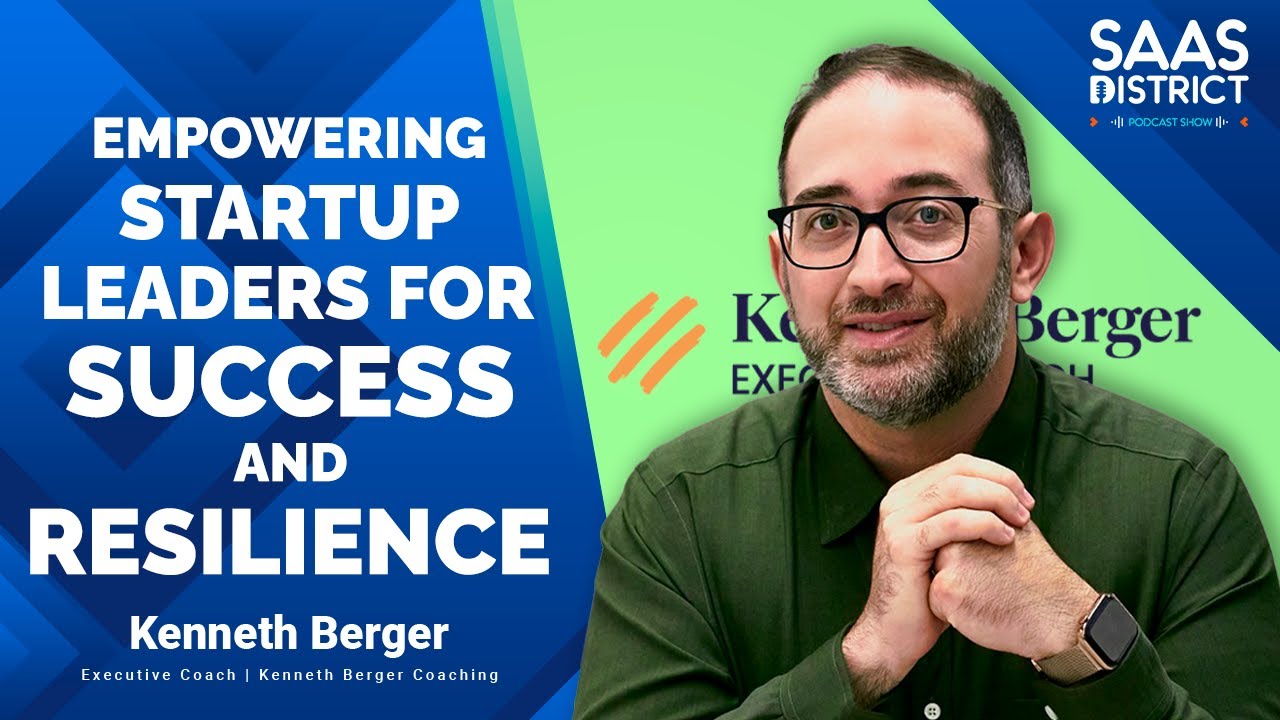
In this SaaS District podcast episode, host Akeel Jabbar interviews executive coach Kenneth Berger, who draws on two decades of tech industry experience to help startup founders develop resilience. Berger introduces three internal mindset archetypes—Hero, Victim, and Villain—explaining how each shapes founders' responses to external challenges and how they can become stuck in self‑limiting stories. He emphasizes that true resilience comes from internal safety rather than external outcomes, and he offers practical habits such as mental “reassurance” drills, travel analogies, and a gym‑like repetition of positive self‑talk. The conversation moves to burnout, linking it to fear of failure, perfectionism, and over‑work, and suggests using small uncomfortable feedback conversations to build tolerance for discomfort. Berger outlines communication principles: clarity, humility, and a factual‑plus‑feelings feedback framework that avoids blame and encourages honest, regular dialogue within teams. He discusses the leader’s responsibility for their own emotions while owning the impact of their actions, and provides concrete phrasing examples for requests and boundary‑setting. Throughout, Berger shares resources—including his website (kberger.com), LinkedIn, and an upcoming book “Ask for What You Want”—and personal rapid‑fire insights about his flow activities (skiing, tennis), advice to his younger self (let go of being right), and current challenges writing his book. The episode blends theory, actionable tactics, and personal anecdotes to equip founders with tools for personal resilience and healthier organizational cultures.
Chapters
Hello, hello everyone. This is your host, Akhil Jabbar, and welcome back to another episode of SaaS District. In today's episode, we'll be talking about empowering startup leaders for success and resilience. Today we have our guest Kenneth Berger joining us. Kenneth, Kenneth is the executive coach at Kenneth Berger Coaching with over 2 decades of experience in the tech industry. He's empowered leaders from startups like Typeform, Dribbble, and Fastly, guiding them to tackle challenges, combat burnout, and achieve their desired life paths. Serving as a trusted confidant to multiple CEOs, Kenneth equips them with the tools to succeed in the dynamic tech world. He has a wealth of experience in technology, with his mission is to assist startup leaders in defining their goals, standing up for their aspirations, and embracing the world's response. His unique insights garnered from years as a founder, operator, and executive coach enable him to guide tech leaders in achieving their potential while addressing the opportunities and challenges inherent to the industry, which you guys know all about. So welcome, Kenneth. Super excited to have you on the show today.
Awesome. Very glad to be here.
So, you know, this is exciting. I know I love your approach, the way you explain things and, you know, how you look at this for where a lot of startup founders are maybe not thinking about this. So one word you brought up, which is, which is the topic of this episode is about resilience, and I think that is a keyword. As you know, I, I've been, you know, pondering a lot over the last few months on how to really develop that, uh, because I think that's a key trait that I look for even when I do investments in, in founders, is, you know, the more resilient they are, I find the— generally they're, they're better at, you know, dealing with the day-to-day challenges and lead to better success. Um, but, you know, you approach it from a different angle, which you talk about the hero the victim and the villain archetype, which, you know, happens in business but also in, you know, day-to-day life. But I'd love to— if you can explain a little bit more about that, how they manifest in the behaviors and challenges faced by startup founders, and what strategies or approaches you've developed to help founders identify and navigate what their respective archetype is.
Sure, happy to share that. So, you know, for me, you know, when we talk about resilience, um, it's really about like, what can we do internally? Because I think a lot of people, and a lot of founders especially, I think get stuck in this, this place of trying to find solutions externally, right? To say, oh, if I get this, you know, this next customer or this next investor or this next hire, then things will be okay, right? Then I'll feel safer, or things will be easier, or, you know, etc., etc.
Yeah.
And the reality is, right, like, we don't control any of that, right? And, and, and looking for for those external sources of safety kind of sets us up to fail in a certain way, right? It's hard to be resilient if you're constantly looking to the outside, to these things you don't control, to feel okay day to day. And so when I talk about the hero, the victim, and villain archetypes, it's really about starting to look within to say, okay, sure, I've got all these challenges on the outside, these goals, but I don't control any of that, right? The thing I do control is what's on the inside. And often we have these stories we tell ourselves that are actually holding us back. And so, you know, obviously every person is unique, but these archetypes really speak to a lot of what I've seen in clients because we sort of tend to fall into one of a few buckets there.
Mm-hmm.
And so, you know, when I think about the hero archetype, these are the folks that are always out there saving the day, right? And so often what I hear from them is, you know, I've got some challenges here, some things that are, are tricky, but it's really all fine. It's fine. You know, maybe I'm working 14 hours a day and I can't hire anyone and I'm running out of money, but it's totally fine. We'll be okay. Um, and, and so this is, you know, admirable in a certain way, right? And, and, you know, of course, you know, I think some people would look at that and say, oh, you know, how tough, how resilient. But really, when you're saying, oh, everything's fine when it's not fine, you're depriving yourself of a lot of important information, right? Of like, how do I actually solve this? If you're telling yourself it's fine, You're not even articulating that, no, this isn't fine. There is a challenge here, or there's a goal that I have, or a change that I want to make. And if you're saying everything's fine, then you can't even begin to start that process of actually going out and asking for what you want. So to me, that's that hero archetype of saying everything's fine. Then the victim archetype is more about, I don't have what it takes. And that can be sort of a deep thing of like, oh, like, you know, I, like, I, I don't have what it takes to be a, a great SaaS founder. Or it can be sort of a more, uh, you know, operational thing. It's like, oh, I haven't learned sales yet, so, you know, I can't, I can't be a salesperson for our company until I've taken a sales course or I've read a sales book or I've taken a sales training.
Mm-hmm.
And so whatever it is, there tends to be this idea of, oh, I don't have what it takes. I'm missing something, right? So here you think about like imposter syndrome, right? Of like, oh, I don't quite have what it takes to do And this is something that I think is very pervasive and natural in a certain way. But it's also something that I really take a strong stand for with clients. No, you're not missing anything, right? We all have what we need to succeed already. Now, it doesn't mean we're going to get every dream that we have, but taking that approach of, no, I have everything I need. Maybe I want to read a book or I want to take a course or I want to learn more about sales. But it's not that I'm missing something or I'm not good enough or I'm stuck. It's say, yeah, I have everything I need and I can go forward and I can take action on that.
And between those two, so you mentioned the hero, the victim, and what would be the villain one?
The villain one is more around blame, right? Because I think where the hero says everything is fine and the victim says, oh, I don't have what it takes or I'm missing something. The villain tends to say, oh, it's not me, it's all you guys, it's your fault, right?
Mm-hmm.
And so, you know, the villain perspective, I think, is very tempting, right? 'Cause it's always so easy to say, oh, it's everyone else's fault, right? And so there's nothing that I can do. And yet I find the villain perspective is very disempowering 'cause it says, yeah, there's nothing I can do because everyone else is in control and it's their fault. And so, you know, often, you know, the other thing I notice with villain archetype folks is maybe a sense of entitlement of like, I'm owed this, right? Like, this, this customer has to sign, right? This employee, you know, has to accept, right? Or, or maybe this employee has to accept my feedback and do exactly what I tell them to do, right? That's a really, really common one, right? If like, I want this person to behave this way, I'm paying them, why don't they do it?
Mm-hmm.
And the tough thing is is that we don't control anyone, even if they're an employee, even if you're paying them, right? Like, we can't— we don't have full control over other people. And in fact, uh, you know, real, um, delegation often comes from letting go of control, of saying, yeah, I'm not going to be able to control exactly how this employee does it, but it means that I'm going to get to scale, right? They'll be able to do something that I can't do on my own. Um, and so for the villain, like, often the challenge is letting go of these ideas of Entitlement and blame and saying, you know what, I'm not entitled to anything, right? Of really trying to take a more humble stance and saying, I'm just going to ask nicely, right? And there'll be consequences if, if, you know, people don't do what I ask, if they're an employee, right? Because I have some control over that. But often the journey for them is really about letting go of that blame and taking more ownership of how they can set some boundaries, um, and build better relationships by not putting all this blame on other people. Because obviously that You know, tends to create some tension, as you might imagine.
Yeah, yeah, that makes sense. So I mean, in each of those 3 archetypes you described, I mean, it sounds like, you know, folks are stuck. I guess we get stuck in our own stories. And in any of those, it may be that we're just not radically honest with ourselves to be able to then break free of that story and then, you know, maybe find better solutions and be able to grow. Does that sound kind of accurate?
Yeah, no, that's exactly right. That, you know, it's— and in a way, to me, it's really inspiring because we say, oh, it's not that I need to wait on some uncontrollable external thing. I can just stop believing this thing that I've been believing maybe for a long time, for my whole life. And that's going to unlock all kinds of possibility for me if I just believe I have what it takes. Nobody owes me anything, you know, etc., etc.
I mean, it sounds easier than you speak. I mean, it definitely sounds easier than actually doing it in real life and applying it. You know, what are some actionable strategies that you, you know, you work with startup founders or teams to help them break out of those cycles? You know, one that I thought about a lot outside of just, you know, within the business realm is traveling. You know, I think, you know, things like the gap year or traveling for a long time, you break out of your perspective, you get new, you know, just a shakeup of your day-to-day and your routine. I think maybe that gives your mind a little bit of space to be able to think of new stories or understand that you're actually stuck in a story. But outside of that, you know, if they can't, obviously, if that's not one option that founders have, how do you work with them to get out of it without, you know, interrupting their day-to-day work?
Well, I actually think that travel example is a great one, right? Because part of what we often do when we travel is we shake ourselves up, we get out of our comfort zone, we go into an unfamiliar place with unfamiliar customs, and Part of what we usually realize is, oh, I'm going to be okay anyway. Even if I can't eat my normal food or follow my normal routine or have the people around that are normally around, I'm still okay. And so to me, that's part of what's underneath all these kinds of journeys is learning that everything's going to be okay. The stakes are not as high as they seem. Because I think that sort of fundamental fear that can come up of like, oh, am I not safe? Am I not going to be okay? I think that's really pervasive on the founder journey where people get scared of like, am I going to lose my whole reputation? Is everyone going to see me as a failure? And of course, if you start believing like, oh, my entire reputation and my future rests on the success of this company, of course you're going to be terrified.
Mm-hmm.
And so to me, the practice is really reminding yourself again and again and again of actually everything's going to be okay, even if this company crashes and burns. Guess what? I can found another company. I can get another job. None of this is life or death because these instincts we have are really old, right? This is caveman stuff, like fight or flight. And so it might feel like you're being chased by a bear, but you're not being chased by a bear, right? You're just on a Zoom meeting talking to somebody, right? So there's no physical danger.
Yeah.
But we need those reminders because we forget again and again. And to me, what that practice looks like, it's like going to the gym, right? Of like getting Getting those reps in to remind yourself, I'm safe, everything's going to be fine, no matter what happens, I'm going to be okay. And when we remember that on a more consistent basis, all sorts of possibilities are opened up, right? Because we're not so scared, right? The stakes seem much lower.
Yeah. Can you speak a little bit about burnout as a result of maybe getting stuck in these stories and loops? I know a lot of startup founders eventually may lead to burnout. Sometimes we receive a lot of founders who want to sell their company just because, you know, they've been working on this business for 5, 6, 7 years. They've, you know, hit some kind of growth plateau, and they've lost the energy and the excitement of the business. But a lot of time, it seems like, you know, the common word is burnout, and it's just because they, you know, they need something to shake up, and they're struggling to advance and grow as much as they'd like. But, you know, it can happen at different stages of the journey. But I'd love to hear from you. How does that fear kind of play in and perfectionism contribute to burnout? And then what are some common behaviors that you see from this fear that maybe people who are listening in can see if they can identify and maybe work through as well?
Sure, of course. So when I think about burnout, right, you end up— you see all these people doing these behaviors that from the outside might look crazy, right? How have you been working 14 hours a day for 9 months straight, right? Or for 2 years straight or whatever. Whatever it is, right? So people don't do these things, especially not over these long periods, unless they have a really, really strong motivation. And so, you know, hopefully, right, in the best case scenario, it's a positive motivation of, oh, I'm so excited about this vision I'm creating, I'm willing to sacrifice all this other stuff, and I'm doing it on purpose. Unfortunately, that's pretty rare, right? And that's often what I'm helping coach folks towards. And so instead, it is that fear, right, of like, well, I don't feel like I have a choice. Because unless I work these 14-hour days every day, then, you know, whatever, you know, pick, pick your disaster scenario. Like, I'm going to fail. And what does it mean to be a failure? Am I going to be, you know, disappointment to my family? Or am I never going to get a job again? Am I not going to have money? Right. You know, different people have different ideas of what that worst-case scenario is. And so to me, a lot of the burnout behaviors are associated with that sort of fundamental fear of failure. And so really, a lot of the way you work your way out of burnout is, I think, first, the stuff we just talked about, right, of being able to build that habit of, oh, this is— I'm not being chased by a bear. Like, the consequences are not actually as terrible as they seem.
Yeah.
And by starting to edge into that and allowing consequences to happen, then we can start to get that felt experience of, oh, like, it's not just that, like, I'm not as scared anymore. I've actually let this thing happen, and it wasn't as bad as I thought. Right? So an example might be like an awkward feedback conversation, right? Maybe you've been having conflict with someone, or you have feedback that you've been withholding because you say, oh, it's so awkward. I don't know how they're going to react. I don't want to have this conversation. And so I'm avoiding it, and it's causing me all this stress and doubling my work, et cetera, et cetera. And so even a small step like that to say, you know what, I'm going to go ahead and have that awkward feedback conversation, right? That gives you a chance to build that felt experience That, oh, this actually wasn't that bad. Like, it was uncomfortable, but I was able to tolerate that discomfort. And maybe the person took it well, maybe they didn't. But either way, they dealt with it, I dealt with it. And so that's the way we learn over time. Like, yeah, I can do hard things, right? If I can tolerate working 14-hour days, I can certainly tolerate having an uncomfortable conversation, right? It's just feelings, right? I can move through it anyway.
How much? So it sounds like the feelings is what kind of gets blocked up, right? You're stuck in the fear. You know, I didn't reach— we didn't reach our $5 million ARR benchmark. We didn't raise, you know, our next round or a Series A round. So, you know, when those things are not met or, you know, these big goals that we set, and if we— it basically feels like you said, like we're basically dying and we've lost everything about ourselves. But really, it's not that big of a deal, right? If you look at it from an outside perspective, but in our own minds, it is that big of a deal that it's like a death or live kind of situation. But, you know, I'm curious to know, you know, from when it leads up to that stage of burnout or where there's an overwhelm of the emotions, how much of those resolutions are because of avoiding awkward, uncomfortable conversations or those, you know, those feedback conversations you talked about?
I think that's a really common scenario, right? I mean, I think so often actually where people start You know, working with me is they say, I'm stuck. I don't know what to do. I've been trying to influence this person, whether, you know, it's an investor or an employee, and they just keep saying no, and I don't know what to do. I feel stuck. Um, and so, um, that, you know, that, that's that, that, that sense of, of stuckness of like, how do I influence this person? What do I do when I say no? Or what do I do when other people say no? To me, that's a really fundamental question that has to do a lot with feelings, right? How do I, how do I, how do I tolerate this feeling of disappointment or anger or frustration that I get when someone says no? And so to me, the question is, how do we move through that and actually start learning from it? So a no doesn't feel like a failure or the end of a line, but just as iteration, right? The way you might iterate on product to say, oh yeah, well, I got a no, which is totally normal and fine.
Mm-hmm.
And so I'm gonna keep learning from those nos and iterating and trying different things, um, and seeing that as normal and good and just part of, you know, progress as a business as opposed to negative and bad and problematic.
Yeah, makes sense. So I mean, founders, you know, the founders you work with, it seems like you work with folks in, in the startup space. Um, what are, what, how are you guys, how are you working with the, the founders and the teams to, you know, help the founders maybe break out of their, their burnout or their patterns, but then also promote that culture of resilience among their entire team? What do you typically do when you're working with founders?
So it's a great question because I think especially with founders, there's both the sort of personal dimension, right? So all the things we've been talking about in terms of working through their own kind of beliefs that might be holding them back or challenges they have as an individual, and they have the opportunity to make a broader cultural impact on the organization, right? In the terms of, this is how we do things here. And so there's definitely best practices there, and different people have different comfort levels or opinions about them. But I think great examples here are, how do we give feedback, right? Is it a, oh, we're very polite and nice, and we only give real, unfiltered feedback once a year, right? Like, that can be really problematic because by a year from now, like, it's kind of too late, right? You've already been frustrated or not happy with performance for a long time. There can be more serious consequences versus if we set up a culture where we say, hey, we're really honest with each other day to day, giving and receiving feedback on a regular basis. And we say it's safe. It doesn't mean that if you get negative feedback, your job is on the line. We expect that everyone's going to make mistakes. People are going to have disagreements about what's the most effective way to move forward. And so exchanging feedback is actually an expression of trust, not an expression of sort of negativity or mistrust.
Makes sense. So it depends on, I guess, the culture of what you're saying the founder sets up and how they communicate. Another piece of, I think, getting to that culture is maybe clarity and humility, right? I think those are 2 words that founders, if they develop Um, could also help them. But, uh, you know, from your perspective, how do you think clarity and humility impacts founders when they're trying to express their needs in the high-pressure startup world? And what does that mean from, um, or what have you seen that means for team dynamics and overall the success of the startup?
So this is another way I sort of, you know, break down sort of the challenges that people often have in terms of asking for what they want and sort of building influence.
Yeah.
Is that often you have a set of people who kind of aren't asking enough, right? Maybe they aren't articulating what they're asking, or maybe they know what they want, but they aren't saying it out loud. They're too afraid to have the awkward conversation or to make the ask. They're not sure what the interpersonal consequences are going to be. And so for those folks, the challenge really is about clarity, right? Let me get clear on what I want because if it's not clear to me, it's certainly not going to be clear to anyone else. And, you know, can I be clear with other people, right? Can I actually, you know, say it out loud, come out of the closet and stand proudly for, yeah, this is me, this is who I am, this is what I want? Because you would be amazed how many people are kind of hiding that, right?
Mm-hmm.
They're not fully standing for what they want, you know, either internally with their employees, externally as a business, right? They have these ideas that it's not safe to, to say that. And of course, That's natural and understandable. People get scared. Of course, I've got a ton of compassion for that. But for them, I think of the challenge really about getting really clear and being clear with others. And so on the flip side, I think then you've got the more entitled people, right? Maybe those folks are really great at asking. They pepper everyone around them all the time with, do this, do that, I want this, do that. And so those folks are really practiced at articulating what they want. And at standing for it. But often they're not actually listening to the response very well, right? Because if you were listening to the response, you would know, oh, barking orders probably isn't getting me good results, right? How is that impacting my relationships, right? Am I really getting yeses, or am I getting kind of halfway yeses, or am I getting nos that I'm not really hearing, right? So when you come into these, these sort of asks with entitlement, it can actually be really hard to really listen and learn because the reality is mostly when we ask for things, we get some form of no, right? It's pretty rare that someone says, hell yeah, absolutely, 100%, I'm off to do it immediately, right? We usually get some degree of reticence. And if we're not listening to that, we're not learning at the rate that we want to be in order to be more effective with our requests. And so, you know, for them, you know, really the challenge often is humility to say, Oh, it's not that people owe me yes or people have to do what I say, but I'm actually not going to come in with orders. I'm going to come in with humble requests of like, would you please do this? As opposed to, I need this by 5:00 PM Friday. Because often that practice of humility, of reminding themselves that nobody owes me anything, right? Mm-hmm. Like, all I can do is ask nicely. That can have a really powerful effect in terms of helping them own the impact of their behavior. And starting to listen a lot more carefully to what they're getting in response when they're making requests.
Exactly. It sounds like just effective communication seems to be an issue in general in the workspace with the Muck folks. But how much is that the responsibility, would you say, of the leader first being clear with themselves? And then also when they're seeing— if they're seeing the employees maybe struggling to be able to express what they're looking for in order to grow or how they'd like to communicate, Or what they're looking to get from the founders or from the team? Or do you think is it the leader's responsibility to keep sharing their side and then trying to make suggestions or guess to help get it out of the employee and reciprocate an effective communication?
That's a really good question because I think this is actually an area that trips up a lot of founders and execs. Because I think either they say, oh, this is not my problem, like, it's not my responsibility, you know, this is everyone else's problem, or they're overtaking responsibility. They're saying, I need every single member of my team to be happy every moment of the day, right? And that's kind of an impossible task, right? We're human beings. We're not gonna be happy all the time.
Yeah.
And so, you know, I think, you know, it's tricky to, you know, get super precise, you know, when we're generalizing about what that right balance is. Typically, the guidance that I share with clients is around taking responsibility for yourself and for the outcomes you want, right? So it's not anyone else's job to take care of your feelings, how you feel day to day. That's your job, right? You need to make the choices that help you feel good day to day, achieve the things that you want to achieve in life, and generally just be okay moment to moment.
Yeah.
And so that, you know, the tricky thing of that is, okay, if you're taking responsibility for yourself, well, usually that means taking responsibility for your impact. Oh gosh, when I communicate with this person in this way, right, they're feeling a certain way and I'm not getting the outcome I want, right? It's like, okay, maybe if I, you know, speak really harshly with my reports, okay, maybe they do it, but then I kind of feel distant from them and it feels a little bit lonely. Like, do they really get me? Do they really understand? And so maybe you're not actually happy with that outcome. And so it's, it's a tricky balance to say, I take responsibility for myself. I'm not going to try and take responsibility for the feelings of everyone around me, but I am going to own the impact of my actions. Right. It's not like I'm not a participant in the system. Of course I am. Right. And the choices I make, the way I behave, it has a really big impact on other people and on whether I get the thing I want or not.
Mm-hmm. You know, you mentioned one example, which was, you know, how you effectively communicate. So you said, you know, can you please, you know, get this done versus, you know, I need you to get this done. Can you share maybe as the last question here, can you provide maybe some other examples of the impact of well-phrased requests on individual growth, team dynamics, and overall startup trajectory? And then maybe what are some other strategies that founders can use to improve their ability to effectively communicate with, especially with the fast-paced environment where people are coming and going so quickly, the team is growing quickly. You're trying to keep up with the demands and the growth of the clients, the team, and etc. Maybe there's little tricks here that you can, or little phrases that you can share that they can help them to get them through those.
Sure. So, you know, one classic that I recommend to everyone is The framework that's essentially when you do X and you want that X to be something uncontroversial. So it's not like when you're an asshole, because when you're an asshole is controversial, right? It's like, who's to say what that is? But when you say, when you take more than 2 days to respond to my emails, and then I feel why, right? And so maybe I feel nervous or I feel disappointed or I feel frustrated. And so what's nice about this way of giving feedback is that it avoids arguments, because I think a lot of the ways that feedback fails is when it creates an argument in itself, right? And so when you make a claim about someone else that they don't agree with, like, you were being an asshole in this meeting, right? Then they're gonna argue with you about whether or not they were or they weren't, and you're not actually getting to process the sort of meat of the feedback. And, you know, similarly, when you talk about the consequences, right, if you're talking about something subjective, right, again, people can argue, oh, you know, did this have a negative effect on the customer? I don't know. Did it?
Didn't?
Like, we can't know for sure. Whereas if you focus on factual things, things that are maybe a video camera would observe, or, you know, a Zoom meeting recording would observe, or when you focus on just your thoughts and feelings, right? Because no one can know your thoughts and feelings other than you. Right? And especially if you're in a manager relationship with someone else, you know, your feelings really matter. If you're frustrated with your direct report, like, those feelings are extremely relevant. And so I think often people find this counterintuitive because they want to provide a bunch of data. They say, oh, you know, these are all the reasons that my opinion is right and you shouldn't do this and I'm right and you're wrong, as opposed to saying, you know what, like, data could show different things, right? You can always make multiple arguments with data. It's more subjective than people like to admit. And so when they really bring it back to that sort of factual feedback, it can be a lot easier to have a back and forth conversation because you're just saying, hey, when you do this, like, I feel frustrated. And yeah, I wish you would, you know, try doing things a different way because of course I don't want to feel frustrated. I want us to have a really positive relationship. And so when you're coming at it from that factual, non-controversial, humble request way, you get such a better response on average. than when you're coming in saying, how dare you do this thing in the meeting? That was so disruptive. That really hurt, you know, the relationship with the customer. If you do this again, you're fired, right? You know, we might want to do that, you know, if we're feeling frustrated or scared or what have you. But if you can get to that sort of more precise, factual place, it sort of helps build that relationship over time.
Yeah, I agree. And, you know, I know throughout my career I've been around those situations, as you know, back when I was an engineer over 9 years ago and worked in the oil and gas industry, you know, that was the general way of how folks communicated. Unfortunately, it's very, um, you know, very demeaning and just, just kind of the personality— personalities you described. So I'm very used to on the receiving end. And then, you know, I learned, you know, as I became an entrepreneur, how to become better at expressing it because you know how it feels to receive it. So yeah, I mean, so I think a lot of people are just not aware of how they communicator, that's just become the normal. But I agree that it's super important of being able to build trust with your team. I mean, that's what I found. The folks that I've worked with, the leaderships, or both ways, are the ones who are able to communicate effectively, and I felt trusted in receiving and giving uncomfortable feedback with them.
Totally. And to me, I think sometimes people say, oh, this is so soft. How do I be aggressive or be tough? When Maybe someone is doing something that is putting their job at risk. Like, maybe I do feel like I might have to let them go.
Yeah.
And so, you know, to me, my response there is like, yeah, we can still set boundaries, right? Like, of course we need to have boundaries, right? If you cross this certain line, like, this is gonna be the consequence. But we don't have to do it from a place of blame or wrongness, right? Because people are generally good, right? It's not like we have all these malicious people working in our companies, right? Everybody's trying to do the right thing. And so to me, it makes the conversation a lot easier if we can acknowledge, like, yeah, it's coming from a good place and I need to set some boundaries. And so the nice thing about that is instead of coming with a threat of like, oh, you have to do this, you have to do that, we can just say, hey, it's up to you what choices you make in your life, right? You can behave this way, you can behave that way, you can do whatever you want. But I'm telling you, this is the boundary I'm setting, that if you cross this, I'm going to let you go, right? If you do this thing, maybe I'm going to be frustrated, right? Or I'm going to sort of lose trust in whether I can have you work on these types of projects.
Makes sense.
And so that way for them, there's more space for them to sort of own their own autonomy of like, gosh, what do I want to do? How do I want to behave? As opposed to trying to directly control their behavior, which is a losing battle.
Yeah, makes sense. This has been great, Kenneth. I'd love to dig deeper on another, another time, but, uh, you know, shifting towards the personal rapid-fire questions of the show. But before we get into that, is there anything else you want to add in terms of, you know, any founders who are listening in or maybe interested in, in, you know, learning more about what you do that you'd like to share with them?
Sure. Yeah. If you're, if you're interested in executive coaching, uh, I work with startup founders and executives. Uh, feel free to check out my website. It's kberger.com. K-B-E-R-G-E-R.
Awesome. Cool. Ready to go into the rapid-fire questions?
Yeah, let's do it.
Yeah. Okay, cool. What's one activity you enjoy outside of work that you find gets you into flow state?
I love skiing and tennis. Those are my sports. And they're, yeah, they're favorites of mine because they're social, they're physical, and they give me a lot of fulfillment, but they're low stakes, right? It doesn't matter if I'm bad at them.
Yeah, love it. What's, uh, one piece of advice you wish you had known? If you can go back and tell your 25-year-old younger self, what would you tell them?
Ooh, I, I would definitely tell myself to let go of being right. I think I spent a lot of the early part of my career very attached to how right I was a lot of the time. And, you know, I think it, it gave me a lot of confidence, But it also hurt a lot of my relationships. And yeah, that's one I've internalized. And yeah, I keep warning it every day, right? Let go of being right.
Fantastic advice. Yeah. What are some of the biggest challenges you're currently maybe facing in order to continue your coaching and consulting business? Or is there anything else that keeps you up at night these days when it comes from a business perspective?
My business is going pretty well despite the economic doldrums we're in. But for me, my big challenge right now is around writing, because I'm writing a book about my process I follow with clients to help them ask for what they want. And that's been fun because I'm learning how to write a book, right? Which, you know, of course I've done short-form business writing, but this is a whole new world figuring out how to share ideas at a larger scale. And it's been kind of fun and tricky figuring it out.
Oh, that's awesome. Do you have any preview you can share when to expect it or the name of the book so we can look out for it?
The book's still in progress, so TBD when it'll be out, but it's called Ask for What You Want.
Ask for What You Want. Love it. Speaking of book or resources, is there any, you know, any 3 favorite resources or maybe books, whether they're people or mentors or people you follow in the space who you'd say have been most instrumental to your success over these last few years?
Sure. You know, I love I love Conscious Leadership Group. So they have a book called 15 Commitments of Conscious Leadership that I think provides a really nice sort of handbook for some best practices around just behaviors that are going to sort of help companies function more effectively. And so I like them because to me, they toe this line between being in the operational world, in the tech world, and really operating in that sort of more coaching space of thinking about what are sort of principles to sort of be more effective and be more calm and happy in your life.
Love it.
Conscious. So, yeah, so that's one I love. I also have been loving learning about parts work, which is kind of an expression of this psychological technique called Internal Family Systems by a guy named Richard Schwartz. So he's got a bunch of books on that. One's called No Bad Parts. But I think that's a really effective way to work with the parts of us that get scared, right? To not say, oh, I hate that part of myself that gets nervous or doesn't think I have what it takes, but to actually do the opposite and bring a ton of compassion for that part and say, of course you're scared, right? Of course. Like, if you think your whole, you know, sort of success is predicated on this one thing, of course you'd get scared. And so that approach of really taking care of our parts that get scared, to me, is an incredibly effective way to sort of build behavior change on some of these things that might be really tricky to change otherwise.
Love it. Kenneth, what does success mean to you today? Whether that's personally, business, financial life, there's no right answer. How do you look at it today in your career?
Well, for me, it's a portfolio of things. I think about just how do I feel day to day? So that has a lot to do with sort of physical health and mental health. So think about how to take care of myself and sort of make sure my days generally feel pretty good. I think about impact, right, of how to create the impact that I want in the world, right, and sort of feel good about the way I'm spending my days. And I think about sort of growth or improvement, that there's something really fulfilling about getting better at tennis and skiing, getting better at writing a book, getting better at coaching my clients, or even guesting on podcasts and sharing my ideas with the world. So I think those are big 3 for me. And maybe relationships too, right? Of course. Right. How connected do I feel to my family, to my friends, to my clients? to the people who matter to me in the world.
Awesome. That's great. Um, this has been really great, Kenneth. I appreciate you sharing all these insights. Um, if anybody is interested to learn more, uh, please make sure to reach out to Kenneth. Um, so where can founders get in touch with you? You mentioned your website. Anywhere else that's the best way to get in touch with you and learn about you and your company?
Yeah, so I'd say check out my website at kberger.com, K-B-E-R-G-E-R, or you can find me on LinkedIn where I share ideas and articles. So you'd be welcome to connect or follow me there. So it's linkedin.com/in/kburger.
Awesome. So we'll add the website, your LinkedIn page onto our show notes. If you guys want to check it out, make sure you say hi and say hi to check out Kenneth. So thank you so much, Kenneth. I appreciate you joining today.
Thank you so much. It's a pleasure.
Cheers. Thank you all for watching this episode and joining SaaS District today. Don't forget to like, subscribe, and hit the bell for future episodes where we interview top leaders in the SaaS industry. If you're a SaaS company looking to grow and unlock the true value of your business, get in touch with us at Horizon Capital, and myself or one of our consultants will provide a free assessment to help you get there and hit your goals. If you have any feedback or suggestions for this podcast, please comment down below and help us improve. our content for you all. Thanks again, and see you on the next one.
Bye!
More from Akeel



Get a mentor as soon as possible — and make sure it’s a mentor in your space.




Keith Gillispie: Why Most New Investors Fail & How to Avoid the Common Traps #250 | SaaS District



