Kris Rudeegraap: Reducing Churn and Increase Retention of your SaaS Using Personalized Gifts # 151
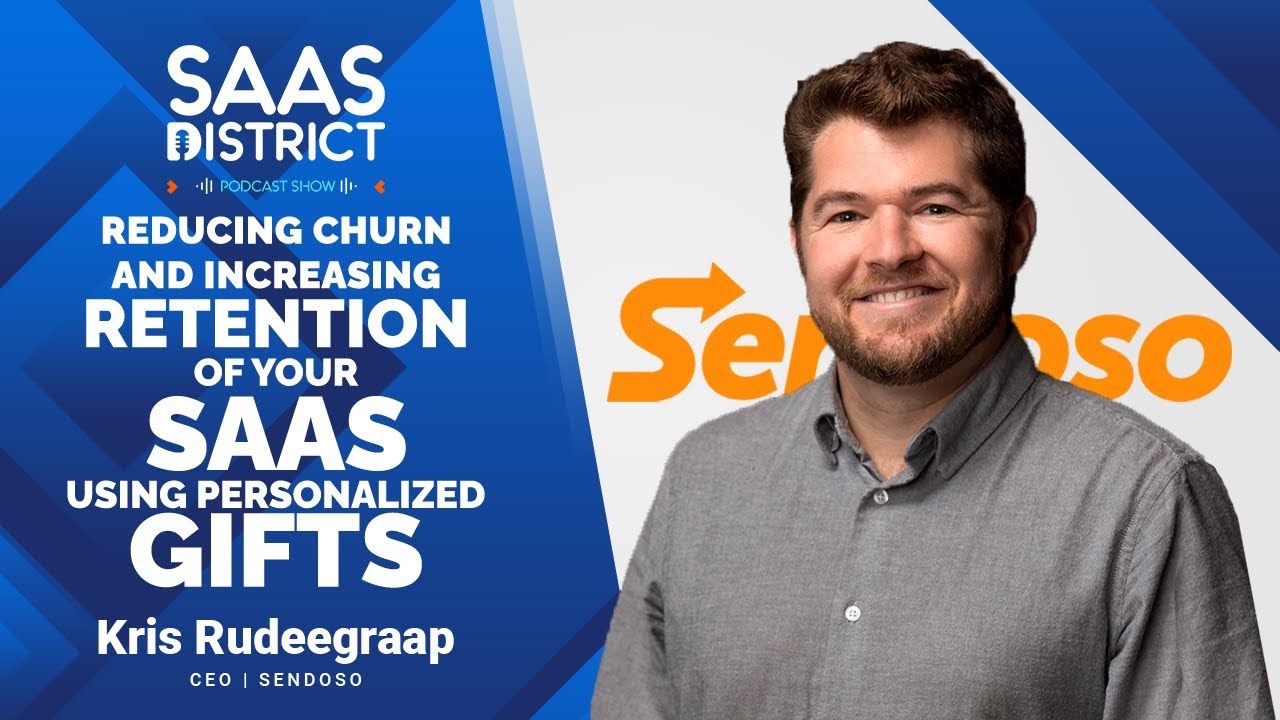
Chris Rudeegraap, CEO of Sendoso, explains how personalized physical and digital gifts reduce SaaS churn by creating champions and building human connections. He maps gifting across sales, marketing, and customer success workflows, integrating with Salesforce and HubSpot to track ROI. Sendoso raised $155 million in Series C funding.
Chapters
Hello, hello everyone. This is your host Akhil Jabbar and welcome back to another episode of SaaS District. In today's episode, we'll be talking about how to reduce churn and increase your retention of your SaaS customers using personalized gifts. Today we have our guest Chris Rudy Gropp joining us. Chris is the co-founder and CEO of Sendoso, a leading sending platform that helps companies stand out by promoting new ways to communicate with the consumers throughout the buyer's journey. They enable B2B sales, marketing, and customer success teams to offer both digital and physical gifts to buyers and customers. He has worked at TalkTest, Yapstone, and Pacora, and has over a decade of sales and a decade of experience in sales, where during that time he realized that using direct mail and gifts to create meaningful interactions was an effective approach to driving demand and increasing sales, and thus the idea for SendOsto was born. So welcome, Chris, super excited to have you on the SaaS District show today.
Yeah, thank you so much for having me here, excited to chat.
So I'd love to hear, right, most people listening in, you know, founders, marketers, they understand how digital marketing works, you know, a lot of email marketing, maybe some SMS marketing, but using, you know, both those, right, the combination physical and digital, can you speak about, you know, how you suggest even going about building that, you know, starting from scratch? I wanna build a sound go-to-market strategy that combines both of those, physical and digital. Can you speak about that, how we can go about that?
Yeah, for sure. And so I'll kind of preface this that with a lot of companies already kind of do a little bit of this offline marketing. They just don't do it well. You know, the category has hundreds of billions a year being spent on corporate gifting, direct mail, you know, promotional products, but it's a very manual spreadsheet-driven process. And so that's really where we came about. So I'd assume most every listener has sent a gift out, sent a mailer out at one point in their career, whether it's sales, marketing, success, or even to an employee. And so what I think about, um, is how do you really operationalize that? And I think that's key so that you can do it time and time again. So it's a part of your process. And so I think the first thing that starts is really how do you map out the buying journey and how do you really make it so that you are, um, very definitive around when do you want the digital touch, the SMS, the, the physical mailer, the phone call, the— and how does that look throughout the kind of top of funnel, you know, SDRs outbounding to middle of funnel with AEs and account executives to closing the deal, and then all the way into the customer journey too, because I think that's also an important touchpoint from a perspective of reducing churn and really increasing retention, is how do you look at all these different touchpoints that you could have, and how do you really add in these, these gifting and mailer components to that? So I think a lot of companies maybe fail to do that. I think product teams do that really well is they like say, hey, where are all the different, you know, product touchpoints that we want, you know, users using our product to engage with? And so product and design teams love that, but marketing and sales teams, I think, think that way but never actually articulate it enough so that the entire company knows. So I think that's step 1. I'd say step 2 is really leveraging software to do it better. In all honesty, you know, it's a pain in the butt to send stuff out if you're doing it manually. No one wants to pack boxes, go to the post office, you know, go source have a little mini warehouse in their office or their garage. And so I think you do have to leverage a platform like Sodoso if you want to operationalize it so you can do it time in and day in, day out. I think you also want to integrate it into your other workflow tools. So, you know, integrate it into your sales engagement tools like Outreach or Salesloft or Groove so that it becomes a step within those sequences or into your Marketo or HubSpot or, or Eloqua marketing automation. So it becomes a step within that or integrated into your CRM so it becomes a, you know, a touchpoint there where you can see it and click when you need to. So I think the, the integration piece into software will also help building it into your strategy so that you can do it without effort. And then I think the very last thing to really think about is how do you take the onus off of a single individual? So previously, a lot of times marketing would own like a batch and blast for gifting. And so it put all the onus on this one person, this one time. And I think sales and marketing and customer success is now real time. And you have, you know, at your organization, many people that are talking to prospects or customers at any given time. And so how do you kind of take what used to be done one-to-many and bring it down to one-to-one? And I think again, there's really where like some software like Sendoso helps out because we can make it so that you can give budgets and assign certain things that SDRs, AEs, account managers, CSMs, support people can send when the time is right. Hmm.
So it's all about, you know, setting, you know, it's part of the nurturing kind of experience of, okay, I'm sending a touchpoint. This is my email I'm sending. Um, you know, whether they interact with it, you book a call maybe a couple days later. Send them a nice gift. Thank you for your time. You know, that kind of flows out. I see it. Okay. Exactly. And then if I'm looking at it from overall, you know, the marketing plan, sales plan, uh, I want to see ROI, right? Just like any other channel with email marketing, um, you know, any other thing. How do you, you know, how do you kind of demonstrate that the ROI is clearly for this channel?
Yeah. So I think there's a couple of different ways to do it. One is you can demonstrate the ROI by really attaching the recipients of these different gifts, uh, to campaigns in Salesforce or your CRM. So you can start to track, campaign influence. And I think that historically wasn't done for gifting. You just kind of send it and cross your fingers. Now with software, you can programmatically attach a campaign to everything that is sent out so that you can track the results of that campaign through your, your attribution software. So that's one way. 2 is, you know, the performance of the channel. So if you're seeing that the campaigns are performing, what is the ROI of doing more of that? And so I think that's where you'd say, hey, well, if I could send 10 times more stuff and that, and I can move dollars away from, you know, maybe ads that aren't doing as well as this gifting channel, then you can start to see more of an ROI on the channel itself. And then I think the, the last 2 are really based on one cost of goods sold. So if you can work with a provider that is able to provide you with goods cheaper than you could buy yourself, then you can see a return on ROI just based on the cheaper, better priced cost options. And then the last thing is just the time. So if you have an expensive demand gen marketer or an expensive enterprise AE packing boxes or trying to order things, you know, what's the ROI on them focusing on selling time and not on administrative operation time and the ROI of time?
Yeah, no, that makes sense, I guess. I mean, the amount of time you're ordering it, finding the right thing, deciding what to do, and then shipping it out and waiting, you know, all this with a couple of clicks, you know, seems a lot more easier.
Correct.
So we'd love to hear from you, from your side. I mean, so this is one way of how, you know, marketers can use it. You guys yourself, Sendoso, it's been, you know, just under 5 years, you and Braden have turned, you know, one of the hottest startups in San Francisco. I think you raised over $152 million, still expanding, rapidly growing. What's— what have you seen as, you know, one of the best plans, best channels that have worked on the growth and marketing side for you? What worked well?
Yeah, so I'd say one channel that we really invested in early is partnerships and integrations and co-selling. And so this is really how do we build build an integration with some of these different partnerships, like I mentioned, Salesloft and Outreach and Salesforce and Marketo, and how do we do co-selling and co-marketing with them? So I think that anywhere, anytime you can leverage a really successful brand when you're early in your startup, uh, days and sync yourself to them and then co-market to their customers too, I think is a great way to, to drive, um, you know, incremental inbound and incremental revenue. I think, uh, outside of partner as a really strong channel for us, we early on invested in kind of brand and leadership, but I think it's counterintuitive to some early startups that are really focused on channels that you can track the ROI specifically on. For us, we knew that we were in a category that needed thought leadership and evangelism. So I think it's dependent on the entrepreneur or the founder. If you're disrupting an existing beast, if you're a better CRM than Salesforce, you can— you don't need to tell people that CRMs exist. They already know that. For us, we had to tell people sending platforms exist and tell them why they needed them. And so there was a lot of early brand evangelism of the category. And so depending on what category you're in as an entrepreneur, you might need to overinvest in kind of brand as a channel in the early days as well. And so that comes with things that are less trackable, like maybe events, maybe other ad spend that you're not trying to drive conversion with, and really just driving awareness to.
And just for that first piece, if you're doing, you know, more integration, you know, partner marketing, And you want to leverage, so you mentioned, okay, integrate into the platform, you build some functionality and integrate with the features. But then on the other side, you're saying, okay, having them, the cross-promotion and any tips you can share with people listening, how they can best leverage those partnerships and getting them to actually promote you, especially if you go to say, I'm going to a Salesloft today and say, hey, let's help us, help promote us. Any tips?
Yeah. So I would say one, if you have a, you know, one focused on some exec-to-exec conversations. So it's important that you partner up with their, you know, maybe their CRO, their head of partnerships, but also on the ground, the individual contributors. So sales teams speaking to their sales team, CSM teams co-successing with their CSM team. So really it's not just about the, the, the company-to-company partnership, but it's about the people-to-people partnership.
Mm-hmm.
And that's often overlooked, but really early on we had our salespeople like try to be best friends with the salespeople at our partners. And we still do that today. And it's a great way to really drive referrals. There's also soft software you can use to overlay and map out, uh, kind of, uh, shared customers or a customer versus a prospect. So we use software like, uh, Cabal or Crossbeam or, or CoSell.io. So there's some software out there to make, um, co-selling easier.
Nice, nice. That's awesome. And then on the, the flip side, so obviously, you know, there's some successes in your marketing, but, you know, all those failures as well. Any, you know, failed experiments, channels that you tried and you say, okay, this, this was a complete failure, you just wouldn't do again?
And I don't think there's really any failures in my eyes. It's like everything's a test. And I think we can always iterate it on. I'd say one thing that we kind of steered away on really early on, we thought, hey, should we create a whole new team that's focused on different verticals? And we really realized that like that team was on an island pretty quickly. And so we kind of said, we killed that and said, let our existing team just figure out how they can all focus on different verticals themselves too. So we took— so that was something where we— in some cases, I think in startups, once you get to, I don't know, 200, 300 people, you're like, okay, you're a little less nimble than you were when you were 25 people. And so you, you kind of think, hey, can I spin out a little skunkwork team to do something quicker? And I think that's, uh, something that's hard to get right, as it's, uh, not necessarily that much easier than just getting everyone to kind of, uh, do it and move the ship in the same direction.
No, that's, that's, that's great advice. Um, when it comes to customer churn, right? So I think, uh, we talked about how, you know, the, the physical gifts and the products help with, you know, go-to-market with sales and marketing, but then, you know, with the, you know, uh, existing users, uh, any thoughts on how including the product helped with engaging, standing out, and, you know, and the net effect of reducing churn? Any, any thoughts on how that works out?
Yeah. So our product is used by, you know, thousands, if not tens of thousands of, uh, customer success or post-customer, uh, engagement people like account managers, managers or support people. And so a couple of things that I think you need to do as a company is you really first need to understand what, what are your reasons for churn or what is affecting churn? Is it, hey, you're losing champions and then you're single-threaded, you don't have enough people at the company. And that's a— if that's a churn reason, then how do you use, you know, gifting to enable that? So maybe you do a better job of making more champions at the company, or you do a better job of tracking when your champion leaves, and then you send a welcome kit to that new champion once they join so they're excited about using your product day one. I think that's an example. I think another example is maybe like incentivizing product usage. If you know that if you're not seeing, you know, if a company doesn't add more than 5 users to your platform, then you know their likelihood to churn. So how do you incentivize maybe with a gift or with another incentive to say, hey, like get this cool t-shirt or get, you know, Donuts on us if once you add 5 people to the team. And so you can build in like product incentives to drive usage, which if you've done your research, you know that that usage leads to lower churn.
Mm-hmm.
And then I think the other way is just to build better relationships and rapport, especially in this very digital world we're living in. Like, be human about it, you know? Hey, it's your customer's birthday. Hey, your customer just got a new puppy. Send 'em something. Hey, you, your customer had a bug and you want to go outta your way to say, hey, here's, you know, lunch on me. Sorry for the issue. back online in an hour or something and send them something. So I think there's different parts where you can just feel that human-to-human connection. And oftentimes the person that's gonna be renewing is sure, they, they, there's other choices in the market and sure, there's other, uh, maybe sure, there's could have been issues with your platform that would've reduced, would've caused churn. But if they have a strong connection to you as the person in your CSM team, uh, then you can, you know, uh, mitigate some of that churn risk by building better relationships.
Right. Yeah, I think I saw that. It was a couple of years ago when I used, uh, was it, uh, uh, ClickFunnels, right? And they had a pretty cool gamifying tool where, you know, as they onboard you, you have to go through it. And then once you complete it, they would send you a t-shirt with, you know, ClickFunnels shirts and stuff. So I thought that was pretty cool, pretty genius. And I'm assuming, you know, that's a good way to use it, right? To get people engaged.
Exactly.
Cool. Um, and any other, you know, just thoughts or advice for people who, you know, SaaS founders who want to help You know, in terms of overall retaining and, you know, reducing churn that maybe you've seen for yourselves?
Um, you know, I'd say one is just make sure you track a lot of different data, whether it's, uh, product usage data, um, you know, leverage a customer success platform. So invest in software like Catalyst or another customer success tool. I think data and software, um, are easy to overlook in the early days to say, hey, we're, we're too small, we don't want to buy this software yet, or we don't want to invest in tracking data. through software yet. And I would say that's a mistake. And the sooner you can focus on enabling your success team and enabling data capture, the better you'll be.
Nice. That's smart. And what's your take or kind of outlook on the trends of this market, specifically direct mail or physical gifts kind of going forward in the space?
Yeah, we're seeing an explosion in this space. You know, 5 years ago when we invented this category, there was really— it was really nascent, you know, in terms of sending platforms to enable sending at scale. And then for, for companies. Uh, now we're seeing some competitors pop up and we're seeing hundreds and hundreds of millions being invested in this category. And I think, you know, I saw it very early because I was in sales in the trenches doing this myself and said, hey, there has to be a better way. And, you know, I think investors caught on when they realized that there was hundreds of billions being spent inefficiently offline through spreadsheets or through, uh, just, you know, one-off scenarios. And so I think, uh, that mixed with with, you know, the, the trends in, you know, remote work and, and, you know, uh, being able to, uh, engage with people who maybe previously would be more in person. Now you need— you could send them stuff to build that rapport. So I think that the trend, the tailwinds from COVID um, only amplified this market. And I think, uh, we'll ultimately see, in, in my vision, in my opinion, uh, every company, uh, will have a sending platform just like they have a CRM, just like they have an email platform.
Nice. And do you guys send worldwide at the moment, or is it just—
We do. Oh yeah, we send worldwide. We have global warehouse facilities where we're warehousing around the world as well. And so we're a pretty global company.
A quick note from our sponsors today, and we'll be right back. This episode is sponsored by contentfy.co, a premium podcast podcast editing and repurposing agency for busy content creators just like you. Are you spending too much time editing your podcast and end up with no time to stay on top of also publishing, sharing, reaching new listeners, while also staying ahead of the latest podcasting trends? Don't worry, Contentfy has you covered. You no longer need to worry about spending hours editing and repurposing anymore. Just record your content and they handle the rest. Contentfy is an end-to-end podcast editing and repurposing agency to help you grow your podcast by editing and repurposing quickly, easily, and reliably to share all over your social networks. And if you haven't even noticed, I also use them for the SaaS District podcast. So join other busy content creators just like you and me and start saving time and money while you grow your podcast show. Visit contentfy.co to learn more today. Chris, love to kind of shift gears more, more going into, you know, the personal questions, more rapid-fire questions. So far it's been really helpful. You know, just starting off, where are you guys in terms of size today? And could you just talk about— you guys recently raised, you know, I think $100 million Series C round. What's the plan with that? What's the expansion details?
Sure. So we've been around for about 5 years now. Uh, we've raised about $155 million to date. Uh, as you alluded to, about a month ago we raised a $100 million Series C. Um, in terms of just the progression, so about a year and a half prior to the Series C, we raised a $40 million Series B. A year before that, we raised a $12 million Series A. A year before that, we raised a $2 million seed round. And then about 3 months before that, we raised about a $400,000, uh, kind of angel convertible note round. So, uh, good progression along along the way. We have about 500 employees now globally and growing quick. That should almost double by next year. And this $100 million in funding, our goal is to really double down on our customers, continue to build out amazing features, continue to invest in our global infrastructure, look at growth strategies through M&A and other opportunities there, and then ultimately just continue doing what we're doing and scale in all, in all areas of the business.
Cool. Was that a decision from day one? Like, okay, we want to raise capital, you know, okay, did 3— because that's pretty impressive, right? $300K or $400K, uh, angel to seed within 3 months.
Yeah. So really for the first 6 or 9 months of our business, it was bootstrapped. And so we got to a point where, you know, we thought, hey, can we just bootstrap this the whole time? Um, and it really got to a point where bootstrapping is hard when you have such high demand, in my opinion, because we were kind of trying to grow through revenue growth. And so we couldn't bring on our next employee until we really felt that we had enough money in the the bank to support their paycheck. But we had more demand than we could ever imagine. So it's like, we have so many customers wanting demo or prospects wanting demos. We have so many customers getting onboarded. We needed support to, you know, help with everything else. So it was really like, hey, do we wanna like stop growing and bootstrap, or do we wanna just continue the growth and then raise money? I think the one thing we did is once you start raising money, it's hard to stop.
Mm-hmm.
Because I think that, you know, it's like, okay, you use this growth to get to the next stage, and then ultimately, investors come knocking at your door if you're, if you're driving great traction. And so for most of our rounds, investors are the ones that kicked off the fundraising round. And so we raised not necessarily when we needed it, but when investors really saw the opportunity.
So, so that's actually a very powerful framework of making a decision on when to raise, right? A lot of founders just think, okay, yeah, maybe, you know, we should, we're not sure, but I think it's like, you'll know, right? If you're, you're growing fast and you need, and you need the money, that's probably a good time that you should start thinking about it. And you can't handle the growth without it. So that's awesome.
Yeah.
Um, what was— so when it came to your vision, you first started the product, you had an idea because you worked in sales, you saw how this could work using us, uh, building a software like Sendoso, um, compared to where it is today, how has that kind of evolved over time? And, uh, you know, do you, do you have an exit plan or, you know, going to just plan to keep going till IPO or what is the idea there?
Yeah. So I think the biggest, uh, evolution really came from originally I thought this was going to be for salespeople and it was built for salespeople. Uh, quickly realized that marketers love this, that customer success team loves this. that customer support team, that account management teams, that recruiting teams, that HR teams, that, you know, other industries, uh, client services, banking, hospitality. So, um, I think the big evolution was the use cases and who was using it.
Mm-hmm.
That day, day one, I didn't envision for such rapid evolution of use cases. Um, so I think that's the biggest change. I think the vision, uh, at the very core, which is, uh, you know, really helping, uh, inspire human connections and really making it easy to send something to someone somebody else. That has stayed true since day zero. I think as we've evolved, that we've made it easier, we've made more selection, we've made it more integrated, we've leveraged more AI and data, but it all circles into that kind of inspiring human connection and sending things at scale. In terms of the exit, you know, we're just having a great time trying to have fun, trying to build a big business. I think an IPO is the obvious future for us as we continue to scale with great revenues and great team growth. But ultimately our eyes on, you know, the, the day-to-day and really making it the best place to work with, with amazing customer success stories and just continuing to drive a strong product in the market.
Love it. Love it. That's awesome. Chris, what's one piece of advice you wish you had known? And if you're going back and would tell your 25-year-old self?
Gosh, it's a good question. You know, I would actually say like, I don't have any like regrets or things that I need to change. I think when I was 25, I had a startup that I started in that I ended up selling. And so I was kind of an entrepreneur mindset from, from the get-go. But then I really realized I didn't know what I didn't know. And so I got back into working with other fast-growing startups to really learn while in their organizations. And so I was patient. And so I kind of had that mentality. But I would say maybe for others who are 25, maybe there's a scenario where you're not patient. You're like, I need to start this startup today or I'm kind of, you know, screwed. And, uh, I think the— maybe my advice to that is be patient. You can start it when you're 30 and exit when, you know, you're— before you know it. And so I would say don't just rush in. Um, and, um, but I would say don't rush in, but if you are at that point where you do have the good idea, you, you know, you are at the right place, then, then don't wait. So I think it's like, you know, make sure you know when timing is right for you.
Do you remember that moment, like when you knew it was the right time? Because obviously you found, okay, this product that seems pretty good, I'm working in sales, I see it, you know, working. Um, was there like an aha moment? Like, no, I have to put, you know, double down and work on this?
Yeah, I think it was a mix of, you know, the opportunity size was so huge. I validated it with a bunch of friends and colleagues and strangers. I had kind of an MVP that was, uh, getting used by, by random companies that were signing up for it. So all that pointed in the right direction. And then I kind of said, hey, what's the future? You know, we can't live in a world where we're sending out a gazillion emails every day. Like, how else can we build rapport? And what are channels are necessary. And so that's really where I saw that I had to jump in.
Nice. Um, can you share, you know, who or what are some of the best, let's say, 3 resources? It can be books, it could be people, mentors, people you follow in the space who you'd say have been the most instrumental to your success over these last few years. I mean, even before college, it seems you had some success as well.
Yeah. So I'd actually, I take a lot of inspiration from podcasts. And so, you know, maybe I'll answer this, my 3 favorite podcasts. So I really like How I Built This. I think it's really inspirational to hear other founder stories. I really like Planet Money, as there's really interesting inspirational stories there. And then a podcast called Acquired, where they go really, really deep on companies. And I think for me, the inspiration of hearing from, you know, zero to one and how companies got started, or from how they get to multi-billion dollar companies, is fascinating to me and drives that inspiration. If, you know, there's ever a, you know, a roller coaster ride for a founder, hearing other people's success is something that you can kind of look up to.
Yeah, yeah, definitely. So cool. I mean, it will add all those, those podcast links to our show notes, people to check out. Those are, those are great podcasts. Chris, what does success mean to you today, whether that's personally, business, financial, life? I mean, there's no right answer.
Uh, I'd probably say happiness. You know, I think if you're happy, you know, life's great. And so I think for me, success is just I'm happy. Um, and you know, everything, uh, around me, if I'm happy, then I think a lot of things fall into place.
Nice. Love it. Cool, Chris, it's been great. Anything else you want to add? Final notes for anybody listening in?
You know, if everyone wants to talk with me further, feel free to ping me on LinkedIn, email me. It's chris@sendoso.com. If you're curious to learn more about Sendoso, go to our website, you can see more there. But I'm always happy to connect with other founders, other CEOs, or salespeople, anyone. So I love networking. So hit me up if you want to Awesome, awesome.
Thank you so much for joining today on SaaS District Show today. Much, much appreciated.
You got it. Talk to you later. Cheers.
Thank you all for watching this episode and joining SaaS District today. Don't forget to like, subscribe, and hit the bell for future episodes where we interview top leaders in the SaaS industry. If you're a SaaS company looking to grow and unlock the true value of your business, get in touch with us at Horizon Capital, and myself or one of our consultants will provide a free assessment assessment to help you get there and hit your goals. If you have any feedback or suggestions for this podcast, please comment down below and help us improve our content for you all. Thanks again, and see you on the next one.
More from Akeel



Get a mentor as soon as possible — and make sure it’s a mentor in your space.




Keith Gillispie: Why Most New Investors Fail & How to Avoid the Common Traps #250 | SaaS District



