Luca Zambello: The Intersection and Future Trends of SaaS, AI, and Hospitality #229
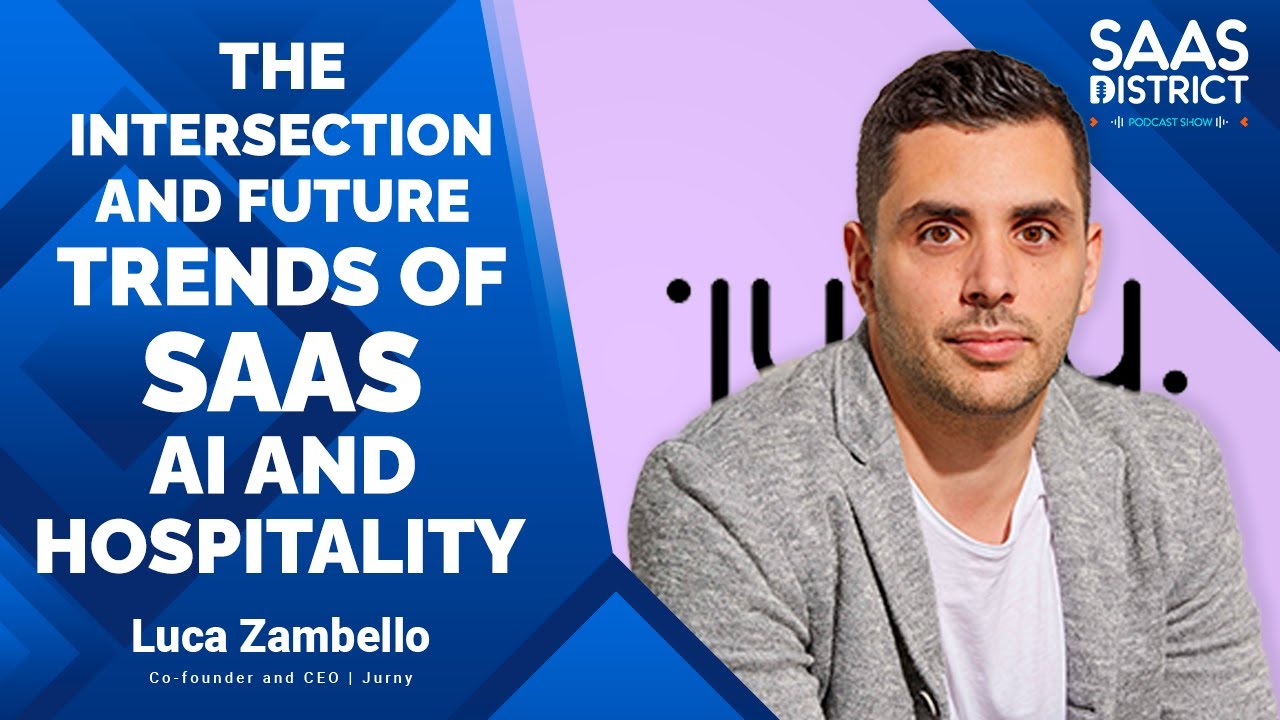
In this SaaS District podcast episode, host Akeel Jabbar interviews Luca Zambello, co‑founder and CEO of Journey, an AI‑powered property‑management platform for short‑term rentals and hotels. Luca shares his personal founder story—from moving from Italy to the US, building a luxury‑villa landing page that generated $1.2 M, to launching Journey in 2019 to solve the fragmented operations of short‑term rentals. He discusses why the US startup ecosystem still offers valuable networking advantages, though post‑COVID remote work has lowered the barrier for international founders. The conversation moves to industry trends: the market is maturing, margins are tightening, and only the top‑performing operators (70th percentile and above) are thriving by differentiating through technology, location, and guest experience. Luca outlines three pillars of success—asset location, presentation/reviews, and operational efficiency—and explains how Journey’s AI stack (dynamic pricing, multi‑channel distribution, AI‑driven upsells, automated guest communication via the Nia AI assistant) provides a competitive edge. He warns against over‑automation that erodes the human hospitality feel, emphasizing the need for curated experiences. The discussion also covers asset remodernization: using SaaS to boost NOI, increase property valuations, and enable refinancing. Future opportunities include automating cleaning (robotics) and further AI adoption, while noting that large hotels lag in AI integration. The episode concludes with rapid‑fire personal questions, where Luca reveals his passion for go‑karting, advises early tech immersion and asking questions, and recommends resources such as the All‑In podcast, The Hard Thing About Hard Things, and Never Split the Difference. Contact information is provided via Luca’s LinkedIn and Journey’s website.
Chapters
Hello, hello everyone. This is your host, Akeel Jabbar, and welcome back to another episode of SaaS District. In today's episode, we'll be talking about the intersection and future trends of SaaS AI and the hospitality industry. Today we have our guest Luca Zambello joining us. Luca is the co-founder and CEO of Journey, which is an AI-driven property management solution which is reshaping short-term rental and hotel operations. He's a recognized expert in AI and a serial entrepreneur where he founded Journey in 2019 in order to simplify and make AI and automation accessible to all hospitality businesses, including small Airbnb hosts, to large hotel chains. Luca is also an advisory board member for entertainment and hospitality management at California State University and has raised over $12 million in capital to develop his AI-powered technology. So welcome, Luca. Super excited to have you on the show today.
Yeah, thank you for having me.
So before we get started, can you please just share like a quick background of, you know, your story and how you got to building Journey? Um, and where are you guys in terms of size today? I know you guys have raised some capital, but, but how big are you guys? Just to give our audience an idea of where you guys are?
Yeah, happy to share that. I was born and raised in Italy and moved to the United States when I was 21, so about 15 years ago, with the excuse of studying. Really wanted to— it always fascinated me entrepreneurship in the United States and this startups coming from young kids with great ideas and getting big fundings and being able to develop things that honestly everywhere else is a lot harder to do. And coming from Italy is not that it's a poor country by any means, but But it's not even close to the amount of opportunities that you will have in the United States. So that really is what brought me there. A few years after I moved to the United States, I stumbled into the idea. It was super early, Airbnb wasn't really yet a thing, just started. And I realized that luxury short-term rentals For for luxury villas, were done all through brokers and word of mouth. And I said like, "What if I build a landing page?" Because I the way it happened is I was actually looking for to rent a luxury villa for someone who needed it, and I was helping them out. And I realized that I was looking online; I couldn't find anything. I'm like, and then I figure out that it was all done through brokers. So I said, "But if I was looking online, I'm sure there was there's many other people doing the same exact thing." I built a landing page literally in a few days and kind of created a small database of luxury homes. And that landing page did $1.2 million in revenue on— and it was really not that many costs. It was just me and an assistant in one year. Start a business because it was a form of arbitrage. We were brokering deals and Literally 12 months after Airbnb exploded and a bunch of other competitors in the market doing exactly what we were doing, our cost per click went from a few pennies to like $4 or $5 per click. So it became a completely different business. But from there, I spun off a management company, grew and scaled that management company. So I really saw the short-term rental industry starting from the very, very beginning. And I've had basically several businesses or several pivots of the business within that industry. And what's been very cool is to observe many companies trying to build that next big thing within that industry, but not really many companies succeeding with it. And so I saw several different versions of that and I've been part of several different versions of that. And then the first version of Journey was one of those. So we were actually managing apartments and trying to scale a very large operation, venture-backed, but just like we did, there was many other people. I don't know if you ever heard like Lyric, Sander. Sander even got to IPO with Trustback. Sorry, went Trustback public. And so like many companies, but not really, not many succeeded actually, nobody really succeeded. They all got to medium average scale or actually fail or having to pivot the business. And one of the big reasons is because at first it's actually pretty scalable because it's relatively low asset compared to a hotel because you can go rent an apartment or convince somebody to give you a house to manage, and you make money on it, and you have relatively decent margins. But the second you scale the business, it's extremely fragmented. So you have multiple— your operation is extremely spread out. And so people try to compensate with this with an infrastructure that they try to build and with technologies. But current existing infrastructure and current technologies especially before Journey, were just as fragmented as operation. Because hotel, even if they have this super old technologies, most of them, and they're not really quick to advance, they have a centralized operation which makes it a lot easier to manage. But short-term rentals, if you're managing like we did at one point, over 300 units, That's across 30 different locations. That's very challenging and it's very fragmented. So you need to have technologies that allows you to compensate for that. And that technology, that infrastructure didn't exist. And we figured out that that was an issue. And so we eventually then decided to do that full-time and try to fix this issue for the whole industry.
Love it. So before we get kind of deeper into your products and understanding the hospitality industry, I'd love to ask a couple questions. But reversing back to the first thing you said, which is, you know, as a European, uh, you know, Hungary founder or potential entrepreneur thinking to move to the US, right? This is a common thing I hear from— I get a lot of entrepreneurs all around the world reaching out to me, speaking to me, and they're saying, hey, you know, should we move to the US? It just seems there's more opportunity there, better funding, better opportunities, um, better networking connections, or maybe just easier to help you kind of accelerate Do you agree with that statement? And what would you recommend to maybe anybody listening who's, regardless of where they are on the stage, but they're thinking to take that route? Like, I spoke to somebody last week from Germany, one of the founders we work with, and they're kind of thinking that, right? But we'd love to hear your thoughts. And do you think it's still worth it today?
Yeah, I think things have changed a lot since I made that decision. And obviously COVID accelerated that. Quite dramatically because everybody became okay to do everything virtually. I don't know how many companies I know of that don't have offices anymore. They have an address just to have an address, but everybody works remote. So I think it really changed quite a bit. I do think that it was absolutely a must 12, 13 years ago. or prior to that. But I think a world post-COVID, I think it changed quite a bit. And I think there's a lot of opportunities of doing things even without being in the United States. That being said, moving to the United States allows you to obviously have access to better network, better networking. For me, the things that made the biggest change was I actually moved to the first WeWork outside of New York, which was in Hollywood, in LA. And that was one of the best things I could have ever done. I forced myself to go to an office setting. And there I saw so many startups, so many people just going and raising money. with ideas, and I went to all these people's offices and started asking, how did you do it? And that's how I learned. I knew zero about the venture world and how to raise money, and I only learned because I got to meet all these people that successfully raised money and grew startups in a reality like WeWork. And if I didn't do that, there would be no way that I would be here. doing what I'm doing right now. So from that standpoint, I think there's some great opportunities and a network and like-minded people. I think the biggest thing for me in Italy, the biggest problem I had, it was very hard to find like-minded. I was a weirdo that wanted to— Yeah, I get it. The outsider, right? Like that had big ideas, big dreams, United States is very common, especially in the big cities. You go to New York, San Francisco, LA, it's very common. That's more of the commonality almost to have big dreams and try to achieve big things versus you come from a reality like Italy, although it's an evolved, developed country, people don't—
Yeah, they're happy with the status quo. They're enjoying their life.
Yeah, exactly.
Why change?
Which is fair enough, right? For many ways, I think that they have a great life, better than many other people, because they're more okay with what they have. But if you are like I am or like many other entrepreneurs are, they want to achieve more things, it's going to be harder for you to find like-minded people.
Yeah. So the innovation is definitely there in the US. They're pushing edge, cutting edge. Kind of like what you're doing with AI technology. And then also the network, which I think it becomes more natural there in just kind of your day-to-day. If you just get out there and do things, you're gonna find more people who are doing things you wanna do or ahead of you or have done it. Whereas I think nowadays you may be able to do that, but it's a little bit more effort maybe going online and trying to find the exact person and asking for advice and guidance, which may not be as easy versus being in person. So yeah, it makes complete sense. So I think for folks who are looking to push the bleeding edge and move things forward and find people ahead, I guess the US still is ahead. I guess one point you talked about, which is about maintaining like-minded people, I guess. So you're being in Italy now. How do you maintain that? Is it all kind of remotely in your network and online communities, which I think a lot of people have moved towards, or were you able to find that in person there now going back?
Yeah, I think right now for me, it's a lot easier to maintain the network wherever I am.
Yeah.
And I mean, I travel a lot more than before, so I find myself everywhere I go finding more like-minded people. And going to conferences helps so much. Being invited to speak at conferences also helps a lot. I think you need to be in specific geographic locations, especially in the beginning, 'Cause it's gonna help you create that initial network. Once you build it, in today's world where it's a lot easier to stay in contact with people thanks to Zoom calls and being able to talk to investors anywhere you are in the world, then it becomes a lot easier to maintain.
Makes sense.
So, and I think 13 years ago, you needed to stay in a specific city reality to maintain that network. I think that now has changed a little bit. Yeah, yeah, that makes sense. That's how I see it. Cool.
That's interesting about what you mentioned about the luxury, um, you know, short-term properties. I didn't realize it was all done through brokers. I thought you can, you know, go on Airbnb and all these would be listed there. But, you know, curious to know your perspective, you know, now 2024, you know, it's been an interesting time with short-term rental periods. There was a time where it was, you know, super lucrative. Now A lot of regulations, a lot of government involvement, setting a lot of limits in terms of, you know, for investment opportunities, for rentals. What do you kind of see as kind of current trends? Let's look at it from like the, you know, the user perspective or investor perspective, somebody coming in and looking to manage several properties, whether it's buying them, renting them. And let's just say apartments for ease of example here. Do you still see that the margins and opportunities are still there in this market for people? And if so, where do you think that is?
Yeah, absolutely. It just became a lot more competitive, right? So like the industry became more mature. And so it means that before almost anybody could come in and make money, now you need to know what you're doing or you won't make money. And I think In response to that, the fact that the industry is still growing quite a bit year over year, and revenue is growing year over year. One trend that we saw is that the 50th percentile and below is making less money, but the 70th percentile and above is making more money. So that's an interesting data point in my opinion, is that the people that know what they're doing, they're actually making more money than before. But you have to differentiate yourself. And that is the reason why we pivoted and decided to go full-time on the software side, because we understood that infrastructure is gonna become one of the biggest differentiating points. There's gonna be 3 main pillars. One is really like how the aesthetic of the platform, Of the location, right?
Right.
And the geographic locations of your assets, right? The second is how you present it, and how you present it includes also your reviews and the feedback from your customer. And the third one, how you run it, which is going to influence your reviews, it's going to influence how it's being presented, it's going to influence how responsive you are with guests and stuff like that. And that all comes from software, especially if you want to scale an operation. Or make even a small operation very efficient and increase your profit margin, which is also the other problem of having increased competition. You need to have things that gives you an edge, and those things will be either increasing margins in what you're doing with the same tools that everybody else has, like with the same assets that everybody else has, or providing a better experience with the same amount of resources that other people are spending. And that's the way you can get ahead of the game. So yeah, I think the industry is just maturing and the opportunities are actually there. And just like the easy asset-light dream that all people are selling, It really doesn't work, in my opinion. Like, it works at least in small scale. So you've got to get a lot more serious now if you want to, if you want to make money.
Maybe what are some trends you're seeing with some of those folks, you know, 70% plus, the ones who are really crushing it? Um, you know, are they buying, you know, properties in Barcelona or Rome and, and, you know, buying units and then just really managing them really, really well? Um, like condo units, are these luxury villas that are being, you know, where do you find like the biggest opportunity? And then One part I see is that when you start integrating technology to help you run operations, sometimes I've been to places where it just seems too much automation and too much technology where it just lacks any personalization. And it just seems like I'm talking to a bot and this whole process is just scanning in and there's no— which killed the appeal of the initial Airbnb touch. But I understand it, right? It's margin, it's efficiency. It's automation, but this is part of the experience that kind of gets lost, right? What do you think?
No, I think it's a great question. I'm going to try to address— there's many points. I'm going to try to address them all. On the technology side, I think there's 2 relevant things. Automation only provides added value. Automation can actually provide added value and added benefits to guests when automation works and when technology works, right?
Okay.
We're talking about AI, for instance, versus a chatbot. A chatbot feels robotic, but if you developed a really good AI communication system, it might elevate your experience. It remembers your name, remembers what you like, understands if you're frustrated or not, and knows how to answer you immediately and give you exactly the answer you need right away. So if you have that, that elevates your guest experience, right? But on the other end, if you have a chatbot that doesn't even answer your questions you ask, you might get an answer right away, but you rather wait 5 more minutes and have a human being answering you versus a chatbot, 'cause that provides no value to you. Or if you have an automatic lock that doesn't work, then you're like, okay, that doesn't do any good. On the other end, If you're implementing technologies that are actually helping you save money in terms of operational costs, you need to reinvest those money. Well, A, you can lower your cost, your pricing to match what you're providing. But if you want to keep the same, the same, uh, uh, top-line revenue, then you have to increase the quality of the product and give that human touch and human hospitality feeling in different ways, which is given with experiential states. What does that mean? And actually that's where we see the best trends and the best performing assets out of all. It's oftentimes not just the location. It could be even an okay location, but it's the experiential feeling and how you, unique experience it gives to our guests, right? Um, you can have a tent in Joshua Tree possibly making more revenue than an apartment in downtown LA, right? I'm not saying downtown LA is necessarily a good location, but just, just to give you the perspective, the difference value on assets.
For sure.
It's massive, but one gives you a unique experience that the other one doesn't give you. So creating unique experiences, that's definitely something where we see things, where we see hosts outperforming other hosts. And so attention to details. And like you said, give you that feeling of curated stay versus just like, we're doing this. And that's one of the reasons why these companies are trying to do large-scale and scale-pass-down work. It's because they destroy that human touch. It just gets— it becomes almost nonexistent. And at that point, people are like, well, I'd kind of rather stay in a hotel than paying almost the same money or more money for this whatever room.
Exactly. Yeah, it's interesting, right? So it all comes down— and I agree, the experience has always been kind of the the game changer and, you know, really enjoying a place, like how well they got treated, like how easy it was, the overall vibe, but just, just the way they took care of the management operations. I think that's— I agree, that's going to be the way to stand out. And it seems like no matter where you are, if you have that, you can do fine. You know, so alongside— so an experience, location, and then there's like the tools and management to help you operate properly. What are some, you know, maybe AI tools and platforms do you envision as becoming an absolute requirement, or not a requirement, like a necessity if you want to stand out, if you want to benefit from your business model for hotels in the future?
Yeah. And I will combine AI with automation tools in general. But in my opinion, if you're not using any type of dynamic pricing algorithm, you're already behind competition by a quite large margin immediately. Um, if you're not listing on multiple platforms than just Airbnb, you're not listing on Booking.com, Expedia, and, and multiple platforms at the same time, you're, you're missing out on a huge chunk of revenue, right? Like, let's even say that Booking.com and Expedia and VRBO can only bring you another 20, 30% only relatively in revenue. That's 30% more revenue every month. That might be the difference between you making money or not making money that month.
That's huge.
And then there's one other trend I've started seeing is upsell, for instance. That's another way to make another 5, 10%, squeezing another 5, 10% out of the same assets. That's something we're actually fully automating with AI. The ability to— if our AI, our AI is called Nia, knows that there's availability for that unit, it will automatically propose, say, if you're interested for late checkout, late checkout is available. And so that has— once you do that, most people actually do need Late checkout, many people do and they just don't bother to ask. They don't even know if it is available. So just proactively doing that can increase your revenue even like an extra 3-4% per month per unit, which at the end of the year is huge numbers. And those are some of the stuff, the things that we start seeing that can make a big difference because you add a few point percentages there, a few point percentages there, at the end of the year you're making like 50-60% more. than your competition, you're crashing and your competitor may be dying. So that's one thing. And then more specifically, just to focus on the AI side, I think guest communications and guest management is gonna get almost fully automated or close to fully automated. We have data points So we have something called pre-populated answers, which is not the full autonomous mode. It's when people go on Journey OS and they see a message, whether it comes from Airbnb or it's a text message or comes from Booking.com, the message from the guest. And then we have a pre-populated answer there. Right now we are close to 90% of those answers being sent as is without any type of editing. That means that we're close to 90% already of potential full automations of guest communication. That's a huge number. And guest management is a big cost for a lot of these companies. So that's some of the most immediate trends and things that I think anybody in the industry should be looking at immediately. And then obviously there's some larger ones where we see coming, where in which operation can become, I don't want to say fully automated because you're going to have always needing to have somebody going and cleaning units. It has to be a human, I mean, at least for a while until we are going to have robots doing that. And then keep up with the units themselves. But the whole operational side that people underestimate a lot, there's a lot of moving parts and a lot of overhead costs. That's usually where the biggest chunk of costs are for operators. And a lot of that is going to be fully automated with AI.
That's super interesting. So I didn't know, you know, a lot. So, you know, shifting, just putting some, you know, budget and promoting on different listing platforms like you mentioned, you know, adds 20%, 30%. That's, that's huge, right? Like for any business, for just running and listing on a few other places, you know, it's an instant boost. And then you mentioned also automating your process and then upselling that. I don't think I've ever been upsold before in the experience of joining. So that's, that's good. And then, you know, so moving forward, like going into, you know, future trends and what you see as opportunities or challenges maybe now in the hospitality industry, Whether you guys are tackling them in the market, or maybe there's other founders who are looking to maybe get into this market and resolve it themselves. So one would be obviously the cleaning experience that still hasn't been automated, right? If you can come in, you get the bot, like a robot to come in and do that, obviously that's, that's huge. But what are maybe some other places you see that are like maybe struggling or areas where you see it just like this is, you know, not— It's not run or managed effectively or properly, but There's a lot of opportunity here that could really help owners grow.
Yeah, from a technology standpoint, we're trying to fix all of them.
Yeah, sure.
So I don't know if there's any specific on the technology side, but I can tell you that from a business standpoint, I can see the new A new way of running hotels, a new almost asset class. I started seeing companies looking at this in the right way, but not enough, more from a commercial side. If you take a boutique hotel run poorly, and there's many of them out there, and run like they used to be run, put light remodeling in it, relatively light remodeling, and just remodernize the asset with new technologies and run it with a platform like the ones we built, which is what we were originally doing because we built that platform for ourselves. You can now take the same assets, increase the amount of revenue and decrease its cost, which means increase the cap. Basically, the value of— because you have more margin, you now have a higher NOI, and the value of that building is given by how much profits you're making on that asset. You now can refinance that asset at a much higher valuation than when you originally bought it. That's, I don't wanna say equal to printing money because there isn't such a thing, but if you can figure that model out, that I think in my opinion can become very scalable and very, very, very lucrative. That's one of the biggest trends that I've seen in my opinion.
Potential.
No, because actually I've not seen it being as big enough, but that's one of the biggest opportunities that I personally see in our industry.
That makes complete sense, right? So there's one side of going and buying an apartment, building your own building, and then renting it out, which we see often. But it's not very much the case where people are going after older or maybe less maintained or less profitable units or buildings and then being able to turn it around, flip it, and then increase the value for specifically hotels and Airbnb. Curious to know, I guess for people listening and maybe looking to go down that route, what are some What does the NOI look like typically for some of these deals? And what are you looking for as a good opportunity or bad?
Well, usually you want to see someone who has below 30% margin, and then if you've done it properly, you can double that. And I can see this eventually becoming so disruptive that the large names and the large hotels are going to suffer quite a bit. I think hotels have not been affected directly, but this is taking what the short-term rental industry has learned and now going against the hotels head-to-head. Nobody has done it yet.
Yeah.
But I see that coming, and I see that being one of the biggest disruptions that is going to happen. in the hospitality industry very soon. And large hotels are not nearly as much paying attention to AI as much as they should.
So love it.
There's a big opportunity here.
You guys are here to hear February 2024. We'll see what happens by the end of the year if people start getting into this space. So thanks for sharing, Luca. I would love to shift gears and go towards the kind of last part of the interview, which is more about the kind of the personal rapid-fire questions. Ready for those?
Yes.
Yeah. All right, cool. Luca, what's one activity you enjoy outside of work that gets you into a flow state?
It's completely unrelated to business, but I like racing cars and professional go-karting.
Oh, I love it. Gets the thrill. And I do some racing too. Yeah.
Yeah. And I do some sim racing at home as well. I have a whole sim setup. Oh, man, that's so cool. That's my— when I happen to have some free time, I do that.
You race. Love it. Love it. What's one piece of advice you wish you had known? And if you can go back, you would tell your, let's say, 20 or 25-year-old self?
I would say to start even sooner than I did and definitely get into the tech space and learn as much as you can and ask. Honestly, probably if I have to say one thing, don't be worried about asking. I've learned that a little bit later and became very useful for me, but asking questions to people who have already done it. Most people, many people will answer you.
That's true. Yeah. Fantastic advice. Love it. What are some of the biggest challenges you're currently facing in order to continue to grow and scale Journey? Meaning, what keeps you up at night these days?
I think it's just— I don't know if there's something that keeps me up at night specifically, but When you want to build a company, it's a constant grind.
It doesn't end.
You will always have challenges. It doesn't matter. You have to be okay with that. You have to just put it away and just know that that's how it's going to be. Of course, I mean, if you make more money and your personal life is more set up, I think that That helps you. But I think you have to be okay with the fact that it's always going to be challenging. Yeah, I agree.
What are some of the best 3 resources? They can be books, mentors, or maybe people you follow in the space who you'd say have been most instrumental to your success over these last few years.
I love podcasts. I think podcasts are a great source of information. You have to choose the right ones. I mean, I say, like, I don't know if you want me to give specific names, but in general, podcasts. I love YouTube as well. I try to find a lot of—
Maybe one or two channels that you really like or influencers that you think have really helped you. Whether you follow now even.
Well, yeah, the podcast is one of my favorites. It's— and I'm not— doesn't by any means I agree with everything they say, but the All-In Podcast is a great way for me to keep up with news and the venture space. A bit too political lately, but I love that one. A book, if I can recommend a book, The Hard Thing About the Hard Things. That's That's a pretty good one. And Never Split the Difference, probably.
Yeah.
Yes. Those 2, I would say, as a high recommendation. And then in general, whatever industry you're in, to try to find influential people within your industry. And especially on the AI side, I'm listening to people that are super geeked up about the space and they're talking about And they're not yet famous, right? Because there's not really many people talking about that. But it's one of the things, technologies that we started adopting. And it came from, you know, I'm not a technical person, but I really got involved on the technical side from the AI perspective. And we came up with a multi-agent concept, you know, having multiple agents specialize on very specific fast, talking to one another, which is giving us insane results. And if we were not on top of those trends and really studying those, it wouldn't give us the competitive edge that we have. So doing things like that has helped me a lot.
It's exciting times, right? Like, the AI space is actually— I've heard this recently with a lot of folks who are really getting— it seems like it's drawing a lot of people in who have maybe previously just kind of dabbled in the tech space, but are really interested in the innovation of what's the possibility and potential that it can create.
So, yeah, 100%.
Yeah. Luca, what does success mean to you today? Whether that's personally, business, financially, life? I guess there's no right answer, but what does it mean to you today?
Yeah, I think success is being able to I mean, there's definitely a lot of different definitions of success, but I— and I don't see myself necessarily as successful because my goals are pretty high. But I think obtaining at least some of your big goals, not all of them, because I think if you're like me, and there's probably many people like that, that You're going to always have higher goals, but you are able to obtain your goals, but at the same time have— you cannot have absolute balance because if you run a company, you need to run a company, but have a successful family and healthy home environment, I think it's extremely important. That's very much overlooked, but you can become the richest person on earth and have a complete destroyed family. It doesn't matter. Money will be worthless to you. So I think I think that's probably one of the biggest challenges being an entrepreneur to to to to keep you know if you're especially building a family if you have kids like have you know a healthy family at home and and keeping a good positive relationship with everybody while building the business. That's success to me.
That's success. So finding success in your work, but then also we understand how much it sucks you in, but still being able to manage that and still balance your family and other relationships and keep those strong, right? So you have that to fuel you. Exactly right.
In your work, you do have to sacrifice some places. It means that you're going to be able to do a lot less for yourself, right? I don't drink, I don't go to bars. I don't do many of the things that other people find fun because I sacrifice those for others. There you go.
Priorities, right? You know what's important to you and you're going after it. So that's awesome. Yep. Love it. This was great, Luca. I appreciate you sharing all this and jumping on today. So we'll wrap this up with maybe if you can just share, where can listeners or audience get in touch with you? Learn more about you, learn more about Journey, or just say hi?
Yeah, I'm pretty active on LinkedIn, so personally, and you'll probably find most of the updates about our company and myself there.
Okay, awesome. We'll add your LinkedIn profile and link to our show notes if you guys want to check out. Make sure to say hi to Luca and check out journey.com, which we'll add to our website as well. So thank you. Thank you so much, Luca. I appreciate you joining today.
Yeah, thank you for having me.
Cheers. Thank you all for watching this episode and joining SaaS District today. Don't forget to like, subscribe, and hit the bell for future episodes where we interview top leaders in the SaaS industry. If you're a SaaS company looking to grow and unlock the true value of your business, get in touch with us at Horizon Capital and myself or one of our consultants We'll provide a free assessment to help you get there and hit your goals. If you have any feedback or suggestions for this podcast, please comment down below and help us improve our content for you all. Thanks again, and see you on the next one.
More from Akeel



Get a mentor as soon as possible — and make sure it’s a mentor in your space.




Keith Gillispie: Why Most New Investors Fail & How to Avoid the Common Traps #250 | SaaS District



