Max Kremer: From Startup To Acquisition & How to derive value with customer journey analytics.
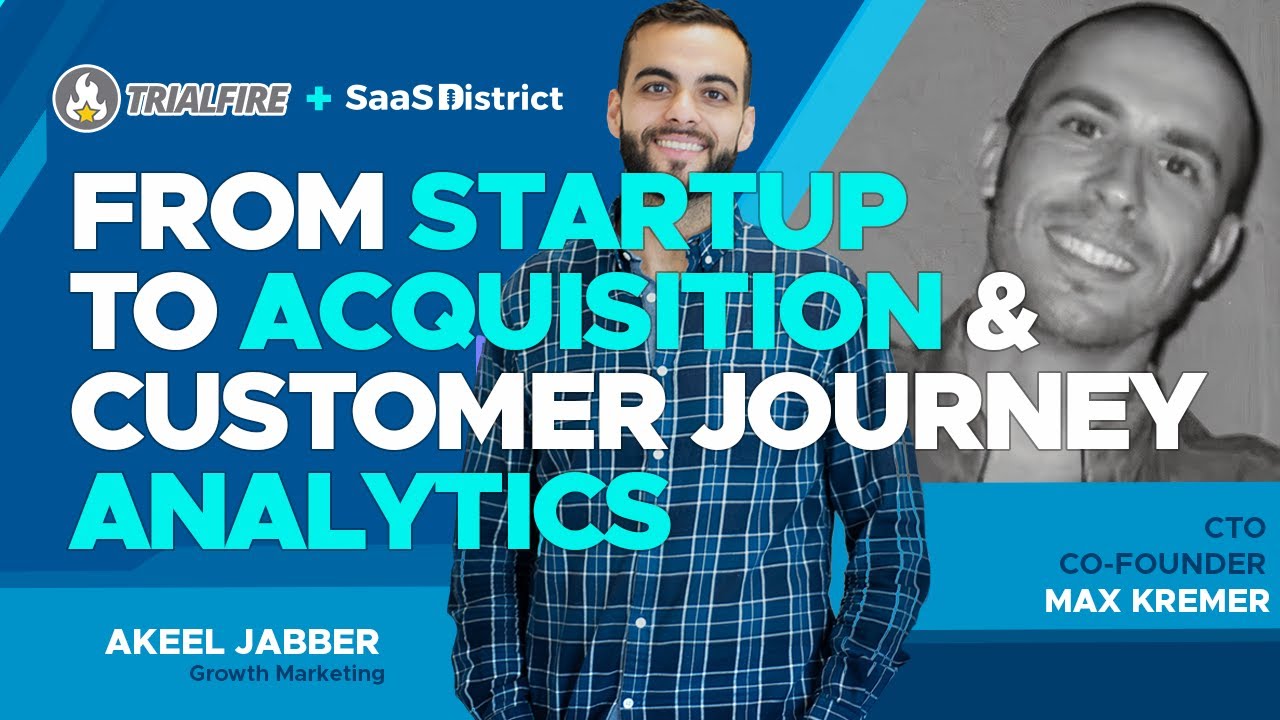
In this SaaS District interview, Max Kremer recounts his entrepreneurial journey from co‑founding Datastay, a PLM SaaS platform for mid‑market manufacturers, to its acquisition by Autodesk in 2012. He explains how the acquisition experience highlighted the difficulty of understanding free‑trial user behavior, which sparked the idea for TrialFire—a customer intelligence and web‑analytics platform that captures every user interaction (clicks, keystrokes, scroll depth, form fields) out‑of‑the‑box. Kremer describes TrialFire’s differentiation through deep marketing‑data integration and a game‑theoretic attribution model based on the Shapley value, arguing that traditional last‑click heuristics are obsolete in today’s multi‑touch funnel. He stresses the importance of disciplined UTM parameter usage for clean data, shares how the company reduced AWS costs by moving from managed services to custom EC2‑based storage, and outlines the challenges of scaling in a noisy martech space. The conversation also covers personal lessons—particularly the need for technical founders to develop sales and marketing capabilities—and future plans to double‑down on attribution, expand the sales team, and continue growth in 2021. Throughout, Kremer emphasizes building real value for customers as the sustainable path to successful exits.
Chapters
This episode is sponsored by Horizon Capital, an M&A and micro private equity firm that acquires and grows SaaS companies. Horizon Capital only works with SaaS companies generating between $500K and $5 million in annual recurring revenue, where they help them unlock the true value of their business and scale to the next level. Whether you're ready to move on to your next startup or want to work with the right growth partner, Horizon's team will work with you to find the best structure possible. From M&A strategy to capital investments, SaaS is all they do. Simple as that. If you're a SaaS founder with less than $5 million in annual recurring revenue and are looking to sell your business, visit horizoncapital.com today and get a free valuation. If you'd like to sponsor the SaaS District podcast or recommend any guests that you think would be valuable to be on the show, visit horizoncapital.com/saas-podcast today. Thanks again, folks. Hello, hello everyone. This is your host, Akhil Jabbar, and welcome back to another episode of SaaS District. In today's episode, we'll be talking about from a startup to acquisition and how to derive value with marketing attribution. Today we have our guest, Max Creamer, joining us. Max is an entrepreneur, technologist, and the previous co-founder of Datastay, which is an on-demand web PLM software for SMBs, which then got acquired by Autodesk. He is now the co-founder and CTO of TrialFire, which is a customer intelligence and web analytics platform that removes the barriers to being data-driven and always on-demand, on data science. He enjoys talking about startup success and failures, as well as methods to measure consumer engagement, what to track, why and how to get those metrics quickly and easily. So welcome, Max. Super excited to have you on SaaS District today.
Glad to be here, Akeel. Thank you.
Yeah, no worries. So obviously let's start off as usual. What we like to know is, you know, can you share a little bit about your personal background? What were your past ventures? And then what was your core motivation after you exited your first company to launch your now company, which is TrialFire?
Okay, so my background is on the tech side. I, you know, I graduated from York University with a degree in computer science, and worked for a number of different companies, but was immediately drawn into these— this world of startups. My first exposure to that was when I moved out to Chicago. I worked for one of the first voice over IP providers called GoToCall. And, um, GoToCall was really interesting. They, they, they penetrated the market by first publishing, um, the, the telephony rates, right? So you're calling from US to any other country and you can look up different providers and see what they're charging. So they generated a lot of traffic like that, and then they launched their own service. So that's how they built an audience and then launched their own voice over IP service. That was a great success. They were acquired by Delta 3. And then I moved back to Toronto and I joined another startup called Ocean Lake Commerce. And that was a total flop. And you learn as much from the failures as you do from the successes.
Absolutely.
Back then, I don't know if you remember the days of like black and white mobile phones, like the old Nokias.
The flip ones?
Yeah. Web browsing was like nonexistent, right? We didn't have browsers the way we have, you know, mobile browser now. So it was all black and white and we built sort of this transcoding engine that would take any, any regular laptop or wired site and transcode it to WML, Wireless Markup Language, which was like back then that was kind of the bridge between HTML and phones, right? So we had some traction there. We had, we had a, one of our best customers was the Shopping Channel and we built this like mobile experience that users can see products while watching Shopping Channel. and buy in real time on their phone. But it's, um, that technology was easily disrupted, disrupted by, by the evolution of mobile devices, right?
Yeah.
So obviously you don't need something like that anymore. It was kind of like the cassette era, right? Between records and, and, and CDs, right? So, um, that, that eventually Kind of flopped. And, uh, I went to work for, uh, a couple other, uh, large corporate companies. I did some work, um, in online banking and, um, and then eventually started Datastay.
Okay. And what was that? So you were working in banking and then it was just like on the side, you were kind of building this on the side while working, or did you quit your job and go full-time?
I was, I was doing it in parallel. Yeah, yeah, it was a long time ago, so I'm trying to remember all the details.
Sure.
And my, um, my co-founder at that time, Mike, um, you know, gave me this idea. He, he, he was building— he was making CD-ROMs for automotive, um, like low down in the supply chain for, for automotive parts manufacturers, like a CD catalog of their products.
Right.
And, um, They were having all these problems like maintaining the integrity of their product data, and they didn't really have a change management process. So they had CAD drawings that weren't aligned with what the part actually looks like, things like that, the revision history. There was not really comprehensive software to manage it. People were doing it in Excel and Word docs. It was a mess.
Mm-hmm.
So he built like, something for a company called Federal Mogul. So I don't know if you know Federal Mogul, but I'm sure you've heard of like Champion Spark Plugs, and they— that's the umbrella company, Federal Mogul. They have a whole bunch of automotive brands.
Okay.
And he built something in ASP for them to manage their product numbers. And we looked at that and we're like, well, how can we make this generic? How can we make this a system for any group of engineers that needs to collaborate over a bill of materials and change management process and a set of CAD documents and version control, how can we make that available? And we realized we were competing with like IBM and Dassault and like these huge companies, and they were selling these tremendous multimillion-dollar software packages.
Mm-hmm.
And back then, this is the emergence of SaaS, right? So we're like, okay, well, we'll just have a web app and we'll make it multi-tenant.
Right.
And now, you know, no one does big software packages anymore and it's all—
SaaS.
SaaS is, yeah, SaaS is the de facto standard now for software delivery. So that's how we started was, Back then it was called PLM, Product Lifecycle Management, and we started playing in that space and we got a bunch of customers because the mid-market was wide open. They couldn't afford the IBM solution, right?
Right, yeah.
So we got a lot of great customers. I loved working in that space because I got to visit some of these clients and see their factories and I was always sort of like an engineering nerd in my spare time. Like, I take apart motorcycles, put them back together, build choppers, things like that. So, so that was, that was really cool for me. And we got Autodesk's attention because we were using various browser plugins to display some of their proprietary CAD files.
So they were like an integration partner at that point, would you say?
Kind of, kind of, sort of. And, um, and then they're like, yeah, we want to buy you guys.
Nice. They— so they approached you. Did they know like how, how big you were, or were you just getting their attention from how much volume you were bringing to them? Or do you remember that?
Um, yeah, we were pretty transparent with them about our size and the number of customers, and, and they didn't really buy us for our customers. They bought us For 2 reasons. It was the technology and the, the, the SaaS or cloud-based service delivery mentality, right? We kind of— we were one of their first SaaS acquisitions, right?
Okay.
They were still in the era of like licensed CD-ROMs of software.
Right.
And we kind of inoculated that company with this mentality of a monthly licensing fee per user per month, cloud delivery. And, and wow, that was amazing. Watching, watching that change in a company that big was just phenomenal.
Hmm. Nice. So then at that point, they liked the technology. They liked kind of how it integrated, you know, the SaaS, what it was. Was there anything else that Like from your perspective, so they saw some, some key kind of integration or they saw the value of the product. From your perspective, what was your motivation and, and kind of the experience that you went through? Can you share a little bit more about that at the exit stage? Like, was it just the number made sense and you're like, or was it Autodesk? Was it that they give you something that you'll continue working with them or you just wanted to move on to something else?
And it was, it was, it was a few factors, right? I mean, of course, of course you have a software giant like Autodesk come and approach you. That's, that's, there's definitely the wow factor there.
there.
Um, but, but like I said, I, I loved working in that domain. I love working in that engineering space.
Hmm.
So, so that was a big factor. Um, yeah, and I think, I think we just jived with the people, right? The, the, their corporate culture is great. Um, the people from that team who, who took part in the acquisition And then of course what later became my boss at the company at Autodesk. They were just great guys and we really gelled. So the working relation, of course the number made sense. And also at that point we were kind of struggling to grow, right? We were still kind of growing organically. We didn't really look too much into like raising a proper big round. We were angel funded.
Okay.
But we still owned, I think, 80% of the company at that point of the Autodesk acquisition. And yeah, it was hard. It was hard getting new customers. It was a really long sales cycle because to adopt PLM into an organization, you're really changing the status quo. You have to get huge teams on board— engineering, quality assurance, management. So the sales cycles were, you know, 6 months to a year. It was brutal. So, yeah, it was, it was, it was time for a change. We were, we were sort of feeling the fatigue of slogging through the mud.
Yeah.
And this kind of gave us a rebirth.
Got it. So now your exit from this, when was this? In 2000, like how long ago was this?
This was in 2012.
2012, okay.
Yeah.
And then I think that's when you also, at what point was there you saw that opportunity to start TrialFire? Tell us a little bit from that, you know, that exit, probably had some time to kind of, you know, process that experience. And then, you know, do you drum up, say, okay, I'm, you know, I'm an entrepreneur, I wanna get back into the game. And do you see this problem so clearly, or how do you kind of move to that next stage of launching TrialFire after that?
So after about 2 years at Autodesk, I think I just got too comfortable, which is a weird place to be. I never knew that about myself, right? It was sort of a little bit of a voyage of self-discovery, but it was a great job, and I can't say enough good things about Autodesk. But, you know, I spent a lot of time in meetings and I'm more of a doer. And I just— I guess I wasn't challenged enough. Sometimes you don't appreciate the value of hardship until it's gone.
Yeah, right.
I know it sounds like, you know, I'm a sadomasochist and I like pain, but you kind of need that. You kind of need something to overcome.
That's how you grow, right?
Yeah, exactly. Exactly. Exactly. And the idea of TrialFire actually came about from DataStaY. And then later at Autodesk, we saw a problem that actually was magnified as, as the company grew within, under the DataStaY, under the Autodesk umbrella, rather. And one thing we struggled with as part of the sales cycle at DataSta, and then again later at Autodesk, was, was understanding user behavior. You have a bunch of free trials going on. You have a SaaS product, you got a bunch of free trials. How do you know where the low-hanging fruit is, right? How do you analyze user behavior and figure out, okay, these guys are engaged.
Mm-hmm.
So let's go after them. These guys, they're kind of just like poking around in the product and there wasn't really a way to do that.
Hmm.
Right? Google Analytics, still the de facto standard for analytics. It's crap. Like, you know, you're going to see page views, anonymous users, everything is aggregated. You can't see individual customer journeys.
Yeah.
You can't ask the questions that you really need insight into. And that's where the idea of TrialFire was born.
Got it. So you saw the problem so clearly, it was a problem at Autodesk. And then I know we mentioned, you talked to this before our calls, you actually partnered up with the same co-founder from your previous company, went out and launched TrialFire. So maybe you could just tell me more, you know, tell us a bit more about, you know, data analytics specifically, because I think that's important for a lot of our listeners who are in the SaaS space. What is the timeframe for analytics that you should be tracking? What is the limit of the size of the company, or what is the amount of data to be efficient that you should be tracking overall if you're a SaaS company?
Well, my philosophy has always been track everything.
The more the better.
Right, the more the better. And that's always been the TrialFire philosophy as well. That was one of our early differentiators is we out of the box tracked every single click, every single keystroke, every single form field, scroll depth, everything. We figured, okay, let's get this fire hose of data and then we'll worry about how to make sense of it.
Right.
'Cause trying to do it after the fact, you realize, oh wait, We didn't track that. So now you have to— you can't retroactively go back and track something, right?
Right.
So it's easy to retroactively ask the question as long as you have that data.
Right. And then when you have that data kind of presented to you, you can make better decisions because you're, you're not, you're not making assumptions on missing data right now. You can— you don't have to go back and see what was missing and make assumptions.
Exactly. Exactly.
Okay. Is there like, so if you have all these datasets, right, is there anything specifically now that maybe as a SaaS company that you find to be most important to track specifically for generating growth and regarding on the customer behavior side? What are you seeing? You mentioned, you know, e-commerce stores, what are they tracking? What are they looking at?
So tracking everything and trying to be everything to everyone is sort of a double-edged sword. Analytics and in general, you know, martech, marketing tech, it's a huge space.
Yeah.
And it's a noisy space. So trying to be just another analytics player, we quickly realized, well, that's not going to work.
Got it.
So, you know, you have, of course, Google Analytics and you have enterprise versions of GA. You have the Adobes of the world, you have IBMs, you have, you know, all the incumbents So, so to stand out, we really focused on marketing data. So we started, we started pulling down AdWords performance data, Facebook ads performance data, and, and mashing it with our data. So now we're taking, we're taking what you're spending on ads, right?
Mm-hmm.
Mashing that into the customer journey.
Mm-hmm.
And building an attribution solution. So now you're not, you know, the model for understanding if an ad is working or not working has been like, okay, well, what are the— what's the conversion rate? Okay, how many people clicked on this ad and bought? But it doesn't work like that anymore. It worked like that 10 years ago when you Googled something and then bought it. But now you— the way people shop online is completely different. They go on Facebook, they'll click an ad, then they'll watch a video on YouTube, then maybe they'll subscribe to a newsletter, newsletter, and then they'll get an email, and then maybe you'll retarget them, and then they'll buy.
Exactly.
So what, all that journey and you're still giving credit to that retargeting ad that converted them, right? You, you, you have to measure your entire funnel, right? Um, and, and that's where we started tackling this, uh, attribution problem, uh, because people were still doing it in, in a very archaic manner. They were using last click, They were using first and last click. They were saying, okay, well, what if there's 10 clicks? Let's just divide it by 10. And, you know, those heuristic models are completely arbitrary. They don't make sense.
Right. So how do you kind of, you know, track that and how do you give that marketing attribution correctly? So you have 10 different— I think what's the average now? I think it's like 7 or 9 kind of times you have to hit somebody with some kind of marketing context.
6 and 11 marketing touches, around a dozen, let's say, on the high end before someone converts.
So, I mean, you basically have to be everywhere and then keep hitting them on different angles. And then where do you give— where do you suggest giving that attribution? Where's the right place to do it?
So there's only one right way to do it. And actually the problem was solved back in the '60s by Lloyd Shapley, who won a Nobel Prize in mathematics for the Shapley value formula. And this is, um, part of collaborative game theory.
Hmm.
So, which is a, which is a branch of mathematics. So, so game collaborative game theory is all about how players play in a coalition, right? So if you think about hockey, right, you have the guy that scores, but the guy that gets the assist also deserves some credit. So, um, the way I like to The analogy I like to use is a card game. Okay, so let's say we're playing a card game together. Okay, me and you are playing and we win a bunch of money. We're playing against the house. We're a team. Someone else joins our team. We win an even bigger pot. Someone else joins our team. We win an even bigger pot. How do we split fairly our total winnings?
Hmm.
Okay.
So, I mean, so one thing you mentioned could be equally, right? So one option is divided by the 4 of us, right?
Right, but just because you joined the team doesn't mean you did anything, right? So how do we measure that? Well, the way we do it is we look at your marginal contribution, right? So how did the team do before you, and then how did the team do after you, right? So if you, if you take that analogy and map it to the marketing world, the players are the touchpoints.
Mm-hmm.
Okay, so you have your Facebook, AdWords, email— those are all your touches. And the total pot, the winning, is your conversions, your sales. And you, you use the statistics. You don't try and attribute each individual sale. You use the statistical, uh, statistical performance of the different channels, how they work together as a coalition to create sales.
And so would you give like a weight to each kind of, uh, I guess that's how you look at it, right? Like maybe double the weight for the retargeting, maybe half the weight for the initial piece of content they read.
But it's not weighted. That's the beauty of it is you don't have to come up with arbitrary heuristics. The statistical performance gives you the weighting. It's kind of like, it's kind of like a fancy weighted average.
Got it. Yeah.
Weighting is based on the performance.
Based on the data. So by this one person joining the team, if you're, if you're winning streak just automatically kind of started going, sort of increasing, you know, every game by them joining it over time, their value increases.
Yeah. You know that they're contributing marginally to and they're boosting yourselves, they're providing lift.
Nice. So when it comes to data, I think one thing that's tricky is you know, good data versus bad. I think that's always important. You want quality data to make better decisions, right? How do you guys, as you know, TrialFire, or how do you suggest to people to make sure that what they gather is clean and verified? And then would you get— can you give an example between what's good and bad data for specifically marketing analytics that you see?
Right. So, I'm sure you've seen that like when you post links to a website somewhere and you want to measure the performance of those, you have to decorate those links with query parameters, UTM parameters they call them.
Yeah.
That's sort of the de facto standard is these UTM parameters. It came from the GA world and kind of almost every marketing platform uses them today. And it's just a way of putting some metadata on those links. And it's just a matter of being regimented about building a scheme for maintaining those parameters and sort of the taxonomy of what they mean. If you have links coming in everywhere and, you know, a link doesn't have those parameters on it, then it just looks like direct traffic essentially.
Mm-hmm.
So that's the first step. That was a bit of a learning experience for us that, you know, so many companies don't have their, don't have their, their, their shit together in terms of like maintaining that, right? You need to have sort of a clean framework of how you're going to like your taxonomy for your marketing needs to be clearly defined ahead of time.
And so you suggest that like same thing you mentioned, like would you have that everywhere? Like, you know, you're going on a podcast, you put a link there. Do you, you know, absolutely.
Absolutely, absolutely. So we stress that, like, don't put a link anywhere, anywhere in the world, on the internet, in your email signature without those parameters. So that way you know what is driving traffic. And that's the start point. If you don't know where the traffic's coming from, then you have no visibility.
That's right. And you can't give proper attribution. How do you do that as you scale, right? Because, uh, you know, as analytics, there's so much more data that you have to manage and you have to, as it grows, what's your guys' strategy for data analytics as you scale? And, you know, what's the system, uh, you, you provide to organizations or suggest to them?
So, so the scalability challenge for us, um, was definitely prevalent. Um, you know, if, if you think about a fairly decent, uh, size organization with, with a lot of traffic, and you're talking about capturing not just every page view but every single click and every single, um, keystroke, then you have a lot of data. And initially we just tried to piggyback our scalability on um, a scalable data infrastructure, and we depended on Amazon to do that. So were you— we were used, of course, like everyone else, we were using AWS, um, not like, uh, a server under my desk or anything, right?
Mm-hmm.
So everything was on the cloud, but we, we started to, um, just— we were kind of drowning in the fees, right? Like, sure, we can turn up the scale and, and okay, we can, we can scale out and, and They make it really easy to do that, but it's also very costly.
It adds up pretty quick, yeah.
Yeah, it adds up real quick. And we weren't really getting the performance we wanted. And a couple years ago, we realized that we have to fix this because it's eating too much of our— eating into too much of our profits. The Amazon bill was just getting out of hand. And, uh, we, we kind of had to— instead of using the, the, their data services, we kind of had to develop our own. It's still on Amazon, but now we have our own EC2 instances. We, we have very fine-grained control of the, the underlying storage devices that we're using. And, um, we don't have like the fancy UI for like clicking and scaling things, but The cost is like, I would say, you know, we were paying— it's at least a 10th of what we were paying before.
Wow.
Wow.
So 90% improvement.
Yeah, yeah, yeah, yeah.
Okay. That's a much worth transition there. Cool. So, Max, I want to kind of switch gears here, kind of make this a little bit more personal about kind of what your kind of rapid-fire type questions, but you don't have to answer them rapid-fire.
Right.
So, here's the question. What's one advice you would give your, you know, I'm saying 25-year-old self, but let's say, you know, 10 years ago, say it's 2010, 2012, let's say around that range, you know, during that phase where you're building up your first startup, you know, before getting to an exit, any advice you'd give back to yourself? Or something you wish you had known. Just like if you, you know, for—
Yeah, I wish that I was better at developing a sales and marketing program. Right. That was always like for me developing the software again, I'm on the tech side of things. But as, as a co-founder, you got to wear many hats. And it— and I really wish that I focused more on sales and marketing and developing sales assets quicker, uh, more robust sales assets so that you can arm a sales team.
You would have done that? So you're more of a technical founder, right? You're a CTO. Do you feel you— that would have been a good fit though? I mean, not playing to your strengths rather than You know, having, you know, say your co-founder being that being his strength versus you trying to develop and learn how to do that? Or is it just because you want to be more kind of—
I think you have to. I didn't, I didn't really have a choice and I, and I kind of didn't put as much emphasis on that as I needed to. And especially now, like, you know, as we were, as we talked about earlier, you know, SaaS and cloud, it's It's, it's how everything is delivered now, right? And it's, it's very hard to differentiate, differentiate yourself on features now.
Yeah.
Nobody cares about features, right? So you really have to resonate with customers. And yeah, I think I've gotten a lot better at that, but, but maybe grudgingly.
Yeah, yeah, sure.
So, so there's definitely an importance in not just building features, but, but Really understanding product market fit and how to deliver a message that resonates with your potential customers.
And what would you say are some of the challenges you're facing today in terms of growing and continuing to scale Trailfire?
Well, I alluded to some of them earlier, like the, just the size of the marketing tech space is just Huge, and it's very, very noisy, right? Like, you know, if you, if you try and search like how to be successful with digital marketing, you'll get inundated with videos and, and tips and blogs and, well, what software should it— like, there's a million options for, um, marketing automation and, uh, email and, and this and that and customer journey. So—
Right.
We, the challenge was really finding a niche because trying to be an analytics tool. No, that's not, that, that's not working. So, so we, we had to pivot a couple times and, and I think we nailed it because the, the attribution challenge is real.
Mm-hmm.
Right. If you can't figure out how to, how to measure your return on ad spend correctly, then You don't know what levers to turn up or down. You don't know which bucket to put your money in.
Exactly.
So, you know, you have these companies and they're spending tens of thousands of dollars monthly on ads and they're burning money in a lot of cases.
Right.
Yeah. So kind of fine-tuning, fine-tuning on being as specific as possible and getting that niche right, I'd say, is the most important thing.
Nice. So speaking about attribution, you know, you do it with marketing. On a personal level, would you say there are any, you know, books, mentors, people you follow, you know, maybe 3 of them who you'd say have been instrumental to your success over the last few years that you can give credit to?
I, to be honest, I haven't really read any kind of marketing books. I mean, all the books I've read have been technical. So things like The Mythical Man-Month is sort of the Bible of software development. Peopleware, how to manage technical teams. Clean Code, just how to develop clean, robust, maintainable software. Those are the kind of things that I would attribute a lot of our success to.
Nice, nice. And speaking of success, so, you know, you mentioned You mentioned that, and then, you know, somebody who's also gotten exits from your first company, I think, you know, a lot of SaaS founders go into building a company with the goal of, you know, success being getting an exit. You know, now a couple of years later, what does success mean to you today, whether that's personally, financially, you know, business, doesn't matter?
So I think trying to build a company for an exit is a horrible strategy. I think you need to build value.
Mm-hmm.
And then the exit will come.
Yeah.
Right? So if you can build something that's valuable to people, if you can create value, if you can— if it's disruptive, even better. But if you can create value and if you can solve a real problem for people, then that's what you should be aiming for, right? And then if you grow that, if you scale that, if you get attention, then, then the exit will come.
Right. So what does success mean to you? I'm assuming that, you know, that exit isn't your main tracking point of success.
I mean, it's, of course, it's something I think about, and I think about, well, who would be a potential acquirer, and how would I get their attention? But first and foremost, it's, yeah, it's about getting customers. So definitely success for me would be a successful exit, If I can get the attention of potential acquirers and even begin that dialogue with them, then that's success. If I can add 10 more customers in the next quarter, that's success.
Nice, love it. Yeah, cool. So Max, going into 2021 here, what are your future plans for TrialFire and where can our audience get in touch with you if they wanna learn more about what you're working on?
So the plan again is to focus in on attribution. I think, I think that's going to be our bread and butter moving forward. I think we've made several different pivots and, and I think this is the one that's going to stick. Um, we're, we're, we've, we've come up with a, with a message and a solution that really resonates with customers and, and they've been able to really change the way they do things and, and disrupt their status quo. So it's working. And our plan for 2021 is just more of the same, is to sort of fine-tune our marketing message around attribution and keep going after it. Definitely scaling out our sales team is on the agenda for 2021. And if you want to get in touch with me, it's max@trialfire.com and you can hit us up on the website. Cool.
Awesome. We'll add those links to our show notes if people want to check that out.
All right.
All right. Thank you so much for jumping on SaaS District today, Max. Appreciate it.
My pleasure.
All right. Have a good one.
You too. Bye-bye.
Thank you all for watching this episode and joining SaaS District today. Don't forget to like, subscribe, and hit the bell for future episodes where we interview top leaders in the SaaS industry. If you're a SaaS company looking to grow and unlock the true value of your business, get in touch with us at Horizon Capital, and myself or one of our consultants will provide a free assessment to help you get there and hit your goals. If you have any feedback or suggestions for this podcast, please comment down below and help us improve our content for you all. Thanks again, and see you on the next one.
More from Akeel



Get a mentor as soon as possible — and make sure it’s a mentor in your space.




Keith Gillispie: Why Most New Investors Fail & How to Avoid the Common Traps #250 | SaaS District



