Neha Naik: Data-Driven Strategies for Hiring Excellence and Retaining Top Talent #208
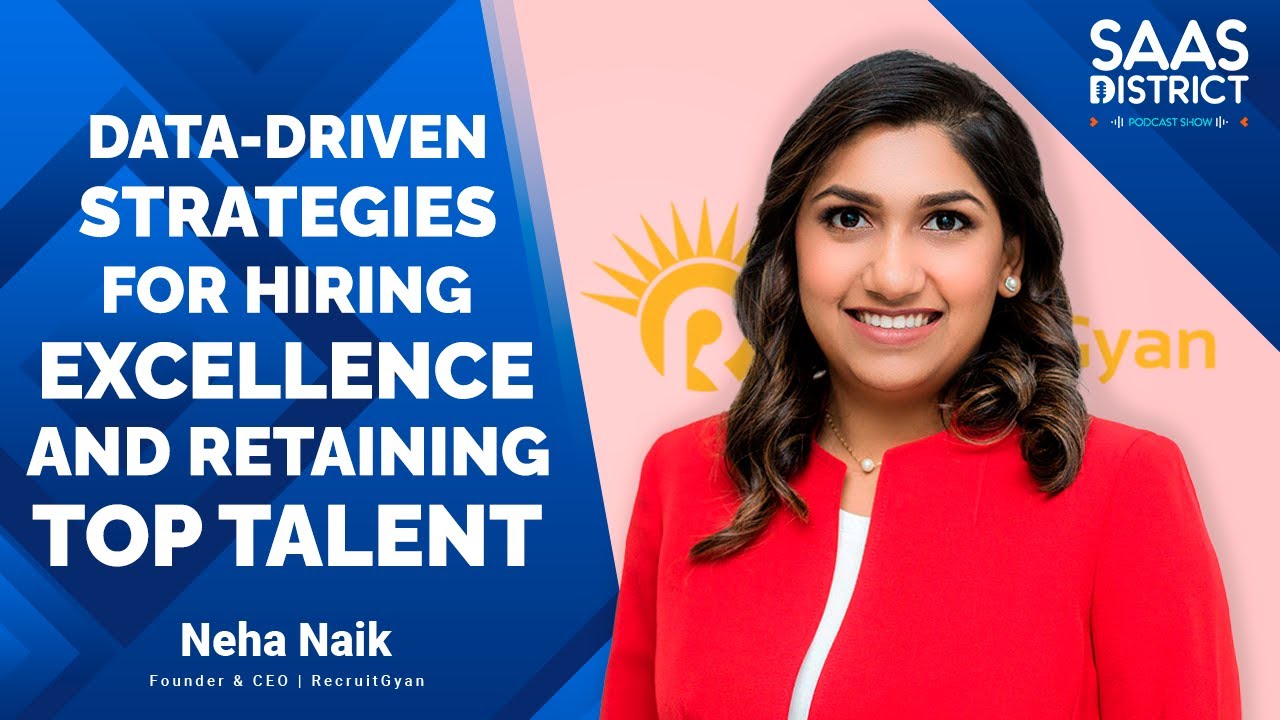
Neha Naik, founder of RecruitGyan, breaks down hiring and retention through data: track interview count per hire, fill rate, time-to-onboard, and 60-90-day performance. She trains managers on bias-free behavioral interviews and frames retention as cost-avoidance through transparent communication, flexible work, and quarterly burnout surveys.
Chapters
Hello, hello everyone. This is your host Akhil Jabbar and welcome back to another episode of SaaS District. In today's episode, we'll be talking about data-driven strategies for hiring excellence and retaining top talent. Today we have our guest Neha Nayak joining us. Neha is the founder and CEO of RecruitGyan, a human resources company specializing in recruitment consulting, business staffing, and interview preparation with a focus on technology startups. Neha accelerates company growth by attracting top talents and motivating investors. She's an official member of the Forbes Business Council and has founded multiple ventures including RG, The Sleepy Club, Creative Arc, and Triad Partners. So welcome, Neha. Super excited to have you on the SaaS District show today.
Thank you for having me. Super excited to be here. And thank you to all the listeners who are listening in. Excited to talk.
Yeah, impressive career yourself, but you're an expert in career planning, recruitment. You're also a certified sleep consultant. And so I'm curious to know a little bit more about that. How do you, how do you work? Maybe, maybe start with that. Something simple, you know, so founders listening in, they need help to, you know, sleep is ultimately super important, right, to operate at a high level. What are some tips there?
Yeah, so I would say that the reason I started that business is being a founder of a startup myself, a couple years ago, I had kids. So I have 2 kids, I have a 6-year-old and a 3-year-old, and routine and discipline and healthy sleep is a priority for our family because otherwise it's really hard to get things done, as people who are listening in with kids probably know, right? And so for me, it was really important that we instill healthy sleep hygiene from the get-go with our kids and really allow them to experience self-soothing and just kind of discipline in a way where, hey, you know what, it's bedtime for a reason. is when your melatonin kicks in. So I basically work with other families who are struggling to get their kids on healthy routine, healthy hygiene, so that the whole house can sleep better.
Nice. Love it. That's, that's, that's probably making more difference than any other venture out there, right?
Yeah. Yep. A huge difference.
Yeah. Cool. Yeah. So let's start with kind of best hiring strategies. And so we have growing teams here. A lot of founders are always looking to hire talent to improve their their process to make sure that their funnel gets better in terms of hiring people. So how do you use data to tell a story and then from there put in place best hiring strategies for your growing team?
Yes, I think, you know, one of the things is data tells a story and it's a very objective story. Nobody can argue with data, right? And so in our business and when we work with clients, data is the language of our business. It's how we do business. So Everything with us starts at data. That's the bare minimum foundation. A lot of companies or even recruiting agencies, data is not something that's important to them, but it's important to us and my team because when we work with our clients, we can use data analytics and really identify any trends in the recruitment funnel or any bottlenecks really, and understand the characteristics of successful hires, right? And so again, using data from market research, from internal success metrics, we really align this with our client's hiring strategy that are— that is directly relevant to their business objectives. So when we look at like doing, you know, some type of an org chart, for example, right, we wanna make sure that we're making these decisions strategically. And the way to do that is to really use data as a backbone, right? And then not just, you know, building an org chart, but then how are you attracting the right candidates, right? How is our offer stacking up against the market, against, you know, some of the other competitors, right? And so basically allowing us to use this data-driven approach, we're really able to make informed decisions and guide our clients in a very objective way where things make sense because we can prove to them that when you do things a certain way using data, then you're going to have high retention and you're gonna get the right people on your team, which ultimately is going to lead to just really good product productivity output.
But what would you say are some of the top data, the metrics that, you know, when you're talking to your clients and you're trying to compare and show and highlight against the industry, for example, obviously, you know, salary might be one of the biggest ones. What are some other maybe top 3 or 5 metrics that really make a difference in being able to go out and present to their prospective employees?
Yeah, I think the other metrics are like how many interviews they have to get up to the hire. What types of interviews are they looking at? Are they looking quantitative, qualitative type of interviews? What is their fill rate, right? So if the position's open in January, how many months or weeks is it taking them to fill the position? Now, once they fill the position, how quickly are they able to get the candidate onboarded and ready to go, right? And then how is the candidate doing, you know, 60 to 90 days after their hire. So we look at all these, and then also the biggest thing is like retention and turnover, right? So how did the interview process relate directly to the candidate staying in the company or leaving? Because I do really think that, you know, if you use data the right way, the strategic way, then you can map out your interview process, but you can also make, you know, really, really good educated guesses into what's going to happen with that, you know, employee when they stick around, right? So interviewing, the first impression is really key to us, but these are just some of the metrics that we Cool.
And then, you know, so you also work with hiring managers, right, and helping them set up best interview practices. How do you go about training them so that they can then also bring in and hire, which we all look for, is, you know, high-caliber talent to our team, right, especially at the beginning?
Yeah, and I wanna start off by saying that, you know, a lot of times hiring managers, you know, haven't really interviewed, and it's not a bad thing. It's just that they were working on the actual priorities, right, especially at startups. And so, When I work with hiring managers and it's their turn to interview, it's almost like, I don't know what to do. I don't know what to ask. I don't know really how this is going to be a bigger part of the puzzle, right? And so when we work with hiring managers and when we train them, we really teach them how to set clear expectations with the candidates and with their team members. We teach them how to craft or help craft compelling job descriptions and how to conduct effective interviews, right? And so basically when you look at conducting effective interviews, you want to remove any and all bias, right? We want to make sure you're asking behavioral questions. So yes, skills and experiences are great, but especially if you're a startup, behavioral questions are important because we want someone who's a team player, someone who's going to not need micromanaging, and someone who can literally take ownership of things and run with it, right? And then also understanding the importance of cultural add to the team because that's also really critical. And a diverse team is a healthy team. A diverse team experiences less turnover, right? They have higher retention. And then also we work with them in creating like test projects or real-life scenarios where, you know, we do some type of a paid assessment with the candidate and work with hiring managers to kind of get that out there because it's a good way for hiring managers and candidates to work with each other before they officially work with each other, right? And so doing all the things, we ensure that we are then basically allowing for hiring managers to only attract the high caliber or the A talent, right? The A+ players that are out there that are actually going to be interested and they're going to give to the interview process and Really make themselves a part of the team instead of like just a chore that they have to do.
Right. Yeah, they actually want to be there. Makes sense. So, you know, one part is, you know, attracting them, bringing you on. You have, you have the interview process nailed down, you have the hiring process nailed down. Now you were able to bring on A talent, but another important piece of that is being able to actually retain them because, you know, that's all just part of the beginning. But when the work actually starts, then it's a different thing and you're embedded in the team. So One, why does retention matter? And then more importantly, what are things that you've seen that founders can do, especially in the tech startup space, that can do to retain the top talent, especially in today's market?
Yep. And I think retention is a huge, huge deal for me because I know that since COVID we saw a lot of companies really take a hit with retention, right? Like their turnover skyrocketed. A lot of it because, you know, people had to stay home with their kids. But a lot of it was there were other companies now You know, putting together really competitive offers and remote benefits and all those things. So that I remember going through that with my clients specifically back right around when COVID started. So one of the things I want to say, you know, with retention is when you, you know, think about retention, you want to think about how critical it is when you want to retain a high-value member of your team because they can really have a significant impact on the team morale, the productivity, and also the business growth, right? And it's very expensive to hire and onboard and train a new person and then expect them to meet the same metrics or same productivity as somebody who's been, been there with you. So you want to think about like, kind of like a customer acquisition cost, right? It's always cheaper to sell to customers that you've sold to than to acquire new customers. And it, it's very similar in recruitment. Now, how can founders really help, right? This is one of my favorite things to talk about. So obviously you want to foster a culture of, you know, growth and inclusivity and equity, right? You want to be transparent. Transparency is huge because when you are transparent with your team members, there's kind of a two-way street. There's this arm of trust that goes out And then, you know, people stay with you and they'll tell you exactly what's going on. Like, hey, I got this offer. Like, you know, how can we, how can you help match that, right? How can we work together on this instead of just people dropping and leaving, right? Also, then we wanna look at work flexibility, right? So there's a, you know, there's gonna be that constant debate on like hybrid versus in-person versus fully remote, but offering some type of flexibility where it's a healthy mix of each is going to go a long way for, you know, companies as well. And then of course supporting learning and development. Right? So knowing that your employees are also people and they want to learn and they want to grow with the team and really encouraging that and, you know, allowing for that, you know, giving some type of an incentive or bonus for them to pursue whatever it is that they want to pursue. And then any type of achievements, right? Celebrating achievements, celebrating wins, and also celebrating failures, right? Because once you are cumulatively failing and you're cumulatively succeeding, then people are going to know that you respect them regardless of where they are, right? You're not just going to drop them because they had, you know, clients that go or whatever. So really kind of celebrating whatever is happening within your team, within your, you know, company culture is really going to allow for a higher retention.
So one important point that you mentioned, which is around company culture, and that's something I think, you know, maybe, you know, a lot of founders, some founders think about this early on when they're initially building their teams, but a lot of times they're so focused on the product that, you know, they forget about, you know, what the importance of company culture is. And then, you know, down the line, I think maybe a lot of listeners can relate to this, is they're trying to figure out how to shape now their company culture of what, you know, either they'll talk to other founders, they'll see what works, and then maybe try to get some ideas. But how do you, you know, envision what does an ideal company culture look like? How do you shape it? And then, you know, because once you have that, I'm assuming your recruiting costs drop, you increase the, you know, quality of caliber of talent that you get in, but also referrals as well, right? To help you. with building your organization? What do you suggest there?
Yes, and I think, you know, I like what you said that when, you know, companies are first starting out, like, you know, they really care, like founders really care about culture, and then you start to kind of see that fall apart, right, as the company scales, because of course not everything can be scalable. But a couple of things that they can do is first of all, make sure that, you know, your company's mission, vision, and values are out there, like people know exactly what you stand for. So when you build anything, whether it's interview process, whether it's your onboarding process, whether it's your performance performance reviews, whatever it is you're building, have to be in line directly with the company process and the company mission, vision, and values. A lot of people actually forget that, right? A lot of founders will have these really pretty, beautifully written mission, vision, values, and then what's happening inside is a total contradiction of what they believe in. So you want to make sure first and foremost that everything is in alignment because people are going to start seeing through the smoke and they're going to start understanding that this is really not what I signed up for, right? The other things are, which I touched on in the earlier question, is this behavioral transparency, right? We no longer have the CEO on the 50th floor locked up in a corner, right? Like now founders are very much out there, they're on Slack channels, and they really want to be a part of the team, right? So encouraging flat hierarchy, encouraging people to reach out to them if they have any questions, if they have any doubts. And, you know, that allows for just increased collaboration, increased transparency, and Don't we all love being at a place where we feel included and we feel like people care about our opinions? Like, yeah, we want to feel like there's a place for us as human beings. We want to feel safe and we want to feel needed, right? And so that's— those are the psychological triggers. So as founders, you want to make sure that the people that work with you, work for you, they feel safe. They feel like they can share their thoughts, their processes, their opinions without feeling like, you know, something's going to come at them, basically. And then really, I always say, like, you know, Surveys, anonymous surveys every quarter are amazing because then you're really going to understand what's going on with people and people aren't going to be afraid to speak up. So getting into this habit of anonymous surveys every quarter and asking people for their opinions, right? Asking them honestly, what can you do as a founder or as leadership to help them feel better here? And when you go and ask those questions and when you take these initiatives like anonymous surveys and all hands on deck meetings, when you're transparent like, hey, March was a great month, April sucked, here's why it sucked, here's what we're going to do to make it better. When you have these honest conversations, people don't feel like they need to beat around the bush to ask questions. They don't feel like you're hiding something from them because you're coming out on top. And when you do that, you've now built a culture of inclusion and equity because you're actually allowing people to voice their opinions and really allowing them to feel confident in what it is that they're doing. And lastly, but most importantly, making them feel included and part of the company mission and vision.
Just a follow-up question on the one about anonymous surveys. So that's an interesting you know, tool to use. So you suggested sending these out every, you know, quarter or so. So one question is, you know, as a founder, what can we do to improve? Or, you know, how can, you know, I improve as a founder as well? What are some maybe one or two other questions that you can share that are really important there that you want to include in those?
Yeah, I would just say, you know, one of the questions that I really like is on a scale of 1 to 10, how burnt out do you feel right now? Right. And so So you can— I like to call this burnout meter. And this is especially prevalent in startups, right? Because startups, the teams are smaller, right? Because cash is king. So you don't want to spend a lot on building the teams. And so a lot of times people are wearing multiple hats, right? And so really kind of honing in on like, where do you feel like, are you burning out? Where are you on a scale of 1 to 10? I would say that's like the one of the questions that I have all of my founders ask, because then you can really tell like, how is, how is your company feeling inside, right? Are they feeling overwhelmed?
Do you need to hire more?
Do you need to scale back on deadlines? Because burnout is the number one reason why people leave companies, right? That's when you get turnovers. When people feel burnout, they feel exhausted, they feel like no matter what they do, it's never enough, and their list keeps getting longer and longer and longer every single day. So you want to definitely ask for, you know, the burnout. And the second question is, how would you rate the company culture here, and would you recommend it to any of your peers? This is another question that I really like because, again, it really honestly tells you or the founders, like, hey, how are other people rating the culture here, right? And so if you're getting a lot of, like, 1s and 2s and 3s, you know, out of 10, that's probably not a good sign, right? And you want people to bring in the referrals because when you get more referrals, ultimately, that's what's going to cut down your recruitment cost. It's also what's going to cut down your retention because the person that now has brought someone over is not going to leave right away, right? Because now they've, you know, kind of invested in this other person joining the team that they've recommended. And then the third thing is just kind of asking them, you know, what they like to do, like, what are some changes they would like to bring to the organization that they don't see yet, right? So whatever that may be, they want more all hands on deck meetings, they want a company offsite, they wanna have like, you know, pizza day Friday, I don't know, whatever that looks like. What are some changes that they would want to implement? Because that makes the employee feel like you're actually asking them for what they want changed, and then it makes them feel like they're listening to what I have to say, right? And so typically then once you get, and there's obviously, I like to ask 8 to 10 questions in a survey.
Okay.
Depending on the team's goals, but then you wanna get those those results together and you want to have a meeting and talk through some of the key themes that popped up, right? So for example, one of my clients, one of the themes that popped up was one of the managers was a micromanager. And because of the surveys, we were able to point like that team had the most turnover because this person was a micromanager and people were kind of getting tired of that, right? And when we did the anonymous surveys, it was like, okay, we just had to have a chat with, or the leadership had to have a chat with this manager. And then everything kind of, you know, kind of started coming back to normal because they understood what was wrong. So it's a lot of like using again data, to form decisions. And in this case, we're gonna use, you know, survey data and really form decisions on hiring teams and management and also making sure that the people feel, you know, included and, and respected.
Yeah, those are, those are great questions. I, I love them. And I haven't thought about it, but yeah, the burnout one I think is super important that maybe people are maybe more reluctant or, or fearful of, of, of maybe expressing. Maybe some are not, but, you know, when you kind of put it out there and rate it from 1 to 10, it makes it a little bit easier to, to put yourself in and bring it up. So cool. I wanna talk about kind of the last topic here, which is, you know, a hot topic in today's— here in May 2023, we're talking about AI. So how do you see, you know, the key role of using AI, you know, in May 2023 for recruiting, retaining top talent, or just using it in general for, you know, HR management?
Yep. And I'm one of those people where I think that we can work with AI, right? I know a lot of people are like worried they're gonna lose their job. jobs and they're gonna— they're kind of having panic attacks, right? But the thing is, I feel like anytime our civilization goes to the next step, you know, we have to kind of work together with what comes to us, right? We cannot get into this mindset of like, oh my gosh, I'm gonna lose my job and this is gonna be the worst thing ever. So for me personally, I feel like AI is there to really help the recruitment process and really streamline and automate a lot of recruiting, right? So if you think of like sourcing candidates, there's a lot of great AI finding candidates, that you have screening resumes, they can do a quick review of the, you know, resumes, scheduling interviews. You know, you can tell them a calendar connection and an API, and then they can go ahead and schedule those. And even predicting candidate success, right? So based on the parameters and based on the data from the types of candidates this company has hired, is this candidate that we're interviewing, what is the probability of their success, right? And so what that allows for recruiters and, you know, hiring managers to do is really free up time to do more interviews, right? Because the Yeah. But I feel like you still need a human to talk to people about what the company mission, the vision, the values are. You want a person to, you know, really deliver on that. So we can then really, you know, focus on high-value tasks and decision-making and high-value communication, right, where we can actually tell the candidate what it is that they need to know, what's going to make their role successful, answer any questions in real time so that the candidate feels like their questions are being answered, right? So basically, I feel like it's, it's kind of, you know, a good working relationship, right? So AI can also analyze data and identify patterns and predict employee turnover, right? And so when you do that, then as recruiters and hiring managers, we can make proactive decisions, right, and address potential issues before it gets too severe, before we have a ton of turnover, right? AI can also personalize learning and development plans for each employee depending on what it is that they wanna do. And so again, recruiters' and hiring managers' roles are going to change slightly, but it's going to be for the betterment of the candidates. It's going to be for the betterment of retention, and it's going to allow for us to work together and ensure that ultimately, you know, when we hire people, we don't lose them. And when we do hire them, we're actually, you know, taking their success into account, not just as an employee, but as a human being, right? So that we can help them professionally, personally, all areas of life. And AI can really help us do that. Whereas before, we probably wouldn't have the manpower to do it ourselves.
Yeah, it's interesting. I think I always get fuzzy, you know, because we're talking about human beings here and the AI is how it's been. As much as we think it's great, I think it was Amazon, right? They built this tool years ago. They spent hundreds of millions of dollars of it to hire top talent and be able to do better, make better decision-making. But in the end, I think that the net, you know, what the result was, they kept hiring, you know, men or something like that. And then it's like just the AI just got trained to learn that, like, you know, because there's more men who apply for this position, we end up hiring more. It ended up like, you know, choosing them. So, and then they end up killing that project, right? So it was hundreds of millions of dollars wasted. And then so there's so many examples like that, like you mentioned. Okay, maybe people— there's like some signals of people wanting to, you know, are about to turn over, right? So what is this like? They're just sending less emails or, you know, like what are they doing? They're just like detached from their work and, you know, maybe taking less calls. But I mean, there's 100 things that could have— could go wrong there. That could be something else, right? So yeah, I'm kind of, kind of interested to see where it goes.
I think it's really about finding a tool that works well with the organization, right? There's a lot of AI tools and we're going to see a lot more, no doubt. But it's really about, you know, keeping the human-centric approach, right? So like the human beings are going to make the decisions, the final decisions. The AI is going to help with analytics, with data, with some of the grunt work, so to speak. But at the end of the day, you know, we can't throw everything over to AI, right? It's a tool to use in addition with what, you know, the recruiters and hiring managers are doing.
Yeah. Do you have any special or favorite tools that you guys use in the recruiting world or you would recommend to folks? The founders?
So, you know, it's interesting. A lot of the, the applicant tracking systems now have an AI component. So for example, we use Notion Dashboard as one of our, you know, applicant tracking systems that we have our clients kind of use as well. We track the candidate progress and all that stuff. And, and it's really cool because it will remind you like, you know, hey, you need to follow up with Nicole and reject her for this role. You had a call with her on Thursday, you know, so you can kind of program it to send you reminders. You can program it to schedule emails. You can program it to even create like dashboards. For your team. So when I jump on a call with the hiring manager, I can say, hey, look, let me share my screen. Let me share with you what Notion AI has said about this role. It's been open for 90 days. These are the stages where we're like really losing candidates. Like, how can we make that better? So I think that has been a tool that's been really helpful. And then, you know, of course, like ChatGPT is great for sending like catchy sales emails and stuff like that. Now, I kind of am a little, you know, in between there only because Because I always like to look at the email and correct it and make it sound a little bit more human-y, if that makes sense, instead of just copying and pasting what ChatGPT says. I know a lot of people are doing that with their social media content, with emails, but for me, I do like to throw in the human-centric approach. But at least ChatGPT is doing some of the research for me, right? And then I can go in and say, you know what, that number is actually not right. I'm going to change that. But just using it and things like that. But showing data, I think That's huge. Like, for me, that's, you know, the biggest thing is like putting together data with roles and then saying like, here's what we recommend for this particular position has been instrumental.
Yeah, that makes sense. Notion AI is fantastic. Cool. Yeah, this has been great. I appreciate you sharing all this. I think we're going to go over to the next, the final part of the interview, which we go into the kind of rapid-fire questions. Ready for that?
Let's do this.
Let's do it.
All right.
First question, Neha, what's one activity you enjoy outside of work that gets you into flow state?
I would say I love to jog and run and then spending time with my kids. I would say the 2 things that always make me feel better no matter what's going on in my life. If I get my heart rate pumping and get some cuddles and kisses with my kids, I feel like I'm on top of the world again.
Nice. Imagine. And then one day you're going to be going on jogs with them and then it's 2 in one.
Yeah.
What's one piece of advice you wish you had known? And if you can go back, you would tell your 20 or 25-year-old self?
Yeah, I would say the biggest thing is that I would tell myself is don't be afraid to make mistakes or fail, because ultimately it's the failures and your capacity to make mistakes that's going to stretch your comfort zone and you're going to learn something new. And so I know as society, like, we're told like failing is bad and blah, blah, blah, blah, blah. And but I think really going back, just knowing that as an entrepreneur, like failing and making mistakes are part of your growth curve. It's not— it doesn't mean that you're done. It means that you're actually one step closer to success. And so that's something that I wish I told my younger self.
Nice. What are some of the biggest challenges you're currently facing in order to continue to grow RecruitGyan? Meaning, what keeps you up at night these days other than your children?
I would say the biggest thing is just doing more sales calls and getting in front of more people, right? So we have some fantastic funnels that are built, And, you know, we just— I really love to get on sales calls and pitches because it doesn't scare me. So I want to do more of that because that's something I really enjoy. And up to now, a lot of our businesses come in through referrals or, you know, people reaching out on LinkedIn. And so now I'm ready to kind of flip that and, you know, go even a level higher and start doing some pitching myself.
Nice. And what kind of companies are you looking for? Is there some special companies or special roles that you guys specialize in that maybe you can Yeah, so we, we have a couple of different packages.
I would say the biggest thing is our recruiting is, you know, for startups, ideally tech startups, but we also are working with a shapewear company right now. We're working with a construction company. So I think really just technical roles within these startups I think is great. We also have an employee transition package, which is really great if, you know, your leadership has had to lay people off. We are going to work alongside your team members that were laid off and help them get ready for their next job search.
Mm-hmm.
So I would say those are the 2 primary things that I, I wanna, you know, work with you guys on.
Cool. Who or what are some of the best 3 resources? It can be books, people or mentors, or people you follow in the space who you say have been most instrumental to your success over these last few years.
Yeah, I would say, like, I love that book. All of mine are books. So Never Split the Difference by Chris Voss, because it's really good about negotiating and it's really good about not just negotiating like with clients and teams, but also like at home, like with kids. Right. Because you know if you have kids, there's always some type of a negotiation going on. The second was Atomic Habits by James Clear. I really like this book because he talks about you know incremental shifts, right? And so I really like that because a lot of times you know when people you know go on diets or you know start being healthy, they just like go like really really crazy about it, and then they are not able to accomplish their goals. So he talks about you know making those incremental changes, and I love that outlook, right? And so I I really like that. And then my final one is A Happy Pocketful of Money by Deva Chakraborty. I'm really big into manifestation and all that. And so the way he breaks it down, like the concept of time and how do you actually measure success and self-worth, it's really good if you are struggling with some old programming, right? Because I was a daughter of an immigrant, so my money programming was very different. My money programming is very different than what my dad had taught me. So I had to kind of clear that out so I could go to my next level of achievement.
What was that last book that you mentioned?
Happy Pocketful of Money by David Jokani. Happy Pocket.
I've never heard of that one. Another similar book that you know helps with the the the money programming that I found is called Die with Zero: Getting All You Can from Your Money and Your Life. That one's a good one as well.
So, but die with zero. Okay. Okay. I'll do that.
So we talked about you know the programming around what does success mean? So that's our next question. What does success mean to you today? Whether that's personally, business, financially, life. Is there's no right answer.
Yeah. So I would say success to me is just being able to have, you know, my life, my working life, and just really doing things that I truly love, right? Where it doesn't feel like work. It feels like, wow, I'm like actually changing the world. And then again, having a stress-free life, right? Like not having to worry about like mortgage or my kids' education and stuff like that. Because then you kind of, you know, you kind of attain this freedom, right? Financially, but not adding any personal stress to that, right? And so I would say those are kind of my two definitions of success.
Nice.
Awesome.
This has been great, Neha. I appreciate you sharing those. Last question. So I mean, where can founders, you know, anyone listening in get in touch with you, learn more about you, and also learn more about your company?
Yeah. So you can go to my website, which is recruitgyan.com. So recruitgyan.com. And then you can also email me at neha.naik@gmail.com. And then of course, I'm on LinkedIn as well. So you can find me on LinkedIn as well, and we can connect.
Perfect. Awesome. We'll put all those into our show notes. So if you guys want to connect, make sure to say hi and reach out to Neha. So thank you. Thank you once again for joining SAS District today. Appreciate it.
Thanks, Akeel. Happy to be here.
Thank you.
Cheers.
Thank you all for watching this episode and joining SAS District today. Don't forget to like, subscribe, and hit the bell for future episodes where we interview top leaders in the SaaS industry. If you're a SaaS company looking to grow and unlock the true value of your business, get in touch with us at Horizon Capital and myself or one of our consultants will provide a free assessment to help you get there and hit your goals. If you have any feedback or suggestions for this podcast, please comment down below and help us improve our content. our content for you all. Thanks again, and see you on the next one.
Bye.
More from Akeel



Get a mentor as soon as possible — and make sure it’s a mentor in your space.




Keith Gillispie: Why Most New Investors Fail & How to Avoid the Common Traps #250 | SaaS District



