Rossel Sabourin: How to Scale your Startup from a Small Team To Over 2500 Employees
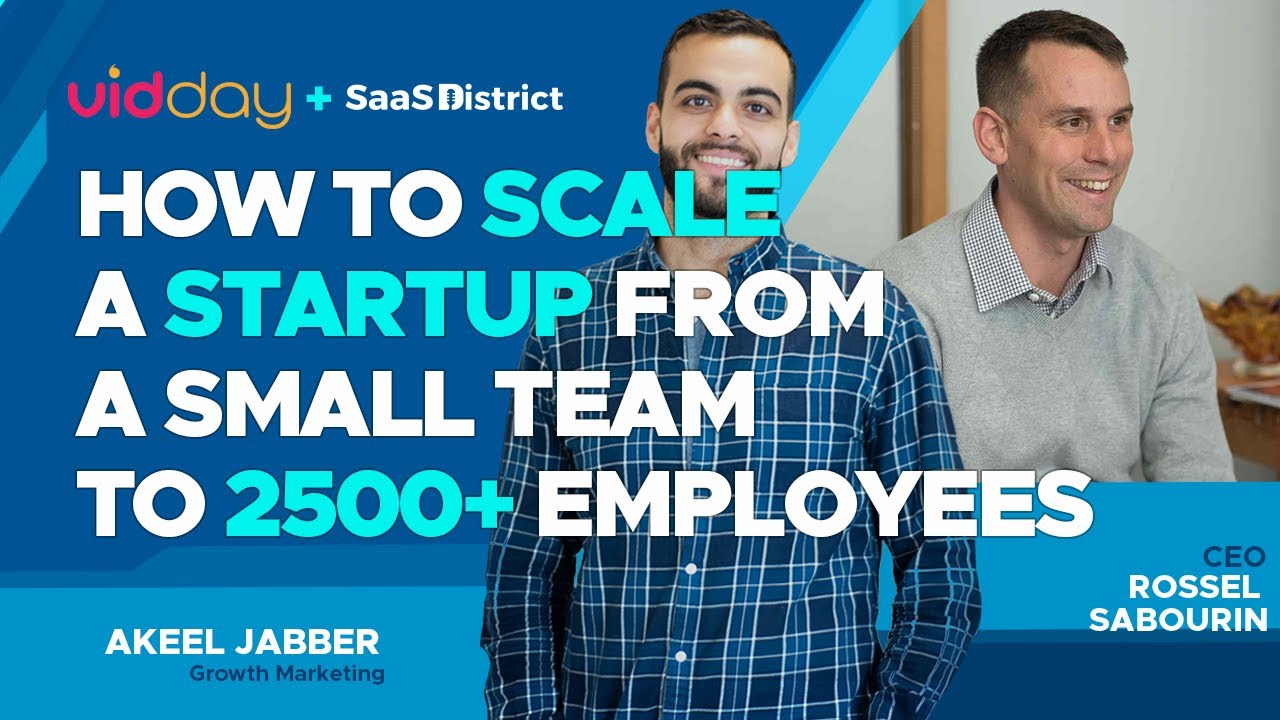
In this SaaS District interview, Rossel (Russ) Sabourin shares his journey from a rural upbringing to co‑founding and scaling the Canadian food‑delivery platform SkipTheDishes, growing it from about 25 employees to roughly 2,500 before its acquisition by Just Eat for over $110 million. He outlines the core tactics that drove that growth: a fail‑fast mindset, rapid MVP releases, empowering a passionate team, and a relentless focus on solving operational inefficiencies rather than out‑spending deep‑pocketed rivals like Uber Eats and DoorDash. Sabourin discusses the importance of first‑mover advantage, high‑frequency code deployments (up to three releases per day), and data‑driven iteration. After the exit, he took a sabbatical road‑trip, then joined Vidday, a crowdsourced video‑gift SaaS that lets users create event‑based video montages for birthdays, retirements, and other occasions. He explains Vidday’s product‑market fit, its length‑based pricing model, bootstrapped financing, reliance on AWS Activate credits and government grants, and the in‑house design of themes and editing tools. The conversation also covers current growth challenges (funnel leakage, platform stickiness, technical debt vs. feature work), social‑impact initiatives (tree‑planting per video, free get‑well videos, Nominate‑a‑Hero program), and personal entrepreneurial advice—treating the journey as a marathon, prioritising health, and learning from mentors and books like The Hard Thing About Hard Things. The interview closes with Sabourin’s definition of success as positive impact on customers, team, and community, and where to find Vidday online.
Chapters
This episode is sponsored by Horizon Capital, an M&A and micro private equity firm that acquires and grows SaaS companies. Horizon Capital only works with SaaS companies generating between $500K and $5 million in annual recurring revenue, where they help them unlock the true value of their business and scale to the next level. Whether you're ready to move on to your next startup or want to work with the right growth partner, Horizon's team will work with you to find the best structure possible. From M&A strategy to capital investments, SaaS is all they do. Simple as that. If you're a SaaS founder with less than $5 million in annual recurring revenue and are looking to sell your business, visit horizoncapital.com today and get a free valuation. If you'd like to sponsor the SaaS District podcast or recommend any guests that you think would be valuable to be on the show, visit horizoncapital.com/saas-podcast today. Thanks again, folks. Hello, hello everyone. This is your host, Akeel Jabbar, and welcome back to another episode of SaaS District. In today's episode, we'll be talking about how our guest scaled a startup, SkipTheDishes, from a small team to over 2,500 employees. Today we have our guest, Russell Seborin, joining us. Ross is now the co-founder and CEO of a gift, a video gift startup, Vidday. It's a group gift video solution where they bring in over a million video uploads from over 150 countries into their platform. Ross formerly helped scale SkipTheDishes, which if you guys don't know, is a seamless online food delivery and pickup app from a small startup team to that over 2,500 employees, which we'll talk about today. So welcome, Russell. Super excited to have you on SaaS District show today.
Thank you, Akeel. It's a pleasure to be on the show today.
Awesome. So, uh, for those in our background, we always like to start off, what's your personal background? What is your past experience and ventures, including being part of that SkipTheDishes, uh, up until I think it was acquired by Just Eat, by I think for over $110 million? Is that correct?
Yeah, that's right. And, um, I've had a pretty varied background. I grew up in a small town. So when I was young, working on the farm at the family business, I spent some time managing a lodge that was off the grid. So we had our own power system, our own water system, satellite telephone, satellite internet. And like you mentioned, SkipTheDishes, that was a wild ride. When I joined in 2014, we had around 25 employees. And when I exited last year, like I said, we had around 2,500. Certainly wore a lot of hats there, but spent most of my time building out and leading the operations teams. And when I exited last summer, I was heading the business intelligence teams as well. So that was kind of a fun new foray for me, and it's been something that I've become quite passionate about.
Nice. So, you know, from farm to SkipTheDishes, what was that kind of that transition? You know, what was it that kind of attracted you to that role at the time when there were, you know, very early on? Were you just like, you know, drawn towards the startup scene and you saw the potential? Or, you know, where were you in that, in your, in your career at the time that made that transition there?
Yeah, so there's, they're pretty different industries, of course, but I think what's been consistent throughout that process is just, I've got a passion for learning. I like to take things apart, figure out how they work, and, and put them back together. So I think that's kind of what drew me to the tech startup scene is that you could move at an incredible velocity. Just lots of things that were exciting to me. I've always enjoyed technology, and it's brought me here today.
Cool, cool. So you've been there, I think, for just over 4 years. Can you share with our audience maybe some of the strategies that you implemented or that you've seen while you worked there? that resulted in that growth and expansion of the startup?
Sure, I can certainly share a lot of the mistakes that we made.
That's important as well.
But more seriously, I'd say that's actually something that's really important to consider is you have to fail fast. So you're going to make a lot of mistakes along the way. You never have perfect information. You're going to be making a lot of a lot of guesses. Don't be afraid to pivot and just continue to iterate. And the other thing as well, I'd say it's really important to get things launched into your production environment as MVPs. So that's minimum viable products. So just get it in front of your customers and you can iteratively improve it as you start to get feedback from your customers. The other thing I'd say is surround yourself with a team that's passionate and empower them to help move the needle. Very quickly, a startup grows beyond what you can achieve as an individual, and it's more focused on what can we collectively achieve as a team. I like to say dream work makes the team work.
Nice.
Teamwork makes the dream work.
Teamwork makes the dream work. That's true. That's a good point. So from that growth, you said you made a lot of iterative changes, fail fast. And how fast were you making those changes? Like when you're releasing these features out to your users and you're trying to make a decision whether you should implement it or not, is this like a weekly thing? Are you doing this monthly? How are you making these decisions here?
Yes, that's certainly going to change as the business itself changes. And I'd say when it comes to tech startups, it's not uncommon for new code to be hitting the production environment multiple times per week, especially in the early days. Here at Vidday, there's days where we're doing up to 3 releases per day into our production environment. So yeah, code is changing all the time. We're taking that data, we're measuring the results, we're getting feedback from customers, and then we're fine-tuning, we're making adjustments. And again, you fail fast. You're going to make a lot of mistakes. Just create that safe space with your team where we can try things that are outside the box. We can try novel ideas. Most of them won't work. When you find something that sticks, then you focus on that, you make it better, and you win the winners.
Nice. Can you share any constraints or strategies? We have a lot of startups in our audience who are coming in and they're facing giants in the space, right? So you guys were competing with, you know, guys like Uber Eats and, you know, DoorDash. How did you guys manage that and stay competitive? Because I like, for example, I know like Just Eat at some point tried to enter the Canadian market, and I think they failed. So what would you say was kind of your advantage that kept you guys growing?
Yeah, it was an interesting story with Just Eat as they ultimately acquired us. They did end up launching into the Canadian market. And I suppose the fact that you don't know that they were there is a testament to how we were able to kind of fend off them as a competitor. But certainly Uber Eats and DoorDash, very deep pockets, and it really— it ended up being a pretty big opportunity for us, as at that time we were largely bootstrapped. And we didn't have the resources or the runway to kind of throw money at the problem like some of our competitors were doing. We really had to look at the problems, the issues that we faced in food delivery, bring them down to the actual root of the issue, and actually solve the problems. So we couldn't really ignore them because we couldn't afford to. We actually had to solve the efficiency problems. We had to solve the things that— that were plaguing the industry. And that kind of gave us an early edge in that we put a lot of focus in our tech and in our stack to really make delivery work, especially in the mid-markets or the tertiary markets. And that really allowed us to thrive. And as the economy and things changed, maybe it was a little bit harder to come by capital. We saw a lot of other competitors that just simply couldn't make a go of it because the underlying business model just relied on solving those problems with money. So I'd say, as with anything else, whenever you're faced with a challenge, you look at how it can be an opportunity and how you can use it to your advantage.
Would you say timing was a major factor, like the time when you guys came in and launched in Canada, or if you came in a little later where Uber Eats had more market share, would have been a different story?
Yeah, first mover advantage always gives you an edge. It'll be easier to make the land grabs, to be the first service that restaurants partner with, get more loyalty from. We had a 3-sided marketplace, that's our couriers, restaurants, and customers. So certainly it was an instrumental part of our success.
Nice. So, you know, 2016, they were acquired by Just Eat. And then, you know, what was your reason for stepping away, you know, while you're around through that entire exit process, and then launching, I think, Vidday in 2019? So, 3 years after the exit, which is your new startup now.
So, SkipTheDishes, it was an amazing part of my life. I learned so much, made a lot of great friendships, professional relationships. But personally, I thrive in chaotic environments. I like things to change frequently. I like to get involved, get my hands dirty, and it was just time for me to pass on the torch. We had a really great team and they were better suited to kind of take SkipTheDishes to the next level.
Mm-hmm.
So after I exited, In 2019, I actually bought a truck and a camper, and my family and I took a road trip for a few months. So we traveled across Canada, we stayed in national parks, we hiked, we biked, we had a great adventure. When we returned home, we had covered, I think, 15,000 kilometers, and that was just a really great experience, kind of a way to unplug, recharge the batteries a little bit. But once I got back, I quickly realized I like challenges, I like to stay busy, and wanted to jump into something else. And so when I joined Vidday, it was already launched. The timing ended up working really great as it was just kind of blossoming from a passion project into a fully fledged business.
Mm-hmm.
And so during my first 3 months at Vidday, we actually grew 100x in volume. So it was a fun ride to jump into and another rocket ship.
Cool, cool. So you guys are growing pretty quickly now. So for those, I mean, Vidday, can you explain a little bit what do you guys do and what is the solution you're bringing to the market here?
Sure. So the vision was pioneered by Denis Divin. That was the original founder. His goal was to make people smile and he's all about the human connection. So the platform, it's at vidday.com. You go onto our website, whether you have a retirement party, a birthday, an anniversary, or at this time of the year want to make a holiday greeting. You create an event and it's basically crowdsourced contributions that you can make a video montage for somebody. So I actually just made one for my wife for her birthday. I sent out the link to our friends and family, and we got submissions from all around the world. People that we had traveled with, families and coworkers, they all made nice videos saying what they loved about Shannon— that's my wife— and all the great things she's done. We basically take all those contributions, make it into one video montage, and then give that as a gift. to the recipient.
Nice. Yeah, I mean, I've, uh, I think I've recently created a video specifically like that where it was compiled by what— there's usually one main organizer for a mutual friend, and then they, they reach out to everybody and everybody has to record it, they compile it, and then they— I assume they use some kind of like video editing tool to put it all together. Um, yeah, you know, from your perspective, like, the product is so specific with the product and offering which you guys are Putting out there. How do you feel like— how big do you feel this market opportunity is? You feel like there is a big space to be, you know, marketed to here?
Yeah, that's a great question. And again, um, with a startup and when you're trying to solve an issue, you really have to, uh, identify what your core competency is, and you've got to do it better than anyone else. So, uh, part of the beauty about, uh, Vidday is how easy it is for the creator. So it's a website, not an app, nothing that needs to be downloaded onto your phone. You simply create the event, you get that link that you can share to friends and family. Again, the contributors, they visit the website, they can upload video from their telephone, from their computer, there's nothing that needs to be downloaded, and then For the creator, we've got all the editing tools built into, into the website. It's easy to use. The options are tailored and custom-built for our specific themes and videos. And so that's really why we chose that niche and we want to be the best platform for it. But one of the great things about tech is that it's geographically agnostic. So that means we can do videos from anywhere in the world. So already we've sold videos to over 150 countries. around the globe.
Mm-hmm.
We are best known for birthdays, but certainly, as I mentioned before, with retirements, anniversaries, baby showers, graduations, Mother's Day, there's all sorts of opportunities to use Vidday, and we're really only limited to an internet connection and some discretionary income. So it's a pretty large market. Currently, we only offer our service in English, but in the future, we We do hope to expand that as well.
Cool. Um, so can you talk a little bit, you know, you mentioned when you joined, you know, there's a lot of growth, so it seems like you're starting to hit product-market fit. Um, can you share what were the initial costs to, to get kind of Vidday off the ground until you hit that point? Where were you guys investing a lot of, a lot of the capital?
Yeah, so product-market fit, um, I mean, the first Vidday was made on a laptop, and, uh, it was after having received all the videos, uh, via email. And I mean, it was manually made through a typical video editing software. And I think the results of that first video is what really inspired the project. The recipient cried tears of joy. They said, it's the best present I've ever received in my life. There was just so much great feedback from the contributors who had submitted videos to the event. And that's really what kickstarted the project. So it was a really iterative approach. As multiple events started being created at the same time, the concept of having one general inbox and receiving videos from multiple contributors, that obviously wasn't working very well. So, okay, let's spin up a website where we can start to have individual events. For, for the different bid days. And then of course, with HD video, the amount of infrastructure that's needed for transcoding, encoding, rendering, etc., etc., required a lot more investment. And so bringing in the other co-founders, Jeff Flaxen and Denis Dubing, and then growing the engineering team, so Greg and will to help set up some of the infrastructure to actually make it happen. All that to say, a lot of it was blood, sweat, blood, tears, and sweat equity. Some of the original founders put in some money. We've had some great partners as well. So for example, we're a part of the AWS Activate program. They've given us access to Engineering time, help with prototyping, Well-Architected reviews, a large amount of credits to help us with that prototyping and developing of new tech. And then we've had some great help from some provincial and federal programs as well in the form of grants and subsidies. Cool.
So have you guys raised any external capital or completely bootstrapped kind of internally with the Founders capital or co-founders?
Yeah, at this point completely bootstrapped.
Nice. Are you guys planning to do a raise at any point or you guys think you're fine?
Uh, it's always an option. Yep.
Yeah, yeah, very cool. Um, so what would you say is like, you know, your pricing model is interesting, right? Like when you get the way you guys set it up as a length-based model depending on the length of the video, you know, why did you guys decide that pricing model and have you tried, uh, testing or validating other, other models? Like per template or selling templates, whatnot?
Sure, that's a great question. And yeah, so VidDays start at $5. They increase by length of the final video. For us, it just made the most amount of sense. We're able to charge customers in line with what they're receiving. So customers always feel like they're getting the right amount of value for the price that they've paid. A short video with few contributors means we have to do a lot less transcoding, a lot less rendering. We've got less customer care costs. So it's natural that we would charge less. Some vid days for, say, retirements or maybe a 50th birthday party, they can exceed an hour in length. So they might have over 100 unique contributors, thousands of pieces of media, and things are just a lot more involved. The software and hardware required to move those large file sizes and handle that, it's a lot more demanding. And the price therefore reflects that.
Got it. So you just decided to keep it with— have you guys tested others or you guys stuck with this model from the beginning and just stuck with it?
Yeah, we've been iterating and changing the pricing structure. We'll continue to do that. We've got a lot of really great ideas in our upcoming roadmap that's going to allow us to trial some, some different iterations as well. So we're looking forward to adding some more flexibility into that pricing structure.
Okay. Now you mentioned you have an engineering team who, you know, obviously that's where you kind of put a lot of your investment. Do you also have a specialized team specifically focused on creating and designing new templates, themes, and kind of editing options?
Yeah. So all of our themes are developed in-house. So Jeff, he leads our design team. We call him Goldfingers. He's been doing a really great job. Some of the themes that we'll be releasing shortly, one of them I know was inspired by his son, so it's really cool to kind of see that process as it evolves and we can kind of give feedback on it as it's going through the design and testing phases. And it's really, really exciting to see it come into production and have people from all around the world use those themes. In terms of the editing options, Yeah, most of them are developed in-house. Again, these aren't off-the-shelf components. They have to fit into our themes, and we're doing things with the videos that aren't really available anywhere else. So we've got to build those options specific to the platform, and it just allows it to be more intuitive and easy to use for our customers.
Cool. Many SaaS companies we talk to or we've worked with, they start as a simple niche solution, which I think you guys are offering here, and then you expand into other product offerings based on user feedback, which we kind of talked about, which you did at Skip as well. Where do you see the product expanding to in this market with kind of your roadmap in mind, or is it still too early to tell?
Yeah, we don't want to lose sight of our core competencies, and as I mentioned earlier, we've got a lot of great ideas for the platform. As the product continues to evolve, we'll expand on that, on that product. But we do want to ensure that we stay true to our values. So I haven't touched on it too much yet, but for— as an example, for every video that we sell, we plant a tree. We offer our services completely free for get well videos. So that's to help people on, on their road to recovery. So again, the company was founded and its goal is all based on the premise of doing good in the world. So as we make, whether it's design or strategic choices, we want to make sure that we can stay true to those values.
Cool. Cool. So, Russ, I want to switch gears here a little bit more kind of on a personal level. You know, what's one advice you wish you had known and maybe would tell your 25-year-old self as an entrepreneur for other young entrepreneurs listening and maybe want to give them some advice, what would you tell yourself?
Sure. Yeah, that's a great one. The biggest thing I'd say is it's a marathon, not a sprint. So with startups, it can feel like there's so many things to do, you've got to accomplish all of them. What I've come to learn though is once you hit a milestone or you have a big accomplishment, it simply opens the door to another 3 things that you can be doing. You're always going to be as busy as you can be, there'll always be more things that So remember to pace yourself, and your physical and your mental health wins every time. Take care of yourself, and in the long term, that will net you the best results.
Love it. So what are some challenges you guys are facing right now in order to continue to grow Vidday?
Yeah, we've got the usual— I like to call them opportunities, not challenges. Yeah, how do we stop our funnel from leaking? How can we make the platform more sticky? Should we refactor the codebase to make it more performant and robust, or should we focus on features and UI/UX to ensure that we grow? We've got finite resources and we've got to ensure that we're making the best use of them at all times. So it's that constant adjustment and pivot. pivoting as to what's changing in the broader macro environment and what's happening inside of the codebase, what kind of breakthroughs and setbacks are we getting.
Cool. Obviously, you had some success over the last few years. Who would you say, or what would you say, are 3 best resources? This can be books and/or people, whether it's mentors or people you follow, who you would say have been the most instrumental to your success over the last few years?
I'd say family's been instrumental for me, especially my wife. She provides stability to our family. She's always supportive of my dreams and aspirations, gives me the confidence and courage to swing for the fences. I wouldn't be able to achieve the things that I have without her. And my kids, they remind me to slow down, appreciate the little things.
Mm-hmm.
As you can see, I work from home now during the pandemic, and they'll come down and say hello and just kind of bring some joy and some happiness to my life. Professionally, I've learned so much from my peers at Skip, Kendall Bishop, Rui Melo, Mal Shedden, to name a few. And in terms of books, I really enjoyed The Hard Thing About Hard Things by Ben Horowitz. It's kind of a realistic insight into startups. Certainly doesn't gloss over the fact that there's going to be some high peaks, but some pretty deep valleys that you've got to get through.
Yeah, that's a fantastic book. Recommend everybody read that one. Love it. What would you say success means to you today, whether that's personally, financially, business? There's no right answer, but love to hear your take on it.
Yeah, another great question. I think it changes throughout one's life. From a financial perspective, there's a certain requirement. You've got to have a roof on your head, food on your plate. Eventually, though, you get to a point where you start to get a diminishing return on that financial success. So for me, success is, is more based on are we having a positive impact in the world? Are we helping others to grow? within our team, with our employees? Are they learning and succeeding? Am I around and present for my family? And at the end of the day, are we giving customers a great experience and again, having a positive impact in the world?
Nice. Love it. Cool. Ross, appreciate you jumping on, on SaaS District today. What are, what are your future plans for Vidday and where can our audience get in touch with you to learn more about what you're working on?
Yeah, so they can find us at vidday.com. That's V-I-D-D-A-Y dot com, vidday.com. We're on Facebook, Twitter, LinkedIn, and Instagram. And we've got a couple actually really great initiatives that are happening right now. One of them is the Nominate a Hero program. So we're helping celebrate everyday heroes. Could be frontline workers, healthcare workers. You can head to our website, and I'll flip you a link after the call here. You can nominate someone in your life to receive a free video along with celebrity shout-out. And so that's a really great program that, that we've been seeing some cool results with. And we've also pledged to offer 1,000 free videos. So whether it's charities, community groups, or just individuals who are trying to help make the world and their community a better place, Especially those that have lost their reach. So maybe they've had to cancel some physical events, or maybe are just not getting out into the public as much as they could. They can sign up on our website. I'll give you a link for that as well. And we'll make, again, 1,000 videos for free.
Very cool. I love what you guys are doing. Love the impact you guys are doing and trying to help people. And we'll add those links to the show notes and hope you guys can check it out. And share that with the people who need it. All right. Appreciate that, Russ, and wish you guys the best of luck in your success with your guys' company here.
Yeah, thank you so much for having me.
No problem. Nice chatting. Cheers. Thank you all for watching this episode and joining SaaS District today. Don't forget to like, subscribe, and hit the bell for future episodes where we interview top leaders in the SaaS industry. If you're a SaaS company looking to grow and unlock the true value of your business, get in touch with us at Horizon Capital, and myself or one of our consultants will provide a free assessment to help you get there and hit your goals. If you have any feedback or suggestions for this podcast, please comment down below and help us improve our content for you all. Thanks again, and see you on the next one.
More from Akeel



Get a mentor as soon as possible — and make sure it’s a mentor in your space.




Keith Gillispie: Why Most New Investors Fail & How to Avoid the Common Traps #250 | SaaS District



