Spencer Coon:Top Secrets to Increasing SaaS User Engagement, Product Changelog Feedback & less Churn
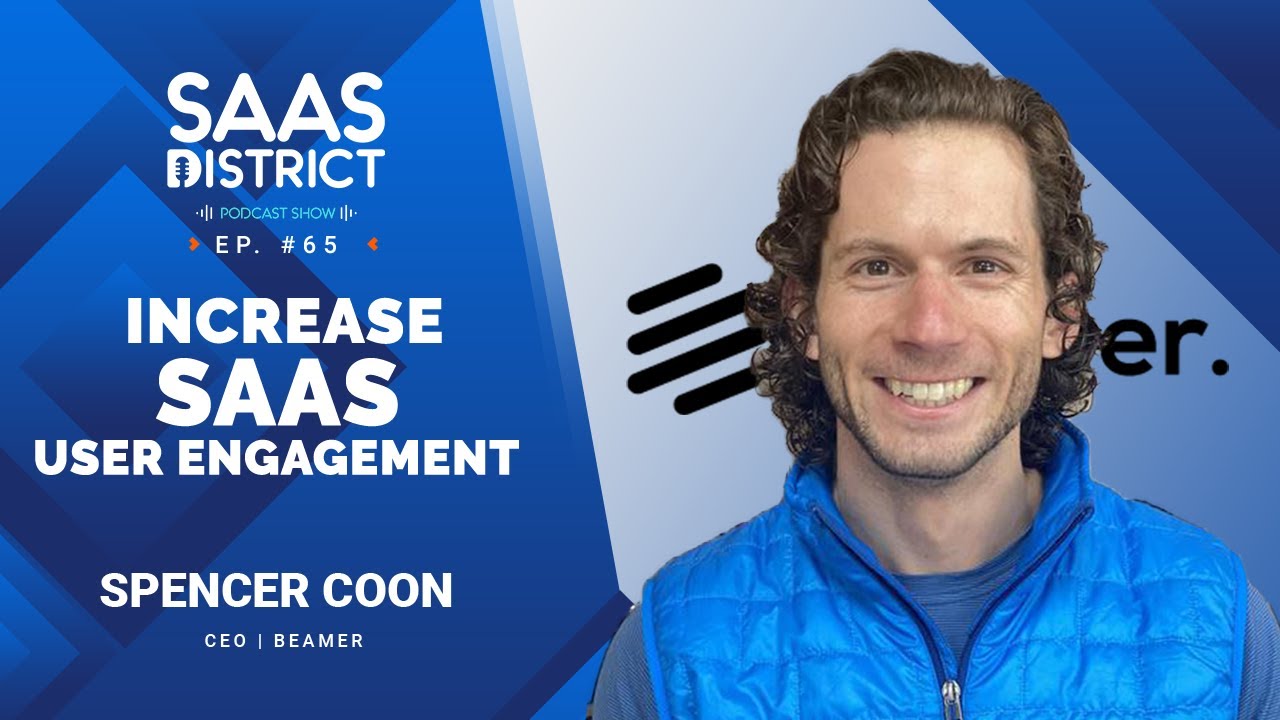
In this SaaS District episode, host Akeel Jabbar interviews Spencer Kuhn, co‑founder and CEO of Beamer, a no‑code in‑app changelog and notification tool. Spencer recounts his career shift from JP Morgan investment banking to founding two early SaaS products (JoinCube and Hibox), the successful exit of Hibox, and the bootstrapped launch of Beamer in 2018. He explains how an internal need for product update communication sparked the idea for Beamer, the market gap for a no‑code changelog service, and the rapid product‑led growth that led to ~900 paying customers and $1.5 M ARR. The conversation dives into concrete tactics for increasing user engagement—segmented in‑app notifications, gamified onboarding, visual content, and a feedback loop that drives product improvements and NPS. Spencer shares metrics‑focused practices (tracking churn, aiming for <1 % monthly churn) and growth experiments such as an AppSumo lifetime‑deal launch, targeting strategic customers (Intercom, Hotjar, Freshworks), community involvement, and the limited success of LinkedIn ads. He discusses the balance between product‑led growth and building sales/marketing capacity, the importance of OKRs, and offers personal advice for founders, recommending the All‑In podcast and emphasizing passion over perceived safety. The episode closes with a listener discount for Beamer and contact information.
Chapters
This episode is sponsored by Contentfy, a premium video editing and content repurposing service for busy content creators, influencers, brands, podcasters, YouTubers, and marketers. Contentfy provides unlimited end-to-end editing and repurposing services to help you get your video and audio content edited and repurposed quickly, easily, and reliably. Join other busy content creators, founders, brands, and marketers who now spend even more time creating while they take care of the rest. You no longer need to worry about spending hours editing anymore. Just create content, build your audience, and grow your business. If you're a content creator looking to save time and money, or looking to outsource your content marketing team, get your first free video edited now at contentfy.co. If you'd like to sponsor the SaaS District podcast or recommend any guests that you think would be valuable to be on the show, visit horizoncapital.com/saas-podcast today. Thanks again, folks.
Thank you. Hello, hello everyone. This is your host Akhil Jabbar and welcome back to another episode of SaaS District. In today's episode, we'll be talking about strategies to increasing SaaS user engagement, better product changelog feedback, and reducing churn.
Today we have our special guest Spencer Kuhn joining us.
Spencer is the co-founder co-founder and CEO at Beamer, an easy-to-use newsfeed, changelog, and notification center that helps you get up to 3 times more user engagement, increase customer retention, and convert more leads. Spencer started his career in finance as an investment banker analyst in New York and then moved to Latin America and co-founded 2 successful tech businesses. He's an expert on building SaaS companies, Latin America finance, fundraising, valuations, and M&A. So welcome, Spencer. Super excited to have you on SaaS District show today.
Yeah, I appreciate you guys having me on board.
So I'd love to hear that story. Let's tell us a little bit more of how you went from working investment banking, I think it was at JP Morgan, to moving to Chile, building 2 successful startups, and now, you know, being a co-founder at Beamer, uh, I think back in 2018.
Totally. Yeah, exactly. Yeah, happy to get into that. So I'll try to keep this short. Yeah, started my career in investment banking at JP Morgan, but I think I always had the entrepreneurial bug. So actually just like a few years after starting with them, In 2014, I teamed up with my current co-founder Mariano to build our first SaaS product, which we called JoinCube. So it's basically like an enterprise social network, kind of like a peer of Yammer. And, you know, traction was okay, but we wanted to create a product, I think, more for like small and mid-sized companies, which is kind of what we were and kind of the need that we understood a little bit more. So we pivoted in 2015 and built a product called Hibox. So that was like a collaboration app that's kind of like having like a Slack Asana and Zoom all in one. So the same place where you're like managing your tasks, you know, projects and creating them, you actually have the ability to communicate with your team, to collaborate, to actually like get the work done and just in a far more efficient way. You know, we were looking for like a way for like a product could be more, you know, self-service. Like we want a product that's more self-service, that lends itself to be more product-led so we could scale it with a leaner team, which is just our mentality at the time. time. And what's cool is that Beamer actually came out of an internal need that we had at Hibox, which I think I can talk about a little bit more later. But we basically launched Beamer about 3 years ago, and we're super excited with its impact so far. So Beamer's, like you were mentioning, Beamer's like a changelog notification center that helps notify users in-app about your latest product updates and get user feedback. So it's a great tool for like SaaS companies, and we're working with a lot of Customers like Intercom, Hotjar, Atlassian, Freshworks, Drift, and many other leading SaaS players. And if I had to summarize our mission, it's we want to help SaaS companies incentivize and enable a feedback loop so that they can build better products that users love.
Love it. And just before getting into talking about Beamer, what's the current status of those past ventures? Hibox, JoinCube, are those still running? Did you guys shut that down? Did you sell it? What happened to those?
Totally. It's actually pretty exciting. We exited Hibox in February of this year, so just a few months ago, for a pretty good multiple to a strategic buyer. So we're really happy with that. It allowed— I mean, we weren't only about like, you know, 2 to 3% of our focus was on that. It was pretty much in maintenance mode at the time, but did have some recurring like MRR on customers. So yeah, I mean, we're happy that we can now like 100% focus on Beamer. We've sort of experienced the exit process and understand how that works.
Yeah.
a little bit. Um, we have some more cash to invest in growth, so it's all good. And then Joint Cubes, it's really fully in maintenance mode. I mean, there's definitely some existing customers still getting some good value out of it, but it's pretty much in maintenance mode at this point.
So you mentioned a pretty good multiple. Just for— you don't have to give, you know, exact numbers of what you sold for, uh, but just to give, you know, founders who are listening in, maybe thinking to sell to a strategic, what can they expect for multiples? I know you're in the value and M&A, you had that background. Totally.
Yeah, I can't really disclose that, but, um, I've definitely looked into this a lot, and if I were to have to give any advice to founders, I would say the range is huge, huge, huge, huge. If you want to look into what the multiples are for selling to a financial buyer, like private equity firm or something like that, there's plenty of stuff online, you can find it. It's like a lot more defined. For strategics, it can run the gamut. You could sell for like 3x ARR up to like 20x. I mean, it totally depends on the fit and the team and the timing. So many things. It's kind of hard to say. That's not a great answer, but I've been frustrated with that answer myself. And that's what I've kind of discovered is really the deal. I think it's all about just creating a platform that's a tool that's valuable with low churn, with happy customers, where you can be the market leader ideally. And then that's going to lead to good outcomes as you start to develop relationships with corp dev teams and potential acquirers.
Sure. Yeah. I mean, you guys made that decision to exit, so I'm sure you're pretty happy with the multiple that you got in the end.
Totally.
So, 3 years into this journey, you know, building and growing Beamer, can you share a little bit, you know, where are you guys in terms of size today? Have you guys raised external capital? And if so, how much? Or are you guys fully bootstrapped?
Totally. So, yeah. So, we've raised a little bit less than $1 million in total, mostly from like family and friends. And those are from rounds that we raised in 2014 and 2016. So, really, those funds were used like 100% for the development of those 2 other products that I mentioned before, Joincube and iBox. So it's pretty cool. Beamer is actually fully bootstrapped. I mean, we didn't launch Beamer till 2018. So Beamer has been profitable from day one, and we use revenue from Beamer to fund all of our investments in its future growth. And we kind of had that lean mentality from day one because of this. And I think that's really helped us in so many ways, but particularly in terms of avoiding feature creep, maintaining our ease of use. And focus on like fully solving the most important customer needs. And then in terms of traction, we got about like 900 paying customers, we're about at $1.5 million in ARR.
Very nice. Good job. Just in just over almost 3 years or so. So let's get— I want to get a little bit more detailed in how you came upon the opportunity in the market. You saw it, you said it was an internal problem. But how did you see that, that it was a product, a problem that the market needed? And what was lacking that, you know, Beamer was there to solve when you guys decided to launch?
Totally. So yeah, like I mentioned, we had the need ourselves, which I feel like is always kind of the best situation for building a great product. So like we were our own customers, so we really understood the problem. Like I mentioned, we run like 2 different SaaS products, we're constantly building, you know, new features, improvements, all sorts of like cool product updates, but we didn't really have a good way to like notify our users about what was new so they could go check it out and know that we're working hard for them. So we decided to build sort of this like in-app changelog notification center sidebar widget to let them know. And that kind of became the first beta version of Beamer. So we checked the market when we were thinking about should we build this or not, and we saw that there weren't really any no-code changelog as a service tools in the market. And yeah, I mean, we just knew this was a huge opportunity since there are hundreds of thousands of SaaS companies just like us that have the exact same problem.
Mm-hmm.
That's how we identified the opportunity.
So you guys found the opportunity. Did you guys have it, you know, start marketing it and promoting it to maybe some of your old customers to see if there was traction and interest, or did you go out to market? Did you— how did you decide? Yeah, that's a viable product-market fit.
Totally. That's a really good question. And yeah, I think it's a valuable thing for other founders just to like hear about. Like we did not, like, as soon as we had the idea, like go all in, completely abandon the 2 projects we were, you know, products we had built. We actually thought of Beamer when we first built it as a way to generate leads for Hibox, which is like so funny looking back on it because I think within like 4 to 5 months, I'll have to check on the exact number, but within a very short amount of time, Beamer had like more MRR than Hibox and without really doing like any paid channels or anything like that. So it's kind of funny that originally we thought of it as a way to create leads for those 2 other products. But I think that's an important way to be like, be cautious, like before you totally pivot and go to the next thing, like make sure you really have the traction and product-market fit to justify that because pivoting is not easy. You have to change everything. You lose a lot of time and resources that you've invested into other things. So I think that's an important thing to throw out. But yeah, I mean, we did some soft launches. We shared it with some of our entrepreneurial friends, got really good feedback there. We did an AppSumo launch. That's where you do a lifetime deal of your product. You limit the features and create really specific plans. But the cool thing is I think it was like for a lifetime deal, it's like between $49 and $99 total. So like now it's like way less than what we charge for one month of Beamer and you're giving someone like lifetime access to it. But it allows you to really quickly build this really big network of like initial kind of beta tester like users to evangelize your product, tell you about it, like get that real feedback that you need to see if you really have something, if you grab that product market fit. And so that really helped us. It was, it was, I think, key in kind of, you know, starting things. And we could— we, the, you know, the difference in feedback we were getting was really palpable. A lot of times with Hybox, we felt like it was like, not like we were like cramming it down our customers' throats, but, you know, we like really felt like we had to kind of sell them and like explain everything. Whereas with Beamer, it was like instantly people saw it and loved it. They wanted it. They're like, this is what I was looking for. This solves my problem. And I think just that kind of tangible difference in the reception of Beamer with the users was key in helping us be comfortable and like, okay, we should pivot and we should really go all in on this.
So talking about AppSumo for a second there, you said you're focused on SMBs, but you also mentioned you also have a lot of enterprise clients— Intercom, Drift, Hotjar, Freshworks. Would you suggest— was it more for feedback or would you still use it as a growth and marketing channel today and recommend to founders who are maybe more focused on enterprise?
Totally. Me personally, and I'm sure this differs based on your own product, but I would really just use AppSumo mainly when I was launching a product. So the very, very beginning stages, like you don't have many customers, you don't have many users, and you want to in a very quick way get some exposure, get real people using your product, and start that feedback loop that can help you build a better product. And especially if your product is product-led like Beamer. So when people use Beamer, they basically install it on their app and kind of like show it to all their users. For us, it was really important to get that ball rolling and have Beamer being used by real products with real end users that could also use Beamer. So I would just use it for the initial launch. And the reason is, I mean, you're not going to get any MRR from this. I mean, it's all lifetime deals. I mean, we got a tiny amount because you can limit the plan, which we did. And then you can have like a special, okay, if you want to upgrade to a monthly paying subscription, you get a— 50% or 80% discount off our normal prices and you can switch over, but it's never gonna be like a big MRR boost, really. Especially just given the audience.
Yeah, that's what I figured. Yeah, makes sense. Cool. So you mentioned users getting up to 3 times more user engagement, decrease in churn, higher lead conversions. Can you share specific examples or frameworks of why and how to best use those in-app notifications for maybe some of our SaaS product marketers to start seeing similar results? Without being too annoying or spammy when you're building those? Because I know too many of those people get like, why do you keep sending me these notifications every week?
Definitely. Yeah, I think avoiding being too annoying or spammy is key. And I think Beamer, really any in-app changelog, is going to help a lot with that. So before Beamer, most SaaS companies were publishing product updates in, I would say, either like a company blog that no one reads, doesn't really get any traffic, so it's kind of not having much of a of an impact, or sending it out in an email newsletter, which has its own set of issues. So like, you know, being out of context, it's not in your app, you have super low open rates due to like spam and promotions folders, and it is like kind of intrusive and spammy. So it really limits like how often you can reach out to users. So what Beamer does with this like plug-and-play changelog is allow SaaS product teams to notify users directly in-app, in context, about all kinds of product updates. So not just your biggest feature releases. So it helps users discover new features so they get more value out of the product, as well as helping convince them that you really are working hard to provide them the best possible solution. So they don't need to go look for someone else because you're already working as hard as possible to make this the best solution for them. You can also collect user feedback with Beamer. It's a really important part of the feedback loop so your product team can find out what users think about your latest releases and even have them suggest new ones. So since the notifications are in-app and in-context, they're much less annoying and spammy because the user's already there, they can click on it if they want or not. You can also use segmentation to keep your notifications as targeted and relevant as possible, and I think that's really important to do that. We also recommend that companies use Beamer's changelog as a dedicated channel for product updates without really any marketing offers or promos or anything like that. So that helps reduce even further any spammy feelings. And it keeps the feed clean and the users like really highly engaged on those notifications. And we do have like other modals that our customers can use for marketing-related comms. So things like pop-ups, snippets, banners, things like that.
Cool. So we mentioned having pages, emails, and there's other channels like maybe like SMS. And then now we have these tools like the changelog widget. When it comes to that kind of feedback loop, do you guys measure what that kind of difference in engagement, meaning let's call it user feedback when they're sending email Versus the in-app widgets? Did you guys measure that difference?
Yeah, totally. So, as mentioned before, it's much higher than email since Beamer's in context, in your app. It can actually be installed to look like a native part of your app, so notifications get extremely high engagement. So you can install it with a bell icon or a menu item with text like what's new or updates or something like that. So you don't have to deal with spam folder promotions, it'll get to everyone that's logging in. And, you know, like I mentioned before, like a huge benefit is you can send out many more product updates than if you're using email, where like at most you'd send an email update like once every month, but that even feels like a lot. I think most companies are probably sending out every few months or maybe even like a couple times a year.
Mm-hmm.
So with Beamer, you can announce even the smaller like improvements and fixes and things like that. So you're not just focusing on your biggest releases, and, you know, users will know that like you're constantly working for them. And in terms of quantifying it, that's pretty tough. I mean, that definitely will run sort of the gamut of different ranges based on the companies. But yeah, I mean, we've had many customers report more than 3x engagement on their updates, email or whatever other channels they're using, like a blog versus the in-app widget.
And how often would you suggest that we'd be releasing these notes and changelogs? You said email maybe once every quarter. If we're doing it through GetBeamer, is there a time you recommend people release these?
Totally. Definitely much more often than once a quarter, for sure. But it will depend on the speed of your development cycle, like how mature is your product, how often are you actually churning out new features, because you don't want to announce something that's not really important or relevant or going to have an impact for the user. So it will depend on your development cycle, but I would say if We look across all of our customers. We now have, like I mentioned, over 900 paid customers and many, many more on our free plan, so we have a good sense of how often people are really doing this. So I'd say 1 to 2 updates a month is common. So that might not sound like a lot, but I think it's still a pretty good amount in terms of hitting up users with your latest features and improvements that really do make an impact for them. But a lot of our customers will do it more often than that, a couple times a week. We have some customers like Drift who will do a weekly sort of update or summary. So they're not gonna push out the release like as soon as the, you know, the new feature's deployed. They'll actually, you know, wait and kind of summarize, okay, this week, you know, this is what we've done. And they do it on a consistent basis, which I think is cool too, because that creates sort of this expectation and like your users become excited and they know like, okay, Fridays I'm going into Drift and I can see like, you know, what's new.
And would you say, is there, is this something you say, you know, every SaaS business would need? I know you mentioned like the product cycle, or does it work with certain markets and audiences and how your product roadmap looks like?
Totally. Yeah, it's a great question. I mean, I would say every SaaS business for sure should be using an in-app changelog of some kind. It could be Beamer, it could be something you build in-house, but it really is like a vital part of the feedback loop. So the new features that are built and that you announce and you tell your users about, That's going to lead to even more user feedback, which leads to new and better features, and that loop, kind of virtuous cycle, continues. So it's a great way to, like, sort of, you know, start your users, get your users to expect a better product, and when they demand a better product of you, that spurs you on to build a better product. And so, yeah, that virtuous cycle I think is really important, and I think, you know, SaaS companies today more than ever need to quickly adapt to market demands and There's just so many options in SaaS that if you don't differentiate yourself and really convince your customers you're the best possible solution, you're really solving their needs, it's going to be difficult to retain those customers.
Sure. Yeah. So I think part of that retention also comes to keeping them engaged. Do you have any favorite strategies that you can suggest to our audience when it comes to improving that user engagement for SaaS? improving NPS scores? I think those are maybe related.
Yeah, totally. I think those are definitely related. Yeah, so there's many, many things I could touch on here, but just a few of our favorites. So, ask for user feedback and act on it. So, proactively go out and ask for user feedback, however you want to do that. And then also make sure the user feels heard. So even if you aren't going to— the user asks for feature X, and even if you aren't going to build feature X, Which, because you shouldn't do everything your users ask for, right? You got to keep yourself on track and be following your own roadmap. But yeah, just make the user feel heard. So even if you aren't going to do it, at least tell them, hey, I heard that. Thanks so much for the feedback. Keep it in mind. Let them know that you are hearing their feedback, even if you aren't going to build exactly what they want. Another important thing is gamification and onboarding checklists. So direct your users, identify the key steps that you know will get them hooked on your product. And then direct them to complete those either via gamification or checklists or something like that. Segmentation, like I mentioned earlier, so keep your communication targeted and relevant. So segmenting by user role, by plan, by geography, whatever you can do to keep those notifications a little bit more relevant is key. Visual elements, I think, are really, really key for user engagement. So things like explainer videos, GIFs, including that within your changelog and And really, whatever sort of communication you're doing with your user, I think is really important. And then in terms of NPS, so we actually offer an NPS survey, so we have a really good sense of what causes companies to get higher or lower NPS scores, and definitely one of the highest, I guess, reasons, one of the most common reasons why users will leave a high NPS score is ease of use. So I cannot stress enough to other SaaS founders, that's what you wanna be focusing on, making your product easy to use. Not having overly complicated software is definitely globally one of the most common reasons for high NPS score. And then responsive and helpful customer support, that's also a super common answer. And I think that helps with user engagement as well.
I love that ease of use, right? As engineers, we try to overcomplicate everything. People just want—
I know.
One click. If you can do it in one click, please do it in one click.
Do less, but do it in one click.
Exactly.
That's what they want.
Cool, man. So you guys have done super You know, great job when it comes to growth, $1.5 million ARR, 900 paying customers. And you got some big brands, you mentioned Intercom, Hotjar, Freshworks. Can you share any, some, you know, growth strategies that have worked well for, you know, attracting some of those big players for our audience, maybe SaaS marketers who are listening and they want to test out to get some of those big guys to listen to them?
Yeah, for sure. So in our case, a lot of the growth really has been product-led. So, and this is something, I mean, we we were looking for. So we had always, before Beamer, we were always looking for, you know, how can we find a way to get our users to promote our product without having to do it consciously? And so like, we definitely have that with Beamer. It's great. Like, you know, when Intercom uses Beamer, I mean, they're installing this Chainedog widget within their app and showing it to all their users, who all, you know, a high percentage of their users are SaaS companies and also are potential Beamer customers. So it's just Yeah, for us, it's a great growth engine, is identifying those strategic customers like Intercom, Hotjar, Freshworks that we know have a high percentage of SaaS users. And we don't treat those customers exactly the same. We do whatever we can to get those customers on board, especially earlier when we were just starting out. Now, maybe not so, so much, but yeah, when you're starting out, I think it's a great strategy to identify those strategic customers that are either going to give you that good you know, success case, you can build a case study and share it with, you know, other leads, or if you're more product-led, you know, get your sort of app in front of their customers or their community in some way. I think that's a really important strategy for growth. Providing great customer service. So we actually have a lot of our dev team, part of our dev team answering our live support chat.
Nice.
It can be a little distracting at times, but I just think it's It's so worth it. I mean, we have so many of our customers that are just saying, you know, your support is amazing. It's so good. It eliminated all the friction I had. I mean, we try to make it easy and self-service anyway, but, you know, issues always inevitably will come up. And so I think that's been actually a really good investment that we've done is just putting so much focus on providing good support and good, you know, again, good UX, good ease of use, good documentation. And I think that too, not only does it help people, you know, convert, but also I think that gets us tons of referrals. I think because of how easy it is to work with us. I think that's what gets this sort of community of like, you know, product teams and product marketers that are using us, you know, talking about Beamer and sharing it like with their colleagues and people in their network and stuff like that. And then yeah, it's talking about communities too. Like we try to work with communities that we know like engage the audience that we're going after. So guys like the Product Marketing Alliance, you know, a bunch of like product marketers and product teams that are interacting there. And so it's a great group for us. And so we do things like, you know, giving them the tools for free with a watermark to use on their site. I've done podcasts with them. We engage with their Slack group. But yeah, I think working with communities where your audience is living is obviously a good strategy as well.
Definitely. And how much would you say your growth budget and time is allocated towards, say, sales and marketing team versus just focusing on product-led growth and Investing in more developers and just using that feedback loop to build and grow.
Totally. Well, yeah, so as I mentioned, like, as of now, we're mostly product-led, so highly levered towards the growth, but towards the product-led, excuse me. But yeah, I think, you know, now in 2021, it's like we really want to put a big focus on creating more marketing and sales channels to grow even faster. So we're really excited about that. We actually have like a couple of open roles too now for head of growth and sales. So If anyone is interested, definitely feel free to reach out.
Definitely. Do you have any growth strategies that maybe you've tried and tested that have failed and maybe wouldn't recommend, or have you not even tested anything and just starting now?
No, we don't. We do some tests for sure. So like one thing we didn't have great success on is LinkedIn ads. So, you know, we thought that'd be like a great place to advertise, especially for us because we have a super defined buyer persona that we can target by employee job titles. So let's say product marketer or head of product, definitely someone that would own Beamer within the organization. But yeah, I mean, we just found the engagement to be relatively low on the ads and also found the CAC to be quite high, cost per click as well, to be super high given how many clicks and conversions we were getting. So possibly we were just doing something wrong there, I don't know, but we definitely didn't have great success there.
Kind of final question around how your company's structured, I wanna talk about OKRs. I think that's an important part.
Do you—
does your team, you know, do you guys create and measure OKRs as part of your, uh, you know, goals in the year? And if so, how often do you recommend measuring them? And, uh, maybe what are some critical ones that you guys measure or other SaaS founders should be paying attention to?
Totally. So yes, we do measure it, but admittedly, like, this is something we're looking to track and measure more. I definitely think there's room for improvement for us. And I think that's, that's common. I mean, especially we got to lean Pretty small team in terms of headcount at least. So it does make it tough to do all that measuring when you have so many other things where you're wearing so many other hats. But yeah, I think it's key. If I had to pinpoint one as the most important, I know it's common knowledge, but just to emphasize it again, I would say tracking churn is key.
Mm-hmm.
I mean, if you have a leaky bucket, it just really makes it so hard to make any progress. probably aren't truly solving your customers' needs. So I guess we have less than a 1% monthly churn at Beamer, and we want to drive that even lower. And that's definitely a metric that we are tracking pretty aggressively and seeing what we can do to drive it even lower.
The one metric that matters. Yeah, that's a really good one to pay attention to. I think even just half a percent, if you drop that, I mean, it'll—
Huge impact.
Huge impact, right?
Yeah.
Totally.
Cool. Uh, Spencer, I want to switch gears a little bit more personal here, moving towards the rapid, rapid fire, but, uh, you know, take your time answering it. Um, what's one piece of advice you wish you had known and would tell us, let's say your, your 25-year-old self?
Buy crypto for sure. But, uh, no, I mean, I'm, I'm 33 now, so that wasn't too, too long ago, uh, for me. But yeah, it was right about the time, I guess, when I was deciding whether to leave investment banking and go kind of jump into the— co-found my first startup. And, it was definitely scary. I mean, I was worried that I might be losing the chance to pursue lucrative, successful, impactful career in finance. And, it was kind of a path that seemed, I guess I perceived it as a little bit lower risk at the time.
Hmm.
But honestly, looking back, I think the much bigger risk would have been dedicating your life's work to something that you aren't truly passionate about and it doesn't offer you the lifestyle that you want. So yeah, my advice would be just, you know, don't live somebody else's life, you know, go for it. And then also, like, if, you know, if at first you don't succeed, just keep trying until you find something that feels right. You know, I mean, we did build, I think, 2 products that were great in Joint Cube and Hivebox, but, you know, neither I think were like growing at the rate we wanted to or really having the impact we wanted. And so I think there's nothing wrong, you know, with not succeeding on your first go. I think it's actually kind of hard to. So I would just recommend keep on trying. Uh, new things until you find something that feels right.
Nice. Take the plunge. Yeah, I think I did around that same time. I think it was 24 or 25, and yeah, I haven't looked back since. So yeah, I understand. Totally. For sure. What are some of your, your biggest challenges you're currently facing in order to grow, continue to grow Beemary? Meaning, you know, what, what is keeping you up at night these days?
For sure. So our conversion rate is actually relatively high from trial to paying customer. And like I mentioned, our churn I think is is also relatively low. So I think our biggest priority has to be like filling our top of funnel. It's like, how can we generate more leads? So that's kind of what I was mentioning. We're looking to do a big push into, you know, growth basically. So like, you know, other paid channels, partnerships, you know, content marketing, affiliates, podcasts, of course, great way as well. So yeah, that's really what we're looking at most is like how to fill top of funnel.
Cool. Who or what would you say are some of the best 3 resources? They can be books, can be people, mentors, people you follow who you say have been the most instrumental to your success over these last few years?
Totally. Okay. I don't know if I have 3 to recommend. I definitely have one really good one. I do find like books, I used to read a lot, so hard now. I just find myself so strapped for time. I definitely prefer podcasts. So I like what you guys are doing and what everybody's kind of doing in that space. So if I had to recommend One, it's not this one. I'd recommend the All-In Podcast. So it's relatively new. I think it's been around for like a little over a year, and it does not focus exclusively on like startups or tech. But I do think it's just like a great resource that covers important current topics. And what it really helps me to do, I think can help you to do as well, is like think independently. So it's hosted by some like really brilliant minds, and they all are in tech or have been in tech. And it's kind of like, it's a great like purple podcast. It's like not overly biased to left or right. It's super funny. And yeah, I just think it helps you be like more informed and smarter about like what's going on in the world. And yeah, I think if I could recommend one resource, it'd be that, the All-In Podcast.
Super cool. That's with Chamath at Social Capital.
Exactly. Totally. Yeah.
I haven't heard it, but I'll check it out.
You can check it out. It's so, so good.
Yeah. Okay. I'll subscribe today. Thank you. Cool. So you've had an exit, you know, had some— built some great, you know, built a great business today, built successful business in the past as well. What does success mean to you today? It could be personally, it could be financially, it could be life, business. There's no right answer. Hmm.
Yeah, totally. I mean, yeah, success for me is just working on, you know, product that has real impact, solves a real customer need, and with a team that like you really trust and enjoy being with. And know we'll go to battle with you in the trenches. Because it's definitely hard, especially being like a lean team and building something from scratch, something new. So you definitely want a team that you can trust and like you enjoy going to battle with.
Mm-hmm.
And, you know, hopefully that leads to a solid financial outcome. And hopefully it also leads to like a lifestyle that all team members are happy with. So like we've been remote, for example, for over 4 years. I've gotten to live in— super lucky, but yeah, I've gotten to live in like Argentina, Chile, Spain, now back in the US. And yeah, I think, you know, that's an important part I wouldn't overlook is if your kind of job is— what you're working on is facilitating a lifestyle that you're happy with and that fulfills you. I mean, to me, that's definitely like a big part of success.
100%. Love it. This has been great, Spencer. Lots of good insights here for people to learn from, I think. Where can our founders get in touch with you, learn more about you and Beamer if they have any more questions?
Totally.
Yeah.
So obviously getbeamer.com, that's the site for Beamer. Would love for you guys to check that out. I'm not personally as active on socials as I should be, but hoping to change that soon. But yeah, you can definitely reach me on LinkedIn or email at spencer@getbeamer.com. That's a great place too.
Cool. Thank you so much, Spencer. This has been great. Thanks again for joining SaaS District Show today.
Totally. And I actually had— I don't know if this is of interest, but we have a discount coupon that we could offer for listeners. So love it. Listeners want to get 15% off their first 6 months of Beamer, you can use the coupon SAASDISTRICT at getbeamer.com and get that.
Love it. So 15% off first 6 months, guys. Check it out and see how you like it. Totally. Well, thanks.
Yeah, thanks so much for having me on. I appreciate it.
No, thank you for the discount.
Appreciate it. All right. Have a good one. Bye-bye.
Thank you all for watching this episode and joining SaaS District today.
Don't forget to Don't forget to like, subscribe, and hit the bell for future episodes where we interview top leaders in the SaaS industry. If you're a SaaS company looking to grow and unlock the true value of your business, get in touch with us at Horizon Capital, and myself or one of our consultants will provide a free assessment to help you get there and hit your goals. If you have any feedback or suggestions for this podcast, please comment down below and help us improve our content for you all. Thank you so much for listening.
Thanks again and see you on the next one.
More from Akeel



Get a mentor as soon as possible — and make sure it’s a mentor in your space.




Keith Gillispie: Why Most New Investors Fail & How to Avoid the Common Traps #250 | SaaS District



