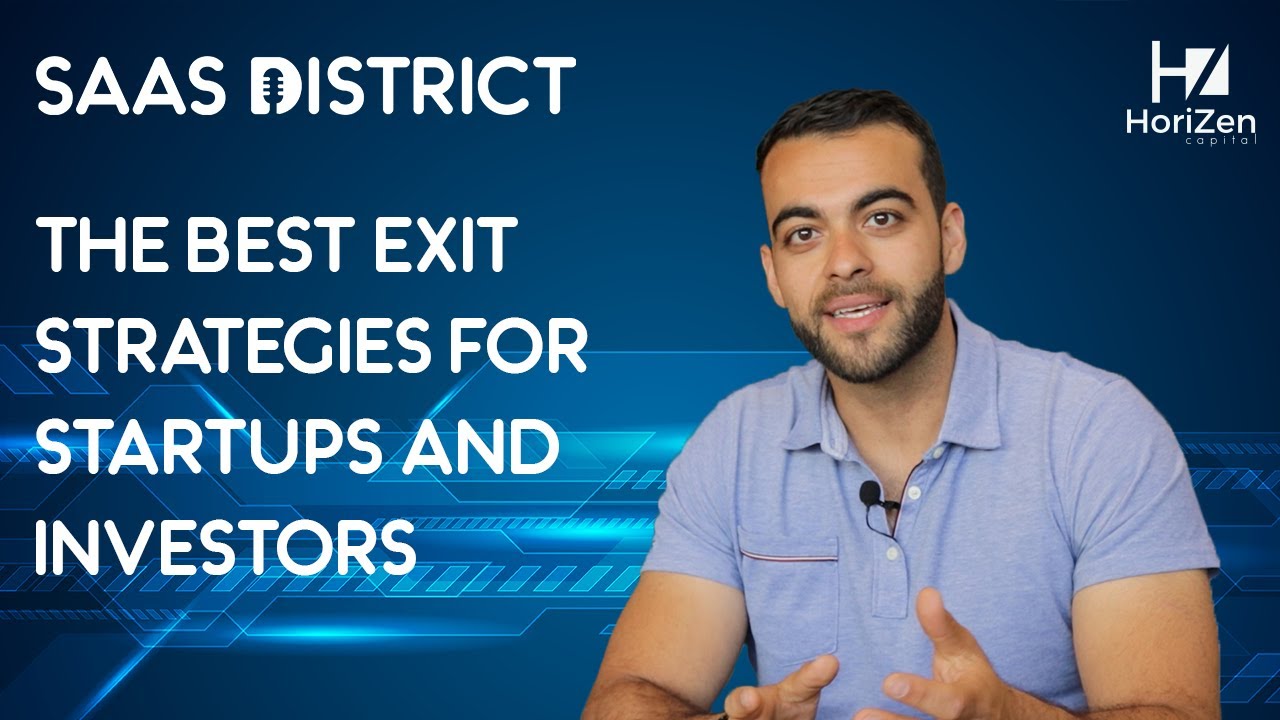
In this solo presentation, Akeel Jabbar—Investment Director and General Partner at Horizon Capital—explains how SaaS founders can achieve a $10 million-plus exit valuation when targeting strategic acquirers such as Google, Shopify, or Amazon. He outlines the four core valuation levers: (1) rapid, accelerating revenue growth (including recent surges), (2) a clear path to profitability even if the company is currently unprofitable, (3) strong customer retention with low churn and upsell potential, (4) strategic fit both technically and in customer base, and (5) a large total addressable market (TAM). Jabbar provides concrete ARR‑to‑exit multiples, noting that a 3× ARR multiple (~$3 M ARR) can yield a $10 M exit for average growth, while high‑growth companies (70‑80% YoY, <2% churn) may achieve the same valuation at just $1.5 M ARR. He also references external valuation resources (Nathan Latka, FE International, MicroAcquire, Centurica) and encourages founders to keep scaling and consider ideal strategic buyers.
Chapters
So a dream that almost every single SaaS founder has when they start their company is to be able to one day exit it to a big player like Google, Shopify, Amazon, and get the big exit and fulfill your dream of starting your business. Now, one question I get often is, how do I get to a $10 million or above exit valuation of my business when I'm starting off? And that's exactly what we're going to talk about today. My name is Akeel Jabbar. I am the investment director and general partner at Horizon Capital. And I'm going to tell you exactly the factors that go in and to get you over $10 million in your valuation to get the highest exit towards a strategic acquirer. I am the investment director and general partner at Horizon Capital, where we work with SaaS companies exclusively who are doing over $500K and ARR and helping them get the highest valuation and exit, finding them the best company to acquire their business. Now we work with so many different SaaS companies, you know, uh, in all different kinds of industries. And what we find is different kinds of trends which get people the highest valuations when we talk with strategic acquirers who want to buy their business. Over my time of working in this industry, I've worked with over almost 15 different companies, SaaS companies specifically, and helping them either through their growth, helping them achieve their growth plans, helping them exit to a financial or strategic buyer, or help them find the right partner to help them accelerate their— take their business to the next level. The number one variable that's going to get you the highest valuation no matter what is going to be the growth of your SaaS company. And that's your, your monthly user growth, your monthly revenue growth, and then also your annual growth. How does that look like over time and are you accelerating? In an exponential fashion. Now typically when you're thinking about growth, most people think about historical growth now, which is great. Now having the historical growth, you know, year over year, are you growing 50, 60, 80, 100% year over year? They're going to look at that as the main factor when deciding on the valuation of your business. The other thing that you have to realize is they're actually going to look at sudden surges. So if you're accelerating actually in the last few months, let's say the last few years you've been growing for, say, last 2 years you've been growing 50% or 60% year over year, and for some reason the last 6 months maybe you found some kind of new market or new strategy that works and you're now growing maybe 20% month over month. That surge for, say, like the last 6 months that shows that that acceleration is going to boost you, boost that valuation even higher. So, so that's number one. The first variable you really want to focus on is hitting that top-end line of your revenue and try to accelerate that as quickly as possible. Now, question is, does profitability matter? That's a lot of people ask me is like, do we have to stay profitable? Should I be reinvesting my capital back into the business or should I be, you know, taking that money and showing that profitability to get the maximum return? In SaaS specifically, strategic founders are going to— strategic buyers are going to look at your business and say, look, we don't mind that you're not profitable, but is there a clear plan that if you were going to change A, B, and C, that we could make it profitable overnight. Maybe you're putting all your money into R&D, you're doing all these kinds of growth experiments, but if you're going to stop doing that and run it as it is, can we make it profitable and continue still to grow? So that's another factor is you don't need to worry too much about profitability as long as you can show that it can be profitable at some point. The second biggest thing and the second variable that people look at is customer retention or churn. Okay. That's, that's a super important factor that a strategic buyer is going to look at. Now obviously the biggest power of SaaS businesses and why people love the recurring business model, model is that because you have that residual effect where business owners get that residual income every single month. And what that does is that compound effect leads to higher retention. So what you need to prove is that you have a low churn rate. And what's even better is if you can upsell those clients. So let's say they're sticking around for a year and you have the LTV. If you can upsell them and increase that value, that'll take you bump up your valuation even higher. So that's number 2, making sure you have higher retention with your customers who stick with your product. Number 3, the third, the third factor that people will look at is the integration factor and how it fits in with the technology of what they have. Um, obviously you can't control this. Um, and that's something that, you know, specific to the strategic that you're talking to. But if there's a clear fit on how your product can be a good fit with their product, you're going to see a huge jump in terms of the valuation. Okay. And that's the difference you'll see between, you know, people talking about a 3x ARR exit, that's the valuation that they're getting, and a 5x ARR. Okay, if you have the right fit for their product, you're going to get that huge bump and people are willing to pay that premium if you can show that it's a good integration with their product. So the tech is one part and the other part is actually the customer base. Does your customer base overlap with their customer base where you can cross-sell, upsell, and leverage your customers to be able to grow and give that bump to their existing users. And number 4, the 4th factor that's going to play into variable is your market or your TAM, your total addressable market. Now this is super important because the size of your market is going to show how valuable and how big the opportunity is. If your market is super niche and super segmented, a strategic is going to come in and say, look, this is probably the biggest we can grow. We're not going to pay a premium because there's only limited opportunity of how big we can grow this. So the bigger the market you have, the bigger you're— you've taken a piece of that pie, the more attractive it looks. So let's kind of roll that all back together. You want to get back to a $10 million exit. Okay. So what does that look like? If generally, if you're not growing that quickly, you're probably going to get a, you know, at that range, you're looking to try to get to at least, let's say, $3 million in ARR. So right now at this stage, people are paying about 3x of your ARR. So if you're doing $3 million a year, you might be able to get $10 million exit. Now if you're, if you're growing super fast, okay, you've got the accelerated growth, you've got a huge TAM, total addressable market, there's a good fit with the synergies with the strategic buyer, you can actually possibly get that even if you hit $1.5 million in ARR. So half that amount. So if your business is now at 1.5 million in ARR, okay, you're growing super quickly. Now I'm talking, you know, 70, 80% year over year growth at the minimum. Your customers are sticking, maybe have, you know, less than 2% churn, maybe positive churn. You'll be able to easily get that $10 million or even more. So there you have it, guys. If you guys are interested to learn more about this, you know, check out the other guys like, you know, Nathan Latka, FE International, you know, MicroAcquire, Centurica. These guys are always posting, you know, new valuation reports of what's going on in the industry. But at this point, you know, if you're at $1.5 million ARR, you're growing rapidly. This is how you're going to get to your $10 million valuation. Keep growing your business. I hope you guys do well and you guys are able to achieve the dreams of your exit you've always wanted. Thanks again for watching, guys. If you liked this video, comment below, who's your ideal exit partner? If you could sell your business today to a strategic buyer, who would you love to sell your business to? All right, thank you guys, and we'll see you guys on the next video. Bye.