Tips And Tricks to Avoid Burnout As An Entrepreneur | SaaS District
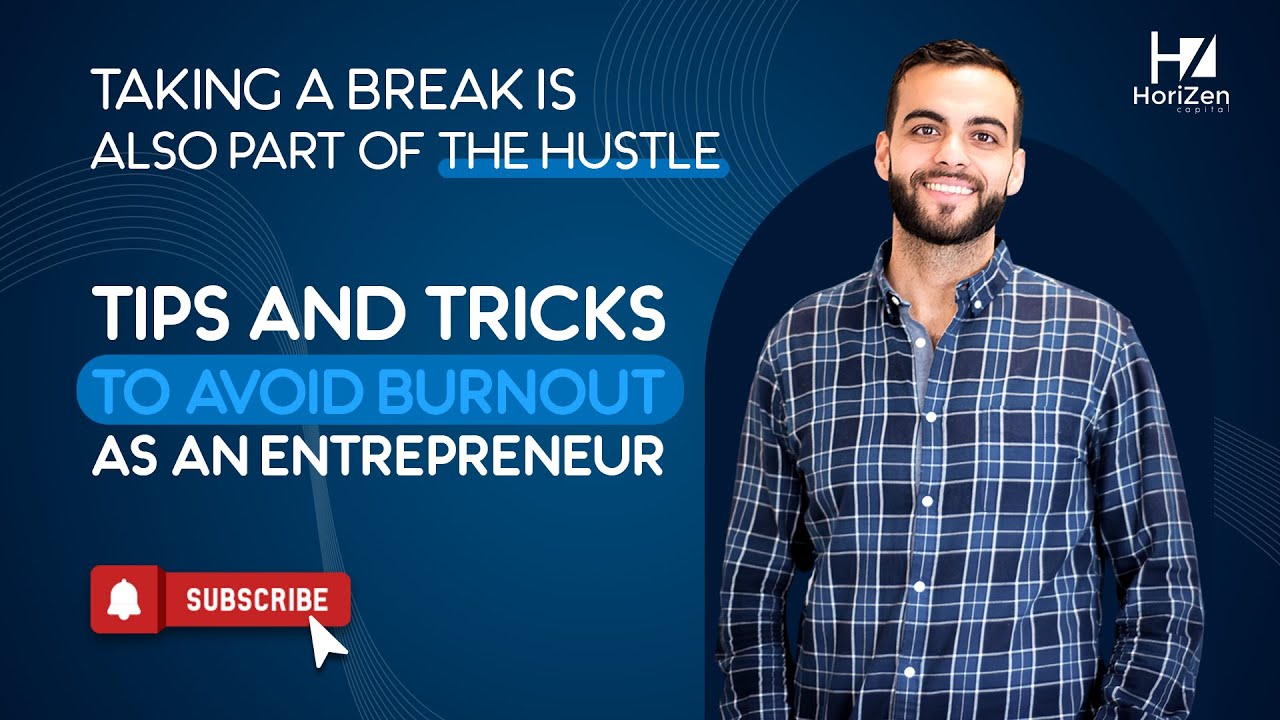
Akeel Jabbar, Investment Director at Horizon Capital, shares seven habits to fight founder burnout: sleep 7-9 hours nightly, take 20-minute power naps, use the Pomodoro technique for breaks, exercise regularly, track nutrition, change your work environment, meditate daily, and take vacations. Burnout often pushes founders to sell their companies.
Chapters
You woke up this morning, you just don't feel like going to work. You probably had this feeling many, many times as an entrepreneur where you just don't want to get back. You don't want to get back up. You don't feel like you have that excitement anymore. You don't have that grind. You don't have that energy to go in and face another day at the office. What you're probably facing today is probably what we all face at one point in our entrepreneurial journey, which is burnout. And what I want to talk about today, because this is very, very important, right? Your mind starts playing Tricks with you. You just don't have the energy, you don't have the drive, but you know you want to reach your goals. You have this big ambitious goal. You remember why you wanted to build this company and you were so driven at the beginning, but now you're at a point where you're just feeling completely burnt out. It's been years, feels like a grind, you're just not enjoying it anymore. So I want to talk about some ways of what you can do to tackle this problem, and I guarantee you it's not as complicated as you think. When it comes to improving your energy, having that drive, and getting away from burnout, It comes back down to a few fundamental basic things that you need to tackle on, and hope I can help you guys today. Hey guys, welcome back to another video here at the SaaS District channel. My name is Akeel Jabbar. I'm the investment director at Horizon Capital where we work with SaaS companies every single day. And I work with a lot of founders on a daily basis and including myself. This happens to me as a founder. Uh, and I see burnout happen all the time. It's very clear if this isn't dealt with directly, uh, what happens is this generally compounds, you know, day after day a little bit, you know, starts eating at you and then eventually you get to a point where you're just so tired, so fed up, you're so burnt out and you just want to give up. And that's what generally happens to us, right? Like we have founders come up to us, and they want to sell their companies. And a lot of times it's because they're burnt out. They've been grinding away at this company for 5, 6, 7 years and they need somebody to come in with a fresh set of eyes, fresh energy to come in and infuse a lot of things that they love to do, that they think they can do and they know that'll improve their company, but they just don't have it in them anymore. So the first thing, fundamental basic that you need to do, right? When we talk about growth hacking, when you're talking about the new big thing of, you know, optimizing your body or the new thing, To, to get you to the next level, right? We're always looking for these hacks. But before you focus on the hacks, we need to focus on the basics. And I think this applies to anything in life, but more importantly to your health. So if we talk about burnout specifically, the first thing you should look at, the trick that I recommend, is getting enough sleep. All right, how much sleep are you actually getting? Do you know how much sleep you're getting? Or do you say, you know, I think I get anywhere between 5 hours, 6 hours, 8 hours? Or is it consistent? Do you have a consistent sleep pattern? Get a simple thing like this. Look, I have this watch here. I track my sleep. You can get an iWatch, you can get something cheap, it doesn't matter. There's a lot of these little devices, the Oura Ring, a lot of people recommend. But all of these, what the point is, you want to track your sleep. And if you're not getting at least 7 hours a night, try even 8. Like, I guarantee, try sleep an extra hour tonight and see how you feel tomorrow. Like, you can have all the problems in the world and you might be super frustrated, super stressed, super annoyed. Get to bed early tonight, wake up and get that full 8 hours sleep, and then you tell me how you feel tomorrow. But you know, you can get a watch like this, track it every day. I like to get a score of at least 90%. You know, there's different apps that use it, but try to get that 7 to 9 hours. Okay? And you'll see how much of a difference that makes in your life. So if you ever feel like you're not productive, like right now, if you're feeling like, look, I'm just not feeling productive, my mind is not there. And you know, I have all day, I have all these tasks I need to do. Go take a 20-minute nap. You know, go lie down. If you're in the office, you know, find a couch, close your eyes for 20 minutes. That's probably the most effective. You don't want to go beyond that because then you get into, you know, some deeper sleep patterns and actually is more counterproductive. Stay in that 20-minute range. And generally what I like to do is I like to set an alarm for 25 minutes from now because I know it takes me a few minutes to relax, to shut off, and just to close. And even if I don't fall asleep, you know, completely deeply, the fact that I just keep my eyes closed, you know, try to stop thinking of things, be relaxed, and, you know, put myself in that state where I feel more calm. It'll make a big difference. When it comes to actually, you know, deeper sleep, when you get into that cycle, it's all about getting into REM sleep, right? If you guys haven't heard about that, it's a whole cycle. And generally a cycle lasts about an hour and a half. Okay, and if you cut it too short, it's actually counterproductive. So that's why when you're talking about sleep, you want to get that 7 to 9, but generally you want to hit 6 hours of sleep, 7 and a half hours of sleep, or 9 hours. And generally what I like to do is I like to start, you know, get to bed 8 hours before because I know, you know, I'm tossing and turning. It takes me a little bit to fall asleep. So by the time I actually do fall asleep, you know, that 20-30 minutes, I get that full 7.5 hours of proper sleep and I get those full cycles. So make sure you tackle that first. That's number one thing you can do, focus on, get more sleep. Number 2, so the second thing you can do, which kind of ties back to rest overall, you know, resting your body, is taking breaks, right? So, you know, it's easy to just grind, keep it going. You're in the momentum, you're in the zone, you're focusing, you're just going back to back to back to back, right? I mean, we've all been there. We're just grinding it out. But then what happens is we don't schedule breaks. And one thing that I really love to use is a tool called Pomodoro Technique. So on my laptop, I actually have this program, this application on my MacBook. It's called Flow. You can download it, it's free. And what it does is it forces me to take breaks. So part of the Pomodoro Technique is You set a time period for work, short work period, so that can be 25 minutes. You take a 5-minute break and it forces you to take that break. And during that, you know, 15 or 25 minutes or 45 minutes, everybody has different cycles that works better. You're super focused, there's no distractions. The app actually lets you disable apps. So for me, email notifications, Slack, any of these things are completely disabled. So even if I try to open them, it'll disable it. So I have to focus on my super high productive tasks that I need to get out of the way, and then I take a break when it allows me. You do a couple of cycles of these and you'll find you're a lot more productive. So if you can't schedule breaks, force yourself to, you know, add tools or platforms to help you get there. 5, 10 minutes just to recharge, take a walk, have a, you know, go get a drink, you know, play with your pet, listen to a song, whatever it is, just to, you know, get away from the zone. Then you come back and you're refreshed and charged to go again. Number 3, staying active, right? So one part is resting, Right? You got to take enough sleep. You got to get some rest, but, and you get all your work done. But then what happens is you're just so worked up. You haven't rested enough. You're overtired. You haven't ate enough. So it's hard to, it's very easy to skip being active, right? And exercising, getting blood flow going, getting the muscles worked up from sitting all day, right? You're sitting down all the day. Your muscles are not being used. You're a human. You need to be moving around unless you're in a physical job, which I don't think a lot of SaaS founders are. You need to be moving. You need to take care of your body because that is the most important thing. You take care of your mind, your body, everything else follows. That can be in any ways, right? There's no right way. You know, the easiest thing is just going for a walk. Go for a 15-20 minute walk. You know, listen to some music, listen to a podcast, whatever that is. If you can get to the gym, if you can go for, you know, if you can go swim, if you can go for a run, you can go play sports. You know, whatever it is, whatever is fun for you, right? Go do a yoga class. Everybody has their own thing of what they enjoy, but at least, you know, something that gets your body moving for at least an hour. you'll see a huge impact on how that affects your brain and your creativity as well. So, you know, adding to taking care of your body, right? This is all about priming, getting out of that state of burnout, is taking care of your body. The next thing is making sure you're eating right, right? How's your nutrition? I, you know, something I found a few weeks ago, actually this was something I noticed, was I thought I was eating enough, right? I'm eating my breakfast, I'm eating my lunch, and eating my dinner. But, you know, years ago when I started tracking my calories, like I use an app called MyFitnessPal, and I have an actual scale which I start weighing my food, I actually found like my target, I'm supposed to be eating at least, you know, 3,000 calories for the amount, you know, my size and my weight and my goals and the amount of activity I'm doing. I was probably eating half of that. And I didn't realize until I started eating, you know, upping my calories, upping my food and start eating close to that 3,000 calories, how much more energy I had, right? And you just, you know, so easy to overlook because you think, yeah, I'm eating enough. I mean, I ate a salad, I had a shake, you know, had an omelet this morning, all that good stuff. But if you add it up, it's just not enough. We're human beings, we need We need high-quality food in us and we need to keep that energy to keep us going. So simple thing you can do right now, you know, track your food if you're not already. I like to use MyFitnessPal and, you know, part of that is just seeing, making sure you're eating enough food and getting enough energy to keep you going. And, you know, there's so many different kind of diets. I'm not gonna say which one works for everyone. You know, some people like keto, it helps them get more energy. Some people like intermittent fasting, they feel they get more energy. It's all up to you what your goals are, what you're trying to do. Intermittent fasting does work really well, you know, skipping breakfast, only eating in, you know, those 4 to 8 hour windows. Whatever you like, but just make sure even in that 8-hour window you're getting enough food. Because it's so easy to say, yes, I'm only eating 8 hours and I'm only gonna have 1 or 2 meals, and that ends up only being 1,000 calories. And if you're 200 pounds like me, 1,000 calories is not enough. It's easy to get burnt out if you're not eating enough. So that's number 4. Number 5 is just changing your environment. You're probably in a routine. You may be going to the same place to work every single day. Maybe it's your home office, you're sitting at your desk. You're there 5, 6, 7 days a week and you're just sitting there for hours. Maybe it's going to the office. You're going to the same office every single day from, you know, 7 AM to whatever it is. Something you can do is just change it up. Maybe once or twice a week, go work at a coffee shop, go work with a friend and, you know, work at a different environment. Or maybe just, you know, meet with a friend and go have lunch and change it up, you know, with different— at different locations and different friends every part of the week. Even if it takes an hour or 2, just having that change or, you know, meeting with the team, meeting with the client. Going to meet them. I think that really helps just recharge, change your change your your rhythm, change your mindset of what you're seeing every day, and that might inspire some some new energy, some new creativity, and some some fresh thoughts to get you back on your feet. So that's number five: just changing your environment. Number six: it's all about the mind, and that's meditation. I love meditating. I know a lot of people hate it, right? You can't sit still and do nothing for a minute. This is very easy to skip, right? A lot of people get into it, and they think. You have to force it. So you might be using an app like, like Calm or Headspace, right? I mean, those are good, don't get me wrong. I love them, I've used them before, but it's so easy. You'll get into it for 2 or 3 days, you know, you do those 10-minute apps and you buy their premium feature and you think it's going to save you. It's not the app. The hardest part is just setting time. Most people say the morning. It doesn't matter— evening, afternoon, lunch, dinner. It could be anywhere. All you need to do, sit down Close your eyes and breathe. That's it. Breathe in, breathe out. Sounds so simple, and do it for a minute and see how you feel. Don't force yourself to go 10, 20 minutes. It's just like going to the gym, right? You're like, I'm getting back in the gym New Year's, I'm gonna go, you know, 5 days a week, and you're overcommitting to yourself to something when it just starts with the basics. Like, take a minute right now, pause this video, close your eyes, breathe in for a minute, and breathe out. In through your nose, out through your mouth. Super simple. Do that for a minute and see how you feel. Just do that on a daily basis. Try to build momentum and routine to do that once a day, and I'm sure it'll make a big difference in how you think, and you'll get more clarity in getting that blood flow and oxygen to your brain. So that's number 6, which is all about the mind, and that's about using meditation. Number 7, take a vacation. Maybe it's been years since you've actually taken a vacation, right? You're overworked. You've, you know, same thing we talked about, same environment. You're not taking care of yourself. You need to recharge. All of these activities is to recharge, right? Your body, your mind, your energy, your flow, your environment. And what happens is when you go on vacation, you meet other people, you're forced to think different things, you're forced to deal with different kind of people, you're forced to decide on what kind of food you're going to eat and put different things in your body and check out new things and get all this excitement and serotonin going to your brain. And that helps you get a recharge in overall thinking of how you're thinking of your business. If you haven't taken a vacation, go book it right now, right? Go see what's out there. Even if, you know, people think you need to go somewhere exotic and travel, you know, thousands of kilometers away, maybe there's a simple place you can go that's an hour or 2 away from your place. You can, you know, get on a bus, get in your car, and drive down there this weekend. Go for a weekend, take some time, you know, with a friend or a partner, and spend a weekend there and see how you feel. I'm positive if you go for the weekend, you come back on Monday, you're going to feel a lot better. You're going to feel, you know, you have some new fresh insights. You're gonna feel a lot better Monday morning going to the— getting back to work and getting out of that rut. All right, so there you have it, guys. Those are the 7 simple tricks, right? They seem so simple. I don't want to overcomplicate this because all those other hacks are great, but start with these 7 basics. If you're doing this, scheduling those vacations every month or every 2-3 months that you can, and taking care of your body and mind, everything else will fall into place. There you have it, guys. Thank you guys so much for watching this. If you enjoyed this, Make sure to smash the bell, subscribe, and like this video. And quick comment below: what do you guys do when you're feeling like you're in a rut, when you're feeling burnt out? How do you deal with it? What works for you? I'd love to hear from you guys. Let me know in the comments, and I'll see you guys on the next video.
More from Akeel



Get a mentor as soon as possible — and make sure it’s a mentor in your space.




Keith Gillispie: Why Most New Investors Fail & How to Avoid the Common Traps #250 | SaaS District



