Wesleyne Whittaker: Empowering Your Sales Journey Through Confidence | #215
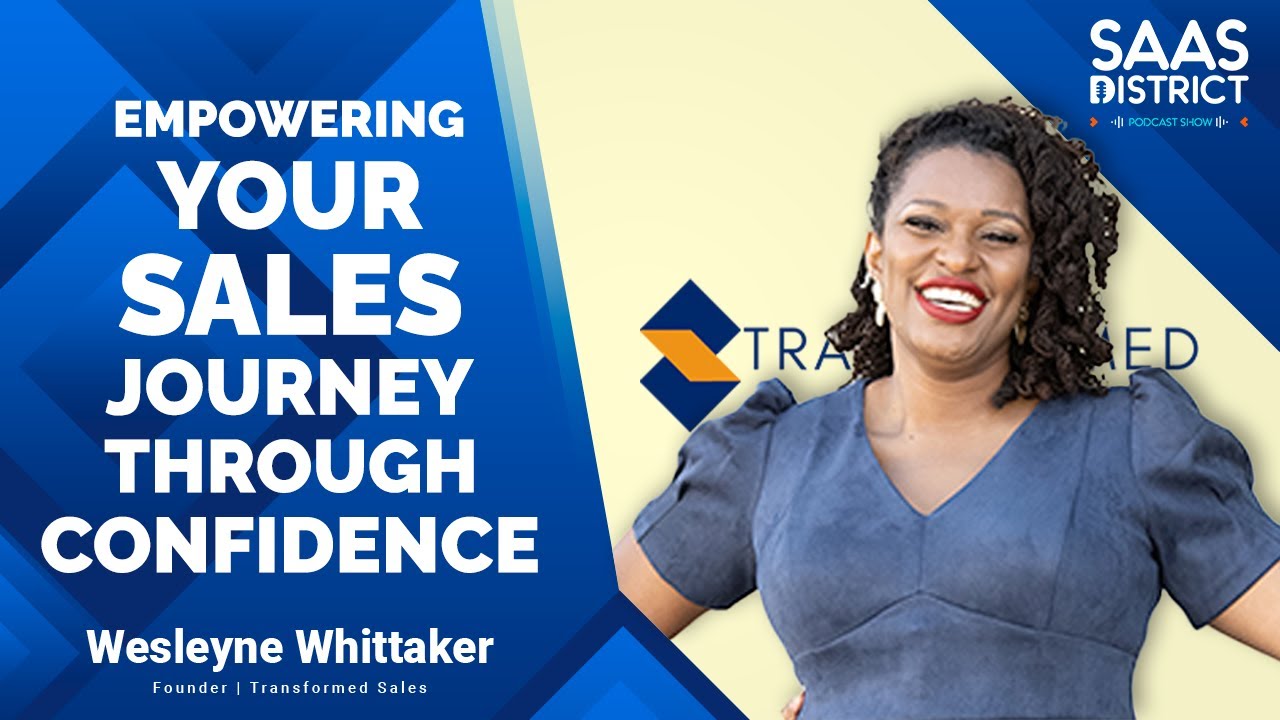
This content was created by Akeel Jabber. This content was uploaded by Akeel Jabber. This is a YouTube podcast episode titled "Wesleyne Whittaker: Empowering Your Sales Journey Through Confidence | #215" (published 2023-09-22). It's an interview-style conversation on the SaaS District show, hosted by Akeel Jabber, with guest Wesleyne Whittaker (founder of Transform Sales). The discussion covers Wesleyne's transition from chemist to sales leader, leadership-focused sales training (especially coaching middle management), hiring and evaluating salespeople, building sales confidence, founder burnout and time-management, practical tactics (win/loss analysis, playbooks, follow-up coaching), and a brief rapid-fire personal segment. Metadata includes the YouTube content type and a thumbnail URL.
Chapters
Hello, hello everyone. This is your host, Akeel Jabbar, and welcome back to another episode of SaaS District. In today's episode, we'll be talking about empowering your sales journey through confidence. Today we have our guest, Wesleen Whitaker, joining us. Wesleen is the founder of Transform Sales, a sales training and consulting firm focused on the STEM industries. She's a chemist turned sales coach dedicated to helping individuals achieve their professional aspirations. With a background in chemistry and success as a top international salesperson, she founded Transform Sales to guide aspiring leaders in honing their skills and achieving remarkable results, which we'll talk about today. So welcome, Aisleen. Super excited to have you on the show today.
Thanks so much for having me. I'm excited to be here.
So before we kind of dive into the kind of the sales and how you help people on the sales side, I'd love to hear your story. If you can share what's kind of been the story behind transitioning from a former chemist into a now international sales manager and leader.
Yes. So I I like to actually call myself a recovering chemist because I spent the first part of my career as a chemist working in a petrochemical lab with plastics and failure analysis, really understanding why are things breaking when they're in the field. And so, I found myself at a place in my career, I was like, I want a little more human interaction. You know, in the lab, you don't really talk to that many people in a day. And so, I found myself in sales and I tell people I finally figured out what I wanted to be when I grew up. when I got into sales. And because of my love and my passion and my tenacity, I made a really fast ascent from individual contributor to international sales manager. And as an international sales manager, I got in there and I was like, okay, great. This is what I did to sell. This is what made me great. This is what made me excellent. I need everybody else doing exactly what I did. So I was really trying to have a team of mini-mes. And in 6 months, people were leaving. We weren't hitting our numbers. So at that point, I realized the onus was on me as a leader to figure out what was the problem within me that made people not want to work within the organization, and why weren't they hitting their numbers. And so from there, I took this journey of really developing myself as a leader, understanding how to empower each person on the team, meeting them where they were. And within 6 months of that, everybody was— we were hitting our quota every single month. I had people, like, begging to join our group. So that's what I do now with Transform Sales. We work with organizations and we really help make that leadership-centric culture strong so that you reduce your turnover and really hit those revenue numbers.
Yeah, which is, which is most important, right? I think that a lot of founders struggle with that, especially if they don't have experience managing sales teams in terms of, you know, they probably hire great people, but in terms of making sure they hit the results and hitting their quotas. That's always the challenge, right?
Yeah, it is. It's— you can hire a good person, but if you don't give them the roadmap that they need to succeed, if you don't allow them to blossom and bloom in the way that they need to blossom and bloom, a top performer at another organization can come into your organization and become a bottom performer.
Interesting. Yeah, the whole environment and how your system kind of makes a huge part of it. So what's the kind of the significance there? So you were coaching with Kind of middle management, is that how you work in enhancing their overall sales team performance? And then what kind of results have you seen when, you know, focusing on this group here?
Yeah, so what I like to say is initiatives go to die in middle management. And so the problem is that when you have a new initiative or something that is rolled out from leadership, they put it down to the middle managers, which are typically the frontline sales managers, frontline leaders, you know, working with the individual contributors, but they don't tell them what to do or how to do it, right? So what we do is we come in and we, first of all, we strip the organization apart by doing a complete evaluation audit and to see where everybody is in terms of their hard skills and soft skills. And then we work with the organization to come up with customized training and coaching programs. And the nucleus of what we do is really that we train leaders and teams together. So I, we never go in and just do sales training for leadership or just for salespeople. And whenever you're in the training, whether you're the CEO of the company or VP of sales, you are an active participant. And what that does is it builds that camaraderie, it builds the glue that that organization is missing. So everybody realizes they're on a level playing field.
Mm, got it. Versus where, you know, middle manager kind of steps out and kind of likes to direct and be out of the Day to day, is that how you typically see?
Oh, yeah, the middle manager, typically, for a typical sales training, when I first started doing this, they'd be like, oh, I'm just gonna sit in the back, I might have some phone calls, some emails, blah, blah, blah, you know, but these are the problems with the team. I'm like, yeah, no, you need to shut out of your email, you need to not have any meetings scheduled today. And you really need to be an active participant, your team needs to see that you're invested in this just as much as they are. And whenever I have a manager that's resistant, like, no, no, I just have too much to do. I see the effects of that after the training. They come back to me 3, 6 months later, and they're like, yeah, you did this great training, but I think we need another session because XYZ. I'm like, you weren't invested, you weren't involved. So your team, they're looking to you to get their direction to know what they need to do.
And how much difference do you say that makes when, you know, you get the leadership team involved, the management team? And how does that kind of transpire to the individuals on the team?
So when we get the leadership invested and involved, and they are right in the trenches with their team, and then that leadership really invests that follow-on coaching, because sales training never works in a vacuum, you got to have the follow-up coaching. We see literally within 90 days of our trainings being over, we see 30 to 50% increase in sales. We see the environment of that organization changing. And even getting a little bit deeper into companies that have like net promoter scores and things like that. We've seen net promoter scores, we've seen those things double. And those scores are telling, say, getting— they gauge, sorry. So they gauge things such as how How much do you, how close do you feel to your leader? Is your leader really invested in your development? Can you, is there an open door between you and your leader? And so we see gains throughout. So it's not just the revenue. Revenue is important, but we also see changes in the culture of that organization.
Right, which I think is probably even more significant and continues to keep the change and results.
It is.
Yeah, yeah. What do you believe, so when it comes to hiring, I guess that's a big part initially is finding the right salesperson. What qualities do you believe define kind of a good, confident salesperson and the sales leaders when you're looking to make that decision in hiring?
So, I am a big proponent for not hiring your competitors' rejects. And I say that to say, one thing that companies often do is they go to their competitors and they try to poach their competitors and get their competitors' salespeople to work for them. And that never works because one, a salesperson who is willing to leave the competitor is typically, maybe they are unhappy because of whatever's happening within the organization. You know, that sometimes means that they're kind of like a rebel and they don't actually bow to authority and they want to do things themselves. And another thing is, some, many times you will have a top salesperson that is really, really good. in their job because they worked for years, sometimes decades to build that book of business. And they don't actually know how to hunt. They don't know how to actually nurture that client. They don't know how to consultatively sell. So you take them out of their comfortable environment and you move them to your new environment. And they're like, wait, I'm out here in the middle of the field and I don't actually have the skills needed to be a good salesperson. So when you're identifying salespeople, don't just have— make sure they have industry knowledge. If your company, if your products are as good, as you say they are, you can teach them the technical stuff. You can teach them product knowledge. That is easy. But what you can't teach them is how to be a good salesperson. What you can't teach them to do is how to have good time management, how to consultatively sell, how to be quiet and ask the right questions. Those things are really, really hard to teach. So look for strong sales skills, not industry knowledge.
And for you, I guess, how do you define strong sales skills? Like, what are you looking for? And, you know, there's communication obviously is a big part, Especially if you're a founder, maybe who has less, maybe very little sales skills, you're very technical, it's a little bit harder to identify when you're not familiar with that.
Yes. So one, I would say a red flag or thing to look out for is that salesperson that talks a lot. So talkative salespeople are actually the worst because that means they don't listen. So if they are constantly trying to sell you on how great their abilities are or how much they're going to do for this organization, That means that they're a talker and they're not a listener. Another thing that you really want to look out for is that person who feels like they're a lone wolf, and they think that, oh, all my business is going to come with me when I leave this organization because they have— they're pretty egocentric. So as a founder, what you want to do is you want to hire a salesperson that you would want to sell to you. Mm-hmm. So when you're sitting in that interview and you are asking them questions, how are they asking you? Hey, I don't think I quite understand what you just asked me. Can you restate it? Or is this what you're saying? Like restating your words. That's how we want salespeople to work with our customers. Listening, actively listening, staying. You ask them a question in the interview and they stay right there on that question. They don't go to the left or to the right because they're staying in your world. It's just like we want them to do with our buyers. We want them to stay in the buyer's world. So really be laser-focused on the way that they're communicating. And also, I make salespeople do a presentation in the final interview, depending on if you have 2 or 3 interviews, that's completely up to you. But I make them do a presentation and present to me on a topic that they are passionate about, because I need to see your ability to do research, Put a PowerPoint together, speak publicly, get asked questions, and teach me something. Because we want salespeople that have that ability to teach our buyers things because we want them to take the buyers on a journey.
Can you tie that back? You know, so which is the theme of this podcast, which is about, you know, confidence. And when you mention all these skills, you know, going out, sales skills, how much does that tie back to confidence? And are you you know, focusing on trying to build the confidence first by getting them to, to have all these, you know, go ahead and build presentations, build the, building the reports, etc., and having those good skills to talk with the customers? Or are you focusing on, you know, the confidence side first?
So, you know, it's kind of like they go hand in hand because a confident salesperson, and I want to, you know, really take confident versus egocentric. So a confident salesperson, they understand their subject matter, they understand themselves, right? They like, I get who I am, I know how to sell well. But they understand that they don't know your company. Even if they come from within the industry, they don't know your specific company. They don't know your secret sauce. They don't know those things. So they speak confidently about what they know. And they don't like ad-lib or like fluff it up. To act like they know things about your company, right? And in that confidence, we're looking for the way— are they making eye contact? I mean, a lot of these things that we don't really think are important are so important. Are they making eye contact with you, whether it's in person or on Zoom? Are they following up after the interview saying, thank you so much for taking the time? You know, I believe I am the best candidate for this position. Are they answering your questions directly? So you want those soft skills. Soft skills are so much harder to teach than hard skills. So your job is to be laser-focused on those things. And again, even their presentation ability, maybe the topic that they chose to present isn't— wasn't that great. But they spoke about it so confidently, and they knew the topic area so well, you're like, this person has potential. Whereas sometimes people, you tell them to do that, and they do a presentation on the company, like your company. I'm like, that's not what I asked you to do. You can't follow instructions. So don't let those small red flags go. Those red flags are there for a reason. Like, stick with your gut, have your matrix of things that are important to you when you're hiring. And when you see a red flag, eliminate that person.
Right away. Yeah. So, you know, entrepreneurs, one thing that we face where we hear a lot, you know, a lot of founders come to us, and one thing where they get stuck on growth is, is, well, they get stuck on growth. I think that's tying tied back to some kind of burnout. Sometimes the personal situation of the founders is frustrated. They've been, you know, trying the same thing over and over for years, and maybe, maybe they just don't know where to go or how to take their business to the next level. And usually that leads to some kind of level of burnout. What would you say to founders who are facing that in the entrepreneurial journey? And how do you come in? And, you know, you said you kind of gut out the— gut the business and relook at it from scratch and then set up new programs. What does that look like to help them get out of that rut?
So the key part of what we do within organizations is we make these founders have a very, very, very unbiased look at themselves to realize the challenges, the issues, what they're doing within the organization to hold the organization back. And so with a founder, what the key thing that we are looking for is what I like to say, the propensity to change. And so we're asking questions, we are gauging, are you really ready to change? Are you ready to do the hard work? So your brother-in-law is a CFO, and we know your brother-in-law isn't doing what is best for the organization. Would you be willing to let him go? And if they're like, well, no, no, no, and this and this and that, that means that that's not an organization we're going to work with, because you're not willing to do everything possible to turn this around. So when they're at that level of burnout, we— like, I literally make founders do time tracking for 2 full business days so I can see where they're spending their time. And a lot of times they're doing things they don't need to do.
Yeah.
So as founders, we feel like we have to touch everything, we have to do everything, we have to sign off on everything. But that's not true. Our job is to know how everything is working in the business, know how things are moving in the business, But not actually physically do it. So when they start releasing some of those things that they don't need to do, it allows them to become that strategic visionary again. And then on the same— while we're working with the founder or the senior leader in the organization to have to unburden themselves, we're looking at the sales team and we're seeing the bad habits that have developed because you have a founder or a sales leader that is at 150% and they can't give another ounce. So then the sales team is running. It's almost like the inmates are running the asylum. The sales team is doing whatever they want to. And the founder is getting upset because they're like— he's like— he or she is like, you guys aren't hitting your numbers. You're not doing what needs to happen. But they have no direction. They have no structure. They're just getting beat over the head and told to sell. But nobody's given them the roadmap, the playbook for them actually to execute.
And do you think that the general at this stage, like the founder doesn't understand how to create a roadmap or they haven't created one before, or is it just kind of more of a mental, you know, there's other issues that they're more focused on that they just don't think to give that priority. And that's where you come in and say, hey, you've got to do whatever you have to do to give this priority and make those hard decisions that I think usually stops them from taking action.
Absolutely. What happens is It can be a combination of all 3, or it can be one that is holding them back. But most times founders, they have a great product, they have a great idea, and they know it so well, but they just don't know how to sell it. And so they had early success because they went into their immediate network, or they had big buzz because their product, their service was cutting edge. But then it gets a little bit deeper, and they can still do the same kind of selling, but they don't know how to replicate the success. Because nobody has pulled out those bits and pieces from their brain and laid out a sales process that can be handed to salespeople. And so it takes someone going through interviewing them like, okay, so this is the first thing that you do. Okay, what happens next? What happens if the answer is no? What happens if the answer is yes? And literally having such a granular process that you hand that to salespeople within their first week on the job, and they're like, oh, I get it. I know how to do this. Yeah, I got it.
Love it. Last question here before we kind of jump into the rapid-fire questions, Wesley, which is, you know, right now there's kind of a challenging environment in the tech industry, especially with, you know, a lot of sales folks maybe trying to hit quotas and, you know, budgets being cut and et cetera. What kind of sales tips can you leave here for maybe employees of companies maybe looking for some low-hanging opportunities and make the best of this in this environment?
One of the greatest things that you can do when you're in a place of immense pressure is start with what you know. And in starting with what you know, that requires you to really take time and do what I like to call win-loss reports. I know there's software out there and there are people who can do this now, but this allows you to, to do a couple things. It allows you to touch your existing customers a couple times. And it also allows you to go back to lost deals. So you interview 5 people that you won business within the last quarter and 5 people you lost business within the last quarter. And you take the data that you've gotten from the wins and the losses and you double down, you find more people that have the characteristics of the people that you won. And you use the data from the people that you lost to understand how to speak the language of the customer. How to not focus so much on your products, how to really focus on the solutions that they need, not to get into the price war, but you use the data to inform what you do next. And then you just go, you just go laser, laser, laser focused. You say, these are the people that I serve best. I know my message resonates with them. This is my message. I'm going to go out there. I'm going to book as many meetings as I can. If I'm in the middle of the cycle and I'm the one who's doing discovery and demos, And closing, I am so focused on what I did well and who we spoke to. When I see that new lead, that appointment, I'm going to be so prepared for that meeting. That is the way that if you're in a down place, you really take it and turn it around. And if you're just a founder and you're the one who's having to do all these things, you have to carve time out and really have time blocks on your calendar to do these sales activities so you can make sure that you are focused on selling, on moving, on doing things.
Yeah, I love it. So it's kind of going inside versus trying to go out and try to figure out new things. Look at what's been working historically, what hasn't been. Look at the data and kind of really laser in on the lowest hanging fruit.
Yeah.
What's worked in the past. Yeah, makes sense.
Absolutely.
Love it. This has been great. Leslie, ready for the rapid fire questions of the show?
Yes, I'm ready.
Yeah. Okay, cool. What's one activity you enjoy outside of work? So that means, you know, sales or doing, you know, some kind of chemistry in the lab that gets you into flow state.
I love to read. I really do. I love to read and listen to audiobooks and podcasts. So that gets me flowing.
Okay, so we can, we can touch base on that question. So what are some of the best 3 resources? Can be books, people, mentors, the people you follow in the space have been that has been most instrumental to your success over these last few years and you'd recommend?
So I, I do a lot of reading and listening on what I call kind of like mindset work, because I found that your mindset, your belief system is really what helps you succeed. There are so many different books and things out there about sales techniques and leadership techniques and all of this. But if your mind isn't in the game, then it's just gonna flow apart. So one of the— I will say a resource that I use is like literally podcasts. And so something like this, I mean, I'm a consumer of what I actually enjoy doing. So listening to a podcast, you know, the people who are listening to us now, I always— whatever podcast I'm listening to, I always go to the bottom and see what else. It's like other recommended podcasts.
Mm-hmm.
And that's how I find new things to listen to. So I would just say podcasts in general are a great resource. A person that I really follow and I enjoy what they talk about and what they teach is Ed Mylett. He's a really, really strong mindset type person. He's a very successful entrepreneur. And I would also say, let me see who came to my brain when you asked that. I would say Oh, hmm. I can't think of another person off the top of my head because I have so many things in my brain. But I would say yes.
Any favorite book that you've read recently or that you recommend?
There we go. It's called Your Next Five Moves. It's by— I think it's David Patrick Bet-David or something like that. He has a couple of names. Yeah. So Your Next Five Moves. That was a really, really good book.
Yeah, David Patrick Bet-David.
Yeah, there we go. Patrick Bet-David. Yeah, he has a couple like first names. And I mean, I think especially as a founder, if you get stuck in the today, right now, the focus. And so if you think about what are the next— where do you want to be in whatever defined time? And he really helps you work through those things. He does a lot of mindset things, but it's really a business strategy book to help you think outside of your current realm.
Love it. Yeah, I follow him on YouTube and his content is great. So it's a great recommendation. Yeah. Cool. What's one piece of advice you wish you had known? If you can go back, you would tell your, say, 25-year-old self?
Let's see, I would tell my 25-year-old self to take more calculated risk. My 25-year-old self was very scared of trying new things or moving outside of the box. And what I have learned in my 30s is that it's okay to fail, but it's not okay to fail twice. So having that mindset of if this doesn't work, it's okay, learn from it, take the learnings and use that to get better next time.
Yeah, best advice for everybody all the time, I think.
Yes.
What are some of the biggest challenges you're currently facing in order to continue to grow your business, transform sales, or, you know, meaning what keeps you up at night these days?
Hmm, let's see. I sleep really good these days.
That's awesome.
So I think that the challenge I would say in the business is getting too big too fast. And so that actually happened to us, I would say probably about a year ago. We were getting so big so quickly, it was outside of my reach. And I staffed up, and it was too fast. And so I had to downsize, if you will. And so now we're kind of at that steady pace of, I now understand what I need to do, like what levers I need to pull, and not moving from a place of being scared or anxious or feeling like I'm going to drop balls. So I think that that's the thing, getting too big too fast.
That's a great problem. A lot of people would love to have that. What does success mean to you today, Wesley? And whether personally, business, financial life, there's no right answer.
Success for me means being in this state of peace and happiness and just joy. I went through a pretty bad divorce about 2 years ago or so. And one of the things that I realized coming out of that was I lost myself. So I didn't know who Wesselyn was. I was a mom. I was a wife. I was a business owner. I was a sister. I was all these things, but I forgot who Wesselyn was. And so in the 2 years since my divorce, I found myself again. And I am very focused on keeping my peace. I'm very focused on being balanced. So I literally— my first meeting of the day isn't until 10:00 AM.
Wow.
And I don't take any meetings after 4:00 because— I want to be a fully present mom in the evenings with my boys. And in the mornings, that's my time. So after I get my kids on the bus, that's when I'm praying, I'm reading, I'm listening to my podcast, I'm walking, I'm doing whatever. It's not that I'm not up, but I need to pour into me before I can give anything for anyone else. So that's what that means.
As long as you have your control over what keeps you— your cup full, I guess that's what you're saying, right?
Yes. Yeah.
Yeah, I love it.
I literally sent somebody a message. And I said, I've been up since 4:15 this morning. And I spent 2 hours, you know, in the presence of God and just, you know, meditating and doing all those things before I had to get my kids ready for school. And I was like, my cup is overflowing. And like, that's what happens when you spend that much time by yourself and doing whatever you need to center yourself. Your cup is overflowing.
Yeah, I agree with that. Spending time with yourself is probably the most underrated hack you can do. Maybe, maybe, maybe send, you know, all the founders you work with to like a silent retreat where they're on their own for a couple hours. I think they'll come back better entrepreneurs, right?
Oh, yes. I was talking to my best friend, and she's a business owner yesterday. And I was like, I just did 20 minutes. Can you just do 20 minutes? I start small with people because it's hard. It's hard to sit in silence. It's hard to turn your brain off. It's hard to even journal or even read a book that is for personal growth, not for business growth, right? So I'm like, just start with 20 minutes. If you can wake up 20 minutes earlier than you do today, and spend 20 minutes doing something for you before you get started with your spouse or your kids or your even your animals, like just 20 minutes.
Love it. This has been great, Wesley. So just to kind of wrap off here, where can founders or leaders listen in and get in touch with you? Learn more about you and your company Transform Sales if they want to learn more?
The best way to get in touch with me is on LinkedIn and let me know that you heard me on the podcast so I know that you're a real person. But yeah, I am there every day. I post lots of content. So yeah, that's what I would say.
Awesome. Well, we'll add your LinkedIn link to our show notes if you guys want to check it out. Make sure to say hi and get in touch with Wesleyne to learn more about your sales process. So thank you so much, Wesleyne. Appreciate you. Jumping on the show today.
Thank you so much. It's been my pleasure.
Yours. Thank you all for watching this episode and joining SaaS District today. Don't forget to like, subscribe, and hit the bell for future episodes where we interview top leaders in the SaaS industry. If you're a SaaS company looking to grow and unlock the true value of your business, get in touch with us at Horizon Capital, and myself or one of our consultants will provide a free assessment. to help you get there and hit your goals. If you have any feedback or suggestions for this podcast, please comment down below and help us improve our content for you all. Thanks again, and see you on the next one.
Bye.
More from Akeel



Get a mentor as soon as possible — and make sure it’s a mentor in your space.




Keith Gillispie: Why Most New Investors Fail & How to Avoid the Common Traps #250 | SaaS District



