Scaling Across Borders - Kosovo l Episode 2: The Ones Who Came Back
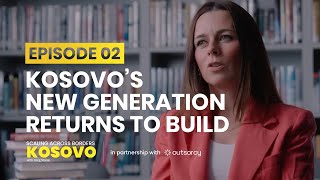
A filmed episode (Scaling Across Borders — Episode 2: The Ones Who Came Back) in which host Greg Moran visits Kosovo to profile people who returned or relocated there to build businesses and educational institutions. The piece features multiple founders (Blendrett/Blendrett — founder of Tactica and Elzai; Ghent — founder of Revdash and Maxhire; Zach Dowd with Ethan and Dion — running Decathlon/AI systems) and educators (Dr. Albina Bolidomai at RIT Kosovo; Alejtin/Alejtin Berisha at Universum College and the Finnish School of Kosovo). Major themes: diaspora return and reverse migration, building global service and outsourcing teams from Pristina, youth-driven talent pool ("50% of the population under 30"), and education-led capacity building (entrepreneurship courses, experiential "town/Kunta" learning). The episode balances optimism about cost-advantaged, English-capable talent with candid notes about gaps in investment, R&D, and a full startup ecosystem.
Chapters
This is scaling across borders, a journey into the markets most of the world overlooks. I'm Greg Moran, an investor looking for what others miss. Places on the edge of the map that are building their own future. My first stop, Kosovo. It's a country better known for headlines from the past, yet rarely seen for what it's truly becoming. Coming back home means different things to different people. For some, it's returning to family. For others, it's a chance to finish a story that never really ended. Kosovo's past pushed so many away, but now a new generation is coming back. Not just to visit, but to build. Leaving is easy when the world opens its doors. But coming back, that takes something else. What makes someone trade comfort for uncertainty? Blender at Elzai is part of a new wave of founders turning Kosovo into a global service hub. After studying and working in the US he came home to prove that a small team in Pristina could deliver at the same level as New York or San Francisco.
I had the opportunity to stay in the us. I worked for a couple of marketing agencies there after I did my MBA in marketing. But I had a couple of ideas of what I want to do. Ultimately, the goal was to come back and start something of my own.
Gintedushi left Kosovo during the war and grew up in the Bronx. After a decade working in New York's tech and marketing world, even at Google, he walked away from the American dream to chase something harder. Building world class companies from Pristina.
I think when I joined Google, I was there for about four years. Towards the end, I didn't feel challenged. If I'm not learning every day and I don't feel challenged, I have to do something different.
Dr. Albina Bolidomai built her academic career in the United States at Minnesota, Clemson and Yale and chose to come home.
I felt that Kosovo needed more, needed people to come back to help build the country.
Alton Barisha could have built his career anywhere as he studied and worked abroad. He earned degrees in Finland and saw the world's best education systems up close. But he came home to apply that knowledge here.
I taught at NYU for a year. I lived in the UK for two years. I lived in three other countries around the world, but I always came back here.
But not everyone building here was born here. Zach Dowd came from Australia as a traveler who arrived by chance and stayed by choice. What started as a hiking trip became a new chapter in his life.
I didn't really have any expectations. I didn't know what it was going to be like but from that experience of interacting with all the local people, I was like, this place is amazing. Like, the energy here is so vibrant. It's young. And everyone, everyone's speaking English as well, which is for the Balkans. I don't know. There's not quite any other city I've been to where it's like, English is quite frequently spoken.
Today Zach runs decathlon together with Ethan Allen and Dion Barisha. It's a team blending international experience with local drive.
What we're doing now is we're building internal AI systems for, like, holding groups.
Oh. Ethan's also an Australian living in Kosovo.
And so what that comes down to is like, okay, you guys have got, you know, let's say five different businesses. They've all got different ICPs, they've all got different business models. What's the overarching strategy which governs how you run those businesses? And then how can we take that overarching strategy? Install custom made AI into your business so that instead of having five people all managing one task, instead you've got one person managing that task with the help of the supplementary AI.
Before the office, before the company, it was just an idea and a coffee table at Newborn Brew.
I'm walking into a coffee shop and I wander in and this guy next to me is like, g', day, mate. You're from Australia.
See you on TikTok.
I'm like, yeah, that's me. Deanne's not Australian. He's an Albanian, born and raised in Kosovo. Together with Zach, they came up with a business idea. Building a business in a country you didn't grow up in isn't easy. But Zach says that's exactly what made it meaningful. But this is where you started. This is where you started the business. Right. I think you told me on the way in, like, there's a.
This is ground zero right here.
That's right.
Everything started from here. The meeting. My idea for that product started here. I made a team that believed on that idea.
Yeah.
And Zach was able to see that. So he was really impressed by that.
I came into that interaction. I was, I don't come from a tech world or a tech background. I'd been working in sales and marketing for two years and I saw the app they were developing and I was like, d, I want to sell this in Australia. I'll set up a universities and sell this to get all the students on as users.
Yep.
Like, whatever you guys build, I'll sell it in Australia or wherever.
Over time, the outsider became part of the story. Proof that Kosovo's future isn't just being written by those who left and came back, but also by those who arrived and stayed. Hello?
Can you hear me?
Yeah. I got you.
It is Greg, right? It is.
Splendid. Nice to meet you.
Nice to meet you too. Where are you from, Greg?
Denver, Colorado. How about you?
Oh, nice, nice. Never been there. I am from Kosovo. It's a very small country in Europe. I'm sure you never heard of it, but have you?
It's been a while. Not sure why I've heard of it. I think it's been some time.
It's a great place to see you. Should definitely consider coming.
Great, I'll be right there. When I first met Blendrett, it was through a video call. Like every modern partnership back then, he was running a small agency from Pristina. I was calling from across the ocean. A few years later, we were sitting in the same office, building something together. Educated in the US he came back home to build not just one company, but an ecosystem that connects Kosovo's talent to the world.
So I returned to Kosovo, started Tactica, a marketing agency, together with my brother who is an expert in marketing, SEO, Google Ads and other performance marketing services. And we started offering services to the US market. And we do to this day. It's been eight years that we're around. We spent a lot of time building a product that it's comparable to anything a US agency would provide.
So Tactica's clients started asking for more than campaigns. They wanted full teams, people who could plug straight into their companies. That idea became outsourcing.
Tactica has been supporting clients not directly with staffing services, but we realized that many of them were really appreciating the level of quality they were interacting with, from our client account managers, from our project coordinators to designers. So there was a point when some of them started asking for help, maybe to hire someone to get someone part time for some of their operations. And we get that all the time. We have been offering them support without any, you know, financial or business model around it. But then in 2024, we saw that it was time for us to start building this additional line of service where we're actually building teams for our clients. So that's how actually we thought about outsourcing.
For Blendret, leadership means blending two worlds. The structure of New York and the flexibility of Pristina.
You have that marketing pool of talent that is comparable to the US from graphic designers to social media managers to copywriters. I would say we're at par here. An Experienced social media manager, for example, is 25 years old. We don't have a 35 year old social media manager. They don't exist, so we need to teach them earlier. But we see that as a benefit.
From scholarship student to global founder, Blender's story captures Kosovo's momentum. A country truly scaling beyond its borders. Ghent's story doesn't start with discovering Kosovo. It starts with returning to it. What was the reaction you got from your friends? Like, where's what you're going where?
Yeah, I mean, I'd say some of them thought I was crazy, others would kind of stay silent. You can sense the hesitation because when you're there, it's kind of just a grind of the New York lifestyle. Right. And saying, I'm going to just take my family, move to another country is very challenging. But there was definitely some friends that said, hey, I command you for doing this. This is great. You're taking a huge risk.
So ironically, you were actually moving away from your family, back to your homeland. He walked away from the American dream to build something harder, a global business from his home country. From that idea came two companies, Revdash and Maxhire. So tell me about what you're building here at Revdash.
Yeah, so as a sales rep working at many different startups and large organizations, I always saw this gap in kind of sales development and outbound go to market. I said, let me take all this experience that I have across these companies and let me build out a company where we help software startups establish companies with their outbound go to market motion. And then we offer fully dedicated sales development reps who go out and execute on that strategy. And our focus is really on the large enterprise clients. My team, for example, schedules meetings with executives at Goldman Sachs, JP Morgan Chase, Wells Fargo, Walmart, and it's all happening.
With talent that's local here in Kosovo.
That is correct.
For Ghent, Building Systems was only half the story. The other half was people.
So we have a project which we launched two years ago called Maxhire, and it's basically a borderless talent platform. Companies can go in, they can find talent in Kosovo, in Albania, in the region, and globally. And the whole goal is to make that direct link between companies and talent. So I think as a company who originally hesitates to go into a new market, once they do and they see the value and they want to expand, it's like, well, what if I want to hire these people directly? Right? And so that's what the platform is about.
From those who found Kosovo by chance, to those who chose to come home. Together, they're proving that you can build global companies from a small country. After the entrepreneurs and builders, we arrive where every story begins in the classroom. Dr. Albina Bolidomai built her career in academia abroad, earning her PhD teaching in the US at RIT Kosovo, Albina leads a program built on resilience, critical thinking and leadership.
This opportunity does not come along often where you have some of the skills needed to help rebuild your country. I felt that Kosovo at the time needed people who could build bridges. And still today, I see an opportunity to create bridges between diaspora and Kosovo, between global opportunities and local hunger.
She's training students to think globally and compete anywhere. For her, education isn't just a profession, it's a way to shape Kosovo's future.
Every day we ask ourselves this question of what are we doing here? What is our mission here? What is the global or bigger impact that we're trying to have? Who are our students? What happens to them when they graduate? Where do they go? In these discussions, we see that our students are making impact when it comes to critical thinking the most.
Alpina's work extends far beyond Pristina. Under her leadership, RIT Kosovo has built a global network of partnerships with universities, industries and diaspora mentors.
Some of the discussions we have had internally on how to scale this up was to create international business partnerships for our students, because we feel that it would make it even easier for them to get involved in the global market. They already have the skills. They building that opportunity for exposure.
But education in Kosovo doesn't only happen in universities. Alatin Barisha is part of a new generation of educators rethinking how learning itself happens.
I'm in education because that's where I believe you can make the biggest change. And especially in a country coming right out of the war, the thing that we needed the most was talent, right? We had talent, but it wasn't nurtured in a way that we really wanted to be.
Through Universum College and the Finnish School of Kosovo, Allatin turned that experience into action, creating institutions that give young people global tools without losing their local identity.
The first thing for the students to learn is actually they have to feel safe. There is no place where they feel safer than their home. So we build a house here for the students. Whenever they come in, they see this and they feel home, so they feel safe. And the whole environment has been designed in a way that students continuously learn, but learn unconsciously. And the most important piece in this learning ecosystem is our town called Kunta. So we built a, we say a whole town in our school in Kunta, students role play. They work for the government, the bank, the tech startup, or different companies. And in this way they solve challenges, they have different tasks, and in this way they understand how the economy works, how the society works, and the most important, they develop entrepreneurial skills.
That belief drives everything Allaton does, from student centered learning to entrepreneurial programs that link Kosovo schools, startups abroad.
We are the first university, at least in Europe that I know of, that offers a mandatory entrepreneurship course, even for politics students or public administration students or national security students, for example. Our students were so pissed off at the beginning when I said, I mean, I came here to study politics, right? Why do I need a course in entrepreneurship? Because for us being an entrepreneur, it's risk taker, problem solver, seeing opportunities where everybody else sees problems. So we try to build this mindset of entrepreneur in everything that we do.
From university halls to elementary classrooms, Kosovo's educators are building the bridge between where this country began and where it's headed. The promise of Kosovo comes with its own set of struggles.
US companies especially or entrepreneurs who want to launch from Kosovo, I don't think they can find here a full ecosystem that will support them, especially with investments and maybe a lot of very deep research, R and D. But what the ecosystem offers here is a community who have been working and they are in the tens of thousands of them who have been serving big global giants as well as startups. And they understand from product to go to market and could help them launch their product, their company at maybe 1/5, if not 1/10 of the cost that it would take to launch elsewhere.
The hurdles are real, but so is the belief that the future of Kosovo is worth the fight.
I think anytime you go to a new country, that working culture is different. And so it's very easy for you to say, well, listen, in the US we work these hours and we don't do this and this and that. But at the same time, if you actually accept that culture, learn kind of the good and the bad, try to bring some of the good stuff from the US working culture, take some of the good stuff from Kosovo working culture, I think you can have a pretty good combination of both.
There's something that keeps people here. When asked why international employers should hire from Kosovo, none of them hesitate.
Well, outside of the fact that Kosovo has a huge group of young people really eager to get out of the.
Shell and learn, you have that perfect balance of very good cost structure, great pool of resources.
Take a week trip, come have some interviews, talk to people, see how alive, how young the population is.
50% of the population in this country is under 30, right? So this is what we have, and this is what we should.
The biggest natural, the biggest national asset is the youth. Right? It's the youth. Kosovo's story isn't just personal, it's economic. The question isn't if there's opportunity here, it's how fast you want to be a part of it. People left for not a great reason. They went to the U.S. they went to different countries, but they all came back here for the same. To solve the same problem, to build something for themselves, build something for their families, but I think most importantly, to try to build a country. And that is that common denominator that brings people back here for something just so much larger. That's not something you see in most other places, that it's really unique to Kosovo, but it's something really special about what's happening here. Because when you've lived in two worlds, you know the best parts of both, you carry the confidence of one and the resilience of the other. And maybe that's exactly what Kosovo needs right now. The next story begins in the offices, labs, and rooftops where Kosovo's new economy is being built. One line of code at a time. We meet the innovators. Building Kosovos tomorrow, but doing it today.
