Alexander Berger - Pinot Noir (December 2015) - Podcast - Audio with Pictures
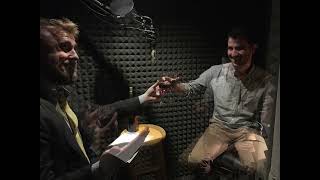
Alexander Berger, program officer at GiveWell and the Open Philanthropy Project, discusses how the organizations recommend charities based on evidence. GiveWell directed roughly $30 million last year and expects to approach $100 million this year, with top recommendations including the Against Malaria Foundation and GiveDirectly.
Chapters
Hello everyone and welcome to Wine Grants, unscripted chat about the unfunded, the official podcast of The Unfunded List. I'm Dave Moss, the founder of The Unfunded List and board member of the Moss Family Foundation. With me this week is Alexander Berger. Say hello, Alexander.
Hey there, how's it going?
Hey, it's going pretty good. I'm in a booth with you drinking some Pinot Noir.
It's delicious.
It is very good. I want to thank you for recommending— I don't believe anybody has recommended Pinot Noir, and it's one of my favorites. We had— we drank cognac a couple weeks ago, which is technically a wine.
I was going to say, barely.
Yeah, it's technically— I mean, I didn't clarify that.
And next time I'm asking for whiskey.
Yeah, that was not— I mean, if I wanted to do whiskey rants, I would have done whiskey rants. Exactly. But so I want to thank you for picking an actual, you know, known wine. And a delicious one at that. We always like to start the episodes off by reading our guest's bio out loud. And we also love setting records here in Wine Grants. So not only is this the first bottle of Pinot Noir, but I think— I'm pretty sure this is going to be the shortest bio I've ever read here in the booth. So here we go. Alexander Berger is the program officer for U.S. policy at GiveWell. Alexander graduated from Stanford University in 2011 with a BA in philosophy and an MA in policy, organization, and leadership studies from the School of Education. He joined GiveWell in July 2011. Welcome to the booth, Alexander.
Thanks so much for having me.
Pretty much everybody knows everything they could possibly need to know about you.
There's really nothing else to say.
Uh, yep. Um, you graduated with a BA in philosophy. Who's your favorite philosopher?
Oh wow, that is a tough question.
Um— It's Dave Moss of The Unfunded List.
Exactly. His deep insights have really moved my worldview. Um, so I think that the one— this is a little bit stereotypical for people in my position. But the philosopher who's probably most moved my thinking and like most affected my life path is a living Australian philosopher named Peter Singer, who's a professor at Princeton. Sure. And definitely don't agree with everything he says, but I think that he's probably—
I think anybody— probably nobody— I don't think Peter Singer agrees with everything he says.
I actually think that's right. And his views have interestingly evolved over the years. But I find him like— he's a very practical philosopher in a lot of ways and I found him pretty useful. My— all my philosophy professors who listen to this will be disappointed that I'm not coming through with the Rawlsian answer, but so there is no answer that would not disappoint your philosophy professors, I can assure you. Yeah, it's not them.
Also, they're probably not listening. The, uh, it is— you're right, uh, you know, given what you do, that seems like the appropriate choice. Um, I think, you know, uh, and similar, I, you know, a lot of stuff he says that I don't agree with, uh, but I like that He says it, and you're right, I like that his opinions evolve. It's very boring to me, people whose opinions do not evolve. And one of my favorite politicians was a guy named Ed Koch, mayor of New York. And he once said, "If you agree with me on 7 out of 10 things, you should vote for me. If you agree with me on 10 out of 10 things, you should see a psychiatrist because you're a crazy person." That's a great line.
When was he mayor?
Oh God, I think when I was a— When I was a kid, I vaguely remember it, so in the '80s sometime. And I think he's still around. I'm not really sure.
Yeah, I think he is.
If he's not, I apologize to the—
The memory.
But no, thank you very much for stopping by the booth. Tell us a little bit about your organization, GiveWell.
Well, so GiveWell is a nonprofit that was founded in 2007 to help donors decide where to give money. We basically run a website where we recommend a handful of extraordinarily deeply vetted organizations working primarily in global health. Where we've done a lot of research about the interventions that they conduct, about the way that the programs are operated, and where we think that they're really cost-effective ways for donors to spend money to deliver better outcomes, often in terms of health or lives saved, but also in terms of sort of economic outcomes, like more money for really like people who are part of the sort of global poor. And I joined in 2011, so a few years after it started, and I was about the 5th employee when I came on. And now we're about 30-something. And the big change over the years I think has been one that, you know, our research has gotten a lot bigger audience and gotten a lot better as the team has grown. But two is that I actually work on sort of a newer project for us called the Open Philanthropy Project, which is our partnership with this new foundation called Good Ventures started by Dustin Moskovitz and Cari Tuna. Dustin's one of the Facebook co-founders. And so we've helped them give most of the money that they've given in the last few years. And I think the long-term vision is that instead of start sort of primarily giving their wealth away through a private foundation, they'll give through this sort of more open public vehicle that other people could eventually join. And so I think in the medium term—
That is interesting.
—we'll probably spin that vehicle out of GiveWell. And so eventually I will work for an organization called the Open Philanthropy Project instead of the Open Philanthropy Project team of GiveWell. So to clarify, who founded GiveWell? It was founded by Holden Karnofsky and Elie Hassenfeld in 2007. They were both like 20-somethings who had been working at a hedge fund for a couple of years. They knew each other from that. They started a club with 6 friends to give away a little bit of, you know, the money that they had made in 2006. And they quickly realized that trying to give effectively was a full-time job, not something to do with like a few hours a year. And so they quit their job and raised some money from friends to go start a nonprofit that was GiveWell.
Great. And then— and so you work specifically on your— what does it say? Program Officer for US Policy, but you work mostly on this Open Philanthropy Project.
Exactly. So yeah, my role in all of the US policy work that happens at GiveWell is under the rubric of the Open Philanthropy Project. Or what we call Open Phil, because we prefer not to use OPP as the acronym. Understandable. But the— it's been hard to explain that to the press in a serious way. Nobody quite wants that quote. Yep.
They're probably going to just write OPP anyway. Thanks. What do you want to say? Open Phil? Open Phil. I will do my best to help have that catch on.
Thanks, Dave. I appreciate it.
Philanthropy community. That's all I ask.
That's all I want. My Christmas gift. So anyway, yeah, so I work on that pretty exclusively for the last couple years. Before that, I worked on reading and summarizing the literature on different interventions in global health to try and build cost-effectiveness models for different charities. Very, very interesting.
You're really much more— and don't take this the wrong way— you're much wonkier philanthropist than me. I find people who know what they're talking about and listen to them. You're one of those people who knows what they're talking about.
I actually think of myself as doing something very similar to you, right? I'm not an issue or a subject matter expert in either global health or US policy by any means. You're so close.
Yeah, there's a bug in the booth today. Could make the podcast— I think I might have gotten it.
I don't think you did. I tell you, I don't think so.
We'll know soon. Soon he'll fly away.
But yeah, I think that you're right. A lot of what matters in philanthropy is being able to put aside your own opinions and consult the right experts at the right time. That's definitely something that we see ourselves as trying to do.
No, and there have been a couple of times where I sort of tried to pretend I was an expert, right? Or tried to research things myself. And to a certain extent, that is the right thing for the philanthropist to do. But relying on experts is not a sign of weakness. That's right.
And then sometimes also experts are wrong, right? So you don't want to fetishize it like the technocrats aren't always right. Yeah.
Well, you know, that is absolutely true. You know, oftentimes, you know, a lot of our— a lot of the grants we received at the Unfunded List were rejected by people who are experts and these are, you know, great programs. It doesn't necessarily mean anything about their value. In fact, that was one of the biggest learnings for me We are, you know, not all that well known, but we got 15 proposals submitted. And I had assumed from the start of launching this project that I would get bad proposals. That was a given for me. And it was actually part of why I wanted to do it. Because I don't want people to waste their time pursuing bad ideas. And I do think it's true in the sector that in general, critical feedback Good critical feedback is hard to come by. And I've, you know, there's people out there who, and I've seen them, uh, uh, pushing bad ideas. And part of me wants to think that that's just because no one ever told them. Because someone's doing good, they started a nonprofit, they quit their job to go start a nonprofit, right? Those sorts of stories, sort of, you don't want to be like, oh, but yeah, that's your— what you're doing is bad. Yeah. And you should feel bad. Yeah, it's hard. No, I know it should feel bad doing Bad philanthropy or having a bad idea for solving the world shouldn't make you feel bad, but we do need to find the best ones. I think that's important. We should be giving well, right? Talk to me a little bit more about— so you're one of the first philanthropists we've had in the booth who also has a list. We're just two philanthropists with lists in a booth.
Totally equal. You and I are in the exact same position here, but you're wearing a suit.
Well, I— so another assumption I have is that the publishing the list would be like our product, right? The big— the unfunded list. I was inspired by a number of different programs. One of them is the Blacklist, which is a program run by some studio— some Hollywood studios for screenplays that were never made into films. They ask all the readers to vote for their favorite screenplay that never— that wasn't made. Yeah. And then they publish a list of— based on how many votes they got from the readers. And I think their first winner was actually Charlie Wilson's War, which got made into an award-winning film. In fact, pretty much every year the winner of that list gets made because there should be a secondary market for these sorts of things. This isn't applying to college. There isn't even a Common Application. So the idea that we're going to— and I I've written grants and I've spoken to people and I've read some articles about it. It takes about 4 to 6 weeks to write a solid grant proposal. When that gets rejected for no feedback and then read by— and then kept secretly in a drawer, that's just such a— it's such an inefficiency. I think by just bringing them out of the drawer, putting them out. And I actually thought that I would— we announced the first list on Giving Tuesday. And I know that we did spur some new donations. For some of the organizations. I've heard back and I hopefully will find out about some more, including some fairly large donations. Awesome. But I actually— I 100% believe that the feedback we gave, not just to people who made the list, but to the 11 folks who don't— I'm still in touch with people who did not make the list, facilitating some introductions, trying to get them on the phone with their evaluators. So they can ask additional questions, giving them really solid feedback on their proposals, that that's ultimately going to be the main value of the list. And so now that I've got you here locked in a booth, you guys have what I am sure is a much stricter methodology to— and this is a permanent list you maintain. I don't remember, do you— I don't want to put you on the spot, but can you name the organizations? [Speaker:ALEX BERGER] Yeah. Well, so there's— [Speaker:ZACHARY WALLACE] How many of them are there?
So there's 4 top charities that GiveWell recommends right now.
4? Yeah, we are— the unfunded list has 4 organizations. What do you know? Can you name them all? Yeah, I can, yes. I can name all 4. It's a challenge sometimes. So it's Girls HealthEd, it's Organize!, it's Accountability Lab, and it's the Lookout Festival, an arts festival actually that was proposed by our host today, the Lookout DC. And that was— I didn't pick the list. I have a matrix I gave to all of the evaluators and just in sort of in generally— I did ultimately choose the list, but I did it based on the 4— these were by and large the 4 organizations the evaluation team liked the best. There was no— there was a huge gap between 4 and 5. And so I was like, well, here's the 4 they liked and the rest they like, but they were either a major problem or there was a couple evaluators who really didn't like it or something like that. So we're giving them really useful stuff, feedback, introductions. I think we're going to improve everybody who applied. But in terms of launching the list, picked those 4. Did you start knowing it was going to be 4 or you just looked at what you actually got? I didn't know how many proposals I'd receive. I was thinking 10 because, you know, obviously lists of 10. I was a Letterman fan. But I used to— I always said 10 or so. And, you know, 4, I think 4 is, it might have been too many, right? It's a lot, especially if you're putting up a list for donors to consider donating to. That's a lot of organizations. That's 4, especially like full proposals, like to sit down and read everything I put up would take a person a long time. Which I'm sure is true to look through your stuff. So what are the 4 on, it's malaria something?
[Speaker] Yeah, yeah, yeah, so GiveWell's 4 top charities right now, we actually, I think ours went up a week before Giving Tuesday. But we always try and refresh the list at the end of the year because that's— the vast bulk of our donations come in in December, as is common for a lot of charities. But partially because we update once a year, our donors know to sort of wait and see what the new recommendations look like.
And you do this once a year?
Yeah, we do. I mean, we will do a check-in. I mean, we talk to the charities year-round and we do a sort of formal check-in usually in March or so to reflect how much money they raised in December and if there's any big need for a reshuffle. But we aim for a once-a-year top charities update and like that really sort of organizes the work year for most of my colleagues at GiveWell.
And the main purpose of that is if you're making your December donations— Yep. If I remember correctly, it's like 90% of all philanthropy happens in December.
Not all philanthropy, but of our— 85% of donations made based on our recommendations. I should double-check it. Maybe it's 80%, but like a really large proportion of our money given based on our recommendations is in December.
But I mean, overall in America, it's large, but it's not—
it's a very—
it's not a large percent because of, you know, the end of the tax year, holidays. I feel like people take advantage of the tax credit. I don't think anybody ever gives because of the tax credit. Totally. That's when they do their giving then because that's— they got to do it by then in order to get the tax credit. They're never like, I wouldn't give if it weren't for this tax credit. Right.
But I agree with that. It's really interesting how much the public policy commentators miss that. And even like I think philanthropists are part of the problem, right? Like when— I joke about it all the time.
I'm like, "Where is the tax credit there?" I mean, it's never why— I never gave a gift for— I mean, if you're a rich person and you want to avoid paying taxes— There are better ways. There are a lot of ways. There are a lot of ways to do that.
I think it's really surprising because I think that like, look, a lot of charities seem to think that it they show up to oppose it. And I find that kind of disappointing, right? Like it's a pretty regressive subsidy for a lot of giving and it's not— I mean, this is my personal view. I'm not speaking for anybody, but it doesn't seem like the— Is this something they would frown upon on GiveWell? No, I don't think my bosses would mind, but you know, this is— No, I agree. A lot of wealthy folks benefit a lot from the deduction.
Mm-hmm. It is true. And poor folks donate just as much in terms of total amount, but rarely do they get to take advantage of that deduction because most of them— They don't itemize. Yeah, and overwhelmingly don't. Yeah. And they should— you should get the same benefit for—
Yeah. My undergraduate advisor, Rob Reich, has written great stuff about this, and I think like he— I've heard of him. Yeah, yeah. He's actually a different Rob Reich. I should have gotten it. Oh, really? Yeah, yeah, yeah.
So the one you've heard of is the former Labor Secretary. I can assure you that none of my Dickinson professors have you ever heard of. They were all very smart.
No, no, no.
They're good schools. He's a philosopher.
He's a political scientist who writes about philanthropy. And one of his arguments is that instead of having like a tax deduction for charity where like people in higher marginal tax brackets get more of a benefit for giving, you should just have like some sort of like charity voucher or something where like you give everybody, every citizen, some kind of voucher for their annual charity instead of like publicly subsidizing. And Rob, if you ever listen to this, hopefully I didn't misportray your view. I'm happy to take responsibility for that. But that seems to me to be a better way to subsidize charity.
You get it as like a reward for filing your taxes. Sure. Here's your charity voucher.
Or it could be like when you vote, right? Like the idea, the basic idea is just that.
Or when you encourage people to show up to vote. Yeah.
The basic idea is that it's like a citizen dividend instead of— I love it. Right now our charity system is really like the rich give a lot more, but also get a lot more of the tax benefits and therefore have a lot more of a say. If you gave people sort of an equal, benefit or an equal dividend to spend— you know, you can imagine like different forms of cultural production or charity becoming a much bigger deal. And like you said, I think we would still see a lot of people actually writing real checks because like they give for the interest of—
I think, you know, some of the most widely criticized philanthropy is these large gifts that go to higher education or the arts, right? And those are not gifts that everyday American— these are only gifts that like the one— not just, you know, 1%ers make, the 1% of the 1% make. We're talking about these $100 million, $200 million, $300 million gifts. There was an article in the New York Times a little while ago about the arts organizations in New York City raised $3.5 billion last year. And like, and I don't— arts get crapped on in philanthropy. Yeah. And they should not. The arts are important. We probably don't need $3.5 billion. That was just in like, they had like a list of the gifts that did not count the like individual small gifts of that was just all the major donations from one year. Yeah. And those gifts, I know why those gifts are made. I mean, they're, they're made for access. They're made because someone wants to have art. Sometimes there are donors who will donate to a museum so that they can have first choice of the art for their own home. Oh, wow. Really? Yeah. We— there was— there's a donor. His name is Mitchell Rales. I don't normally like to name names, but I don't like this guy very much. He's like the 100th richest person in America. He's the founder of a company called Danaher. And there was a City Paper exposé a while back about him and about his arts philanthropy. Yeah. And he operates his own private museum out in Potomac, and he is a major supporter of every single art museum in D.C. And he— and the reason for that is so that he can— he's borrowing it, right? It's on loan from the whatever. Right. It's— but he's writing huge, you know, 7-figure checks, so when he asks to borrow the Picasso, they let him borrow the Picasso. Right. And like, he's making the museums possible with his generosity, but he's also, it's also, it's not particularly accountable, or if an everyday citizen has a problem with that, there's a special office where he can go to complain.
Exactly right. I mean, private museums themselves, this is another point that's due to Rob, he gave a talk about this recently that I saw. Private museums themselves have a pretty weird status, right? Like if you're a wealthy person who has a big art collection and you put it in a separate building on your property, suddenly like you can make that a private museum. It's basically only accountable to you. You get the tax write-off at that point for all the donations.
That's exactly what he did. And it's like you never have to release it to the public. It's funny. I don't think you've read this article.
It was a while back.
He was a big donor to a program I was working for at the time. And this came out front page, City Paper. You might have it out there. I know Washington City Paper. I don't think we have it. Yeah, it's an independent paper that often does like sort of takedown type stuff. It's like one of the alternative weeklies, right? People need to be— yeah, an alternative weekly. People need to be taken down every now and then. It shouldn't be done willy-nilly, but how else are we going to find out about that? Because otherwise, the only way you learn about this guy's philanthropy is you see his name on the donor wall and you go, oh, how generous. And that's how people are talking to him all the time. Oh, how generous. Like, well, you're keeping the best art for yourself.
Yeah. Not so generous, maybe. Yeah.
And he, you know, it was a, you know, he basically made, built a museum for himself. And he gives, he picks like one school to like give it, like they can come one day a week, have a tour. Yeah. And as a result of that, it's a public, it's public, open to the public museum because he does. Yep. Right. And one, you know, he's, I'm sure he's not there for the tour, right? He hires somebody to give a tour to some, and I'm sure the, I'm sure he gets thanked where he gets 30 thank you letters from a bunch of students. And, you know, and that's fine. He is making art available to a lot of people. Like, it's not— this is just the way the system is. Yeah. There's, you know, little ways I think it can be improved with some more accountability. Some— I love the voucher idea. I want to look a little bit more into that. I have not— you've not yet said the list. Delane, what if I forgot them? Yeah, this is your— I clearly— you're buying time because you don't— because you can't name them all.
That's not true. I can name them all. I'm just— I've been trying to get you to drink more water.
Wine to make it more likely that you will—
Remember? Ah, ah, more likely not forget.
You can clearly do it. I remember they did have complicated names.
They do. Yeah, let's see if I can round them up. Without further ado. The organization that's number 1 and where we recommend that most individuals who use our research give is the Against Malaria Foundation. They distribute insecticide-treated nets to prevent the spread of malaria in sub-Saharan Africa. We think they're remarkably cost-effective. There's been a global net gap for like basically as long as there have been insecticide-treated nets, but I actually think it's not going to be around forever. And so donors have a pretty rare opportunity to continue to deliver these nets until the global community acts to fill this gap. And so I see that as a really promising opportunity. That's where I gave the bulk of my personal donation this year. The other 3 top charities are GiveDirectly, which is an organization that gives unconditional cash transfers to people living on less than $1 a day in Sub-Saharan Africa. Particularly Kenya and Uganda right now, but I think they're expanding.
That's awesome.
That's very effective. It's a really neat model because they take advantage of these mobile money systems that are— it's like, you know, people in Kenya had something that's better than Venmo like 10 years ago, which I think is kind of awesome.
Well, are they there because they're like a remittance-based economy?
They are, but it actually came up as a domestic service.
Like the local— I'm not an African economist or anything, but— So, no, it's a service. It has greater need for something like that.
Yeah. I don't know. Kenya had it and other places didn't. So you need a particular story. It seems like the telecom company in Kenya had like a real innovation basically. And then they had regulatory— they had rules that allowed it to scale more easily than other countries. So it's a sort of weird particular story actually. But anyway, they ended up with a great mobile money system that allows you to really cheaply transfer money to really low-income people. And so GiveDirectly transfers something like $0.90 of every dollar donated to people living on less than $1 a day, which I think is a really remarkable— feet and something— Compared to Western Union or something like that. Exactly. So it's not like a competitor in the remittance market in that, like, you don't designate your beneficiary. It's not meant for you as, like, a recent immigrant to send money home to your family. But you actually— a lot of people do use M-Pesa and some of the underlying technology for that. GiveDirectly is an aid organization.
They give— I did not get the bug. It's back. You're no Obama, like I said.
If only we all could be.
But that is the only difference between the president and I. He has better reflexes. Slightly faster hands he has.
Anyway, so I think GiveDirectly is awesome and I think they're a sort of remarkably well-run organization, just really operationally efficient. And so they're really fun to work with. And then the other two organizations are the Deworm the World Initiative, which is a project of Evidence Action, a nonprofit that sort of spun out of Innovations for Poverty Action, which is one of the groups that sort of does randomized control trials on different things. In low-income countries to try and figure out what works. And the fourth one is the Schistosomiasis Control Initiative, which is probably—
What was that first word?
Schistosomiasis. Schisto? Schisto. Schistosomiasis. Exactly. And they— that's an intestinal parasite. Like everybody, I think. Everybody knows that. Yeah, why would I explain that, right? And it's super easy to treat. The pills cost like 50 cents, sometimes much less than that, actually, because they're sometimes donated by the drug companies. And that— both that and Deworm the World do sort of similar things. Deworm the World has historically worked more in Southeast Asia. Schistosomiasis Control Initiative has worked more in sub-Saharan Africa. And they do like sort of country-level deworming programs to ensure that kids who have these intestinal parasites, which are super, super common, like a billion people have them, get the pills that kill them for like almost no money. Awesome. So those are the 4.
I remembered. Yeah, good job. So it was what, the End Malaria Foundation?
Against Malaria Foundation. Against Malaria Foundation.
GiveWell, to give directly. Thanks. A lot of people get those confused, actually. The Schistosomiasis Control Initiative. Yep. And the end the worm? Deworm the world. Deworm the world. I felt it that time. I definitely didn't get it. This would be so much better with video.
Slipped right through my fingers. You guys could just see Dave like, Oh, just grasping after bugs.
I'm basically just flailing wildly in here trying to kill this bug. And you're doing a really great job keeping your clothes. I missed it too. Yeah, you do need to, I feel like two hands is the right approach, but I'm drinking wine with my left hand. I have a little table here to help me out. So there's a few, what's interesting to me is there's three health organizations, but then just sort of like more of a microfinance type. Situation. So, uh, how is it, uh, I imagine you have very complex methodology, um, probably far— we have, and we do here, uh, at The Unfunded List, Girls Health Ed, Organize, uh, The Lookout Festival, and Accountability Lab. See how much faster I can name our four? Uh, if I talked about them, then it would probably take the rest of the, the rest of the podcast. Um, But, you know, we have a pretty complicated matrix that's sort of about— because we're dealing with unfunded ideas, we're sort of— our focus is on does this idea already exist? Who should you be looking for to partner with? Is this innovation an effective one worthy of new funding? Like, you know, those sorts of questions. Whereas you're sort of grappling with a currently already existing solutions to huge problems. You've chosen 3 very clearly health-specific problems and then sort of an economic fix in there. That's— that— I mean, it's interesting to me, what is it about your methodology that drives that outcome?
Yeah. Well, so one thing is that a lot of our process for actually finding these organizations starts with the academic research base. So the GiveWell Top Charities, we're trying to offer donors something that's really evidence-backed. And so when you think about where you should look for that kind of program. I don't think starting with charities themselves is the best place to start because charities aren't social scientists. They're not the ones who are responsible for creating the evidence base for some intervention. And so we typically are actually starting with like the medical literature or the like economic development literature to look at where— what are the interventions or what are the programs that have strong evidence bases?
And then we go— [FOREIGN LANGUAGE] Because what philanthropist has time to do that? Right.
It's not something that like any— Even a foundation with a staff. No, it's rarely something that other folks would undertake. And, you know, obviously we benefit from people who have done similar projects in the past, right? So the WHO has done similar sort of prioritizing exercises. There's a report called the Disease Control Priorities Report that has various flaws, but it's pretty useful in some other ways. So anyway, there's—
We all have flaws.
We didn't create this from the ground up, right? Like we exist in an ecosystem of people who are doing stuff that makes this possible. But a big part of the idea is that we don't ask charities to create the evidence themselves. We're looking for interventions that have strong academic evidence. And then we look for organizations that can show that they're delivering those programs really well. And so that's the case for all 4 of the organizations that we listed, that there's this really strong academic case that doesn't come from the charity itself. And the charity has really strong evidence that they're delivering it well, but not necessarily strong evidence that the intervention itself works. So like AMF has surveys showing that people are hanging their nets and sleeping under them. But AMF isn't collecting the data to show that, you know, bed nets prevent child mortality. That's a bigger enterprise that, you know, academics have done a bunch of over the last 20 years.
Awesome. Very good. And do you have any, any sense of how much funding you've been able to generate by producing these lists?
I wish I remember the exact number off the top of my head. But so last year, I think we moved just under $30 million to the top charities. And then I think this year, like, I mean, this is not official and I don't think we're going to break it, but I think we're looking at close to $100 million.
$100 million was donated through your— Yeah.
So it's not— I don't— don't, don't— but that's the idea. Yeah. Yeah.
Honestly, even if it's half of that, then like— Yeah. And a big enthusiastic round of applause. Right. Thanks.
Yeah. I mean, so one of the things that's been kind of surprising is is that the like, you know, we just started like putting this stuff up on a, like on a blog, on a website a few years ago. And what we found is that there actually was a community of people who really wanted this. And so we're not great marketers. We haven't done a ton of marketing, but what we found is that there's actually a lot of people who really did want this research. And once it existed, were really excited to like take advantage of it and frankly to give a lot more. And so there's like a pretty large community of people who are giving like a significant portion of their annual income to our top charities. Because they feel like they can give with confidence now in a way that they couldn't before.
Like they have a really talented staff of philanthropic advisors.
That's right. That's paid for by the community. Exactly. And so, you know, we're not consultants, but like we— a lot— it turns out there's a decent number of people who are sort of aligned around these goals. And so that's pretty attractive.
I know some people who are philanthropic consultants who probably don't like what you're doing. I think, yeah, that we're undercutting them. No, I mean— That's not a job that exists. Exist. This should just— I feel as though, as you might imagine, this is information that should be available. I think that's true.
Although, like, as a matter of fact, I think one of the things interesting is that like a lot of philanthropic consultants, a big chunk of what they spend their time on, right, is helping people reflect on their values and understand what are they trying to achieve in the world.
And that is—
yes, that is a very professional service. That is a very value—
but that's not like— you don't— and that's absolutely right. And I've had— this is a job I've done a couple times for a couple different folks. And you spend the vast majority of your time just sort of like as a— it's more like a life coaching thing, right? And you end up like actually spending very little time talking about philanthropy. But that— I mean, that's, that's a, you know, that's how it works on a one-to-one level. Most people can't afford, can't even afford to like think about living in a world where they could hire a philanthropic consultant or any consultant. Yeah. Let alone one that's going to like— you're going to pay this person to help you give money away. Yeah, that's to most— to the average person, kind of like ludicrous on several, several different shades of ludicrous. But as you mentioned earlier, and you're absolutely right, giving money away effectively, very difficult. It's a full-time job. Yeah. Especially— and like, even if you're doing it as a full-time job and you're the world's biggest expert, you still have improvements you can make, because we're talking about solving the world's biggest, most intractable problems. Malaria, right? Poverty in Africa, right? Stuff that has been around for a long time. If it were easy to fix these things, it would have been fixed. If simple charity could fix these things, would have been fixed. We've had charity for a long time. People have been tithing for a long time. International development's been around for a long time.
Um, I don't know how easy this is. Can I push back? Like, I Oh, do you disagree?
Do you disagree with me? If you disagree with me, by all means.
Yeah, yeah. I'm not playing devil's advocate. I don't know. I mean, I certainly agree this stuff is really hard. It's not easy fixes. It's not straightforward. We don't really know what causes poverty. Like, I think all of this is true. But I also think that sometimes people make it seem more complicated than it is. Like, GiveDirectly is, I think, a really interesting example, right? Like, GiveDirectly gives poor people like a ton of money up front. And I don't know, like, I don't— we're literally still waiting on the research to show, like, does that, like, sort of bring people out of poverty in the long run or is it mostly just like it subsidizes consumption in the short run? But taking, like, the world's poorest people and giving them more consumption where they spend it on, like, food and healthcare and buying a roof so their roof doesn't leak seems pretty awesome to me. And so even though we're really far from, like, we're nowhere near a world where we're going to eradicate poverty this way. It would actually be surprisingly cheap to like eliminate the sort of like $1.25, $2 a day poverty in the world. And like, I think it's like largely just a failure of will to do so. And like if, if sort of the global wealthy decided that they wanted to, it wouldn't be a hard thing to just like give the money and do it. Or I mean, frankly, for like rich countries like the US to commit to doing so.
What is it you think keeps them? So and again, I don't— I agree. I agree with you. It's not when I say if charity could solve it, you know, it would have. I don't mean we need a necessary— like a very complicated solution. I do— you're right. Just the 1% could solve global poverty. There's math. I'm sure someone's already written that article out there.
Peter Singer wrote a version of it in 2006 in the New York Times.
What is— right. What is keeping— what's keeping them from doing that? Yeah.
I mean, I think there's sort of two things. One is that like people aren't as generous as they would like themselves to believe they are.
But they are donating enough money.
They're donating some, but not a ton. I mean, so—
Take the worst— just take every single donation of over $100 million to an Ivy League school this year, and we could make a— if not eliminate— a huge dent in global poverty.
Yeah, I mean, it wouldn't eliminate it. I don't know— It would be fun to do that exercise and see how far it goes.
I could probably come up with something. Yeah. If I counted symphonies.
Right. Yeah, yeah, yeah.
Totally. Symphonies, orchestras, ballets, and Ivy League schools. Yeah, but I mean— Only $50+ million gifts. I mean, I still think it's like sort of surprising.
Like, even very wealthy people don't give as much as you might think. Like, it's sort of like once you're a billionaire, like, what do you expect to do with all the money?
They give a lower percentage than poor folks do.
So that also is a commonly cited stat that I don't think is true. Because like poor folks, if you take the all of the—
I think once you get income of the lower income bracket and the total amount of giving and compare it, this— like people write this article, that doesn't necessarily— people write this article, it doesn't apply to the 1%. Income and rich people are not necessarily—
that's not where their money comes from. Yes, it's partially the wealth thing. It's partially like the surveys that— the surveys that people use to generate these kinds of statistics don't have good penetration of like the 1%. So anyway, I wrote a blog post about this. Transplants, which is why I have a pet peeve about it. But it's really interesting, I think, that like— I'd like to read that. I'll send you all. Their philanthropy is fairly trackable though. Their philanthropy is trackable. You've got to be able to— No, but it's not that trackable. Like a lot of it is given anonymously and their income is super untrackable, right? The Forbes list is like made up. Tell me about it. So actually a lot of people, as you might know, at universities or whatever, have a job. People ask me how much money the foundation has.
I'm like, I have no idea. Wait, really? No, you have to file a 990. I don't. It's funny, they've been writing— Those are publicly available. The other guy at— so you're working a little bit for Dustin Moskovitz from Facebook. The other guy, there's another guy at Facebook who recently got some inexplicably negative press about what is inarguably only a positive development. He just chose a slightly different— what I like about it, they're like, well, What he's doing is just a tax dodge. All foundations are tax dodges. The only reason if you want to write it, nothing's stopping you from writing checks, right?
Yeah. I mean, I thought that the tax dodge thing was particularly incoherent in his case.
Yeah, but we're not a— we are also not a 501(c)(3).
Oh, interesting. I didn't know that. Okay.
Yeah, I had it. There was one, but I don't see any advantage. I don't see any advantage yet.
No. Yeah, not for me. There's often not. Right. And being able to give politically or to be exempt from the 5%.
I'm not— I'm not— so the 5%. Like more than 5% was what I'd be giving, but I don't see a reason to have a weird requirement like that. And I like transparency, but I don't necessarily like need that. And the only people who look up my 990 are fundraisers, right? And so I don't necessarily need to be having those conversations with people who already know the answers to the questions they're asking me.
Uh-huh. Yeah, yeah. That's really interesting.
Well, what was really interesting was reading all that negative press about Zuckerberg for a setup that was basically the same thing I had.
Yeah, that, that must have been fun. I mean, I think like, yeah, it was the Felix Salmon, like I thought the Felix Salmon response to that was like sort of right on. I mean, the, um, yeah, for the folks at home who may not have read, um, basically Salmon said like, look, Zuckerberg made all his money by creating something new in the world and doing something innovative, and he's gonna do something similar with his philanthropy. You know, I, I do think it's like good and appropriate that people are starting to question philanthropic commitments more, right? I don't think that the right response is just deference. Oh, yeah. And sometimes I see people— Oh, it shouldn't just be, "Oh, isn't he wonderful?" Right, exactly.
Wait for him to do something good.
Yeah, exactly. And then call him wonderful. And so, waiting, you know, pushing back and engaging critically, I think is super valuable. We appreciate that when people do that for us. And I think—
It helps you grow and become better.
Right, exactly. Like philanthropy, like, doesn't get enough, like, thoughtful criticism. And so, you know, there can be knee-jerk stuff, but like getting people who really engage and think critically. And so, you know, my guess, I've never met Mark Zuckerberg. I don't know him at all. But like—
I saw him at a bar. I went— 18th Street Lounge. I met him once. Around for everybody and I thanked him.
Quite generous of you. Good job. You know, so I don't know exactly. I forgot what I was going to say.
I said that, I mean, that you were talking about criticism of—
Oh, yeah. Yeah. So it's— Oh, I was going to say, like, I bet they appreciated the Dale— There's a book about their funding in Newark that was like, I think, very thoughtful and somewhat critical, but like super nuanced. And, you know, my suspicion would be that like they were like, wow, we got a New Yorker writer to go like investigate and do a book that we can learn from. Yeah. And I would hope that— I think that as a philanthropist, like even it's annoying when the headlines are like sort of unidimensional or like this was a failure. But look, being able to—
You write an article about how Mark Zuckerberg is a terrible philanthropist, a lot more people are going to read it than Mark Zuckerberg started a foundation. And also, he didn't start a foundation, right?
So that's the fun part.
So no one in America has ever been asked, is it a real foundation? More than I have. But soon, Zuckerberg may overtake me.
Yeah, I mean, I think he's probably—
he's doing pretty well on that count. No, not a real foundation. Well, what's a real foundation? Yeah, well, I mean, it's an entity that gives money. I have a legal entity that gives money away.
Who cares? Right, right. And I have a minor version as well, right? Like, people ask like, what is the Open Philanthropy Project? And I have a fun time trying to explain like, well, it's a partnership.
Earlier in this episode, you had a—
Yeah, right. You had a simple question. I said it at like 50% too fast for people to understand.
Listen, we could probably talk about philanthropy in this booth all day. We are running low on wine. And in a couple minutes, this episode will be— well, the file size will be like too big to upload to WordPress. So I'm going to call it to a close. I'm going to invite you back for season 3 of Wine Grants. Just let me know when your next trip to DC is. We'll have you back in the booth, have another bottle. Maybe we'll get 2 bottles next time. And I'll find some way to get around that file size requirement.
Great. Well, it was fun to be here. Thanks a lot for having me.
Yeah, no, this is a great conversation. And I look forward to having more conversations with you. And best of luck to everything with GiveWell and with your eventual transition to the Open Philanthropy Project, which will maybe be a real foundation or a not, or a fake foundation.
Exactly.
Who knows? Be a fun mystery. As always, I want to thank our host, The Lookout DC, which is a beautiful coworking community for filmmakers located in the Adams Morgan neighborhood of Washington, D.C. Thank you, everybody. Thank you, Alexander. And everybody at home, good luck with your funding.
More from Alex
How to improve global health and wellbeing in clear, direct ways | Alexander Berger