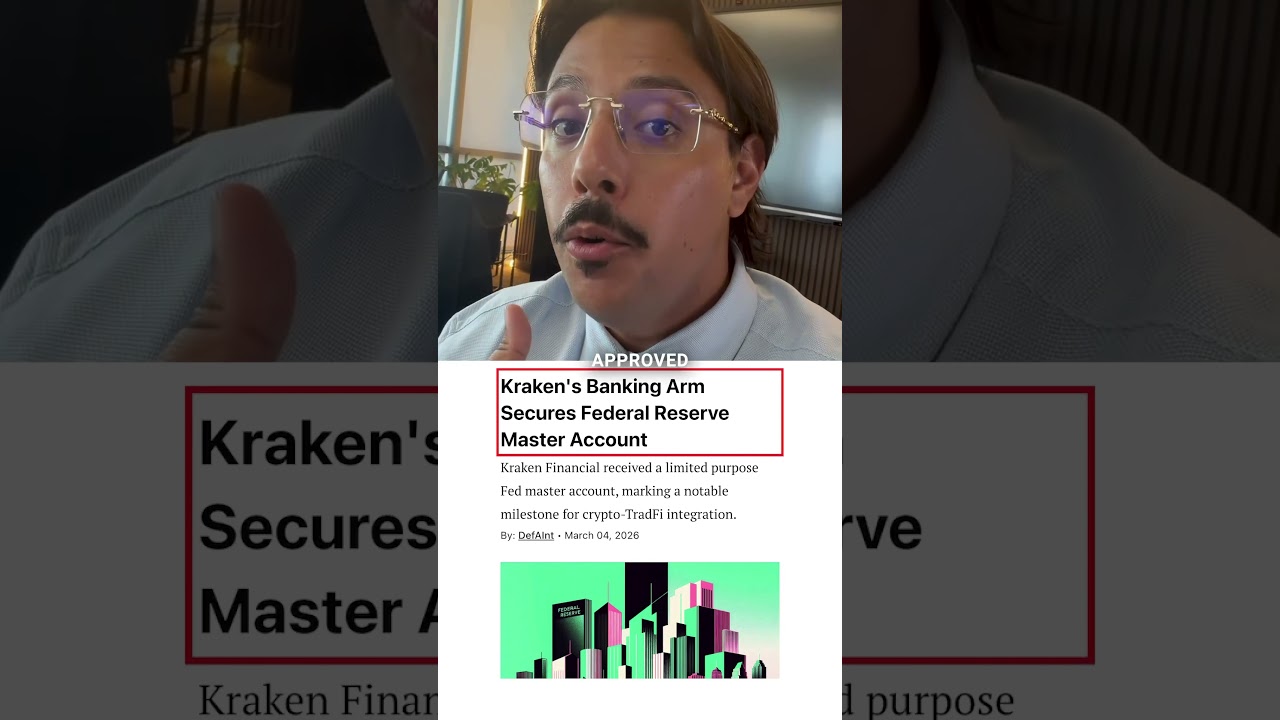
In this video, Alexander Lorenzo explains how SWIFT's new blockchain ledger has enabled its initial 17 banks to send tokenized deposits across six continents in five major currencies (USD, EUR, GBP, HKD, SGD). He defines tokenized deposits as digital representations of bank-held money and highlights the significance of inter‑bank connectivity, which transforms isolated token systems into a broader, crypto‑enabled payment network. The first live cross‑border transaction between Standard Chartered and HSBC is described, illustrating how the ledger records, matches, and nets obligations before settling through existing systems. Lorenzo emphasizes that while not all SWIFT‑connected banks are using blockchain yet, the rollout marks a substantial step toward interoperable bank‑issued digital money and real‑time, global settlement for businesses.
Chapters
Banks on SWIFT's new blockchain ledger now have sent tokenized money across 6 continents in 5 currencies. That is a major step towards banking money working across different institutions around the clock with crypto. On September 28th, SWIFT said most of its 17 initial banks had used the ledger for payments. The currencies were dollars, euros, pounds, Hong Kong dollars, and Singapore dollars. The uses include corporate treasury funding between banks and settlement between institutions. Now there's one very important change. Separate banks are connecting their tokenized deposits. A tokenized deposit is basically a digital representation of money held at a bank. Building one inside a single bank gives that institution a completely new tool that has not existed before. Now, when you connect it to another bank, it makes a wider payment network possible on crypto. And we have the greatest example. In August, Standard Chartered HSBC announced the first live cross-border transaction on SWIFT's ledger. Their description explains what the system does. It records, matches, and nets obligations between the banks with final settlement through existing systems. In plain English, the banks can agree on what each owes, track the transaction together, and connect that shared record to their settlement arrangements themselves. The reason why this matters is because the upgrade involves coordination between institutions as well as the digital tokens themselves. By September, SWIFT was reporting usage across more of the initial group than multiple currencies. This is a massive rollout. It doesn't mean every bank connected to SWIFT is using blockchain, and the report doesn't disclose the transaction value, but it's actually massive progression. And the evidence is through the infrastructure available, a named bank transaction actually complete, and then the wider activity across the first group. For the banks, the work is making their deposit systems communicate through transaction processes. And that is what makes this distinct from a bank creating a token that stays inside its own wallets. The value of the payment network grows when the destination becomes reachable. SWIFT's initial deployment now has examples of that connection working across institutions, currencies, and regions. It gives us a starting point for bank-issued digital money becoming interoperable. Real businesses actually care whether they can get funds to where they need to go instantly. These banks are beginning to build that capacity right now as we speak, using blockchain technology as a part of the process. Pay attention, the world is adopting crypto.