Can AI Replace English Teachers? How to future-proof your teaching career in the AI era.
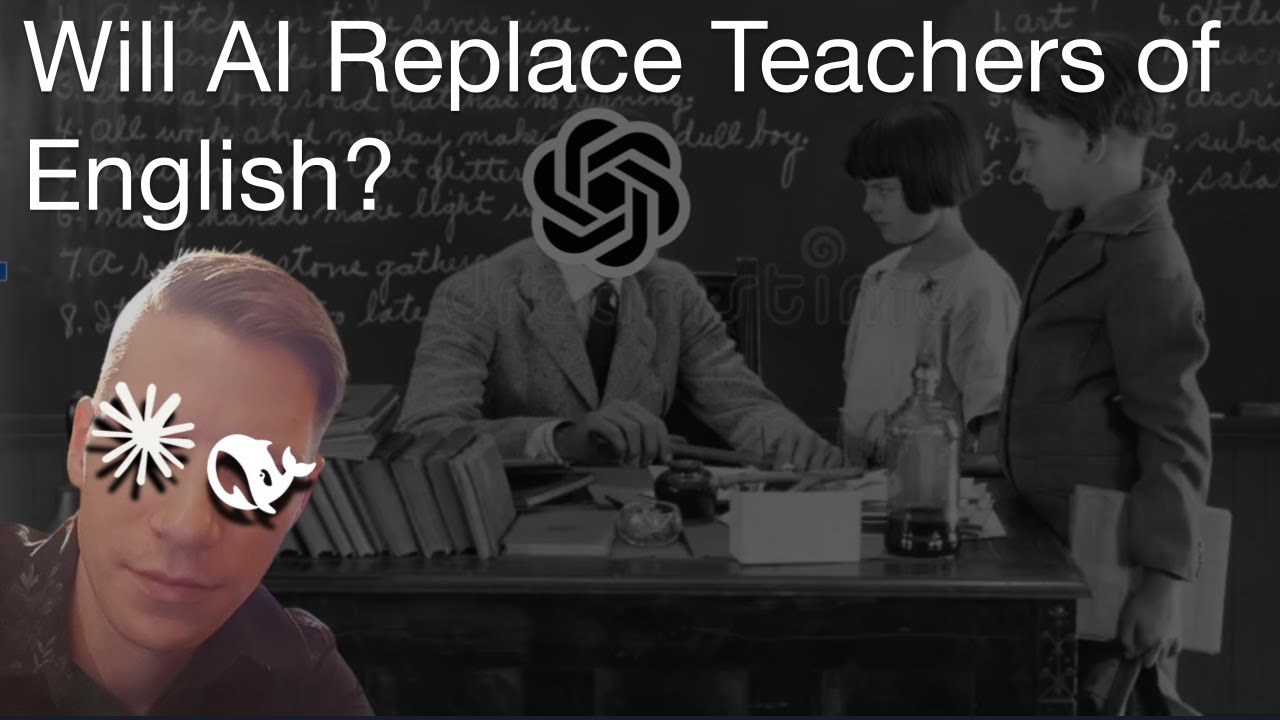
Alexander Popov argues AI can handle availability and feedback but can't replace mentorship, emotional support, and the inspirational role of experienced teachers. He advises English teachers to build personal brands, raise rates, and position themselves as premium educators rather than compete on cost.
Chapters
You've probably seen those YouTube ads where a student interacts with an AI, a video model that creates the illusion of real-time communication. When a learner makes a mistake in these demonstrations, they receive a generic correction like, do you mean you're going to London? The learner then responds with awkward apologies, seemingly embarrassed even though they're speaking to an AI, a machine that neither feels nor expects apologies. It's not human. This interaction reveals something fundamental about our relationship with technology. We anthropomorphize it, projecting human qualities onto systems that operate purely through algorithms and pattern recognition. The marketing makes it look seamless, almost magical. In reality though, these tools rely on text-audio chat, not actual video interaction. So the big question remains, can AI replace a teacher for some students? The answer is yes, but with important caveats that deserve deeper exploration. Even the most basic AI— free, voiceless, and forgetful of everything you tell it moments later— can become a student's only learning companion. This isn't necessarily a new phenomenon when we consider the broader context of self-directed learning. Just as reference books have long served as teacher substitutes, or as people used Somnopedia audio courses or the debunked 25th frame method, many students have already replaced tutors with non-human alternatives throughout history. There will always be people eager to try something new and eventually frame it as a rediscovered classic. These are the so-called pioneers in marketing The kind who must be the first to try the newest toothpaste on the shelf, driven by a combination of curiosity, status-seeking, and genuine belief in innovation. It's no surprise that such individuals are now replacing private tutors with AI. This trend is particularly pronounced in the private education sector. Of course, we're speaking of private education, not state school curricula, which are often too conservative and bureaucratic for such shifts. Public education systems, bound by regulations, standardized testing requirements, and institutional inertia, move at a glacial pace compared to the rapid adoption patterns we see in private tutoring markets. The economic factors also play a crucial role here. Private tutoring can be expensive, making AI alternatives attractive to cost-conscious learners. However, this creates an interesting paradox. As AI becomes more sophisticated, premium human interaction may become even more valuable as a luxury service. However, let's be clear about what we are actually comparing. Teachers are not like Amazon warehouse workers being replaced by robots. The comparison is fundamentally flawed because teaching involves complex human interactions that go far beyond information delivery. In schools and universities, teachers take on a wide range of responsibilities that extend into mentorship, emotional support and social development. According to the English as a New Language standards, accomplished teachers perform functions no AI can currently replicate, except perhaps in checking tests, and even then the context and nuance of assessment often require human judgment. The coaching, motivation, and goal setting that teachers provide is irreplaceable, whether in private or public education. These elements involve reading emotional cues, understanding individual learning styles, and adapting to the complex social dynamics of learning environments. My point is this: if a student is easily persuaded by cheap marketing, they will surely replace you with AI. This isn't necessarily a reflection of AI's superiority, but rather of the student's decision-making process and values. In fact, if determined enough, they'll find an alternative with or without AI. Some students have always preferred self-study methods, relationship partners, or language exchange partners over formal instruction. Conversely, I'm sure you've met students who don't even need a tutor. Their language level may already exceed that of some teachers, and yet they insist on having lessons, not because they need them or will ever use English in real life, but because they believe they do. They may never even travel to an English-speaking country or speak to foreigners at all, but still feel they need a teacher. This psychological need for validation and structure often outweighs practical necessity. These students represent an interesting marketing segment. They are not seeking information or skills as much as they are seeking confidence, validation, and social experience of learning. This human need for connection and affirmation is something AI struggles to replicate. Authentically. So it always comes down to the client's choice, and that choice is not always the right one. Consumer behavior in education often defies logic, influenced by marketing, social pressure, and personal insecurities rather than genuine learning needs. Worrying about AI replacing teachers is like worrying that a Murphy grammar book will replace you. Some people already think that book is enough. Will you try to convince them otherwise? They'll only suspect you're trying to profit from them and assume they're too smart to fall for it. So what makes a human teacher different from AI? Experience, instruction, and authority. The major differentiator is the combination of experience, instruction, and authority that human teachers bring to the learning process. Though in some cases, too much instruction and too much authority might remind students of strict school teachers from their old school that they disliked. That's why many prefer relaxed tutors or AI models that aren't strict, even subtly. This creates an interesting dynamic where AI's perceived neutrality can actually be an advantage for students who have negative associations with traditional authority figures. However, the depth of experience that seasoned teachers possess— understanding how different types of students learn, recognizing patterns in common mistakes, and knowing when to push and when to support remains difficult for AI to replicate without extensive training data and sophisticated algorithms. AI offers the chance to practice anytime, but ironically, many students end up not practicing. It's too easy to delay when there's no human accountability. The always-available nature of AI can lead to procrastination, paradoxically, because there's no urgency, no scheduled appointments, no sense of letting someone down. Also consider the awkwardness when bystanders realize there's no real person on the other end of an AI conversation. This social aspect of learning, the ability to share the experience with others, to have conversations about your teacher, to feel part of a learning community, is something AI cannot fully replace. Can AI really distinguish subtle cues in pronunciation or judge whether it's better to correct an error now or later? Taking into account the broader context of a student's performance. Currently, AI systems are improving rapidly in speech recognition and pattern matching, but they still struggle with the contextual judgment that experienced teachers develop over years of practice. Can it automatically note mistakes and circle back at an optimal time? This requires understanding not just the linguistic error, but the student's emotional state, confidence level, learning style, and the broader lesson objectives. While AI can track patterns and data points, the human ability to read between the lines and make split-second pedagogical decisions remains largely irreplaceable. According to the English as a New Language standards, accomplished teachers quickly identify features of English that students can't acquire through exposure alone. They know when to draw attention to specific language forms and when to let things slide. This requires a deep understanding of both the target language and the student's native language, along with years of experience observing how different linguistic backgrounds affect learning patterns. This metalinguistic awareness— understanding not just the language but how the language is learned— represents a sophisticated form of expertise that current AI systems are only beginning to approximate. Their ability to predict what will be challenging for a particular student based on their linguistic background, learning style, and speakers' errors requires a level of pattern recognition and contextual understanding that remains largely human. Some learners value tutors who have spoken with native speakers, traveled to specific countries, or can recommend study strategies based on personal insights and student preferences. This experiential knowledge goes beyond academic understanding. It includes cultural nuances, real-world usage patterns, and the kind of authentic examples that come from lived experience. When a teacher can say, oh, I remember when I was in London and heard someone use this phrase in exactly this context, it creates a different kind of learning moment than when an AI references a database of examples. The personal narrative creates emotional resonance and memorable learning experiences that pure information transfer cannot match. For many students, the learn-from effect is more important than the learning Itself. It's like attending martial arts classes not for practical skills, but for the sense of belonging to a club, a method, or being affiliated to the master. Most people will never use those fighting skills in real life, but their affiliation matters. The social dimension of learning taps into fundamental human needs for connection, belonging, style, superiority, and identity formation. AI cannot replace the sense of having a guru, someone who travels, publishes, speaks at conferences, creates new projects, and even contributes to shaping new trends or even lexical units in the language. The teacher becomes a role model, a representation of what the student aspires to become. This inspirational aspect of teaching extends far beyond skill transfer into the realm of personal development and identity formation. Now ask yourself, how close are you to that guru status? This question cuts to the heart of professional development in the age of AI. Are you just teaching English and nothing more? Are you traveling, publishing interesting work, creating new things, sharing initiatives? If teaching is just teaching for the sake of teaching, students may lose interest in your personality, especially if your only experience is teaching. You've probably heard students say things like, oh, my teacher used to travel around the world, or she's written books. These comments reveal the students' value beyond pure instruction. They want to learn from someone who embodies the success and experience they aspire to achieve. Here is a simple exercise. Imagine you're about to start learning a new foreign language, say Farsi. What would you want your teacher to be like so you'd proudly share this learning experience with friends and colleagues? Would you choose someone who simply knows the language, or would you prefer someone who has lived in Iran, published research on Persian poetry, or has fascinating stories about their experiences in the Middle East? Dras reveals why personal branding and experiential credibility matter so much in education. Even now, we are offered choices between scripted AI and premium services that include human support. This bifurcation of the market is likely to accelerate in the future. We won't see teachers paid $7 a day. Instead, teaching will be considered premium service, much like personal training, life coaching, or consultation services. So why not build your own brand? This approach acknowledges that the future of teaching lies not in competing with AI on its strengths— availability, cost, consistency— but in emphasizing uniquely human qualities that AI cannot replicate, which means making yourself searchable on Google through consistent content creation and search engine optimization, establishing a name as an author or developer through publishing articles, creating courses, or developing educational resources, maybe even becoming a developer of AI-based teaching methods, positioning yourself as someone who understands both traditional methods and emerging technology. We discuss hundreds of free tools for gaining visibility and generating passive income in our 300-hour TEFL/TESOL course on Udemy. The key is to think beyond traditional teaching roles and consider how your expertise can be packaged, scaled, and distributed in ways that complement rather than compete with AI. Clients, even beginners, should sense that you are like a top CEO from a Silicon Valley startup, That means your online presence must reflect a premium image. This isn't about being pretentious or inauthentic, but about presenting yourself as a professional who is at the forefront of your field, someone who understands both traditional methods and emerging trends. Even when it comes to audio courses, many learners choose them for their personality behind the voice. Millions listened to Michel Thomas courses despite his strictness and somewhat ultimatum demeanor. His personal history of being tortured by Nazis, teaching celebrities, turned him into a legend. Some disliked his style, but others loved the course because of who he was. The content was secondary to the compelling personal narrative. Now compare that to Paul Noble, the author of yet another bestselling anthology of courses. His course is well-produced, but what do we know about him besides his success story? Or think of the top-rated Coffee Break Spanish audio series. At what point do we realize the hosts are Scottish and live in Scotland? How much of their biographies do we actually know? You may think those facts are irrelevant, but how often have you remembered a random decades-old fun fact from someone's biography? Personal details create emotional connections and memorable learning experiences. They transform education from information transfer into a human connection. I always say this: it's time to raise your rates. This isn't just about money; it's about positioning yourself in the market and reflecting the true value you provide. Reflect on how you can build your premium status through continuous professional development, unique experiences, and personal branding. Many of our colleagues are so overwhelmed with paperwork, back-to-back lessons, and limited time off, they can't project a premium image. They're tired with dark circles under their eyes, struggling to maintain enthusiasm for their work. But premium experts are relaxed, alert, and naturally energetic, not forcing fake positivity. That kind of effort always comes across as inauthentic and undermines the very premium positioning they're trying to achieve. The solution isn't to work harder, but to position yourself as a premium service provider rather than a commodity educator. This might mean taking on fewer students but charging more, focusing on high-value services, or developing products that generate passive income. Maybe this gave you a few ideas. Also, I'd like to invite you to our peer-to-peer community, especially if you have projects that need promotion. The future of teaching will likely involve more collaboration, knowledge sharing, and mutual support among educators who understand the changing landscape. And finally, what did I miss? Maybe AI can now track the nuances of student behavior, goal setting, emotional engagement. Technology is advancing rapidly and new capabilities are emerging constantly. The key is to stay informed about these developments while focusing on developing the uniquely human qualities that will remain valuable regardless of technological advancement. Leave your thoughts In the comments below. Doctors take oaths. Even some MBA programs have an ethical pledge. But teachers don't. So let's create our own oath. I will prioritize time, freedom, silence. I will make space to rest, to travel, to read and explore. I will be paid fairly. I will take my vacation, my sick days, my time off. I will get enough sleep. I will receive grants, bonuses, and opportunities. I will protect my energy so I can get more, not just teach more. This oath represents more than self-care. It's about maintaining the personal and professional development necessary to offer truly premium educational experiences. When we take care of ourselves, we are better equipped to provide the kind of inspiring, transformative education that AI cannot replicate. The future of teaching lies not in competing with AI, but in becoming the kind of educator that students seek out specifically because of our human qualities, our personal experiences, and our ability to inspire and connect. By positioning ourselves as premium service providers and maintaining our own professional standards, we can thrive in an AI-enhanced educational landscape.
More from Alexander

10 Free Opportunities for English Teachers & Educators – Build Your Career in 2026

Random Proverb Grandomastery Activity: Creative Thinking Meets Language Skills
Random Questions Grandomastery Activity: Spontaneous Speaking with Dynamic Random Question Exercise
Random Word-Formation Grandomastery Activity: Boost Creativity & Language Skills in 10 Minutes

Random Creature Grandomastery Activity: Transform Language Learning into Creative Exploration
Random Symbol Grandomastery Activity: Boost Your Classroom Creativity with This Symbolism Exercise

Random IELTS Cue Card Grandomastery Activity: Creative Exercises to Master IELTS Speaking
