AI Is Coming for Writers? Here’s How to Survive It…
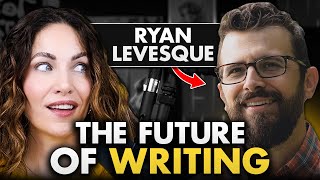
In this 2025 YouTube interview, Alex Cattoni hosts Ryan Levesque, a serial entrepreneur and author, to discuss the impact of AI on writers and marketers. They argue that while AI can generate massive amounts of copy, it lacks "taste," authenticity, and the human connection that audiences crave. The conversation covers how writers can shift their identity from mere word‑smiths to communicators, focus on timeless persuasion skills, and use AI as a tool rather than a replacement. They stress the importance of personal voice, emotional honesty, and building trust through heart, humor, and humanity. Practical advice includes cultivating a refined sense of taste, embracing vulnerability, prioritising quality over quantity, and aligning work with one’s core values and long‑term optimization goals. The dialogue also touches on the broader trust crisis, the evolving nature of content consumption, and the need for writers to adapt their mindset and business models to remain relevant in a AI‑augmented landscape.
Chapters
If you're wondering what the future looks like for writers, whether you're a copywriter, a content writer, or a fiction writer, then stop everything you're doing right now and listen to this interview with my friend Ryan Levesque. Trust me, you do not want to be multitasking during this one because he drops so many gems that you will definitely want to write down. If you don't already know Ryan. He is a 7 Time Inc. 5000 CEO and founder, a 2 Time number one national best selling author of the books Ask and Choose. His his work has been featured in the Wall Street Journal, Harvard Business Review, Forbes Entrepreneur, and NBC News. And he writes a weekly email newsletter called the Digital Contrarian, which, and I am not kidding, is the only email newsletter that I literally tag and save in my inbox and make sure to sit down and read it word for word. It really is that good. In this interview, he dropped some hard truths about what this new age of AI really means for us writers. Is there hope? Or should we all just run and hide? We'll talk about how to shift your skills to become AI, proof what the future looks like for writers, and how to build trust when the world is suffering from the biggest trust crisis in decades. And so, so much more. I'm telling you, this interview is something that I'll be listening to over and over and over again. It's exactly what I needed to hear. And I think it's what you need to hear too. So keep watching. Ryan, what's up? Welcome to my channel.
Hey Alex. Awesome to be here.
I am so excited about this conversation. You and I connected a few years ago and then more recently you came and gave an amazing talk to my Rainmakers, Inside My Mastermind. And and we talked about some really, really juicy stuff and I thought, okay, I absolutely need to invite you back so that we can have this conversation to the greater Posse community. And I'm not going to waste any time. I'm going to jump right in with a question that I know a lot of people who watch this channel are wondering, is there still hope for writers in the future of marketing with AI and everything happening right now? I would love to know your hot take.
I think the answer is absolutely yes. And in some ways I think that there's never been a bigger opportunity for writers, specifically copywriters, to thrive in this new marketing environment that we're in now. I know that might sound like maybe just Pollyanna sort of, you know, wishful thinking, but there's truth in that and it's a Question. I've been thinking a lot about deeply, and I've been looking for data points to support that. And you and I were speaking before we jumped on air here, and I know a working writer that is doing incredibly well in this environment. And what he told me just last week is that he's never had more demand for what it is that he does and the type of work that he's doing right now. And I thought, well, why is that? Like, why is that the case? And I think one of the reasons why is because we've never been more inundated with mediocre AI written copies. So the noise has never been more cacophonous, if you can say that. And so companies are looking for writers that can help stand out, can help them stand out from that noise. And I think more and more businesses are looking for that human touch that sounds different, what you and I talked about, that tastes different. Because as I've written a lot about and spoken a lot about, you know, the world is craving the Sunday brunch version of orange juice, the kind that the freshly squeezed real thing we had enough of, the kind that comes in a can that's watered down and tastes a little bit fake. The world is looking for that reel. So I think if you are a writer here today, there's tremendous opportunity now, with some caveats, because I think the game has definitely changed, which we're going to talk about. But I definitely think it's a good time, although it may not feel like it at this moment for many working writers.
Yeah, I love that you said that. Not only because it echoes what I've been feeling and saying to my community now for a while, but the. The numbers that we have reflect that as well. We see the number of job posts on our job board actually going up right now, and while the nature of the jobs are slightly shifting. And I did a video sometime last month, I believe, about the difference in. In copywriting and how it is evolving and changing. We're seeing more and more people saying, oh, my gosh, I really need support here. I need someone with taste. And that's going to lead into a question that I have for you next to really look at. Okay, what. What. What is working? Why is it working? How do I actually communicate to my customers in a way that resonates with them, that stands out? And how do I make sure that I'm, you know, serving my customers in the best possible way that doesn't just kind of blend in with all of this other noise that we're Seeing online. And so I want to talk about this idea of taste because you have shared with me and my mastermind members and that AI has no taste. And while I love that idea, I'd love for you to kind of unpack that a little bit more. What do you mean by that?
Such a great question. And I think, you know what I can't do. What any piece of technology, what any piece of any tool or resource can't deliver is this idea of taste. And I think as writers, one of our roles that is evolving in the world here today is to recognize good writing, to be. Be able to recognize when something is written by AI. What modifications, what tweaks does that writing need to have in order for it to sound the way that we want it to sound, Natural, authentic, connective. And that idea of taste is one that I've been spending a lot of time really thinking deeply about, and which I think is something that we can cultivate as writers, recognizing good writing. So even though the work itself itself may have evolved and will continue to evolve, we may be using technology more and more, being able to recognize is this piece of writing something that is representative of the brand that I'm representing with my. My work. And that shows up in emails that we write, it shows up in social media posts, it shows up in the scripts that we might be writing when it comes to videos that we're putting together. So this idea of taste, I think, is. Is something that, as we think about what skills are evergreen that we want to focus on up leveling in our careers. One of those skills, I think, is being able to elevate our taste, being able to recognize when something is great because it's often the case. It's like we know when something is off. We know when something isn't quite right, as we talked about with your mastermind. This idea that every writer has a unique energy signature that shows up in their work that gets lost when it's soulless writing that just comes through through technology alone. And the world wants that. The world is craving more of what I call the return to real. The real beliefs and feelings and the vulnerability and transparency that we can write with when we access that part of our being, our mind, our soul, our heart. And when you can learn to access that and recognize that in other people, it's gonna elevate your writing so that you become the signal in that noise, in that cesspool of regurgitated AI Pablum that we're all drowning in right now. You can be that voice where People say this sounds different. Yeah, it really stands out.
Yeah, I love that you said that. And the distinction I want to make is that when we're talking about identifying great writing, we're not talking about, oh, it's grammatically correct. And it has a period at the end, you know, that brings up this whole debate that my community's been having around using the long dash. I mean, I am obsessed with using long dashes in my writing. I think they are so good. And everyone's like, well, apparently AI uses long dashes. Like, listen, if someone can't tell that it's really me, and they're going to accuse me of. Of using AI to write my. My emails or my messaging because I use a long freaking dash. Like, it's way more than that. What makes great writing, in my opinion, is relatability. It's making your audience feel something. It's context, which, by the way, is something that AI also lacks, is this idea of you can have a conversation with your customers that extend far beyond one piece of content. You can publish, you know, series of emails or newsletters, just like you do Ryan. And I'll link to your newsletter below because I am a huge fan and I read every single one. And you're constantly referring back to other conversations that you've started. You're providing context in a way that makes it so, so clear that it is you talking. And then you add in the phraseology, the way you communicate. I mean, I curse as an example, and sometimes people get all worked up about that, but that's how I actually talk. People get upset when I use the word de douche ify, because my mission is to deduce ify the Internet. And I'm like, well, bite me if that's. If you have a problem with that, then you're not for me. And realizing that the more we try to sound like everybody else and use words that everybody else is using or use AI to writer messaging, even if your customers can't directly put their finger on it, say, with, like, one piece of content, they sure as hell can feel the difference through an extended period of time when you're trying to engage in conversation. That was a little rant.
I love it. I love the rants. I love the Alex rants. I'll take more of them. When I was pulling up on my. On my phone, as you're saying that, I was like, you know, I love this conversation. And I just came back from a live event, and I spoke on stage at this live event. Mastermind talks. Incredible event. We've got a lot of mutual friends who are there. And one of the things I shared from stage is I said there are a lot of ideas that I want to share with you here today. But I believe the most authentic expression of the ideas that I want to share with you are the ideas as I wrote them in that moment when I was in the heat of the emotions and the feelings I was experiencing at that moment in time. So if it's okay with you, I'd love to stand from stage and read a few words that I've written. Is that okay? And it just goes to show the power of words when they're in their unsanitized, unmodified form, coming straight from the heart. And I pulled up one thing right here that I thought would. Would be impactful. And I'm trying to find the right sort of entry point because I don't want to spend too much time on this in reading. But what I'll say is this. I'll say it was an email that I wrote that I titled the Embarrassing Confession and I'll read just a segment of it. So I have it on my phone here. But you're going to get the sense, I think, of the ethos of what we're talking about right here. And it's this. As I sit here writing this to you here today, I have an embarrassing confession to make. It's been a minute since I've personally myself sat down and actually wrote an email like this with my own two hands. In fact, my confession to you is this. Virtually every email that we've sent as a company with my name attached to it was actually not written by me, but instead by a team of writers signed with my name for the last seven years. Now, I know that's shocking probably, and while you might, while this may come as a bit of a surprise, or maybe not a surprise, you might be wondering why the heck am I telling you this here today? Well, the reason why I'm telling you this is because it's something that's bothered me for some time and I'm finally in a place to share this now. Just to be clear, there was once a time and place where when I wrote something, it was actually coming from me and it had my name attached to it. It was personally written by my two hands. But as our business grew and as it became more complex and as my responsibilities expanded, I became more stretched, the volume of email that we started to send necessitated having a team nearly full time dedicated to writing all these emails. And I would go on to say, you know, over time, in the last few years, I started feeling more and more that the tone and content of what we were putting out felt less and less authentic, less and less that it was coming from something that I would ever write myself. And it started to have the flavor of that watered down orange juice from a can instead of the freshly squeezed Sunday brunch variety straight from the source. So what's this all got to do? What's the lesson in all this? Well, I think there are many. But to wrap this email, I'll say this. Let me ask you a question. Can you feel that this email was written by a real human being with a real beating heart? Can you feel it? Exactly. Your audience wants to feel your beating heart, too. And people can tell the difference. They can tell the difference between the freshly squeezed Sunday brunch version of you that comes straight from the source and the watered down AI version that comes from a can Zigwind. They Zach, take the road less traveled. And I share that. And hopefully, if you're listening to this or watching this right now, that's given you a visceral reaction. You felt that energy signature that I've just described that's come straight from a real life human being. AI cannot deliver that, at least not yet. There may be someday in the future where it can, but right now, that soulless writing where something feels a little bit off, there's something missing, you can't quite put your finger on it. Your audience is feeling that same thing, and they might not be able to articulate what it is that makes authentic writing. They might be able to say, okay, here are the five bullet points and the principles and the factors. But they can feel it. They can feel it at a visceral level. They know when something is actually real and the world is craving this, it wants it more than ever. So as a writer, you have this opportunity to be that voice, whether it's representing yourself in your own business, if you're an entrepreneur, or if you're a working writer and you represent other brands to channel that through your energy signature in your work. And it gives you an opportunity to stand out. And you can create that reaction not only in your audience, but when potential clients are reading your writing and they say, I want that. I want that orange juice. I want that Sunday brunch orange juice. And I want that orange juice to represent our brand right here. So therein lies the opportunity.
Everything you just said is so, so good. And. And it. A couple ideas floated to mind while you were talking one. It's this idea that how you win the marketing game, so to speak, in 2025 is not by creating more content faster. This hamster wheel of, like, oh, my gosh, now I can just, you know, do what I was doing before, and I can do it at lightning speed thanks to AI and I can produce all this content, and I'm going to win. It's like, first of all, that is not a game I want to play. And second of all, it's a race to the bottom because pure economics tells us that the more available something is, the less valuable it becomes. So now, all of a sudden, there's a rising premium on that. I'm going to sit my ass down and I'm going to type something out of my own fingers, because it's what I'm feeling right now. And to echo what you said is, if you are a writer, that's such a huge opportunity. Opportunity that you can give your clients. In fact, I have two copywriters on my team would never in a million years consider replacing them. That doesn't mean that I don't write anything myself. What it means is, as a team, we're getting so crystal clear on what our brand voice is, what we care about, because I know what fires me up is the same thing that fires them up. And we're able to create content that echoes sort of the. The ethos and the philosophy of what the posse represents.
And.
And then one of my goals is to do more of what you are doing, Ryan, and sit down and actually really pour my heart and soul into something that just. I write. And I believe that, that, that that is going to make the world of difference right now in 2025, which sort of leads me to my next question, which is, where are things shifting? Because obviously, it's a really scary time. We know AI is a Megatrend as. As you call it. Like, big things are happening. It's hard to not get freaked the f out. It's hard to not. And I told you before we started recording, I'm. I'm not going to lie. There's days I wake up and I'm, like, ready to fight. Like, I'm like, you know, like, guns blazing. Like, let's. Let's tear down the. The. The AI bullshit. Let's, like, go for it. And then there's other days where I wake up and I'm like, God, I just want to plant a vineyard in Italy and just eat mozzarel. And I know that that's not the answer Although people might say wine and mozzarella just solves all problems. But what are your thoughts? Like, how do we navigate the emotional side of this as knowledge workers, writers, service providers, entrepreneurs, navigating this, this area that we're moving into.
Such a good question, you know, and I think I would put myself in the category of someone who has a lot of the questions and not necessarily the answers. A few things that I think are really helpful. I try to always appreciate, I try to always approach big questions like this, coming from a place of curiosity. And I find that if you put curiosity at the forefront, then fear takes a backseat. If you approach these questions from a place of fear, then it can be paralyzing. We're talking about, you know, fight or flight or freeze. That response that kicks in when your amygdala sort of gets hijacked and the limbic system sort of takes over in your brain. So you want to escape that. And if you take attack it from a place of curiosity and you shift your identity, I think this is really helpful. Sometimes the big problem that we run into is stem from the fact that we have a certain identity. So we have an identity that is like for example, if you think back a hundred years ago, if you were a driver of a horse drawn carriage, if that was your identity, this is what I am, or I'm a buggy whip manufacturer, that's my ident. You can find yourself in a place where you might feel a sense of being obsolete. But if you shift your identity and you think about yourself as I am a transportation expert, and as long as human beings exist on this planet, there's going to be a need to travel from point A to point B. Now the tools in which I make that happen for a client, for a customer, they may shift over time. But what is permanent is this idea of movement from one place to another. So as copywriters, as writers, as we think about our identity and maybe be open to the idea of shifting that identity, what are your communicator? You are somebody who communicates ideas and you do it through the written word and as a communicator of ideas, that as long as we are human beings and we communicate and we, we are moved, that's never going to change. There's always going to be a need to communicate ideas. Now the tools we use to do that, the media in which that communication shows up will shift over time. Like that is guaranteed. But if we think about what's timeless, the need to communicate, to move people, to persuade, to motivate to inspire that skill is timeless. And so be open to perhaps, the tools that you use to create that inspiration. Be open to perhaps, the channels that you focus on. You might be focusing on writing Facebook ads today. Facebook might not exist 10 years from now.
Yeah, right.
We don't know. Right. You know, if you would have said in the height of MySpace, like, MySpace is going to be gone.
I'm a MySpace expert.
Exactly. I'm a. My. I'm. I specialize in MySpace. Okay. If you. If you like. There's someone out there that's still probably mourning over my space right now. On their business card, they wrote, I'm a MySpace expert. That's. That's timely, but it's not timeless. And so I think that's the. I like to say the truth is in the tension. And I think it is a yes, and it's what is timely and timeless. So, yes, you need to focus on mastering the tactics of the day and whatever channel that it is that you focus on. But you also want to make sure that you take a step back and you're focusing on what's not ephemeral, what's not evanescent, what is truly timeless is going to stand the test of time. And I believe being a skilled communicator is timeless. I think that you. If you focus on knowing how to write words that move people into action and inspire them, then you'll always have a place, you'll always have a vocation, you'll always have an income coming in.
I love that. I love that shift. Because again, going back to sort of the definition of what copywriting is, is I understand at a surface level, when people hear copywriting, they just think words, and then they think, but now I can produce words. Oh, no. Oh, no. Who am I? You know, and really. And this is what I've been teaching since I started teaching copywriting, and then what I did for a whole decade before that, behind the scenes is the words are just like the tiny little execution piece at the end. You know, it's so much more about what goes into it beforehand. It's messaging, it's communication, it's persuasion, it's inspiration. It's all of it. And I love that you said that. It reminded me. Actually, I was reminded of this when I read your recent newsletter and you talked about this idea of. Of problem solving. You know, I often talk about marketing as being nothing but experimentation and problem solving. And to use a completely other example, like, let's just forget about AI for a second. This came up for me In a big, big way. Last year when I hosted my very first in person, large event, it wasn't a mastermind. I've done masterminds before. This was like a 200 person event. And the anxiety I was feeling because of the uncertainty of one, I'd never done it before, it felt really new. I felt like, why did I decide to do this? I could have just stuck to what I know and it would have felt safer. And the thing I kept repeating in my head is, this is just a fun problem that I get to solve and identifying as a problem solver, one that is.
I absolutely love that. And one thing I always try to remind myself is, and this may be a hot take, maybe a controversial pov, but all growth comes with pain. Yeah, all growth comes with pain. You think about when you were a kid and you were actually physically growing, your body was growing, you'd have growing pain, say, mom, my legs hurt. Like, I've got kids that are at that age right now. So it's, it's.
I remember. Yeah, yeah.
You know, all growth comes with pain. When you work out in the gym and you're building muscle and you're building endurance, like it comes with some level of pain. And if you're feeling the pain, then you're doing it right. I wrote a piece recently that you may be thinking of that I wrote. The Struggle is the Solution.
Yeah, that's it. Yeah.
And this idea that we live in this world where we have an obsession over convenience, but the reality is convenience comes at a cost that we're not necessarily aware of. And like just going meta for a moment, I believe something gets lost when we rely on a piece of technology where the output is instantaneous. There's something to the struggle of consolidating your ideas and clarifying your ideas that only comes with time and the work, actually doing work. Chop wood, carry water. There's only, there's something that only comes from doing that. And that when we push a button, it just instantly comes out the other end that we're losing something, we're losing refinement. And even if we use AI like I, I have a commitment with my, my weekly newsletter that I write called the Digital Contrarian, that I don't use AI, I write it myself. There's no team of writers. It's a promise that I've made. It's a level of expectation. At the same time, I literally just worked on a project today where I was putting together an agreement to present to a hire that we're making and I used AI extensively to put together that agreement. But what I can tell you is that when I saw it come through, I knew there were some elements that weren't sitting right. I said, this is positioning the, the, the work requirements in a way that makes it feel really onerous. We have to tone that down a little bit. It looks too scary the way that it's presented. It may be true, but you can't present someone with a, hey, here are all your roles and responsibilities. And here are 10 pages of stuff, jargon, buzzwords, overwhelming. This is like scary, right? So where that taste comes in again, where you can tell the AI and say, look, this is a little too much, or I know this is coming across as a little bit too douchey, a little too aggressive, we got to tone that down a little bit. That only comes with taste. So if you think about your role, your identity as being a communicator of ideas, you know, in the same way that when Photoshop, you know, was first developed by Adobe and gosh, I'm drawing a blank on what was the tool before Photoshop it was, oh, starts with a C. The one that I'm thinking of.
Thinking of like Microsoft Paint.
Well, there's Microsoft Paint, but yeah, there's another one in the mix that I'm thinking of right now that I can't remember in this moment. There's a lot of controversy around that, like what is actual graphic design. And now we've got tools like Figma. The role of graphic designers has evolved and now it's learning how to integrate AI generated imagery to produce something that has that real feeling. So that's constantly going to evolve. But I don't see the profession going away, just see the profession changing. And as we have more and more as the volume to your point, as the quantity of writing and design comes through in the world, quality is really going to show up in a big way. So I think there's an opportunity for us to elevate what it is that we do and be even in more demand than perhaps we were in the past. Yeah.
And something even that I'm realizing not even when I look at just the writing or that like creating content. Hamster wheel, but in all of my programs, my membership, my mastermind, we've been asking our members, like, what do you need more of? And the number one thing they don't say is give me more content. They don't say that. They say, I would love more connection, I would love more conversation, I'd love more real time problem solving. You know, we look at the metrics. How likely are people to go listen to a 90 minute replay in some backend membership area? Pretty unlikely. They're far more likely to tune in and listen on the go or while they're driving. And maybe you're listening to this while you're on a walk and you're not even looking at our faces right now. And that is totally cool. It's figuring out, how can I, how can I make the content I do create if I am creating less of it because it's quality content, how do I make it more accessible, more consumable that actually meets my, my clients or my customers where they are at? And then the second. Oh, sorry, go.
No, no, please go ahead.
I was gonna say the second open loop in my head was you talking about this idea of convenience. And I think that that has really worked against us in a lot of ways because just like we can go to Whole Foods and tap. Like I found myself getting frustrated the other day because the tap wasn't working and I had to actually put in my card and like push buttons. I'm like, oh, this is so annoying. Or, you know, you order doordash or skip the dishes and if it takes longer than 30 minutes, you're like, that's ridiculous. I mean, that's so crazy because convenience is more of this new thing. But what that's actually done is, I think it's taught a lot of people that success should also come that quickly. And if you post, let's say a YouTube video or you post on social media and you're not getting immediate results, it's quote unquote, not working. And it creates just this like noise in this panic of, of I need to keep trying a million different things. And if I don't get results right away, then it means I'm not working. When in anybody you talk to who's built a business, who's who's grown a YouTube following, who's who's created content online, will tell you about the six months, a year, whatever they put in behind the scenes before they got there. And we need to reprogram this idea that what's worth it takes time.
It evokes two ideas in my mind. Everything that you just shared that I think will be interesting to think about. The first is this. There's a relationship between the amount of time it takes to create something and the amount of time it takes to consume something. And I had a deep conversation with Michael Hyatt about this. If you don't know Michael's work. He's a multiple New York Times bestselling author. And we were chatting about this, and Michael's kind of gone all in on AI as a tool for writing. And he was talking about some of the challenges that they're having with their email open rates and consumption rates going down. And I kind of challenged him and I said, how can we expect someone to take the 10, 15 minutes it takes to read something that we've written if we haven't even invested 10 to 15 minutes to create that piece? There's an asymmetry that needs to take place. Right. If you've ever painstakingly worked on any sort of writing exercise, the expectation is that, and it's an unspoken rule, and it's something I think is worth reflecting on. The amount of time it takes to consume that piece of content should be a fraction of the amount of time it takes to create that piece of content. And if you're spending five minutes creating something because you just fired a prompt into chatgpt or Grok or, or Anthropics Clod or whatever tool is your tool that you like using nowadays, and there isn't that time relationship and you're not seeing the consumption. There's a certain expectation and almost level of respect that you are asking the writer to have the reader to have about your writing that not being met. So I think that's like an important idea to sort of reflect on.
And sidebar. They ended up hiring a writer from my mastermind, and I believe their metrics are starting to go up. So full circle moment right there.
There you go. Right. Well, it's like any techno new technology, right? It's like the curve that gets followed. It's all right. This is going to be a panacea that's going to take over the world and it's going to solve all of our problems. Oh, wait. It's not quite as amazing as we thought. Actually a lot more work. I hate it. It's terrible. So pendulum swings in the other direction sort of meet somewhere in the middle where it's like, yeah, it's a very useful but incomplete piece of technology. And the human touch is still absolutely necessary. So it's like isolated idea number one that what you just shared evoked in my mind. The second thing is an interview that I just recently listened to between Seth Godin and Tim Ferriss. And I don't know if you've listened to it yet, but it's this idea that how do we make our writing stand out in a world that's filled with tldr, right? And so TLDR didn't read. And one of the ideas that's been reflecting, that I've been reflecting on quite a bit is this idea that Seth Godin introduced around the importance of status in the relationship between our writing and people reading it. So, like, for example, there is status associated with, like, the Bible, for example, and actually taking time to read the Bible, not just, you know, a Facebook summary. Like, can you just summarize the Bible in like, three paragraphs, please? ChatGPT, go for it. There's a certain status in certain circles around actually reading the Bible, right? There's a status around, for example, reading New Yorker magazine. There are apparently 4,000 subscribers that get it by courier, and it comes in a bit earlier than the male subscribers. So if you subscribe to the New Yorker magazine and you get it delivered via courier, you get the magazine. I believe it's somewhere between 24 and 48 hours before the rest.
And people will pay for that.
They'll pay for that. And there's a status associated with being able to not only get it early, read it early, talk about it early. So that way you have status among your peer group being able to say, yeah, I already read that article. I got it.
Not to mention the stack of them on your bookshelf when your friends come over. And you can be like, oh, yeah, I'm subscribed to the New York.
Yeah, exactly right? There's status around being able to say, the example Seth Godin gave was you and I having a conversation over a piece of fiction writing like Catcher in the Rye. If you've said Catcher in the whole, like, you are immediately someone who has lower status than if you say, oh, I absolutely read it. Let's have a conversation. In fact, I live in the town next to where JD Salinger wrote Catcher in the Rye, which is actually true. There is a status associated with certain forms of writing that make the actual writing itself, not the TLDR chat GPT summarization of it, but the actual writing itself. So I just. I think it's an interesting thought experiment to think about within your community. How can you create a piece of writing that the community wants to read? Because it elevates their status in the community, and it almost is something that has to be read. You have to read that piece. You have to read the Bible in Bible study. You can't just do the ChatGPT summarization of it. You actually have to read the original piece. And that's what elevates the value of our writing. So I think these are like two different ideas that are both, I think, interesting to think about and reflect on in relationship to the work that we put out in the world.
Yeah, that all of that is so, so good. And the other thing that I was thinking about is this idea of what is value shifting because I think oftentimes when people are creating content, they think, oh, I have to share the five things, the three steps, the two things. And yeah, I still do that in my YouTube content. You know, people love learning in frameworks, but, but I'm really starting to lean more towards just showing up as who I am and talking about that and what I'm going through on a, on a day to day basis and behind the scenes, you know, tours of my office and showing people like, hey, behind the curtain. This isn't just about the value of content in, in that sort of thought leadership or step by step expert guidance type of way. And it kind of points this, this lens on. And you say this, the, the importance of the messenger and not just the message. It's like people want to know who you are just as much as they want to know what you do. And something that I've been talking a lot about lately is showing up is who you are. And a lot of people are afraid to start creating content or posting on social media because they think, well, I'm not an influencer or a creator or I sell services to clients. I'm not, you know, selling courses. What's the point of, of showing up in that way? What's the point of having a personal brand? And I really do think that showing people who you are is such a powerful way to stand out. Because I know for me, I'm not going to work with anybody who I don't genuinely like, period, 100%.
I mean, I like you and I are, you know, in many ways singing from the same hymn sheet right now. A few things that I'll, I'll add to exactly everything that you just said. So I believe that we are absolutely entering into an era where the messenger is more important than the message itself. The message can be replicated, the message can be copied, the message can be co opted, but nobody can copy you. Who are you at your core? What do you believe in, truly? And people will decide whether or not they want to buy from you based on who you are, not necessarily what it is that you're selling. They might say, like, I love what Alex stands for. Like I'm, I'm picking up what she's putting down, like, I believe in what she has to say and whatever. So what do you got? What do you got for me? Right. Like, we're on the same page. And so I think that's important. We have a personal brand. Whether we do it intentionally or not, everybody has a personal brand. And whether you put time, effort, and energy into cultivating that and developing that is another question. But every single person has a personal brand. So message messenger versus message personal brand, absolutely. And we've also entered into a world where the default state of the world right now is a state of distrust. And that's something that we talked about when we were having the conversation with your mastermind. This is actually measurable. This is not like a theoretical idea. There's an institution called the Edelman Trust Bureau, the Edelman Trust Barometer, and they've measured the state of trust in the world for the last 25 years, since 2000. And we are in a world right now where this is no surprise, where the default state of the world is a state of distrust. So the question we have to ask ourselves is, how do we establish trust in a world where everybody and you and I talked about this. Everyone wants to know, when you do one of your webinars, everyone wants to know, is this AI?
How do we know this is an AI?
How do you know? Is this really happening right now? Is this prerecorded? Like, everyone wants to know, right? And I think there are three really important ingredients when it comes to establishing trust. And we spoke about this, and they are. People need to see three things. They need to see your heart, your humor, and your humanity. They need to see that you're a real life human being, that you have flaws, that you have imperfections. They need to see your humor. They need to see that you're someone who can laugh at themselves. And that's why I think the fact that you cuss and you swear and it's part of your brand is like. Is so good, because people see. They're like, ah, this is real. It's so refreshing. And your humanity, people don't want to just see the highlight real. They want to see the real real, real, real. And I wrote a piece about this that I shared with your group that I called the oscillation between self loathing and self love. And there was a moment that I had a few months ago now where I was having this low. I was definitely having this. This. I don't know if it was depression. I don't know what it was, but I was just. I Didn't want to talk to my wife. I didn't want to talk to my kids. I just wanted to be alone. And I couldn't snap out of this funk. I just couldn't snap out of it. And I felt like I needed this serotonin hit. And the only thing I knew to do was to walk out to our pastures out here on the farm that we live on in Vermont. And I just had this sense, this instinct, this intuition, this desire to be with the herd. And I went out there and I was just with our herd of cattle. And I got down on one knee and I had my hand in my head like this. And I just started crying. I just started bawling my eyes out. I was just like. It was just this cathartic moment where I was letting out all of this emotion that I didn't realize I had. And it was in that moment that one of the young heifers in our herd, incidentally, her name is Athena, she walked up to me and she sensed that something was wrong. And in her infinite wisdom, the goddess of wisdom, Athena, started rubbing her face on me. And then she started rubbing her neck. And then before I knew it, I was covered in cow boogers and cow mucus. And I thought, how did I get here? And it was like, just disgusting. It was like slimer from Ghostbusters and I from crying, just laughing hysterically, because I thought, in this moment, I must look so ridiculous. I must be so gross. I need to take a shower. Snapped me out of my depression, that micro depression that I was experiencing in that moment. And I came back to my house from the pastures, and I sat down and I typed this piece. I wrote this piece called the Oscillation Between Self Loathing and self Love. And I said that in between these feelings of self loathing and self love is acceptance. And that when you actually start slowing down and you stop trying to be so damn busy and filling every moment of your life with something that you can actually take a moment to pause and feel. And this is the full spectrum of human existence. It's not just the highlight reel. It's not just the real real. It's the real real. And we all have moments like this, like you and I were talking about before we came on. Moments of, you know, where we feel a sense of, all right, well, where's this all headed? Like, where are we going? Right? Like, where's this? Where's this all moving to? And it's okay to have those moments of doubt. It's okay to have those moments of wondering what. What it all means. And I wrote that piece, I shared that piece, and I can't tell you how many people have come to me afterwards and really appreciated that. So the question to reflect on, I think, is, what is a moment? What is a tender moment that you've had in your life that you can share with deep vulnerability and deep transparency to establish a level of trust with the audience, with the market, with the community that you're looking to deepen your relationship with and lean into that and be okay with the fact that it's a little bit uncomfortable. It's maybe not the most natural thing, but it is going to establish a real relationship with you as a real life human being, not in a calculated way, not in a manipulative way, but just in a way that is expressing your full spectrum of experience and life. So those were a few things that showed up for me when you shared.
So powerful. And I think, too, to anyone who is sort of thinking about this idea of. Of starting to show up online, and I think the questions I hear a lot of people asking are like, I don't want to just air out all of my dirty laundry or be, you know, quote, unquote, vulnerable, because that feels fake. And. And, you know, we're. We're immediately just putting labels and reasons and excuses on everything, you know, baby steps. Like, I'll say part of my journey of creating my brand as someone who worked behind the scenes for almost a decade and felt so safe there because all I had to deal with was a few clients at a time, and I had no social following. I had no YouTube channel. I had none of it. Part of my journey through this has been learning to open up little by little. I'm a pretty private person. I think my baseline is that I'm a happy, you know, cheerful person. I try not to share only the highlight reel, but it is deeply uncomfortable when I do share something vulnerable. And so baby steps. It's a conversation knowing that, you know, it's not about doing something that you feel uncomfortable doing. It's about starting to have the conversations that actually matter. And that then realizing, oh, my, oh, my God, everyone wants to have this conversation too. It's not just me. And I think that's been such a beautiful thing to sort of recognize. And knowing also that building trust takes time. Like, we're seeing way longer sales cycles with our customers. We're seeing people just sitting and lurk and watch and wait for a lot longer. And I'm totally okay with that because I want to make sure that when someone does buy from me, and if you're a service provider or a copywriter working with clients and it takes them maybe a year to eventually start working with you, like, that's okay. You're doing, you're doing the job that, that you need to be doing in order to build that trust so that the baseline isn't down here, it's now up here. And, and know that that's part of the process right now. So, yeah. Ryan, thank you for sharing all of that. I love that you're all about asking questions. We know that you're the ask guy and I have so many questions written down that you've asked your audience or that you've asked me. And it's such good food for thought. So I want to wrap up. Last question is what question or questions should everyone be asking themselves right now as we move into 20, 25 and beyond?
I think the number one question that should be at the forefront of our minds right now is what are you optimizing for? What are you optimizing for in your business? What are you optimizing for in your life? I think it's easy to see people on social media, people that you might be following right now. You see something that they're doing and what they're advocating for. And I think an important question to reflect on is what are you optimizing for? Like, for me, I know in this season of life what I'm optimizing for is I've got two boys, they're in the other room right now. After we hop off this conversation, I've got a pot of chicken stock that's been simmering all day that I'm going to be transforming into soup with food that we've grown and raised on our farm here, and we're going to sit down as a family and we're going to have a great meal together. And it's one of the highlights of my day. That's what I'm optimizing for. I'm not optimizing for empire building season of life right now. I'm not optimizing for world domination. I'm not optimizing for sacrifice everything in my life, my health, my family, so that I can build this rocket ship of a business. But sometimes we see people online who are building a rocket ship of a business and we think, why am I not building doing this? But we don't often see is their front stage is their backstage is hidden. We don't know what it is that they're doing. We don't know the fact that they travel around with a film crew with them 24 hours a day, seven days a week, when they're on an airplane or when they're at a restaurant. Like, we don't necessarily see that aspect. Or we don't know that they've foregone having children so that they can focus exclusively on their business. Or we, we don't know that they've sacrificed the relationship with their parents, partner or their spouse, or they haven't talked to their parents in 20 years. We don't see these things. And I think it's really, really important to get crystal clear in what it is that you're optimizing for and the constraints that you have, the trade offs. I just told one of my boys just the other day, said, look, there are no shortcuts in life. There are only long cuts in disguise. And I think the sooner we recognize that, the sooner we can appreciate that it does take hard work. It takes struggle, it takes working for what it is that we are working toward to get to where we want to go. And the sooner that you recognize that and accept that and kind of like take a deep breath and like, oh, it's just as hard for Alex as it is for me. It's just as hard for Ryan as it is for me. Yeah, that's just the reality of it. It's just hard and getting clear on what trade offs that you're willing to make. So question I'll leave you with is, what are you optimizing for?
So good, so good, Ryan, thank you so much for this conversation. To everyone listening, give Ryan your love in the comments below. I'm also going to link to his newsletter, the Digital Contrarian. I have told him this, but I would tell all of you, it is literally the only newsletter that my assistant knows to put in a read only folder on my computer so that I truly sit down with a cup of coffee and I read every single word that you write. Thank you for sharing your wisdom with us. Thank you for sharing the reality, the truth, the real, real Ryan, I appreciate.
You, I appreciate Alex, and thank you so much for the opportunity to share here today.
Thanks, bye. All right, guys, if you enjoyed that video, make sure to check out the next one from me right here. And you can click right here to get a free gift. If I had to start over from scratch right now, with no previous experience, experience, formal training, education or connections, this is exactly what I would do to build an online business and start making money asap. Keep watching.
More from Alex







Best Instagram Marketing Strategy For Small Business 2026 (PROVEN & PROFITABLE)

You know those headlines that make you click even when you swear you won’t? 👀


