Automate Your Small Business & Boost Sales With AI & Smart Tools: Interview With Jordan Gill
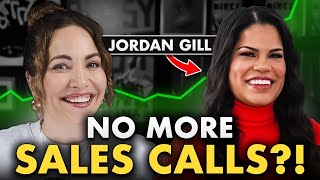
Jordan Gill, who scaled an agency to 500 clients then deliberately went solo, shares how small-business owners can use AI and niche SaaS tools to automate without complexity. Social-proof widgets can push landing-page conversions to 70-80%, and Video Ask funnels can replace sales calls. He warns against feeding proprietary work into public AI models.
Chapters
Increase your landing page conversion rate by 70% with this simple tool. Automate your podcast and content production with AI. Have sales and discovery calls without actually having a call. Yes, you heard me right. If you are a small business owner, a solopreneur or a freelancer who is ready to save time, energy and money by systematizing your business, then you are going to love this interview with Jordan Gill, my new friend, top 100 business podcaster and the founder of Systems Saved Me. She's going to talk to us today about all the best tools and tips and systems that she uses to avoid burnout in her business without sacrificing results or revenue. So keep watching. Hey Posse, what's up? It's Alex and I am so freaking excited for you to watch this interview with Jordan Gill. I'm telling you, she is my new go to person for any and all questions I have about streamlining my business and she's one of the amazing speakers who will be taking the stage at Posse Fest this October. I cannot wait for you to meet her. So if you don't already know who Jordan Gill is, let me tell you, you are about to. She is a multi seven figure business strategist who built a business from the ground up to over 500 clients and 12 employees in just two and a half years. But then, and this is like she decided to go back to the solopreneur life. Yes, she descaled her business and you better believe we are talking about that too. And when she did, she looked for ways that she could streamline her business to save time and boy did she find them. And that is exactly what she does. Now she helps other small business owners do the same through her top 100 business podcast system, Save Me. She helps businesses spot the invisible systems they have never even seen or heard of so they can save their sanity and make more money. And I'm telling you she has already saved me a lot of time and energy. So I cannot wait for you to see this. Here is my interview with the brilliant Jordan Gill. Do you know what is super sexy? Systems. I bet you didn't think I was going to say that. Jordan Gill, welcome to my YouTube channel. I am so excited you're here.
Oh I'm so excited. And listen any talk you're going to start with Systems are sexy. I'm in there like in there like swimwear.
What I love. Yeah in there like swimwear. What I love about you is you have such a clear brand. Systems Saved Me. And as a business owner who has been doing this for a long time. I can tell you that systems are not often the first thing I think about when I think about building a business. But now that I have a business, systems have saved me so many times. And you're just the systems girly. And I'm so excited we're here to talk about all things, tools, text, tech, hacks, all the things that you do to really automate your business. But before we get into that, I want to know a little bit more about you because reading your story, we're such kindred spirits. But what got you into this line of work? I know you have a podcast. What were you doing before you started your podcast? System Save Me.
Yeah, so before System Save Me, I actually was working for at the time, between 2014 and 2016, actually a big name online entrepreneur in the space they are no longer. But I was their first employee and it was an eight figure online business education company. And so that being where I started before having my own online business was such a blessing. And I was their head of content. So think of like Beyonce has songwriters. Like, I was the songwriter to this gal's Beyonce. So she was, you know, the face and the smarts. I just was able to take her interviews and do market research and create really awesome courses and webinar scripts and things like that. So I actually have a background in journalism. So random. So I can, I can dabble in copy, but I definitely am way more into systems. So that was my background, was kind of the head of content, copywriting that side of things for another online educator. And so I entered this world as an employee of somebody else. And then, you know, two years in, for me, it was, it was God saying, hey, it's time to go. Even though I was having a blast. Like, I totally loved my job. It was, it was such a wonderful experience. But when you get that nudge, sometimes it's just like, all right, I guess I'm taking a faith leap. And I did. And. And it's been System save me since 2016.
That's so awesome. Yeah. My story is similar in a way where I loved my my job. I loved my 9 to 5 as an employee. Many of you know listening that I worked at Mind Valley, also an eight figure company. Like, the education I got was incredible. And then sometimes the universe just has a way of being like, it's time. And so did you start your podcast before quitting your job or did you quit your job and then start your podcast?
So I gave six weeks notice because we were literally about to go into a launch when I got that nudge, and I was like, I'm not. I'm not going to do the whole just like, hey, during a big launch that. That usually, you know, are in seven. In the seven figures. So I gave six weeks notice, was like, okay, let me go and talk to my friends in the industry and just see if clients need any more help actually in the curriculum space, because that's what I had been doing. And I kind of tailored into systems eventually, but I was able to. In those six weeks, again, I think I was making like 3,500amonth or something as an employee. And then my first month as an Entrepreneur was about 12K in monthly recurring revenue for retainers, which was wild.
That is. That is wild. But it just goes to show, like, one door opens, another door closes. And all the experience you had in that original role was so valuable, which, again, is so similar to my journey. Like, left my nine to five and then kind of was like, all right, I know there's people out there that are looking for copywriting and marketing skills and so doing that behind the scenes. So what I find so amazing and refreshing and just awesome about your story. And I sent you a voice memo before this going, like, girl, I resonate so hard. Like, I love that you were like, listen, okay, I was a solopreneur. You were working with clients. You had multiple retainers, as you said. You were obviously making over six figures a year doing that. You were a solopreneur. Then you transitioned to building a team and launching courses and really kind of doing that shift, which a lot of solopreneurs do. And then you shifted back to being a solopreneur. I want to hear a little bit more about that journey and your decision to sort of make that change.
Totally. It's. It's scary both ways when you make the decision to say, okay, I'm going to invest and I'm going to ramp things up and it's going to get uncomfortable. And then also, the descaling part is also very scary. So for me, when I was a solopreneur, I did monthly retainers, got burnt out, like, five months into my business doing that, so moved on to VIP days, did that for a couple of years, and then everyone was seeing that I was only working with clients, like, four days a month, and everyone's like, what are VIP days? I want to do them. So I started helping some people on the side with that and then realized, oh, I actually could probably turn this thing a VIP days into a bigger platform. And so that's when I launched Done in a Day, which was my group coaching program. And it, it just like took off kind of immediately. So from there I then ended up having, I think at the height about 12 employees, which is a lot, so multi, seven figures, all that, you know, all that stuff. We had about 500 clients in two and a half years. It was still to this day I'm like, that was wild, awesome, great experience. I learned a lot. And there was a pivot moment for me with my done to day program where we had a lot of like, just to be transparent, like coaching issues. And I had to decide, okay, do I want to hire more coaches or do I just want to be done? And that was, that was the pivot point for me. And I said, actually I don't want to bring on more coaches, so I guess I'm done. And so then that started the process of, okay, we're descaling and then trying to figure out and play and still try to keep a core, core group of team members. But at the end of the day, the responsibility of employees was very, very heavy on me and I took it extremely serious that I'm helping people pay their mortgages and live and grocery shop. And that was a lot when I already was trying to figure out what my next thing was. And so ultimately then I decided it wasn't in their best interest or mine to hold on to them while I was still trying to figure out my own thing. And also at the same time kind of going to some chronic illness flare ups, which I know we've spoken about. So it was, it was a combination of a couple of those things. And so going back to solopreneurship was scary because there's a stigma, right, of.
Like, like, yeah, right.
And now it's just me. And so what happened there? Like, did you fail? Did you whatever? And it was definitely strategic decisions all along the way. And you know, looking at kind of the past like year, I would say was definitely the right decision for me because I needed to heal, I needed to focus on my family. And so then not having such high expenses because payroll is high, not having such high expenses was necessary for me to kind of get my nervous system, my, my immune system back on track to then be able to say, okay, now I'm open and more creative and I want to innovate and start kind of a new trajectory that, that looks a lot different because I don't, I'm not bringing any team, ongoing team members on, but I'm, I'M having a heck of a time. I'm enjoying it.
Everything you said there, like, I. First of all, I want to thank you for just being so transparent about your journey, because again, it's like so many people glamorize this world of going from solopreneurship to running a team. And like, you said, you had to focus on hiring and you were having coaching issues. And these are all things that I have gone through in my business. And there have been days where I'm just like, wait a second. I kind of miss when I was a freelance copywriter working with a handful of clients, just traveling the world and writing, like, what have I done? And I do believe that I'm on path and I love my business so much. But, like, thank you for just shedding light on that. That, you know, just because a lot of people are out there saying, like, you need to, like, you know, launch courses and build this and do that. That, like, that might not be what you actually want. And you said a quote, and I want to quote it word for word. You said, I am totally uninterested in doing something just for the sake of not looking flaky or people saying I've lost my mind. If pivoting is what's best for me, my family, and my clients, and slash students, then I do it. Done deal. And, like, literally, I have goosebumps as I'm reading that because, again, like, I hear this a lot, especially in my world. And I have so many freelance copywriters in my community who get to this point where they're doing well, they're working with clients, they. They are maybe even hitting that six figure mark and above. And. And they just have this feeling of like, well, what's next? Like, I guess I need to launch courses. And what I always say to people is, like, listen, there's no such thing as passive income, first of all, because so much has to happen behind the scenes to build a brand and to create programs and do all of that. And so if that's what you want to do, like, hell yeah, all the power to you. But, like, there's so much power in just being, like, wait, what if what I have is actually enough? And is this what I want? And so my question to you is, what advice would you give to solopreneurs to really gauge, like, what is that next step? Because I'm telling you, like, ego just really becomes a big part of it when you're just like, oh, my God, I want to build this thing. I want to be important. I want to be significant. I want other people to look at me and think the same. And so, like, what advice would you give to, to them looking to decide what to do next in their business?
Yeah, absolutely. The, the biggest thing was when I started Done in a Day, I knew that I wanted to be able to actually be able to purchase on my own, my husband and I's dream home. So that was my big goal. And in order to do that, I had to make seven figures in my business to be able to show a certain, you know, of, of stability and whatnot. And so I did that at the end of 2021. And so that first initial goal got, you know, checked off and then basically the next, like six to eight months was then when things started to get wonky because I didn't have another thing or goal that I was trying to achieve necessarily. And so the, the shiny seven figures didn't mean as much to me. It didn't, it wasn't worth as much to me because I got technically what I wanted out of scaling and growing at that pace. So I think then mentally that's where I started to just be like, okay, maybe I don't care to make that much, and that's fine. So I would say to, to anybody at that point of pivoting and saying, okay, I'm doing well, but like, what everyone else is saying and doing is again, hiring team and creating programs and masterminds and big, big important, impactful offers. When impact is deep and it's wide, it can be both. Right? So most people think, okay, I need to go wide in order to have impact. But I truly believe that you can have just as much impact in the depth of working with people. So if you are working one on one or in small, small groups, there's so much that can be done there that honestly can give you a really great life. And so, you know, I would encourage you to think about why do I want to get the seven figures? It's, if it's for people pleasing and for people to like, puff me up or whatever, I, I would hesitate to, to move forward. But if it's, you have a goal that you're trying to reach and that that other milestone is going to help you do that, then I would say that's going to help you stay grounded because there's going to be a lot of stuff shaking you up. And if you don't have a reason truly to be making those big leaps and bounds in your business, then things are just going to fall apart and it's not going to be fun.
Yeah. Oh my gosh. Like, yes. I mean, two things to that. One, there have been days where if I didn't have a really strong mission in the copy posse, which is to deduceify the Internet and really change the face of modern marketing and to inspire, you know, heart centered and empathetic copywriting, there would be days that I would have given up, like having that. Like, I'm not doing it for the seven figures. I'm doing it because this is a movement I'm creating. If I didn't have that, oh man, it, like it changes everything because it is hard. Like, like, let's normalize the fact that it is freaking hard. And let's be honest, seven figures, I mean, how much of that is actually going into like your personal bank account when you, when you get to that level? And again, it's like, like that's where this industry has so many smoke and mirrors. It's like you hear people doing these like massive, massive, massive launches and then you're talking behind the scenes and you're like, oh, your profit margins are actually, you know, similar to or much lower than mine and I have a way smaller business, but like, oh. So it's just an interesting, an interesting insight and there's a lot of, as we know, a lot of bullshit on online. So thank you for just sharing so candidly. So now what you do, and I love this, is that you, you build micro tools and you, I mean, you do more than that, but you build micro tools, you share strategies, hacks, tips to help entrepreneurs save their sanity. And you're already helping me, so thank you. How would you define a micro tool? Just in case anyone's like, well, what is a micro tool?
Totally. So for me, how I define micro tools is something that has low competition. So I'm not, not trying to be the next convertkit, I'm not trying to be the next click funnels, I'm not trying to be any of those. It's something that either only maybe one or two other people are doing or nobody's doing. It also has low to no customer support. So that means that the SOPs are clear. It's again, there's not 70 features, there's maybe three to five. And then also from that there is low complexity. So again, we're not, we're not building massive software.
Yeah.
We're building very, very small, specific, even niche tools that can help support, you know, one, maybe a few groups of people.
Yeah. So I have to ask, are you just like Some nerdy coder like, like, do you do this all on your own?
No, actually, I do not know. I. Well, let me say this. I don't know how to, like, code code, but I can read code to understand it. So I, I have a group of developers on upwork, so they're. And, you know, it's great. We meet when we want to and otherwise we just chat in upwork. And I come up with the vision. I come up with, I play around a little bit with UI design, which is user interface design. So if you look at an app, that's, that's the UI I played in dabble a little bit in that. But I definitely, I don't touch the code. I let, I let some other rockstar do that.
But I love that so much because again, it's just pointing to like, you have the vision, you know, that people, business owners have this, this problem and then you're really just sort of the producer. You're like, listen, okay, I'm not going to build a, a whole SaaS platform because that's not what I want. But there are these problems that entrepreneurs have every single day. And I think I could, I think I can problem solve this with the right people. And that's really coming down to that. Like, it's not a what problem, it's a who problem. Like, you need to find the right person and you're. And you're creating these incredible tools, which I just think is so rad.
Thanks. I'm having fun.
And so I have to ask, as someone who is, you know, creating tools, what are your thoughts on AI and how do you use AI in your business?
Oh, yes, I use AI very carefully because I do believe in the power of it. I think it's amazing. I actually have tools where my podcast is edited and the show notes are done solely on AI. Where I kind of start to lean or be cautious is when I'm putting my intellectual property into an AI generator of some sort. So I'm cool with putting my podcast in there because that's free and public out in the Internet. Yeah. However, if I were to put some intellectual property from my courses, my programs or things like that, that's where I start to pause because I don't want my intellectual property then being redistributed, watered down, moved around the Internet per se. So there are some ways to kind of eliminate that from some AI stuff. But if you read the terms and conditions, which I encourage everyone to do, even though nobody does, you know, it starts to be where they Start to own whatever you input into, into these generators and into these tools. So that's my line. Is anything public, anything that's stuff that already is going to be out there on Internet, like, whatever, that's fine. But anything that is behind a paywall, my consulting, my frameworks, I haven't yet put any of that stuff in any AI generators, just because again, unless I was custom building something to where I could shield that from happening, I just think that you need to kind of protect, you know, protect your intellectual property. That's something worth protecting for sure.
Yeah, I think that's so, so smart. Like, it's still the wild, wild west when it comes to it. I know it's evolving quickly, but I think what's it. What I find really interesting is, and this is leading sort of to my next question is there's just so many people out there that are sort of bombarding you with messages around, like, if you're not using AI in your every single part of your business, or if you're not firing your entire support team, or if you're not right, like, like you're gonna fall behind and you're doomed. And like, honestly, I have so much to say about anyone who pushes the doom and gloom narrative. But, um, what advice would you give to. Let's say it's a copywriter or a, a business owner or someone who's like, okay, well, I, I have this awareness that AI exists and that I should be using it. But I also, the obsoletion rate with it is also crazy. I mean, you start using one tool and then two seconds later you're like, oh, wait, there's something better or that's not working anymore or what have you. Well, what advice would you give to small business owners, like, to start using AI? Like, where should they look and what areas of their business or content should they start. Yeah, looking to use AI in?
Totally. So I, I know I'm talking to the copywriters and I would say this to any audience, but I don't think that AI writes good copy.
Okay, thank you for saying that.
So, and I'm not just saying that to toot your horn or to, you know, to push your narrative or anything, but just I, again, as somebody who has really define that skill for myself and sell well through words, I. There's just chatgpt, perplexity, Claude. Any of that stuff just does not compete. There still has to be a human element of editing, refinement, adjusting to your target market, to how you use slang and language. So I I'm not a fan of using it for like long form copy, even like sales emails, those sorts of things. Where I would encourage you to look is operations. So again, is there, are there ways that again, you can reduce customer support? So maybe you have where, you know, somebody sends an email in and depending on if it is in certain areas of question, then an email can be, you know, responding back as, you know, an assistant of yours so that you aren't having to answer all these different questions all the time. I would also say content wise. So again, like I said, I use a couple of tools, so I use Resound AI, I think, is what it is. That's my podcast editor. So I literally feed it the audio and it cuts out the spaces, it cuts out the ums, the odds and all that. But it actually allows me to keep some if I want to because I think there is just some, yeah, humanness to that. So I do resound and then I also do swell AI or swellai.com or something like that. And they do my show notes, they find the timestamps, they have, you know, the, the titling suggestions, all of that. And so, you know, I can get through four podcast episodes a month, I think in like three, four hours. So that cuts down a lot of my time. And I don't have to go back and forth with anybody. It's just I send it through my stuff and it, and it helps me to do that. And so, so finding ways for, I would say content as far as like podcast editing or even editing short, long videos into short ones. Totally. All for operations, like assistante stuff. Totally. All four, I would say. I would, I would still not feel confident saying, hey, go to trash. You need to write some stuff for you that's going to produce, it's going to write for you or help you, but it's, it's not replaceable. Like you can't take that copy and just slap it somewhere. Because what people are saying is, oh my gosh, you can write 365, you know, captions, but nobody is talking about the conversion rate of those.
Exactly.
Because they're not.
Oh my God, it's so funny how many people are like, well, you, you never have to think again. Like, you'll just like use this to put on this and then you put that into this and then you put this into this and bam, boom, like you're done. You have a business. And it's like, great, let's just tell everybody how to create more generic noise online. And then everyone's wondering like, well, that didn't work. Like, I invested all this money in learning, you know, these new great things. And here's the thing. Like, I'm not hating on AI either. Like, to me, I'm like, wow, what an incredible tool that we now, now have access to. And I've always been one to, like, I, I stick to the basics. Like, I'm like, listen, as long as we're people selling to people, being a person matters and having empathy and understanding people and all of that. Like, until we're selling to actual robots and then maybe a robot could do a better job of that. Like, I just feel like we need to remember why we're all here and who the f. We are. Like, we. We build businesses to solve people's problems, and if you lose sight of that, just for all the fancy, like, bells and whistles, it's. It's. It's a race to the bottom. And I just. Anyway, like, I, I get on a soapbox all day about this, but it's.
It.
It really is. So thank you for sharing. I. I was going to ask because you had mentioned you use it for your podcast. And, and I think, you know, again, that's such a perfect place to use AI because you're not using it to create your podcast. I mean, you're having real conversations with people, but then you're using the tools to make a lot of the editing or a lot of the systems and processes quicker after the fact so that you can actually create more value faster for your community. Which I think is the sweet spot of, like, yes, in my company, we have a policy that if we can use AI to produce the same quality work faster and to create more accessibility with our content, like, hey, sure, we can translate it, we can transcribe it, we can do all these things to make it more accessible. Like, yes, all day, every day. So thank you for sharing that tool and I know you have a few more awesome little tips and tricks to share with the posse. So let's talk about social media. You. You mentioned social media notifications and the way that you use that to build social proof.
Yes, yes. So I found that my people are what people know as, like, external buyers, meaning that they need to see proof that other people have bought this or are buying this or had a good experience. The opposite of that is internal buyers, which is what I am and I purchase based off my own goals, regardless of if anyone else is buying. Like, that stuff doesn't necessarily move the needle for me, but my people are the opposite. They need to see case studies. They need to see, you know, that other people are enjoying. Yeah, right, Me. So I've had to really be like, oh, this is how I buy. Okay. What's the opposite of that? Just doing that.
I feel like I'm an anomaly. What's happening here.
So what I've created is the ability to, you know, you go to pages and they have the little pop up notifications. There are some tools that do that. It's for people who are purchasing or whatnot. But I've gone the extra mile to also be able to have, if people have bought recently or past buyers, have little notifications of reviews or of DMS that you've received about the freebies or the paid offers that you have. So again, people are seen in real time. Oh, like there's somebody in, you know, Vancouver that bought something. There's somebody in Miami, there's somebody in Barcelona. And they're like, okay, I'm not the only one. Like, I'm not. I don't want to feel like this kind of ether, right? That is the Internet of just like, I'm like the one buyer that is interested in this. So while stagnant, case studies and all that stuff is great. There's something about the, the kind of rotating of social proof that just really increases not only the buying of your paid offers, but my freebies. Once I started putting that social proof on there, my landing pages converted 70 to 80%, like really, really high. And I was like, okay, y' all really are external buyers because that they're feeding off of that. And it's funny because then I. And sometimes they'll like recognize somebody. They're like, I wonder if that's the Chelsea that I know in Jamaica. And then they're like, oh, it was. And they like chat about it, right? So it's, it's something that again, you see a little bit of that, but I just have ramped it up because I want to show a variety and not just people buying. I want to see people's experiences coming up. I want to see people's recommendations coming up. So. So yeah, that's my offer Hype Micro.
That's a. Yeah, that's amazing. And this is a micro tool that you built?
Yes.
Amazing. We'll link to that in the description below. I'm like already like drooling.
Oh my God.
I'm gonna put that on everything that everywhere. Incredible. Oh my God, like you're so genius. I love it. Okay, so my next question is gonna absolutely blow the minds of every Single one of you watching this who does sales calls. Which, because I have a ton of, you know, service based based business owners in this community. You guys get ready. Like, seriously, Jordan, how do you do sales calls without doing sales calls?
Right. It's like a social media trend, right? It's like, oh, tell me you're this. If you're. Exactly. Without telling me you're this. Yeah. And so I, I don't like sitting at my computer, which is also a weird thing to say because I'm a tech person. But it's just, it's draining after a while. So sales calls are very draining for me energetically. So there's a tool called Video Ask. It's not my tool, but it's one that I found and adapted to be able to have sales calls without sales calls. And when it does, most people use it for like customer support, but essentially think of it like a video funnel that can answer questions as you on video and you don't have to answer it like live. So for example, I had my mastermind and instead of doing sales calls, I did a video ask funnel. And so I asked the initial question, okay, like, I'm so excited that you're interested in my mastermind. And this is a video recording. This is not me saying this every time. I am so excited you're, you're interested in my mastermind. I want to get to know a little bit of information from you first. So tell me your first name, last name, your business name and what you've got going on, who you serve. They respond back. Then they go to the next video that's pre recorded and say, awesome, thank you so much. Now why do you want to join this mastermind? What's, what's intriguing you about it? Is it me? Is it wanting to find a group of individuals? Like, let me know. And then I have a multiple choice. So then they don't even have to record anything or type anything. It's just they get to select what is the big driver of them being interested. So they click that. And then what's cool is depending on how they answer that, that a different video happens. So ABCD A goes to a video that says, oh, cool. You want to find camaraderie and other people who are just like you. That's exactly, you know, the type of thing that I'm building over here. XYZ reasons. Okay, someone selects B, I answer and say, oh, you want to get to know me more? Awesome. Like, you know, what do we have in common? Or what is it that drew Me to, you know, drew you to me. And I can ask again specific questions depending on their multiple choice. And it's me talking ish to them in a pre recording video. So it feels like we're on a sales call because they're just, you know, clicking the buttons or typing their answers or even video recording their answers so I can see them. So I go through a series of those steps and then at the end it says like, awesome. I'm gonna, you know, take all these responses and I'm going to send you a personalized note within the next 24 hours. So then what I do is video app sends it to me, I review all the answers and then I can respond actually in real time and say, oh my gosh, Angie, I'm so excited that you're interested. You know, I have another person that is a brand designer that I think you'd really get along with or we have another person. And so, yeah, it is amazing, first of all, because again, you can eliminate as much of the information gathering in a way that feels really personable. And secondly, I can add that personal touch because at the end I can start the conversation and if there's any objections to handle, I can do that. But I'm only a part of a very, very small part of the process versus having to be on the call the entire time.
Well, and having to schedule it and when are you available and no shows. And I mean, this solves so many problems. And I mean, I'm so excited for you guys to try it out. And it's hilarious because I had one of my Mastermind members introduce me to video ads Ask yesterday. And so when you told me about it, I was like, clearly I need to start using this. So I had a meeting with my team today to talk about how we can actually start using it to gather case studies and, and video footage that we can then repurpose into, into cool content, of course, with consent and all of that. But there's so many use cases for Video Ask. I mean, Video Ask, you should be sponsoring this video, by the way.
Hello, Call me, call me, come on.
But amazing. And this is what I love. And this is to me, what is the most exciting thing about where things are going with. With AI and with new tools like Video Ask, which I don't know if it integrates AI features, but I'm sure it does or will in the near future because so many of our favorite tools are which. That's kind of where I'm looking to use AI is, you know, I'm not a tech person. I don't know how to make my own GPT. I don't know how to do any of that. However, a lot of the tools that I love and use every day, I'm like, I'm trusting the experts because they're now starting to integrate AI into their tools to make my life easier. So I'm like, this is incredible, but I love that and I know I have so much more to learn from you, but I am so excited and I haven't even shared yet Posse, that Jordan will be joining us at Posse Fest in October. And so I cannot freaking wait. You're going to be taking the stage, you're going to be sharing conversion hacks to grow your business and you're going to be on an AI panel. So we're going to be hosting an AI panel where we're going to have a lot of experts all talking about the different ways that they're using AI and not using AI. And I'm just so freaking excited to have you there.
I'm pumped. Like, if I get to just nerd out on stage, like it's about to be a whole situation. Bringing notepads, bringing iPads, any kind of pad, it's going to be a party.
Bring the pads is going to be a party. That's. That's going to be my next email. Exactly. Yeah. So, so I'll put a link to Posse Best below if anyone wants to grab their ticket to meet Jordan in person and geek out on all things marketing and systems. And of course we will link to your micro tool, the amazing social proof one below. And last question, Jordan, where can people go just to like follow your jam? You have incredible content, like, where can people go to find you? Listen to your podcast, all of that.
Yes. So thankfully it's pretty easy. System Save me everywhere. SO system save me.com website, my Instagram at systemsaved me. I do dabble on LinkedIn or at least I'm trying to. I'm just Jordan Gill there and those are like the three main areas. And then obviously, if you like podcasts, you can head to your favorite podcast app and go look at System Save Me there too.
Amazing. Jordan, thank you so much for sharing your wisdom with the Posse. I cannot wait to see you in October.
Yes, thanks so much for having me. Can't wait. Bye.
Alright, guys, if you enjoyed that video, make sure to check out the next one from me right here. And you can click right here to get a free gift. Goodbye, copywriters. You've just been replaced by this guy. Well, it looks like this will be my last YouTube video. It looks like it's time to retire your laptops and go back to your soul numbing nine to five. It looks like we are all doomed because robots have replaced us. I mean, this guy on Tick Tock says. Says so, so it must be true, right?
No.
Want to know the truth? Keep watching.
More from Alex







Best Instagram Marketing Strategy For Small Business 2026 (PROVEN & PROFITABLE)

You know those headlines that make you click even when you swear you won’t? 👀


