Binge-Worthy Email Marketing Secrets You NEED To Know In 2024 (Interview With Laura Belgray)
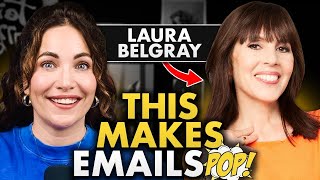
In this interview, Alex Cattoni talks with veteran copywriter Laura Belgray about how to craft binge‑worthy emails that keep readers hooked. Laura shares her unconventional path into copywriting—from a Spy magazine internship to TV promos and eventually email marketing—highlighting the timeless power of stories over generic tips. She explains the "value trap" (mistaking actionable advice for true value) and expands value to include entertainment, empathy, and connection. The conversation dives into practical ways to mine story ideas: staying alert to everyday moments, using a "Story Gold Mine" list of 63 prompts, and extracting narratives from clients via interviews, surveys, or voice notes. They discuss subject‑line inspiration, urging marketers to look at personal emails and old correspondence for authentic hooks. Laura offers a candid take on AI: useful for brainstorming, titles, and breaking writer’s block, but inadequate for genuine voice, specificity, and humor. They also explore the evolving copywriting landscape—shorter attention spans, the need for concise, top‑of‑mind communication in the "messy middle," and how AI may raise the skill ceiling. Throughout, they promote the upcoming Posse Fest event and Laura’s resources (Story Gold Mine, non‑sucky subject line guide) hosted on talkingshrimp.com.
Chapters
Want to learn how to write binge worthy emails that your audience just cannot stop reading? How do you find amazing storytelling ideas to use in your emails? Want to hear the most obvious place you have never thought of for finding the best subject line Inspo? And what is one small habit that you could start doing like today that would instantly make you a better storyteller? You better believe you are getting the juiciest answers to all of those questions and more as I sit down with my brilliant and hilarious friend and expert email copywriter Laura Belgray. Hey Posse, what's up? It's Alex and oh my God. I am so excited to bring you another exclusive interview with one of the incredible speakers taking the stage at Posse Fest Live, my upcoming in person marketing event that trust me, you do not want to miss. And you can learn more about the event at the link below and grab your ticket before we sell out. But first, in this interview, Laura Freaking Belgray is going to be teaching us all of her tips and secrets for writing personality rich drool worthy. Oh my God I can't stop reading your emails. Emails. I have been a big fan of Laura for a long time. Ever since I found out that she was the OG copywriter for the one and only Marie Forleo. She was one of the first women copywriters that I became familiar with back in 2011 after I quit my job at Mindvalley and since then I have been so inspired by her. No BS Real talk. Gotta click copy. To this day I still open every single one of her emails because they are that good. If you don't already know Laura, get ready because she is brilliant, wildly sarcastic, even more than me and I love that and she is so much fun. She is the founder of Talking Shrimp, co creator of the Copy Cure with Marie Forleo and award winning copywriter who has been a professional writer for over two decades. And when I say professional writer I mean professional writer. She has written TV spots for clients like NBC, Fandango and Bravo and now helps entrepreneurs and creatives cash in on their unique personalities, become binge worthy and get paid to be 100% themselves. And she is the author of the national bestselling book Tough Titties. I am telling you guys, you are going to love Laura and will absolutely eat up all of the incredibly brilliant advice she has on email marketing that is fun, bold and most importantly, easy. Now here's the interview. Hello Laura Belgray. I am so excited you're here. Welcome to my YouTube channel.
Thank you. Alex Catoni I'm so happy to be here.
I've been looking forward to this chat so much because every time we've talked, you know, off, offline, we just end up laughing so much and having such a great conversation. And I know you have been inside my reign mastermind, speaking to my Mastermind members. The most exciting news, of course, is that you will be speaking at Posse Fest this October. I am so freaking excited about that. And I wanted, of course, to introduce you to the entire posse here on YouTube now before we hit record, I was like, thinking back, I'm like, when did I first discover the amazing Laura Belgrade? Because I know many of you watching this know of Laura, you know of her work, you know that she's the co creator of the Copy Cure with Marie Forleo. And I have been following her for such a long time. And so, you know, one when you came to speak to my mastermind, so excited one when you agreed to come to Posse, best freaking excited. And now I'm so excited for this conversation. And the first time I. I was became aware of you was back in 2011. We were just reminiscing at Marie Forleo's Rich, Happy and hot live in New York City. And I mean, God, that was a long time ago. And I'm just so GL. You're here now talking with me and.
The podcast 13 years later, if 2011 was the year that you actually went.
Yeah, I was trying to do the math. Like, it was 2011. I'm so excited. Okay, so we know a lot about what you're up to now. I. I shared your incredible story in the intro, but I think it's always so cool to sort of hear from. From the people that we look up to in the industry. Like, how did you get in. Into copywriting into this world? Like, where did it all start?
Yeah, well, I got into copywriting through magazines because I. My first real job that wasn't a bartending job or some loser job. Bartending is not a loser job. But I was like, just out of college, like, just wasting my days for a while. So the first. The first real job that I had was for a magazine. It was an internship at a place called Spy magazine. Spy was like. Like the satirical downtown New York publication at the time. And if anyone reads New York magazine like that, it very much has the DNA of Spy. Anyway, I was a terrible intern. I was on the editorial side, and we were supposed to come up with ideas and for stories, pitch, like, become journalists. They wanted to. They wanted us to become Editors or assistant editors or whatever. And I came up with nothing. I never pitched a thing. And the managing editor had to took me to lunch and told me, you know, you can take initiative here. When you're told that you can take initiative, it's not a good sign. But the advertising side took mercy on me when my internship was up and hired me to be an assistant or whatever. But they assigned me an advertorial. And so for those who are not familiar in advertorials, like the page in the magazine that looks like it's part of the magazine, but it actually in tiny letters at the top as promotion or advertisement. And I, my assignment was to write one for like a whole page of the magazine on doers scotch. And so I had it. I wrote a quiz called do you party like your uncle Marty? And it was to determine whether you were like a cool hipster or an old fart loser. And if you were an old fart loser, the remedy was drink doers and recipe in the sidebar. And ironically, because I was still living at home with my parents, an essay on adulthood. And yes, so that was. I didn't know it really, but that was copywriting. I was writing. I mean, now we would probably call it content marketing. Either way, I, I think the two are very completely integrated. And from there I went into TV promos, which was my total dream job. Somebody I met at Spy was writing promos for VH1, told me what promos were like. I write little things during the commercials that are advertisements for the network. Like I watch a bunch of TV and regular things. And I was like, oh my God, that's a job. I need that job. I always, I love tv. Always wanted to do some kind of, some form of writing that had something to do with tv. So I, he, he helped me get that job. It was the 90s, things like that happened. I just went in and the person hired me. And so I wrote promos at VH1. Nick at Night Nick Melody and TV Land for years and years. And then speaking of rich, happy and hot live Marie Forleo. I. I had met Marie Forleo in hip hop class at crunch in 2003. Hated her at first because she had the most slamming body and like hit every move and was demonstrating hair. Her hair. I mean the thick, thick, thick hair that never, even if she sweat, the hair never got like stringy and thick. Who are these, who are these people? She's a mutant. But then she ended up being really nice and we became friends. I couldn't Hate her anymore. We would walk home together. And years later in like 2009, I was hitting a creative rut in terms of like writing promos for tv. A dream job. But I still, I felt like I have more to say and more to do and maybe I could make more doing something else with my writing and I don't know what it is. And Marie was about to have her first live event, her first rich, happy and hot Live in 2009. And she knew I was a copywriter and invited me to give a talk on copywriting. And of course her audience learning about copywriting would want to know about like direct response, the kind that says buy now. Click here and. But I didn't make any distinction. I didn't have any crisis of confidence about it. I was, yeah, I know copywriting. And I gave a talk 5 secrets to non sucky copy, which do apply to any medium. And people started coming up to me after my talk saying like, hey, I'm a coach or I'm a realtor, I need help with my about page or I don't know what to put on my homepage or I don't know what to say in my emails to my list, can you help me? So I started saying yes to these people and that's how I ended up writing copy in this world. You asked how I got into this world, which, you know, the online space, which I refer to as just the space. The space, yeah, it's such a nebulous big blob of a world of different kinds of businesses. And I ended up segueing into the space entirely because there was no ceiling on what I could earn, what I could charge. I like, I didn't have constant homework like writing for tv. I always had a deadline, you know, from the network. And I found a way to write copy for clients that involved writing in real time, having a, like a one on one in real time meeting where I would draw out the gold from what they, what they had in their head and turn it into copy on the fly. And that way I, that's how I created it. What I call it hashtag no homework life.
Yeah, I love that. So good. You said so many things that just like we're just so spot on. I mean I think the first thing too, and this is a total sidebar, but you know, going to live events that they're so powerful. In fact, I met Marie Forleo for the first time at conference in San Diego in 2009. And this was like right when she was starting to get Started and do her, her, her launch and start running her events. And it's true. You know, you go to events like people ask me the power of going to events like you go to events and that's just like where magic happens. That's where relationships are built. That's where people come up to you and they go, hey, can you help me? And I'm so excited to recreate that at Posse Fest because it feels really like a full circle moment for, for me to have started my sort of freelancing career as an event organizer with, with mindvalley and then going to people's events, meeting some of the most amazing people in the space on ad events and then now doing my own. I just love that you shared that. And then what I also, I also love is you talking about like how to write non sucky copy and writing advertorials back in the day, which by the way, that word is kind of making a comeback like it never really did while I was a freelancer. And now I'll have students ask me like, I've been asked to write an advertorial. I'm like, oh, this is interesting. It's just a online advertorial as opposed to a magazine advertorial. But I do think it's funny how everything comes back full circle. Which leads me to my next question, which is someone who's been a copywriter for, for years, where do you see the future of copywriting going? You know, what are you noticing in the space? I'm just going to use that word forever now. What are you noticing in the space? What are you seeing changing? What's not changing?
I think, well, what I'll start with what's not changing and that is the desire for stories, for entertainment, for infotainment.
Yeah.
Because I think one thing that is changing is things are getting more saturated and people, especially in the space, are signed up to more and more lists and following more and more accounts and just, just inundated with people providing what they think of as value, which is like actionable tips and how to do this, how to 10x that. And the things that we tend to gravitate towards are like, what is going to what looks like a good story? Like everything else feels a little bit overwhelming. I mean, sure, we'll click on something like this person, you know, added 10,000 people to their list in a day. Here's how I'm like, oh, I want to know still. That is the story. But most of all, we just as humans gravitate to what is going to entertain us or satisfy our curiosity and over what is going to give us something to do, another to do? So stories are as important, if not more important than ever.
Yeah, I think.
And like the future of copywriting, I don't know, like, I don't see that changing. I do see attention spans getting shorter. So it becomes more and more important to cut unnecessary words, make things as concise as possible. Only use the relevant details, cut out the, the throat clearing that you know, the stuff in the beginning that you don't really need, and get to it. So that's, I think that's something like, what about you? What do you see?
Yeah, I mean, I completely agree. I think, you know, I often say, like, is it people's attention spans getting shorter or is there just so many more options? Like, you think of, you think of Netflix. It's like you turn something on and if you're not into it in two minutes, you're like, I'm just gonna go binge watch Love is Blind uk. Yes, I think that that's kind of where we're at right now. Same with, on social. It's like literally, and you're on to the next thing, but people are still spending hours and hours and hours watching content, reading emails. And so it really is. I agree, you know, with all of the new trends, all of the new tools, with all of the, the tech and AI and of course, I'm going to ask you about AI here in a second. Is, you know, of course those are, those are changing, but they're not changing the end goal. They might be changing a little bit of the process of your workflow, but they're not making the need to be able to communicate persuasively and pull attention forward and tell stories. They're not making that obsolete. In fact, to your point, I believe they are making it more important. And learning a skill like copywriting, whether you're doing it for clients, whether you're doing it in your own business, has never been more important. With all of the options out there and people are so just caught in this, you know, Google defines it as the messy middle, which is this point between when someone first discovers you and buys from you. That used to be such a linear funnel or a linear path that as a direct response marketer, it was all about like the, you know, the chain reaction marketing of like, if they, if we increase the opt in rate and then we increase this rate and then we increase that rate and we increase it all through this line of, of action, steps we're, we're good. And, you know, if someone doesn't buy from us in the first 30 days, they're never going to buy from us. That has never been more untrue. And so that's changing. And it's just what it's requiring is for us to really be present and to continue to communicate and stay top of mind with our audience while they're in that, like, messy middle of trying to evaluate and figure out, wait, who is the best option for me. So I, I completely agree. And I think that, in fact, AI is making copywriting a more valuable skill set because of that. Because the barrier now to create content online is down here. Anybody can do it. But it's, it's really meaning that the people who want to stand out and tell stories and all the things we're talking about, they need to be up here. They need to be operating at a higher level.
Yes. And that. Right. Staying connected, staying top of mind. That is, I, I agree. More and more important. And people take longer to make these decisions. And you, you need people to become your super fan.
Yep. Yeah.
You need that. You need those super fans if you want to have a, you know, make the sale and have a sustainable business.
Yeah. So that leads me to my next question, which is, I mean, let's talk about AI, because it's sort of a theme that I, I, that every podcast, every video, every interview, it's. It's what, it's what everyone's talking about. I would love to hear your, like, hot take on AI and how you use it, if you use it at all in your, in your copywriting.
Yeah. I mean, my hot take is not that original. It is that AI for writing copy, for writing anything authentic and like, that connects and has emotion and is genuinely funny. If you're trying to be funny, it blows. Just blows. And I don't. Everyone will say, a lot of people will defend it and say, like, you're just not using the right prompts. I have not seen one thing written by AI that connects with me that makes me think, oh, well, that is pretty good. And AI fans, especially people who are selling AI, who are promoting AI for their own business, are going to say, like, you just didn't know it was written by AI. You can, I feel like you can always tell. And so if you can't tell, it's.
AI, you think a lazy writer just wrote it and didn't really put much love or attention into it. So it's like, maybe I, I can believe that a human wrote that, but I, I'm not that it was really written with love and intention and, and it's not making me want to read more.
Right. It feels totally formulaic and even if the copywriter replaced the word delve or took out the skyrocket emoji, they're still telltale signs that just make it feel. Fall flat and feel like everyone else's stuff. Like the same story you've seen over and over. So like I, I think it is worthless for that end. End result that you need. I think it's great for starting like if, if you are bothered by the blank page and have no idea where to start or how to structure a sales page or actually I haven't used it for sales pages but. Or and I've tried with, tried experimenting with it for emails and it, it always comes up with a, like, you know, hey there folks, you know, or ladies and gentlemen presenting, blah, blah, blah. It has just the doofiest voice ever. But I, I think it is good for just getting something down on the page that you can work with that you can be like, okay, this sucks, but maybe this one sentence is good. Or this is a jumping off point. I also like using it to brainstorm titles or names of courses or something. Creating something. Yeah. A module like what should I call this? And sometimes it'll come up with things that are like, have an element that I didn't think of. Yeah, like, oh, that's actually pretty good. Like I, I created a course recently called Based. It was a bonus for my book Tough Titties. And it, it's called Unput Downable Binge Worthy Secrets to Binge Worthy Storytelling from the Pages of Tough Titties. And I think it, I think AI Chat GPT came up with like from the pages of Tough Titties.
Right.
And I, I liked that a lot. And someone else suggested binge worthy. I'm like, oh, right, duh. Binge worthy. AI did not come up with that. So it's helpful for brainstorming things like that.
Yeah.
But I don't think it understands yet how to write a good like a compelling newsletter email, like broadcast email or launch email at all.
Well, and the thing is too like you said it, it's like when everybody's using the same tools, you know, again, if you have to write like a super transactional like thanks for purchasing this product or something that's just like, okay, I just needed to get the information out. I don't have time to do it. I don't have a copywriter or if you're new in business and you're like, this is all overwhelming, it can be a good starting off point for sure. In fact, I love ChatGPT for that reason, is because, you know, as the designated writer in my friend group, the number of times people contact me saying, can you just review this email that I'm sending? And not even from a marketing perspective, but just like, hey, I want to send this email to my boss, or I want to, can you read over it? And I'm always like, like, run it through ChatGPT first. Like, see what you can come up with and then I'll review it. So I actually use ChatGPT as my, like, my first line of defense to be like, hey, that's gonna give you something. But then please, please, please, people, use your personality. Use what, use what makes you. You use the language that you naturally use. And, and I, I completely agree. It's a fun brainstorming tool. And, you know, building your brand voice and really figuring out how you want to differentiate yourself in this overcrowded marketplace is really important right now. It's like, figure out, you know, if you're not funny, you don't have to be funny. Like, I, I laugh out loud at your emails, Laura, but like, you don't have to be funny. You could be sassy like me. You could be, you could, you know, be sweet. You, like, figure out what your voice is. And then that's going to allow you to really feel a little bit more confident writing. I love that.
Okay, so wait, wait. I just want to say one more thing that it cannot do. That, I think is the element that makes stories pop, that makes, that gives them voice, is specificity, is concrete details. Like if you wrote a story about somebody being a demanding. If you said that like, we just had a house guest who was demanding and entitled, that's one thing. You're like, what if you said we just had a house guest that. Who was upset that we had Pellegrino and not Perrier but still drank it all and didn't replace the bottles in the fridge. Like, that's, that's a story. Now, now it's a right. So it's those concrete details that give a story grip that and keep us reading, that makes it feel effortless to read and keeps us from skimming over it. And because those where it's abstract and just ideas like adjectives, demanding and entitled, we just tend to like, or we want evidence, you know, that's what we might be intrigued by that. But then like, show us show don't tell. Show don't tell is a. The refrain of, you know, good creative writing and any kind of writing. And AI can't do that for you. Right, okay, sorry.
Yeah. Or it'll just make up some very generic story that, like, absolutely makes you feel nothing. And so I love. And to be able to use AI to be like, oh, that's an interesting concept. Now how can I pull examples or stories from my own life to actually give that any sort of meaning or make it interesting to my reader.
Exactly.
You talk about something and I love this so much. And I, And I. Every time I talk about it, I'm like, my friend Laura says you talk about something called the value trap. So of course, you've done so much different types of copywriting and content writing over the years. You're very well known for email copywriting. I love reading your emails. And you talk about something called the value trap in the sense that value isn't necessarily what a lot of people think it is. Because oftentimes when copywriters or marketers or business owners sit down to write an email, they're like, oh, I know, I need to email my list and I need to provide value. What is the value trap? If you can talk about that and, and what are some ways around it?
Yeah, I think that value, the. The concept of value in marketing has just. Just has such bro y origins. You start to. Once you start becoming marketing aware and studying marketing copywriting, you'll hear everybody say, deliver value. You know, I just dropped a massive value bomb. Like, did you hear that valuation? How valuable was that? And you start to think like, that the only form of is an actionable tip, something that you can take and use and implement. And I would argue that there are so many other forms of value, especially that we look for in our inbox because we are looking to be entertained and moved. So you're providing value if you distract me or enter entertain me, it's valuable. If you make me laugh, you're providing value if you make me see something that I didn't see before and shift my perspective, or if you inspire me to try something new or just if you make me feel less alone. And that's a big one. Like, okay, I feel so much less crazy. Thank you.
Totally.
I feel like I am in good.
Feel less crazy all the time. So thank you for that. But truly, I'll be like, I'm slapping things around here if I read an email from you. And I'll be like, oh, my gosh, thank God that Actually happens to Laura too. Like, like it really is. It's just a story. And I, I love that so much.
Thank you. Yeah. So, like, saying the quiet part out loud, that is value and admitting your flaws, that. So that other people can say, oh, I'm not, I, I'm not the only one. And they feel permission to be more themselves and permission to talk about those kinds of things so that those are all different forms of value that are not the traditional bro, a like, actionable tips kind of thing.
Now I'm going to question every time I use the word value of like, I'm going to be like, this sounds bro.
How do I change?
I need to. We need a new word for value. But one of the best ways that you add value in your email marketing and all of your different marketing materials is through storytelling. And I would love for you to share with the posse how you come up with story ideas. I get this question all the time and I think sometimes it can feel like, oh, God, I need to go find a story. Or do I just magically, like, have stories that I pull from? What is your process for finding great stories to use in your email marketing?
Yeah, I mean, I am always on the lookout. Like, ever since I started blogging in 2009, I'm always on the lookout for something to talk about, to retell, for something that feels like a story. And I find stories in just little moments. So like, so say my husband is. This became an email. My husband is standing there eating Raisin Bran from the bowl and complaining. He's like, so much for two scoops. Look how few raisins are in my Raisin Bran. And he's very upset about the ratio. And I was like, okay, I gotta tell a story like that because, oh, because I, I said to him, well, then, you know, we have a box of sun made raisins. Why don't you dump a bunch of those into your cereal? And he's like, no, that's not how this is done. That's, that's, those are, that's against the rules. And so like, you mix those raisins.
With the Raisin Bran.
No, you can't do that. That's not how the game is played. And so my email, I don't always know what it's going to be about, what is going to be the term, what is going to be the point. But once I've written it, like, at a certain point I get to like, oh, that's the meaning of this. This is what I pull out of it. And for me, for that one, it was like, he is a rule follower. It's probably partly in his German stock, like, from on his dad's side. And. But some of us can't deal with rules and don't play by the rules. And, you know, if, like, hi, I'm one of them, and if you're like me, then this thing is for you. Like, if you're a rule breaker like me, then this thing that I'm offering is for you. Will show you how to break the rules. And I don't even remember what I was promoting, but you can always. You know, sometimes you have no idea when you start telling a story. You're just like, this was interesting. Or, this is funny. This is something I would write about to a friend. And that's where I like to start. Like, I would. I report this to a friend. Yeah. If yes, then it's a story we're telling. Sometimes you have no idea where it's going to go and you feel like, well, this won't. This won't provide value if it doesn't have a point. Sometimes it provides value without any discernible point. But it's nice. Nice when you can pull out. Sometimes you find it as you write it. Like, oh, that's what my comment is on this story.
Yeah, absolutely. I think that's. That's the best way to source stories is once you get in the habit of looking for them, you're really like, oh, my God. As soon as you have that feeling, like, I need, need to tell someone about this. Like, I need to tell my friend about this, or, oh, my God, this is going to be hilarious over a glass of wine later. Those are the stories. You're like, I'm just gonna bank those. I actually have a note in my phone that's just random ideas. Like, like, one time an Uber driver said that I gave him farmyard vibes that I was so confused about, and I texted it to my team. I'm like, I don't know where we can use that. And then she's like, maybe it's because you just look like you're like a lover of all animals and you have empathy, and that's kind of like our mission. I'm like, use it.
Like, go for it.
You know? But I do think it is like. Like, it is interesting when you start getting in that mindset of just like. Like, you hear someone say something or you have this funny anecdote with your partner or your friend, and you're like, I'm just going to Take note of that.
Yes, exactly. Just those little moments that might. And it might feel like, oh, this is only good for one sentence. You'll usually find that it's good for a lot more than that. Like it starts to. Even if it is just one sentence. Great. If you can tell a story in one sentence. Amazing. Love.
Short.
No I ever unsubscribed because your email was too short. That's true. You know, so, yeah, so great. But usually it will turn into more than that once you start writing it down. And another, another thing that generates a lot of stories is, is if you're doing something new in your life, like just learning something or you just. Just, you know, took a one single, I don't know, tutorial on like, tying knots or I have a friend who wrote like a bunch of essays just on learning to speed. She took a speed reading course and it generated so much great material. So any, anything that you're learning, any kind of change in your life, a change that you've made, something that has changed on you, change is a big one. Anytime I, I think I, I wrote an email. Anytime I write an email with the word change in the subject line, it gets super high open rates. Like, yeah, I think my most opened email the past year was like, I'm making a big change. And it was. All it was, was about. I. I learned that drinking straws caused the same wrinkles as smoking. And yeah, I learned like that the dermatologist. I'm no more straws. I'm only doing sippy cups. So. And. And that was the moment takes away your wrinkles.
Drinking like you're a baby, you know, like, exactly.
Go back to baby mouth. Baby sips.
I mean, they have no wrinkles. So that must be why.
Exactly. That's why.
Perfect sense. Yeah, I love that. And it is a bit of a muscle. And I think too, I. One question I'd love to ask you, and I'm curious what your thoughts are on this is, is, you know, when you're writing for yourself, you're like, okay, it's my personal life. People are interested in that. Do you have any advice that you would give to writers who are writing for somebody else to try to find stories either about or for an audience that isn't their life or their audience. Because, you know, obviously in a perfect world, and I did this with my clients back when I would write is, I would interview them and I would ask questions and I would follow them. And my team, my team's so great at this. Like, I'll post something on my Instagram story and the next thing I know it's being used in an email. Like, this is brilliant. They're following me, they're watching me. But you know, some clients are a little bit more behind the scenes or they don't necessarily share a lot about what they do in their private life. Do you have any advice for writers to source stories from other, you know, places maybe not their clients lives?
Yeah, well, I, I, first of all, I do think that that's a great method as interviewing your client. Or you could give them a, like a survey every month or so to gather, to gather stories. Like, even if they say, I have no stories, I have nothing new for you. If they like go through these questions, like I'm gonna tell you, like at the end, you'll ask me if I have anything that you know, to give the audience. And I will mention this guide that I have called Story Gold Mine. And it's full of, it's like 63 different prompts to mine your everyday life for stories that sell. And you could hand this to a client and say like, fill this in or like, you know, a few of them at a time if, if it's going to overwhelm them. Yeah, but it doesn't. Like, stories don't always have to be from the person's life. They can be about like success stories of their clients or a story that they love about, you know, a story that they've heard told. People repeat stories all the time. Like this. I just saw this politician, Cory Booker on Instagram or Tick Tock talking about like telling this story that I'd heard before about someone at the airport saying like, cutting the line at the, you know, at the desk and at the gate and people saying like, what, what are you doing? You're cutting the line. He like goes right up to the TSA agent. He's like, like, you know, well, do you know who I am? And you know, she gave him crap and he was like, don't you know who I am? And then she got on the mic and said, you know, excuse me, like paging everyone in the airport. We have a, you know, we have a, a passenger here who doesn't know who he is. Can anyone please come help? And so I told that terribly. But, and he told it great. But like, just stories like that, like, yeah, apocryphal stories. Stories of, some people love sports stories or stories about Henry Ford or you know, things absolutely about history. And those are legit too, as long as they're told in the client's voice and point of view. And that's up to you to bring forth. And, you know, and. And it's also how you frame it. Like, would the client say, I heard this story recently from, you know, so and so, and I can't stop thinking about it or gonna be like, one story that has always inspired me.
Exactly right.
I'm in a rut. Is blank. Like, how do they frame it? And then that's how you get in the client's point of view. And. Oh, good voice.
My. Yeah, my content writer just wrote an email about, like, she saw in my story that I went to Costco and I was, like, super stressed out because I was like, I thought going on a Thursday was going to be better than going on a Friday. And it was like, big mistake. And then I was like, and there's. There's samples everywhere, and it's just like, mayhem. And she somehow turned, like, the Costco sample lady story into an email, and I was like, this is genius. And it does. It does take, you know, practice. But, you know, even with your story, gold mine, which we'll talk about here in a second, like, you could take those questions and literally just every day send a voice note to your client and be like, what about this? You know, and then that way you're not sending them this big, long homework. Because anybody who runs a business or works with clients who runs businesses know the last thing. Like, they're going to put that off if you send them a list of 60 questions. But if you just ask them, like, drip campaign. Hey, what do you think about this voice note? Transcribe it. Slack transcribes all these apps now make it so easy. Right. To pull that out. So I absolutely love that advice. It's so good.
So, yeah, sorry. It could be like, I just got inspired by that. It could be like, what's the best thing that happened to you this week?
Week.
What's the most annoying thing that happened to you this week? What are the last five things you spent money on? Like, just very easy to answer questions. And those can turn into stories.
Yeah. Like, right now I'm thinking, oh, my God, I hope nobody can hear Tater losing her mind at the landscapers, you know, downstairs. It's like talking about, like, what do you do when your dog loses their. When you're in the middle of an interview? You know, anything like that can be turned into a story, and it's just relatable. People are like, oh, my God, me too. My dog barks at everything. You know? Yeah. And I think, like, my last thought on that is, I think oftentimes we get intimidated by the word story because we're thinking, you know, maybe like, journalistically or we're thinking, oh, this has to be like the hero's journey, or this has to be some epic story, arch and framework, and it's like. No, no, no, no, no. There's like, like, there's stories like you're, like, you're, you know, writing a movie plot. Yes. But then there's also just, like, anecdotes and everyday little nuggets of. Of experiences that you can share with people. That, again, that is value. That is valuable. If you're making anyone feel any sort of type of way that they're enjoying reading your email, that is value.
Yes, exactly. And it does not have to be an epic or at all. Beginning, middle, and end. That's not the only kind of story you can inject. One line of. Of story. Like, you know, it's. It just started pouring out on, like, just started pouring. And I forgot to cover the lawn furniture, the cushions. So I'm gonna. I'm gonna make this quick or just anything like that. Atmospheric story. Just like one little line of story is sometimes all you need to make something. Change it from just dry information to personal and personable and interesting and real.
Absolutely.
Yeah.
So the next question I want to ask you has to do with your subject lines. Because I told you this before when we. When we spoke that, oh, my God, every time I get an email from your email list, I'm like, is Laura emailing me? Because the subject lines are so good that I literally open them, and then I'm like, oh, this. This is a marketing email. But I still read it all. I still love it, and it still does feel like it's coming directly to me. Where do you. You find great inspiration for just amazing subject lines?
Well, usually. And this is. This is why I, like, I switched to ActiveCampaign for a while from ConvertKit. And one thing I really hated about it, I won't go on a rant about other things I hated. One thing I really hated was that when you started an email, it would ask you for your subject line. And almost, I would say, 95% of the time, I was like, I don't know until I've written the email or until I've written most of it or halfway. So I usually pull the subject line from somewhere in the email, and if I have something that I start with that I really. It's just a Subject line that I saw somewhere else. Like in a personal subject in a. In a personal email, which is where I get a lot of them. Yeah. And want it to make. Want the email to make sense with it and not feel like misleading clickbait. Then I'll insert something in the email to make sure that it, that it answers to that. Like, well, what about the subject line? But so often it'll come from what I'm writing, but sometimes it is like from like somebody emailed me the other day. A friend emailed me the other day for advice and her subject line said, you're a business. Business genius. And. And I was like, wow, that's a great, like it wouldn't stop stealing. All right, I'm gonna use that. She didn't use it for her newsletter. She used it just to me I'm like, well, that's a subject line I'm gonna steal. Yeah. And often I've gone through like gone back. When I'm feeling totally uninspired. I go back to my earliest, like, you know, flip my inbox to reverse order from oldest to newest and see the ones from like 2006, 2007 that were when friends used to email each other. Now we just text now. Well, now we only email each other if we're gonna forward something generally or an invitation. But back then we would email everything. And so that's where I find the most compelling personable friend to a friend. Subject lines like, have to cancel, you know, frowny face or right. Or like, hehe, I'm being mean or. Or like, like omg. Worst pick ever. You know, those kinds of things are what we used to email to each other. So those are great.
Worst pick ever. That's definitely. I have emails like, untag me immediately.
Yes, yes, exactly. Please untag me. That's a good one.
You know what I have to tell you this story is. So you sent out an email recently and the whole premise of the email was. Was what you're saying. It's like, hey, look to your personal emails for inspiration on subject lines. Because if you got it in a personal email and you opened it, maybe if you're writing an email to your list, like they. They'll open it. So immediately I did this. I'm like, who emails me like that isn't a marketer, like a confirmation for a flight or something? I'm like, my dad, he emails me all the time. I literally went to my inbox and I went and I scrolled or I put in my dad's name and all These emails pull up and immediately one caught my attention. And the subject line was a few things need your attention. And I used that as the email that day. Like, it's such a dad thing. Thanks dad. I'll make sure to pay quick attention to that. But, but the email really was about like, hey, here's a couple important reminders about things. And so I, I said a few, a few things need your attention. And I'm like, genius. So thank you for that little tip. I literally put it in, in, in place like immediately after reading your email. So perfect. So good. But that's just it, you know, I think people tend to over, overthink it. But it's like if I want to write a personable email that people open and read, what are the emails that I open and read? The personal emails that I get.
Yes. And like it's, it's different. If you're writing an article or a blog post, then you want a, a title and you want to say exactly what the article or post is about so they know immediately from the title. Subject lines are different. You don't all, like, most of the time you open it because you don't know what this is about, but you're intrigued.
Exactly.
You're like, yeah, I gotta see what that's about.
Yeah, exactly. I love that. So good. So, so good. Okay, so we've already sort of, of sprinkled the, this incredible, you know, gift that you're, that you're giving to the posse community. Can you talk a little bit about your story gold mine? And we're going to put a link to that in the description below you guys, so everyone watching this can go get your hands on this awesome resource to help you source endless stories for your emails.
Yeah, you bet. Okay, so story gold mine is 63 surprising places to mine your everyday life for stories that sell. And so it is, is a big old list of prompts that you're gonna just look through and immediately start thinking, oh, I do have stories to tell. You know, it might be anything you've changed in your life recently, like a new habit or practice or a word or phrase you've adopted or dropped or hate or something that changed in your life. Not necessarily. You're doing like, you know, I, I wrote a series of emails about my neighbor's kids starting drum lessons at age 3A above my office. They built him a drum room above my office. And that was a good one. Or observations around you about yourself. Maybe these are eavesdropping, like a conversation you overheard or just Something that you noticed in nature? Some, like, some people love nature metaphors. A bunch of those recent experiences, like, you know, a pattern you don't know what to make of, like, oh, I keep finding $20 bills on the street. What is going on? Yeah. I mean, if you travel, any. Any kind of travel experiences, that's such a rich place. Seriously, mine for. Yeah. And then, of course, past experiences, like something you weren't allowed to do as a kid or a thought you used to have that you now know isn't true.
Right.
There's so many places in your life that will generate stories. And so if you start thinking, I'm a. Like, I have a boring life. I'm a BO person. Nothing happens in my life. I live in a boring town. You know, there aren't people doing crazy things and saying crazy things on the street. You don't need any of that. Your life has. Is just full of stories. And unless you say, like, I don't, you know, I don't like people. I don't have friends. I. There is nothing I would ever tell a friend.
Yeah, I don't talk.
Yeah, right. I don't. I don't talk. And I have nothing to say to anybody.
No ears. Yeah, right.
Yeah. About anything. Yeah. Well, then maybe you're not cut out for this. But.
Right. I. I love that so much because it really is just having those prompts. Like, if someone says to you, laura, tell me a story. It's like. It's like someone's saying, tell me a joke, and you immediately go back to, like, knock, knock, like this, like, childhood joke. That's, like, the only joke you remember. But you're like, that's so hard. But, you know, it doesn't mean that you're not funny. It doesn't mean that you don't have stories. It just means you need to get your gears going in another direction before you can actually share the value. So those prompts are so and so insanely valuable, and I'm excited for everyone to use them.
Yeah, me too.
We are going so much deeper into all of this. At Posse Fest, you're gonna be doing a whole presentation on your email marketing magic, how to write emails that get your list clicking and buying and drooling over every word and how you, you know, use stories to sell and how you, you know, create just an incredible, incredible vibe on your email list. I love it. Like, I am. I'm on so many email lists and your emails I read time and time again, and I'm like, I need to get Laura at Posse Fest talking about email marketing. So all of you who have not bought your ticket yet, go and grab your ticket to Posse Fest. Come hang out with me and Laura and the rest of the speakers live. We are going to have so much fun. Laura thank you you so much for doing this interview. I know we could keep going and going and going. I'm just such a big fan of you and everything you do. Where can everyone listening other than downloading your story gold mine go to learn more about you and just see what you're up to.
Yeah well come on over to talking shrimp.com and you will see other freebies there too and also be able to get on my list. By the way I have a guide to subject lines non sucky subject lines that you'll also want want. But that is where you will find story gold mine at talking shrimp.com story gold mine. Or maybe you have a link that you're providing them.
We'll put it in the link below too. Description below too. But that's great description. Yeah. Yes.
And then, and then my I would say on social, my main home headquarters is Instagram still and and also threads so you can come find me there at at at Laura Belgory.
Amazing. I love it. I love it. I love it, love it. Thank you Laura for being here with me and the posy and I will see you very soon at Posse Fest.
Yay. Hope everyone comes.
Bye. All right guys, if you enjoyed that video, make sure to check out the next one from me right here. And you can click right here to get a free gift. Increase your landing page conversion rate by 70% with this simple tool. Automate your podcast and content production with AI. Have sales and discovery calls without actually having a call. Yes, you heard me right. If you are a small business owner, a solopreneur or a freelancer who is ready to save time, energy and money by systematizing your business, then you are going to love this interview with Jordan Gill, my new friend, top 100 business podcaster and the founder of of Systems Saved Me. She's going to talk to us today about all the best tools and tips and systems that she uses to avoid burnout in her business without sacrificing results or revenue. So keep watching.
More from Alex







Best Instagram Marketing Strategy For Small Business 2026 (PROVEN & PROFITABLE)

You know those headlines that make you click even when you swear you won’t? 👀


