Branding 101: How To Build Customer Loyalty With Brand Voice
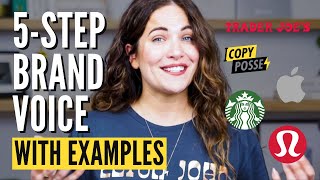
In this tutorial Alex Cattoni explains why a strong brand voice is the key to creating "irrational loyalty"—the deep, almost emotional bond that makes customers repeatedly choose a brand over competitors. She walks viewers through a five‑step branding exercise that defines the core components of a memorable brand voice: (1) Unique Selling Proposition (USP), (2) Mission Statement, (3) Brand Story, (4) Personality & Phraseology, and (5) Values. For each element she provides clear definitions, practical guidelines, and concrete examples from her own business (Copy Posse) and from well‑known brands such as Apple, Trader Joe’s, Lululemon, Starbucks, and IKEA. The video emphasizes that brand voice shapes every customer touchpoint—from sales copy to customer service—and that aligning the brand’s core values with the audience’s values and fears drives repeat purchases and premium pricing. Alex also references branding expert Deb Gabor and promotes further resources (Deb’s book Branding is Sex and Alex’s Inbox Challenge) for deeper learning.
Chapters
Want to know how to create an audience of raving fans without having to spend thousands of dollars on big promotions or fancy marketing strategies? Well, then there is one very important thing that you must get right and it has nothing to do with your business plan or how long you've been around or how many people are on your email list or even how good your marketing is. I know. Shocker. But I am talking about one very important thing called branding. And in this video, I'm going to walk you through a simple five step branding exercise that can help you create a unique brand voice and keep your customers coming back again and again. Stay tuned. Hey posse, what's up? It's Alex and I am very excited for this tutorial because I firmly believe this is something that far too many brands and businesses overlooked. Yep, I'm talking about branding, and I am not just talking about visual branding. You know, the colors, the fonts, the logos and the imagery of your brand. There is another part of branding that is so overlooked, but so, so important. Of course I am talking about your brand voice. Your brand voice is very important. It's what ultimately dictates everything you do in your business, from how you approach sales and marketing to how you handle customer service and even the type of content you post. You. Your brand voice is what helps your customers get excited about investing in your product or service. And it is the number one reason why a customer comes back again and again and again. Just like my friend and branding expert Deb Gabor says, when you get branding right, you create irrational loyalty. A condition where people are so bonded to your brand that they would feel like they were cheating on you if they were to go buy something else. And that is exactly the type of feeling you want to induce in your customers. That bond, that connection. Because that is what will keep them coming back. Even if a competitor comes up with something bigger, better and bolder. That is why they'll pay five times more for your product than they would for some Joe Schmo product that does exactly the same thing. And that is what will help you sell out your product launches before customers even know what the hell they're buying. Trust me, this has happened to me before and I promise you, it all has to do with my brand voice. So there are five very crucial elements that make up a strong brand voice. And today I am dishing out some fresh perspective and brand new examples of brands and businesses that are building irrational loyalty through branding. Done right now. I saved the examples till the end, so be sure to stick around and let's get started with brand voice element number one, your unique selling proposition or usp. Your USP is a single statement that succinctly embodies the one thing that differentiates your brand from your competitors. It promises a specific benefit or a unique feature that other brands and businesses don't have. This is what makes you stand out and answers the question, why would someone buy from you over the competition? Your USP should very clearly communicate these three things. What you offer, who you serve, and how you do it. Getting clear on these three things will help position your brand or business as the key to helping your customers achieve their goals. So as an example, the Copy Posse helps rad copywriters and entrepreneurs around the world ignite their businesses with modern copywriting tips, trust training and strategies that work today. All right, moving on to brand voice element number two, your mission statement. Now, this is one of the strongest messages you can communicate as a brand or business because it's setting the intention behind your brand. It conveys your purpose or why you are here in a way that intrigues, inspires and motivates both your customers and the people within your organization. It's your way of answering the question, why are you here? Like really, why are you here? Why do you exist as an entrepreneur, a brand or a business? Because here's the reality. We know that there are other brands and businesses and people who are out there doing, selling and offering something very similar, if not identical to what you're offering. So why then why did you choose to go into business and what is it exactly that you want to do better or different? Think of this as your rally cry. It is the thing that brings everyone together for a common cause, a common purpose or a struggle. Strong belief. So as an example, at the Copy Posse, we believe that the best copywriting combines the power of authentic brand storytelling with proven direct response marketing principles. And we are so over the scammy and severely outdated tactics we see being used online today. That is why we are rallying the raddest, baddest crew of copywriters around the planet to help us with one mission. Deduchify the Internet one word at a time and make caring cool again. So if you're on board with that mission Posse, give me a thumbs up below. And here comes number three on my list, brand story. So according to research, 80% of customers are more likely to recommend brands they emotionally connect with. And 70% of those emotionally engaged customers will be willing to spend up to two times or more on brands they are emotionally loyal to so how can you foster an emotional connection? Well, through a powerful and relatable brand story? HubSpot defines brand story as the recount of the series of events that sparked your company's inception and expresses how that narrative still still drives your mission today. This is where the art of storytelling comes into your brand voice and messaging. And as copywriters, you guys should be absolutely crushing this. Think about it. Most people know the backstory behind their favorite heroes and villains because they are compelling and memorable. And yes, just like a superhero's origin story, a strong brand story covers three important turning points. The status quo. This is the old norm or the aggravating situation that eventually led you to now. Number two, the challenge. Right. Basically some form of a problem, conflict or adversity that disrupted the status quo and motivated you to find. Number three, the discovery. This is the epiphany or the resolution that led you on a personal journey towards ultimately starting your business. And remember, you want to tell this story in a way that your customers can emotionally relate to. So I'll link to my about page below so you can read more about my origin story. All right, now on to the fourth element of a memorable brand voice. Number four. Personality. Your brand personality is about the real qualities, expressions and emotions it embodies the most. Yes, you need to give your brand human characteristics. Identifying your brand personality is a lot of fun and it will play a huge role in determining the flow, the tone and the feel of your copywriting and messaging. So is your brand conversational and playful? Loud and assertive? A young millennial who loves to travel? A genius? A billionaire? A playboy? A philanthropist? What are the defining characteristics that make your you? Now another part of your brand personality is your phraseology or the common phrases saying words, sign offs or slang that you tend to use most in your marketing or content and customer communication. So you might have noticed that here at the Copy Posse, I tend to say a few things over and over and over again. Like Benny, that's my word for benefit. The right phrase pays. Ciao for now. Rad. I love that word. I know it's like from the 80s, but I love it. These are all my go to phrases that I come back to again and again and again. And my audience knows that they're the foundational phrases of my so they've come to expect them in my messaging. If I were to suddenly stop saying one of those phrases or use a different phrase in its place, it would probably throw my audience off and make them think what that doesn't sound like Alex, who's writing these emails? So having a few phrases and words that you always use as a brand or business is important because it keeps your messaging consistent and cohesive across all platforms and lets your audience know. Yep, that's the copy posse. So when I'm working with clients to create a brand voice guide, I'll create a glossary of their most common phraseology so that so that it can be given to everyone who communicates on behalf of the company, all the way from the traffic team to the customer support team. All right, now our final must have brand voice component is number five, values. So your brand values represent what your brand stands for, which is also what you, the person or team behind the business stand for. These are the guiding principles that shape every single aspect of your business, from your message to your customer experience to the buying journey to your refund policies. Everything. Right? Once you've got a good idea of your USP mission statement and brand story, it's time to strip all of that down to your core values. Now, if this is something that you're really struggling to identify or you're going to those generic words that you just hear all the time, remember you can always refer back to your customer avatar or your ideal customer. And that's because as a brand, you want your values to mirror your customer's values. All right, now, are you ready to see some brands that have nailed their branding and built up a massive fan base of irrational loyal customers based almost exclusively on their core values and then also speaking to their customers greatest fears? I know I am. So the first example on my list is Apple. Probably the ultimate example of irrational loyalty. Most of us Apple fanatics know damn well that there are probably better versions. I know, I can't believe I'm saying this of many of Apple's products, but that doesn't mean that we're ever going to make switch to Android or Google or. I don't even know who else makes phones or laptops. Apple has nailed their branding down so well. And the reason it works is because they have meshed their branding directly with their audience's core value and greatest fear. Their core value. Great innovation. Their greatest fear? To be inauthentic or mediocre. All right, let's move on to Trader Joe's. So let's be honest, if you're in the health grocery store business, it's kind of hard to compete with Whole Foods. That is, unless you're Trader Joe's. The people who love Trader Joe's love Trader Joe's and they won't shop anywhere else, Whole Foods included. And that's because Trader Joe's nails their branding. They are fun, whimsical, gourmet, and cost effective. Their number one core value, pleasure. Their greatest fear, being bored or boring others. All right, now let's move on to one of my favorite brands, Lululemon. So who would pay $100 for a pair of yoga pants? Thousands of people around the world would, as long as they're Lululemons. So this brand definitely has an irrationally loyal customer base. Again, because their branding and messaging directly aligns with their customers core values and greatest fears. That core value intimacy. But not intimacy in the way that you might think. Their fear is being alone, being unwanted, unloved, or a Wal. Yep, look it up. Next on the list is Starbucks. Now, love them or hate them, you have to admit they have a great irrationally loyal following. Starbucks is arguably one of the most successful and popular coffee chains in the entire world. And that is because they don't just serve coffee. They serve you an entire brand experience that is rooted in their core value, freedom. Their customer's biggest fear is getting trapped, conformity and inner emptiness. I mean, think about it. You go into Starbucks, you can order a extra hot, extra foam grande soy latte with three pumps of vanilla syrup if you wanted, and they're gonna write that down, that cup, and you are gonna get your absolute favorite drink because you value freedom. And the last example on my list, Ikea. Everyone's favorite one stop furniture shop. Well, maybe if you're in college. I don't really shop much there anymore. But I have to admit, I really love ikea. IKEA is notoriously known for its complicated instructions and frustrating, time consuming installations. But that doesn't stop their fans from flocking to them for every piece of simple and affordable furniture they need. Why? Because their branding speaks directly to what their customers crave the most. Their core value, belonging. They just want to have a nice place like everybody else. Right? And their greatest fear is to be left out or to stand out from the crowd. All right, there you have it. I hope you enjoyed this tutorial on brand voice. And if you want to learn more about brand voice, I highly recommend you check out Deb Gabor's book, Branding is Sex. And if you want to learn more about creating brand messaging that's centered around your customers core values, desires, drives and fears, then check out my own the Inbox Challenge, where we dive deep into customer archetypes, buying psychology and email marketing. You can learn more about that at the link below. I will see you next week with a brand new video. Until then, I'm Alex. Ciao for now. All right, guys, if you enjoyed that video, make sure to check out the next one for me right here. And you can click right here to get a free gift. What trends dominated the Internet over the past year and are only going to get hotter in 2022? Come along with me as we count down five huge digital marketing trends to keep your eye on this year. Keep watching.
More from Alex







Best Instagram Marketing Strategy For Small Business 2026 (PROVEN & PROFITABLE)

You know those headlines that make you click even when you swear you won’t? 👀


