EVERYTHING You Need To Know To Start Copywriting
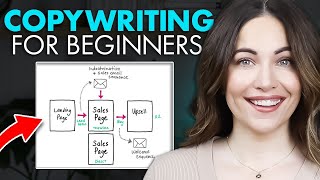
Alex Cattoni explains copywriting as words designed to inspire specific actions, covering the main assets: ads, landing pages, sales pages, and emails. She walks through email funnels, conversion triggers like hooks and social proof, and the emotional storytelling that moves people to buy.
Chapters
As any Google search will tell you, copywriting is the act of writing words that sell stuff. Okay, cool. But what does that actually mean? In this video, I'm going to explain exactly what copywriting is and how it's different from other forms of writing. And I'll even show you some examples of copywriting in action, all in less than 10 minutes. Keep watching. Hey, posse, what's up? It's Alex Here on my channel. You'll learn all the things you need to build your online business from copywriting, branding, marketing, social media, and everything else in between. So if that sounds good to you, then make sure you subscribe below. And don't forget to hit that bell to be notified when my next video goes live. So what is copywriting? Well, copywriting is defined online as the activity or occupation of writing the text of advertisements or. Or publicity material, which makes it sound really, really boring and kind of transactional. I. I know I'm biased, but I actually think copywriting is a lot more fun than that. Copywriting can start movements, it can rally audiences, it can spread awareness about important topics. And yes, it is the lifeblood of every single business. Because without copywriting, you have no business. It is literally the words you use to communicate with your customers. So. So, although yes, copywriting does get your audience to buy from you through ads and other publicity material, it does so much more than that. Like, for example, when you read an email that gets you to attend an event or donate to a cause that matters to you, or you read a social post that gets you to comment and engage with it, or maybe share it or DM it to your friend. Or you enter your email address to sign up for a free workshop or online guide. Yes, it was copywriting that convinced you to do that. So that is why I define copywriting as words that are specifically designed to inspire your audience to take any sort of action. So now that you know what copywriting is, you might be wondering, okay, Alex, but where do you actually use it? Is it the same thing as writing blog posts and social captions? What does it actually look like in practice? Well, let's get into it, and I'm going to start by talking about the difference between copywriting and content writing. Well, you might be surprised to know that my opinion on this has actually changed a bit since the very first and kind of awkward video that I posted on the topic back in 2019. But to break it down simply, copywriting is not the same thing as content writing. They are both very important in business today, but they have two Very different end goals. A content writer's number one goal is to create engagement and build brand loyalty. And they do this through writing things like blog posts or educational emails, long form social media posts and content video scripts like this one. Whereas a copywriter's number one goal is to get the conversion, AKA a sale, a click, a view, a sign up or a donation. That's why copywriting is also called called direct response copywriting, because the words evoke a direct response or action. So this means that copywriters aren't typically writing things like blog posts. They are writing things like sales pages, emails, landing pages, marketing and webinar scripts, and advertisements. Now, as a copywriter, you might be asked to write every single one of these pieces as a marketing funnel designed to strategically take a new lead through the entire sales funnel from start to finish. Or you could get hired by a business to audit their existing pages and funnels and make tweaks to boost overall conversion rates. So, by its more traditional definition, yes, a copywriter helps businesses get more leads and then turn more leads into paying customers. But in my opinion today, a great copywriter also needs to understand how to create emotional resonance with a reader, build trust and authority, and properly guide and nurture new leads through a valuable and memorable buying experience. Which begs the question, wait, Alex, isn't that a lot like content writing? Well, you're not wrong. I actually think the lines between great copywriting and content writing are becoming more and more blurred as audiences today are seeking out more conversational, personalized and educational sales experiences. So while there definitely is still a place for traditional direct response copywriting and purely educational, entertaining or inspirational content writing, I think the best copywriters today are really great content marketers where storytelling and brand experience and sales all meet together. And that is exactly what I teach at the Copy Posse. I believe that the best copywriting combines the power of authentic brand storytelling with with proven direct response marketing principles. Which brings me to what a copywriter actually does day to day. Okay, so what does all of this actually look like for someone like you who is interested in becoming a copywriter? Let's break down the most common things a copywriter might be hired to write. They are ads, landing pages, sales pages, and emails. And by the way, these are all the assets that I teach my students how to write inside my eight week copywriting program, the Copy Posse launch files. I actually structured this program specifically to teach brand new writers everything they need to get hired and start making money in just eight weeks as a copywriter from foundational Copywriting techniques, checklists and formulas for you to base your writing on to, diving into the more fun and complex things like buyer psychology, hooks and how to use storytelling and specific language to get people to buy, and a whole lot more. And you can learn more about the Launch files program in the description box below. But. But for this video, let's just do a quick overview of all of the assets that I just mentioned so you have a good idea of what all of this looks like. Okay, so ads. The first step of any marketing plan is to get traffic, AKA new leads, to hopefully turn into paying customers. You want people actually landing on your website, and this is where ads come in. So think of the paid ads like this that you see on Facebook and Google. Each and every one of these ads usually has one of two purposes. A, to get a new lead, or b to get an immediate sale. There are other types of ads like engagement ads and awareness ads, but we're gonna talk about the most common ones right now. So which one you'll be asked to write really depends on the specific target audience you are writing for. But in general, when you're writing an ad, you'll need to one think of a compelling hook that captures the reader's attention, right? You want them to stop scrolling, to actually look at the ad. Write a strong opening to get them to continue reading the ad. Which brings me to compelling body copy that convinces them that you have what they need. And then you want to end with a strong call to action to get them to take action. Yes. Okay. The next asset you may be asked to write is a landing page. So if your ad does its job, then the user will click that ad and then go to a landing page or a sales page. Now, if the purpose of your ad was to generate new leads, that means you're not trying to sell anything right away. And your leads would likely go to an opt in page or a landing page. Now, now, this is different from a sales page in that again, you're not trying to sell anything. Most of the time you simply want them to sign up for something for free, like a workshop, an ebook, or some sort of free guide. Landing pages are usually pretty short and to the point. You'll start with a strong hook, give a few strong benefits or reasons why they need it, and then, yes, of course, give them a call to action. So they sign up for this free thing, which means they've officially joined your email list and you can begin the process of nurturing and marketing to them. But let's talk about the other option, your ad is selling selling something and in that case you'll take them directly to a sales page. Now of course, this is where you'll want to outline all of the features and benefits of your product or service. Include social proof like testimonials and stories, along with a really, really great offer that convinces them to take action. So as you can see, this sales page is pretty long. Not all sales pages are this long, but most will follow the same core conversion triggers. And I go through this in so much more detail. Inside the Launch Files program, you'll learn how to create sales pages to just like this you'll learn where each conversion trigger should be applied for maximum impact, how to actually write a sales page in a compelling and persuasive way, and why this is really important, why each section matters. So if you want to see that whole page in action and check out the Launch Files program, you can click the link in the description below. Okay, so we've talked about ads, landing pages and sales pages. Now the next and probably the most common thing you'll be asked to write as a copywriter is my favorite emails. So this is a big one. Because email is such an important part of the whole sales process, it is pretty rare that a brand new lead will see an ad and then immediately become a customer right there. Like on day zero. It does happen and of course we love those people, those fast action takers. But it is pretty rare. More often than not, a new lead will sign up for your email list and then they'll receive a set of welcome emails. Now I always recommend sending at least three welcome emails where email number one welcomes new leads, gets them excited to be part of your community, and gives them next steps. In email 2, you want to share more about your mission and most importantly, get them to feel included and like they're part of something with you. And email3 is where you tell them exactly how you can help them. And at this point you really want to make a strong offer and tell them where they can go to get your product or service. But your job doesn't end there. A new lead could take a few days, weeks, or even months before deciding whether or not you're the who person person they want to buy from. It can be a long process to nurture a new lead and turn them into a customer. Which means high value emails need to be sent on a regular basis to keep your audience warm and engaging with you. That way, when it comes time to promote something, you're already going to have a lot of trust established with your list and the promotion will go so so much better. Now in terms of what writing those promotional emails will look like for you. As the copywriter inside the Launch Files program, I teach you my proven Step six email promotional sequence. You'll get my formulas, tons of examples, and even my exact email and social copy that I use during my own promotions. I have put everything you need to start a thriving and successful copywriting career into this program. I'll walk you step by step through the entire process with detailed video trainings, downloadable PDFs, templates and formulas for you to reference and swipe and so so much more. And you can learn more about the Launch Files and description box below. Now give me a thumbs up below if you're excited to start your copywriting career. And if you want to go even deeper down the copywriting rabbit hole, make sure to check out my next video where I break down the secrets of the highest paid copywriters today. You can watch that next and I'll see you next week with a brand new video. Until then, I'm Alex. Ciao for now. Alright guys, if you enjoyed that video, make sure to check out the next one for me right here and you can click right here to get a free gift. Want to know the single biggest difference between a side hustle copywriter who is overworked, underpaid and overstretched versus a six figure copywriter who is excelling, thriving and absolutely dominating their niche? Keep watching.
More from Alex







Best Instagram Marketing Strategy For Small Business 2026 (PROVEN & PROFITABLE)

You know those headlines that make you click even when you swear you won’t? 👀


