The Marketing Funnel Explained: What Is It & How To Write One
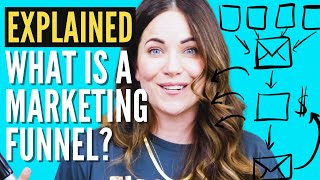
Alex Cattoni breaks down the five-stage marketing funnel: awareness ads, opt-in pages, sales pages, indoctrination emails, and sales sequences. She maps each stage to the AIDA framework and shows how to avoid leaky funnels that lose prospects between steps.
Chapters
What's one of the most desirable skills that the highest paying brands and businesses are looking for in copywriters today? Well, it's not just that you can write killer copy, they also want to see that you know and actually understand exactly how a complete and cohesive marketing funnel works. So in this video, we're going to break down the marketing funnel piece by piece. Keep watching. Hey, posse, what's up? It's Alex. If you're new to the crew, welcome here on my channel. You'll find tons of in depth tutorials, copy critiques, practical tips and exercises that you can use to start, grow and scale your online business. So hit the subscribe button below and don't forget to tap that bell to be notified when my next video goes live. Now, it goes without saying that there are many, many, many different types of marketing funnels out there, ranging from those with an Einstein level of complexity, with upsells, downsells, cross sells and add ons, tripwires, exit offers, cart abandonment, offers, list goes on and on to your basic starter funnel, which is what I'm going to be breaking down for you today. Because before you can get all fancy with your funnel optimization, you first got to have one that actually works. So today I am breaking down the core components of a marketing funnel, the purpose and goal of each component, and finally, how they're all woven together to take a fresh lead from cold to warm to ready to buy. So let's dive straight in, shall we? The marketing funnel explains. Explained. All right, so first let's start off with a super simple definition of what a marketing funnel actually is and why it is so important to understand as a copywriter. Now, you have probably heard of the simple Aida framework. So this is a conceptual sales funnel and it looks a little something like this, right? It starts with awareness at the top, followed by interest, desire, and then of course, action, which is someone actually making the decision to purchase something from you and your brand. So this funnel essentially explains how you take people from an unaware state to actually purchasing from you, amongst all the other options that are out in the marketplace. Now, I love the aid of framework because it applies to every single sales process in the world. It's not specific, it, it's universal. So keeping this universal framework in mind, how do you create a marketing funnel? What does that actually look like? Well, essentially a digital marketing funnel is the entire flow of sales assets and strategies used to attract visitors, convert them into leads and nurture them towards making a buying decision. Right? So it's really designed to Gain awareness, turn those eyeballs into clicks, and then peak interest, Turn those clicks into conversions, and then of course, turn conversions into longtime repeat customers. And it's important for good copywriters to understand this process, because the truth is, you might be the best copywriter in the world, but without the proper funnel in place to meet your customers where they are at and guide them through a buying journey, it really doesn't matter very much. And this is why the highest paying brands and businesses will pay extra for a copywriter who knows how to write and strategically map out every single piece of an effective sales funnel. So the basic funnel we're breaking down today looks a little like this. All right, so at the top of the funnel, we have the ads. Okay? After the ads, we have the landing page, then the sales page, followed by indoctrination emails, and lastly sales emails. Hopefully you can see that down at the very bottom. So we are going to go through each and every step of a marketing funnel and every single one of the core assets you need in a basic digital marketing funnel. All right, so, so let's get started. So at the top, we have ads. Now, the number one goal at the very top of every single marketing funnel is to get awareness. Going back to the Aida formula, right? Awareness and attention, AKA eyeballs on your stuff. So we really call this impressions or views in the marketing world. I mean, people need to discover that you and your product actually exist before they can go ahead and buy something, right? So there are many different ways that you can go about getting eyeballs or traffic to your website, right? Organic traffic via SEO, maybe content marketing via social media, like this YouTube video or cold email marketing. But one of the most common ways to do this in direct response marketing is through using paid ads. So these are the copy pieces that'll take your prospects one click closer to discovering all that you have to offer them. And businesses will often run multiple variations of a paid ad with slightly different hooks and angles. But all of these ads, once click clicked, of course, will move your lead or your prospect rather, to the next stage of the marketing funnel, which is of course your landing page. So this is what your landing page is. And all of your ads, different hooks, different angles, are directing to your landing page, right? So once your leads have discovered you through your ads, the goal is to get them one step further with you so that you can continue to build a relationship with them and move them through the funnel, right? You want to pique their interest and get them to say, yeah, I would really like to learn More about this, right? So you're getting them from attention and awareness to interest. Again, there are a lot of different ways you could do this, but one of the most common ways is to direct all of that traffic, whether it's organic, whether it's content marketing, whether it's paid ads, to a landing page, otherwise known as a squeeze page or an opt in page. Now, while the landing page is technically any page where traffic lands, I personally use this term specific specifically for pages that are used for the purpose of converting visitors into leads, right? So this is often done by providing a free, highly valuable resource like a checklist, a cheat sheet, a guide, webinar, workshop, masterclass, whatever, in exchange for their email address, right? So once you have their interest and their email address, they then drop down into the next step of the funnel, which is the sales page, right? So once you've converted your eyeballs into leads, the next step of the funnel is to convert those leads into customers. So this is where you present them with an offer and turn their interest into desire. Well, hopefully right now this could be done via a webinar or even a sales call. But my personal favorite is a beautifully written sales page, or as I like to call the money page, right? This is the big one. This is what most brands and businesses focus on getting, right? Because this is the page that actually sells the product or service, AKA what makes them money, and is ultimately what will make you the most money as a copywriter, because you can charge the most for this asset. And now the other components in the funnel are hugely important, but they actually don't make your clients money. In fact, they actually cost them money, right? So your sales page, your sales asset is hugely important. But here's the thing, right? The vast majority of leads will not purchase right away. That's why it's really important to continue building trust, rapport and desire with your audience so that they will go drop to the bottom of the funnel and actually take action. So you don't want holes in your funnel, right? Because what happens is when people come here and they don't buy, they could leave completely. And then what happens, right? You possibly lost the sale, you have a leaky funnel, that is no bueno. Which is why as marketers and copywriters, we're always working on increasing conversion rates because we want to plug those holes. Just like someone comes from an ad land on a landing page, someone doesn't sign up, you've potentially lost that lead forever. So your goal as a copywriter or marketer is to make sure, Your leads stay, stick around and one of the best ways to do that post sign up right after they give you their email address here is to continue following up with them through indoctrination emails. So once you've actually gotten a prospect to give you their email address, you can begin the process of nurturing those leads through a series of emails, often referred to as indoctrination emails. So you have their email address. Now you're going to send them a series of emails to really build up awareness, desire, trust, rapport and and provide valuable, relevant content. So instead of hard selling, your primary goal with these emails is to educate your prospects on who you are and why you're uniquely qualified to help them. So this is a great time to share who you are, what your mission is, what you stand for, and more importantly, that you understand them as in your audience. And their unique challenges and obstacles don't make it all about you, make it all about them. Only then, once you've given your new lead enough time and valuable content to become more acquainted with you, your brand, your values, your, and actually build up more of that desire, you can move them through the next component of your funnel and remind them of your offer. With of course, your sales emails, which you probably won't see this, but it's just another email icon, right, is to send them your sales email. So going back to the ADA framework, right, sales emails are sent ultimately with the goal of getting your prospect to take action and buy something from you. And this can look different for every different brand or business. But generally speaking speaking, when we're talking about sales, at this point of the funnel, we're talking about a new lead who has never bought from you before. So I recommend sending a minimum of six to eight sales emails, right, including one to introduce your product, one to educate them on the benefits and how it can help them, one to convey incentive and scarcity, one to showcase social proof and build authority, and a few to overcome their objections. And of course, to continue building trust. That's still really, really important. And of course, all of these emails will have a call to action that will bring your prospects and back to the sales page, right? Plugging holes in the funnel, hopefully getting them to continue to purchase and engage with your brand. All right, and there you have it, the five components of a marketing funnel, what it is and what you need to know as a copywriter who is writing a marketing funnel. Now, are you ready to take all of this knowledge from tactical to practical? Well, in my eight week copywriting coaching program, The Copy Posse launch files. I won't only equip you with the latest copywriting principles and techniques that are working today, but I will also walk you step by step through writing the essential copy assets that we talked about today. That's right. You'll learn exactly how to write each and every component necessary for a complete and cohesive marketing funnel that will make you stand out among the sea of copywriters out there. Which means in your portfolio, you'll be able to showcase your next level writing abilities and your understanding of how all of these pieces fit together for a strategic marketing funnel. And trust me, this is the type of experience and expertise that high paying brands and businesses are looking for. So if you wanna get started on the launch files, you'll find a link to that in the description below. And I will be back next week with a brand new marketing tutorial. Until then, I'm Alex. Ciao for now. All right guys, if you enjoyed that video, make sure to check out the next one from me right here. And you can click right here to get a free gift. Are you new to the world of digital marketing and copywriting? What is the difference between these two skill sets? Well, I got you. Here are the 17 terms you need to know.
More from Alex







Best Instagram Marketing Strategy For Small Business 2026 (PROVEN & PROFITABLE)

You know those headlines that make you click even when you swear you won’t? 👀


