how i built a $123k/mo coaching biz in 60 days from scratch
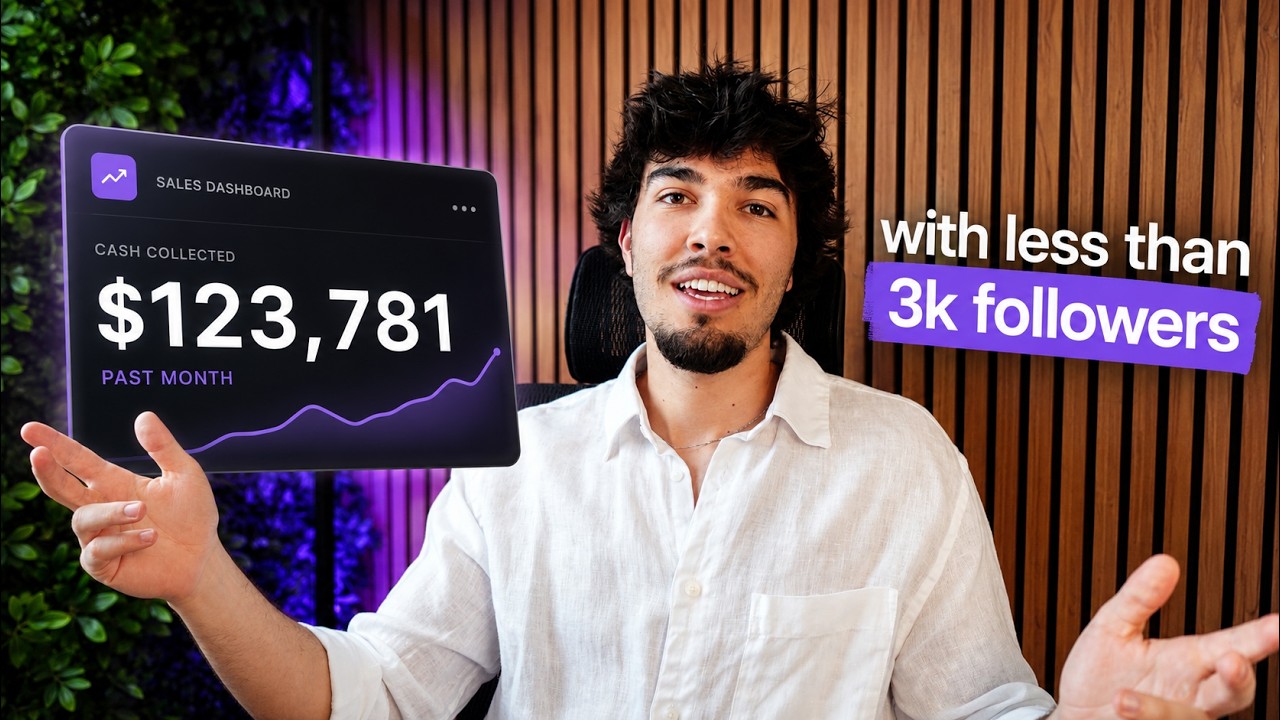
In this 60‑minute walkthrough Alex Gintchin explains how he and a client launched a brand‑new information‑coaching offer from zero to six‑figure months within two months using only organic YouTube traffic and a lean, data‑driven sales operation. He starts by showing verified payment‑processor data ($98K in WAP, $12K in Stripe, $10K in wires) to prove the $124K cash collected in June. He then outlines the two core fundamentals of any business – a product (the offer) and a market (the ideal client) – and warns against three common mistakes: blindly copying others, focusing on the wrong activities, and moving too slowly. Alex describes his three‑pillar foundation (personal brand, ICP research, offer creation) and how he used detailed market research and client onboarding forms to generate actionable data. He scripts the client’s first 9‑minute YouTube video, which, despite modest views (3 subs, 25 views), generates a $2K sale via Instagram DM. He iterates the funnel, moving from a simple VSL + iClosed booking page to an application form as traffic scales, and raises the price from $2K to $4K. To handle increasing volume he hires setters and a closer within 24‑48 hours, builds SOPs in Notion, and equips the team with ManyChat, Discord, and a custom CRM called Cliently that tracks leads, calls, and payments. Throughout he emphasizes rapid action, 80/20 focus, and continuous data‑driven iteration, culminating in a repeatable system that produced $124K in cash in June and is on track for another six‑figure month.
Chapters
In the past 2 months, I started and scaled a brand new info offer from complete scratch, starting with absolutely nothing, to 6 figures a month in just the first 60 days. And this was done all completely organically without spending a single dollar on any ads. And keep in mind that in the month of June, We collected just under $124,000, and this is cash collected. A lot of people will inflate their numbers and talk about contracted revenue, but I'm talking 6 figures a month in actual cash. The first month, we ended May around $33,000, and then as you can see, $123,781 for the second month, which was June. And at the time of recording this, we are around halfway through July and we are on pace for another 6-figure month. The crazy part too is that the personal brand behind this offer did not exist 3 months ago. My client's YouTube actually just hit 3,000 subscribers yesterday, so we were able to do 6 figures in a single month in the second month of starting everything with less than 3,000 subscribers. All of our traffic was organic through YouTube. And before I jump into showing you guys exactly everything I did from the very beginning to ending the month of June with over $120,000 in profit, I want to pull up our payment processors real quick to just show you guys that I am not pulling these numbers out of thin air. As you can see, if I go from June 1st to June 30th, you can see in WAP we processed $98,000. And then in Stripe, from June 1st to June 30th comes out to just under $12,000. And then the remaining $10K or so was from bank wires. And now that that's out of the way, I can jump into the starting point. So before working with me, my client had no personal brand, no offer. Literally the only thing he had was a personal Instagram from just like friends and family. I was able to actually find a screenshot of his account right before we started working together. And as you can see, he is around 1,500 followers. And actually at the time of recording this, he is under 2,500. So again, this goes to show you that you can actually hit numbers like this without needing a massive personal brand. You just need to be able to focus on the right things. A lot of you guys tend to overcomplicate everything, but in reality, running an info offer comes down to 2 things, which is the product and the market. And obviously this doesn't just apply to info, but business in general. In order to have a business, you need to have a product and then somebody that you can sell that product to. These are the core fundamentals. And specifically for info, your product is your offer, right? Whether that's a mentorship, a course, a coaching program, whatever you want to call it. And then in order to actually be able to sell your product, you need to be able to generate traffic online so you can actually sell your offer. And there's no reason to overcomplicate it. It literally comes down to these 2 things. And the important thing that you need to understand is you need to focus on both of these things equally. Equally. You can have the best product in the world, but if nobody knows who you are, you're not going to be able to sell it to anybody. And if on the flip side everybody knows who you are but you have a horrible product, how are you going to expect to sell that? If you guys currently are struggling to scale or make the amount of money that you want to be making with your info offer, you're probably doing one of these 3 mistakes. And the first one is blindly— let me spell that correctly— blindly copying other people. So this can mean just like copying somebody's funnel, copying their VSL, their YouTube video, whatever it may be. If you blindly copy somebody else, regardless if they're in your niche or not, you don't have the full picture. You are not making a decision based off of data, but based off of somebody else's data. And when you don't have the full picture, for example, if you're copying somebody's funnel, you only see a small fraction of the marketing side of things, but you're not able to see all the backend for what they are specifically doing. And when you blindly just copy somebody, they might be in a different situation from you. And the person who's making, for example, $1 million a month is going to be focusing on different things, different types of content, different backend systems compared to the person who's starting from scratch or trying to go from $2K a month to $10K a month, whatever it may be. And this kind of ties into my second point, which is focusing on the wrong things. And How do you know what are the right things to focus on? Well, you have to make all your decisions based off of actual data. Again, if you're just blindly copying somebody, how are you going to know what's the right thing? To expand real quick on this idea of focusing on the wrong things, you need to always be thinking and aligning all your actions with the 80/20 rule. If you guys aren't familiar with that, it is basically just this simple concept that in life, the majority of results you get from something will come from a small percentage of the inputs you do. So a simple example of this is if you want to get super jacked, there are a whole bunch of things that you can do. But if you can only focus on a small amount of things that are going to get you the most results, it's going to be, you know, sleeping well, eating well, and training well. So it's the exact same concept for when you are trying to run an info offer. There's basically an infinite amount of things you can do, but if you actually focus on making data-based decisions using that data, you can actually figure out what is your 20% of things that you actually need to focus on to actually be able to, you know, generate 80% of the money that you make. And the final common mistake that people make that really limits their growth with info is not moving with speed. If you think about the, the only way that you get results for something is taking action. In order to get more results, you want to take more action, right? So when you move with speed, you are able to get more data points and then Hence make more money, get more results. And these 3 principles were exactly why I was able to get these results in such a short time frame, on top of the fact that I'm pretty decent at sales and marketing, right? I'm not promising you that just by copying what I'm going to share with you in this video, you are going to be able to generate these results for yourself. I have Been in this game for a little bit under 2 years, and I have done this time and time again, so I know what works and what doesn't work. But coming back real quick to this idea of moving with speed, it's not just that I moved with speed. This principle of moving with speed applies to everyone. So not just me as the operator for the business, but my client and also our actual sales team. Everybody needs to be moving with speed because that is how you are going to optimize for the most amount of growth. And just to prove my point here, I am going to text actually our setters right now and start a stopwatch so you can see how fast everybody on the team moves. So let me go in the group chat. So I have a text prepared and I am about to send it In 3, 2, 1. All right, I just sent that text. Let's see how fast it takes for them to respond. As you can see, literally in under— I didn't stop that in time, but in literally under 15 seconds, Already one of the setters responded to my text message. So again, I cannot stress the importance of moving with speed, right? Not just myself, but everybody on the team needs to move with extreme speed. And I promise you guys, I did not text them beforehand to let them know this is not like a re-recording. This is literally the first try I did this. All right, I was just texting, uh, The group chat and the other setter responded as well, like literally, literally a minute later. So as you grow something, obviously you're not going to be able to do it just by yourself, and you're going to need to hire more and more people. And your main bottleneck is going to become the speed at which you can actually communicate with. So if this is dialed in and it takes less than 60 seconds to be on the same page with everybody, you're already ahead of, you know, 99.9% of other people. Okay, so now that I basically covered the essentials, I can jump into the very first thing that I did with this client, and it consists of 3 very important pillars. And the first one is the brand. So before we actually you know, jump into doing anything, the very first thing I needed to do is actually understand who my client is at a fundamental level. Because it's called a personal brand for a reason, right? It's personal and everybody is a unique individual. And the best type of marketing is when you actually stand out. You do not want to blend in with the crowd because if you look like and sound like everybody else, you're just going to blend in with the rest of the noise. So the The very first thing was me actually putting myself in my client's shoes and being able to understand absolutely every single detail, literally everything and anything about him to understand what makes him unique. So we can actually build a strategy for his personal brand that's going to be able to develop a cult-like audience. And once that was done, the next part was for me to actually understand our ICP. And the market slash niche that we were going into. Because for this specific offer, it was in a niche that I've never ran an offer before. So I had very limited information and I needed to make sure that not only do I understand everything and anything about my client, but I needed to be able to step into our ICP's shoes know everything about them as well. Because you've probably heard this time and time again in other videos, you cannot try and sell something to everyone because if you speak to everyone, you won't speak to anyone. I think, I think that's how it goes. I'm not sure. But anyways, you get the point, right? You need to really dial in on the specific person that you are going to be serving. And then once I had those 2 things, The final step was actually crafting the offer. And the reason you got to do it in this order is to be able to craft a product that actually stands out, you need to know who you're actually selling this product to. And again, like I said, every decision you make needs to be based off of data. So this is why I spent time actually getting to know my client and getting to know everything about our specific market. So now that I had done all my due diligence and proper research, and not just a surface-level understanding of everything, but actually super, super detailed and nuanced, it was time to move on to the next step. And before I jump into that, I just want to emphasize this very, very important concept that clarity Only comes with action. And you might be saying to yourself, Alex, okay, cool, why is there a picture of a biker eating it? My point with this illustration being, when you learned how to ride a bike, you didn't learn how to do that by reading 10 textbooks on it, and then when you hopped on the bike, you were able to do it, right? The way you were actually able to learn the skill was you got on the bike, you fell, You know, maybe once or twice or time and time again until you actually develop the skill set of, you know, having the balance and being able to ride without falling down. And a lot of people get caught up in this trap where they think that if they just spend time thinking, they will be able to think their way to the proper action that they need to take. When in reality, the only way that you are going to know what's right and wrong is from data points. And the way you get those data points is actually doing something. So the first set of data points that I had was, you know, doing this market research and having my client fill out super in-depth forms that gave me all of the data points needed so I could have clarity on this. And now that we had that, the next step was literally to start recording YouTube content. It was literally as simple as that. I already had a really good idea of what we were going to sell, but now we needed to actually generate the audience so we could sell them this offer. And the only way we were going to be able to figure this out is by having my client start posting on YouTube. Because again, to remind you guys, We were starting from scratch. He had no personal brand whatsoever. The only action that we could take next that would push the needle is to start making— because once we started posting YouTube videos, we would be able to build up an audience and that audience would give me data points so I know exactly how to go about the marketing side of things. But the only way I'm going to be able to know how to do that is if we start posting YouTube videos. So taking all of this data that I had from these 3 pillars, I scripted my client's first YouTube video. It was It was literally a super simple 9-minute video. In full honesty, it was just like a trial run because when he hadn't done YouTube before, he needed to build up the skillset of actually being able to make content. That is something that most people aren't just born with. And the only way that he was going to get better at that was just to start posting without overthinking, right? Like it's, It comes down to this idea again that the clarity only is going to come with action. And the only way you're going to get better at something is just doing it time and time again. You cannot overthink. You just need to do and then you look back at it and then refine as you keep on going. So this first YouTube video was pretty bad. I'm not going to lie. Like it wasn't anything special. Again, it was my client's first YouTube video, but I had scripted everything out down to the title, the actual framework of the whole video, because I took all these data points that I had from how we were going to do the personal brand, the offer, and the ICP, and knew exactly what the best first video for him to post would be. And I kid you not, that this first YouTube video actually got us our first sale ever without even publicly having an offer yet. And if you don't believe me, you can see here the first sale was for $2K and it was on May 3rd. And if I go over here to our YouTube dashboard, as you can see, the very first YouTube video was posted on April 18th. And you can see in between this time we didn't post any other YouTube videos, and that was just because my client was busy with some other personal life things, so he couldn't actually dedicate the time yet to start posting. But we posted this first video, and by the time May 3rd came around, you can see the channel had a whopping total of 3 subscribers and 25 views. So you might be asking yourself, okay, how did you guys get a $2K sale from literally 3 subs and 25 views? Well, The thing was this first YouTube video, it was not random. I scripted it based off of all of this data and all of this data that I got from doing my due diligence and market research, as well as spending a lot of time with my client to understand everything about him. So I knew when we posted this video, it would target the person we were trying to target. To sell them the offer that we were trying to sell. And at the time, because this was the first video, like I said, we were not actually advertising an offer yet. So the way the sale actually came about was through Instagram. Out of those 25 viewers, because this video was so dialed in and specific, one of those viewers decided to follow my client on Instagram and sent him a message asking, it was just like a simple question. I forget what it was. They were just asking a simple question. And I saw this as a really good opportunity to get proof of concept for the offer that I had drafted up. So converting this lead into a sale was as simple as basically setting this lead and then pitching a $2K offer just over the DMs. And as you can see, it works. Literally without a single sales call, we closed somebody on $2,000 for an offer that didn't even exist yet technically. So as crazy as this might sound, this is what happens when you do everything properly and focus on the things that actually matter. And the very next thing after we got this sale, what I did was, is I made an onboarding form so I could get even more data because if from the very first YouTube video, We already got a sale from literally three subscribers and twenty-five views. That is a very clear data point for me showing like, hey, you are on the right track, and I need to start collecting more data points to see exactly how did this guy find this video, what in the video actually made him want to reach out, and what about the DM conversation actually made him sold on wanting to. Spend this money on this offer. So there's a couple different tools you can use. It really doesn't matter. I do like Tally, Typeform, and uForm. Those are all great choices. But what you need to do is every time you get a paying customer, you need to have them first thing after they pay, fill out an onboarding form so you can ask all these important questions so it can give you a better feedback loop with more data that you can use. So you can refine your marketing and sales process going forward so you can get more and more people to actually pay you. So from in between this, uh, point of getting the first sale on May 3rd, and I believe it was May 22nd, we started just closing a few deals here and there, just replicating this process. If I go back to YouTube, you can see here, if I go from the 18th of April to the 22nd. You can see here, if I go back from the 18th of April to May 22nd, we had that initial YouTube video and my client wasn't able to actually drop more YouTube videos until May 7th. And then yeah, coming to May 22nd was when we dropped the funnel. But basically in between this period before we dropped the funnel, I scripted out some more videos for my client. And as you can see, he started posting like every few days and we started gaining some traction. So By the 22nd, we already had 200 subscribers and the views were picking up. If I go over here to the dashboard and go back to May 3rd to May, let's see, May 21st. As you can see, we did almost $12,000 in cash collected. Since we already knew and validated this idea that like, hey, this person watched a YouTube video, asked a question on Instagram, and we were able to close them through the DMs for this offer. Once my client started posting more videos, we wanted to replicate this process. I specifically told them to drop CTAs in his YouTube videos to DM him on Instagram with any questions that the people watching might have. And that's exactly what happened. As you saw, We posted a few other videos and a few people went to his Instagram, asked a question, and then we followed the same setting process and pitched literally over the DMs, sending payment links without any sales calls whatsoever, and got a few other people to join the program just like that. So this was more than enough proof of concept for me to know that we needed to double down on this. And it was time to actually launch the funnel. So that brings us to May 22nd. And this funnel that I built was super, super simple. It literally consisted of a landing page with, you know, like a headline, subheadline, your VSL, and then basically just a button that would take the leads to iClosed. And again, going back into this idea of making decisions based off of data, because we had already closed a few students through the DMs and each student was filling out an onboarding form. I had a really clear understanding of what made these people actually want to spend money. So I just took all of that and implemented it into the copy and the VSL for this funnel. Because now if we had people who are watching the YouTube videos, instead of having all this friction of having them go to Instagram and start a conversation, They could click a link directly and just watch a video and book a sales call. Because at the time, for these first few people that we closed over DMs, we were selling a $2K offer, but we literally had a 100% PIF rate on that. So we knew we could raise the price to $4K. But the problem is it's gonna be way harder to sell a $4K offer through just DMs. For something like that, you're going to want some sort of like sales call. So the specific reason that I wanted to use iClosed for this first version of the funnel instead of something like cal.com or Calendly was because in order for somebody to be actually able to book a call, they need to fill out this information. And if somebody fills out their information but doesn't book a call, iClosed will actually save that data. So I can see the phone numbers of everyone who actually put it in but didn't book a call. And, you know, at the time, since this channel had only 200 subscribers, every single lead counts because to maximize money, we don't— we're not working with like tens and thousands of leads. So we need to optimize for collecting as much lead information as possible to convert as many of these people. And that's why I didn't have an application, because if you have an application funnel, like a lot of these people, that is going to add a lot more friction. Statistically, if you have any sort of form, it's only going to have a 30% completion rate. So out of every 10 people that visit your form, only 3 of those people are actually going to complete the form. And again, touching back on this idea of blindly copying people, if I had just blindly copied somebody who had a lot of traffic, who had a form instead of having it directly to book a call, I would've missed out on a lot more traffic. So going back to the timeline, on May 22nd was when we actually launched this funnel. And we ended this day actually at, I think it was like $6K. And I personally took these calls myself and closed them. The reason I took these calls myself instead of getting a closer is because if I'm able to take the first few sales calls of a new offer that I work on, that's gonna give me even more data points because I'm speaking directly with the ICP. And again, as you know, my emphasis on making data-based decisions— this is the most raw source of data that I can get so I can make even better decisions in the future to make the offer even more money. So honestly, that was pretty much everything we did for the month of May. If I go from May 3rd to May 31st, you can see $35K cash collected. And, uh, I know a lot of you guys might have been expecting like me to say we use some super high-tech complicated funnel, but as you can see, that does not matter at all. You just need to focus on the fundamentals. And when you do that and you make data-based decisions and you take a lot of action and move with speed, you see exactly what works and what doesn't work. And And when you find something that works, you can double down on it and replicate this process. That's how we were able to do a decent amount of money with— let me go here, April 18th to May 31st. As you can see, the YouTube channel had 576 subscribers, right? This first video that was posted on April 18th, As you can see, no videos until May 7th. And then, right, my client was able to actually drop more YouTube videos consistently. And with every new YouTube video that dropped, the channel started getting momentum. And the thing is too, this channel was able to start growing momentum at such an exponential rate because not only did I use all this data from the sales calls and the onboarding forms, to improve the marketing and sales process of this whole thing. But we used all of that data and applied it to every video going forward. And I focused on making every single video better than the previous video. And that's how everything started compounding. And yeah, that's— I mean, I don't want to beat a dead horse. Like, that's everything that went down in the month of May. And that brings us to the month of June. Where we hit the $124,000 almost in cash collected. So by the time June rolls around, right, we have this machine that's pretty simple and it's working. It's just we're posting YouTube videos and those YouTube videos are generating traffic and those views are converting into money, right? Somebody from YouTube is going to the funnel, booking a call, and I'm closing them. Or somebody from YouTube is going onto Instagram. I'm having a conversation with them and then booking them manually onto a sales call with me and then closing them that way. And it's working pretty well. And because I'm handling everything for my client from the sales calls, the setting process, the actual, you know, video scripting and all of that stuff, the only thing my client needs to focus on is just recording these YouTube videos and doing the fulfillment for his students. And since he doesn't have to be split-focused over a bunch of different things at once, we can effectively make a lot of money while he can just focus on getting his students the best support possible so they can actually start getting really good results. Because the better results that your program generates, that's gonna be at the end of the day like the most effective marketing you could ever have. And if we fast forward here to June 2nd, I know this says June 3rd, but as you can see, it was at 1:00 AM my time. So technically June 2nd, using this exact process, we had a $14,000 day. And this was literally all myself just doing all the setting, all the closing. And as you can see here, as far as June 2nd, the YouTube channel had 690 subscribers, which wasn't a lot. But this was really a breaking point where it was time to scale and pull a new lever because this was really good money. But the problem was, since I was doing all of this myself, I had no time to actually make strategic decisions that would move the business forward and keep on scaling the offer, right? I was busy the whole day in the DMs and taking calls. So this is why as soon as this happened, my very next step was to hire setters. Going back again to those 3 top mistakes that a lot of people make who struggle to actually scale in info, the speed aspect. This was something that I needed to do with extreme speed because if I didn't do this as fast as possible, we would have missed out on a lot more money. So literally the same day I started reaching out and trying to find some setters so I could hire for this offer. Because since this process was literally proven to work, if I had somebody else actually being in the DMs, then I could focus on just taking more sales calls, which would generate us even more money. Literally the same day this happened, I started interviewing people who applied for this role. And this is why it's important for you to also be connected in the space, because when you have the right connections, you can go and find the right people because hiring the right talent is super, super important as well as being able to manage and train them. And basically I have ManyChat, Notion, and Google Meets here because we used ManyChat to actually give the setters access to my clients' DMs. And then in Notion, I had to build out SOPs that would go in depth over all of the roles and responsibilities that these setters needed to do. So they were super clear on their expectations and they could actually do their job properly without me having to worry about that and allowing me to focus on higher leverage tasks that would scale the business. As well as for the first week when I hired these setters, I would have meetings with them that would last 2 hours every single day. And like I said, this all happened in like 24 to 48 hours. The second we hit that record $14K day, on the 2nd of June, I immediately started interviewing setters and hired 2 setters the very next day. And this was the process basically for the next week that I had with those setters. And things were going really well because like I said, since my time was freed up and I didn't have to be in the DMs because we were getting more and more leads because the YouTube was compounding, my schedule was freed up so I could actually take more and more calls and collect more cash for the offer. And this brings us to basically halfway through June where things started picking up so much. My whole day was booked with calls back to back. My whole day was booked with calls back to back. I didn't have any time to focus again on higher leverage tasks like what's the next YouTube video going to be? And, you know, making these high-level strategic decisions that would bring the business forward because my time was constrained in doing sales calls the whole day. And that is why halfway through June I needed to hire a closer. So same thing again, moved with extreme speed because the second I had a day where I could not focus on anything else because I just had calls, 24 hours later had a closer onboarded and trained and ready to go on this offer. And not only that, but I had to start increasing friction on the actual funnel because the thing is when your traffic online starts to increase, you know, it's not going to be exponential in terms of your qualified leads that you have. As your traffic increases, your unqualified leads are going to increase as well. And since the funnel was a VSL straight to booking a call, a lot of unqualified leads would start getting on the calendar. And I wanted to make sure that I did not waste the closer's time. My goal was for him to only take calls with qualified leads. Leads. So the way I was able to add more friction to the funnel was removing the iClosed integration and replacing with an application. Because if you remember a little bit earlier, I said that applications have around a 30% completion rate. And now that we had a lot more traffic and a lot of it was unqualified, I had to up the friction so we would get less leads and optimize for actually higher quality leads. But in the past, right when the offer was first starting out, I needed to optimize for just as many leads as possible because we didn't have an excess of leads to work with. So this is why when I onboarded the closer, the new process of how basically money was made with this offer was, again, we were just focusing on YouTube strictly to generate traffic. My client was posting, you know, a video every like 3 to 5 days that I was scripting for him. And then leads would either go straight from YouTube to the funnel page, they would watch the VSL, and then they would fill out an application, or they would go from YouTube and follow my client on Instagram, or, you know, go in his DMs and start a conversation. And then regardless of which stage they were in, the setter's job was to basically call these leads up and make sure that they were qualified and had actually high intent. Because a lot of people are just going to waste your time. And for the closer, it's really important that he isn't wasting time and is having as many booked calls with qualified leads as possible. So that's why we had the application. As soon as an application would go through, literally, as you saw with how fast my setters texted me, within a minute or 2, they would get a text from the setter and then they would hop on a call. Or if they were a lead from Instagram, the setter would start a conversation and then hop on a call with them, make sure they were qualified and had high intent. And if they were not, then they would just dequeue them, stop the conversation and not waste their time. But if they were, then they would manually go and book that lead onto the closer's calendar. And for the sake of not making this video extremely long, you want to have a sales process from in between the time that somebody gets booked onto the calendar and actually has the call with the closer. That's why I have this question mark here because I'm not gonna go in this specific video and all the sauce of everything that went down. But the main idea here is you don't want to solely rely on the closer and the sales call of actually securing the deal. You wanna do as many things as possible that will optimize that after somebody's booked onto the calendar, they will show up to the call with their objections pre-handled and they're ready to buy, right? So anyways, these leads that are high intent and qualified by the setters would hop on the sales call with the closer and then pay. And that's, that's pretty much it. Like, like I said, it's, you don't have to overcomplicate things. It literally just comes down to these 3 principles of making data-based decisions instead of blindly copying and focusing on the few things that will actually give you the majority of the results and moving with extreme speed. And the final thing that actually tied all of this together is very strong team communication, as well as having these systems in place and proper management for all of this to work cohesively as one big machine because as you know, when you start dealing with having multiple people in a business and you're not doing everything yourself, it's very important to have super clear communication and expectations, training. And the way I was able to have this super simple process work so effectively is by utilizing my own software that I actually built called Cliently, which I'll go over in a sec. And Discord. So basically Cliently is just a custom CRM that I built for my sales team. As you can see, if I jump into here and show you a real lead, you can see all of the critical information that you would need in one place. And not only is this useful for me as an operator to see all this information so I can make these strategic decisions that will move the business forward, But this is also super useful because the setters need to be able to communicate with each other clearly and also with the closer. So for this specific lead, as you can see, you can see exactly the date that this lead was created, and you can even see they came specifically from the funnel, and you can see all of their responses here to the application that they filled out, and you can even see which YouTube video this lead clicked off of and went to fill out the application. I can even see at what time they started the form and how long it took them to complete it. Here on the left, we have all their contact information. We can see their local time, you know, all of that stuff. I can see, you know, like I said, the source, but also I can see the setter assigned, the closer assigned. And I can see all the other activity in here. So the next thing after this lead filled out the form, I can listen to the call recording that the setter actually had with this lead. And then you can see here that the call was booked. And this is one system that makes it super easy because the setters can see all the information they need on this lead, follow the exact SOPs that I trained them on. They can record the call in one place, and then they can also book this lead onto the closer's calendar. And as you can see here, it has all this information. It even has the link for the closer to just click on it and you can reschedule, cancel calls, all that stuff. The closer can see all of the specific notes that the setter actually put on this lead. So the closer doesn't go into the sales call flying in blind. Then I also have the setters confirm with all the leads an hour before their call comes up that they are actually going to show. You can see exactly when this lead confirmed, and then you can see the call outcome. So the closer actually fills out a form that has a bunch of information like when the call was, the outcome of it, the lead quality, you know, any objections. They paste in the actual screen recording of the whole sales call with the transcript attached to it and any additional notes. And log the payment and all of that stuff. And as you can see, all of this is in one place where it makes it not only super easy for me to keep track of everything and know exactly all the important data that I need, but it makes it super easy for the team to communicate with one another. And this system, because it's all custom built, I can build it around exactly not just what I need myself, but what my team needs to be as efficient as possible. So hopefully you can see it all comes down to these fundamentals of having super good sales and marketing skills and then applying those to get as much data as possible and move as fast as possible, and then making decisions based off of the data to keep on refining something. And when all of this is clearly tracked and in one place, it makes it super easy where if something goes wrong, I can see exactly, hey, why did this go wrong? Or if something starts working really well, I can figure out exactly, hey, why is this working really well? How can I double down on it? And this is exactly the constant process that I did every single day to actually take this offer from nothing to 6 figures a month in the second month. It's literally that simple. And just to touch on this Discord part, like I said, this system is fully connected to Discord where we have all of our internal team communication. So basically anything that you can think of is automated. And you can see this is an actual screenshot of our Discord here with all of the different channels that we have, you know, with all the different automations that go on. And again, this just makes it easier because everybody, if they're super clear on what their tasks are, they can just focus on doing what they need to do without wasting any time and having things be as automated as possible. But yeah, I just wanted to make this quick video to show you guys that it's actually possible. So I hope I broke some limiting beliefs. And yeah, if, if there's one thing I want to leave you with, it's just those 3 fundamentals that I touched on towards the beginning of the video, and they all tie into each other, but it really comes down to being able to focus on the right things. And the way you're able to know what are the right things to focus on is being able to track as much data as possible and then make decisions based off of that data and move with extreme speed, because the shorter your feedback loop is, the faster you can actually improve, right? So again, that's why clarity comes with action. You're not going to be able to think your way to clarity. You need to just do things, get the data points, and that's how you're going to become super clear on what your next thing you need to— if every single day you are constantly focused on becoming better and better, you are going to have this upward spiral where you have this crazy exponential growth that most people would think is impossible, but it really is possible if you do have these right skill sets. And I know I didn't touch on too much in terms of like the technical, like sauce part of things, but again, I didn't want to make this video like super, super long. Just leave a comment down below. Let me know what are specific topics you would want me to go over, including just stuff about the sales process, setting process, you know, how to actually find good talent, train good talent, manage you know, build these backend systems, all of that stuff. So yeah, just let me know. This video was more of just showing you guys the actual process of everything I did and kind of like pulling the curtain back so you can see it really isn't as complicated as you would probably think. And yeah, if you do have any questions, like I said, anything you'd want to see next, just leave a comment or you can also go to my Instagram. And shoot me a DM. I do read all my messages and try to respond as many as I can. So I'm gonna leave it at that. And yeah, I hope you guys were able to get some value out of this, and I will see you guys in the next one.