Alex Mitrevska, Native Teams: To be a good communicator, you must have active listening skills.
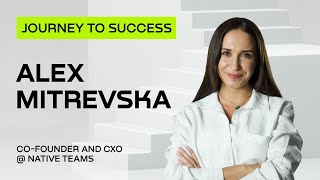
Alex Mitrevska, co-founder of Native Teams, talks about startup culture and leadership. He emphasizes that good communication starts with active listening and knowing when to delegate rather than do everything yourself.
Foreign.
Hello and welcome to our Journey to Success series. My name is Sim and I'm the head of content here at Unlimit and I'm so excited to have you with us here today. I would absolutely love if you could just jump straight in and give us a little bit about your career journey and what has led you to co founding Native Teams.
Thank you. Hi. So my name is Alex, I am just a brief intro about myself. I'm Alex. I come from North Macedonia, small country on the Balkans. And why I mentioned this is because my journey started off right there and it's still going right there, which is a little bit uncommon when it comes to comes to geolocation and how startups are coming here and so on and so on. So how it started is that basically I didn't plan this, right? So I've never planned to confound something. It just came to me as an opportunity, right? You know the story about the red car. So when somebody asks you, for example, how many red cars have you seen today, Alex, on your way to work? No way I can tell you, right? But if you ask me, well, tomorrow when you go to work, please count the red cars. I would count them and tell you. So it was basically on that analogy kind of a thing. I was actually looking for a job, anything that I can work, right? And I, I met Jack, which is the, the founder of Native Teams now my business partner and I actually started working for him as a customer support manager, right? And at some moment he told me, look, this is a really good opportunity for you and me to start something together. This is the opportunity to take the opportunity, to want the opportunity, right? And then at that moment, because we built native things for our own, let's say benefits, because as I said, I started working for him. But we always have these struggles of getting paid, getting properly employed as a freelancer and so on and so on. And he really loved to work with people on the bowel cancer, right? He was in Macedonia way before we met, like a couple of years way before we met. But he always had these struggles, okay. So then we decided, okay, so if we want to keep working together. And we did want to work together, but with myself and a couple of other team members, we said, great, let's do something about it, let's fix our own problems and then do it, do the same for other people. And he did ask me, do you see the opportunity here? And this is the same as I say, with the red car, I would have, you know, keep working for him. Although we had all of these issues, but when we saw the opportunity of resolving these issues, not only for ourselves, but for other people as well, we actually grabbed that. So that's how it started. I worked for him for three years and then we started native teams. Right. So that's what I said at the beginning. I never planned to be in a position where I am now. And it was a really authentic and unnatural, let's say, flow of how working for someone led me to become actually a business partner with the same person and also the people that at that particular moment were also my colleagues and his employees as well. So again, it's an authentic story. And I know a lot of people when it comes to startups would say that the best and the most successful startups are the ones who are resolving their own issues. But it's so true, right? And this is another proof that it's so true. Because when you know what the pain point is and you resolve it for yourself, you know what other people would need to. So that's like a brief story of how it started. It wasn't planned, but it actually, I think I was also lucky, right? I always mentioned this, like there is luck. We should really, really think about how lucky we are in a situation like this. So it was the right time, the right circumstances, building something that I needed with, with the people that, you know, also were depending on, on that solution. But it's also like really being at the right place and the right time.
Thank you for Shar, that's wonderful. And I think it is very exciting because as you said, particularly like with startups and like new innovations and solutions, we're always seeing that people are trying to of course address a pain point or fill a gap in the market. And it's really interesting to hear how people's stories evolve. I mean, in your journey. I think for the next question which I wanted to ask you, but you've slightly started to answer, it was about what actually motivated you to co found the business and being in a startup sort of culture. How did you find the early stages of that journey in particular?
That's a really interesting question because when people ask me what motivates you to do this? I always say because it's fun, right? As a person, honestly, I'll be honest with you, when I had to start working and I was at the age of 22, I'm 32 now, I always hated work, right? Getting up in the morning, not knowing what I'm doing, just going to work to pay my bills. I always Said, look, this is not what I'm supposed to do. This is not what I want to do. I know I have to pay my bills, but there is another way to do that. Right? And until today, I, I think the motivation to say yes to something like that because it was really what, what me and Jack did, we said, okay, this is the solution. And he asked me, do you want to be my business partner into this because of X reasons, right. Because he's from the uk just to get the whole idea and I'm from the Balkans. And we actually both had really different opinions on what and how we should be doing that. But it was really interesting because at that moment, okay, we thought, okay, so I hear your opinion. And had some experience before he had another startup. I never was in a position of working in a startup as well, but I had pretty much an idea why I would like to do that. And it's exactly the thing that I said to you. I wanted work to be fun. I wanted work to be a motivation for me to get up in the morning and have a purpose. Okay. So I go there, I have these people, I'm doing this and I know why I'm doing that. Right? That was my biggest motivation and still is my biggest motivation. So when you ask me what is my motivation, it's the people that I work with, to be honest. Right. Because we were also lucky to build this culture, which is something that it was intentional to an extent, but it was because in the DNA of what I wanted to do and what Jeff wanted to do, all the very different, but they were also very similar. We both wanted to do something that it's more than work, right. We both have these aspirations of when I go to work, I want to feel I'm having fun. I want to like the people that I work with and I want that to be like a, a whole purpose that we, that we all share. And it's clear why we're doing that. And as you mentioned, it's the, the culture in a startup. It's something really, really easy to an extent in the beginning. Because when we talk about a startup, we're talking about 20 people at the beginning. And when you have 20 people, you know, all of those 20 people talk to each other every day and so on and so on. So the culture some somehow happens. But when you grow in a scale up where native teams right now is so just for records, we're like 200 team members right now. You have to make sure that you work on that company culture and on what Keeps you motivated to go at work every day. Not just myself, I know the question was for myself, but for the people inside. Native teams. Native teams as well. So if I can summarize if the motivation is actually doing something, which is not a burden for me personally, because work was always a burden for me, but this is something that I create, something that I can be thinking outside of the box, enjoying time with the people that I work and not separating life and work. Right. Because I don't know if you can ask me, but that's something that somebody, actually, everybody would ask me. Like, as a co founder, do you have work, life, balance? And I hate that question. Because if you think about getting balance in work and life, it's so, so demotivating and it's so hard. And then it makes me overthink. Do I? Do I? Do I? But then I. I thought, okay, I don't need to separate both of them. It's not that I'm a workaholic, but I live what I work. Right? It's not like I'm. When I work, I'm dead. And I. It's not life, it's life, but it happens in a different way. So if you can actually. It's a. It's a mindset, at least for me. If I can actually fuse both of them and leave while I work, it's a win, win. And my biggest motivation.
That's really lovely. Thank you. I think it's very important. I love the fact when you were saying you were really trying to find something that doesn't almost feel like work, even though, of course, you are still working, having something that you are passionate about and that you're enjoying something that you feel like almost, Isn't that sort of monotony of having to just wake up, go to work? And, um, that's a really important cycle. And I think so many people spend such a long time trying to find that and trying to achieve that, and the fact that you've managed to achieve it at such a young age as well is such an inspiration. And that is literally one of the main reasons why we do this series, because it is about journeys to success and finding happiness and what is it that people are doing on their career pathways and motivating them. So I think that's a really wonderful thing and I think it's really important to share that as well. So thank you. How about the early stage of the journey? Was it a different shift? Did you find it quite easy to sort of flow into changing your career? How was that early stage of your professional journey where you were like, okay, we're going to start our own venture. This is our own journey.
Now look, when I look at it right now, I would say it was all because of a very big reason. But at that particular moment, it was very hard, I'll be honest with you, very challenging and very hard to switch to something. Okay. I was just. So I go a little bit into the story of my career. So I started as a customer support agent, but in what Jack was building at that moment, I was given also the opportunity again, the red car situation, to try everything that I wanted to try. Their product management, sales. I've tried every single position you can imagine in a company, right. Not everything worked for me, but I definitely learned and I got out of my comfort zone so many times. I've cried a lot, right, with challenges and everything, like you've cried a lot, and so on and so on. But at the end of the journey, like, when you ask me now, how was it, I would say it was really hard. It was really hard for me physically as well, like having to. To find my thing in it. Because when you are that junior, as myself, as you say, I'm pretty, pretty young to be in a position where I am. When you especially start this journey in a very junior level, you haven't been to all of the steps. You have to hack some of them, right? But in order to hack some of them, you have to know the right people to do it. And I was very lucky to be supported with a couple of mentors that I've met through my, my career. Some of them recommendations from Jack, some of them recommendations from our, our investors as well. And they helped me hack all of these things that I didn't know and I was super supposed to know at that particular moment, it was really difficult and challenging. I had tons of fails, I have to have to admit. So I should also mention the love relationship that I have with failures, right? I had tons of failures during these, this career. Things that if I haven't been through, I would not not know what success looks like. But of course, we'll go through this a little bit in details later maybe, but I've learned that as many failures as I have, as many lessons I have, and as many times I go out of my comfort zone, it helps me move to these challenges and see them as opportunities, right? Because it was extremely, extremely difficult for a person like me to actually grab an opportunity. But also, it's not just an opportunity. It's. You're responsible for so many things. Right. All of a sudden you start with being just an employee and then a couple of years later you have this company and people who are my team members and I'm directly responsible for their growth, for the growth of the company and at the end of the day for their salaries. Right. And when you think about it like these are the things that I'm responsible for now, of course, it's me and Jack now, but again, I'm part of it. You have to think of how do I do the best for me, but for them as well. Because at the end of the day, somebody else was responsible for me at the beginning, but now I am in that particular role. But it's so easier when you've been through both of them, Right? So it's so easier when you've been a team member and when you are on the other side of the equation where you have to take care of the team members because you already know what they're looking for. Because I was one of them.
Absolutely. And I can imagine that that transition of doing your job and going home and suddenly, like you said, having so much responsibility, it must have been a phenomenal growth experience for you as well. And I know you touched on the idea of having failures and going through challenges and tough spots, but was there anything that you would be willing to share with us that felt like a significant setback or experience that you faced in your professional journey and how you overcame that to reach this level of success that you're now experiencing today?
The biggest moment of that is the company has grown. It's a startup. The company has grown like in an unexpected, unexpected way. I mentioned this as well. Some of the things that I had to do in this company were a little bit ahead of me. Meaning that my biggest challenge, my biggest setback was growing, but maturing together with the company as well. So that would mean that at some point, and I'll tell this is a really personal story, but I'm really final of sharing it. At some moment in this company, I was the coo, right? COO of native teams. But as I mentioned, as the company was growing, but not in growing, but maturing as well. Because there is a huge difference between growing and then maturing the company, company as well. At some point I realized and both me and Jack spoke openly about it. Am I mature and grown up enough to actually be in this position? Although it's my idea, my startup, I'm co founding it, but I just have to be real of my capabilities. My previous experience about it and how much I can drag this forward, right. Because the company was growing more than I did. Right. And at particular moment I was. Was totally not aware of it. But then I realized, okay, this is it. This is the part of my career where I have to really, really make sure that I upskill, that I go through all of that. I learn all of these things that I need to learn, which I might have if I was a co founder at 42. Right. 10 years from. From now and so on and so on. But because of the position where how this naturally came, I haven't been through all of the those experiences and I have to learn and upskill and ask for the relevant support to be able to mature enough so I can drag this company forward. Right. And not let the company drag me, which is the worst thing that that can happen. So at that particular moment, we decided that, okay, it's okay, we're the co founders. That's pretty much it. It's our vision and everything. But we need people who will fill in those gaps that we have as a, as a foundation. Founding, Founding business partners. Right? And that's how we, we decided that we're gonna hire this person who is more experienced than me to actually fill in. In those kind of things. And together we can then drag the company forward, as I said. And we slightly change my role and responsibilities in. In the company as well.
Thank you for being so honest. I think that's also poignant message behind that because I think like you said, having that retrospective, look where you're saying, okay, I know that this is my concept and I know that this is my journey, but being able to address points where we feel like we're not strong enough yet, but we know we want to improve on is a massive thing for any career, whatever career somebody picks. Having that ability to step out from where you currently are and look at what it is that is actually in front of you and how you can get to where you would like to be. That's a really important thing. And so I think that's a really significant message. But one thing that I would love to know, and it could ties into that because I know you touched on the idea of maturity is also what other professional skills do you feel are essential to being a successful leader? And they're skills that also people have to work on continually. So even if we feel like we're doing a great job with it now, okay. But it still needs to evolve as we evolve through our careers.
Look, there is not a formula for it. Every leader is a different leader. But of course there are a couple of, of let's say skills or things that the leader could and should do in my opinion to be a successful one. And I always, I really try not to generalize things when, when somebody asks me and I really go from my personal experience the things that most of the time were helping me first of all is the communication skills. But you will hear these communication skills a really important one for pro leader. It is. But sometimes we just get a little bit, let's say we misunderstood the concept of communication skill when it comes to leadership. In my opinion, it's more about active listening than talking, right? When we say better to be a good communicator, it doesn't always mean to talk good, right. It sometimes and in my case means to actually have an active listening as a skill when it comes to the team. The line that I'm leading because most of the time, times the leader, yes, will push forwards would lead the team towards a vision. But it's the team who knows the challenges through that particular journey, the solutions to it because they are working on it, they're living on it and so on. So in my opinion, and what helped me the most, not just as an opinion, but as a fact, is my active listening, right? To listen to what they have to say, to understand and not to respond. Again, the being a good communicator when it comes to this also helps. But being an active listener is something that helped me help me a lot. Because you also give a meaning to what they're saying, right? Because as I mentioned, in most, in 90% of the time a leader will push the team forward, but the team knows what, what is the solution to any of the challenges that they're facing and so on and so on and usually have the answer to, to, to those, those ones as well. Another one that I would like to mention here is it's really, really important to be easy to work with, right? And I think sometimes we undermine how important this is a skill is. I don't think that it's maybe not even listed as a skill, but in my opinion being easy to work with, it's supposed to be listed as a skill, right? I have the skill of being easy to work with because then you're approachable, you're comfortable to, to go to a so on. In my opinion, leaders should think about what their team members will remember. They won't remember the tasks that I gave to him. They would remember maybe the speech that I will make to them, but they will Remember how I made them feel during that time. It's a human characteristic. Like it or not, we all remember the feelings. Right? So whoever is going to listen to me now is going to remember how I made you feel with the things that I said. It's a human characteristic. So I try to connect that with leadership and be as easy to, to work with. But also, you know, you have to have this particular moment of asking for help when needed. Right. It's another skill that a leader should show. Because if you're a leader doesn't mean. Yeah. That you have to know everything. Nobody knows everything. And it's, it's something in my experience that some of the leaders will easily forget. Because you feel the responsibility. It's my team, I have to, to lead it. It's my obligation. I'm accountable for it. Yes, but really asking for help or for support for other leaders or for team members, whoever it is, it's such an important thing to do. Right. Because everybody knows that they need help, but not everyone will ask for, for that help, especially when it comes to people who are in a leadership position. So I would really put this as something that a leader must have. It's actually go and ask for help when you, when you need it, because it's only natural. And then your team will also feel empowered to go and look for support when, when they need to. In the last one that I want to mention is the ability or the power of delegation, which in total honesty I still haven't mastered. It's the most difficult skill, the skill of delegation, because again, it comes with the sense of leadership that, the sense of think that I'm accountable for this, it's my responsibility. Yes, but you can't take it all on your shoulders. Right. Because then you're not a leader. Then you are someone who has, has a responsibility or things that have a responsibility to do it all yourself. And then again, first of all burnout will happen and then the team won't feel empowered and actually have that sense of ownership. Okay, but I can own my own, my own tasks. You're just here to lead me towards an accomplishment of, of that. So power of delegation or the mastering of delegation, it's a really, really important one, but it's most, the most difficult one as well. Especially when it comes to not so much experienced leaders as well.
I think that was a very like, clear and powerful message. So thank you for sharing that. And I think so many of the different attributes that you spoke of, especially like the delegation, being able to have active Listening, I think those are, a lot of those also come back to soft skills as well as hard skills. And I think that also comes into where you spoke about being able to ask. When we don't know things, it's okay to ask. And the reason I love it so much is also because as you mentioned, as people progress in their career, people reach a certain level. There's often a misconception that because you are COO or you, you're the co founder or you're head of a department, that you're supposed to know everything. But we are all constantly learning and we're all constantly growing, growing. And that is how we are on these journeys to success, because we have the capacity to learn and ask questions. But I absolutely agree with you on all of the traits that you mentioned. And I think the one that I really, really loved the most was honestly the active listening. Because. Because I think that's something that people forget about. We talk about communication so much now in all areas of our lives and how important it is and how fundamental it is. And it can be the make and break of so many scenarios, both professionally and personally. But I think sometimes we overlook the element of the fact that when we are communicating, we also need to actually listen because it's at that point that we'll be able to learn and we'll be able to see gaps. And I can also imagine that as you are in a senior position having those moments of active listening when you're speaking with different teams, it must give you a lot of insight, especially as the organization is growing and you may sort of like not be able to be in touch with teams on the ground at all times. It must be a very, very important step to have.
No, it's definitely. And it's. I think it's something. And it's why at the beginning I mentioned to you that me and Jack came from totally different worlds, different perspectives and exactly what you say to your body point. Listening to people will give you access to different perspectives. And there is nothing more beautiful than that. Right. Because my perspective and your perspective combined, it opens doors to many, many possibilities, especially in startups where you have to think outside of the box.
Yeah, absolutely. Absolutely. One of the things that I would absolutely love to know from you, if you don't mind, is sort of looking at your journey right now. What do you feel has helped you stay motivated to reach each of these goals? And of course that's not to say you don't have more goals, but what feeds your motivation to carry on?
You Know what, it's growth, but growth in a way of personal and professional growth as such, I haven't had the possibility to be in a comfort zone known for a while. Right. And, but that's for a good thing, I guess. But sometimes you miss that moment where you are in a comfort zone, you know what's gonna happen and so on. But I haven't had that luxury for a long time of period. But on the other hand, I think it's very much what keeps you motivated, right? Because you have something new every day. Although sometimes changes and people don't like changes, nobody likes changes and so on. But having approved that all of those changes are just the way to, to growth personal and professional has been like something new for me, something that I've learned and I'm really never eager to forget that change is the only constant you can, you can have in a startup and in life if you, if you want to grow. Right. And for me it's always been not a challenge but a goal in my personal life that I'm always going to try new things. Right. I get easily bored. That's one of my toxic traits as a person. I really get easily bored. Like with whatever I do, I get easily bored. So I'm trying to find something that will keep me on my toes always, whether that's at work or whether that's like in my personal life. I have to have challenges, I have to be challenged even you know, when, when that's causing me a lot of stress because you know, with changes there is stress and so on. It's what at the end of the day, it's what keeps me alive, right. And having these constant changes being out of my comfort zone every single day, which I am in native things and I absolutely love it. It's one thing that keeps me motivated as such because I see motivation is not something that I think of, okay, what keeps me motivated. It's something that happens, right. I have work to do, I have things to do, I have things to think about. I have, I don't know, my pen and paper to be creative and write something that I want to do next day and so on. And that's motivation for me at the end of the day.
Thank you. I do love that. I think it's very interesting. I also love the fact that you just sort of feel like you're recognizing within yourself traits about your personal character that are feeding into your work. And I think that's something. That's a really good point of self reflection because I feel like I also do that and I think it's really important. But sort of looking at your own journey and from what you've experienced of your own motivations and what feeds you, what advice would you share to people that want to also become leaders and entrepreneurs in the tech space?
Okay, the very first advice is I would say be ready for, for tons of failures, right? Be ready for tons of failures and another one. And I know this might sound, sound a little bit contradictory of everything that I said, the advice that I give to people when they ask me like I have this idea, I really want to start, would you suggest I do it? I always say think about it. Think if you wanna, if you wanna do this. Because soon enough it's not just gonna be you and your idea. Soon enough it's gonna be tons of people, it's gonna be tons of stakeholders and it's gonna be the world that you are trying to change with, with this idea, right? So think about. And again, this is coming from my, myself being a little bit more, more self aware and as you say, reflecting on everything that I do on personal level. Is this your thing, right? Is this what you as a person can handle? If, is this something that you want to do? Because I've met tons of co founders that are suffocating on the things that they've started, right? Because it's really nice, it's really, really beautiful when people ask you for the success when you go on an interviews like this and so on and so on. But on the other hand can be very tiring if you really don't want to do that, right? So the first advice that I would give is talk to founders, try to understand what they do. Even if you can row shadow, right? I, I never had the chance to do that to Roshadow. Maybe if I did I would have like a different opinion and never went into this journey. But I had, I haven't had the up that particular and I'm happy for it. But try to think about it like, is this something that I really want? Because it can be your greatest success. It can be the place where you feel like it's your natural habitat, but it can also be such a really exhausting, let's say journey. And then you think, okay, this is, this is not for me, this is not what I want to do and I'm going to be stuck in the dead end job because that's what, what my, my thing is. So however hard this, this sounds, it's the only advice that I always give to people. It's about, think about it connected to your personal values. Right? We all have our personal values. We all have our personal traits. And think if this is something that you want to do because it ain't easy. It's not like fun and success stories every day like the, the one that I'm sharing now. But it's failures almost every minute, right? It's failures every minute. Whether that's your personal one or something went wrong. When it comes to your team or whatever we have done, it's on you to actually deal with it. And we have to understand that part that, that comes with it. So if you're not a person who wants to work under a lot of fun but also stress, you know, just think about the things that, that you, that you want to do and be ready for time. Tons of failure that comes with that.
Yeah. Thank you for sharing such an honest answer. I think a lot of what you said comes down to like, there has to be acceptance of a lot of accountability on multiple levels. Whether you're accountable for the impact you're going to make for your ideas, for the fact that things may not go right for other people once your organization grows. It sounds like there is just a mass of accountability with these things. And I think that's a really good advice because as you said, I think so many people in the world want to create change in different ways. And I think a lot of the time we have great ideas, but also the work behind it may not be as beautiful as what we always think it's going to be. So that's also one of the reasons why we have series like this and content like this because it's so important to give exposure to that and speaking with people like yourself who have been through that and announcing the fruits of your labor as well, it's a really good comparison. So thank you so much. I'm on my last question and it is my ultimate favorite question to ask people because it can be so open ended and it is simply just how do you define success?
Look, my definition of success is a very good learned failure. Okay. That's my definition of, of success. I don't separate success and failure. There is like a really thin line between, between the both of them. And I'm, I always think, okay, but what does it mean? Am I really successful? Honestly, most of the times I ask myself, am I really successful or am I just following my purpose? Right? So if I have to say what makes me feel successful and what's my definition for it is following a purpose. And again I try to connect this with, with what's natural because as human beings, whatever you do, it's defined by nature, right? So it's belonging or to something, doing something for a purpose. Like if I can explain this better, it starts with anthropology and sometimes, and it's really sad that we forgot about things like that, really the basics of what a human being does would feel motivated and successful. And that's. For example, in the earliest of the times when human was trying to actually find their purpose, there was a, let's say a group of people, a leader of that, A group of people. And every single person in that group knew their particular role on how they gonna contribute to the end result, which at that time was fair enough to survive, right? But everyone had somebody with, would hunt, somebody would cook, and so on and so on. But everyone had a really defined role of what they're gonna do. So they achieved their end goal, which was to survive. I will try to connect that with myself. Okay, so what is that I want to do? To try, right? Because we're not talking about survival now. But again, it's really simple. It's what helps me try, what helps me feel like I have to accomplish something, which is success, right? As a, A, as a really well accepted term of, of those kind of, kind of things. So what helps me is actually knowing my purpose into, into all of this and connecting that purpose to my personal values as a human being. As I said to you, I really wanted to work to be something that is not just a job, something that it's fun, something that it's easy and something that will challenge me every day because I get easily bored. So what I'm trying to, how I'm trying to define success here is that I found my purpose, right? That I found my purpose into this whole group that we have, if you want to put it that simple. And I follow that purpose and I know exactly what my role is in there. And if I actually succeed to show this way to all of the people who are in native teams and to all of our users as well, it's actually what makes me feel successful, right? Knowing my purpose and actually helping people know their purpose in their everyday work life, it's what, what success means to me.
Thank you so much. That was, that was very, very poignant. And that's a great note to end on as well, because I absolutely, I love that answer, Alex. That rounds up our time together and I am so grateful to you for making the time to speak with me and share your story with us. Here at Unlimited as well, because it's amazing to see what you are doing, what native teams are doing. It's been phenomenal. So I'm just incredibly grateful. So thank you so, so much.
Thank you. Thank you so much for having me and letting me, you know, speak my. My truth to you and, yeah, it was brilliant.
More from Alex
Native Teams - Makedonskiot startup koj go osvojuva svetot | Alex & Nikola | HTMFM 30