Mortgage and Finance Education

In this live YouTube panel, mortgage loan originator Aly King‑Harris hosts real‑estate agent Erin Leach and life‑insurance professional Lucretia Burks to walk viewers through a step‑by‑step roadmap for creating generational wealth. Erin explains the home‑buying workflow—from buyer‑realtor interviews, lender pre‑approval, earnest‑money deposits, inspections, and the need for a cash reserve after closing—while stressing the importance of a realistic budget and a six‑to‑twelve‑month emergency fund. Lucretia breaks down life‑insurance fundamentals, contrasting term and whole (permanent) policies, introducing the concept of “layering” coverage, and highlighting how insurance can replace income, pay off debts, cover estate taxes, and serve as a cash‑value asset. Aly then ties the two tracks together, emphasizing credit‑score mechanics (payment history, utilization, age of file, mix), practical credit‑building tactics (budgeting, autopay, disputing inaccuracies, avoiding excess inquiries, using secured cards, and managing collections), and how a clean credit profile unlocks mortgage eligibility. Throughout, the panel uses a conversational, instructional tone, peppered with analogies (e.g., bedding layers, karate‑kid discipline) to make complex financial concepts accessible. The session ends with actionable next steps: obtain life‑insurance while young, create a detailed budget, clean up credit, and then pursue homeownership.
Chapters
Hi everybody that is tuning in. I am Aly King-Harris. I'm a mortgage loan originator and I am here with Lucretia Burks, who is a real estate agent. I mean, I'm sorry, who is a life insurance agent. Help, we got a little distracted there. Sorry. And Aaron Leach, who's going to come on. Immediately after me, and we're here to just give you some information about building generational wealth. And you might say, well, what does a mortgage and, and real estate and life insurance have to do with building generational wealth? It has a lot to do with it. You want to understand how to get a mortgage, and Aaron's going to talk you through how to buy a home, that entire process. And LaCresha is going to talk about making sure that your investment is safe and making sure that it is paid off. Um, so I'm gonna go ahead and let Erin take over.
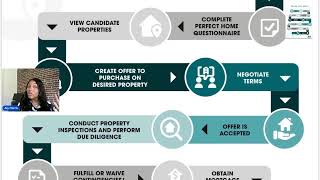
Hello everybody, Erin Leach, the Rock Queen of Real Estate, coming to you live from Birmingham, Alabama. Welcome, welcome everyone. So what you can see here is kind of a roadmap on what it takes to purchase a home, and what I'd like everyone to kind of quickly do is take a moment, close your eyes, and take a deep breath and understand why you're wanting to become a homeowner. Now open your eyes. What did you envision? What was the purpose of you becoming a homeowner? Was it to build wealth? Was it to have family live with you? Was it to help build generations of families to stay with under one roof? What is your why? What is so big that you're willing to fight tooth and nail to get the keys to your lovely home? So on this roadmap, you're going to see that a lot of times we start out with interviewing each other. We're going to interview— you're interviewing the realtor, the realtor's interviewing you as a potential client, either by listing or buying. And from there, speaking to a lender, The lender helps us in the next steps of getting what's called a pre-approval or a pre-qualification. In doing so, that allows you and I, after we've had our buyer consultation and discussing what a buyer needs to do between realtor and buyer, then we can start opening the doors to the homes that are able to be afforded with your pre-approval. Now, when we're doing that, one thing I want you to remember, You have to have money. It is not about the loan or the lender. You must have money to put down in what we call earnest money. So when you're looking through the track record here of an offer being accepted, that means it went into contract. Once we meet that contract need, there is a stipulation of earnest money, and it is something that has to be delivered to a specific area within 3 days of the contract here in Alabama. Now, if you're watching this someplace else, there's other rules and regulations in those states, and that's something else I want people to know. These wonderful influencers that out here giving us information and knowledge, unless they're within your state, your city, they don't understand your market, and you need to get to the right people. That's what matters. So with that, you have to have earnest money here in Alabama. It is typically 1% of the purchase price. So whatever that contract contract prices. Let's say, for example, it's $200,000. It would be $2,000 that you would write a check, a personal check, or you would go and get a check from UPS, wherever, and you would take it within 3 days so that it is holding that home for us to keep moving through the process. If that doesn't happen, the contract breaks. That's all there is to it. After that third day, if it doesn't happen, it breaks and you move on to the next. So you don't get that money back. If you sit there and you put that money in, you don't get that money back, but that earnest money actually goes toward what fees are at the closing, and so it's deducted. So it's like putting something on layaway, and if you're not going to get it, you may not always get that money back to you. It depends on what the contract states. So having a real estate professional that's going to educate you and advise you and listen to what your needs and wants are helps us move through the process. Now, as you're seeing this graphic, I'm not going to get into all the details. This is kind of a quick little Cliff Note, if you were to say, of how to do a home buying process. The second thing I want you to think about is negotiate when it comes to your inspection. Inspection is out-of-pocket expense. You don't ever get that money back. What you do is you get to discuss in the negotiation on what a seller's willing to repair or not repair, but that is money and it's typically anywhere from $250 to $1,000 plus depending on the size of the home, the location of the home, and what warrants the home being inspected. Now, under that inspection, it's called a general inspection. I want you to think about Walmart. We all go into Walmart, we grab milk, et cetera, tires, wipers. They don't know anything specific about those tires. They don't know if B.F. Goodrich did them in Tulsa, Oklahoma, or Texas. They don't know, they don't care, they're just selling them. So during that inspection, it may be advisable to get another inspection done, a specific inspection for foundation, HVAC. That is extra money that comes out of your pocket as a buyer. That doesn't come from a lender, that doesn't come from just that one inspection, but it is up to you to decide if you want further inspections or not, or to walk away from the deal. And that's something we would discuss in person. So with that, when we are looking at all that data, the end time I want you to think about at the very end is to have at least 6 months to a year's worth of income set aside for you so that when you become the home buyer and you get the keys to the wonderful castle, that God forbid, if anything is to happen after you close on that house, and if you have a home warranty, Please remember that home warranty is only good for 1 year, and it doesn't cover the cost for the people to come out and do the repair work. So that's some incidental money to have set aside that a lender can't help you with, okay? When you are living in that home 6 months to a year, I typically tell people to keep around $10,000 to $20,000 just laying aside in case anything, gosh forbid, ever happened that you can afford to stay in that home, not use a credit card for a busted tire, or if something happens to your car's engine, or the children have to have some kind of dental work, or somebody wants to go on vacation, that you can live in your home in the lifestyle you want. But to have more of that information, I always suggest having at least a buyer's consultation with a realtor, and you can speak to as many realtors as you want. It's free. But you've got to find the right person that fits you, your heart, your need, and what your home buying needs are. If you want someone who likes to educate and talk you through each situation, give me a reach out. Erin Leach, the Rock Queen of Real Estate. I would love to be able to help and inform you and guide you on your next property, especially here in Alabama. And if you're looking to relocate and you're needing to list and you're wanting to buy somewhere else, I assist with international and throughout the United States as well, and helping people find the right person to help them in their next transitional time. And I appreciate everything everyone has done just to be on here, and thank you for your time on this beautiful Saturday. And may we all be blessed and enjoy our Saturday. Thank you.
Awesome. Thank you so much, Erin. And, um, I really appreciate you for being able to come out and break some of those things down for us. Um, next we're gonna have LaCresha. To, um, join us and kind of talk about what life insurance is and how it can help you to build generational wealth. Um, Lucretia, again, like I said, she is one of the most professional people. She knows her stuff, and she's with one of the best companies, New York Life. Um, so she'll, she'll come on and talk to us a little bit. You ready, Lucretia? I cannot. I don't think so. You could just come over here. I mean, if you want to bring your laptop with you, that's fine.
See how it's saying I'm on but I'm not?
Yeah, I don't know what happened here because we're not here, but we're good. It's okay.
We're better at our things than tech, right?
Yeah, we, we've, uh Technology has gotten away from us.
Good afternoon, everybody. My name is Lucretia Burks, as Aly King-Harris has mentioned to you. I am grateful for the opportunity to share with you what I know and the perspective of a financial services professional life insurance agent. So I want to talk to you about the basic basics of life insurance. I have a few notes.
I want to make sure that I keep it concise.
So that I make good use of my time and give you some great information. If you have additional questions, you can always reach out to me at 205-837-9830, or my email address is lrburks@ft.newyorklife.com. Again, that's L-R Burks, B-U-R-K-S, at ft.nylife.com. So the basics about life insurance: life insurance is a contract between you and an insurance company. You pay a premium, and in exchange, the insurer pays a death benefit to your chosen beneficiaries if you die while the policy is still in force. So why do people buy life insurance? What purpose does life insurance serve? People purchase life insurance to replace income, lost income, pay off debts such as a mortgage, a loan, credit cards, and any other debts that you can think of. Also, life insurance covers final expenses, and this can also be a method of funding your child's education. We want to also consider that life insurance leaves an inheritance. We want to be sure that we talk about the cycle of passing on generational poverty. We want to break that. We want to pass on generational wealth. And life insurance is one of the means that would afford an individual the opportunity to do that. And maybe not from the perspective of getting rich, or wealthy, but at least blessing the next generation or two with something that can help springboard them in their, their future, um, financially, support their future financially. Also, it can help to cover estate taxes and business obligations. Most people are not aware of that, but that is one of the many reasons why people purchase life insurance. So I want to skip a few things that I have here and just get to the crust of it all. So there are a few basic types of life insurance coverage, and they each serve a different purpose. But just in general, we are covering the life of the insured. So term life, a lot of people have heard of term, and the main characteristics of term is that it covers an individual's life for a specific period of time. It is temporary, and that time is selected by an individual. For example, term can last for 10 years, 15 years, or 20 years. Term also is the most affordable because it is temporary. It's most budget-friendly. There is no cash value in a term policy, and it is important that people understand that, that cash value term is associated with a different type of coverage, and I'll share that with you here momentarily. Term insurance helps to pay a benefit if, if death occurs during the term. So that's term coverage in a nutshell. Now I want to talk to you about whole life. That's the other side of the life insurance conversation. Whole life, or what we call permanent life insurance, it covers a life, the lifetime of the individually insured person. So it covers a lifetime. The premiums are fixed, and that's very important. Whole life helps to build cash value over time. As long as the premiums are paid and the policy remains in force, then it helps to build cash value. Now, whole life can be a little more costly for the individual, but the most important part about whole life that an individual should seize the opportunity of is to secure it when they're young and in good health, and particularly securing it before purchasing a home. It's the start of a financially sound future. We also have universal life, and there are some other products. I did just want to make mention that outside of term and whole, there are other products. Universal life is one of those. I won't share the details with you about that, but just keep in mind the basics be— between term and whole life. They both serve the purpose of covering the insured. Now, when you want to talk about how much coverage you need, you've got to look at your family's living expenses. You got to look at your debt, which would include a mortgage if you have one or not. Future education costs, I mentioned that to you when we were talking about those different types of insurance policies, and existing savings and investments. So this is an example. If your annual income is $60,000, we're going to say, suggest and recommend that your desired amount of coverage would be 10 times that income because we've got to replace the income that your family is losing by having lost you as a loved one. And now you want them to have that for 10 years plus, but at a minimum, we want to multiply that times 10. We also suggest that you consider the cost of potentially purchasing both coverages. You can do what we call layering. You can have a little bit of a whole life and a lot of bit of a term, or the opposite. Either way, you get the best of both worlds with the purchase of both of those. Um, let's see, I'm getting to the bottom of my list and I want to keep it concise. I'm going to skip a few things. Let's see, for most people who are seeking pure protection, term life is going to be the most cost-effective way. But for those individuals who are looking for a component, a component of accumulation, then whole life is going to be a product that we recommend. But At the New York Life Company, we make sure that we take everybody through a process so that we can determine the best possible course of action for the individual and their family and also their financial situation as it is right now, today. We're very sensitive to where you are right now, and it is our goal to help you identify your goals so that we can map out a strategy and a plan to get you from where you are today to where you want to be in the future. Again, my name is Lucretia Burks. I am a financial services professional and licensed insurance agent with the New York Life Company in Birmingham, Alabama. I am also a registered representative, so I can help individuals with some other products. But it— my time this morning was just to share with you the basics of life insurance, and I appreciate your time and attention. If you have any questions, you can reach out to me at 205- 9830.
And I'm going to turn it over now to our host.
Well, I believe at the time, at the present time, she is busy getting someone else together and ready, so we're going to come back together and just see if there are any questions from anyone and see if there's maybe something we can chit-chat about and help others see how the, the, what we, the services that we provide are connected and how they complement each other.
Yes, I know that as a real estate professional, whenever I'm having that consultation, I'm always asking, so what's the plan? What's the plan? So how would you recommend someone, let's say, that are in their 20s How would you recommend that they plan for when they're becoming a home buyer, what they would kind of need to look at when they're just starting out? Would it be a universal or term? Does it depend on what their options might be just at that price point, or how does that look for you?
So my personal recommendation for someone so young is to maximize the benefits that would present itself as a very positive and impactful decision later on in life by going with the whole life. And I'm going to use myself as an example. When I was 23, I purchased a $100,000 face amount coverage knowing what I knew about insurance. My degree is in finance from the Alabama State University, and so I understood the importance of insurance coverage because I had heard it from my grandmother. But then when I learned the difference between the term and the whole life, I said, well, let me do that. And at the time, I kid you not, it was a struggle to make those premium payments. But I can see the benefits of it now at my current age of 51 and the accumulation that is in that policy at the age of 23, starting it then. So I'm paying a 23-year-old's premium at the age of 51, and I'm seeing the accumulation that is in that policy. And over the years, over the years, that's right. And so now, at the time, I didn't have a husband, I didn't have children, and I didn't have a mortgage. I did not have a home, right? Um, but the, um, you're saying where, where to start?
It is different for each individual.
I did make that choice for myself. I would recommend it for an individual who can afford it, right? Um, but there are positives to getting a term at a young age because it's very affordable. A lot of people don't know how affordable a term plan can be for them at a young age.
Any young age, especially like for myself, when I'm seeing first-time homebuyers, typically they're young, coming out of college, they're getting their first degree and they're getting their paychecks and they're eager and they're getting married and having babies. But also some of the first-time homebuyers are older. That they've had to live a little bit and they've moved a little bit and they've done the things that they've done and they didn't have insurance. And that was something that I was also discussing with them because again, when you're getting into a home, you want something that you might have a policy through your, your work or whatever, but it only covers kind of the incidentals. And when life happens to people, I mean, it happens. It's like that brick wall back here. It doesn't come at us all the times like this, like waves. Sometimes it's just like slam., and you might have just got the keys to your house and then a life event happens.
You're right.
Or your extended family, a life event happens. And then the house that we were looking at, because my background's occupational therapy, it's like, okay, I'm looking at that whole picture of the person. Like, what are their thoughts and values and what are they wanting to do? And they might have to have a loved one move in even though they're 20 and that love, you know, their parents 50. Or the great-grandparent might have to move in, you know, who's 80-something, or everybody's moving into great-grandparents' house. Is it worth doing the things? And they don't always have insurance because they didn't know. So the sooner we educate, it sounds like the better off we are in this world.
You're right, and you raised a point, a very interesting point that I want to expound on. It is, um, our goal, or my goal as an agent, to view each individual on a case-by-case basis. I did mention that earlier. What was good for me at 23 might not be good for a 23-year-old today. However, I do like to share the benefits of all of our plans, and then we tailor-make it to the individual. But one of the things that I wanted to point out is when young people are— when they seek employment and they gain it, their employer will offer benefits, and we do encourage everyone to partake of their employer benefits. The flip side of that, or another layer to that, is also establishing their own independent coverages outside of their employer, which is what I did at 23. So I didn't share that detail with you, but I worked 22 years at the Birmingham Airport in general aviation. And when I left that employer, my benefits, including my life insurance, remained there. But I still had this policy that I got when I was 23 years old, and it has remained with me. And so I've had it 25-plus years or somewhere thereabouts. But, um, it is important that individuals, when they are young, that they establish something for themselves outside of the employer, as well as partake of what the employer offers them. And we call that layering. I like to use the example of when you make your bed, you have a fitted sheet, a flat sheet, a comforter, and sometimes we have a throw on top of that. We need to layer. Layering is a very important and effective part of our financial strategies so that we can build wealth and share it with our families. Now, we don't have to start out grand. I think a lot of people are under the impression that they have to start out with some large number. No, let's just start where you're comfortable and where your budget will allow you.
Right.
The budget is the boss. Listen, the budget speaks to everything we can and cannot do. And a part of our financial strategies is to make a budget and stay within the lines of that budget.
We want to work within our means. We have lofty dreams, and it is a good thing to do, to have a lofty dream.
But we have to bring those dreams down down to reality because dreams are not gonna pay the bills.
That's right.
So, so we got it. So we got to manage.
Just because you can get approved for something doesn't mean it's available.
That's right.
We can dream, we can have that dream board, but everybody's got to start. They got to put their toe in the water.
Yes. Every—
to learn to swim, you got to be in the water.
Yes, yes.
Well, it was such a pleasure to meet you today, and I know our host just stepped back in. And I don't see any questions at the moment, but we sure do appreciate everyone's time. And we're gonna let Aly step back in so that we don't hog all the star shine.
Absolutely.
Thank you so much. That was some— you guys brought some very valuable information. Um, I love the analogy about layering and, um, starting young, especially with life insurance. That's definitely something you want to get young, because as we age, what happens? Something's gonna pop up on that MIB— that's your Medical Information Bureau— and you might get rated or even denied. So if you're young and you don't have any health problems, you need to get some life insurance. I have Lucretia, her information in the comments section, and I also have Erin's information in the comments. These are some pretty smart ladies, so you guys need to call them. And go ahead and let's get our financial life in order. Um, and so I know you guys have got— you've got to run. Um, but I really appreciate them for sharing that information. I wish that I had have kept my policy that I bought when I was in my 20s and have that really low rate and, you know, be covered. Um, so I'm gonna go ahead and get some. I'll be talking to Lucretia before anything else pops up, right? Um, And so the full snapshot is going to be making sure that you are covered first. You— and once you're ready, you get your home, you're covered, your home is covered. But now I'm gonna— and it's kind of like a backward design, but now we're gonna talk about how to get you into a home, which is all about making sure your credit is healthy. You're welcome. And, um, there are some Yes, making sure that your credit is healthy. I, and I really want you guys— Lucretia says something that I feel like is the most important thing to understand: the budget is the boss. I went live the other day and I can guarantee you most people cannot off the top of their heads tell you how much money it takes for them to live every month. Right? You need to know that because if you don't know what your necessities are financially that you have to pay, how in the world are you going to ensure that there's not a deficit? And that is usually where we start to see a decline in our credit is because we don't know how much is going out. So we're spending money we do not have, and that's going to affect us in some way in the long term. One thing I want you to do is create a budget. It's uncomfortable because you know you're over your budget. It's uncomfortable to sit there and write down everything you have going out, but you have got to do it. Otherwise, your finances will be managing you. You will not be managing your finances. Sit down and write down everything, and it's going to probably take about an hour because you're going to remember things. Oh yeah, I forgot about Hulu. Oh yeah, I forgot about this app that I'm you paying for? Sit down and write down everything that's going out. Then you sit down and you write everything that's coming in. If there is a deficit, you can either, like I said, you gotta go to your boss and tell them, I need a raise, or you're gonna have to cut costs. That's the very beginning. We have to master the foundation, the fundamentals. Wax on, wax off. Okay, and Karate Kid, the reason he was having him to do that was because he was training him for discipline and consistency. And you have got to have that if you are going to, uh, master your financial life. One, the good news about it is what you did in the past with your credit, it's already done. You can start and move forward. The best thing to do is don't go waking up those old collections. Let them stay asleep until they die. You need to establish new credit. If you know you're not going to get approved for a credit card, go ahead and get a, uh, secured credit card because you don't want to suffer the inquiry without the benefit of the new credit. That's something that I run into a lot with my clients. All of these inquiries, you do not need everyone checking your credit. If you get 5 dings in a month, that looks like desperation. And it also looks like you're not responsible because you should know by now that you're not supposed to do that. Um, and I've had clients that have had 42 inquiries. That is too much. You don't need that much credit. And if you've gotten denied by one or two lenders in the same artery, then that means you need to take a look at what's happening. Everything. Now I want you guys to answer honestly. Do you— I'm not talking about your score. Now with mortgages, we use FICO, and so, um, I need you guys to understand that it's more than just your score. You need to know what is in that file, okay? What is showing up on my credit report? Any inaccuracy, yes, it can be disputed, but it needs to be inaccurate. We don't want to be disputing things that we know is accurate. Okay, we're going to dispute the inaccurate things and we're going to check and make sure that they're not being reported twice. That happens a lot. Collection agencies will report a debt twice. So we need to go through each one of our files and make sure that nothing is being reported inaccurate or that is being reported twice. This is also something I need you guys to really understand. 35% of your credit score is your payment history. The other 30% is your credit utilization. Now you've got 10%, 15%. 10% is like how old your credit file is, 15%, um, being, um, your utilization of a mix of credit But I need you to understand that 65% of your score, that's a big chunk, okay, is paying on time and credit utilization. The number one thing you can do and will— your score will skyrocket in within the next billing cycle is pay down your credit cards. 30%, I told you guys the other day, that is a C. You want to be 10% or lower. Don't pay it off, it's gonna look like you have closed the account. Now you want to pay it down really, really low, okay? Because that is 65% of your score, okay? Um, don't max your credit cards out, that looks desperate. Why are you— if you have a $500 credit card Why is it $500 used? That's not what we want to show. We want to make sure that we are under 10%. You need to understand your billing cycles because what is shown on your report is what was generated during that statement. So it's your statement balance. So if you go and pay that credit card off and your statement's already generated, it's going to be another 30 days before it reports. So master that. When are your statements generating and when are your credit card companies reporting to the bureaus? So collections, we really don't want to have any collections if you can help it. Things happen, especially in this economy, but if you can help it, you can always call before it gets to collections and make arrangements. If you have a collection and it's new, let's say less than a year old, it's worth having a conversation with the collection company to pay to delete it. We don't want it to say paid as agreed. We want it gone. Okay, that's— you're gonna— you'll see a major jump in your credit score if it's deleted. A lot of companies don't want to do that, but they absolutely can because either they were gonna— they're gonna accept the money that you're gonna give them and delete it, or you can let it sit there and sleep and die and they don't get anything. Um, so making sure that you understand what percentage of your score is coming from where. That's important. Um, and making sure you put— listen, if, if it affects— and I learned this, um, a few years ago, and I promise you it's worth it— if it is affecting your credit score, it needs to be on autopay. Autopay for the minimum amount, but you do not need any late payments because I, like I said the other day, one late payment, even if your score is high. And a high credit score, the higher the score, the bigger the impact that one late payment is going to have. So what you want to do is just put those things on autopay if it's affecting your credit score. Everything else, we, you know, we can make arrangements, but if it's affecting your credit, it needs to be on autopay. Um, There are things built into the algorithm that can affect your credit score and you don't know it. Um, so make sure that you have your updated address. Get those old addresses off if you can. The, the— because the zip code, your zip code, yes.
And this—
there was a case study of a guy in Atlanta. He moved to a part of Atlanta that was closer to his job, but the zip code, the algorithm didn't like it, and his credit credit cards, the company started decreasing his amount. So make sure you update your address to reflect your current zip code because your zip code could be affecting your credit score. Um, and if you'd like that case study, I can email it to you. You can just drop your email, um, in the comment section. Um, so we've gone over, you know, what percentage each one, uh, affects your score. A lot of people ask, like, how long is it going to take me? I'm a 580. How long would it take me to get to a 700? That depends on your file. That is a big variable because you can only— you could be a 580 just because you have one credit card that's maxed out. You don't have any work to do except for to pay down your credit card. With, with our company, Dream Home Team, uh, powered by Cross Country Mortgage, we have a simulator where you can give me a call and say, hey, Aly, I would like to know what I need to do to get from a 580 to a 720. We can do that for you and tell you the exact things you need to do, what will happen immediately, in 3 months, and in 6 months. Um, Does credit education work? Yes. I'm not going to say credit repair because you need to be educated on what's holding your score down. You need to be educated on how to keep your score where it is. So yes, it works. Yes, it works. And I went through this process with Michael Ali. You guys may know him. But he took me through this process. He looked at my credit score. He told me what I needed to do. It wasn't a lot. I didn't know how close I was to being able to get a mortgage. I did what he told me to do, and, you know, here we are. I just, you know, celebrated my 2 years of being a homeowner. Um, uh, can you still buy a house in bankruptcy? Yes, you can. Um, but there's a waiting period Um, Chapter 7 is typically 2 to 4 years depending on the loan type. Chapter 13 may be sooner, but you will need to get court approval. Um, will being added as an authorized user really help? Yes, the account's history posts to your report— age, payment history, utilization, etc. Don't go to these predatory trade line rental companies. They're the, the, the algorithm is smarter than you think it is, and it can tell if you have any relation to this person. So you really want someone to add you as an authorized user that is related to you because it will be noticed, um, and it won't have as much effect if you're renting trade lines. Please stop it. Um, where do you need to be to buy a house? So you need a minimum of 580 for FHA with 3.5% down, um, a 620 for most conventional. Higher is always better to save your rate. So no, you don't have to be an 800, you don't have to be a 750, you can be a 580 as long as you have your 3.5% down.. But make sure that you have some money in the bank for your incidentals. Anything could happen. And also make sure, please make sure that you get a home warranty. It will save you thousands. So making sure you have a budget, making sure you know exactly what's on your credit report, making sure that you, you don't have any discrepancies. If there are discrepancies, the CRAs or credit reporting agencies are obligated once you dispute it to get it off if they can't verify it in 30 days. And you can actually check in at day 7 and say, it's been enough time, what's going on, right? Um, I want this off my report because it is inaccurate. Make sure you put anything that's related to your credit needs to go on autopay. Even just for the minimum amount, so that you're not slipping up and forgetting and missing payments. As you've had more than 2 late payments in the last 24 months, it's going to be really difficult for you to finance, um, anything really, but definitely a mortgage. Um, so in closing, you guys, I But if you want some assistance on getting your score where you need it to be, things happen. I am available. I do credit coaching. Um, our company does have the model where we can put— run it through and it'll tell you exactly what to do. I can send you a report. This is what you need to do. This is what the timeline is going to look like for you to be where you need to be. Everyone can improve. Don't worry about the past. That's happened, it's over. Now we want to focus on building new positive credit. So we want to make sure we have a budget, we want to make sure we have some life insurance, we want to make sure that when we are ready to buy a house, we understand the roadmap and what has to happen. And we want to make sure that our credit is crisp and as clean as can be. So I appreciate everyone. I really appreciate Lucretia and Erin coming and joining me today. They are very, very, very knowledgeable women. Um, you you guys have an amazing rest of your Saturday, and as always, may the algorithm forever be in your favor.