5 Game-Changers you need to consider when choosing a Cosmetic acupuncture or acupuncture course
Amanda outlines five key factors for choosing a cosmetic acupuncture course: learner type, cost, insurance, certification, and business support. Her "Final Cut" program combines online lectures, live Zoom coaching with 2-3 students per session, in-person clinical days, and a business module covering facial protocols, microneedling, light therapy, and more.
Chapters
Going to go back into the Zoom room because now I know and I'm on live Facebook. Hello! A little bit better than yesterday, I think. So tonight it won't be a long one, but I'm kind of on my soapbox a little bit, and I hope you're going to learn something from what I'm going to say. And first of all, I'd like to thank everybody for registering and joining me here on the VIP Zoom room. And for joining me on Facebook, and I know that Sarah will be looking after everybody on Instagram for me. So I'm going to start now. We're going to be talking about your education, uh, what I've kind of gone through in this pandemic and why I've developed my training program the way I have, and what that means really for you. And it's certainly not me selling my course to you, I just want you to think about what I say in context with your thoughts about your own training and what your outcomes, what you want to achieve from it. So I'm going to share a little PowerPoint with you, just doing that now, been doing this a while. So the first thing I want to do is to remember our great teachers. We've come through obviously what has been a dreadful— is a dreadful pandemic, and I'm sure that all of us— not me actually personally— but a lot of us have lost precious friends and family members. Just changing my phone to no sound. My journeys to Germany over the last 10 years have given me the pleasure and the honour of having met some of the great teachers of our time: Giovanni Richard Tan, Hugh McPherson, and Lillian Bridges, a very recent loss. Professor May, Benny May, known to many of us in the UK, was the founder of AccuMedic. He was an incredible man. He introduced disposable needles to the UK, and I lived next door to him, so I knew him very well indeed. He was a groundbreaker in so many ways in the British acupuncture community. When you come to the bottom level, you're going to meet people that have really influenced me at a personal level. Professor Jane Plant, who we lost a few years ago, allowed me to go into Imperial College with her and study neurosciences. And Boo Armstrong, you can see she has a blue plaque to her name, an incredible young woman who died of breast cancer at the young age of 35. A great friend and a great loss to me. And I also want to remember my teacher's teacher, Dr. Lee. I never met him, but he taught my 3 teachers who, thank goodness, are still with us. And I thank them, and I thank all of these people, and please just appreciate the precious gems they have delivered to us over the years. We're all such a short time on this earth. As I now am 61, I suppose I'm quite conscious of the fragility of life and how long we are going to be here. So what I'm going to present to you today are my thoughts about your education and also, in a way, what has become my legacy to you, if you want it. When I'm Gone, my online academy where I'm going to be there hopefully forever. So it's kind of quite a, an emotional thing for me to be saying, but I feel that I always wanted to do this, and after 2 years of hard work, um, I feel that I'm going there now. And indeed, my thanks to all these influencers, um, who have in some way, large or small, moulded me into the teacher that I am today. Now for happy things, but we should remember them. I will say one other thing actually, that back in 2011 when I taught in German— in, in, not in Germany, in Japan for the first time, the Japanese lady who was organising my trip said, "And who is your famous teacher?" And I said to her, "Well, there isn't a famous teacher. This is all things that I've grown and developed myself, but maybe I'll be famous one day, or maybe I am. I'm not really bothered about fame, but the fact that so many people are here tonight gives me a lovely warm feeling in my heart and makes me appreciate that actually all my hard work was worthwhile." So now it's about you. 5 things that I want you to think about, 5 facts about learning something new. And this PowerPoint has been put together because what I realized quite quickly was that there are many issues that people face when making a decision about the fear of learning something new, uh, the imposter syndrome when they've learned something new and want to make it their new business, and we're going to have a look at what kind of training you would need in order not to have the fear of being able to use it afterwards and indeed learning it correctly so that you can. And this applies to all courses, it's not about mine, it's about your thoughts about taking a course and investing in a course and your time. So why am I investing in training? There's a whole list of things here. These are all the questions and feedbacks I've had for 20 years of students thinking, "Do I do Amanda's course?" And indeed, they're the decisions I've had to take about whether I take a course. Some people want to— have just qualified in acupuncture but feel they need more help or want to specialize and learn more. Some people want to make it a business because they feel they're not really going anywhere with theirs. They want to change the direction of their life, that maybe the style of their work doesn't fit with the current times, things should change, hence if you create material you change with that material. If you copy people's material or just report people's material, you can, you don't understand the essence of that material in the first place, and of course some people just want to do something that they want to love and enjoy or are passionate about and that's perhaps less physically taxing on them, massage for example. I mean, I know with me, I can't massage anymore, my hands wouldn't be able to take it anymore as I get to old age. Well, not old yet, but getting there. Then you think about what kind of learner you are. Some people are dyslexic, so they need a very visual course. Some people are quite analytical, very academic, would suit a degree, lots of study, interested in dissertations. A lot of people just want to be hands-on, and actually If we're therapists, that's really what we want to learn—hands-on, how to apply all those theoretical things and put it into practice. And that is what I was taught by my teachers—applied training. We were acupuncture-ing from day one. We really didn't have to wait 2 years before we stuck needles in each other. Are you slow to pick up ideas? Do you learn really quickly and feel that sometimes people hold you back? That can be quite irritating if you're in a course where you've got a limited amount of time, and that's where we come to next, because your time costs money. You've invested in travel, hotels, you've taken time out. Think about who's teaching you, where's their background, is it their material? Reporting material's fine, but how are they reporting it, and how big are the groups you're going to be in? That's coming up next. All of these things are factors for you to be considering at the time of decision-making, and I know that the 3 big ones are: can I get insured? What does my certificate mean? And can I join a professional body? And of course, different states in the US, it's a different story. You have to be a licensed acupuncturist to do acupuncture, but most of the other world, it's a fairly unstructured affair. Acupuncture is quite a recent skill really for all of us. And so we have voluntary self-regulation in the UK, and, and that is an open book for people perhaps to not learn properly and still be able to practice. And that's what I do. I regulate acupuncture in many ways, and I'm very concerned about what— safety of our patients as well. Ultimately, why do we learn and change our career or add? It's because we want to earn money make money, improve our lives, maybe get some freedom in terms of what we do in other ways, but also it's quite nice to know that you can earn back the investment that you spent on the course in the first place. And one of the big things in that are people say to me, "Well, how do I promote? Can I have some business support? And also, when I've left the course, what kind of training support can I have?" And all of these factors, these first 3 slides, have been something that I've been toying with for years, just thinking, how can I create this mix and, and help everybody achieve their own personal requirement and yet keep it within a context of pricing? It's a challenge as a teacher, and I think you guys need to understand and appreciate what we all go through in developing our courses for you. So the reality is In many cases, students are disappointed in their course. They perhaps felt that, you know, they don't have the skills and it would really take 10 years to be able to be like my teacher. They didn't have the same experience as others. They felt that there were too many people in the room or that people were interrupting with questions all the time. Maybe the course wasn't detailed enough. Always speak to people who have attended other courses and get feedback and referrals because that way you know from your peer group that the courses work for them and obviously give the teacher the feedback. I have worked rigorously for years to improve my training and I know my colleagues have from other colleges based on your feedback and I really do believe I've met the needs now which is what you're going to hear shortly. The key thing as well is the time to practice, and I was always battling between a 3-day course where I had to deliver an element of theory so people understood what, what I was trying to explain and the underlying theory behind the treatment, but also to get the practice, and 3 days just frankly wasn't enough. So if you aren't happy with your course, you either give up altogether or look for another course. Those are the two options if you haven't had the course that really met your expectations in the first place, and that's a disappointing outcome, I think, very disappointing. So along came coronavirus, and it gave me time to reflect during the first lockdown and make some really critical changes to the structure of the training that I've been giving now for nearly 20 years. It took me 2 years, 2 years now of hard work. The students that came on board with me at the beginning of the pandemic have had the honour of me live regularly trying and testing new methods and course material with them, and they've stuck with me, and I think they've grown with me, and I thank them so much. But I really have I believe I've thrown away the rule book about what a course should contain, and part of that is the value added, the value added which is my time and the sharing and caring that I feel I give, and I know so many other teachers do as well. So I'm going to explain what I mean by that, but these changes will stand forever. So first of all, The cosmetic acupuncture that I adore, in fact, all the treatments that I deliver, whether it's fertility, musculoskeletal, I have found that if you integrate different modalities, you're layering. It's like, like the Swiss cheese model, really. You're layering different, different modalities to enhance the original beautiful thing that we have, which is traditional Chinese medicine or acupuncture. And if you took some of those away, that's fine, but you can add things or take other things away when perhaps a patient can't cope with many needles, they want light therapy instead, Gua Sha, cupping. We have options as therapists, and I believe our courses should be the same mix. This is from a website where they were looking at maximizing outcomes in a build— business model, building models. All different businesses look at different modalities to enhance the outcome of what they do. Your business should be like that as well. They call it different funnels. So what— let's look at the fragments of those integrated issues. Let's look at each thing individually, just a couple. The online book option. You know, for years we studied books. We still do. I love my books. And along came online learning, the knowledge industry, which has expanded exponentially during this pandemic. Now, the thing about the knowledge industry is that a lot of people just popped up straight away within days with their online courses, and I couldn't believe it. I sort of scratched my head and said, wow, that's amazing to deliver something like that. But I didn't want to just produce a 1-hour course. I thought, this is my chance to put together all those magical bits that I always wanted to do and deliver one course for a specific type of audience. In other words, create the course for the need that was coming to me, the people's questions, all those feedbacks from years, and that's what I did. So when you're on your own, what are the benefits? You can work at your own pace and watch things over and over again. That's fantastic. The problem is that people can feel isolated, they drop their course, they don't continue. They can't get help sometimes, and indeed with a practical skill like acupuncture, very difficult without direct guidance. There's only so much we can teach you remotely, and I think you'll appreciate that, whether— whatever the therapy. Of course, then we have face-to-face learning, which is the old-school way, the way I've always taught, and probably you learnt everything as well. Apart from Open University, which is an incredible thing and I've actually studied with them, we were face-to-face. So, the benefits, of course, you're with your instructor, you have guides from your tutor to check the work you're doing, and generally you should leave confident with your new skill, but obviously that depends on certain factors. Lost in the crowd in a large class, I know when I trained with— or didn't train, I mean, I attended one of Richard Tan's lectures in Rothenburg, there were 100 of us in the room, maybe more. There are so many things I would have loved to have found out about aspects of it. I wrote down everything, and that's the thing, I've got all these notes and I've never looked at them again, which is a bit of a tragedy, and that's on my list. But you get lost in the crowd, and certainly in terms of practice, It's impossible to learn anything without small class supervision, but that can cost, and that's another issue. Is there enough time to cover all the material that you've studied? Did the class go too quickly for you as a learner, or was it too slow and you were frustrated? Did you have enough foundation time before starting some basic concepts for the skill you were going to learn? And again, indeed, obviously there were the cost issues as well. Did it add value to my life and 'Can I use my skill now?' And I'm sure as learners you all face some of this, all of this, some of this. I know I have, and my teachers were very generous to me, and I've been mentored to this day by— and I'll cite him— Paul Robin and Jane Plant, who took me under their wing, and I definitely wouldn't have become the therapist I am and my view of science the way it is without that very personal touch. So, with cosmetic facial acupuncture, here's the thing, we're working on someone's face and I often say this to people that when you're going to treat someone's face, it's a personal space. I mean, if I went up to someone in the street and touched their face, they'd have me for assault. We don't appreciate the privilege that we are given by a patient walking into our clinic and allowing us to work on their face. And I think therefore, as a teacher, I feel my responsibility to the student is to make sure, A, they understand that, and secondly, that they leave with the skills of not only what to do but the magic how to do, because that's your responsibility. It's not, in my view, just a case of putting needles straight into someone's face. Beauticians actually that I teach in the UK from scratch, they learn everything acupuncture, TCM within scope, are incredible facialists. These skills do not come easy. They're often there after many years of working in this precious zone. So what have I done about it? So first of all, I had to go online. I picked a site called Teachable. Actually, Peter Dedman's just joined platform, so I sent him a little welcome message. It's a great platform. It lets you know where you are in your course. Of course, I've put together a planning tool that people can follow as well, and it allows you to watch easy access video footage. This is a scene— this is from the Final Cut course. It's brand new. Everyone that's currently registered on my program will be getting this as a gift, and I will close the old course once it's finally launched, so this is your countdown if you want to get both, but you get the opportunity to download all the slides, watch the videos over and over again, and it's supported by— and this is the interface that I mentioned earlier— live coaching with me on Zoom, and I only have 2 or 3 people to a session where I, having watched the video on the platform, you then actually— she's using orange needles so I can see them, this isn't what we use in the face, but so I can see she's done it correctly and we interact where I explain the techniques as well. Now in the UK I've been sending out silicone faces so there's a real physical interaction with me and it's safe because it's an inanimate object. In the States, very difficult unless you buy a silicone face, you can join these sessions. I am giving a one-to-one, one-and-a-half-hour session with my students. In fact, I did one last week and I'm inviting her back for another because I thoroughly enjoyed it. I want to see a follow-up session with her so I can make sure the students who have learnt from online, who can't get to me because of travel, are able to use their skills now. But that doesn't mean they shouldn't come and do the clinical when I can come across the pond, and I can't wait to do it. So first of all, it's online, supported with live coaching. No one's doing this. Next, I have a weekly Q&A session. You can see it up here in the right-hand corner where everyone comes on every Sunday night at 5. Day in, week in, week out, I present new material. I always do a presentation of some kind. Questions are answered, problems are shared, and a community is built that deals with the isolation. You are with us, we are there to support your journey in learning. Yes, people get challenged, and I am also there to help you because I care. I care about your investment, and I care that you are learning well and properly and will get value from what I give you. The next thing you do is join me in the clinic and we have such fun. You're going to learn rolling and needling and different techniques, integration, light therapy, Gua Sha, Heskia. He's coming on live shortly. I've got a Heskia course I'm about to launch. We actually really enjoy these sessions. My certificate students get 10 clinical days with me where I walk them through everything from beginning to end, including the ear. So do you, you get ear acupuncture in the signature course as well. And of course, we all get to enjoy treatments and you get to treat me because I want to feel you on me, then I know you've got it. That's the magic. And you get to treat my patients as well. So from my point of view, this is fully interactive. Even with my skincare, I've even put together a kit very cheap, that you can actually smell and try the products while you're studying online. That's the mix that I believe is magical. But here's the thing, it's an investment of my time, but I think it's worth it because now, now I see incredible skills leaving my clinic. And if you ask any of my students, I believe they would tell you, having gone through my sausage machine, as I call it, that I have actually managed now in all these years to be able to issue everybody that's been through my funnel a certified logo that they can put on their websites, and hopefully we can talk about further support. Part of this night, this night's live, is for me to get familiar with the platforms because I want to do public videos talking about the work we're doing and the benefit to the patient, and then of course tell them where they can find my certified students who have graduated fully from my course. So I'm offering all my alumni, all the people that train with me before, please come back and learn from me again. Let me pick up the threads, fill in the gaps. Contact me personally because I will be giving you a very special offer. And a lot of you have continued to buy needles or attend various events with me or assist me in courses. Over so many years, and I wouldn't be here now if it wasn't for you, and I thank you. So we're going to look at a couple of things more. What does the signature course The Final Cut contain? This is part 1, it's in 2 parts, a total of 24 lectures and covering everything I could possibly have thought of for you from the causes of aging to really quite quickly looking at protocols. From Lecture 3, we're creating balance, the constitutional part. We're looking at the facial protocols covered by coaching, auricular, all the other areas, materials familiarization, method of microneedling, much more about the skincare because people really did ask me, they didn't understand what to use and when. My passion, fascia, how we wind up the face and how we release in other places. The whole system is based on fascia, and, and I think you all know I've been passionately studying fascia and working on cadavers for many years. Then we even look at the mechanisms of microneedling, how it works, and take a deep dive into all the special concerns and wrinkles and eye area and lower face. In the past, all I could do was teach you how to do a wrinkle and hope you could get on with it yourself. Now I literally hand-feed you the information and all the slides are released to you. We, we take a look at dermatology, um, as well— the difference between all the different eczemas and psoriasis and rosacea. They are different, and I've spent hours producing all this material to help you learn and be better at what you do clinically. Then we go to Part 2. This will be a separate course, but it's part of the final cut. NACOM currently wanted me to do 2 parts, 16 hours and 14, and I will be applying for the California Board. I just sort of took a step back when I realized how expensive it had become, but that's on the list, and the application will be going out to soon. So in Part 2, we really start to move and shake. We talk about the integration of other things. We look at the difference between the fascia release tool that Martin Heskja designed, that I have supported and love and represent in the UK, the Gua Sha— what's the difference, how does it work, and can I use both, and if not, why? Well, you can, and I explain that. Light therapy, again with Jennifer Waters, a great friend of mine. She introduced introduced me to light back in 2013. We introduced this interface between acupuncture and light, and it's just gone crazy because it works, and I don't touch something unless it works. We look at Integrating Tuning Forks, um, just as a broad thing. I'm going to be calling in some experts to assist me on some special events, but at least I explain the difference of how it works and how you can use it. We talk about cupping, We talk about taping and exercise and any other therapy that I've come across that would help my treatments work better, or more importantly, what can your clients do at home? Because continuing the treatment between sessions is just as important as the way, I hope, you gradually step up the momentum of the treatment you deliver and don't throw it all in the bag on the first day. Too much. So we will talk about staging treatments, planning treatments. We look at the different scenarios— kind of lead— led into that, didn't I? We talk about setting up your clinic, good clinical practice, the consultation process, planning a treatment, auditing your results, and engaging your client to continue to come and complete their course. You will, from the first session, section, have a good understanding of how long it takes for a treatment to work, what's involved in terms of spreading your treatments out. All of that is there. I share with you 20 years' worth of case studies and before and afters. This took me a long time. I had to hide people's identities, and obviously what I want to do is encourage everybody to do their own because the next step for me is a clinical research project. We desperately need it, and I will be collaborating with all my peer group now to try and set that up. And the final magical moment for me was to create my business course. The business aspects talk in a broad way about all the things you need to consider, and I'm collaborating with a couple of great mentors of mine who are going to support you guys and also create a special course for you and come in on the live sessions to explain how how, for example, business plan template, very simple strategy on a page, can be used because like you, I'm a therapist, not a businesswoman particularly, and it's taken me years to get into the momentum of having a business and working it properly, cash flow, and for me it's import and export and inventory and so many other things. Fortunately, all you have to worry about, hopefully, is doing the very best for your patients, and enjoying a clinical success. So that's the signature course. At a glance, this is how it will look. You do your first module and your second module and you get your coaching, and if you're in the States, that's kind of it for the moment until I can get to you. If you can travel or if you're in the UK, you join me for 3 clinical days, and I'm going to share something with you. I am offering 4 because I believe 4 for the price I charge for 3 is what you guys need. It's been on test. I've been running lives now since July when we opened the clinic. All of this leads to you being able to produce your own case studies. How can you have marketing material if you haven't got the confidence of having gone through the experience of producing a case study and reflecting on what you achieved or couldn't achieve? And this is really important to get rid of that imposter syndrome. How can I charge what I want to charge if I don't believe I can get the results? All I did was get hold of some really challenging cases, especially my acne patients, and transform their lives, and I know that not only can I do it, all the things I'm going to teach you are what I do in the clinic, so you will have I'm bridging that knowledge gap for you and sharing with you the stuff that I've learned from doing my case studies, and no doubt you'll do the same yourselves as you grow in whatever new venture or study you're doing. But practice— what they say in China, I did it with my tai chi, you learn one move and then you practice it a thousand times. Practice, practice, and that's One of the ways case study work will help you develop that, and of course, any issues with case studies, any help you need, I support you with your weekly Q&A live where everyone comes together on Zoom in a meeting, not on a webinar like this. Just so you know, I have another course which is for my certificate program. That's for people who are therapists and they want to enter the acupuncture profession or students who are studying their degrees and want to get out there early but want to have an area for them to build their own clinic. So the first thing I do is I introduce them to foundation training. Coaching is shown by the stars. They're coached in auricular acupuncture. They're working with microsystems for the constitution. They learn about regulation of acupuncture. This is for UK students by the way, only really. They learn about the different materials to do with auriculotherapy, the idea of a humunculus model, understanding what a microsystem is. Then they understand key concepts of TCM, and we do tend to focus on beauty and skin and relaxation as the key areas. Their scope of practice is extremely clear to them, and they know that they must refer to a senior practitioner if someone comes in with anything that's outside of their scope. But auriculotherapy, as you know, has quite a broad spectrum of use, and we take a look at all the different humunculi, the, the musculoskeletal map, palpation skills, and all of that, all supported heavily with coaching. They also learn about face reading and things that you would have learned during your own degree courses if you've done a degree. They also have a very in-depth consultation training which is coached as well. We even have breakout rooms where they can practice on each other and tell me what they observed and what treatment they'd give the client who is the other person. There's also another course that they will attend on tongue diagnosis as well and covering in more depth TCM syndromes relevant to the scope they're working. And of course, when they've done that, they are ready to join the signature course online. They understand the language and they've got a they've got a feel of what our beautiful world is all about. After that, they will join me in the clinic. So you can see it's a significant course. It's over 200 hours of training, and I'm looking to create a degree, ongoing degree, what they can grow their course, uh, study and flying hours as they go. Certificate students, if you're watching, you will have your foundation module You can now do coaching and you will be able to do basic NADA auricular acupuncture. Ideally, you would attend a 1-day session with me or my colleague Mark, who is a licensed NADA teacher. You would have learnt the anatomy of the ear and all sorts of things. You're, uh, you have to have done anatomy and physiology at Level 3 to join. You will start your case studies Then you'll do tongue diagnosis if you haven't already, and you will do 5 days of training with me. One of those is a masterclass at the end, but you'll do 4 days now, 1 day at the end of clinical training with me, more case studies. Then you'll join the signature course for the facial acupuncture. More— or you would have— sorry, that's the theory module. You may have already done it, but ideally you'll do it at this point. So you'll do all of your foundation work, then you will start the signature course online. You'll do your online life coaching and you'll then do more case studies. You'll be doing your 4 initial signature clinical days and you will finish by coming back with all your case studies done to do 2 days of masterclass. 10 days in total, more if you need it. I'm all about your outcome If you need more study time with me, no charge. It's about your difference in— just like we in TCM talk about the different patients and their differentiation, different students, some need more, some need less. That's there for you as part of this programme. And again, I'm saying the case studies build your marketing and your confidence. So that is mixing up all the different modalities of training all together, and people have been quite confused about my offering, so I'm hoping I'm giving clarification now with this flowchart. So if you want to learn cosmetic acupuncture with me, I'm going to give you an opportunity which is for 24 hours. I'm giving you, if you want, if you're from the signature course, if you want to book the whole program, because now unlike at the beginning, I, I can offer you clinical training every single month. The online starts anytime you like— today, tomorrow, it's all there for you. You'll get the final cut when it's released. And I'm giving you an extra day of training in the clinic, and I'm giving you a set of my Thrive Needles because I developed these for the face. They are a little bit of magic and they have transformed my work and I know many others as well. They're worth that— 3 needle boxes is worth that £100, so it's not a bad deal really. If you don't want to commit to a whole— the whole shebang, and these— if this is for acupuncturists, by the way, so you know acupuncture, you're coming in as a continued education You can then just book the online coaching, which is perhaps if you're in the States, and you're going to get a reduction as well. And if you're an alumni of mine, if you've trained with me before, please reach out and I will have a chat to you about how much I will ask for you to join the programme. No one's coming to my live Q&As unless they've met come into the new program because everyone needs to be at the same level as they are when they join me in the clinic. No weird questions. Everybody— no one comes into my clinic unless I've actually coached them and I'm sure they understand and have achieved the right level. So everyone comes in together and can grow together at the same time. The same with the Q&A sessions as well. If you're a certificate student, I'm giving you some offers here, and there's a saving of nearly £250 on what is actually a very competitively priced course. I haven't actually gone up to the full price yet. I'm still in semi-pandemic mode, um, and if you just want to book the foundation training, then you can. That's the online. I will honor the clinical price at the time of booking. And that's on the website. So I'm not going to go on and on about pricing. If you would like to talk to me about joining the course within the next 24 hours to get this price, or at least register your interest, please drop me an email, contact Sarah through Instagram, and, um, or phone me, contact me through the website, and I'm happy to help you. And that is it. I think there's one more slide. I'm going to answer some questions now. I hope you resonated with what I said, but just find the elements of a training program that work for you, and it may not be mine. If you just want to learn online and you don't want me to interface with you, you're not for me. If you, if you want help and you really want to be engaged in a community and have ongoing learning, because my Q&As will go forever, then I'm the right person for you. It's— and there's no more charging either, so it's really your choice. Let's see what we have on my chat. Oh, that's so lovely, Anisa! Thank you, that's so lovely. So Anisa's saying, I feel so fortunate that I joined Amanda's online training program at the beginning of the pandemic and have been part of the creative process from the beginning. You absolutely have. She's learned so much, not only about facial acupuncture but about acupuncture principles. And what I feel sets Amanda apart is her passion and desire to help everyone master these skills through her coaching sessions and weekly Q&As. And she can't recommend my course enough. The results I've gotten— here's the thing, it's all about the results at the end of the day. She has had amazing results, and it has, in her opinion, changed the trajectory of her acupuncture practice. She loved the online portion and she can always refer back to the material she's struggling with and she doesn't feel it's an online course really. It's not, to be honest, it's my way of kind of getting into your lives. I've been alone in lockdown, I actually love having the company of everybody and Anice, it's a pleasure teaching you and spending time with you and I can't wait to get to LA, so yes! Victoria, I just want to clarify, with all the signature course, final part 1 and 2, if I signed up for the course earlier this year, yes, you will be able to access it. Anyone that's on my program will be getting the final cut. What's going to happen? I'm going to register you all onto it, probably part 1 first, and then we'll move to part 2. So you treat it as your final revision before you see me clinically. And I will close the current course which is full of lots of raw footage and me learning my craft, if you like, that's going to close but it will still be up on the web, you won't lose that and of course Victoria you'll get 30 more PDAs, if you're in the States I can't remember because it's a distance learning course with Encom It's a distance learning course. The current version was a live presentation because that's all I could do at the beginning. There's some questions here. De Brit, my gorgeous, is the facial reading in the main certification? It's not. It's in the certificate course, but that's not to say I won't present the module in the live Q&A. I do that sort of thing. So I gave it to the students because they don't have the TCM pulse-taking skills that a degree person would have, so that is— there's not as much detail. But I can't— I did it so long ago now, that module, I can't remember how much of that I give in the signature course. I'll come back to you. But I know you've done it, Ashley. Are Thrive Meals included in the signature course? Yes, they are. I will send 3 boxes, one of each type, to my American colleagues. And I missed this— is the Signature Course paced a specific way? You take your time, you can fast-track your way through it. If you're in the States, you might as well take your time. I'm probably not coming over the pond until the spring. I just can't risk getting ill, so I'm going to wait and come over probably at the end of April, early May for sure, and I'll hit LA, Bastia because I love that place, and of course New York. I'll do 3 states, possibly another. I'm probably going to spend a month. I'm doing a big project in the States of my own, and so I probably will need to even hit Chicago actually, so I will be out for a month. And come and see everybody and do my training with you. I've got a few compliance issues to work on, that's all. And Brit, so do we have to do the practical when you come to the States? So would we— yes, you, you— well, Brit, you've trained with me, so anyone that's alumni, really, you just need the online and then come back for a masterclass. I will be offering a masterclass to alumni when I'm in the States. And any of you that from America that have been with me know that I've I will let you come in for free to assist me on some of my programmes over there, but I will run a masterclass for my alumni, which will be the 4th day of the training that I give in the States, and you certainly don't need to do the whole programme. That's what I mean, I have a special pricing deal depending on who you are and what you need to learn from me from my old student base, and I adore you all, so of course I'm going to look after you. I'm going to apply, Lina, for CEUs pretty much straight away, actually. I kind of wanted to wait until I could actually physically launch the course because then I can fund the cost of the CEUs as well. So I think I will definitely apply within the next 2 weeks to California Board. It takes 40 days for that program to get approval, so I want to try and get in before Christmas. So I would say they'll be available to you from the new year. But you can sign up, do the current course which is ENCOM, there are still some CEUs that you can get through that and then you can just get the final cut and get 30 CEUs when I release it. If it's running already, you just join that course and I'll issue you with your CEU certificate. And there's some more Q&As. Oh, thank you so much for interacting with me everyone, I really appreciate this. Oh, Debrette, I love you too. You're all gorgeous. I really do appreciate it. And I've got 8. I think that's just it. I hope I haven't missed any answered. Oh, open. Um, I haven't dismissed any. I don't want to dismiss any of you. Um, I don't know if Sarah's got any. I know she didn't want to come on. Um, and I can't see the Facebook questions. I'll have to answer those later.— but just one thing I did want to say, I will be bringing my friend with. Let me close this PowerPoint down, hang on a second. Oh, I can see the questions easily here, that's it. And I invested about £2,000 in my friend here because I felt that you couldn't film a white silicone face. Oh, by the way, it was me that kicked that one off as well. I found that I think it was at Peacom I bought the Face and everyone's using it now. Fantastic, good, it's good and safe practice, but this chap, he's great, you'll get to needle him, it's her actually, developed for injectables and anatomically fairly perfect, certainly on the facial area. We obviously work in other places as well, so not quite so anatomically perfect on the neck, but all the things I've done, I like to try and test and give you the best possible quality for your learning. And you'll definitely meet— I think we tried to name her actually, and I don't think we actually finished it. But anyway, my friend cat travels with me, and I won't have to bring 20 silicone faces with me this time because you'll all be skilled. I won't have any new people joining any of my courses when I go out and about. Because I want everyone to come in at the same level, so you all would have been coached by me first. And I think there's a number of students, if you're out there, I'm waiting to hear from you about your one-to-one coaching session, so come on, email me and we'll get some dates in for you. Any other messages? Ashley. So I will wait to hear from you if you're interested in learning from me now or— you can sign up now and start after Christmas, I don't mind, but I wanted to share my love for teaching, my love for the people who have taught me, and just appreciate all your teachers, everybody. You know, we're not all here forever, and I know I'm going to be here forever because my acupuncture, but I just want you to just Where can, where can you get the head? Oh, you can get the head from a company. I'll send, um, I'll send you the information. It's— they're in, they're in the UK. They're handmade, but it's going to cost you about— he exports everywhere. They're about, was it, $2,500? But I'll send you the link, Britt, no problem. So anyway, precious everybody, I really appreciate you watching me tonight. Um, I'm really touched actually because I know there's been a lot— 50 people in my Zoom room! Oh my God, so lovely of you to join me, and I hope to meet you in person one day. And I can't wait to meet all the wonderful people that I've made friends with online all this time. Um, it's going to be a very special event really, um, when I get to America because I'm getting to meet all my lovely UK students students now. All my love. Thank you, Sara, for managing Instagram for me. I so appreciate your work. Sara was a student and she's just the most amazing, wonderful colleague who I'd be lost without. And I hope to be in touch with you all soon. And thank you for watching. There will be more presentations. I'm going to share some little snippets and things. And of course, if you haven't joined my course snippets on my online academy, if you go to my website the link is there. And for everyone that's in my Zoom room, I'll send you the link. You get the course snippets for free if you haven't already been on. So with that, I'm going to say good night. I'm going to go and have a second gin and tonic because I was very nervous when I started, but I have had fun and I hope you have too. Thank you again. Bye.
More from Amanda
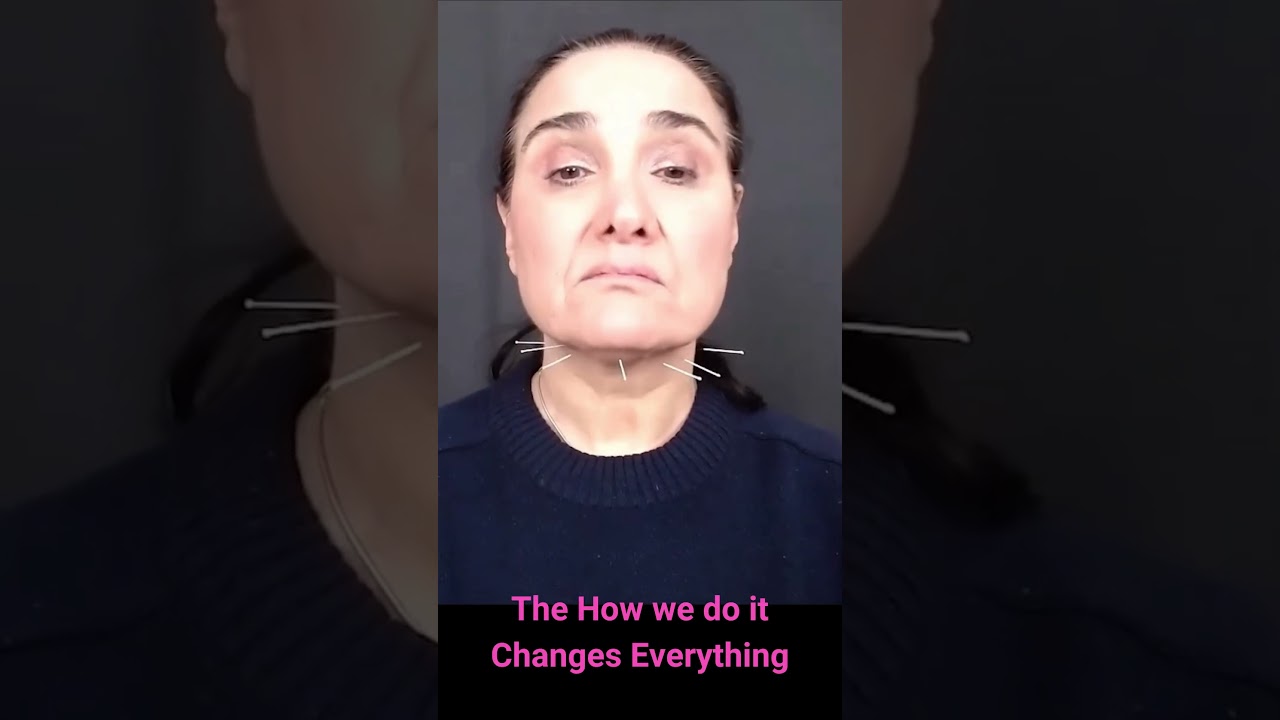

3 tips when using Thrive intradermal needles #acupuncture #cosmeticacupuncture

Proof of concept clients love it and you really won’t learn this anywhere else 😁#acuregen

Reaction Video about Long Needles in Eye Area! #cosmeticacupuncture #amandashayle-reacts, #acuregen