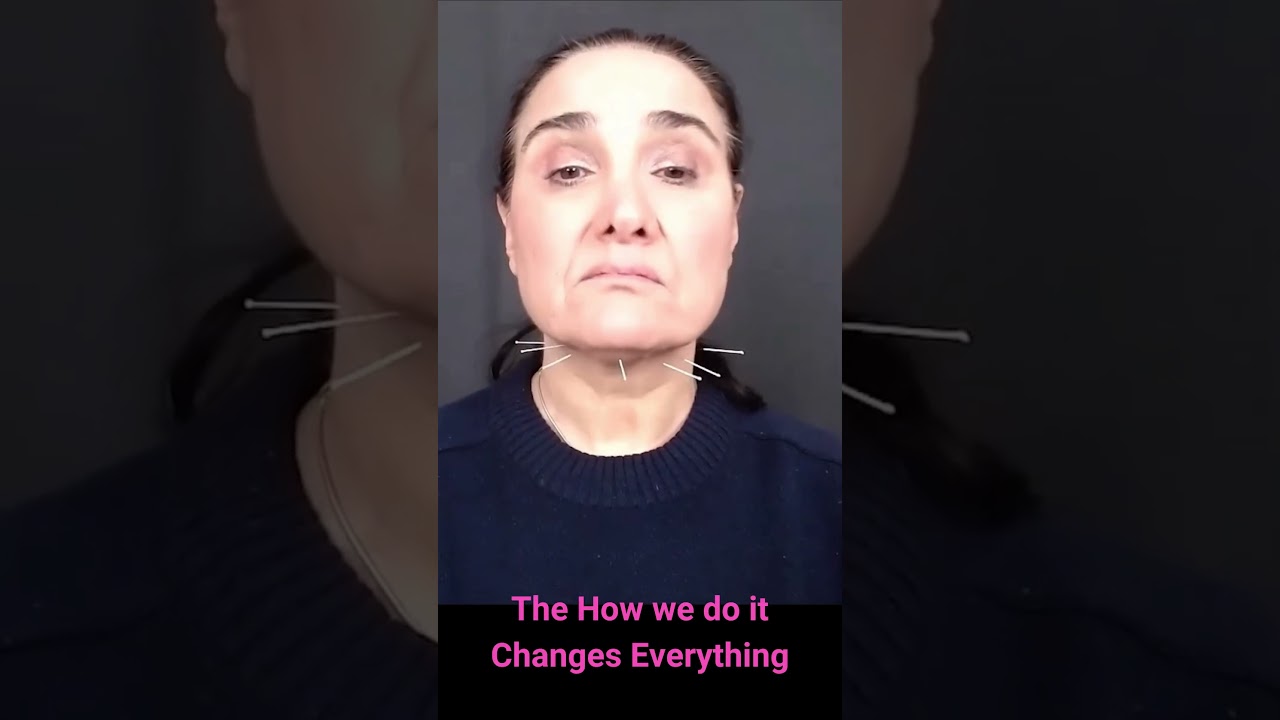
Amanda Shayle presents her UK-patented Thrive needles for cosmetic acupuncture: a bronze needle for deeper work, a gold-plated needle for fine stimulation, and a silver needle with silicone coating for sensitive skin. Each needle type targets different conditions and improves patient comfort and clinic efficiency.
Chapters
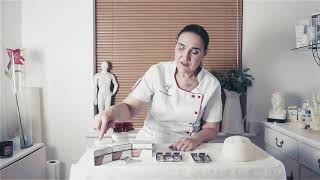
Hi, Amanda here. I'm going to orientate you now to the materials we're going to use for cosmetic acupuncture. There are the longer needles and there are my Thrive needles. And I want you to completely understand why I designed 3 types and why 3 types are useful to have in your clinic. One of the big issues is people have different skin. Men, scar tissue, women with fine features, very loose flaccid skin in older, older people all require a different approach. So that is why we have 3 needles. And I also don't want the treatments to hurt because they won't come back. We want them to have the treat in their treatment. So again, I found a way of working the tissue so that I'm in control of it and it's not in control of me. And the other benefit, of course, is that it makes you much more effective in the clinic. You work smoothly with a flow and your patient enjoys every second. I'm going to now orientate you to the Thrive needles. And then you're going to see why I designed all 3. So the first one is my— it's a bronze, bronze colour and it's 6mm long, so it's the longest of the intradermals that we do. 0.18 gauge by 6mm. The next needle we have are actually gold-plated handle. They are half the length, they are 3mm also 0.18 gauge. Gauge being the thickness of the needle. So they're quite fine and they are quite stimulating at the same time. The silver needles are called Gentle. They're fairly unique on the market because the only other needle available is actually the Sirin Spirex, which has a really tiny head which is almost impossible to manage on facial tissue. It has its role in retaining a needle. Needle retention with tape over it will make it very comfortable. My needles wouldn't suit that at all. We're doing different things. But the feature about the silver needle is that it's 0.12 gauge, very thin, 4mm long, and it also has silicone on it, so it slides in, and it's really brilliant when you want to be very, very gentle with your patient, or it's their first treatment. So I'm going to use, um, Thrive Needles that I use for the longer supporting tissue work as a way of illustrating why I have different gauges and different lengths.