Amanda Shayle Presents: An Interview with Martin Heskier
Designer Martin Heskier discusses the Heskia, an ergonomic bodywork tool rooted in sacred geometry and a decade of refinement. A core protocol of 99 strokes mobilizes interstitial fluid and enhances capillary flow without skin trauma. The tool works for facial rejuvenation, cellulite reduction, lymphatic drainage, and plantar fasciitis.
Chapters
So good evening everybody and welcome to a really special Q&A today. We had a little technical hitch but I think we're all together now which is wonderful. I usually do a little presentation on either a question that's been sent to me in the week or something I've seen on YouTube and we discuss it and this is continued education at its best because we also discuss cases where people feel they're not making progress, or they share their successes. So it's a lovely private community, international. We've got guests here tonight from all over the world. We've got New Zealand, we've got the States, we've got the UK, we've got France, India, and so on. So it's a really international forum for us, uh, with some really very experienced and skilled people who feed into any questions that we have. So it's definitely worth coming every week and it's something I give for free as part of your blended learning package. So with that aside, I'm now going to introduce Martin. He's an inventor. I think you're an engineer, Martin, is that correct? Is it an engineering background?
Uh, design.
Design.
It's pretty much the same.
But the beautiful thing is it's ergonomic design. I think that's, you know, Ergonomics are a key factor in this.
That's my specialty.
Yeah, yeah. He's worked passionately, um, in the, the body, working with the human body since 1997. Um, he's an acupuncturist, so that's wonderful. He understands the integration. You know, I love integration of how we can use the Hesca within a treatment program. And he's really been involved with a lot of amazing teachers of different subjects, craniosacral, sotai, which I don't know, it sounds Japanese to me, but his acupuncture and understanding of TCM. And actually because of his relationship with William Bridges, his face reading, he's really, really, really, and then we're going to have to access some of this knowledge from you, Martin, a master face reader because of what he's learned in his journey there as well. But really importantly, he, he has used this tool for bodywork with very significant world champions of sport, ballet stars, which is totally up my street. As you know, I love ballet and will have a background in that. And, and actually has used this in all facets of health, not just musculoskeletal. He gives back, which we love, to veterans and to various charities. He's worked with cerebral palsy and cancer. And Martin, please share, is there anything else we need to know about you and why you developed the tool?
My streak as a designer is the one that you see a possibility, not a problem, you see a possibility, and then you launch at it to see if you can find a solution. And, uh, that's, that's my streak. That's how I am. First of all, Amanda, thank you for inviting here. I hope everybody has a wonderful day and a wonderful evening. I am, I'm stoked to be here, and it's a great, uh, setup, and I love, uh, what you're doing for the community. Amanda, thank you so much.
Yeah.
So having that streak of designer and my specialty in ergonomics, kind of, and I have to say I'm a spiritual healer also. So I have a lot of communication on what we also are, and that's where I got my inspiration from. I saw it. I actually dreamed it. I actually dreamed that there was something, uh, cooking inside me of, of something extraordinary. And instead of, as I would do normally, was to, to run to a workshop, to my workshop, I would, I would, uh, this time I would just start to even do more yoga and the even do more meditation and just awaiting its arrival. 3 months later, it arrived early in the morning, and I was on a bike to my, my dad's workshop. And he was— I'm brought up in a kind of a Charles Eames family, the Nordic Charles Eames family. We had a studio workshop and, and home in one. I'm actually sitting in it right now, visiting Denmark and my family here. So I would— my dad was not collecting cars, not houses, he collected wood from all over the world. So he had a library of this exquisite wood, and I went to his library and picked a piece of wood And he said, "No, no, you cannot take that one." And I was, I said, "Okay, fine. We go to the lawn and we fight for it." So he said, "Okay, you can have it." Mind that he was one head taller than me, so, and wider in his shoulder breadth. He must have thought I meant it. And that's how it, it arised. A couple of days later, I, I was polishing it in, in the, in the sunset, and it, it was the, the shape as is. And it took me about 10 years to decipher it completely, what it was that I have done. And, uh, it came up to, um, two portions. First of all was the, the the functional use of it. And, and later on I presented for the Association of Physiotherapists in UK, being keynote there in 2014, where I promoted my, or, or launched my, my method that I had come up with. And, and I, I understand that it's, uh, uh, a completely decipher it from, from sacred geometry. And it is completely in coherence with the human body, and that's why it can be used by small hands, big hands, left hand, right hand, weak hands, strong hands, on a very broad specter, capable of, of adding on to any physical manipulation of any kind. And I've taught broadly on all levels and, and also states of education, from, from college students studying for acupuncture and physiotherapy and chiropractic and so forth to the most specialized rheumatologic clinics and hospitals around the world, Mayo Clinic and Jefferson in, in U.S., amongst others. So it's, it's very integrated. And then because I am this kind of inventive type, I, I realized that it could be used for cellulite. And, and through my, uh, Lillian Bridges was my, uh, my former wife, and she, uh, face reading led to, to, of course, we can do something for facial rejuvenation. And that led to, to us talking about the, what the, what the face can would benefit from. So that led to protocols in facial rejuvenation. And, and I have the add-on in this, how to work with the human body, uh, and especially for, for women. The cellulite is, uh, something that 98% of all women between 25 and 75 has.
So I have to say it's really helped my leg. I have to say, in the build-up to it, the girls were using it on my legs in the clinic because my legs were swelling up while I was teaching. And miraculously, each time the fluid just— it's a very gentle lymph drainage effect. It really was quite phenomenal. Unfortunately, I had a slightly more serious condition, and we don't know why I've got it, um, and it is recovering. But even at a— and this is kind of coming to my next question— even at a micro level, I found that this little curve fitted into the inside of my knee, like the eye of the knee. I could— I'm fascinated by the way you can use parts of it. 'Cause you know, when people look at this, they say, wow, it's very large. How can you use that on the face? And I say, well, hang on a minute, just look at it. And you can start to use even these little areas here. You know, I'm playing with it now. I'm really kind of getting into it. But each part, could you just for a second talk about the different, not necessarily the curves and the edges, because I'm going to put that in. You can talk about the curves and edges, of course, but particularly how you can break this down into ergonomics within ergonomics, really, because you've either got the large ergonomic, which we talk about, but then you've got these micro ones. I'd be quite interested just to drill down in there a bit.
Find through Sacred Geometry, it fits our body. It's on a molecular level, so every little nook and cranny will be capable of being fitted with, with the tool. And even with the difference of, of the faces, because you can twist and turn it all the way around. And I, I highly recommend for those of you who have the tool is to carry around for 24 hours just to upload it into your spinal reaction pattern, because that's where you'll have the, the handling of it. So the way we are, we are the curves, and, and, and the structure of us is on gravity and, and how we have built our skeleton and ligaments and muscles to, to balance it out. And that means that, that no matter how you are, you are built as a human being, we all build on the same principle, and that's why it fits everybody. To get into the micro part of the tool is Uh, to explain it, there is a point on the tool that I use that is way more precise than an acupuncture needle, and it's even faster because it doesn't penetrate the skin. And that means that it's— it's— there's no trauma to work with. So it gives a satisfaction result in just 1.5 minutes. And that's where we are talking about on this level we have reaction patterns that are way faster than usual. Against Gua Sha, because I don't like bruising, I don't like to create trauma. So I think what we're talking about when we're going down these small curves is the Gua Sha 2.0, and it is about creating the kind of a micro-frapping in the tissue. It's not, it's not a scraping, it's not the usual Gua Sha, it's a much more delicate process on a much more delicate level. And that means that you can actually just how you did it in your film.
Could you just talk about the 1.5 minutes and also about this hydration thing? I don't know which you prefer to talk about first because one—
it's the same.
Okay, must tissue memory, tissue memory. I'll let you explain that because I do my best but I'm not you, Martin.
Hydration, hydration is, uh, and we talk about interstitial fluid. And, um, I have now spent 6 years to try to find method that could measure what it is that I do. I can, I can see the results. The anecdotal evidence is overwhelming, but we can't measure it. What I, I, I came to the conclusion because of the, the reaction patterns using the curves, the soft curves are the one that are the, the one that promotes the, the fluid, a flow of the fluid. Yeah, that's— I think it— we're— I should— yeah, that one exactly. And then the larger one underneath, uh, yeah, these soft curves. And then also the what you could say would be a natural thumb position. Uh, there's this— yeah, this, this, the soft curve there. Yeah, that one.
Yeah, yeah, yeah.
And then sideways out of my thumb.
Yeah, yeah, yeah.
So yeah, that would be the other one that is, is part of it. So these 3 curves are the ones that are pretty special, and, uh, I can allow myself to say it because now I have several companies that have tried to copy my product and they are not successful. So that's actually why I say it's pretty special for this. What happens is that it opens the capillary, so there's an increased flow of interstitial fluid into the intercellular space, meaning that more nutrition comes to the cells. —and there is more fluid to pick up the trash from the— the carbon dioxide. And also, by that, there is a flow through the tissue that dissolves the crystallization of the lactic acid. So, it's— and it absorbs back into the venereal part of— I think I said it correctly. Correctly, part of the, the capillary. So the process is, this is quite unique that it opens both in the arterial and the, and the venereal, I think it is called, venese, venereal, a part of the, the capillary. That increase, that's why it's possible to achieve a result in just in 1.5 minutes because it's on this level and And just to resemble what we're talking about, what kind of speed we're talking about, your blood system is from here to the moon and back again. And just by us sitting here quiet in chairs, it, it, it goes through that, uh, distance 5 times in a minute. Wow, it's a lot. We have— it's a very rapid system that we have. We are incredible human beings. We as human beings are incredible. All beings are, of course. So I, I somehow managed to tap into this and, and put it into method and protocols. And that's why it's possible to work with the face gently. There's no need to be aggressive. Not on this plane, this level. It's all about micro, micro movements, micro frapping. Um, it's like a sonar, uh, process going on. I can even prepare— I, I've, I've worked with that— repair broken bones very fast. Um, and, and they are, uh, like, Perios seems to be something that's very hot to work with, but it's really rapidly helping the process of rejuvenation.
And one of the questions I have is, how do I— how is the correct way of moving it from around? Because is it— how— what's the best view? If you've got one there that you can show, so is— how do you go from one form of holding it to the other? Is there a little tip, some tips you can give us about changing the position on when we use it? That's the first.
Of course, of course. Don't ask me unless you're prepared to listen for a long time. Yeah. Okay. Of course, the, uh, the most important thing is actually the, the curves, and in addition to that, there is the points. It's, uh, of course I have my own here. It is like you have, uh, the index here And you can see how I hold it. It fits inside the hand, but it also fits out in the fingertips. So when you're working with the curves, you're using the fingertips, and when you're using the points, you're working with the— with having it in the hands. Ergonomics starts, right? So you have the, the index here, and the, the tip of it The tip of the, the wand tool is very specialized. I will go into details of that later on if wanted, but this is the, the index, and I flip it in my hand, and then I have access to my thumb, equivalent to the thumb. Then I turn it, and I have now access to this small curves, and it is the outward going So it's like if I was using my thumb like this or a finger in a lift. And then I can flip it again and then I have a different approach with it. And then I can go back to my index. There is an extra point. You look at this one and say there's 3 points. But I look at it and I say there's actually 4 points because here you have 2 points. You have the heel of the palm and you have the tip of the thumb here. So the heel of the palm is equivalent to this one. We use it to, to assess, access a body and assess what's, what's going on. Uh, it's— the tool is covering 2 very important areas.. And the one is Empowered Self-Treatment, and the other one is a tool for highly specialized practitioners that actually understand exactly what they are working with, which is the scroll of people here. And we are— when we are as practitioners are working with people in 8 hours or more, a day, even small movements, even small pressures are wearing off on the hands because we are using a lot of energy whether we want it or not. And this one is in alignment with the, the human energy, and it is in alignment with the ergonomic part of it. And I could even ask all of you guys, uh, that is having a tool in the hand, try to actually feel it and see How does it feel in your hand? And make a comment also if you feel it fits in the chat, and we can see you in there.
If anyone wants to bring their tool, hold their tool, we can have a look at how you're holding it. But I think that's a really good tip, Martin, just the fingertips. I think knowing that's how you do it, I've just kind of got on with it and done it the best way I can. We'll go back into the view with you and me. So fingertips to make the moves, and I do say to people if they're working with an oil, don't— I usually have a cloth, but don't get too much oil over it because otherwise the thing gets quite slippery. So you prefer water-based, don't you, than oil?
Yes, you can use serum, cream, and and oil and water as you please. There is, if you feel on the tool, you'll feel that there is this kind of resemblance to skin, and that's why it works with that kind of friction. It runs on air. And if you just stroke it over the skin, if you have moisture in your skin, there will be a blockage and it needs to then to run. At the moment that happens, I use the Tränkt water because it's much more rapid than any other. Oil, and it doesn't influence on my grip. And I am turning it in the hand constantly in a treatment. It's flipping in all kind of— and it's natural. I do it on both sides, of course. It's It's a natural. Yeah. And because it's— when you use it continuously, it becomes second nature. Sorry to interrupt, but you can— yes, you can, you can definitely use— I, I found that if you use a serum with water, if you make these combinations, you'll have an incredibly nice slide over the skin. And when you have this kind of viscosity that is very sliding, you will be able to adjust the pressure, I would say, 10 times up. You can really be delicate and precise in pressure and angles. And the thing is, and that's why you have me coming for these Q&As over and over again, because I I, you can show as I do and you can read books as much, but there is one thing that is by far more efficient and a method, and that is learning by doing. And it's, I resemble it to a a granddad that is going to teach his grandkid how to make a fishing fly, which is nearly impossible to, to, to teach. However, kids are learning super fast because they are watching how the granddad does it, and when they try themselves, the granddad is there to say, hey, you should do like this. So that's the That's the process of, uh, of us also having an offer later on for, for training. And that is this, this showing. I, I can't say how many times I've taken like ABC for, for doctors and, and, uh, highly, uh, educated practitioners. Because they need to have that kind of essence in under the skin.
I have to say, actually, when you treated me in Seattle for my nasal labial area— and I have purposely left it because I know you're coming over soon, so I get you to treat me again— but I've got some before and after picture. Actually took it off the video. It was quite— it was bizarre. Um, the gentle— I thought it was the subtlety of how you worked and this sensation of the grab it was almost like a chi grab sort of thing. I might, if I'm spiraling Moxa over someone, I get, I can feel, I can grab the chi and release. And I actually felt it. So I'd just like you to talk about really maybe what, what you were doing with my nasal labial fold, because the girls have seen the video and also, um, what you're doing when you're turning at 90 degrees. Just to give a study of the concept behind why that would have released this contraction, which has gone back again, and I haven't got special effect on my thing. And also why, and can we, on a patient who's lost a lot of fat here, once we've released that, we can— how would you plump it up? Would you be using a different curve just to work in that area? Because this is one of the trickiest bits for us. Bruised disc, and, and I've seen the result of what you can do, uh, which I'll show them after you've spoken. I'm going to show them what you did in 15 minutes on video for me. So if you could just walk us through what you did there, it'd be amazing. The contact had tracing.
I see the human being as a full structure, so when there is a problem on the surface, I go all the way into how How is it all put together? How is the, the bones in the face, uh, working? How's the ligaments? How's the muscles? We have 14 muscles on each side, as far as I remember. And I actually start working with the, with that structure before I go to work with the skin. And in the whole process in that, and it You can do it in your own grade, but I do work with the energy, of course. I try to work as much as possible with body-mind and soul energy.
I mean, there's no question you were working from inside out. I could feel connection. It was really quite a profound sensation, actually. And the skin— I mean, we work at two levels with our beauty treatments. We work obviously constitutionally, which I know this helps as well, but we work subcutaneously in the SMAS tissue, which is kind of what you were stimulating and removing any fibers and, and contractions and everything. And then the skin, there's definitely an exfoliating effect by using this tool as well. But if you could just kind of describe what the tracer was doing in particular, I just think the girls wanted to kind of get some particular— I mean, the how you— we have to be in a room with you, I think, but even if we can explore ourselves and get an understanding so we've got more headspace to learn better from you when we're with you.
So it's like a rolling, yeah, yeah, it's a micro rolling that you have there. It's a, uh, I can't remember what it's called right now, speaking too much Danish the last couple days, but, uh, but it's like, it's, it's like skin roll that, that you do in a very micro manner. And it followed up— the way it's designed is you do that with the tip of it, of the thumb, but the thumb pad that is right there after with the soft ending of the curve actually creates a sliding from being a brace, a little abrasive on a mic level, and then going into a smoothing effect afterwards. And And it's a double smoothing, and then because when you go out and then you come back again, and then it, it happens again, and then you come back. So it's a, a very soothing procedure for, for the skin, and it is the result that, that we are working with here. The— when the tool comes in, it's, it's a, uh, the Ent of the procedure because it's as important. In my personal consultations, I have the mind in there. I speak a lot with my patients, decipher them, how they are doing, what's going on, because that influence on the facial muscles as well and what they have experienced in life.
Intention. You're talking about intention as you're working.
Yeah, I actually do that prior to— my treatments are pretty specialized, and so I do some long—
We lost you for a tiny second. So when you're working with the tip, I studied the video, so when you raise it up, why would you Why would you— is that so you can sink in? I mean, I could—
there's, there's the, the, the tip of that, the index, uh, the tip of that index is, is resembled with the, uh, the stern of a boat. You have the, the deck, you have the two sides, and you have the line of the stern. And, uh, yeah, that would be the deck and that would be the tip of the stern. So it's kind of a pyramid in this cast. And there is these three lines that forms, um, is the one that you can, you can use for twisting and turning and scooping into the, into the tissue. And that's what, uh, where we have the combination of these shapes, because you'll see that I sink in, then I go around the point and pick it up, and then I will then flip it and release it. That's some of the, the techniques in, in using it. And it's, uh, as I see you, uh, doing— you trained with me, of course, and so you have the right, all the right moves in doing it, the way that you go in So on your face, the other—
I sometimes, if I'm releasing here on patients, particularly up here on the corrugator, for example, I, I kind of find I go to the tip of the one of the edges of the thumb to release. Am I doing that wrong? Because it's not a pyramid, not like here. Would you—
of course you're not doing it wrong. No, I would actually add on to work on the occiput, add that on and over the scalp because that's a part of it. You need to have tug of war release, the tug of war of the muscle.
So working on the occiput, sorry, I—
okay, occiput all the way over the skull to to have the frontialis completely released. And then you can go on to the next layer of muscles in there. So that's a part of it as important. Yes, you come up ending at the curve and the fluid, helping the fluid to do its wonderful work in creating more hydration and plumpness and flow in the tissue.
One other question I have, I think I've pretty much cracked on my own, and again, I just want that to be done under your supervision because I think Martin is coming here at the end of September, so I'm really, really excited that he'll be here on the 1st and 2nd of October in the UK, and we're going to do a course, so I can't wait and we'll talk about that later, but he is going to come. So I kind of really, as part of my blended learning, want everyone to get an idea, try it all out, get familiar with the tool, hold it, use it, find out what they don't know, find out what they do know, and then you can kind of correct and check and there's room to learn more. That's kind of how my whole course has been constructed really. But one of the things, so I feel like I'm definitely getting amazing results here, I love the fact we should connect it there because that its tensility of the tissue. One of the challenging areas, apart from the sculpting that I do here, I noticed on some of your notes, turkey necks. I— how do we do the neck? Because rubbing the neck, you know, you've got— you don't want to grog them. I find that more challenging. I find the curve, but then I'm not quite sure if I'm doing it correctly because we do want to drain down, but if we're working under here. We do great stuff with the needles, but it's nice to have that finish with the Hesket, and to know if you could just give us a couple of tips on how we'd— what you do when you're doing turkey necks.
I, first of all, I start prior to any other treatment, I start to loosen up for the whole— right now the name of the muscle escaped me, I think it's plesso— platysma. Platysma, is it? Yeah, platysma, that's correct. Yeah. And, but as you think of it, it goes from the collarbones all the way up to the— so that's where you start. You start in the extremities. Yeah, the collarbone. Exactly. And the jawline, and then you're very softly starting to invigorate the whole area.
So would that be the correct— for me, would that be the correct curve? Actually, that's your—
you're in— you jumped right on to second. The first one would be— the first one would be the soft curve, uh, to, to make a fit with the, with the two soft curves and, and making a 99 stroke. So exactly, exactly. Yeah, right. Yeah, yeah. And it's very important that you have a very nice glide there because it is a very sensitive area. And yeah, and so you have to, you have to, to kind of work with it on both sides of the, of the, uh, Jack— what's called—
that's the other soft curve, but it actually—
yeah, you can definitely work with, with both Both curves actually works very well, but you just have to be careful with the middle. And, uh, and once that is done, also I would use the thumb alongside the, uh, the, the collarbone and the jawline. Yeah. Oh, okay. Yeah, yeah, yeah. But on the inside. Yeah. Not, uh, yeah, I would actually go in there.
Yeah. Underneath it? No, above it. Above it, right?
Yeah. Yeah, and then follow the line, follow the line there. Yeah, yeah. And then I, of course, I would also, uh, work with the SEM as a part just for the interstitial fluid flow. As that is done 99 times, and that's equivalent to 1.5 minutes, uh, and it's very rewarding for the patient. They really relax and open up. And you want that kind of energy that a person has, which is, if they have turtleneck, is that there's a lot holding back and a lot of activity in the throat chakra. And you want to help that person to have freedom of speech, if you like. And that would— that this is the the kind of the manual, uh, working with, with that part of, of, of the psyche of a person that helps.
Yeah, sorry, does this matter?
Yeah, yeah, you don't have to— first of all, you don't have to, to rush it. Secondly, you don't have to be very, very slow with it. Uh, it, it's It is to just do it in a natural speed, something that feels right. The most important thing is actually not to, to, uh, um, to jump before it's actually hit the, the 99, uh, because the results really start to, to, to balance and, and, and, and get mounted in, in the last part of the, the, the 99.
I wonder if anybody else has got it. So what's the 99?
Claire's asked very good questions. 99 times or counting to 99.
So up and down is one rep. One.
Yeah, yeah, that's nice.
That's one of 99. So if I were to do it here, because it's obviously easy for you to see That's 1, 2, 3, 4, 5. It's equivalent to a minute and a half. If you're a few seconds one way or the other, I don't think it matters. You get used to it, don't you? Nothing at all.
You can actually do it way faster than 1.5 minutes. 1.5 is to ensure the result. It's not to dictate that it's 1.5. If you do it 99, it's also to ensure the the results, not to dictate it. And, uh, but my finding is that it is in the, in the very last part of the, the 99 that it, it, it really, uh, cements and, and, and make— ensures that the results stay.
It's a bit like a physio warming up an area before they do a manipulation or something. So what you were doing for me, because a number of people haven't seen it, was 99 working in this area here to hydrate. Am I right? So as I'm— so you do this here and then off 99, you with your fingertips, remember everybody, the boat's upside down, slightly level, you put it in and then you bring it up and you hold it, no wiggling and jiggling, still with gravity for 99 again.
Correct. Yeah, and there's— it's incredibly important to be very delicate because it's powerful. It's a leverage, it's a Falcon Principle, so you have to be very, very mindful in using it. And in the face, it's delicate. You can, if you're not really taking good care of your pressure, you can instigate, or accidentally I would say, if you're not mindful about it, you can create a little— Mark? Yeah, bruising, or not bruising, but like some excess red.
Yeah, so yeah, I think, um, you're— what's better, and I do say this to everybody, is better to spend a bit more time on an area. And actually what I found is if you on the first treatment and you're working on, say for example, the corrugator, cleanse with the cleanser, maybe do a scrub first as well if they've never had a scrub for a while. Then I've got this cleansing oil which is actually not that slippery. It's got moringa and squalene. It's a really beautiful oil for acne Skin, putting that on— this is what we were doing in Marbella— put that on and then release with the Heskia first to release that contraction, because there really wasn't any point just putting needles in. It was just perfect. You're trying to needle into a really tight muscle, and that's actually going to be uncomfortable for the client. But by releasing it using the oil and being gentle and maybe spending a little bit more time rather than rushing it and making a mark, because I think that a lot of— a couple of students have actually made a couple of marks even with the Hesqvarna, and that basically saying they're just doing too much pressure. Is that correct?
That's correct, yeah. And also another thing, that is when you start to do it with fluids of promoting influence, I think that you should use your intuition even further to understand if it's already enough when you hit 50 or 60, something like that. You can actually, you can make it shorter, I would say, because it's as it is the phase, you can be more delicate, you can be more intuitive in how you work. And it's supposed to be working with the tool is a help for the practitioner to do an even better job. Yeah. And it should be feeling like that as a practitioner that you have when you use it, should really be feeling, you should be feeling that it's really nice for you to use.
Yeah, and the left hand, right hand thing, I believe you are bringing out a left-handed tool at some point, aren't you? Not that I think we need it.
It has been on a wish list for a very, very long time. When I designed it, I designed the left hand also. It's a quite steep investment because I work only middle great level.
Yes, I do not think— isn't it?
Yeah, it's not made in China, it's not, uh, it's handmade in many ways. It— there's no compromise in, in the quality, uh, or the material. So, uh, I, I needed to have a foundation for the, uh, for this initiation of next and next level, and it happened. I just, uh 2 days ago, initiated that. So the process is that it should be on the market within the next 3 to 6 months. Amazing. And that's the left hand. It's exactly the same as the, uh, the right hand. And it is— the reason for me stalling it so much is that I found that it was highly ambidextrous. I had the right hand Doctors and physiotherapists and practitioners, they're coming back using— that was in the test period, and I had a set of left and right, and they came back with the using the left hand for the right hand, and that told me that, that it was, it was ambidextrous.
I would just like to ask you about feet for a second because one of the things— I will open this up for questions in a second to anyone else. But the feet, what I love is as a treatment, at the end of a treatment or while they're relaxing, I work with their feet. Now a couple of my students, more than a couple, are reflexologists, and it's wonderful because you can get the feedback of the crystalline feeling, the little crystals that form under the feet. Imagine that's my foot, and it just is incredible for working there. Have you got any tips about how you use it on the feet if you do use it? Because it's a tip to everyone, my mint foot cream and this, they're in heaven. I love it. I always get my girls to do my feet at the end of teaching.
Several of, of, uh, physiotherapists swear to use it for plantar fasciitis and bone spurs, actually. I have a lot of pro golfers with bone spurs and they treat themselves. I have marathon runners that experience plantar fasciitis, which is death of tissue, which is worse, but they recuperate and recover in 3 weeks only. So if you use the soft curves, you are already in your second level. You bypass the interstitial curve and then you go straight to the soft Gua Sha. So fit the soft curves first. Right, that's a really good tip. They fit really, they really fit under the foot. Really well. Um, wow, actually this one, uh, here is the one that you can, you can fit to the—
yeah, yeah, yeah. And then, yeah, I do tend to go to that one, I really do. So just use the soft curve first, actually.
So soft curves first, super soft in pressure also. You don't have to use more than gravity.
But the question he was getting from a lot of the therapists was feedback. And I have to say, I do get feedback. I can feel that little— I mean, I get feedback from the client if they get a little pain. That's a ball of rice you talk about that you're feeling for. But you particularly up here, you really do. I mean, I can feel the fuzz and I can feel it with my finger. I've got little furrow, see, I can feel it with my finger. But when I do it with the tracer, when I feel it with— and I say to people, it's like shark fin forward. That's how I get them to know which way is which. I can actually feel it as if it was in— it was as if it was my finger. Is that good, isn't it?
That's— that is exactly— and it was, it was my criteria number one when I designed it, whether it was good or not. And it was— if I, it— I was doing healing, I was doing body manipulation with my fingers, and I I, I, um, had the criteria that it should be exactly, uh, as my hands, if not better. And I found actually it works like a magnifier. It's incredibly efficient and, and magnifies any movement or, or things that you feel inside the, uh, the patient's, uh, body. It, uh So, and it's due to the sacred geometry function in it, the ergonomic function. It completely is in coherence with both the practitioner hand but also the patient tissue. It is, I mean, yeah.
So I want everyone to kind of possible, yeah. So I want everyone to sort of think about starting with a soft curve, then moving to the next curve. It's almost like kneading the bread and then going to the next level. So there are differences between those curves that I must admit I hadn't computed. The other thing I want everyone to get used to is holding it and handling it and feeling comfortable and manipulating it with their fingers. And the third thing I want people to think about is getting— having intention when you work the 99 and feedback. Start feeling with this rather than your finger. You do feel it, it actually for me it transmits through my hand. That's what I feel.
You can actually put some facts behind that because in your fingertip there is 3,000 sensors for the— let me read that question. Okay. There's 3,000 sensors in your fingertips, but that actually goes on for the rest of your hand, not only the fingertips, but also further down. And it, it ends up with, uh, I think it's 17,000 receptors that you have. And if, if this— you have actually this one here as, as fitting into your hand and you have your fingers touching it, so you're, you're, you're receiving information and it, it activates all the senses in the hand because it works like a fulcrum principle. A little movement in the tip is a lot of movement in the rest of it. So it's a full composition.
Like swinging a pendulum, you know, a tiny, tiny movement and you get a big movement. It's quantum. It's like when we do a distal point, when I've talked about this propagation of a signal. I'm loving that. Oh, Martin, I'm so grateful for some of this. I honestly personally had some massive aha moments. What I'd like to do is just see if anyone in the group has anything they'd like to ask you in person, so we're going to go on to gallery, if I can get that.
Indeed so, yes.
Everybody come on camera, and if anybody has anything they want to— and you can— Clare has a good question. Unmute your mics. Clare's left us. Clare, I think Clare Edwards. No, me Clare, me Clare.
Hello Clare, gorgeous. Hi Martin. Hi Amanda. I haven't actually got my— I've left my tools at the clinic, I haven't got it on me. But I am a reflexologist, I have been. I haven't— I'm going to join your course in October, but I'm also interested— I do body massage as well, and how it can be— is that something you'll cover on the course, how it can be incorporated? Because I'm nervous to use it as part of massage because I like it to flow and I don't like to break contact with the client, and I I'm kind of, I'm loving using the Hestia for the feet and like we were saying, it really, I can really feel the crystal, the crystals in the foot, but it's how to use it as part of a body massage without breaking the flow. But that might just come with experience.
I think you're, you're, you're on, of course you're establishing the contact and the trust in the client by using your hands. Because it's soothing hands. And there comes a time when, when you're— you can't stroke them gently over the skin, you actually need to get in there and get some business done, and that's where you start to injure yourself. Average time that a massage therapist doing Swedish massage lifespan without having injuries is 4 months. And, and in general, it's a it's a 4 to 5 year lifespan until they have to, to, to take another education. So, uh, you are really prone to injuries, and, and the tool will help you very much in there. You can easily incorporate it. It— I have patients, uh, asking, are you using the finger or the tool? They literally can't feel the difference. And, uh, and it's all in you getting it in there in your feeling apparatus. You, you have to use it with a sense, uh, of, of, uh, uh, just try it out because then you're— as you, you dare, you, you get, you get it, uh, easily in there. Um, incorporate into your practice.
I use it for florals because they can't tell the difference, you know.
With two Heskies? I've only got one, do I need two?
I use two and I work as it— because of my hands, I mean, I was thinking either I can't— I mean, when I've needled the back shu points, for example, I have to— we used to have to get our thumbs and go, or our index finger or thumbs, he would go up the back, yeah, the side of the spine and release. I can't do that, honestly, it hurts too much. But this, all the pressure's on my hand here, it's, it's literally transmits, there's no pressure on me. Not that we want too much pressure, to be honest, but you know, some people like it. And you could just go up and start even here, it feels like you're thundering.
And also it gives you— you can concentrate your, your efforts to control it and, and, and also balance. And as you're holding it, Amanda, it is easily used for, uh, it's— you have two right hand and it's easily used like that. So yeah, I would say, uh, Claire, you can, you can you can definitely use two. I would do that. I often do that when I have those situations, but I don't have that situation as much because I work very omnipotent with the human body. But I would— it is my clear recommendation. And If you want to work with it, of course, take two, or you can take the chance and wait for it to come with the left hand.
Actually, one quick, one final question for me, Martin. When you're working on the occipital cavity, which I totally get by the way, because I tell them to do it on the ear, What's your favorite tip for the occiput? Is it the hook?
I actually prefer the curves. Oh, oh, literally the curves. The curves are very efficient. If you have a chance to cradle your patient face down, you can really work it well with the curves. And I mean soft, soft manipulation that has, you know, you're helping the system to help itself. And it's incredible what you get out of it as a gift in a very, very short time.
I would say that would also, because I have to say I do associate tension here and tightness here with alopecia and hair loss. I mean, yes, with the cellulite, all things that we don't really do that well with needles. You can rollers, but I— on every hair loss patient I've had, they've been ultra stressed, had retained heat of some kind, normally manifesting on the scalp as well, but every single one's had stiff neck. So I top and tail with Oxypup, but to support that with the Hescue as well, I think that's a lovely way of relaxing them before if we're going to roll their heads or give them light therapy. I think it's, um, I hadn't thought about Hescu in the Oxford area actually. There's another question here, let's see if there's anything great for lymphatic drainage. Marianne from New Zealand, thank you.
Yes indeed, yeah great.
This was when you were working with men, he's pointing here, I just took a screen grab from the video. So we've already talked now about this curve or edge and Even though it looks like he's pressing in quite deeply, you would— do you want to say anything about the angle that you're holding or anything like that?
Yeah, it's actually on my way going in there, in, in the moment, uh, after I would, uh, um, twist the turn a tiny bit and angle it because there is two, uh, corners on that going in and releasing the, the tissue in there. That is the one that creates the hold. Of the tissue and then soothing it back into shape.
I must say, actually, twisting the tool to fit the curve, the ergonomic, is important. People don't need to think just going straight, you can twist it, that's what you mean, isn't it, when you're twisting?
Yeah, it's multi-dimensional, yeah, you can, that's why I was referring to this early on, this, uh, how to learn to, to, to, to, uh, tie a, a bind, a flying, a fishing fly, uh, yeah, because it's, it's, it's so, it's so, um, you have to be shown how to use it intuitively because it's so omnipotent. And so, uh, you can use this so many, many, many, many ways. Um, this is actually, this is the before and after.
After you did me that day. I think that, that side particularly, I mean, it's quite incredible. Look at that. Just when you're— one feedback on this, uh, I was just using— I'm probably doing it wrong, but I, I was finding it really hard. Is that all right, just using that bit?
If I play it— absolutely, yes. No, notice how it did— it's, uh, it fits perfectly, and it's how you, how you angled it and how you twist and turn it, then you have the perfect fit. And I would actually use that kind of treatment prior to working. Look, gross feet.
I was kind of using the thumb. This isn't a video.
No, I can see exactly what you're working with and how you do it. It's incredibly important to have a good glide because if you have this delicate skin on the face, you can be— it can actually turn a little abrasive if it's for a longer time that you're doing it with the— like dry. And just to circle back to Claire, what she was asking about for body massage, You don't have to use the oil or anything for the body. It slides. It can even— you can treat a sciatic nerve through genes.
I'm so excited that we've arranged for Martin to come to London and teach us directly and to come to Los Angeles for those of you in the US. Please don't miss this opportunity. I think you've established from this interview how important it is to learn the fine details about using the Heskia One tool. And Martin's going to mention a little bit now just about why working with AccuRegen and team makes such a difference to your experience with the Heskia.
There is, uh, um, another part of the, the discrimination is that in— I'm very limited my time. And that's the forum we have here. So that's, that's what you get from, from this exclusivity is, is actually access to me. And, and that's— and I'm very willing, I'm very available for those who are— I make myself available for— it's very flat structured and very open. Minded, very reactive, but I'm very discriminating with the people and my time. I work with a lot of high tickets, and so this is because it is in my scope of interest and friendships.
But dates for Martin, first and second, the first weekend in October and the 29th and 30th in Los Angeles. We will put up some marketing information. Please support this. We've gone to great lengths. I'd love to bring Martin, who has given of his time, but like with everything, ultimately you can only so much— learn so much remotely. And having experienced feeling Martin working on me informed me so much and I've grown since then. So there is a lot that we don't understand and a lot of power in our hands with this incredible design product. And thank you, Martin, for your time and for creating this.
Thank you for inviting me. Yeah, that is— yeah, actually, now you mention it, for treatment in the days I'm in London. I will, I have some things that I have to attend to, but I think I will have a one day extra that we could do for those who are fast to sign up for it. We could have some, we could sign up for treatments with me. And that would be a possibility.
Definitely, I'll put that out on the email.
And Martin, thank you for inviting me, Amanda. It's a pleasure, wonderful to meet your crew, uh, and a great group. I'm looking forward to, uh, to meet you all hopefully, and when I come to London.
More from Amanda
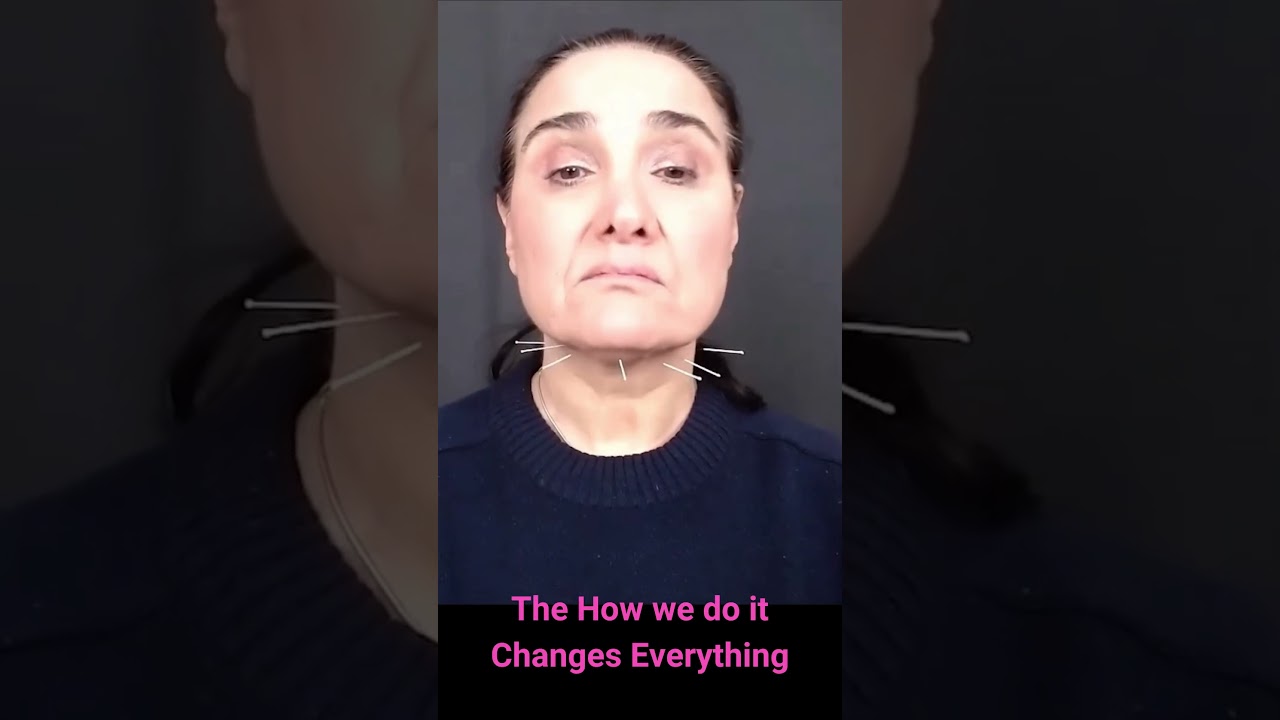

3 tips when using Thrive intradermal needles #acupuncture #cosmeticacupuncture

Proof of concept clients love it and you really won’t learn this anywhere else 😁#acuregen

Reaction Video about Long Needles in Eye Area! #cosmeticacupuncture #amandashayle-reacts, #acuregen