Tips for Success with Intradermals and Acupuncture!
A cosmetic acupuncturist shares 20 years developing the Thrive intradermal needle, a 3mm/6mm design for painless placement in wrinkles, scars, and skin conditions. She demonstrates insertion technique, contrasts her needles with traditional Korean hand needles, and outlines a 30-hour training program with video, business modules, and weekly support.
Chapters
So I'm going to share something very special with you tonight, something that I tend to just show my students, but I felt it was time to celebrate the launch of really 3 years' work and previously 20 years of development and I thought it would be a good way to celebrate. So I'm going to be explaining to you the best way to use intradermal needles, and that's not just the ones that I've developed, but it's intradermal needles in general. I'm going to take you through a few steps of how I developed them, but I really want to kind of share with you how I got here because Really, this has been my years of experience, and I'm going to be sharing a lot of this with you now. So before I open up— what, I have a PowerPoint to open— but before I open that, I just want to say to you that when I was in my 40s, I looked at myself in the mirror while I was at the hairdresser having some color put in and realized I looked old. And I thought, oh my goodness, this— got to do something about this. I was having— I was in the middle of my acupuncture studies at that time and I began exploring based on what I've been taught in class, what could I do to help myself. And 20 years ago, cosmetic acupuncture was pretty well unknown. And what I discovered, there were a few other people doing it out there and everyone was using the same materials, what we were learning to use in class, long needles. And then there were these intradermal needles and they, they really were a bit of a nightmare for me. I felt that they were fiddly, I kept losing them, they took too long and here's where my Joynt journey started. So I'm going to share something with you, this board, this thing here is one of, it's my original, this is 20 years old, this is my original needle research board, and no one's seen this because I haven't shown it to anybody since I stopped teaching face-to-face only, since my online course started. It's not really been something I've needed to use, but on this board are all the different needles of the time. There's the Korean hand needles, there's the old intradermals. I think this brand was called Vinco. I don't think they're around anymore. You've got Searans up here, there was the Balance needles, and the problem was that nothing that was being used by everybody else seemed to be good enough for what I wanted to do. And what made it even more difficult was that when I was teaching, because people were unfamiliar with these teeny little fragile intradermal needles, they kept dropping them, losing them in people's faces, and, and it was actually quite scary. So I really needed to do something about it, and, and this is the beginning of how I developed my Thrive intradermal needle. So everything that I now use is based on what, what works, what works and makes my work more quick, because time is money in a clinic, and also in terms of the comfort of the patient, what makes it more comfortable for them, because Actually, if a patient's coming to you and they're in pain, they're probably not going to come back. And I'm sure there are people in the market who are actually watching, um, watching now thinking about having an acupuncture treatment. And I think it's really good for them to know that we really care. What I need to say to you is this, that everything I'm going to show you I have tried and tested with students in my clinic And everything that I show— I'm going to show you really does have substance and it works. Actually, as I was producing this, there were more than 5 secrets, so you're going to get more than you bargained for tonight. But why am I doing this? I really do feel the profession needs to wake up and realize that actually using the stuff that's been going for years isn't necessarily the best way of delivering a cosmetic facial acupuncture treatment. Treatment, not just for yourself but for your clients as well. So let's continue. I just want to quickly take you through a little bit of the history of an intradermal needle, because that's the thing I believe is the secret to our work— not the long needles, not at all. So intradermals have been used for thousands of years, um, mostly in Japan. But they've emerged more recently in, in more different uses. So you've got things like press tacks, which are used on the ears and on the body. They're used by athletes to enhance performance, would you believe? And we have this new emerging science of transdermal drug delivery, and that's important. You're going to look at— we're going to look at this in a bit in a minute because there are growing evidence base that you have a much more powerful influence by working cutaneously, just under the skin. And the Japanese kind of understood that, and you have some very gentle techniques which definitely have a more global effect on the body, as you will see. So we know that, uh, cosmetic acupuncture has been used, uh, a lot in, in history as well, probably more for complexion and to give people a brighter, lighter look. And we know as practitioners— and the public are watching— we know that by working inside, our health reflects our skin outside. So if your skin is looking really tired and wrinkled, it could be from exterior photo damage, for example, from the sun. But a lot of the dry skin conditions and dehydration are coming from your internal health. So in, in cosmetic acupuncture, we work at two levels. We work inside the body and we work on the outside where, you know, we'll deal with the special concerns that you have. So I developed my Thrive intradermal needles in about 2013. They now carry a British patent. They're becoming an industry standard in the cosmetic facial acupuncture industry. They're used all over the world. I'm so excited. Um, but they not only work as we were using traditional intradermals primarily for wrinkles and superficial work, they also facilitate, as I've said here, other applications of treatment and allow integration with other modalities, which probably wasn't possible. And I'm going to do a little demo so you can see what I'm talking about. So my secret number one came out of a lecture that I attended in Rothenburg back in Germany in 2012, and indeed from research papers which you're going to see now as well, that when we stimulate the skin, we stimulate the brain as well. And what Stephen Brown said in a very interesting delivery at that time was that the deeper you go, you actually only stimulate the local area. Interesting. Let's look into this a bit more. So the reason I'm so passionate about really superficial needling on all my work actually is that we don't actually just want to regulate the local points, we want to regulate the whole body. I've just explained we work on the inside and, and we work on the outside, but the skin, it's, it's part of our ectoderm. We have these embryonic tissue, mesoderm, endoderm, and ectoderm, and it has a direct loca— a direct connection with our brain. It's made from the same tissue type. So we have a paper here which I'm going to cite in a second which actually now proves— this was written in— when was this written? 2014, actually. The brain-skin connection, the connection between stress, inflammation, and skin aging. So it's very pertinent to the subject of cosmetic acupuncture and why we need to think about working at a more cutaneous level. So the Japanese, as I'd already said, understood right back in those days that, that the skin and working superficially had a global effect on the body. I've learned from a very amazing anatomist called Gil Headley that gentle work on fascia on the surface rather than deep tissue massage has a more integral effect on making changes there as well. And the Japanese also believed that lighter touch had a longer effect, and that's important because our clients want to know how long their treatment is going to last for. What I have to say at this point is when we do cosmetic acupuncture, it is a progressive change and an improvement. Rather, I use the analogy of growing a plant. We, we don't plant a seed today and get a tomato tomorrow. Everything we do in acupuncture has a progressive change, and this allows the body to grow and the new cells to come up and for us to respond better to the treatment over a period of minimum 6 weeks. But if we work lighter and more superficial, there's evidence to say that the effects will last longer. And I even have cases of one example of a psoriasis patient whose condition continued to improve even though she no longer came to me because life got in the way and I'd actually dealt with some of her more acute pain and problems. So in terms of the modern use of a very cutaneous or subcutaneous type of treatment, they're now exploring microneedling. We all know about the Derma Roller, that's a brand, but microneedling using multiple needles with patches which can transfer drugs directly into the body without having to injure the tissue itself. So people who are thinking about having threading or, or these thread lifts, the truth of the matter is if you went for plastic surgery and you've had chronic thread lifting the plastic surgeon won't touch you because you've damaged all the substrate below your skin. And I have felt this myself where people have actually— it becomes traumatized and you actually get your network of tissue, it's a bit like a cobweb, it becomes scar tissue. So it's really worth considering that we want to be gentle and we want to work very superficially So this is the paper, it was published, as I said, in 2014, and really what it says is that stress on the inside reflects on the outside, and stress on the outside reflects on the inside. So we know that our skin is highly sensitive, it's our barrier between the outside and the inside, and it informs us if we're about to touch something hot or if, if they're— it's our barrier to protecting us. It also, under the skin as well, forms an important part of our immune system and our abilities, for example, control temperature and adjust to the external stresses that we're exposed to. And it really doesn't want to be damaged. So again, we don't want to damage the skin because it's there to protect us. We don't want to break it, slough it off with heavy laser resurfacing because because that's going to expose the skin to, to scarring and to other problems as well. So I will send the link out to this paper and it can be downloaded for free, but it's very interesting to know that even in research now we are understanding this relationship between inflammatory processes from stress, and one of the most important things we do in acupuncture is reduce stress. That helps us heal, and I have many citations on wound healing which is affected if the person is more stressed. And acupuncture has a great history of leaving our clients grounded, feeling relaxed, sleeping better, which improves the skin as well. Back to intradermals. So if we don't want to traumatize the skin, and if we don't want to stress our patients out, and if we don't want to work too deeply, Why do we do this? This drives me insane. I'm probably going to be politically incorrect here in terms of the professionals that are watching, and I'm sorry, but I never can understand why people put long needles and handles in like this. What does this mean to me? It means I can't integrate other therapies in my treatment. From a patient perspective, it looks very scary. And I was in class the other day and I said to the students who were showing me some work they'd done or where they'd learnt somewhere else. And I said, okay, let's have a look at the needle that's inserted. So if you look at these Korean hand needles, they're commonly used around here, but look how deep they've been inserted, hardly at all. And these are developed for hand acupuncture. They're actually not blunt, but they hurt. Why would I use those when I can insert a 3mm intradermal which is actually slightly thicker, sharper, doesn't hurt, doesn't hang out, fear of getting lost. I don't see the point. And with a handle like that, it's impossible to put a mask on top or lay a light therapy pad, which some of them need to lay straight on the skin. It limits your ability to give a more diverse treatment and Back to our plant again, if you think about the outside environment, we need lots of different information to stimulate the skin. Light therapy, which I introduced in 2013 as an integrative modality with acupuncture, light therapy should be polychromatic, meaning more than one color. That is because the skin gets bored if you stimulate the same way every time, the skin stops responding in the same way. So we want to enable ourselves to be able to add skincare or light therapy or magnetic therapy, anything to keep the skin stimulated and accepting. Because if you use this one color light day in, day out, the skin won't respond anymore. And when I was at Imperial College as a guest of their undergraduate biology department, we were experimenting on cockroaches and we saw that after 15 minutes they stopped responding to the stimulation we were giving them. So I am telling you this based on, again, evidence base, which I really believe firmly in. So I'm going to talk to you now about how we correctly insert an intradermal. This is another of my hates. They're not supposed to be inserted in a perpendicular format. Once again, you can't lay anything on, and they— there's a risk of them falling out. It's good. I see some erythema. This is an acute inflammatory response to a needle going in. This is going to bring in new collagen induction and a healing response because that's what the needles do. But traditionally, the Japanese acupuncture needles were for retention. That's why they're so fine and you can't feel them, see them, and they're very fiddly to use. Maybe one or two would be put in different parts of the body, but they were never designed for this. And again, that's why I designed something that would work more easily in this respect. And, and you'll— I'll explain how the difference is later on. So I'm going to draw on here first of all how they should be inserted. As I say, they were designed to be retained rather than to be kept in, in other words they'd be sent home with them rather than being used in a treatment. So what you would have, you'd have the coil needle here, I hope you can see this, and then it would go slightly under the skin subcutaneously or subcutaneously, so it's just under the skin, and then they would put a sticky plaster on top so that they wouldn't get lost, and they were used on acupuncture points particularly, and that's how they were supposed to be used. And I have to say that when we're working in wrinkles and lines or working with any kind of scarring, this transverse, as we call it in the profession, approach is a much more effective way. You're covering more ground, for one thing, and you're also pushing through the scar tissue in into an area which perhaps hasn't been depleted and encouraging new cell growth, which will happen more quickly if you do it that way. When people needle into wrinkles this way, I always talk to them and say it's a bit like needling into the dead zone. It's going to take a lot longer for the dead, um, depleted cells to regenerate. Why not work where we have healthier cells? Because We are made of water, I think 88%, and water goes everywhere, so these cells will migrate into the caved-in area, so we get a quicker response if we work this way. So just to summarize, you're working more safely, they're locked into the skin, you're able to work very— they're only going to be 6 millimeters long or 3 millimeters long, but you're, you're not going to risk losing them and they have a better effect. So I'm going to undo this and move to the next slide. In fact, I'm going to talk about this slide and then I'm going to do a quick demo of what I've just explained. Right, so intradermals can be used in deep areas where movement has created deep lines, and those fix. It's a form of scar tissue, and, and quoting Gil Headley, I refer to it as the fuzz. So if you're going for microneedling, you're literally going to skate over the top. The real problem is what's lying underneath, and the only way you can do that is by doing the transverse needling effect that I have just shown you. So you're going to work on the outside, you're going to go into the wrinkle and through it rather than just going down into it. And we, we have different ways of doing this, but these areas of atrophy here, we need to go into them, never surround them either. This is relatively pain-free because scar tissue doesn't really have any nerves. And if you don't work the way I show my students, actually you really don't get a very good effect. We also use something called the Hesqia, which I find on, say, very deep lines— I appreciate she's making a movement here, but if these are present at rest, we need to release those before we actually start to needle as well. And all of this I show in my training. I teach on the online course how, or rather what to do and why I do it, but in class this is where we actually get to actually do it and learn the real how. It is about the technique, but I'm just giving you an idea of why I wouldn't surround the wrinkle. And really these fine needles, I find them too fine to actually have an effect as well. So here we are, this is my mini studio, and I've actually got here some of the normal intradermal needles. So let's have a look. So here they are, they're very— you can't really see them very well, they're very, very fine, and I'm going to insert one into— oops, that's gone into her ear— into the skin here. So what you do, you have a very fine needle. I'll see if I can bring the camera a little bit closer. There you are. And it's designed— it's so thin, it's designed— I can't even feel it with my finger— to disappear. And that's the sort of thing you'll cover up. So if I'm working on a patient and I'm going to try and deal with wrinkles, It's literally going to take me all day to do this. Let me just try and get it back into focus. Sorry, I'm not using— this is my needle here. Okay, so if I change, I'll bring— I'll close up in a minute. I'm going to put in a Thrive Intradermal needle next to it now. So the Thrive Intradermal needle is not designed to lay completely flat. It's impossible. Let me try and lay that one a little bit flatter. You do have to consider the contours of the face. The face is a very interesting landscape. Let's put it right down there. There we are. It will pop up. Now this is silicone, so it doesn't help us, but let's try and do it one more time. There we go. But what it can do, you can actually feel it under there, if you can see it. And if you're doing a row of wrinkles, what this actually allows me to do is to pick up the needle without touching the skin, whereas here I have to go right underneath it. And when we take a row of needles out, if we're releasing a scar, which is what an old wrinkle is, it's a form of scar, fibrotic tissue, you're going to get some residual bleeding. That's quite normal. And you can contaminate your tweezers. So what we want to be able to do is find them, see them, and be able to insert them more easily. Now I'm working with one hand because I'm Zooming, but we do like to have two hands on the face, and I will talk more about the different needles shortly, but that's the significant difference. These are almost impossible to see, and quite commonly they're like they're used within the eye area, and that was always my area of concern. I'm going to come out of here. So I hope that you can see directly the difference between the two needles. So I stopped using traditional intradermals as soon as I could, quite honestly. I'm going to share screen again. Okay, so what, what we are trying to do is, is provide a less invasive treatment but get a maximum effect at the same time. So we're going to have a look at wrinkle reduction now. This is my secret number 2, the correct way of doing a wrinkle. So wrinkles are formed 3 ways. They're either formed from repetitive movement, when you're going to get a very poor elephant— I don't mean elephant, but a deeper line. How do I know it's repetitive movement? Because when I stretch the line, it's not going to— it's still there. So it's there at rest, and when I stretch the skin, it's still there, and I can often feel it with my, my finger. Dehydrated skin, on the other hand, it's sort of a bit like this. It's much finer. The lines are more easily dealt with by a sprinkle of needles and probably a nice hydrating mask afterwards. And photo damage links more into the dehydration and damage caused by an exterior source than it would from movement. Of course, you can get folds because the skin has sagged, or people sleep on their side and get fixed lines from, from repetitive behavioral areas. But in the case of dehydrated and photo damage, anyone thinking of having Botox are wasting their time. Repetitive movement is the thing that Botox would be used for. But is it going to get rid of the residual lines that are left? Mostly, except now in the aesthetics market, you can't just use one modality. You need to combine it with other resurfacing modalities to improve the skin as well. So here's an example of more of a fixed line, it's still a fine line though, this could very well fade away. On younger skin it hasn't had time to form and there's more fat and healthy reception of the skin to healing and changing. As we get older those mechanisms fail a little bit and that's very much dehydrated skin rather like you just saw on the elephant, And indeed, if it's flaking, as you'll see here, that's a sign of a longer-term chronic condition which would require a professional acupuncturist to address those from our traditional methods as well. So that would be a case of definitely needing to work on the inside out as opposed to here. But even here, she's got irregularities in her skin, hasn't she or he, I don't know who it is. So we don't want to thread the needles. All the research shows that we want multiple punches. These are my Thrive needles. You can see they're in a little row. These are going straight. We can do it that way. I've changed it slightly now. And this is what— when I mentioned the bleeding, you see a little bit of bleeding. You might get that. You're going to get chronic inflammation anyway, which is a good thing. That's the erythema. You can see, may get a little bit of plumping up and swelling under the wrinkle, which is great. And this is about 20 minutes later. You can see that we have completely changed how those wrinkles looked because it takes time for the skin to respond to these micro injuries, which are relatively pain-free. And if you use a really sharp little intradermal, that makes all the difference. I see many pictures of people who are using all these long-handled needles here, and what that actually does from a practitioner point of view, it makes it really difficult to work. And from a patient point of view, their needles are being touched and moved around, and people don't like that. And we don't thread, as I've said already, because the research says the more holes you make, the more response you get from the area. So just drawing again, I'm going to show you— so this is my secret number 2— how to actually do a wrinkle. And what traditionally was done, where people would needle straight down in here— actually, I'm just going to change to my arrows. So traditionally, people were needling straight down, and as I've already said, that's, as far as I'm concerned, the dead zone. What I want to do is work into the area where possibly there's scar tissue fixing the wrinkle in place, and also you've got much healthier tissue and cells which will respond and this is getting us a better result. This is a lot easier to do with my Thrive needles than it is with the flimsy coiled ones. And as you will see if you get some and try it for yourself— and I, you know, I ask people, try this out, you know, don't just take what I, what I'm saying— but what we've found in the clinic is we get a much better result. Obviously It's the speed of work that really works too. The patient wants you to get the treatment started, get the treatment finished for them to relax. They don't want to lie there for extra time while you fiddle around trying to put the needles in. The way it's going to look would be more like that, or you work along the wrinkle going into it like that. But we— this is like an aerial view. We don't see the value of doing that. So the thready thing, I suppose I'm threading through the, the wrinkle, but this doesn't work as effectively. I hope that helps you understand that. Secret number 4: the type of introduc— needle should directly reflect the skin and area you're working on. It's really important to think about about the kind of skin our face and this weird landscape of our face is. It's not like anywhere else on the body. We have nooks and crannies, thick and thin skin, and it's much more sensitive. Remember, our face, the skin on our face is particularly receptive to what's going on in our environment. In fact, we've got all of our sensory facilities there, our eyes, our nose, where it's our defense mechanism against Well, to keep us safe, isn't it? So when I sat in a pub and wrote, drew on the back of a beer mat, my dream of what I felt I needed for my intradermal, um, the, the, the Japanese steel, the ultra-sharp needle was part of that development really. And in fact, my steel one, my, um, I call it my Thrive Gentle, has silicon, it's siliconized, so it really slides into the skin, but the copper and gold are not. They are handle copper and gold, they are gold-plated, but the needle is a little bit thicker. And what that means— they're 0.18— what that means is that there is another way of how acupuncture works, this mechanical stimulation of the collagen fibers. So they're a little bit more stimulating, but they're so short and so fine the patient doesn't feel any discomfort. Interestingly enough, the longer needles are actually thinner and less disrupting and siliconized, so they're actually less stimulating as well. Also, the Thrive Needle will allow me to use magnetic stimulation, and we know that the hemoglobin in the blood, which contains iron, um, allows the, the magnetic field to attract to it. And this is a great way of doing micro myofascial release. By stimulating needles, and for the patient it tickles, it's a lovely feeling, and it's been trending all over Instagram actually. So these little tags are much more friendly for use with a magnet. If you try and use a magnet on the others, they come out and then you can't get them off the magnet. So have a go, but you'll see what I mean. So the 3mm are very, very short and we tend to use those on the really sensitive areas such as the forehead and around the eyes. They're 3 millimeters, that's at least longer in fact than what people are inserting the other needles that they're using, but they're perfect as well for tougher skin because when you have scar tissue, needles can bend or you're forcing them in and, and these really go in and you can control what you're doing more easily. I use the 6mm for more fleshy areas like the lower face, and that gives me enough depth to actually reach underneath to any deeper atrophic scars. And quite often I have to start with the 3s because the scar tissue needs to be relaxed, and then we release it using these needles. The 4mm is a nice middle way in terms of length. They're very, very fine, so if someone's really scared of needles, which which, you know, they shouldn't be because these don't look scary. They're very— they really don't hurt at all. They slide into most skin, but I don't recommend them on really tough scar tissue, which, let's be honest, you wouldn't feel them anyway. As I said already, scar tissue, you don't feel. There's no nerves in there. So my next secret, and possibly 6, 7, and 8, is Time saves money. Your client is busy, they don't want to be lying there longer than they want to, or if they are, they want the treats, not the treatment. You want to get the treatment done more effectively, so you need materials which are going to enable you to work faster and smarter, work better, and that let you integrate other modalities as well. And the other really important tip is being organized. Because that's time using too. So first of all, let's have a look at what the— these Thrive Needles do. So you can see we can get lots of little needles all together really easily, and actually if you're clever you can pull them all out at the same time, so that saves money. You can use them with your fingers, not just with tweezers, and that's really useful around the eyes so you're not pulling out eyebrows. And you can control, particularly if a client flinches because they're feeling it a little bit more. I do have specific things I teach in terms of pain-free insertion, too much to share today, but using fingers is a game changer when you're working with an intradermal. The trays you'll see in a minute, they help me organize my work, stops me from having to unwrap needles in front of the clients, which takes takes ages with all the wrappers flying everywhere. Another thing these do, they allow reduced bruise risk. If they're only short, you're very unlikely to catch a capillary by accident, whereas with a long needle you could. So less pain, happy clients, not scared of what they're getting, think they look cool and trendy. And they work better. So particularly though is this multiple and close insertion. It really enables you to nail these little acne scars, for example, on the head very quickly. This is what the tray set I give my students looks like, and the reason I've done it this way is I've got a little Q-tip pot because that's quite significant for us. If we can't get our fingers in between wrinkles, we can use the Q-tip. We can control the skin with them. The little trays allow me to unpack my needles. I have a special sharps tray, which means I don't have the filthy dirty yellow bin next to my client's face. That's my magnet, a really nice easy-to-use tweezer, and the bowl I use for my cotton pads when I'm working, and it really is a whole different experience. I use this for all my treatments. I can't live without them now, and that's the feedback I get as well. So, um, if you're interested in any of those, we do sell those off of our website. They're all from the dental industry. They can be autoclaved, but the one tray that we use for sharps is the square one. Everything else is clean. And can be washed. If you want to autoclave that, you can, but we never put dirty needles anywhere but in the sharps tray. I think it's worth looking at the practitioner perspective and then the patient perspective. This is what we're doing, is just stimulating this pigmentation mark by reducing spiraling of magnet. You see the needles are moving. So what's kind of cool is that the actual needles don't need to be touched and you can do a domino effect, so it's kind of cool to watch, but they tickle and if you've got pigmentation we go into it, but what you want to do is actually work so that you can stimulate them without hurting anybody and all of these additional elements make a difference to the outcome that you're going to get. So patients prefer this to a long needle. We do use some long needles because we're changing the way where we're training the skin to tighten, and we're making some other changes in the fascia. But most of the time, whatever you're doing with a long needle, you can easily do with the intradermal. And this— these are the gold ones because maybe it was the first treatment, and we want to get the client more used to what we're doing. And again, because of all the arteries and blood vessels here, this is a great way of avoiding having bruises. And bruises are something that can happen. We want to avoid that as much as possible. So to give you an idea of what this all looks like, so we've got some wrinkle treatments going on and the 11s. You can see the zigzag effect that I've used here. They're not designed to lay flat, but they're flat enough for me to put things on top. I can use them on acupuncture points around the eyes. They're not hanging over the eyes, which I, I would find quite disconcerting. And this is the work of Sarah Bradon, one of my amazing students, where she has used them to create a tightening effect And this could easily have been done with long needles. It wasn't necessary. We can use it to plump up the mouth area. We can use it to tighten the throat and the neck, which was my big concern back in those days. And I'm— it's 20 years on and my neck's actually better now than it was then. This is what the pigmentation treatment would look like. And this is the result of using my needles on a woman in her 70s after 3 months of treatment. And, uh, it really is very powerful. We lit— this is literally one of my patients. She had photo damage and a lot of sagging, and that is how she looked after 3 months. We can use the intradermals where people are very sensitive, so we can use them on TMJ to relax the area around it. We may need still to use longer needles to reach in into the masseter, but it's a great way of actually helping a nervous patient who doesn't want to have too many scary needles used on them. We can use it on the tummy. I was amazed at the result from this one where literally on the same day we had a change, and when she came in the next day it was still fantastic. Using a mask as well, this is using the Intradermal in atrophic acne scarring. And yes, with hypertrophy, meaning bumps or acne cysts, you would still want to surround, but you don't need the long handles. You really don't. And I don't know why everyone continues to do that. I don't know. I'm just saying I have intradermal needles on acupuncture points on the foot here, and I'm able to use a pad directly on the skin. Some of the light therapy systems now are domed, so it's not such an issue anymore. But again, light therapy can be integrated and you can put the needles in and the mask directly on top, provided you don't have long handles. So you're planting the seed, nourishing the field, and, and giving it light, and then giving it food and helping that skin really make those changes much more quickly. How long does the treatment take to work? I always say allow a 3-month period because the skin cycles and the turnover of skin will allow the skin to recover and the new cells to come in. You should begin to start seeing an amazing result after 6 sessions, if not before. And my students know that there are certain things we're going to see after the first treatment, and one of those absolutely is a more fresh-looking skin, um, hydrated, whether you use the mask or not, because we work on the body to actually nourish a lot of fluids and things and encourage better function of the body to nourish the skin and get rid of some of that dryness as well. You can use the needles also on the ear. I actually did treat Terry Olsen's ear with intradermals, and if you notice how red the ear is, she's responded very well. I mean, there was an amount of things going on there with this particular patient, but that's a long needle. I would still use longer needles inside the concha area on the ear, but on the lobe where the skin can be really tough and plastic handles are really heavy so they hang, it means you've got to push them in more and that can be uncomfortable or the needle will bend. You can quite easily get the same effect using an intradermal on the ear, but the course that I've developed. It's taken me 3 years to really crack the online teaching, and I'm so proud to be announcing that I have now finished the final cut in its full glory. So this is a 30-hour course, part of my program of blended learning. I don't believe you can learn acupuncture online, but what you can do is learn about what we do and why. And see demonstrations and have an idea of how everything works before coming into my clinic. What I found is that now people come in, I don't have to explain the basics, we can get more advanced together, and the outcomes— people are much more confident with their skills, they're becoming masters of those skills reflected in their clinics. And also what it means through the online support I give every week, live like this, we are now going to be focusing on building their businesses, and that is included in a module down here. Let's have a look. So part one, we're talking about all the causes of aging and how you would integrate with other modalities in the real beauty industry. That's what our patients expect us to understand, how we create balance on the body to work inside out. How we work on the outside in through the protocols of the face. We're working on the ears, we're dealing with pain support, we can actually support other things going on with our patients through the ear acupuncture as well. After all, the ear is connected to our face neurologically and through the tissue as well. I take you through materials microneedling methods, there's video footage of treatments, I explain the skincare, fascia, my passion, how things work, detail about all the special concerns. This was not possible on a 4-day course and what's beautiful is you can come back and watch these videos again and again and again. In Chinese medicine, and I'm not and it pretty much applies to everything, you learn one thing, you should study it a thousand times. These videos are meant to be watched more than once. And people say to me after they've trained with me in the clinic, they come back and see new things as they reflect and revise and watch the videos again. Part 2, which I'm now revealing, this has all the ins and outs of why I integrate acupuncture with other modalities. I've given you a taste of it, not least because the patient gets a better result, but it gives you the flexibility if they don't want needles or can't have needles to use something else and understand why and how. So we've got the Gua Sha versus the Hesqir. I, I compare and contrast so you can make your own decisions, um, because Gua Sha really wasn't supposed to be made for the face either. The techniques have been adapted, but the Heskies method allows for you to have much more fascia release and work on those little scars and sculpt, because I'm all about sculpture of the face as well. I go into great detail about light therapy. I explain about tuning forks. I give you a whole idea about how cupping works and how I use it. And all the other things I've used or played with or experimented over the years. And this is an ongoing process. So here I'm sharing with you 20 years of my work all in one 30-hour course, and it has taken me 3 years to get this to a final cut level. The fun starts where I start talking about the different treatment scenarios, how I can organize a treatment and what's available, the Express treatment, the deluxe treatment, the maintenance treatment, setting up my clinic, the consultation process and discussing on how you're going to plan your treatment with your client, building trust, being organized and working to a goal. My case studies, things I, I've learned from my own experience has been explained here. Finish the business side. Anybody that's studying with me is doing it, I think, because they want this to be an important part of their acupuncture business. And I really do believe that people, if they really, really want to make a business and really want to become a master of what they do, this is the course that will deliver that final result for you. With all of this available for you to review again and again. And what's, I think, special is that I do go live every week. So now what's exciting is the students are coming and saying, 'This worked really well,' or, 'This didn't work well,' and we're helping them. We're looking at different scenarios together as a group online every Sunday night. And I keep— this is a gift to my students, and I have been doing this for 2 years, building up an incredible archive of different questions that have been asked. And why has it taken me so long to finish this course? Because I've been adapting this, so I'm answering as many questions in my final cut that— so that it's a complete, concise guide for you. So the price hasn't really changed since I launched this 2 years ago, and you really are getting not only the value of this course and what it will offer you in terms of ongoing reference. It's a book, a video book, but you also have access to me every week. So I actually say to people who are joining me when I interview them or chat to them online before, this is almost like a membership fee because you're not just getting a 30-hour course, which is value on its own, you're tapping into me as much as you need me moving forward. And that's how I believe we can produce Excellent practitioners.
More from Amanda
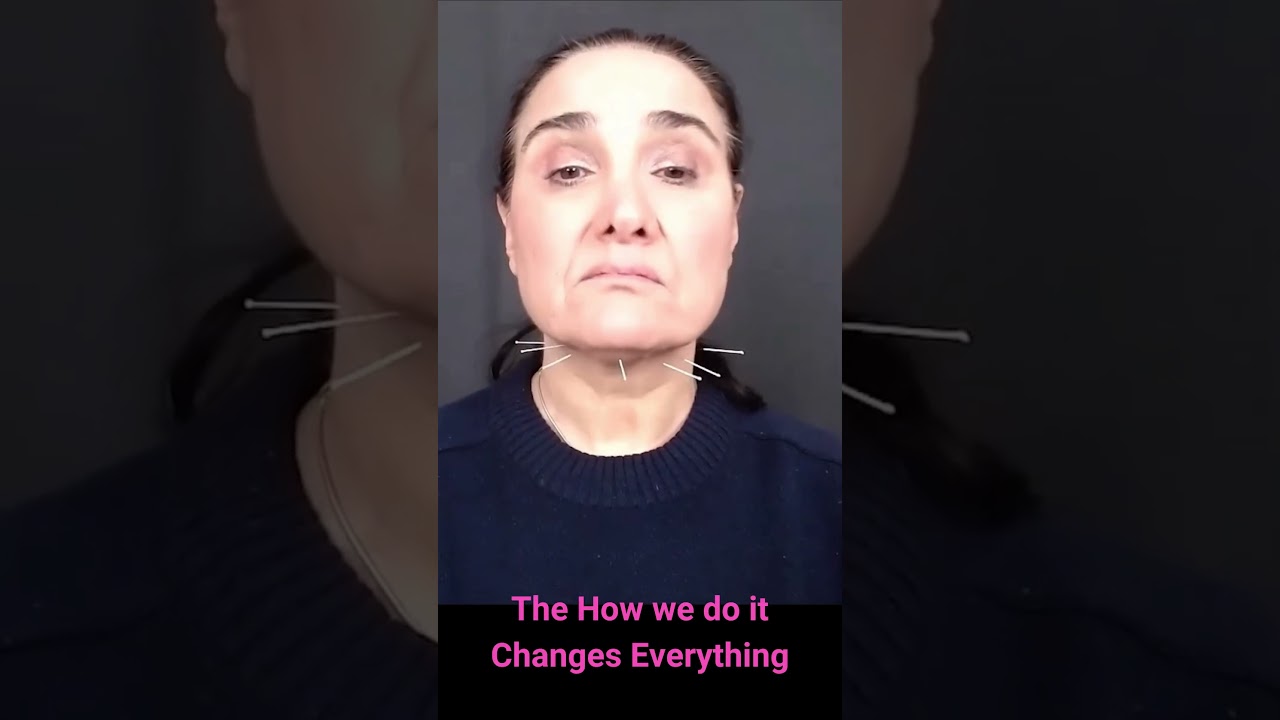

3 tips when using Thrive intradermal needles #acupuncture #cosmeticacupuncture

Proof of concept clients love it and you really won’t learn this anywhere else 😁#acuregen

Reaction Video about Long Needles in Eye Area! #cosmeticacupuncture #amandashayle-reacts, #acuregen