The Canadian-ED Leadership Show: Episode 13 with Amos Fodchuk
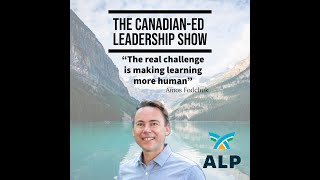
This is a transcript of Episode 13 of The Canadian-ED Leadership Show (hosted by Dean) featuring Amos Fodchuk (recorded June 12, 2023). The conversation explores Amos’s background as a Canadian–American education leader with wide international experience, and his view that leadership competencies are universal but play out differently depending on environmental constraints. Key themes: differences between Canadian and U.S. educational leadership cultures (risk tolerance vs. interconnected civic fabric), the role of Advanced Learning Partnerships in brokering long-term community–school relationships, examples of district partnerships and leader duos, the challenge of keeping learning human amid technological change (including AI), and a recruitment-oriented appeal for more people to serve as binding agents in communities. The interview closes with rapid-fire personal recommendations (book: Systems Convening; film: Everything Everywhere All at Once) and local recommendations (Saltbox restaurant in the Raleigh–Durham area; UFO landing pad in St. Paul, Alberta).
Chapters
If you pay attention over a five to ten year period, that the media cycles are beginning to look a lot more polarized across Canada, especially in certain provinces today.
Sure.
So to me, this, like, what I can control through, through the platform that I have as an education leader is the degree to which communities can build and nurture and strengthen the relationship that they have with their school systems. Which, if you think about it, Dean, you and I are of a certain age. Right. Like it used to be that the, the main street was a place of gathering. You know, we still have hockey arenas. Thank, thank, thank, thank God. Right. But then we also have malls that are in some type of metamorphosis. We have, you know, online communities and online commerce. And now, now generative AI. Right. Like all of these things that are, are consuming us and siloing us. So, like, the real challenge that I see in this work is making learning human and ensuring that schools remain hubs for their community.
So I was first introduced to Amos Fodchuk in the fall of 2019.
Mutual Friend of ours, Bob Dylan.
Reached out to me and said, hey, I work for this guy, Amos Fotchuk, and he's trying to grow his business in.
Canada. And I think you two would really hit it off. And he was right. We did. We started talking back at that point. And, you know, sometimes when you meet someone, you have this immediate synergy and connection. And Amos and I both share a very similar belief and philosophy around education and how we can support educators and leaders. And so that began a relationship that now is in its fourth year. And I'm very pleased to support colleagues here in Canada and also in the US and, and that's always been a fascination of mine, that comparison of Canadian and American culture and specifically education. It's something that I think.
Lots of people think about. I get asked a lot about because I've had lots of experience in both countries. And so I wanted to, I wanted to bring Amos on the show to hear his side of that conversation. And he's just got so much experience and knows so many wonderful people in education and has done a lot that he's just sort of that perfect person just to have that conversation. So if that's something that you're interested in, that you're curious about, again, I think you're going to enjoy this conversation with Amos. He's just a very, very smart, smart man and I always learn a lot from him. And again, this podcast is brought to you by Advanced Learning Partnerships, of which he is the founder and president of that. And I work under his mentorship, but it's a very, very collaborative effort, no doubt. And I would say, listen, I don't ask people to do this a lot, but like, if you're listening to this on Apple or Spotify or whatever, like, if you click subscribe, that'd be really kind of cool to do. And again, if you're not familiar with subscribing, it doesn't mean you owe anything or, or have any obligation. It just means that when you open up that app, you'll have the latest episodes. And so I'm gonna attempt to continue on, maybe not quite at a weekly pace. I think probably moving to bi weekly, especially over the summer. But I have a number of really, really exciting guests coming up on the show that I'll be excited to share with you. So you don't want to miss them because I think, I don't know, I find these conversations really, really valuable. I think you will too, and I hope you enjoy today's conversation with Amos Vodchuk. So, Amos, the first thing I want to ask you is you're a die hard Edmonton Oiler fan living in Carolina Hurricane country who arguably have been more successful than the Oilers over the years. I. I still don't quite understand if and how you have any allegiance to the Carolina Hurricanes.
I don't. That's pure and simple. I go to the games so I can.
Sit in the same hallowed hall in which my heart was torn from its chest in 2006. It's a form of returning to the scene of the crime.
So were you.
There's a hockey game going on. Yes. I took what I. My best friends. Yeah. Yeah. So my best friend and I, Mark Otter, who lives like 0.8 miles, and.
I met him last week. That's kind of cool. That. That guy.
Yes.
Who's a Boston Bruins fan, by the way, which is odd.
Yeah, it is Art. Mark's odd. There's no. Don't try to apply logic to emotion. And so he was getting married and my wedding present to Mark was two tickets to the Carolina Hurricanes versus Edmonton Oilers, Game five, Stanley cup final. Fernando Pisani, overtime winner. It was an amazing game. We were, we were going to do the whole tailgating thing, which for those of you who have never been to a Carolina Hurricanes game, first of all, you need to understand that there are real passionate hockey fans in Carolina. It is amazing to go to these games. These folks are as energetic as anywhere I've ever seen. But the long and short of it is the rituals that they have before the game are amazing. You can go six hours before. And parts of the parking lot look like little urban, thriving metropolises with smoked meats and street hockey and cornhole and all the things. So we were going to do that. It just poured. So we didn't get to do the tailgating, but we did get to celebrate an Oilers win, which, in the annals of history means nothing because we lost.
Right. Right. Yeah. I actually just recently heard Ryan Smith talking about, because somebody asked him, like, you never won a Stanley cup and, but you got super, super close. Was it better to be close in the end or was it like, I wish it was too heartbreaking. And I mean, now maybe in hindsight, as, as a retired nha, he said, no, I mean, it was, it was an amazing run. And, and, and I wouldn't trade it. I obviously wish we would have won. But, but anyway, that, I mean, I just find it. And, and, and that as, as you compare not only your, you know, the sort of juxtaposition between being a Canadian and a Canadian hockey fan and Americans and American hockey, I wanted to talk to you today a little bit about sort of those differences. I'm fascinated between the differences and similarities between these two countries that you and I both serve and work in, have worked in over the years. And, and, and people always ask me, especially, you know, both in both countries, how is American education different from Canadian education? And I have my own little spiel and thoughts, which, I mean, I, I preface by saying I, I, this is what I think. And I, but I'm curious for you, who is, who is a dual citizen who was educated From K to 20 in, in Canada, but has been, you know, working and living in the US and, and that. So let's just talk maybe specifically about leadership, since this is the third theme of this podcast. Like, what, what do you see as sort of similarities and more interestingly, the differences in leadership, in educational leaderships in Canada and the U.S. yeah, well, that's a cool question.
Well, so, yes, I've spent just about half of my life living in Canada as a Canadian and half my life living in the United States as a dual citizen, a Canadian and an American. I earned my citizenship in 2013, and I've, I've come to love the United States in deep and complementary ways to the way that I continue to love my home, which I still consider to be Canada. And so when it relates to leadership, I'd extend that, that lens out globally because I've also, I've also worked as an education leader in China In South Korea.
I was a learner for a year in France. And I've traveled to 37 or 38 different countries in my life. And so when it comes to leadership, I think it's much more of a universal competency than it is anything regional or a nationalist. At the end of the day, a leader carries certain behaviors, knowledge, skills, and the accumulation of those, those elements is what generates experience. And so I think something that is universal between Canada and the U.S. is, is a commitment to service. Right. We are educators. I've been in education as an educator for 25 years and I've had different roles over that span. I would consider myself to be an educational leader, just like so many others I have the privilege to work with. And there are very, very few differentiating characteristics between a Canadian and an American leader when they're in a position to exercise their experience and their skill. There are some fundamental differences when constraints arise and restrict leaders from being able to practice their accumulated experience. And I find that the constraints in the United States are different than the constraints in Canada sometimes. So we can speak to those constraints a little bit if you like, But I don't see leadership as being inherently Canadian or American. It's more around the environmental conditions.
Exactly. Yeah. I don't think that probably wasn't the greatest question, but I think that's what I was getting to is more like what are the cultural difference and systemic constraints, if you will, that impact leadership and force or guide them to do things differently. I guess that's, that's maybe the better way of framing that. I.
Well, so I think it's predominantly environmental and it speaks to the rationale for why Advanced Learning Partnerships. This firm that you and I serve through and to communities all across the United States and Canada, like the strategy for having a Canada based ALP and a US based ALP is really grounded on and around the acknowledgment that environmental conditions for K12 systems and post secondary slash, you know, higher education institutions operate under slightly different parameters that have like larger scale implications over time. Right. And so the.
The advantage that I see in the United States is that many school systems and school boards are hardwired to take risks, to be innovative, to mobilize resources and accelerate. Now that has a tremendous downside, but there is less of a risk averse mindset in American leadership circles.
In Canada there is this incredible and beautiful strength which is a much closer and much more intertwined.
Fabric between public school systems, local policing, civic and governance at the municipal level, healthcare, like the true Components of a full community are more stable and are more interconnected. So the whole rationale for having ALP Canada and ALP USA is to broker connections that help unlock some of the barriers that can happen when a community has more to lose by being innovative and also has more to learn by understanding the intrinsic connections between a school system and its surrounding kind of host community. And so to me, those are the environmental differences and then leadership plays out inside those spheres. And to me, to me, one of the most powerful and rewarding parts of my educational leadership role and that of my colleagues is that we get to broker connections over multiple years and when the conditions are right, pairing and unifying multiple communities that have complementary strengths, it's like the purest form of working ourselves out of a job.
Yeah, I mean, I think, yeah. What you were addressing and referencing makes me think about, you know, as broadly speaking as two different countries with two very different histories.
That impact who we are and how we operate in so many ways. And that idea of being less risk averse to me is predicated on a couple things. Perhaps. One is.
Is the, is just Americans sort of desire to achieve and accelerate as, as whether it's, you know, sort of from capitalism or however you frame it, but there's just more of a like, like achievement in that sense, is, is just a more part of that culture. But then the second part, which I always find super fascinating.
As, as, as humble as the reputation we have as Canadians. Oh, we're so humble and we're so this or that, whatever that that trope is, we are not humble when it comes to education because we've had a lot of accolades placed upon us from whether it's PISA scores or whomever that Canadian education is high. And sometimes we admittedly think, well, we're, we're better than Americans, which is so crazy crazy based on what we normally think of this. But, but I do think there's a real sense of pride which makes us more risk averse. Right. Because if we're doing things well, why would we change? And then conversely, in America, like the, the media and so forth has, has really been hard on education. Like it's the idea that education is broken and everything is bad. Like they're, they're fighting a very much more, a stronger PR campaign that often suggests that schools aren't as good as they could be. And so for that I think probably makes them say, okay, well how do we, how do we get people off our back and show them that we're actually doing good work? So I Don't know if that resonates with you at all around like that. The reasons why we are as we are.
You're gonna get me in trouble, Dean. I don't.
No, no, no.
Culture war, right? Like, no, but I'm, I'm just like. I'll speak as honestly to this question as I will to any others. Like coming back to traveling and having traveled to countries all over, all over the world. Like, I've learned over time and through experience and a lot of reflection that, that human beings at the, at the. At their essence are universally focused on looking after their families, looking after their communities, and doing the best they can to keep up with an increasingly complex world. So there's that. And then also just given that we work with hundreds and hundreds of communities at any given point in time, I am so aware of how each community and the relationship it has with its school system is authentic and it's unique and, and, and so the whole Canadian American thing, man, I, I understand it at its meta level. There are some, some, you know, some arguable differences. But, but some of the most competitive people I know and some of the most talented business leaders that I know are Canadian. And, and some of the most.
Purpose driven and agile and and visionary community leaders that I have the pleasure of serving alongside are working in American communities. And so I would just say that like, the more you get to know a community, the more you realize how universally connected it is to some, some unifying principles and, and the, the beautiful work lies in the nuance. And so I don't know what the fundamental differences are between Canada and the U.S. you're right that politically the pendulum has swung in the United States toward a more self destructive mindset as it relates to media. But if, if you pay attention over a five to ten year period that the media cycles are beginning to look a lot more polarized across Canada, especially in certain provinces today.
Sure.
So to me, this, like what I can control through the platform that I have as an education leader is the degree to which communities can build and nurture and strengthen the relationship that they have with their school systems. Which if you think about it, Dean, you and I are of a certain age, right. Like it used to be that the main street was a place of gathering. You know, we still have hockey arenas. Thank, thank Gord. Right. But then we also have malls that are in some type of metamorphosis. We have, you know, online communities and online commerce. And now, now generative AI. Right. Like all of these things that are, that are consuming us and siloing us. So like the real challenge that I see in this work is making learning human and ensuring that schools remain hubs for their community.
Well, and again, I think it's, it's just a problem with humanity is, is we tend to emphasize how different we are when in reality, I think what you're, what you speak and I think we both know is like people are people and they're all trying to do the same thing. And there's really way, way more similarities than there are differences. And I mean again, it's, it's, for me it's just like fun to explore some of the differences. But at the same time when it comes to the real work is like wait late. We have way more in common than we do. So the opportunity, as you pointed out, to work together and learn with from each other is so great. And largely I think that's, that's the challenge that educate. It's largely untapped. Like we just don't do enough of that cross, you know, district cross country collaboration. And again, you and I are the beneficiaries of working with so many different people and knowing so many really cool people and saying these people need to talk, these people need to work together because they can build each other. But thinking about, I wonder if you could share some examples of like specific ways that you feel really proud of ALP and the work they've done to.
Help leaders specifically help leaders. Like what are some of the things that you think of when you think of, oh, I'm really proud of the way we help whether it's a district or whatever community specifically and help them move forward.
Yeah. Well, I started my career as a teacher and I loved every single day of the 10 years that I spent in the high school classroom. I politely declined the invitation to become an administrator because I just love the intersection of learning at the classroom level between families and kids and schools. And the only reason I left is because I didn't have the political power to make a scaled impact beyond my classroom, my wing, my department, or even my school. And so I left the classroom 14 years ago.
I can't believe that it's already been that long, but I still feel like I have one of the most rewarding roles that any educator can have because we work with so many communities. Dean over multiple years like that, to me is what I'm most humbled by is the invitation to serve communities for two, four, six, eight, sometimes 10 plus years. And the reason why I think we, we earn that privilege isn't because we're good at sales. It's because we listen. It's because we accumulate talented people who bring diverse and specialized skills and experiences. And to me, every day that we earn an opportunity to work with a community is the beginning of what could be a really long and purposeful collaboration. So I think that by far is what I'm most proud of, that when I go to some of these communities, I'm invited to stay in the homes of leaders and their families because we've just gotten to know one another, we respect one another, and we're, we're in it for the right reasons. The same thing applies to the people that you and I consider colleagues and friends. It is amazing the people who have chosen to unite with us in service to this mission and vision that we hold. So by far, it is the people, it is the, the, the communities. And.
It just, it challenges us to continue to learn. It challenges us to.
Kind of review our own assumptions about where we are in terms of our own growth. And I just feel like I get to learn every day because of these long term partnerships that we earn every day.
Can you, can you give a specific, can you share an example of one of these partnerships? I know you've, you've shared a lot with me and I love listening to sort of on better understanding ALP's history and trajectory in some districts. So is there a district that you think about that has us? I mean, they all have maybe a special place in your heart, if you will, but I mean, what you describe is like, who are these people?
Oh my God, I can talk to you about the people. I can't. I mean, there are 50 communities that I could speak as passionately about.
I will tell you that just maybe this is recency bias, but I will tell you that some of the collaborations that I'm enjoying the most right now are.
Dr. Monica Merrick and Beth Rail out of Plymouth county schools in Michigan. These are exceptional leaders. And I very rarely, when people ask me like, who do I think is a good leader? I never give one name because leadership is not a solitary endeavor. And at best, you need a Han Solo to the Chewbacca, right? And I'm not saying that either of those ladies are exceedingly hairy, but I am saying that they are amazing leaders in the sense that Monica is superintendent, Beth Rail is Chief Academic Officer. They are unified around mission, around vision, and they, they work hard to earn trust across the entire breadth of their community. And, and they build systems. They build systems and they build systems that are human and they're the guardians of those systems and they build capacity in others. It is an honor, honor, honor to work with those ladies every day.
I would also say that Dr. Gina Keller and Dr. Pam Moran out of Virginia. Gina leads a non profit called the Commonwealth Learning Partnership. Pam has a long history alongside Gina as a superintendent and now as, as a national education leader through her own firm, but then also through a regional professional learning association called Vascal. It has been an honor to learn alongside those ladies over the last five years to scale professional learning and innovation initiatives across the Commonwealth of Virginia. I would also say that Jason Van Hoochlomb and Jake Bula out of Winchester County Schools do ferociously innovative and.
They do incredible work. Jason just earned a state award for his leadership role as a superintendent and the, the gentleman who introduced him paid him the highest compliment, which is no one cares more for the needs of every child in a community than Jason. And he is ferocious and he is unapologetic for advocating for the needs of all kids and through his actions and his deeds. And that to me is just a super quick snapshot of three leadership duos that I am, I am just such a huge fan of every day. And there's, there are a hundred more behind them.
Well, and I love, like, because I, to be honest with you, I've never, I never thought of that idea of the duos. Right. Like, because nobody. You're right. Like, it's never just one. So I love how you did that. I have, I, I've personally worked with three of the six people that you mentioned. And, and, and, and, and now I'm really wanting to know the other three more after you share that. Like, but having worked with Beth, the way I, you know, my, my interactions with her is, I would describe her. We, we used to have a term when I worked with Discovery called shipper. They ship. In other words, they get stuff done. And, and with Beth, it's like I've had her do a few things for me and it's like she ships and this is a busy woman too. Like, this is not somebody who just is, has all kinds of time. Like she's doing this full time job and then like she's can I do this? And she said I have this window and I can work on this weekend. I did. But she ships. And she ships really good work so that I can attest to. And then Pam and Gina who both are quote unquote, retired.
Yeah. Like the way in which they like the relentless vision for their state. Like, and just they're great at bringing the right people together and using their connections to say like these people need to be in this room together. These people, like they've just been. So. Yeah, I mean I, again, my interactions compared to yours are minimal. But, and I mean I, I knew Pam before Alp just because she had such a stellar reputation as a school leader. But yeah, that, that this is my takeaway from just this conversation already is this idea of the duos. Who's your duo? So like, I don't know that people can really. Yeah, like, and I mean, you know, it's not that people don't give that credit, but I mean it's, it's the kind of work that it's pretty tough to be a one man or a one woman show doing this work. So that's, that's awesome. So, last sort of serious question, if you will. Not that the others are serious, but.
How have you seen education leadership change over the years? Like what, what's, and, and what do you think the future is like? You know, you started this work 14 years ago and, and again. And I'm sure a lot of it hasn't changed. It's the same stuff, doesn't matter. But I don't know, maybe there's something that is different today than, than you saw 10 years ago or things you're thinking about the future that's maybe different.
Yeah, I mean, well, this is a soapbox. So I'll keep my answer very brief. I think the foremost challenge that every educational leader has, and I consider myself to be as much an educational leader today as I did when I was in my seventh year of being a classroom educator. Like there is no difference. The leadership is competency based. It is not driven by role. And, and so.
Without sounding overly dramatic.
Technological innovation is by far, and has been for a long time outpacing our capacity as a society to maintain a rich balance between culture, democratic guardrails, economic systems and global relationships. And I think that policy can only do so much and I think that policy is really important and we need to expect more from our elected leaders.
But I think that education more than ever and educational leadership more than ever, is a binding agent that is critical to keeping communities together around higher order outcomes. And, and so if anyone is thinking about education as a profession, whether they're in their teens, their 20s or their 50s, we need you, if you're willing to sign on, to be that binding agent and.
To be that magnetic force that can help people see the similarities they have and move together with heavy weight on their shoulders to create hubs and communities in between communities. So that, that to me is the greatest opportunity that I've seen in my career right now. There's more opportunities to be a true binding agent, to be a true magnetic force in education. So get over here. We need you. And you don't have to look like an educator to gain entrance. You have to ultimately strive to become an educator once you get here. But that there are more ways, Dean, of being an educational leader to being a magnetic force. If you're in service to the right ideas. Right. If you're focused on continuing to be that hub that the key pillars of a democratic society need.
You can call yourself anything you want. There are so many different ways of being able to serve now. And to me, that's what makes education the most exciting career destination that anyone can, can have if they really reflect on it.
Well, that's a great, a great pitch. And I know, you know, just from our internal conversations as we think about, you know, the impact that AI is having, will have. I mean, it's, it's complex. It's, it's, it's a lot. But at the same time, how do we, this is, how do we maintain the humanness of this, of this work? I mean, and people that, that do that, that figure out how to, how to make this a human endeavor and let the technology work for us, be supportive in the role. But overall.
It'S a people kind of. That's all it is. And you know, it's interesting, you know, as you say, that my mind goes to the fact that like all industries, like service industries, like anything that requires like FaceTime, people are having a harder and harder time finding people to fill these roles because so much of people's choices now are, oh, they want to work remotely, they want, they don't want to have to go in an office. And while there's, there's great advantages to that, education is, is by its nature is like, let's, let's be in a room together and learn and.
Relish in a community. And so leaders who sort of embrace, like, that's what we do. Like, we, we will, we will be the best at that experience and make it great for the, for the adults, for the kids, for everybody. That this is the place that I'm, you know, want to be at. Like, that to me is like, if you can get that, like you, you, you win, like you've done your job. But like, as you said, there's competing things that are making that more challenging today. Than it was certainly 20 years ago. Yeah, but that's, that's the work.
It is. And I love being in rooms with people. And I'm an extrovert. Not everybody is. But I also like the, to me, the power is in the connection. And once you've earned that connection, then using technology becomes an absolute force multiplier. But doing it before the connection or with too far a distance between the connection, it's just we're social beings, we need to be, we need to be together. And honestly, technology understands that and in some ways.
Exploits that if it's not checked properly. And that to me is part of the role we play too, in helping communities understand the purpose behind learning and how to use tools that accentuate it, not the other way around.
Well, and I just. Yesterday I was on a. Chatting with a teacher from Rochester, one of the, one of our projects we're working on with, calling them innovative accelerators. And she, she shared with me a video that they had created for this. They call it the Zone. And there was just a statement that one kid made in there. It was like, because these are kids that I think maybe school doesn't typically work for them, and so they're trying to create a, a little bit of an innovative environment for them to thrive. And, and this kid said, like, I now have to think about, like, I don't want to miss school because I want to make sure I'm, I, I get to. It's called the Zone. I want to be there. Like, it just was like, that's just so cool when a kid says, like, I don't have to go to school, but I want to, like, I want to be with these people. And I, and I just, you know, I told her afterwards, I said, like, you, like, that's, there's a measure there that, that just goes beyond so many metrics we have that says like, you have a kid who's just saying, I need to be in this place with these people. Like, what more do you want? Like, right. It was so. It was. Anyway, well, this has been awesome. And again, I always learn. Amos, we talk on a regular basis, so I always learn from you. I'm just glad I could share this with, with the broader community. But before we go, a couple, a couple of. Bit more rapid fire questions. So give me a book or a podcast that you're currently consuming.
Okay, well, the book that I'm consuming right now is right in front of me. I, I love podcasts, but I'll, I'll hold it up. Yeah, so this here is one of those. It's one of those little renegade books that I don't even know who it's published by. It's barely held together. My friend Mark that I already spoke to gave me this book, and I've. I should probably give it back to him because he gave it to me six months ago, but I've easily read it four times in that period. And it really just the. The name of the book is Systems Convening, a crucial form of leadership in the 21st century. And it's just like this pervasive. Like it's a little countercultural revolutionary.
Creed occur around how to. How to. How to not just activate communities, but to connect them and harness them and then get out of their way. So that's a book I'm loving. Recommend it if you can even get your hands on it. That's a beauty.
Oh, yeah, it looks like it might not be anyway. So can I expense it then if I find it?
Heck yes, you can. Absolutely. You'd love this book, Dean.
I think so. I think so. What about just for fun, a series or a movie that you recently watched? Like a Netflix series series that you're binging or binged recently. So.
So everywhere, everything, all at once. The Academy Award winner from last year, that has blown my mind, Katie and the kids. And I watched it a little while ago. I have not stopped thinking about it. Just the whole, like, existential, multi tiered universe concept mixed with just hilarious absurdism. I just love that crap.
And finally.
Like I said, I was just in Chapel Hill, saw lots of cool stuff there. It's a beautiful part of the country. But if visitors coming to St. Paul and they said, like, give me a place that if I googled it might not come up, but I probably should go there, visit. What do you recommend?
St. Paul. So. So I will. I will. I will give you a twofer. So if you.
So this is both. So it's Chapel Hill first, and then also St. Paul, Alberta. So you got to give me two places.
Okay, fine. So in Chapel Hill, Durham, Raleigh. So where I live is in this tri. They call it the Triangle. So.
There'S an amazing, amazing seafood restaurant, but it's a shack. It's called. It's called Salt Box. Ricky Moore is this amazing African American chef who's just lived, eaten and breathed seafood and, And. And just culinary culture. And he's a James Beard Michelin awarded, like, he is exceptional. That food is ridiculous. And you wouldn't. You drive past it like it was a gas station. But that place is amazing. So there's that.
I grew up in St. Paul, Alberta, not. Not Minneapolis, Minnesota, which is a small community in rural Alberta. I mean.
The UFO landing pad on Main street, it's been beaten to death. But if you want to come to St. Paul, you're going to see the world's only UFO landing pad. In the 80s, the St. Paul mayor got more money from someone to build a tourist office that is in the shape of a UFO, so. So if you want kitsch, come on to St. Paul. You got it.
Love it. Well, I definitely will put the seafood place on my list of next things to visit next time I'm in. In your part of the world. So, anyway, hey, thank you for. Thank you for this. This was awesome. I've been wanting to have you on, but this is when it worked out, and so I'm glad. And I learned from it. So if anybody else learns, that's just bonus. But I already learned, so I'm good.
We had fun. That's all that matters.
All right, thank you. Take care.
Be good.