#286 Andrew Piper: Data Science, Reading, And Literary Criticism
Andrew Piper, a McGill professor, explains how data science reveals patterns in literature: fiction uses more sensory language and pronouns than other genres, and computational methods can expose biases like gender imbalance in character representation. He argues that close reading and data-driven criticism complement each other.
Chapters
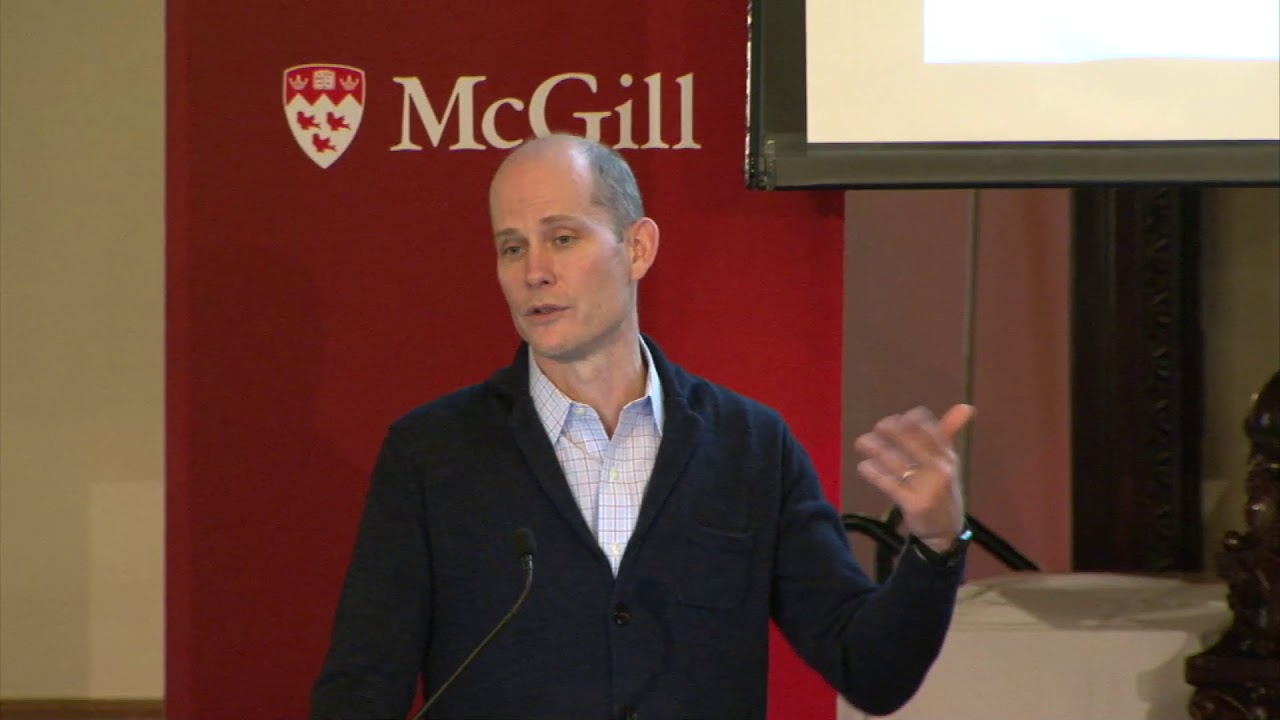
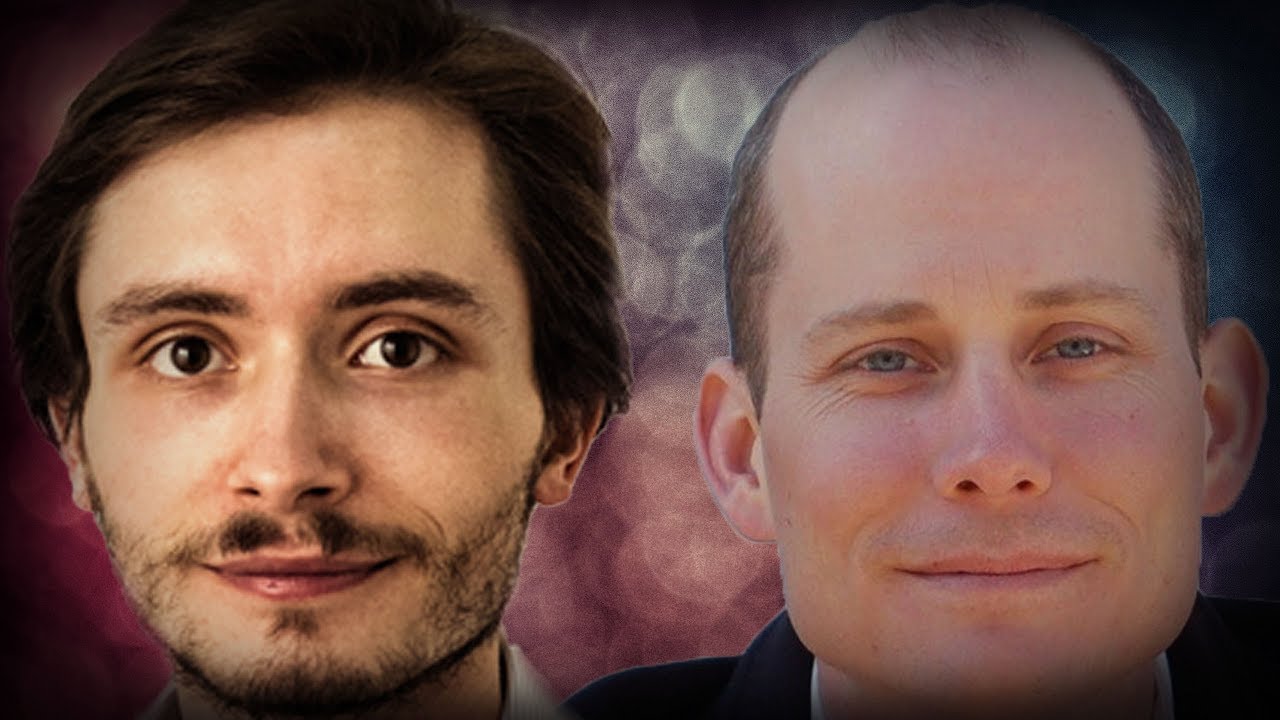
Hello everybody, welcome to a new episode of The Dissenter. I'm your host Ricardo Lopes, and today I'm joined by Dr. Andrew Piper. He is professor in the Department of Languages, Literatures, and Cultures at McGill University. He directs .txt Lab, a laboratory for cultural analytics at McGill, and is also an editor of the Journal of Cultural Analytics. His work focuses on applying the tools and techniques of data science to the study of literature and culture, with a particular emphasis on questions of cultural equality. He's the author of books like Dreaming in Books: The Making of the Bibliographic Imagination in the Romantic Age and Enumerations: Data and Literary Study. So, Dr. Piper, thank you a lot for taking the time to come on the show.
Thank you.
No problem, happy to be here.
Okay, great. So, I mean, by reading your books, one of the things that I got from them that I really didn't thought before was the fact that how people created, how they read, how they created literature, how they read, and so on and so forth, changed a lot with the advent of the Industrial Revolution, right, and the industrialization of books and the massification of book reading. So could you tell us a little bit about that, about the impact that the Industrial Revolution had on book production and reading?
Sure. Yes, that's the, that's the time period that I, my initial research focused on, and it's important to situate it within I mean, what I always try and do is situate these questions within longer historical timelines. That is to say, the revolutions and upheavals that we see in the 19th century, in the late 18th century, that I focused on initially, are part of a series of waves of transitions that reading and readers have undergone for now thousands of years. And each of those transitions has a lot to do with the materials and technologies that readers have access to in terms of what they're reading and how they're reading. And so my book was— the first book, Dreaming in Books, was an attempt to put into profile those relationships. That is to say, how new technological developments in the places of publishing and reading impacted the kinds of material the kinds of practices that readers would engage in with books, but also the kinds of practices that writers would engage in. That is to say, what also really interested me was the creative outputs of these changes, so that it's not just something that impacts, you know, when technology changes, readers aren't just impacted, but writers are as well. And it opens up new windows into thinking about the nature of reading and writing, And so that was, you know, from a very big picture perspective, the emphasis was really trying to draw attention to the creative possibilities that changes in print culture and print technology at the beginning of the 19th century, which was really the sort of onset of this mass reading revolution and industrialization, as you talked about, how those changes initiated new kinds of fictional forms, new kind of creative forms for writers. In the hope of giving people a template for thinking about this idea at any historical juncture. That is to say, how any kind of new technology can open up new spaces for writers to be creative with language.
So the industrialization changed the way writers create their art, let's say. I mean, not only art, but because we're talking also about nonfictional writing, right? But also, I mean, the kinds of impacts that literature had on society, also probably because books got cheaper and were produced in bigger quantities, and also because probably with the introduction of universal schooling, then more and more people were able to read.
Yeah, I mean, you see it at a lot of different levels. So industrialization impacts things like new kinds of readerships. So suddenly children are considered to be readers and an audience for whom you need to produce books especially for. Women become a particular kind of readership whom you can produce books especially for. This also causes anxiety. So, you know, in a highly stratified hierarchical society, the way the 19th century was in European countries, this means that you worry about who has access to what information and the appropriateness of that information. So at the same time, you get this loosening of access, you immediately get lots of handbooks and guidebooks on appropriate use of this so-called new technology. So these 2 things often go hand in hand. And if there's— that might be one larger kind of way to understand these shifts is what happens whenever you have these moments of accessibility, you also have sort of complementary moments of regulation. And so You know, one of the areas that I was really interested in early on was this field of gift books and gift giving. And one of the things that 19th-century print makes possible is the affordability of books as gifts, and they're very valued objects. They have a lot of emotional value, and within social circles, within family circles, so I started tracking and profiling those kinds of books and the types of literature that would appear in them. But at the same time, you get also guidebooks and handbooks that try and kind of give regulatory frameworks for the appropriate types of things that should be appearing in these books, the types of things that people should do with these books, who you should give it to, who you shouldn't give it to, and so that kind of— I wouldn't call it a cat-and-mouse game, but for sure it's a kind of yin and yang that as more people gain access to something, you see a concomitant effort to try and regulate it and control it.
Going back a little bit in history, in your books you also refer to the importance that rereading had in the history of literature, and I guess that rereading books and even memorizing lots of text, let's say, was a common practice between or among scholars and and intellectual people throughout most of our recorded history, right? So, I mean, could you tell us about that and what changed when, for example, the printing press and then industrialization were introduced?
Yeah, there's a German scholar, Rolf Engelsing, who put forth this thesis that he dated to around the period that we've been talking about, early 19th century, where people go from a form of intensive reading to extensive reading. And that's a framework that has been— it's very debated and contested and so forth, but to give you a rough idea of what the implications are, the idea is that for long stretches of time, again, specifically in the European context, that reading was much more of an intensive process, that you read the same book, typically the Bible or portions of it, every day. And it was a form of devotion, and it could also be a form of learning. And so if you think about the technological condition of manuscript culture, so where everything has to be written out by hand, the only way to reproduce a document is to write it out word for word, which is incredibly time-consuming. I often make jokes that in my classes I wish that I taught students how to take tests based on different media epochs so that the first half of the semester they would actually have to write everything out by hand or even memorize things, and then the second semester or they could do different kinds of things in print and so forth. But the idea is that that intensity that comes with that physical investment, that comes with the repetition of reading the same text over and over again, the performance of rituals, right, all the different ways that a very few numbers of texts are tied to a very large number of performances and engagements, that gradually gives way in time over history. When exactly, how, how far, and all that is what historians love to argue about. But at a certain point, it's fair to say that readers increasingly read— focus less on a single book and more on reading many, many books. And that that becomes not just a scholarly practice, that is to say, to be learned, you had to read a lot of things, but just for questions of entertainment and even kind of everyday sociability, reading a lot and reading more was very valued, which meant that you read less of the same thing, so that rereading something was less important to you. Now, as scholars always point out, that's not entirely— it doesn't entirely capture what happened. It wasn't a sort of a move from A to B.
Mm-hmm.
That is to say, as people began to read more and more different types of books, they would also reread many of them and engage with them very intensely, and those reread things would play very important roles in their lives, and for sure, for a very long time, in Western Christian context didn't go anywhere. It was incredibly important for much longer than I think we'd like to imagine, so that these 2 things can kind of operate side by side. But at the core of it is a question of what is the value of rereading something, right? I think that's the thing that people, sort of cultural historians, really are engaged with wrestling with, which is because it's strange. There's no reason to read something again if you've already read it. So why do you read it again, or under what conditions? What value does that have? Sometimes it can be mnemonic, that is to say, it can help you refresh your memory, remember something. But if you can always go back to it, you don't necessarily need to keep it in working memory, so there's no reason to actually read it a lot. So the question is, you know, why do you do that? What is the emotional value of rereading something? So those are kind of the larger Frames in which that's happened. One of the big examples I often use is the Augustine example. So in his Confessions, his famous conversion scene happens around that moment where he's sitting in his garden. He has a portion of the New Testament next to him, and he hears voices off in the distance telling him, "Tolle lege, tolle lege." Take it and read. Take it and read. And he rereads a passage. I think it's from Romans of the Bible, and. Suddenly, that's when he has his conversion. And it's crucially in this act of rereading. It's engaging with material he already knows well, and the message just hasn't reached him yet. But in doing it in a random moment, out of sequence, there's a whole series of values that Augustine invests this moment with. But it is that moment of rereading where a huge cultural transformation, huge personal transformation, could take place. And he creates this culture of transformation around rereading. And we've inherited that. We've inherited that to a large degree. It's instituted in our universities, that is to say, students returning to these canonical texts, making sure they're reading and rereading them to further their investment and commitment to a sense of, like, cultural values and so forth. And that's intention, right? That's intention in terms of university, in terms of which texts we prioritize, in terms of whether we prioritize new knowledge or inherited knowledge. And so the question of rereading is, is still in play. It's still a question of, you know, what does it mean? And just the last point I would make is, for me, as a sort of an emerging computationalist, rereading took on a whole new, a whole new meaning at that point.
So, I mean, throughout history, the way people write changed quite a bit. There were some practices before that for us nowadays would be really weird, let's say. I mean, could you tell us first about the role that repetition used to have in literature? Because before, people tended to use repetition much more, correct?
Yeah, I mean, I think that's a good— it's an open question, which is to say, you know, for sure, you know, the medium of poetry, for example, for example, has built-in repetitions in it because we're aware that repetition and memory and memorization are highly connected. And as is obviously rhyming, sound, meter, there's a whole series of techniques which humans have figured out help them remember things. And that these are things we can do with language. Repetition is one important one. And in terms of prose, that's where it gets a little more complicated, obviously. If you think about liturgies and things like that, sort of statements that you're meant to say over and over again. Every day or every weekend, you recommit yourself to these values and you just say the same words over and over again. And you'll come across funny gags in novels about this practice. So one of the books that I teach in my Introduction to German Literature class is Grimmelshausen's The Adventures of a Simpleton. And in it, there's this very young peasant boy whose family gets destroyed because of the invading armies in the conflict of the Thirty Years' War in the 17th century. Century, and he gets taken up by a hermit out in the woods who's a kind of religious hermit living out in nature, and he says, you know, please recite to me the catechism or something like that, and he starts to sort of mumble the words that he's heard a million times but never clearly fully understood, and in a way that makes absolutely no sense, and that's part of his simplistic nature, but you can see the way a novel writer is playing with this idea of information that gets repeated is meaningless information, whereas information that is new and unseen before and funny and so forth, that's the valuable stuff, right? That's what a novel writer is sort of drawing attention to. So you can see these two sort of two cultures bumping up against each other, one that prioritizes memorization and repetition and the other that prioritizes novelty and innovation. And over time, we're always going to get— again, these are these complements, right? Over time, we're always going to get these pairs that are sort of fighting with each other for who's on top in terms of being more important and more valued. And it's a bit of a dance there, but it's always important to see that they're crucial pieces of a bigger structure, right? You can't have pure repetition. You would never have any— no information would ever be communicated. And you can't have pure novelty without repetition. Because you'd be inventing letters and words every time you spoke. So you would never understand what I was saying because there was no repetition. There was no foundation of knowledge upon which it's based. And so what interests linguists in particular, and I think is a growing area for philologists and people who study texts more generally, is what is that relationship between repetition and innovation? And that's a very hard question to answer. We can observe, we can read novels and say, oh, this feels very new and avant-garde, or we can read poems and say, this feels very new and avant-garde, or this feels very derivative and old. Those are intuitions, and what we're really starting to try and do with computation is say, how can we actually quantify this? How can we quantify the degree of repetition, the degree of innovation, and what will that tell us about cultural values at a point in time if we have a large enough sample of documents to represent that period. That's the kind of interesting direction where questions of repetition can really give you insights about communicative values and creative values of a culture and a period.
So by studying that, we can sort of understand if with higher or lower degrees of repetition people are able to, for example, innovate more quickly or transmit new ideas more quickly, things like that.
Yeah, exactly. You can sort of measure like what the, what the value of novelty is relative to recapitulation. There was a really neat study in the journal I edit, the Journal of Cultural Analytics, where an author was looking at degrees of information. He was using a compression algorithm. So whenever you compress a file on your computer, what it's doing is it's finding out redundancy within the file and stripping it out. That is to say, you could represent the same information with less information, right, without loss. And that's how we make things get smaller on computers. He used the same approach to thinking about literature. And he said, okay, if we quantify the amount of information in these documents, are there interesting things to be learned about how much information, how much redundancy is built into them? And one of the things he was showing was that writers who begin to write under greater time pressures, write in more redundant ways. That is to say, they use more repetition, they use less innovation and novelty in their books. And he showed this across a bunch of different case studies, which was very, very interesting. And it suggests that there are going to be institutional pressures, there are going to be personal biographical pressures, there are going to be cultural pressures, genre pressures, right? These are all different mechanisms that are going to put pressure on my ability to emphasize doing the same thing again or trying to do something new. And for example, this is something people have studied in science as well. You know, whenever— if you write a scientific article, what are the chances of it being accepted? And how much novelty is actually in that article? And how much repetition of past research is in that article? What they typically find is science is incredibly derivative. that a vast majority of the information in an article can already be found in other articles, and that there's a very small portion of it that is devoted to truly novel information. And that gives you an insight into the cultural values of that system, of the scientific system, right? What it really values— it values insight and novelty, but only as a small portion of the overall communicative effort. And there's ways that we can— I mean, it's obviously a complex thing to measure, But there are ways we can begin to do this for different kind of communities of writers, different kinds of documents and fields, to get a sense of the value of repetition versus the value of innovation.
But how is that analyzed exactly? Is it through, for example, analyzing the kinds of words people use, the number of references, for example? How exactly?
Yeah, so I mean, that's where it gets more complicated. So, you know, at the simplest level, you could You could literally track, um, uh, the amount of words, uh, vocabulary in one document that's not in a prior document, right? You can get more sophisticated when you look at sort of expected versus observed values using statistical techniques. That is to say, it's not the absolute novelty of something that matters, but that I tended to use this semantic field or this cluster of words a lot more than I would have expected to happen given their usage rate up to that point in time. And that's a lot of how linguists tend to think more about meaning, is it's not so much an on-off switch— I used a word that I'd never used before— but more I seem to be using these in rates that don't look like what you expected, and that's where your mind is going to latch on to that's meaningful, right? Meaning is often a function of a divergence between expectation and observation. Right, what you see happening on the page does not align with your models built up of what you read. So take an example, you've read a lot of children's books and then you pick up a novel and it doesn't sound like those other books, not because it's suddenly using a whole bunch of words that aren't in those other books, but it's using them at different rates and in different ways and in different contexts. And suddenly your mind kicks in and says, aha, this feels very different and strange to me. It's not doing what the other things were doing. So that's, that's where this idea of repetition isn't just a raw, you know, it happened here, then it happened here, but it can also be a sort of quantitative relationship that we try and model. So a lot of this comes from information theory, is where a lot of the work in thinking about how to model this comes from. When we're talking about things like scientific repetition of information, there you might think about citation networks. The degree to which what I'm doing in this article cites or cites information that's already happened, or the information I'm presenting, how much of that can be found in a kind of matching way in previous articles. So, you know, at some level it all depends on aligning what we would call sort of linguistic practices, right? How language is used. In one set of documents with another set of documents. And that's the kind of world that I now inhabit, which spends a lot of time thinking how best to do that. There's no kind of one way, but the underlying principle is you're trying to mathematize, you're trying to quantify how language use functions in one set of documents or a document, and then compare that to a prior set of documents and make judgments about how similar they are, how different they are, where those differences are happening and what the features are that are diverging, and that's where the interpretive process begins.
Okay, so since we're talking about writing change, about how writing changed throughout history and in different cultural contexts, another very interesting thing that I picked up from your books and I didn't know because nowadays we take it for granted is the role of punctuation. Punctuation in the text, because, I mean, there were periods where people didn't use things like periods, commas, parentheses, question marks. I mean, do you know if using or not using these kinds of marks in any way fundamentally alters the way by which people approach the text, their experience as readers and writers, Or is it just a matter of learning how to read and write one way or the other?
I mean, I'm a literary critic. I think punctuation is incredibly important. So I love details in books, so I love to focus in on things, and that's what the first chapter of Enumerations is all about— punctuation— precisely because to me there was sort of no more elementary unit on a page than punctuation, right? It's something that seems so utterly simple and yet can have so much rich meaning attached to it. So for sure there are ways in which punctuation is just kind of rote, and, you know, you— if you drop a comma here, put the comma outside the quotes there, right, these are things that aren't meaningful. But also, it is also clear, I think, to readers that when punctuation habits change significantly, and by significantly I mean again this kind of quantitative— something is happening with which the frequency of things that you expect to happen don't happen. And when that changes, your sense of the meaning of the text, of what you're reading, changes. And I think punctuation can be very significant in that regard and very interesting. And so some of the things that I found when I was writing the book is you can also see these broad historical patterns changing as well. So the number of periods used in the course of a novel is, say, this sort of standardization of sentence length, and also just the regression to using more periods rather than exclamation marks or question marks is something that's very strongly— a strong trend over time. Things like semicolons fall wildly out of favor over the course of the 19th century. It's a little hard to explain why these things happen, But they're there and you can observe them. And that's what gets interesting is that what might seem like a fairly innocuous mark, you know, it's actually a period on top of a comma. It's all a semicolon is. But for some reason, people become very allergic to using it. And you can show that quantitatively that that happens. And so, yeah, these are really interesting patterns. And you can tell the difference between a novel that is very sparsely punctuated and has very clipped short sentences versus one that is very richly punctuated with lots of commas, perhaps some semicolons, lots of dashes. And again, these are things we can quantify, right? We can quantify the richness punctuation within the document, and that's usually an index of a kind of stylistic complexity. Punctuation initially, sort of historically, all punctuation was, was a marker for a reader to know when to breathe and pause while reading the text aloud. So things like spaces and punctuation weren't originally in written manuscripts in the European context because these things were just being— they were there to be read aloud. They were there to be performed or read aloud sort of to oneself. It didn't matter if there was an audience there or not. Things like spacing, things like punctuation were there to facilitate the reading process as that reading process gradually turned inward. And so punctuation gives you an idea of pause here, take a breath, right? So they're respites, and that changes the pacing.
By the way, you referred to spacing. Was there a time where people didn't really separate words between words while writing?
Yeah, it only becomes a convention, I think, right in the 7th or 8th century in the European context. So there's hundreds of years where it was perfectly normal not to put spaces between words. Words, which is obviously unimaginable to us now, but it's just really important to always remember everything is a convention. Everything, you know, you think a book is a natural thing in the way it looks to you now, it definitely hasn't always looked that way. There are a million other examples and samples and types of texts, right? When we talk about a book, what we really mean is a document that's, you know, words on some material format, and what I love about doing the history of books is to realize the diversity that that format can take throughout time and history, and how many interesting examples and things people have tried, and the way all those different models and materials convey meaning to readers and can do things for whoever is creating the book. So I always love to just encourage people to realize, like, reading is a very material experience, and to to value and valorize those materials as part of the experience, as part of our possible creative expression as well.
Earlier you referred, for example, to the difference between children's books and romances for adults, romance novels, and you refer to the fact that they don't really use different words, it's just maybe that they arrange them in different ways in different styles of writing. Did using these analytical tools that you employ in your work give— gave you new insights into the differences, for example, between fiction and nonfiction?
Yeah, so I mean, the new work that I'm now doing with computational text analysis is very exciting to me because it allows me a way of accessing texts in ways that I haven't been able to in the past, and it does produce insights that wouldn't otherwise be possible. So to, you know, to give you some examples about the types of things that it's helping us see, The, the one of the big tests that we have been running and that is now sort of part of a new book project is this question of fictionality. So what signifies that a work that you're reading, a narrative that you're reading, is fictional, that is to say, is intended to be not true, and that the author is not trying to deceive you but is in fact trying to communicate to you that he or she has made this up. And you probably have an intuition that, yeah, you can tell the difference, right? You wouldn't be surprised if I said, yeah, there's a difference there, and you say, yeah, yeah, of course there is. And then if I asked you what those differences were without actually reading a book, it might be a little harder for you to tell me why, right? That you may not be walking around in your head with an operational model of what distinguishes fiction from nonfiction. That's the nice thing that we can start to do because we can use computational models to to test different hypotheses and theories as to what makes that distinction possible for readers. And one of the things that we've been finding and that seems to be replicated and a strong indicator of this is what I'm calling is sort of the sensibility thesis, which is what seems to be one of the leading indicators of how you can distinguish a text, fictional or nonfictional, is a recourse to sense perception and embodiment, which is to say one of the really fundamental, way down the list, like, or way at the top of the list, one of the most elementary distinguishers between fiction and nonfiction are pronouns. So when we set out to tell made-up stories versus true stories, we spend a lot more time engaging Not just with people— there's plenty of people in nonfiction— but it's with people as pronouns, which means it's sort of an extended version of the self. It's not just you in this moment, and then I move on to this other person in this moment. It's he, he, he, he, he, or she, she, she, she, she. And what's happening in that accumulation is we're extending out someone's identity and someone's interiority.
Right.
We're getting to know that person as they do something again and again and again. And what they do again and again and again, more often in fiction than in nonfiction, is they wonder, they perceive, they look at the world around them. And to me, that was a very, very interesting insight into understanding what this genre is doing. There's many, many things that fiction does, right? When we set out to write a fictional story, authors have all sorts of intentions and goals, and when readers read them, they have all sorts of goals when they read them and things that they enjoy. But if you take the sort of vast bulk of them, right, if you start comparing them as large behavioral units, what fiction does over and over again in distinction from nonfiction is really invest in this extended sensory experience of the world. And I can't emphasize that enough. That is to say, what you're learning to What you're learning to do when you read fiction, according to our research, is you are learning how to follow someone else's experience of the world through their bodies and through other people's bodies. That seems to be a very, very crucial insight. And for sure, this hypothesis has not existed so far in literary studies. We have all sorts of theories of what the novel was for, what fiction is for, And this isn't one of them. This is really not part of the inherited repertoire. And in fact, much of what the emphasis has been on is on the notion of realism, that what fiction is really important to do and what it's done since, say, the 19th century is focus on everyday experiences, everyday lives, and in some sense be like the world. And what our research suggests is that it's not the case at all. That what really matters to fiction is not this replication of the world, but the replication of a particular sensory experience of the world. You can see how it's one step removed, right? And this makes sense because why would we replicate the world in fiction when the news does that, right? This doesn't— if you think about genres and genres distinction, genres do things in a world of other genres. And so there'd be no reason to replicate the job of another genre in yourself. So clearly you want to do something different, and that difference is that personal experience of the world as we see it. So for me, this was a really interesting insight as a literary scholar. Just personally, I thought it was very compelling, and also because it really challenges a lot of the inherited scholarship that's been built up on reading individual novels. So when we start to read fiction at larger scales, we see these insights that we haven't made or haven't seen when we've typically read books one by one in our, in our studies.
So since you're also interested in literary criticism, let me ask you, because I guess that the way people usually do literary criticism, I mean, we have to rely on our brain's capacities, right? Right, because I mean we have very limited memory and a very limited ability to associate different parts of the text, for example, and I guess that with these new methods in literary studies then that would change a bit, right, because things like, for example, our tendency to cherry-pick parts of the text to create sort of a narrative that we like about the book that we're reading. I mean, with these new methods, then that would go out of the window, right?
Yeah, so this is one of the kind of tension— tense points in the field right now. Is it an either/or proposition? And, you know, the way I frame it is that these two ways of being, these two ways of reading, are actually really So the greatest literary critics have been people who have been able to read books and generate really interesting insights about them, and they spark our imaginations, they inspire us to find other things about those books, they make us see the world in a way that we hadn't seen before, right? You can see that value in that mode, and there's absolutely nothing wrong with it. I think it's really valuable. It's how we generate new ideas and new meaning in the world is from reading books. And critics have been very good at that. The problem is, of course, when you move from the insight to the norm, to the generalization, to the truth. When you say, I found this really interesting thing in this novel and I want to communicate that to you, that's one thing. When I go to say the history of the novel is based on the following idea, or the novel as a genre came into being, and then I make some empirical claim. When you do that based on your intuitions and cherry-picking and biases, that's not okay. And that's where these methods kind of bump into each other, because up until now, the field of literary criticism has been doing both things, and one of them is great and one of them is not so great. And so computational criticism data-driven criticism is really invested in actually both halves, and I'll explain why in a second. But for sure, the first thing it wants to do is say, yes, if we're going to make normative statements about how the world works, how people's behavior works, how big, large amounts of documents have worked, then we want methods that can account for those documents. We want methods to be able to test that are independent of my particular observation of those documents. Many people will say, oh, well, that's not what literary criticism is about, and I would say that is absolutely what literary criticism is about. We have a history of people wanting to make normative statements, that understanding what a text is doing is very integral to our discipline. What's really key is just because you're undertaking an empirical quantitative study using computational methods does not mean you've thrown out close reading and you're critical skills as a trained reader, right? The two are informing each other. How you develop a hypothesis, how you validate a hypothesis, how you know which texts are appropriate to use in your study and so forth. All of that comes from the training that is being sort of incubated in traditional literary departments today. So these two things are, you know, they're a continuum, right? You cannot be a good data scientist if you don't have some domain training or experience. These two things are fundamentally connected, and that's what's often missed. It's often posited as like, this will replace that, whereas it won't. They absolutely need each other. But it's very, very important for traditional critics to realize the limitations and boundaries of their claims and research, and that's not being acknowledged nearly enough today. And until that happens, we'll be— it'll be complicated. The last thing I would simply say is computational criticism can also be very creative and insightful as well and not strive towards making empirical normative claims. That is to say, there are amazing number of— some wonderful examples of art exhibits that I love where creative people have used algorithms to try and generate exciting, transformative, shocking, surprising reading experiences. And there the goal is not to make truth claims about the novel or fictionality, right? There is just to sort of startle us, surprise us, excite us, entertain us. And computation can be very good at that too. So what I love about it is it actually can do also both of those jobs. It doesn't have to be any one thing. And I think it's really important that people see that and that people feel comfortable doing that, that they don't feel blocked in. You know, if you're going to use algorithms and programming, that suddenly means you have to be an empirical scientist. Like, for sure, no, right? There's a wonderful world of algorithmic creativity out there that I hope people also embrace.
Okay, great. So let me ask you now, is there any significant difference in terms of experience of reading between print and digital media as we have now?
For sure, for sure. I mean, I think there are very large differences. So my second book, Book Was There, was all about those differences. What I tried to emphasize is that when you see reading as an embodied experience, as something that's physical and tangible and social, that you begin to understand the ways in which print and digital texts orient us differently to the words on the so-called page. And so, you know, I go through all of that in that book. But for sure the differences are there, and researchers are increasingly kind of zooming in on this. So I think Naomi Baron has a new book coming out that tries to synthesize all the research that's been done in the past decade around this issue. So for example, how do readers retain information differently when they read print versus digital is one— is very one strong example, and most of the findings so far suggests what we would have expected, which is reading print allows for much better memory functions and retention than reading digital texts. And the theory is that it has something to do with the geometry, the physicality of the book, which is to say— and historians of reading know this— that is to say, if you go back to the Middle Ages, memory handbooks, right, how to memorize information, was a very important thing in a world that didn't have a lot of writing, right? In a world where writing was scarce and an expert activity, training people to be good at memorizing things was very important. And those handbooks almost universally are oriented around spatial representations. They use spatial metaphors to facilitate people— put it in the upstairs room in your mind and so forth, things like that, right? Really domestic kind of trivial things, but it worked. And so we know that there's some relationship between space and memory and geometry and memory, which means if you give someone a very flat, unchanging representation of something like a digital text, it's simply going to be harder. They have to do more work to process it than if you give them a geometrically dense thing like a book. So that's just like one example of what those physical differences, how they translate into different faculties and facilities.
So do you think that it could in any way change how people memorize things and how easily they do that? Or could it be the case that people have to look for different sorts of spatial cues to be able to memorize?
Yeah, I mean, for sure you could overcome these deficiencies, right? It just, it requires more work. And one thing we know about humans is that we're lazy. Is we're intrinsically cognitively lazy. Like, we don't— nobody wants to do more work when they don't have to. So, but yeah, these— I don't think the differences are so stark that you couldn't retain information from a digital platform as well as a print one. It just means that the defaults are going to be less— the performance will be lower. And really where this matters, I mean, there are probably lots of domains. The one that immediately comes to mind is obviously schools and schooling, where, you know, I can't tell you how many teachers I've talked to who just utter the same concern over and over again about students and distraction and their iPads and their tablets. And there is a real widespread concern that the technologies we are using to teach kids don't seem to be very good at some of the tasks that we valued as educators in the past when it comes to reading. That doesn't mean that these technologies aren't good at other things, they aren't facilitating other kinds of learning, you know, for sure, but there does seem to be certain kinds of learning that's getting harder to do with digital technologies, and that, yeah, that, you know, that's something that people have to really continue to reflect on, is how do you handle this stuff? How do you— what are the solutions you need to come up with? Do you give students better memory aids? Right? Give them guides and training. So to say, like, I know you're about to engage in a reading experience on something where it's going to be harder to remember, so you need to do the following 10 things a little bit more when you read. Like, that could be one solution. Or, you know, using different media for different types of reading experiences. Like, if they're doing an information-driven task where they need multiple information sources, use the tablet. If the goal is immersion and transportation, as I say, immerse yourself in a story world, then maybe it's better to assign the print object. And so, you know, I think as research becomes more available, it can help inform better choices that people can make in these environments.
Okay, so let me just ask you about one last topic. These tools from data science that you apply in your work, Do you also use it, or other people use them, to understand certain kinds of cultural and social phenomena? Like, for example, understanding how certain ideas spread through the population or the intellectual community, and then the type— the kind of impact that they had on society and culture?
Yeah, I mean, what I love about this field is it's so wide open. That is to say, there's a set of methods that people are gradually figuring out and using to answer all sorts of different questions, and it's hard to follow because there's no one place where all this research appears, but it's exciting because it's all connected in really integral ways. And so you see pieces on, like I said, the sort of relationship between information density and authors' careers or time to write. You see pieces that look at biases within art markets. That is to say, they use network theory to show the likelihood of you ending up in a famous gallery is close to zero if you didn't start already in a famous gallery. People have done these kinds of studies as well on academic placement and writing. There's a prestige effect which is incredibly hard to work against. So there are all sorts of ways that I think research is beginning to address the social power of documents. So the one that we did recently, I did with a student, where we looked at the distribution of character gender in a sample of several thousand contemporary novels, and what you see is a very clear trend across all genres of an almost 2-to-1 relationship in terms of male and female characters in novels after the protagonist. And that's the really key detail, because the protagonists were always 50/50. And what that tells you is that at the level when people can pay close attention, right, editors can say, well, I, you know, I don't want to publish all my books with men as the protagonist or all my books with women as the protagonist, so I'm going to try and create a balanced list, right? So you can oversee that. You can't keep track of 100 characters in a novel, and the moment you go sort of fall back on unconscious sort of latent practices, what do you get? You get social bias. You reproduce all the biases that are out in the world, and so that's an example of how we can begin to show that the social effects of creative practices— so we're not trying to figure out what's the best novel or what's this novel or the hot novel to read. What we're showing is that novels, along with other media, reproduce really powerful and unfortunate social biases. So, you know, it's these kinds of questions of— that's what in my bio I talk about. One of the emphases that we have in my lab is questions of cultural equality or cultural inequality. So the ways in which we can go out in the world and we can use our tools to study language, sound, images, to see the extent to which the who's included and who's not? And that seems like to me a very, very profound and important question for culture today. If we, you know, how do we create a culture that is representative, inclusive, diverse, surprising, not so predictable? It goes back to that question of repetition, right? When you watch TV or you end up on YouTube, things start to get very predictable. So how do we generate a culture that is surprising, but also fair in the sense of inclusive, that is, it doesn't always profile the exact same types of people all the time and makes room for kind of a range of human being. That's kind of one of my core areas that I'm very, very interested in, and I see the field of data science being very well prepared to address. I think that's what makes it exciting is because it can account for large amounts of documents, right, large amounts amounts of objects and can come up with techniques that allow you to generalize about that behavior, you can really begin to understand the social effects of things. And that's sort of an exciting turn for me in the field.
So let me just ask you one last question, a follow-up to this, the question that I've just asked. So, I mean, when— because you are interested in literature and literary and how people communicate with one another through a written medium, let's say, when you look into social and cultural phenomena that were probably influenced by certain ideas, do you think about ideas as having a causal relationship with those same phenomena, And I mean, do you think that ideas change people's behavior? Or on the other— I mean, another alternative would be, do you think that, I mean, ideas are just a way of people that are already motivated to do something to coordinate their behavior?
Mm-hmm.
I mean, I'm not sure if I'm framing the question well.
Is that a dumb question? No, no, it's a great question. And the reason I'm laughing is because it's like the million-dollar question. It's a very hard question and a very important question and something that we often talk about in my lab, but in a way that we sort of shake our heads and walk out after we've had the conversation because we don't know what to do, which is to say, what is the relationship between what we might call cultural representations, cultural discourse, how we talk about things and real-world events and what's influencing what there. And you can imagine it's probably a very complex integrated relationship that's going to be hard to understand cause and effect there. But the question is something like, when we see social changes, what was driving that? And a very simplistic way you could frame this is, think about all the art and television and songs and all the culture that's produced around us. Does it have any effect on the world? Like, does it do anything? People who study literature would love to believe that novels make the world a better place. And I'm always like, well, do they? How do you know? How would you answer that question? And I think that really is a profound and important question. is very hard to answer, but one we really ought to try to answer or come up with provisional answers to. Is culture something that comes after the fact? That is to say, these big-scale events happen and then we start to tell stories about that event and we gradually make sense of it. Is art a sense-making exercise? It makes sense of something retroactively? Or is it a belief formation exercise, a change maker? Does it Does it coalesce around ideas which gradually become real in the world, and then those things happen, right? Is it avant-garde in that sense? I don't know. And I, you know, my sense is it does both. And what and where and how strong those effects are, these are all open questions. But for sure, these are the types of questions that we should be asking. We actually now have the tools to at least begin to think about and potentially address, which is very exciting because I think for people in my field, we've long been frustrated by the sense that humanities departments, humanities initiatives obviously seem undervalued in the university context and in the wider world. And I think when you can reframe what you're doing under the guise of, you know, how does art make sense of the world, how does art change the world, that's a very valuable question to be asking and one I think people would see the relevance of and motivates, you know, our research and our knowledge and our expertise in profound ways. And, and so I think what makes me excited about the field is it allows you to begin to participate in those social questions and social debates.
Okay, great. So, Dr. Piper, before we go, would you like to make reference to some places on the internet No, just the lab blog is always the best place.
I try and do my best to kind of update it with daily goings-on. So texlab.org is where people should be able to find the latest from, from our lab in Montreal.
Okay, great. So I will be leaving links to that and to the rest of your work in the description box of the interview so that people can go and check it out. And I would like to thank you for your time. Dr. Piper, again, thank you for taking the time to come on the show, and it was a real pleasure to talk to you.
Thank you.
Hello everybody, thank you for watching this interview until the end. As you might have noticed, I've been putting out regular interviews with academics and intellectuals from a variety of fields. So to keep the channel sustainable, I would like to ask you to please visit my Patreon page and to consider me making a pledge there. Any amount, even just $1, would already be a great help. Otherwise, and if you like what I'm doing, please share it, leave a like, and hit the subscription button. I would also like to give a huge thank you to my patrons and PayPal supporters: Karen Litzke, Anne Blanchett, Perel Galarson, Lau Guerrero, Chantal Gelinas, Francis Ford, and Patrick Sunda, Brian Rivera, Lucas Tafiniak, Sergio Cundreanu, Janne Henninen, Ricardo Vladimiro, Craig Healy, John Connors, Adam Castle, Veggie Giddy, Olaf Alex, Jonathan Wiesel, David Diaz, Anian Cata, Jakob Klinkby, Dr. Jerry Mueller, Herbert Gintis, Rutger Vos, and Bo Weingart, my 3 producers, Izar Webber, Rosie, and Jim Frank, and my executive producer, Michal Ruzierski. Thank you for all.
Thank you.