Beginner’s Guide To Starting A Sober Living Home In 2025
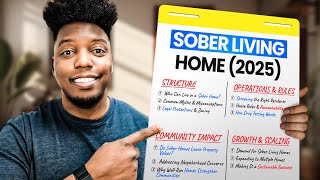
Andrew Lamb explains how to start a sober living home, covering NARR levels 1-2, resident intake, house rules, and how to address neighborhood concerns about safety and property values. Well-run homes provide structured housing and are protected under Fair Housing and ADA laws.
Chapters
Have you heard that a sober living home might be opening in your neighborhood? Not sure what to expect. Let's talk about it. In this video, we're going to talk about the facts of sober living homes. What they are, what they aren't, are they safe, should you be concerned? And at the end of the day, how to approach concerns the right way. It's absolutely normal to have questions and open communication is key. So first, let's tackle this. What do sober living homes actually do? If you've heard of sober living homes before you, you've probably heard about the traditional way suburb living homes were run, which typically meant shoving a lot of people into rooms, maybe four per bedrooms, on bunk beds. You know, perhaps there's a house manager, maybe not. Or the traditional Oxford House model, which honestly is just a pure led. Everyone's in recovery, there's some basic house rules, but really nothing to stop people from doing whatever they want to do. And it's more of a democratic process. Everybody in the home votes on certain things, who moves in, who gets kicked out, things like that. Now, it's important to know that there is a wide spectrum of sober living homes. In fact, there's four levels, according to the national alliance of Recovery Residences, where that Oxford House would be considered a level one home with no real oversight, no management, no monitoring, really. And then a level two home would be something that does have structure, does have monitoring, does have rules, major curfews, things like that. And so again, there's a wide range. You'll want to just simply ask the question, like, what type of sober living home is this? Because here, here's the thing. Sober living homes traditionally have meant it's a house for people who are choosing to stay sober after exiting a treatment program. But what we found is sober living in general is just a niche of group homes or co living. And so it could mean that people are exiting treatment programs. It could also simply mean that anyone can live there as long as they're choosing to abstain from drugs and alcohol. And so it doesn't necessarily mean people are exiting prison, exiting jail. There's no court order or anything like that saying that people have to be here. That would be a halfway house, not a sober living home. Sober living is an independent choice that people are making to move into an environment that does not have drugs and alcohol. So they can simply focus on going to work, going to treatment, doing whatever they need to do to rebuild their lives, save up enough money to find permanent housing and then move out. And so it has nothing to do with somebody, forcing somebody to be there. In fact, for somebody to live in one of my sober living homes, they have to show motivation, true motivation, to actually stay clean and sober. Or if they've never had a drug or alcohol problem, they have to let us know that they're going to abstain from drugs and alcohol and be subject to the rules of everyone else in the house in order to stay there. The entire purpose is to help people reintegrate into society with accountability and support. You'd be shocked to hear how many people have moved into our homes who are simply looking for affordable housing. We have people who literally were living with family. The family member passed away, and now they had to find somewhere else to move. They were staying with somebody not paying rent, and now all of a sudden, their whole living situation is turned upside down and they are homeless. Or According to the HUD definition of homelessness, they're within about 14 days of becoming homeless when they contact us. So it's not that they are on a park bench. It's not that they've been chronically homeless and been outside for any period of time. It's simply that they are what we tend to see as marginally unhoused. So people who are sheltered but by the HUD definition are considered homeless. And so this has nothing to do, again, with people who are on the street, you know, very obvious mental health issues. And there's no way they want to have a roof over their head. Not at all, quite honestly. These are the same people who you probably show up to work with, and, you know, they just don't have a safe place to go and lay their head at night or it's not a consistent same roof over their head. They might be couch surfing, staying with friends, living in their car. I have literally talked with people who have state jobs, unionized jobs, but don't make enough. The house they were in sold. They could not afford today's rent because they were staying in a house where for the last decade their rent never went up. And now they're in a situation situation where there's just no way that they can afford to find another place on their current salary just because rents have skyrocketed over the last five to 10 years. And so they. They literally sleep in their car, go to the gym to shower, show up at work. And a lot of times we're getting calls from HR managers who are saying, hey, I just had this conversation with my employee. They're an amazing employee, they're great at work, very dependable, but they don't have a roof over their head consistently and they need a safe clean space with heat, with you know, in the summer with AC so that they can not have the stress of where they're going to lay head at night. Basically be able to work, save and then get into their own place again. So all that to say sober living homes can house people from multiple different backgrounds. We can't make blanket assumptions and assume that people are actively using drugs or even exiting treatment when that's not the case for honestly I'd say 50% of the people, maybe more who are in our homes now when we first started off, 100% because I started off with our probation department, behavioral health department and getting referrals from local shelters, people who graduated programs from local shelters, not just they went to a shelter but they actually like worked with a program, worked with a case manager, saved up money, have a job and then exited the shelter. Those types of referrals 100% filled us up in our first year of operations. That's how we filled up our first five homes. But three years, four years later, now the majority of our of our referrals are from people who honestly if they have had substance use issues in the past, they've been clean and sober for several months at least before moving in with us, or they never had a substance use problem to begin with. It's a lot of the my apartment caught on fire, I've been staying in a hotel, the landlord isn't doing what they're supposed to and I'm tired of not having a kitchen and all these things. Can you please give me a place to live? That all the way to 70 year old ladies who were sleeping in their car because their families couldn't take care of them and kick them out or son got a job, transfer, moved out of state. Now the seven year old mother has nowhere to go, nothing and wants to stay local but has no one to take care of her. And so these are the types of situations that we're seeing now where again we don't allow drugs and alcohol but we're not seeing as many people re entry, behavioral health issues, things like that. In fact we've even gone as far as to start doing what's called medical respite. And that means serving people who are exiting hospital situations. Maybe they recently had a surgery, they need some post op care but they can't go back home, there's not a safe clean space for them to recover. And legally a hospital can't discharge them unless they know they have that space. So they work with us. We've literally received so many calls from hospitals recently with people undergoing cancer treatment, undergoing, you know, post op for heart conditions, things like that. And we are that safe place where they can be monitored. And it's still a structured environment because we also don't want weird interactions with medications if they're using drugs and alcohol. So they're not allowed to do anything like that inside of our homes. But we're that place where they can safely discharge. So again, I would just say don't make blanket assumptions about what this is. Go to the source, call the phone number of the sober living operator that's near you and just ask simple questions. Who do you house? How does this work? Do I have a reason to be concerned? In 99% of cases, I'd say if it's a well run sober living home, you won't even know that they're there. Another question we've been seeing often is how does this impact neighborhood home values? There are actually studies that have looked at how sober living homes affect property values. What they found is there is actually no effect on values or in some cases it's an improvement in values. There was a study done regarding a sober living home in an area and its effect on property values. And what they found was property values actually went up because sober living homes that are run well honestly are very well maintained. They increase the curb appeal in the neighborhood. They are quiet, they do not increase any kind of noise or nuisances because they typically have rules around that. They have curfews, they have noise restrictions. People inside the homes honestly don't want to be bothered. They want a safe, quiet place to recover or to just, you know, lay their head at night. Stress free, work save. That's it. It's quite the opposite of what you might see with like student housing. I've had a lot of friends who I've talked to who've done student housing and honestly were concerned with these assumptions about turning it into sober living. And what they realized was the students were throwing keggers on weekends, bothering everybody. The sober people are going to be doing the opposite. And so it actually made sense both for a cash flow perspective, but also for the neighborhood in general to transition from student housing into silver living. Again, remember that residents are expected to follow rules. It's a structured environment compared to, let's say section 8 or some kind of rental where there's literally no restrictions. We're giving someone blanket lease to do whatever they want in the home and they should be following, you know, the noise restrictions and code enforcement ordinances that say like no noise after 10 or 11, but rarely is that the case. And no one from code enforcement is going to stop by at 11 o' clock at night because they're off from work. Quite the opposite. Structured sober living homes have monitoring, have things like cameras, and have staff check on things to make sure that none of those things are happening. Another question might be how many people are going to be living in the home? And just in general, you know, how does that affect parking? How does that affect just the neighborhood in general? I'd say on average, sober living homes house somewhere between six and 10 people. That is not unlike the average family. My family is a family of seven, I have five daughters. And so you probably hear more noise from my house than you would from one of my sober living homes. In addition, I'd say about 20% of the people inside of sober living actually have cars that they drive. So parking in our homes has never been an issue. So much. So, like I get this question so often that I am now consulted by developers building single family homes and apartment complexes who want to do affordable housing. They're asking, what do we need to plan for parking? And I always say it's about 20 to 25% of the people who actually have cars in this specific demographic. On to the next question, rules and expectations for residents. It kind of goes without saying that the rules would include no drugs, no weapons, no violence. Those are very easy, blanket rules that you can actually just assume people are being told when in sober living. But I'd say there are additional rules regarding just how to behave and talk with other people. A lot of the rules that we have are basic, you know, be a good roommate type of rules. And so of course, no violence, no threats. But also if you like, use a dish, clean it right away. Don't just leave it on the counter, clean up after yourself. 15 minutes, 20 minutes max in the bathroom. You shouldn't be hogging the bathroom when there are several people in the home. Again, imagine almost like a dorm setting. What we typically do is two people per room. And so in a four bedroom house, we might have eight or nine people. Typically we're not 100% occupied. So that would mean more like seven or eight people on any given day. And although we'll have at least two bathrooms, our rule of thumb, and kind of the general rule of thumb is no more than six people per bathroom. You don't want to cause somebody else to have to wait and you know, not be able to shower in time to get to work on time. And so these are simple things. Be considerate of others. Consider like other people and the consequences of your actions before you make that action. And be quick to forgive, but also be quick to act and be proactive, like, clean up after yourself, think ahead. Very simple things. We're teaching life skills in many cases as well. And so there are chores that have to be done. People are contributing back to the home. A lot of times our folks will actually share groceries and, you know, they have the ability to buy their own food. And so they'll cook together, they'll. They'll have different times. Not everyone works the same schedule, but occasionally we do see people who are sharing groceries, sharing, you know, a gallon jug of milk or, you know, cooking dinner, sharing dinner together. Another thing to be aware of is that most sober living homes will require people who are actively in recovery to attend a treatment program. And so attending outpatient programs is a huge benefit. And having stable, structured housing allows them to focus on attending that treatment, making sure that their transportation is arranged, all of those things. There have been studies that show that sober living homes do dramatically increase the ability for somebody in recovery to not relapse, to stay in recovery. And that's because it allows them to really just focus on attending treatment, going to work, doing what they need to do to the point where, you know, because if you think about it, somebody exits inpatient treatment, let's say they were there for 90 days. They now, after having spent every waking hour in a treatment program, to expect them to exit and go straight into all of the chaos of just life and having to find a job, get a driver's license, all these things that they might have lost before going to treatment or even if it wasn't that bad, and they never had issues with the law, maybe restoring relationships, you know, all the things that the 12 steps recommend, making amends, things like that, that's just a lot for somebody. So it makes sense to ease them into that. And what that typically looks like is something like 15 to 19 hours a week of outpatient treatment. And so they're working part time and going to treatment and then kind of stepping down from that many hours to maybe three hours, three times a week, and then eventually not going to treatment anymore at all. They graduate and now they are fully integr, you know, back at work. Maybe they've reunified with family and. But it takes time for all that to happen and to build that trust again. We can be that Safe space for them to land and be able to rebuild. So I know a lot of people out there. Think about how many people are in recovery in the United states. It's about 15%, literally like 1 in 6, 1 in 7 people. And so we all know somebody who's been touched by this. And you might even have a child, like a son or daughter who's gone through treatment and has lived in soberly living. And if you think about it, you want them, if that was your situation, you probably want them to be in a very well run, stable, structured, monitored suburb living home and not something where it's just pure lead or no one's following the rules. It's 15 people in a house that that wouldn't be ideal. You want them to be in a nice, safe, quiet place. That also means you don't want them to be in the worst neighborhoods ever. The best sober living homes tend to be in nicer, quiet areas with, you know, very safe. If you call the police, they show up within five minutes, that kind of thing. And it's not because you're going to be calling the police, but they. But it's because you want them to be in a nice, safe, quiet space to not have to stress and worry about all that stuff. Lastly, the other thing that you will think through or the other question you might have regarding rules is how often are they drug tested? Every sober living home has their own policy around this. What I've seen work best is at least once a week or random. Now we make sure that people who are actively in recovery and attending outpatient, which is a requirement of ours, if they are actively in recovery, we make sure that they are testing frequently at the facility and we get a release of information, meaning we know what their drug test results are at any given time. We also will randomly test them at our own home, especially when they move in, just to make sure before they ever move in. We have a very thorough intake process. But while they're with us, if there's any reason, you know, to have suspicion, we're testing them as well. And the way that works is you have two choices. You can go, leave immediately, go to detox, get through withdrawals, do all the stuff away from the home and we will welcome you back because relapse is a part of recovery. But typically it's just one time and our folks are so thankful that they're able to come back and we will hold their bed. We've had people do that and literally never use drugs again. And so it's been A great benefit as opposed to like an Oxford house where they were literally get kicked out and just put back on the street. Which is I think the worst possible scenario for somebody who had a slip up. We'll also have weekly house meetings to promote accountability. I've talked about this in previous videos, but it allows this them to express themselves, express grievances, not build up bitterness, but really have open minds of communication and transparency, authentic communication and be able to just the life skills of being able to talk about what's on their mind, air any grievances and then move on. Now another question we get is about visitors. Do we allow visitors? We personally do not. Early on I made the mistake of letting people have visitors and they would lie. We had, well, we also had some interesting. I didn't know how to do a proper intake intake at the very beginning. So we had some interesting people move in. That has completely changed once we implemented our full intake process with about seven pages of information. It's a ton of info that they have to give us first and then we actually talk with them through the scenario, make sure they're motivated. But early on we had some people who tried to take advantage of us and we just said, you know what, no more visitors. It was like, you know, their best friend and they said they were a cousin, it was a girlfriend who they said was a wife. And so we just said, you know what, if you need somebody to talk with, you can go visit, visit them. They don't need to come here. So that was that. Unlike short term rentals, our average stay is well over six months, more like 12 to 18 months. We are not party houses and this is a, you know, not a long term permanent housing solution. But it's long enough for them to actually rebuild their lives, save up enough, show that they make three times the amount of an apartment, lease things like that, and then be able to move on to permanent housing. And we've had incredible success and outcomes of people actually getting permanent housing, getting apartments, moving back in with family instead of going back to the streets. So like I said, sober living homes function like any other well functioning home or well run home in the neighborhood. So that means they contribute to a quiet, safe neighborhood. Typically the yard is upkept, the curb appeal is great. There's a good neighbor policy that we have. No one's allowed to loiter outside and again, no visitors. So literally you should not even know that our home is a sober living home. I know not every sober living home operator operates that way. There's a Lot of bad news stories over the last several years, but there's also great stories of hope and triumph and people with amazing outcomes from our homes. And from the hundreds of students who I've taught our model, literally none of my students, hundreds of them in over 40 states. 0 ODs, meaning zero overdoses, zero deaths, zero evictions. A student who just celebrated one year of a full sober living home, she filled up within 90 days. Had the the home full basically the entire year. And looking back, just said I worried too much. Nothing's actually happened. We're just providing housing and utilities in a furnished room and people are doing what they're supposed to do. Now that we've covered exactly what a suburb living home is or could be and what it isn't, I think it's really important to talk through. How do you address, you know, concerns around legalities, zoning, discrimination, things like that. And so basically, sober living homes are fully protected by the Fair Housing act, and everybody inside of the home is protected by both the Fair Housing act, the Americans with Disabilities act, and depending on the state, there might be state level protections as well. Substance use disorder is considered a mental health disorder recognized by states and by our federal government. And so any action to treat a sober living home like anything other than a traditional rental is considered discrimination. So be very careful about how you go about addressing concerns because you don't want to put yourself in the crosshairs of a lawsuit. A lot of different municipalities have been sued and had to pay. There was actually a lawsuit with Hinesville Village. And so anytime cities or municipalities have gone against Silver Living operators and tried to make them do things like get special permits or prohibit them from opening or try to force people to show that they have a certain diagnosis in order to prove that they have a disability, it has all been met with huge fines, huge damages. The city of Newport beach had to pay over $5 million to an operator. The city of Hines. The village of Hinesdale in Illinois had to pay $800,000 in damages to an operator and $10,000 in fines to the Department of Justice for violating the Fair Housing Act. You know, multiple cities. This has been happening over and over and over in ordinances that say anything like, you know, no more than six or no more than eight unrelated people in a home have also been found to be in violation of the Fair Housing Act. They do not stand up to scrutiny of fair housing because if you think about it, just, just two people per room, that is the definition of their housing. Even single room occupancy that Section 8 and like HUD defines homes by and allows they are fine with up to two people in a room. And so again, to treat any sober living home as different from any other traditional rental, it just is considered discrimination. And you have to be really careful about how you handle that. False complaints, harassment, anything like that to try to stop a sober living home from opening in your area can, can definitely open you up to lawsuits. What you want to do is just find out who the owner is or who the company is that's operating, give them a call and ask questions, have open communication and I'd say even start without assumptions. Just come in with curiosity and ask questions and see. I mean, there might even be ways you can help. You can, I'm sure, refer. We get a lot of referrals from a lot of elected officials and from even former elected officials. And former county supervisor just called us about somebody recently. They've been working with them for eight years and wanted to get them into one of our houses. So there are definitely ways to benefit the community and help a sober living home by making sure that you know exactly what's going on because you're volunteering there. I think that's a great way to make sure that your neighborhood stays safe. Also remember that false claims and spreading rumors without actually talking to the source, talking to the owner, can lead to defamation lawsuits, slander lawsuits, and can just honestly put a really bad spin on things in the neighborhood. A lot of this can be considered not in my backyard type of behavior. And unfortunately I've seen it happen to really good operators who some chose to simply, you know, close up shop. But unfortunately what that meant was everybody inside of that home had to get displaced. In most cases, there aren't enough sober living homes to actually fill the need. And so that means a lot of people end up homeless. So remember that sober living homes provide an essential service and community support. Honestly, again, that study that, that tried to see if property values would increase or decline, it found that in some cases property values actually increased. And a big reason for that was because it reduced the amount of open addiction and homelessness in the area. And so if you think about that, most cities do have some amount of a homeless element of open addiction to drug use or drunkenness. And if you could clean all of that up and have it simply be people who are now going to treatment, getting clean, making the decision to then get housed and in doing so, in, in a private environment where there's rules, structure and then able to rebuild their lives, I mean the amount of positive outcomes and really cool success stories that we've seen. It's just been absolutely incredible to watch people reunifying with children, getting married, being three, four years clean now since we've started this back in 2021, it's been amazing to watch people rebuild their lives. The power of the human spirit. Many times they say they couldn't have done it without us. All they needed was a safe, clean space to lay their head. And again, sober living homes are not licensed rehab facilities. There's no court order, there's no license required because there's no treatment happening inside of the home. Any kind of licensed work happens at a licensed treatment program like an outpatient program or you know, had previously happened at a substance use counseling program or a residential inpatient program. It's not happening inside the home. So again, this is after the fact. This is after their drug use has been behind them for the most part. And some sober living homes like mine and don't even, you know, have that many people who are in actual recovery. They're simply drug and alcohol free homes that offer affordable housing to anyone who needs it. So please share this video if you happen to hear about a sober living home opening near you. Help educate others on what exactly sober living homes are and what they aren't. Help people understand that there isn't too much to be afraid of. I understand that change is different, but a well run sober living home is a great asset to a community, not the other way around. And then just take a fair and informal informed approach when talking with the operators of sober living homes. If you have any issues or concerns, a good sober living operator will welcome communication, although they will likely want it to be through official channels like calling them directly. Posting and ranting on social media will not help. If you found this helpful like and subscribe for more insights about sober living homes and if you're looking to open a sober living home in your area, we teach the right way to do it. You have to actually care about people, not just money, although it does make more than the than a traditional rental. But we have a coaching program called Sober Living Riches where you can learn exactly how to start and fill a sober living home within 90 days with the right people, with the right intake process to protect yourself. And you can book a call with my team@sberlivingriches.com or at the link below.










