How He Makes $15K/Month With Sober Living Homes (Without Owning)
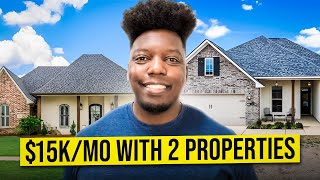
Andrew Tyree leases new-construction homes in LA and rents beds to people in recovery, generating $13-15K monthly without owning property. He started with two five-bedroom houses at $11K/month total rent, charges $2,400-2,900 per bed, and reached near break-even within two months by focusing on women and pet-friendly policies.
Questions this video answers
$5,500 per side; $11,000 per month total.
Started around $2,400 per bed; rose to about $2,900 per bed.
Approximately $13,000–$15,000 per month.
Leased in August; near break-even by mid-October (about 2–3 months).
Chapters
So Andrew, thank you for being here. Two two Andrews on a call. Can you introduce yourself where you're located and like your business?
Yeah. Thank you for having me. I'm happy to talk everything good about this program. So I my name is Andrew Tyree. I am a real estate agent in Northeast Los Angeles. So Highland park is the neighborhood I'm based in. I. My wife and I bought a duplex about eight years ago. It got me into real estate and real estate investing. And yeah, I've been super into real estate investing since 2015. Not super able to just buy things as I would have liked. There was a pandemic. I am a father of a four year old who was born during the pandemic. So I really made a huge transition from my other job. My last business that I had was a travel company and when that went away during the pandemic and we had a baby, I pivoted to real estate sales. So I'm a real estate agent and investor.
That's awesome. I too have a Covid baby. Yep. Technically two of them, but one was just right before shelter in place. So I understand. And that's a tough decline. You still get home with the crying baby.
Totally.
Oh man. Well, that's awesome. So you're also in real estate. Very similar to my background and getting started with all this stuff. And you're in la, which is huge need, tons of homelessness and very little affordable housing, if there is any.
Correct.
And so yeah. And you're in an area that massively needs this. I guess what got you looking into sober living homes as a solution for all the things we just talked about real estate investing, maybe financial freedom, but also serving people, making an impact and solving that problem of affordable housing.
Totally. So I had in my kind of when pandemic happened, we had the, the, the duplex. I was like, oh, this is working. And you know, the travel thing didn't. So I really got my real estate license as like, you know, selling real estate. But I also really did a deep dive on real estate investing in general because I'm like, okay, how do I make what little we have kind of make go get through this pandemic. So I was like, okay, this, this duplex is a thing. So I really did a deep dive and I got really into the idea of multifamily as a solution for housing and I really like plunged into Section 8 housing in general. So I've with clients of mine as real estate buyers. So if they're wanting to do any kind of investing, I Always sort of lean into. You should do section eight. There's you know, the line for, for section eight vouchers is so huge and a lot of landlords are unwilling to do it. And once you kind of get through the initial sort of difficulty of, of getting Section 8 tenants and vouchers and figuring out the system, it pays on the 1st every month. And it's this, this, it's. So you're solving a problem, but it's also much less risky real estate investee wise. Yeah. So that's my solution. That's my solution. But when I bumped into you on, I believe it was on Instagram, you were like, this is what we do with this. So I had studied so many different sort of versions of real estate investing. Really had a heart led, want to help, you know, problems in the community, but didn't have a ton of money to like be like let. I'm just gonna buy multifamily and fill it with section 8. So when I saw yours, it was kind of like, oh, these sober livings, cash flow even more and are much more like a very specific sort of need that's being met. And I personally am also a sober person too for the last like two plus years. So it's kind of something that like spoke to me, I related to. I see a huge need for. Because we don't as much do homeless services. We have done a couple clients like that, but we mainly work with sober living.
Yeah, yeah. And that's I think a key distinction because a lot of people are like, everybody's coming from a drug treatment program. That's not always the case.
Not always the case, totally. Yeah.
Varying backgrounds, but yeah. It does sound like you've had some success. I mean you've been sharing wins inside of our community and you've had a lot of success with drug treatment programs.
Yes.
And in housing, specific demographics. So how did you come across like, let's just talk through that whole decision process of who you're going to house, where are you going to house them, all that Totally.
So I, after doing the course, I basically followed line by line what to do. I'm very like, as soon as I kind of stumbled upon this, I was like, oh, sick. This is such a good, feels good, helps community pays well, all of the things. So I was going through literally line by line of, of like the sober living riches stuff just like eating it up. And it got to the part of like the email outreach. Right. Just like bulk email. All the people that you had. I mean, dude, this was A year, a year plus ago that I had started it. I think it was in June of last year. Oh, no. Yeah. I believe the contact list during of the course for LA stuff was like 250. It was a huge. You had a.
It's a big list. Yeah, we give you guys a lot of contact.
It was a lot of people. And I was like, look, I'm, I'm. I do real estate for a living. I don't. I'll mass email people. I'll. I'll do. So I threw out the email. But one of the things that I made clear in the email was I'm starting a sober living. I'm based in la. Where do I need to be and who do I need to serve? It was just kind of like, this is what I'm coming with. What do you guys need? And I think that that was a thing just good in business in general, I feel like. But like in this specifically, I was like, so a couple people called, like pretty right away. I was listing a house. I was like, hit send. Just held my breath and took the plunge. And a guy called back right away who was from a specific treatment center who was based in Santa Monica, which geographically, I don't know if this is too much in the weeds, but that's like 35, 45 minutes away from me. I live more by Pasadena, by downtown. It's. That's the west side. So I was not interested in really doing it there. But this person called me was like, we need more women's houses, specifically on the west side. And it needs to be more sort of lower budget, which we can speak on that too, but like lower budget in the west side of LA, like near Santa Monica and stuff is 2, 500, 2,800, $3,000 a bed is like the cheap ones. So once I was speaking to him and being like, so you need women's facilities. They. It needs to be central to Santa Monica. It needs to be under the X amount of dollars, under $3,000 price point, which was crazy too. That wasn't even what I was thinking. Yeah, yeah, right.
Like if you think of.
Well, in.
In west side, just so everyone knows is by the beach. So definitely garners a. A higher price point.
Exactly. It's more expensive that way. Hence me living out this way. You know what I mean? It's like Santa Monica, Venice is over there, Marie Del Rey, all that kind of stuff. So it's like what people would see on TV of Los Angeles. Fancier, Expensive. Expensive. So I was like, yeah, great. They'll pay. They'll pay well. It's a high need for their. There's a ton of things in Malibu, in Santa Monica, a ton of treatment centers. One of the things too was as I'm talking to people in the community now, one guy reached out to me that was really helpful and I was like, you're super helpful. Who else do I need to be talking to?
Yes.
From that one breakthrough. Dude, Daniel's his name. Shout out to Daniel at Newview. He. I was like, you're so great. And I would literally, I would just be like, hey man, it's me again. I have this weird question. He'd be like, no, great shoot. Like, go ahead. He was so helpful on the phone every time. Which I found the sober community in general is super helpful also. There's a lot of like, thanks for doing this work. This is really helpful. This is so needed. You get a lot of like pats on the back from people being the new kid on the block. I'm like, hey man, I'm even to another sober living, I'll be like, hey, I'm moving in down the street. Like, can we work together? They're like, yeah man, thanks. Come tour. It's been super cool. That's awesome. That's in other helpful people. Who else is helpful has been super, super great.
Yeah. So you literally like just followed the playbook because we started send out the emails, ask this question, how come we. What do you need? Where do you need it? 100 housing. What demographic do you serve? And then you could fine tune what you're going to deliver to them based on what the need is.
Because I'm, I'm asking them what they need. I'll. I'll build it. They will come. I'm like, cool. Like, you know what I mean it. Cause also a thing that I had that was sort of different from when your course you're. You were opening up in Northern California and there was like a huge need for it. Kind of immediately LA in Culver City was sight slightly saturated. People had been there for a while. In men's homes specifically, they're like, oh, don't do another men's home. In fact, we ended up doing two houses next to each other, running a women's facility and a men's facility. This one's filled up. The women's filled up with 10. The guys never filled up. I think we had one dude come for like a week. So we just had this empty house on this side. So eventually we were like, the people have spoken they we need women's facilities. So we just went with what the need was.
That's awesome. Yeah. And when you give them what they want, of course they're going to send people to you. It's what they said they need.
100 because I'm that it's like you're sir. You're literally serving their need. Instead of asking, you're kind of like, what do you want? And then you. Yeah, brilliant.
And it is a business. Like it's a smart business move. Keep people what they want. Don't try to make what you want and shove it in people's faces.
100%.
100%.
I had talked to a guy the other day and he was like, he's like, yeah, we want to like do a men's facility for sure and like run a gym in it. And we want this and we want that. Like him and his, his like the dude partner. I was like, yeah, so did we. And fruit just wasn't. That wasn't what was needed. So we had to pivoted and made a pet friendly. Women's side. One is kind of a little bit more mental health primary and one's a little bit more substance abuse primary. So slightly different, but kind of, you know, very similar.
Yeah, yeah, yeah. Well, and let's also talk about. Cause you just mentioned pets.
Yes.
And normally people will. So I was warned against women saying it's going to be high drama, high stress, high turnover. Turns out when you manage. Well, it's not that necessarily. It's actually a tight knit community. I told him something we've never done other than like a pet goldfish is have pets. Yeah, yeah. And so you found a need for pets and you found a way to make it work. Can you talk with that?
We. So that was one of the other things. So we pivoted both of them to women's houses and very early on it was that same thing like, do you take cats? Do you take small dogs? And at first business partner were like, we don't want to do that. We don't want to do that. And then so many people kept asking us that we're like, why don't we just do that? Charge a little bit. We would charge like a hundred dollars or a $200 sort of like pet deposit. So we were like, yeah, we opened it up to it being pets. And that led to a big influx. This one woman had two cats and wanted to rent a. A single room. So pink. Almost $6,000 a month for her own room because it had a Big closet for her cats. I was like, dude, yeah, of course. Please move.
Yes. Now.
Yeah, that's fantastic. They had litter boxes. She cleaned them just fine. Like, totally not a non issue. And then we're like, let's open it up to more. I don't want to say no to potential clients. I would rather kind of keep it open. And it. Yeah, it ended up working. It ended up working out.
That's so interesting. So, no, not only are you keeping, you know, humans, which we care about the most while it's in the street, but, man, if someone's attached to their. Their pet.
Totally.
How many times are they being told no and just forced to live on the street or in their car because they don't want to part ways with their cat or dog?
And that. And it kind of, like, helps the vi. Like, it helps the recovery process. So you don't want to be split up from your little friend, from your person, you know, you animal. And then it kind of like, on top of that leads to kind of a vibe in the house that's, like, friendlier and nicer. Like, oh, look, a puppy.
Oh, no, no.
Like, they're all kind of, you know, dog sitting. I was there the other day, and house manager Aaron had to, like, go do something. And, like, two of the girls were like, can I watch Coco? Coco's her little tiny dog. So it's like they're. It's. It just livens up the mood. It kind of keeps it cute, like, feeling and nicer and. Yeah, it was a cool move. And it's not. It's, like, managed well. The dogs and the cats and, like, the house is clean and all that kind of stuff. So it's not like, it's like, overrun with, you know, animals chewing stuff up and like, all that kind of stuff that you would think there. It's. It's. It's nice in there.
Yeah, man, that's. That's so cool. But let's also talk about that, because it doesn't need to be managed. Well, the places you got. These are new construction, nice places, brand new construction.
We ended up. So we ended up leasing, and now the. The idea is to buy something. Like I was telling before, I was like, I don't know. We should figure this out first. After, let's say. So we started the lease in August. By September, it was kind of full. So like, August, I was paying it out. Paying rent out of pocket. September, yes. By. By kind of mid October, it started, like, breaking even. Like, where we didn't have to Pay out of pocket. So like within two or three months of the lease, the half occupancy or like quarter occupancy like covered the bills. Right. So we did a lease which was, was good but kind of in retrospect, I mean I could, I'll. I can just talk numbers on.
Yeah, yeah, it's okay.
I'm like it's, it's 5,500 per side. So it's $11,000 a month to lease two five bedroom houses over there.
And that is, that's kind of par for the course though for like right sizer west la.
Exactly. Which you know it. Even when I was getting them too, I'm like okay, great. Because we can put basically 10 beds in in each side. Like that's awesome. That'll cash flow really well and whatever. Well, now that I'm kind of in. In it a little bit. $11,000 a month would pay a full $1.7 more $1.7 million mortgage which we could get probably an eight bedroom house with a little adue kind of thing for 1.7 over there. Right. Like so I'm like we, instead of fully leaping leaping, we kind of did the two lease thing to, to prove it. But now I'm like, oh, we could have had the same amount of clientele in one of the houses that I had gone looking at. That was, it was crazy. It was like two levels. It was an eight bedroom, it had a little adu spot in the back that could have been a manager's thing. And then it had these add ons that weren't legal bedrooms but were bedrooms. And it was really nice, it was really beautiful. And I'm like oof. In retrospect we could have had all those clients just be in the bot house and you know, been appreciating and been paying down our own mortgage. Yeah, yeah, we're just paying the landlord at this point.
But well you, I mean there's, there's definitely cash flow because you got two full houses and, and you're getting a really good amount per bed from a. Yeah, from like a standard suburb living. Because when I talk about metro LA, what I hear usually is like 1500, but that's like Hollywood. That includes east LA. That's, that's all, that's all a. Yeah. Some stuff gets crazy. I've heard 10,000, 20,000amonth for like really high end.
Yeah, we tooled one in malibu that was $120,000 a month.
Oh my gosh.
But it was also a detox. So they had like, you lived in the house and there was like doctors on staff and a chef and like all this kind of stuff. I was like, man, I. It was wild. It was.
That's where the celebrities go.
It was like a celebrity rehab kind of joint in the hill on Malibu, like overlooking the water. I was like, this is desert. Not that.
But we're also not in it to make the most amount of money possible or we have to see people per room and treat people like garbage. And that's not old.
That was another thing that we took from you that I was like, oh, 100%. We don't do bunk beds. We do two twin beds from the list, from the Amazon list that you. Two twin beds, a shelf, a dresser, like keep it simple. But like two twin beds in a room. Not trying, not trying to like shove a bunch of people in there. We toured a bunch of sober livings that would be like two to three bunk beds in a big room. So we're talking like six people in a room. Adults, people. You know that. I don't want it to feel jail E. I don't want it to feel sardini. I'm like, I want the house to be mellow and there's enough space in these five bedroom houses to fit. We have it now where it's the smaller rooms. So it's two beds per room except one room is, is quite a bit smaller that's in the hallway. So we have just one bed in there. Nine beds in a room, man, is plenty. That's like, you know, that's all that, man. Total. Yeah. So yeah, yeah.
And it's within, within state and hud guidelines. So California and, and HUD say two plus one, right? Two. Two for bedroom plus one additional. So in a five bedroom home you can have 11 people, no problem. That's totally reasonable now because people who are doing more than that, I'm like, that's not okay from a moral and ethical standpoint. But also like you're, you're going in speedies like ibines.
Totally. Which you don't want it. You don't want to do. It's already kind of a thing. You just want to keep everything moral and good and give people space to be able to recover. Because that's the other thing too is like we don't want to, we don't want stuff that's triggering to the recovery process. Right, right. So there's that.
And then.
Yeah, I'm not trying to. Not trying to break any rules and get sued about it either.
Same Here. Cool. And that was my same thought process too. Like, I don't like blunt beds because if somebody did have jail or prison in their past, but I don't want anything triggering that feel. Like they're still inside when they're in our home.
Exactly. Because there's kind of like our house, like you were saying, it's brand new construction. So we leased it in August. We were the first people to lease it. It's clean and nice. It's a sick house. I'd shown pictures on, on sort of the community. Brand new builds are really nice. And they're the two units next to each other. So they're like three story. They have patios, there's like balconies, there's all the rooms, all the bathroom. Everything is brand new. And I think there's something sort of mental. But like they get there and they're like, oh, this is like nice. And people sort of act accordingly.
Yeah.
To their environment, I guess. So no one's, you know, it's. They're not. They're acting less cagey because it's less of a cagey sort of situation.
Yeah, yeah. It's so true. People act like the environment you put them in. So if you treat them really nice and a lot of times this is the nicest place they've ever lived. All of my homes are remodeled for the same reason. Totally of better outcomes. Lower turnover. People just stay longer. They. They do their chores and contribute. It's clean all the time.
Yeah, yeah, it's great. Exactly. It's like you move into a clean environment, you want to like, kind of act accordingly. Exactly.
Yeah. Well, cool, man. Thank you for sharing all that. So you, you found a home. So you, you, you negotiated a lease.
Yeah.
With these guys. And it sounds like they might even have more available free figures.
This is a built. The built. The builder and the landlord have more. But now I'm kind of like, I don't want to rent more. I want to buy one. I want to keep you as sort of the machine that's consistently full and producing cash flow. Then go and buy something. Like I had toured a year ago when I opted to rent instead because after I leased them, there were multiple other things that the guy had also. And I was like, oh, I'm gonna fill up these and then lease more and just turn a bunch of. Do a bunch of arbitrage. Right. Because he likes us. We always pay on time. It's automated. We fix things. This was, I think, a you suggestion as well. But like, we'll fix things so that he doesn't have to be bothered. He's never. We just did replace the. What do they call the garbage?
Oh, the disposal.
The disposal. Thank you. The other day it was like 200 bucks. I'm like, let's not even call him. Let's just fix it.
Right?
Yeah. So the idea, for a second I was like, ooh, let's do more rental arbitrage and just make this a cash flow machine. But very early into it we were like, no, let's get and keep this thing going, but let's buy now property, establish that and then potentially keep kind of going down the line and getting more.
Yeah. I mean, especially if you're generating enough cash flow and you can reinvest that. Correct. Now you can start to get the tax benefits. Especially as a real estate professional, you can write off your.
That's exactly. That's the other part of it that I'm kind of like. It was initially I was like, okay, this is a new sort of concept for me or new kind of strategy, real estate wise. And I was like, oof, it's kind of risky to just buy something. But now that it's really actively working and that the system is really in place and stuff, I'm like, oh, let's, let's go about doing that because I, my core is real estate and the investee side of it, which all the tax benefits, all the like being a real estate professional, tax benefits, all that kind of stuff and just appreciation of. If we were to like buy let's say an eight bedroom house, the one that I looked at a year ago, it was 1, $1.7 million, which is a lot of money. But that same thing can generate about 25, 30 grand of cash flow after paying down the mortgage. That's a bunch. And if I went to a, a lender and did like the DSCR loan and I was like, okay, this single family home is producing X amount of money every month. We could refinance that money out of it and go and buy something else. Because you're buying a single family home and turning into like a business or like a cash generating machine. So now we're like, ooh, rentals. Buy one, refinance in a dscr, keep kind of going down the line and buying more of them.
Yeah, yeah. I mean, literally the same thing, I hit right house, renovate it, build an equity, fill it up, take that right. Refinance, pull out the cash you put into it, do the next one.
Exactly. It's a bur. It's like a burr. Sober burr. I don't know.
Sober, sober. I like it. I'm going to trademark that tomorrow. Cool. And so, gosh, I mean, you went fast. You followed the playbook. It was really cool to watch you continually share reigns and just be like, oh, I'm two weeks in. I sent out my email. I immediately got a great response. Even following week, I did this. I met with this person. They said they could pay this. And they, they said they could pay so much that you messaged me and said, is this legal?
Is this. Yeah, totally. I was like. Because the ones that you were saying were, were, you know, from Northern California, from like Vacaville, Fairfield and stuff. And it was like, you know, you're like, we were talking to the phone. You're like, you can get 850 a bed. You can get maybe even 1200 a bed. And then they're like, we'll give you $4000 for a room. And I was like, like, this is not what I had heard. I was like, I don't know if this is okay. We ended up going with at the beginning, $2,400 per bed. That was a good sort of like entry level point. It's now gone up to $2900 a bed. Another thing too, is it. We're going through programs that are sort of paying us directly for that. So most of the time the client is not coming out of pocket that much. Because for someone who's kicking drugs or getting sober, any of that kind of stuff, $3,000 a month for rent would, would be really high. So there's some. The program helps compensate for that and like base basically pays us for that.
Yeah, yeah. And it's just because the cost of living is so high. I've talked to somebody who's receiving Social Security. 3,000amonth, had two little kids, could not find an apartment for that. 3,000.
Yeah, yeah.
So that's why homes like ours exist. They have literally nowhere else to go.
Isn't that, isn't that wild? It's like, it's. Yeah, it's, it's strange how much cost of living has gone up in the LA. When I, I moved from Northern California to LA 12 years ago and my wife and I were paying $450 each for like a, a two bedroom apartment in. There was, it was a two bedroom apartment. Her and I had a room and then there was a roommate, but it was 450 bucks. And we lived in Echo park, like right by all the fun cool stuff that same Apartment's probably six grand a month now. Ten years ago it was like, you know, eighteen hundred dollars. I think it was sixteen or fifteen hundred bucks. Yeah, it's just wild, you know, it's very much so.
Yeah.
Stuff.
Inflation is real. Uh, since 2018, the cost of living has just gone insane. And I remember volunteering at the dream center maybe 10, 12 years ago right by Ecuador Park.
Oh, the Dream center down here.
Yeah, yeah, yeah, yeah. And, and same thing, like we got to stay in the Dream center, talk to with everybody who was living there. Uh, and even then it was hard for people, but it was way more affordable then.
Way more, way more affordable. I moved from San Francisco down here and I was like, LA is like cheap like every. Cause San Francisco is wild expensive. Yeah. Before everything got wild expensive when they came down here and I was like, yeah, renting a two bedroom house in Echo Park, a block off of Sunset for 1500 bucks is like, that would easily be literally $6,000 now. Like it, it's, it's just gotten completely unafforded. Thank goodness. I like started my own business that bought me a duplex to sort of go, oh yeah. I feel like there's like this. It's very hard to go up monetarily at this point.
Yeah. I mean wages, wages might have increased 25% in that timeframe.
Right?
Yeah. The cost of living, the cost of housing is 400% total, easy.
It's, it's crazy. It's just like not, it's just not keeping up. I don't know how, I don't know how people do it. I'm working in real estate and make a good living. And even that just real estate sales isn't really that much to like there's always, oh, shoot, I have to sell another one. That was the whole reason why pivoting to doing this is really nice because there's like, now that everything is in motion and is working. So we, it was sort of breaking even. After two or three months, we turned it into an all women's facility. And then business partner, I both kind of like backed off for a little bit and I went back to just selling houses. I'd done this project for three or four months that was breaking even, but I needed sort of a break from it and I needed to sell some houses to, you know, just pay my bills and stuff.
Yeah.
Then I took a couple months break and then went back into it in like last December or January. And as soon as I started re hitting the phones because now we have a Live in manager who's there who runs both sides. She has a house sort of leader. So it was running itself, and it was not zero work for me. But then I'm like, okay, now we have this thing very much locked down. I hit the phones again, kind of like I did last August, September, and just got to dialing again. And it literally, from February until a month ago, just jupe. Just shot up in percentage. And now we're. I've had to turn down three people this week. We're completely full. Completely full. So it's. It's awesome. It's awesome.
This is why we continue to grow.
And this is the thing.
I know you're telling people no, because I. I know they're in their car on the street trying to figure out, dude, it's really.
It's. I had a conversation with a woman yesterday, and she was like, oh, I can. I can only do cash pay, like 1600 bucks a month. Which I'm like, oh, we would have fully taken that. Like, you know what I'm saying? Like, if someone's just in need and on the street and they're. Yeah, she had. Had a job also, too, that. There's like a weird. It's a weird kind of phenomenon now where it's like, rent is just outpaced what cost of living is. So this is a. A, like an. It's like a new homeless person. You know what I'm saying? She's like, shoot, 1600 bucks, dude, that's triple what I was paying for rent 10 years ago. And this lady's like, I'll be on the streets if I don't find somewhere that'll take sixteen hundred dollars. And I'm like, oh, man, I wish we could do that, but we just, like, we just can't. You know, we were just. Well, yeah, it's.
It's true. What people think homelessness is is not at all what it never really is today. Yeah, we've had two ladies in their 70s who are sleeping in grocery store parking lots in their cars because they could not afford apartments. One tried to move out of state, got rid of every or put stuff in storage, moved out of state. Two months later came back because she was like, it's not working out. Whatever she went there for, didn't. Didn't work, came back, had nothing, could not afford to get in anything else because her house locked in before she left.
You prove.
And now you're paying today's rates for.
Everything, which is way worse.
Yeah. On a fixed income. And so, thankfully, she found out about us, got out of the Walmart parking lot. We had another lady in the Raley's parking lot. And they were, they were funny because they like met each other, hugged the same scenario. They were like, we must have just passed each other or like been in the same parking lot at times, not including because they were in their own cars.
Right.
But then they get to our home. Both the same circumstance. And they're hugging each other, hugging me, just so thankful. In other. And their own apartments each.
Oh, sip.
We were able to move them on to income based housing. That's based on, you know, the fixed income they're on.
Oh, that's so much better.
Yeah. So I'll talk with you about that too. Yeah.
I was gonna say, I'm like, that's another thing too. That's really cool about this is like, it's very tr. It's like transitional housing. We keep referring to it as that. I think that was from the course also. But like, when I, when I really hit the phones was like in December, toward the end of the year, we had like six women, maybe even seven that were like graduating out in January and like, were going either moving home, had completed like kind of a year or six months sober. They were like, I'm going to do this, I'm going to do it. Three or four of them had gotten jobs and moved into apartments in like January. So like, business wise, it was terrible because seven of our 12 people at the time all left in the same month.
Yeah.
But like, it was sick because all of them transitioned out of this into like independent living, living with their own spot. Little became roommates and moved into like a little one bedroom and all this kind of. I'm like, oh, they're, they're, they're leaving the nest. They're flying. It's awesome. And it motivated me to get back on the phones. And now we're more full than ever.
You know, we're like, this is exactly what we want. And now we have so many. Let's go fill it up. We had the same exact thing in January. I think eight people moved on to their own place. Really?
Yeah.
Well, in two of them, same thing. Two of them would be in an apartment together. Yeah.
Which is awesome because I'm like, I want them to do that. But then it's. It's a tough thing to kind of be like, oh, that's. I'm like, oh, that's beautiful. And also, oh, we gotta get this place. Yeah.
And thankfully, so you've established those relationships. And man, the calls just keep coming.
It's. It's a thing too that we get so many incoming ones that really help too. And I, It's. It wasn't my world, like treatment centers and all this kind of stuff.
But you.
I just like plunged into it. That was another thing we did at the beginning also, just hitting the phones, me specifically hitting the phones, and then being like, when would you like to come tour? Come to our place. My wife is a great baker and I would literally throw it like a. Like a open house for real estate. I have like this cool, like cake, you know, like a. I don't even know the word, like a cookie display thing. We got some Topo Chico waters and homemade cookies. And we'd be like, come see our spot. And it was like, oh, this is great. Oh, I'm gonna refer you people. Homemade cookies, some Topo Chico. Treat it like an actual open house. We were just having people come to three, four people a day. And then we'd go to Venice and see their house or go to other places around LA and like, tour theirs, tour ours. We'll send you people. Send us people off. Yeah.
I love. See, and that's how, you know people aren't in it just for the money because they're, they're helping each other.
It's.
It's not a competition because the need is so big. We're all gonna have people at our homes. Totally. But maybe someone's not a good fit for my home. So I could send them to you or vice versa. You're full now. You send them my way. We can all help each other.
Exactly. But even the thing with the cats or the dogs, right? Yeah, a bunch of sort of. They. We can't place them. Can they come with you? Or they charged more money for their beds. Can they come with you? Kind of referral. That was the thing too. Like, we're interacting with what would be like competition. Right. That's another sober living home half mile away. But their price point may be different. Or they might not do mental health primary so much, or they might not take cats or whatever their thing was. We would sort of take their. You know, take the people that they can't take. So it worked out. Yeah.
That's awesome. Um, well, we've been talking for a while. Is there. Is there for anyone who's on the fence? Because like, you came in and I actually think it was a lull in real estate because rates just jumped up. You were kind of like, I the deal in order to make this Happen.
Yeah.
And so, and so, like, it wasn't like, things were perfect, the timing was perfect. You were just like, I gotta make a choice. Something's gotta change. I think you did finally close a deal and paid for the program and jumped in, but took immediate action. For anyone who's on the fence, what would you tell them about joining sober living Riches?
I mean, it's, it's. It works. The thing really actually works. You're doing good for people, you're doing well for the community. There's. You're, like, providing this service that then ends up paying you handsomely. You have to be able to work. That's the other thing too. Like, you get in there and you have to dial up, like setting up the beds, doing all these kind of stuff. It's. It's a push. It's a push for like two months of like, you have to really kind of nail it. And then the thing just starts working. I'm. I was that thing. I've been studying real estate, different ways of investing for so long. The numbers made sense. It spoke to me personally and it, it has, It's. It's proven itself. It's made sense to me. It. We are now occupied completely, I believe 16 beds or 15 beds. I have to check my little chart thing. But, like, all of it is completely full, like, where we're having to turn people away. And now, now that everything is stabilized, it's about 13 to $15,000 a month of cash flow, which is sick, man. I'm like, yeah, yeah.
When no traditional rentals are getting you that.
What? No traditional rental is getting you that. Even, like, even in LA LA, in a market, I would have to sell a $750,000 house once a month, right? Like every month. Selling a house, which sometimes happens and sometimes doesn't happen to equal the same amount of cash flow that comes from it. Real estate being so volatile, my. You know, still my current career, but now I'm kind of leaning back toward the sober living to be the financial freedom piece. The. Like pays all the bills piece. The. It took a while to get everything dialed in, but now it's like, functioning in a way that I'm like, oh, I could take. My wife is. Is about to graduate a master's program in August and like, let's maybe take the rest of August off and like, take a month.
Take.
The sober living is doing its thing. She's going to be done. We've both just had a real big push the last two years. So I'm thinking of Taking a month off and like renting a house in Ventura by the ocean and chilling out for a little bit. And I'm like, yeah, that's amazing. That can't happen with real estate. Like with just normal real estate. I'm not allowed to do that. You know, this is just paying while I'm away.
Yeah, yeah. Like it should because it's, I mean the, the housing piece is just housing. Right. You're just renting space, you're not doing treatment, anything like that. But because you have a manager, because you have, it's almost like an apartment building. You buy an apartment building, you're just providing housing, you're not doing treatment, but it pays you every single month. And as long as you have the right people in place, you can go and do whatever you want or get the next one going. And you have freedom, you have choice now.
Correct. Yep.
And that's the difference. That's what this provides while you're helping people all along the way.
Exactly. And that's kind of the point that it's at now where it's like just going to be consistently paying me more than what my monthly spend is. So it took, if I had just not taken a bit of a break, it would have probably taken about from signing of lease to financial freedom about six months. Which is crazy. But yeah, also too, that's to fill up two houses with 16 beds. That's like a brick, right? That's another thing I'm telling people that are interested in this. Start with a four or five bedroom house, fill that up. That in and of itself is a great task and is like perfect amount of like of biting off what you can chew. I feel like taking on two houses was a bit much. Worked out nicely now but dang, like August I was like, oh, this is insane. And now it's like better. But yeah, for anyone kind of on the fence about it, it pays back for itself in probably like three months, ish to six months. You're generating money, paying everything back and you're good.
Yeah.
You're positive. Totally cash flow positive that now. I was just talking to the landlord, he's like, hey, you guys gonna like, what are you gonna do in August? I'm like, oh, we want to extend the lease for another year. He's like, great, we would love to. And I'm like, we don't want to pay more. No, no, that's fine. Because he wants us, we're stable so we're. Yeah, yeah, you know what I mean? It's locked in at the same rate forever. It'll kind of generate the same amount of money now. It's, it's good. It's that financial freedom piece that I was looking for since sort of the pandemic started. I'm. Yeah. In the last like two months, kind of getting to. And I'm like, oh, this is amazing.
Yep. Yeah, it just checks all the boxes. I remember talking with a mentor of mine who was like, you know, what are you doing still selling houses? Because what you're doing with the sober living homes checks all the boxes. It's alignment, purpose. You're serving people. Totally spilling you up every single time you go over there because you're getting to hear stories, but also your gratitude and it's consistent income. So it's like all the way around. It's just such a big win.
It's such a big win. And it feels like taking a swing at like a thing that I didn't know very well. Like I didn't know this world. So it seemed like inconsistent. It seemed like a gamble almost. But working regular real estate versus this, this is so much less of a gamble.
That's so true.
Policies change. Like you said, the interest rates went up. I didn't sell a house for six months. I had six in a row in escrow that canceled for six completely different reasons. It was so stressful and hard. Then I started, you know, doing the sober living stuff. And in three months after that, it's like, been just super consistent. I'm like, oh, the inconsistent thing is the consistent thing in my, in my.
Yes, it is. Yeah, it's way more consistent than you think. It's just like this assumption that people are transient in and out, and that's not the case. They stay as long as they need to, but it's not like one month, two months. It could be like 9 12, 14 months. Haven't been doing it that long. Right. I haven't been doing it yet. But even we've had some people for two years.
We've had people for, I think for 4ish months. Maybe she going in five, maybe almost five months now for, for someone. So, you know, I've got some people staying. It's nice. It's a comfortable place to stay there, you know, down.
Yeah.
Yeah.
That's awesome. Well, thank you for sharing your story today. Thank you for jumping back in the community and sharing your wins. Because sometimes people go underground, they go dark. But I know they're doing the work and then they pop back up and they're like, I have two full homes.
Like, we did the work. Yeah, yeah, that was my thing. I was kind of like, in it.
In it, in it.
And they got so busy doing it that I wasn't like, reporting back kind of thing. But now I'm. Like I said, it's now stabilized and like, real normal real estate stuff is stabilized. And my daughter's four and a half now, so that's more stable. You know, all the things.
I'm kind of sleeping through the night.
Sleeping through the night, man. All these things that two years ago I was like, is this ever gonna. Yeah, yeah, it's. It's now. It's now stable. Nice. Hence me jumping back into the community and, you know, kind of sharing my experience with people.
Yeah, I love that so much. Well, thank you for being, like, just totally genuine, open to sharing all the time, and I look forward to seeing more of your success and hopefully a purchase home soon.
That's the next move. And I'll be updating on the wins that we're going to buy something. That's the move.
Yeah. Thanks for being here. Thank you. That was awesome.
Yeah, you're welcome. Of course, man.










