How They Started Their First Sober Living Home (Step-by-Step)
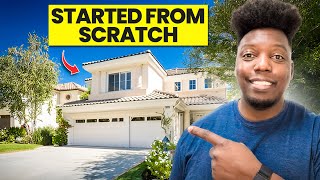
Royce and Priscilla left Airbnb for sober living housing in Sacramento. They negotiated a lease on a 10-bed house in North Oak Park, hired a house leader and virtual assistant, and faced insurance challenges before securing coverage. They're now scaling to more homes.
Questions this video answers
North Oak Park area, Sacramento
10-bed house
Mid-February (Royce/Andrew reference the 14th as opening day)
About halfway full; they said 'a little over a month' open in one remark and 'about two months' in another (timing varies in transcript).
A policy with $2,000,000 coverage and approximately $5,000 per person (as stated in the interview)
Chapters
Thank you guys for being here. Would you mind introducing yourself, your business and where you're from?
Yeah, so we are Resilient Recovery Housing. We're based in the Sacramento area, doing our transitional housing out here. We're from the Bay Area, from the, like, Vallejo, Benicia area, and also from South San Francisco.
Awesome. So it's you, Royce. It's your brother.
Yeah.
Hello.
Morrell.
Morrell. And then it's Priscilla.
Yes, I'm their aunt.
Okay, I didn't know that. So I love it when. When partners come together, but family coming together, that's even better.
Yes, thank you.
Very cool. So what were you looking for? What brought you to sober living homes in the first place and like, what brought you to us?
Yeah. Yeah, definitely. I think so. I've known you, Andrew, for a little bit now since, like, I want to say, the pandemic.
We were.
I was following you while you were still on your flipping journey through Austin and that kind of thing. And, you know, I was following you through that and I kind of like watched you, like, scale this transitional housing sober living business kind of from scratch. And pretty much watching you do that, it was interesting to me. Just because I haven't seen that type of real estate opportunity before. It was definitely refreshing to hear that there was an opportunity available too, where you can really synergize helping people with, you know, what our passion is in real estate. So I really like, like that. And initially we were doing like more Airbnb and like trying to go down that route. And we made the pivot last year in June because I've been working as a nurse in the ER and I really wanted to bring my. My brother on board. Me and my aunt were already kind of doing the Airbnb arbitrage thing and I wanted brother into the fold and try to do some of this sober living thing because I felt like it was something that he would be interested in as well. The work kind of like hits home for him in a lot of ways, and it hits home for me as far as, like, what I do with working in the emergency room. I work close. We're very closely with substance use populations, very closely with mental health, and very closely with re entry on a day to day basis. So kind of like really aligned all at once and kind of like allowed us as a group to come together and see if we can do something bigger than ourselves while still being able to successfully run a real estate business.
So I'd like to add that my background as well, I come from the dependency department I work for a superior court, so I work with the youth and families who, you know, need housing. And I've been in this industry for over 25 years.
Wow. Very cool. Thank you for. For sharing. Thank you for the work you guys do.
Thank you.
It's incredible work to begin with, so also want to do that within your off hours, means you're very passionate about it. And so from the very beginning, then. Well, actually, that. That's a good question. So you decided to switch from doing Airbnb to. To doing transitional housing. What did that look like? And what were. What was going wrong with Airbnb?
Nothing really was going terrible with our Airbnb. Our Airbnb, like, it still is doing well. It's just that we noticed that there were changes in the market. We noticed that although, you know, Airbnb is still. There's still money to be made in Airbnb and it's successful.
It.
There's. It was also overly saturated. There's. Especially if you're doing the arbitrage model, like, it's definitely a very difficult place to be. You could still, like, do well, like I said, but it's definitely something that you'd have to really, really, really put a lot of work into in order to be successful. And that same thing could be said about sober living. There is a lot of work to be put in, for sure, but I think that it's a special niche in the market, especially in California. It offers a lot of value for. For us as. Us as landlords, too. Like, I mean, because of the way that it works with, like, tenant rights and that situation, as well as also with how the price of homes are right now. And, you know, it's hard to really hit the 1% rule or anything like that in a traditional sense with. With rentals. And then when you're Airbnb, the laws are getting tighter and tighter in certain cities for Airbnb. So there's a lot of reasons why Airbnb started to become a lot less ideal for us. And that kind of, like, helped us decide that we wanted to pivot to this because, you know, it kind of, like, solved a lot of the issues that we were seeing with Airbnb early on.
Got it.
And I could tell you today in my courthouse, there is a case against Airbnb, and there's a big rally outside my court courthouse as we speak right now.
Oh, man. Yeah, it's. It's crazy. The stories I've heard of Airbnb of people being able to essentially just squat beyond The Airbnb term, all of those things. Plus, you know, like nightly rates going down. We've had a lot of people switch from short term rental to. To transitional housing and sober living, but for a lot of those reasons. New regulations, not renewing permits and licenses, that whole thing. But it sounds like. And it's not that it's. It's completely passive. I don't know that any real estate is fully passive. There's work to be done, like you said. But yeah, you can avoid a lot of that stuff with people having long term leases and you having no real, you know, way to see what's going on inside of the property and make sure that it's, you know, doing well. But also you get to change lives the whole time. I have hope, just. Which is pretty cool. And so you decided you made that choice. Hey, let's try this. So we're living transitional housing. And then you found us. You found sober living riches. What did joining the community do for you? What kind of value did we provide?
Yeah, I mean like similar to like the structure that we provide for our new guests in our sober living home. It provides structure for us really. Um, I think that having the community not only gives you resources as far as like the trainings and like the live recordings that you can look at, but also it just gives you a sense of community. You can also, it gives you a way to be accountable for yourself by looking at what everyone else is doing and kind of like thinking, okay, how can I be better? What can I do better? And also, like, just like also being able to navigate those problems amongst others who are also dealing with those same issues helps you really like find better solutions to those type of problems. So really it's like the all encompassing community, community of it all. Being able to get the education and of course, like having someone to mentor you through and guide you through who's dealt with those issues is a lot different than trying to solve each thing on your own.
Yeah, I love that. Thank you for sharing. And so. So you joined, you got a home up and running. Like, where are you guys at today? What does your portfolio look like? Like, where are you at?
Yeah, so currently we have one one house in the North Oak park area of Sacramento. It's a 10 bed house. We've been open for about a little bit over a month, I want to say.
Right.
What are we at?
Well, we officially opened in February, mid February. Right. I think it was on the 14th.
So it's like mid or it's like a little bit past Meeting. So I've been, we've been open for like two months now. We're just, we're just coming on about halfway full through the house. And it's been, it's been a process, you know, because obviously like it's a learning process as we go as well. But we've definitely started to iron out some of the kinks in our, in our business, in our, in our process. And I feel like it's starting to definitely take shape as a business. So. Yeah, I mean that's kind of like where we're at. We've already hired like additional like people on our team. We have like a virtual assistant who handles a lot of our day to day our websites and stuff like that. We have a. Our house leader.
Our house leaders.
Yeah. Who's awesome. He helps us with a lot of our like administration of drug tests and like a lot of the day to day with our guests and doing the move ins with them, move in process. So it's been, it's been really nice honestly. Like we've really gotten to kind of like be in the business for, for a while and we've kind of like immersed ourselves in this now and it's, it's pretty awesome. I mean like, you know, like it's crazy how many like community or how many organizations like reach out to us about like partnering and collaborating and wanting to do tours with us. And we're really seeing that it adds value to the community, which is ultimately what's what this is all about. So it's awesome.
Yeah. And then how has that been with people coming in? Like a lot of times sober living gets a certain stigma that it's going to be terrible. People who are court ordered to be there, they're going to destroy the house. What is your experience been? Because our folks choose an environment like ours, they don't have to be there.
Exactly. And you know, to your point, that has been the exact opposite of what we've experienced. Like we haven't had any problems with, with our people. They definitely come with a little bit like rough around the edges at times. But you know that's kind of like the thing that we, we are, we're looking for people who need help and like these are the people that we find and a lot of the times they're more than grateful to be there. Just like excerpt from our landlord because we do. We arbitraged this house. She happened to look at the cameras one day because she was like trying to see if her package was there and she noticed that our guests were cleaning the home, and she was just amazed at how often that they clean the house, how pristine they keep all of the common areas, and how well they respond. She comes to the house still to pick up mail, because some of her mail still goes there. And she's, like, pleasantly surprised by how kind and friendly our residents are. And she says that they're amazing, honestly, to people, amazing guests to have in her house. So she's. She's so happy to have us there and, you know, helping her out with kind of like. We kind of, like, worked out a situation with her so that she can buy a house for her and her daughter. And also it allowed us to kind of rent it as a transitional housing. So it kind of, like, really worked mutualistically there.
Yeah, that's awesome. And I was going to ask that next, like, how did you find this landlord? How did you negotiate the rental arbitrage? A lot of times people come in, they're like, I have to have a property first. But I think our most successful students, many of them have come in and they're just like, let me start with market research, figure out where the need is, and then go find the house, which is exactly what you guys did. How do you negotiate that lease?
Yeah, so actually, this lease actually came from work. I was, like, naturally, like, you know, when you start a new business and stuff, you get excited and you start to, like, have conversations with people about it. And I was, like, just telling one of my coworkers about how I was starting this transitional housing and how I looked to help people going through substance use and reentry and who were going through homelessness and behavioral health issues. And she thought it was super interesting. We were pretty transparent with her. And I think that that's the way that you should go about it. You should definitely just be transparent that, you know, she asked. I told her that we, you know, we've been doing real estate for a little bit, but this is our first home. And she said, would you like. You know, I was like. I asked her if she would possibly consider renting to us, and she's like, yeah, I know you guys do Airbnb, too, but would you. Would we do Airbnb or this? And I was like, well, preferably this. But, you know, if you don't feel comfortable, then it's okay. We can try the Airbnb route instead. But let me run by you exactly, like, what we would do and how this would work for us. So essentially, I sat down with her and we talked. It Over. And ultimately she. She saw the systems in place for our sober living and like, she saw the foundation that we were trying to set and the communities we were trying to serve. And that on top of, like, what we were able to do for her on the financial end, kind of helped her make that decision to go with us for the transitional housing route. And really what it came down to was this. I ran over numbers for an Airbnb for her house, and her house is in a very good location in downtown Sacramento. And I ran her house as a transitional housing. And because transitional housing also has the opportunity to make it a decent amount of money on top of it being a good way to help people, I was able to offer her a little bit more for her rent than I would have been able to as an Airbnb. So that helped her because she was able to use that extra money to afford her new property. And while still keeping this one, which was the whole thing, she was, she was planning on just selling her house possibly, but she had a two and a quarter mortgage that she didn't want to get rid of. So she ended up going with us so that she can get some cash flow and also help people, too.
I love it. So it's a win all the way around.
It's like leaving all the way around that that's the only way it has.
To be honest, in the autocad. Very cool. And so I heard that although this is your first, you guys are working on some others. Is that, is that the case? What's the grind look like?
That is the case. I mean, in our group, my brother and my aunt, they work out the logistics and the foundation of the day to day. And I'm the dreamer. I see the scale and yeah, there's definitely plans in our future. I mean, with the arbitrage model, we're able to hopefully scale to a few units over the next couple of years. We're taking it a little bit. We just, we were first going to pivot to two right away, but we decided to take it slow for the first one so that we can really build out those foundations and then we can copy and paste going forward. But yeah, there's a, there's plans for us as soon as this one gets full. Like my, my goal is to have another win going for us by summer.
Yeah, that's definitely possible. We're just, what, a couple months away?
Yeah.
And yeah, once you have everything up and running, you have the systems, you have the referrals coming in now you just need more space.
Yes, exactly.
Starts and repeat from there. Um, and so what would you say is your biggest accomplishment since joining Silver Living Riches Insurance? That is facts. Somebody cares a lot about compliance.
Yes.
Well, so tell me more about that.
Well, it took us quite a while. Um, I even jumped on a few calls with you with Royce. We. It. I don't know if it was just me or. Or the industry. I know it's part of the industry. That insurance has been really tough, not just in our industry now in sober living, but just all around, you know, California. Yeah. So I've had a heck of a time getting insurance and just trying to. Talked to different insurance brokers and finally found one in Southern Cal from Prime Sub, and they've got us a really good one. We actually. It's a $2 million coverage. 500. I mean, 5,000 a person, if needed. And. And it was about. It was. It was a little bit expensive, but we got something.
Yeah.
So that's awesome. And we're talking about commercial general liability insurance, right?
Correct.
Yeah. Very cool. Yeah. Because we. You get a landlord policy or, you know, a policy for the property if you own it, but if you're renting, you definitely want to have that commercial general liability to cover your business in case anything happens. So we do talk about that in the program, and I love that you jumped on it on some calls.
I did. I was frustrated, and I was just like, I don't get it. And. But you've smoothed a lot of that out with the questions. And then Royce also, you know, we went through some of the calls. I. I looked through the calls, which is great in the sober living, the. The school, and just took a little bit of talking to finding the right broker and letting them really know what we're doing, and we were able to.
To find something able to get. That's awesome. Yeah, it's. It is tough to make recommendations for that type of insurance because we have students in just about every state, and it's very state specific. Right. You have to talk to a broker who's licensed in that state. So you can't always say, like, we'll go and talk to this person. And there's some different focuses sometimes. Right. Women and children or mail house or veterans home. And so you have to be very clear. But we were here for you to offer that support, to answer questions, and we try to do that for anybody if they feel stuck. So thank you for using the community and the resources that we give you. Some people don't. And it's like, well, what are you doing? We're here for you.
Yeah.
Very cool. And so, gosh, before you do an Airbnb, Royce, I know you work a lot. ER nurse, 60 hours a week. What does life look like today? And kind of what's the plan in, in just a few months once you have two homes up and running?
Yeah, absolutely. I mean, like, well, you know, I've kind of done the mental math, the napkin math about like what I would need. And honestly, after this, if this first home is full, I can reduce my hours by at least 10 hours a week and once I get the second home, maybe another 10 hours a week. So as I continuously like build this portfolio and scale with my partners, I'll be able to step a lot, step away from my nursing more my W2 and kind of focus on this, honestly. But also like this, you know, as we continue to build out our systems, this is also becoming less of like a time intensive thing, you know, especially now that we've had, we have our VA on board and our house leader and we're starting to train people outside of ourselves to do some of the day to day. It's really becoming a lot more of a automated system in some senses. There are some things that we can't replace like with talking to people and building the relationships that will probably always be there. But that's honestly what I love to do anyways. I love building relationships with people and being in the communities and helping out in that sense. So it's going to feel a lot less like work, I'll tell you that.
That's awesome. And it's not another, you know, 40 plus hour a week job. It's you're actually starting this and getting time back, which is really cool.
Exactly. And you know, I can't say enough, but can't, can't say enough how important and how nice it is on our end that we have partners, you know, I mean, you know, obviously when you're by yourself, you know, you get to, you know, you keep more of the reward for, for yourself as well. But I can't speak on how much it's helped to not have as much headache by myself early on because I have partners, you know, to split up the workload. So that's been really nice for us. Honestly.
That's awesome. Was there anything else you'd like to share with anybody who's maybe considering joining the community and is on the fence?
Yeah, I mean the main thing about it is if you're considering joining the community, I would do it only if you have Two things, you know, if you have a passion to actually help people in real estate or, I mean, sorry, in sober living and people who are dealing with affordable housing issues. And that, in that sense, it really has to come through from the heart because this community does take a sense of patience. And then the other thing I would say is if you're looking for something where on the real estate side, if you're looking for something that's kind of still untapped, in my opinion, like, I feel like there's a huge need for this, and you can do a lot. It reminds me. I think I was talking to another investor about how it reminds me a lot of, like, Airbnb in its early stages, where it's, like, you. It's still pretty unregulated overall, and, you know, it's still unsaturated to the point where, like, pretty much any house will work for this model. Like, so that's the reasons why I would. I would. I would join. I would join again is because I feel like it just really aligns with those two things, if you're looking for that.
Yeah. Thank you for. For sharing. We love having you. We love the fact that you've given back a lot. You. You answer questions in the community, you've made some connections to investors, you share those resources in the community so that folks can find rental arbitrage opportunities like you have. And I'm really excited to see what the future has for all of you guys, especially as you start owning real estate, because you're going to be making a good amount. You already make a good amount, I'm sure. But then you can start to offset your taxes with the depreciation and stuff that comes with owning properties. So. Yeah. Thank you for being here today. Thank you for. For sharing your story and any last words. Anything else you guys want to share? Merrell or Priscilla?
Oh, no. Thank you for giving me this opportunity. And I'm so grateful that Royce, you know, stumbled upon you and. And we're here today, so thank you.
Yeah.
And thank you for having such a great community of people that are willing to share. So that's great, too.
Thank you. It's because it's made up of people like you. So thank you for being you and for sharing, and I look forward to you sharing as you guys continue to move forward and add on more properties and help more people in. Awesome.
Awesome. Thanks, Andrew. Appreciate your time, man.
Yeah, you're welcome. I'll see you.
Have a good day. Bye.
Bye.










