The 3 AI Rights No One Told Creators About | Trip Adler, Co-founder & CEO @Created by Humans
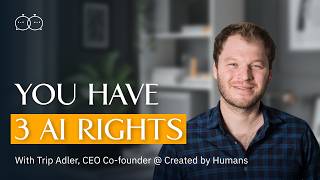
In this interview, host Angelina Yang talks with Trip Adler, co‑founder and CEO of Created by Humans, about the company’s mission to reconcile copyright law with the rapid growth of AI. Adler explains that Created by Humans aims to build a marketplace that lets rights holders (authors, publishers, agents) license their works for AI use while giving AI developers legal confidence and a reliable data source. He introduces three distinct AI rights – training rights (using works to train models), reference rights (allowing AI to retrieve and cite passages via Retrieval‑Augmented Generation), and transformative rights (generating new content based on a work). The conversation covers recent high‑profile lawsuits (Encyclopedia/Merriam‑Webster vs. OpenAI, Anthropic settlement) and the evolving legal landscape, noting that rulings on fair use for lawfully purchased books are still unsettled. Adler describes market reactions: some authors and publishers are enthusiastic, others skeptical; AI companies range from eager licensees to those waiting for legal clarity. He outlines licensing models (usage‑based fees, revenue‑share, upfront payments) and mentions internal detection tools for tracking training and output usage. Scaling challenges are highlighted, especially the complexity of clearing multi‑party rights for trade books, which the company addresses with an author‑sign‑up platform that streamlines rights selection and agreement. Competitors such as Microsoft, Amazon, and other AI‑rights marketplaces are acknowledged, but Created by Humans claims a niche in handling multi‑rights holders. Adler offers advice to indie founders on engaging early with licensing, stresses the importance of goodwill, product quality, and legal compliance, and shares his optimism that a middle‑ground legal framework will emerge, allowing creators to be compensated and AI innovation to thrive. The interview concludes with personal reflections: Adler recommends "Good to Great" for building world‑class companies, "Siddhartha" for learning through lived experience, and looks forward to rereading "Barbarian Days" about surfing, using a bike‑riding metaphor to illustrate resilience and safe‑proofing oneself against setbacks. He reaffirms his commitment to solving the fair‑use and copyright challenges for creators and signals future updates on transformative rights.
Chapters
Napster was also kind of legally gray area, right? And the answer to that was iTunes and Spotify, which is like building out the right legitimate model. So that's what we're trying to do. We're building out the iTunes and the Spotify of this space so that people don't even want to use the Napster anymore. They want to just do the legit version.
Trading a lawfully purchased book is fair use. It's only the pirated copies that were infringements. Patreon CEO called the fair use argument a bogus excuse, right?
First emotion is confusion about what's going on. I feel a little sad that there's so much confusion, so much conflict, because I feel like we should just build out solutions that work for everyone. Trip, welcome. Great to Nice to be here today.
I don't think I can do you justice by giving this LinkedIn headline version of you. Do you have a version that's not on LinkedIn? Let's start with your product right now, the Created by Humans. By the way, I really like this name, Created by Humans. Such a great name.
Yeah, thank you. Yeah, we're, we are, you know, the company that is sticking up for, for human creativity. So we call it Created by Humans, and what the company's aiming to do is we're aiming to solve copyright in the AI era. You know, it's so far when, when AI came along, it felt like copyright and AI were oil and water, but we, we want to try to figure out the nuances of how to make the two work together, and then ultimately create a business model where rights holders can get paid for their data and AI companies can get the data they need with legal confidence. And we've been really focused on books to date. We have our hands full of books. We have aspirations to other kinds of content too, but right now we're just really focused on books and trying to make this work for books.
What's your big bet here?
Well, I think the big bet is that we can make copyright and AI coexist. The conversation about it has gotten very polarized where people are either like, well, we need to like end copyright law, or we need to like fully follow copyright law to the letter. And I think like we can, we can make both of those true if we just build out the right, right model. And I think our end goal is to, is to have great AI products being created, you know, that are powered by human data, and then also have a business model that keeps humans creating things.
Let's talk about news. Earlier this month, you must know this, Encyclopedia and its Merriam-Webster subsidiary sued OpenAI for training on their copyright copyrighted articles. And last year, Anthropic settled for $1.5 billion with authors, right? The largest copyright settlement in the AI era. But the court is ruling that training on lawfully purchased books is fair use. It's only the pirated copies that were infringements. But recently, Patreon CEO also called the fair use argument a bogus excuse, right? And you're in— you're sitting in the middle of all of these. When you see these headlines, I'm curious, like, what is the first emotion that comes to your mind?
Well, first emotion I think is, is it just, I guess, a little bit of confusion about what's going on? I also guess I feel a little sad that there's so much confusion, so much conflict, because I feel like rather than there being lawsuits and confusion, we should just build out solutions that work for everyone and make everybody work together here. Yeah, there have been some really interesting lawsuits, and I mean, they're really still going on. It's still very early days, and I think there's no clear answers to all this. This whole idea of like, is training fair use or not? I mean, I think it's not a black and white answer. I think it's going to be very nuanced, going to be very case by case. And I think as each of these lawsuits play out, as each of these deals get done, they'll slowly start to kind of form kind of market standards around these things. I think it's still very much up in the air how this all plays out.
I mean, as a creator myself, the first thing that comes to my mind was it's just not fair, and there got— there has to be a solution at some point, right? The, the fact that the court says purchase book is okay, I don't really agree with it. Think about like if I purchase some books and I I tear off the binder and I scan them and then just do training on top of that data. If I'm a creator, I don't think it's fair, but I'm struggling here because I'm also an AI engineer. I train models, so I understand the need for good input data as well.
Yeah. Uh, well, I think it's, it's, uh, it's the input data and it's also the outputs, right? Because right now you can, you can ask these AI models questions about books and it gives you pretty good answers that, that serve in many cases as a substitute for the book. So I think there's like a lot to be, to be figured out. The way we've approached this is we've created the concept of what we call AI We realized the world needed some new set of rights here to kind of make this possible. And we've created 3 categories of AI rights. So the first is training rights. That's the right to use books or other human-created works in model training. The second we call reference rights, and that's the ability to use books in RAG. And then the third is one that we call transformative rights, which we think is really exciting. That's the ability to take a human-generated work and transform that using AI. And I think like in order to solve this problem, we have to kind of build solutions and a marketplace around each 3 of those categories of AI rights. And that's, uh, that's what we're doing.
The training rights is really training the model. So you give the data and, uh, you have the RAG reference right, which is retrieval. So search and retrieval and the citations in like chat interface within ChatGPT, for instance, that's a reference right. And the transformative is the generative version of it, the result.
The reference ones are like if you ask a question and the answer is on, you know, page 100 of a book, we would be able to reference where that answer came from and then also get the author paid for that happening. Because, you know, maybe someone didn't actually read the book or buy the book, but if they got, you know, some information from page 100 of the book, we think they should get some, some money for that. And we think that's a big new model for the, for the book industry. And then transformative, that's, I mean, that's, that's really kind of early days and there we think there's a lot of potential there to just you know, to take a book and then transform it using AI.
What's the biggest one of the three right now?
The two we've gotten the most traction on are reference and transformative. We've gotten less traction on training, and that's just because it's so legally up in the air. I think when there's all these lawsuits, I think a lot of people want to just wait for these lawsuits to play out before they decide to actually license training data, um, at least license training data that they can get for free, um, in other ways. Um, so, uh, for reference rights though and transformative rights, those are more clear from a copyright perspective that licensing needs to happen. So we're having more traction around those two.
How do they get caught, right? If I'm a company building something, I don't know. I wouldn't say that this would be the first thing that I think about.
Like, how do they get caught? What do you mean?
Like, how do you detect that, you know, there's reference needs needed or there's also transformative rights is even harder to detect, right?
Yeah. Well, that's what we're trying to build the rules around this and then like the framework around it. Yeah, we actually, we built all these tools to try to detect whether data was used in training or in outputs. We actually built some pretty cool tools internally. We didn't actually, they kind of hadn't materialized the business just because we've been working on other things. But there are, there are some technical tools we could, we could build around this, but that's really the idea is to build what kind of the framework that can get humans and AI working together in a, in a nice way. And that's, that's what we're, we're trying to solve.
I'm curious, how do you think the courts ruling might evolve over time, if at all? Do you think the Do you think it would change? Right now it's like, you know, if I buy the book, then it's okay.
Well, that was one ruling said that if you, if they buy the book, it's okay. I think there's going to be many more rulings and each one's going to be a different outcome. So I think it's really still up in the air. But yeah, the Anthropic ruling, they said if you buy the book, then they can do it. But I just think it could be different in other cases. But even if they buy the book, it's okay that way. I think it's still not a great solution because I mean, it's just not efficient for every AI company to go out there and buy every book in the world and scan them in order to use them for training. It's just not efficient model. So, you know, I think there's a lot of work we can do just to make that, um, make that more efficient and easier for AI companies.
How do you do that? Is that what the— what Created by Human is for?
Yeah, well, we, um, well, one, we clear the, the, um, the AI rights so that these companies can get the, get the books with, with legal confidence. And then two, um, yeah, we're building out the infrastructure to make this really easy so that if an AI company just needs, um, you know, a million books or 100,000 books on a particular topic, we can just get them the files They're like ready to use in an AI-ready format. So we're also building out like an infrastructure layer here just to make this really seamless for both, you know, rights holders and for AI companies.
So AI companies, instead of them trying to figure out how to acquire those books one by one, they can just come to you basically.
Yep, that's the idea. They can just do one simple deal. They can get all the data they need, have legal confidence, and it's just easy and simple. Yeah, we are, I think the one thing we've learned about AI companies, they want to move really fast. I mean, this is one of the reasons why they used books without permission is they just wanna move really fast and we wanna encourage them to move fast. We, we wanna encourage AI innovation, but we wanna allow them to move fast, but in like a legally clean way with the buy-in of creators.
Is it just fast you're looking for or it's also cost?
I, I think it's both. I think it's fast and it's, it's, it's speed and cost. But I, I guess our, our, you know, our goal is that if we could solve the speed problem, that they're willing to spend more, more money to, to, to get the, to get to solving their problems. At the end of the day, I mean, we all know these AI companies have have a lot of money. They're raising these major rounds. And if we can just allocate, you know, a portion of that to go back to authors and creators, we think that's going to be a good thing for the world.
Yeah, that I agree. Do you think the settlement actually, all these recent settlements and maybe future lawsuits are actually changing AI company behavior, that they're actually thinking about just paying it upfront instead of paying the lawsuit?
Yeah, I think it's definitely changing behavior. I mean, there's an era where it seems like these companies were were acquiring data by whatever means possible. And they've definitely cut back on that. They've also really reduced the outputs. Like if you try to ask ChatGPT, for example, to try to replicate a piece of copyrighted text, it'll, it'll say it can't, it can't do that. I mean, same thing with, with Claude and all these models. They've, they've put a lot of copyright restrictions into their, into their products, which does, you know, limit the user experience. Building a model, we can actually then bring back those types of prompts and those types of outputs, but do it with the buy-in of rights holders.
I see. Yeah, that makes sense. Do you Are you— what are you— since you're building this product and you're going to market right now, right? Can I ask, like, how does the market react so far?
So it's, um, it's really— opinions are all over the place. Uh, I think, like, it's amazing just how diverse opinions there are. Um, I mean, on the author-publisher side, I think it's all over the place. Some authors and publishers are just extremely excited about this. They see it as the next big thing. Some of them just are in the opposite perspective. They're are unsure about AI and they're hesitant. And then there's, then there's all sorts of opinions in between. And the AI company side of things, it's, it's similar. We've, we've had, you know, we've done some deals where there's been a lot of enthusiasm and there's a lot of, you know, just kind of mutual agreement up front on, on, on what they want to do and how they want to work with, with authors. And then there's also been situations where I think AI companies just, they, they don't want to license or, or another common situation is just that these, they, they want these lawsuits play out before they actually do deals. So it's really been all over the place. But I think there's enough enough interest that we're getting a good business going. And I think over time, I think it'll just get more momentum as these lawsuits play out and as this new model kind of just solidifies into place.
I'm really surprised that there will be authors who said no to this and there will be AI companies that easily said yes to this, right?
Yeah, there's been some— I mean, there's some AI companies that really believe in this model. I mean, not everybody just wants to get data without permission. There are companies that are enthusiastic and And yeah, there's authors who don't even want to have a conversation. They just, they don't like AI, right? And I think our goal is to turn them around over time. I mean, by showing them the solutions that work for them. I mean, there is a lot of strong emotions around this. I mean, a lot of authors feel like their work has been stolen from them and they feel like their best path here is just to resist working with AI companies. But we think that by, you know, building the right solutions and making this all work over time, we'll kind of smooth it out and get everyone working together.
Yeah, I see. Yeah. So, so if, It's more than just revenue. Like, this is not just a revenue channel, but it's also like whether you fundamentally agree with that your books should be part of the input for an AI model.
Exactly. Yeah. And there's also concerns around, you know, like the creative control. Like, is the AI going to distort what their creative beliefs are? You know, quality control. Is the AI going to misrepresent them? There's all those kinds of questions that we're working through. Um, and so it's, yeah, so it's not just about money and the legal cases. There's also kind of like a more fundamental questions about like how AI would modify humans' work and, and, you know, whether the human behind that is, is comfortable with that or not.
Can you say more about what you say to them when they ask you these two questions?
Yeah, I think we're at the phase we just, we listen to their feedback and we try to integrate it as, as best we can. Um, and I don't think we're going to win over every author in the world right now, but we're going to get enough that we can kind of prove out the model. And then I think And over time we'll get more folks on board as we prove it out. But yeah, I think, I mean, I think we're all learning together. I mean, we're learning as a company, AI companies are learning, authors are learning, everyone is just adjusting to this new AI reality. So it's just a learning process for all of us. And, you know, our role as a company is just to try to, you know, bring everyone together on this particular topic.
What do you think is the end state? What's your prediction on the author side or the AI company side or the court side? You're playing with all these different stakeholders, right?
I mean, on the court side, I think it's going to be some sort of middle ground. I don't think they're going to decide that all training is fair use. I don't think they're going to decide that all training is not fair use. There's going to be some sort of middle ground solution that kind of works itself out. I think the long-term state that we believe in and that we're trying to create is one where, you know, humans keep creating things and they feel incentivized to create things and they get paid for creating things. And there's, you know, appreciation for human creation. And then also AI innovation is moving forward at the fastest speed possible. and innovation is not slowed down by copyright, and that these two are working together nicely and in a nice relationship. You know, it got off to a rocky start with all these lawsuits, but we think long-term we'll get humans and AI working together, and that's our goal.
How do you think such a state would exist in the future that can balance among all these three, you know, different stakeholders? If I truly believe that my creation is my creation and I don't want any AI to use it for any, you know, derivative content creation, then maybe I just believe in that.
Yeah, I think there will be some people like that, you know, till the end of time. I mean, I'm sure there's some like authors who only do print books and they don't want ebooks or audiobooks, or there might be some, you know, musicians who only do live shows. I mean, I'm sure that those kinds of things exist, but I think like overall, I think over time as these things get built out that, you know, the majority of people will get on board for the new model, but just we're still in a state of figuring it out and And the model just needs to be built out.
Can I ask, like, what kind of AI companies are willing to pay, willing to license?
Some of the big guys. We've done deals with the big AI companies, the names you would know. And there's also a lot of startups. There's a lot of startups that are interested in this, which are just, you know, earlier stage version of bigger AI companies. So there's startups, there's big companies, and then there's other ones you wouldn't expect. I mean, we just did a a deal with a government agency. We've had interest from like universities. I mean, there's a lot of different people who are developing AI these days who are looking for data and books, and those are the kinds of deals that we broker.
For the 3 categories that you mentioned about, the training and the reference and transformative rights, are these 3 different products in your mind?
Yeah, they kind of are actually. They're like 3, they're each their own different thing, and they're almost like 3 different businesses. I mean, they do overlap and often if we're, you know, doing a deal or building a product that it might leverage all three rights, it might leverage training, reference, transformative. But I mean, if we really want to, we could be building three separate companies here around each of these categories of rights because they all have their own different nuances. So yeah, it is, I mean, there, it is kind of a wide area of opportunity in that sense. But it's all, it all kind of is just around this theme of bridging human creators and AI.
Who's buying each one? And can you share like, what does the deal look like?
So far, every deal's been very, very different. There hasn't been, um, you know, kind of one consistent template. Um, I think over time as we do more, it will become more standardized, but at this point we're just kind of figuring out one deal at a time. Training deal looks different from a reference deal, which is different from a transformative deal. They all just have their own nuances to figure out.
Like, if I think about the RAG use case, you said that you build some tools to detect, like, you know, if a book is being referenced. How does that work? Are you providing that to the author side or the company side? Is it analytic?
I mean, I'll give an example of a deal that we've, we've done that we haven't announced yet. It's with a well-known AI company. What they're, they're, they're licensing books to be used via, via RAG. So the idea is if you use their service to ask a question and they, the answer to the question is on page, you know, 250 of a book, we would then surface that, that answer and then we link back to, to the book where that answer came from. And, you know, we think it's a, it's a really it's a good, um, it's a good progress for, for how this is playing out because one, the AI company is getting permission to use the books. They, they're not, they're not using pirated copies. Two, that we're, they're, they're, um, they're linking to where the book can be purchased so that you can drive sales of the book. And then three, they're also sharing incremental AI revenue with the author and publisher of the book. Um, so there's an additional revenue source here. Um, so that's, that's like one of the deals we've done and we think it's a really good step in the right direction. Um, we're hoping to do a lot more like that and see the industry play out more like that going forward. Um, like, that would be one example.
How do you charge for it? A lot of the AI companies have a chat interface, and then they answer some user questions, and then they return the citation at the bottom. And then, based on my understanding, you have the book link, and so people can actually— the users can buy that book over there, and you do have the citation. How do you charge? The AI company? Yeah.
Yeah. So, so I mean, one, first of all, the one way to make money is that selling the book. So it's a new model for selling books. But then too, yeah, there is this additional incremental AI revenue that gets shared, shared. We are negotiating that with each, with each deal. There isn't a, I wouldn't say there's a standard yet. There's far from a standard, I think, but, but different AI companies are forming different ways of like distributing AI revenue back to rights holders. And yeah, I can't share the specific how we do it for this one deal. But we figured out a model that works well, and we think we'll be doing more deals like that going forward.
What are the typical models, like categories of models that works? Like, is it by usage?
By usage is the one I'm referring to now. But I could also imagine in the future there could be like a rev share model. I mean, I'm a big believer in that where it's like, you know, an AI company can just say, we're gonna allocate X% of our revenue to creators and pay that way. Another model could be they could pay for like an upfront payment for it. But the one today, it's mostly been by usage.
I see. So if I am a small, let's say indie founder who just started out, should I think about this? Or at what point do I need to think about licensing? For instance, let's say I'm building a therapy bot referencing articles and books, right? At some point I could use something like this.
Yeah, I know it's a good question. I mean, if you're a startup founder listening to this and you're looking for licensed data, I mean, we'd love to talk. And this is a great way, I think, to get visibility for what you're you're doing to, you know, take this approach of licensing data. 'Cause I think it's just, it's the right way to do things and it's a great way to just get visibility and do things the right way. I mean, I do think a lot of founders just wanna move fast and they don't think about this question very much. And that's why there is just a lot of piracy going on in the world of AI and it's all kind of legally gray area. But we think over time we'll kind of build new standards here, build new solutions and clear the rights. And eventually over time this will become just a more like legally clean situation. When should I think about talking with you then? I mean, I think everyone should talk to us at every stage. If you're just thinking about your idea, we'd love to hear from you and talk and talk to you.
Okay, that's cool. What's your suggestion to those founders? Because there's a legal line at some point to my journey. Like if I'm building this therapy bot, I'm going to go to market. I'm trying to build the product, make it work, go to market, grow my user, right? These are the first journey.
Given my role at this company, I can't encourage a founder to do copyright infringement. I mean, that's just not what I can do. So I would suggest founders reach out to us and work with us to do it right. I'd say that what a lot of founders do do is they kind of like push the boundary on this a little bit just to get their business going. I mean, I could tell you like in my last company Scribd, I mean, I'll give a little background how I got into the world of copyright. So when I was, you know, just outta college, I launched the site Scribd to let people upload documents to the web. And I didn't at the time know anything about copyright. And of course what happened is people started uploading pirated books to the website. And then, you know, immediately within days we had all these cease and desist and threats from the publishing industry saying, hey, you have to take our books down. And then that was when I started to understand this whole issue and we implemented a whole DMCA takedown process. We built the whole copyright filter system. This is why I really learned about copyright, but I think I learned about it by first kind of making a mistake and misunderstanding it. So I think that's a common founder journey. But I think ultimately though, I think like, you know, it's the earlier you embrace copyright, the better. And, you know, we're here to help and we do work with startups. So if you're a startup and you wanna navigate this, we'd love to talk to you.
Thank you so much. I think that's really helpful. People without going through the journey, they are aware that there's something there. There could be a blocker on the road. Road at some point, even if you focus on go-to-market first.
Yeah. I mean, it's, it's all just so kind of gray area. Cause like another thing people are doing is like, they'll take like a book and they'll, they'll upload the EPUB file to Claude or something. And then they'll like, they'll, you'll interact with the book and transform it. And it's, it's just, it's also legally gray area right now. And I mean, our solution is like, let's, let's just build the right solution so we don't have to like guess about what's, what's legal. If you look back at like, you know, the Napster era, right? Napster was also kind of legally gray area. Right? Um, and the answer to that was iTunes and Spotify, which is like doing the right, building out the right legitimate model. So that's what we're trying to be. We're building out the iTunes and the Spotify of this space so that people don't, they don't even want to use the Napster anymore. They want to just do the legit version. And that's what we're building.
And this is true. This is, uh, this is applicable to any AI company building, not just the research lab building the models, but also the application layer, right?
Yep. Yeah. I mean, it could be for training models or it could be the application layer. Yeah. That's, those are the reference rights and transformative rights. That's usually typically used the application layer. So that's where we've gotten a lot of the interest in transformative rights for.
Do you think an indie founder, one or two person team can afford the platform?
Well, we, like I said, we structure all kinds of deals so that some, it could be a deal with a large upfront, you know, upfront payment, or it could be a deal that's entirely usage based. So, so yeah, I mean, we're, we, you know, we want to work with companies of all sizes and if you're a small team and you want to try to do this, we're very happy to work on it with you and find a model that, that works.
Other than, other than the legal risk protection perspective, is there any incentive for, for AI founders to, to use something like this?
Ultimately, you can build better products if you're getting legitimate data. Using pirated data is not going to lead to the best, the best products. I also just think it's, it's good for goodwill. A lot of creators are very, you know, emotional, upset about what these AI companies have done. So I think, I think building goodwill out there with, with your customers and with just the world in general is always a good thing. So I think, yeah, I think there's legal reasons, there's goodwill reasons, there's product quality reasons. So, and yeah, we think this is where the world's going to go over time.
Yeah, that's great. What about transformative rights? Who are buying those? Is it also not the big research labs?
Yeah, I can see that transformative rights are the most complicated ones. There's just a lot of complexity and there's a lot of questions around what authors and creators are comfortable with. I think actually the bigger issue there is not really the legal issues. It's like the questions of like, you know, taking the original work and modifying with AI and doing that in a way that creators are comfortable with. So, I mean, that's the one I think that that we are, um, in my opinion, has the most potential but also has the most to still to figure out.
Yeah, it's the first thing I can think of is a challenge would be how would you know, right? I don't know how people find out.
Yeah, I mean, you mean like how do you, um, if I— how do you know if I'm an author and it's harder to, to detect?
And I'm probably not policing myself actively either, right?
Yep.
Yeah, so it's hard for it.
Also, it's hard to know what's happening. Once your file is out there, it's all sorts of things can happen. Um, yeah, I mean, I, I think like, uh, you know, I think we could bring back our efforts to kind of build these detection tools, but I think ultimately it's like, um, it's, it's just building, building the best solution. I think if we build a really great solution here, people will, will choose that over these piracy options.
Yeah. Let me, let me try something. Let's say if I'm the indie hacker to, uh, to take a stab at building an AI rights licensing platform for books. Just like how you did it. And here's my high-level thinking I have, and maybe can you tell me what I missed?
Okay, sure.
Sounds good. So, so I'm thinking here, my high-level thinking, that maybe I'll start with building a database of books with the ISBNs. There are public datasets for that. So I get all these data about what, what books are out there. And then I'm going to cold call all the authors and let authors sign up and claim their books. Then like how you did it, create 3 licenses. License types, like training rights, RAG, transformative, and I'll set a price per book, per license type, let's say. And then I'm going to reach out to AI companies to negotiate deals for them to buy. This is my high-level thinking, but I admit there's a challenge here, which is I think it's going to be hard for AI companies to respond. It's my first reaction. What do you think?
Are you thinking about starting this company? Are we going to be competitors? Is that what's about to happen?
Yeah. Only in this episode.
Okay. Only this episode. I think, I think what you said sounds right. I mean, yeah, I don't think every AI company is jumping to license these books and these rights, but we have enough traction, I think, to get this going. You know, you just need one deal, which leads the next deal, which leads the next deal, and then it kind of, the snowball starts to go downhill. So, so yeah, I mean, that's one of the challenges is getting AI companies to want to do this, but I think we're, we're making good progress. And I think also once these lawsuits Um, kind of, um, I think that'll also be another catalyst for this to, this to pick up even more.
Can you, um, can you, can you, you actually got, was able to get the AI companies that you mentioned to the table, and can you walk us through how you designed that deal? Like, not the actual deal, but just the thinking process. Like, how do you, how do you think about how to go out and get this company to talk with you?
Like, how to just get the conversation started? Yeah.
Yeah. Get, get the conversation started and design a deal that they, it's, it's it's more acceptable to them, right, that they are willing to talk with you? Because my first reaction, this might be the hardest part.
Yep, yep. Yeah, well, I mean, um, first of all, I mean, we, um, um, I mean, we, we kind of have, you know, gotten ourselves out there. We have a lot of big authors in our platform. We have a really good brand. So I think we've got a lot of attention just from— there's kind of the visibility of the company. Also, I mean, I've just been working in Silicon Valley for, uh, I think almost 20, 20 years here. So I have a lot of relationships. I've been able to get to a lot of the right folks, these companies, just through relationships. Um, so I think having just a good brand, having good relationships is kind of the first kind of like the first kind of step. And then, and then once you get the conversation going, it's just a, it's a matter of understanding what their, their needs are and how, how we can help. And it just becomes a discussion and a, and a collaboration.
So the, the first step is going out and then, you know, have a conversation about this topic. What do you think is, is there a signal that can move them? I'm just curious, like the, you know, realize, okay, this, they're, they are actually the right customer and they're really thinking along the lines. That aligns with your goal.
Well, remember, most AI companies, bigger ones, have data acquisition teams who go out and license data. So this is not, it's not like it's, it's that, that, that complex of a thing. I mean, I think where it gets trickiest for us is a lot of these, these companies have already trained on the books using pirated versions. And we, we have this challenge of like, well, well, you already have the books, but let's try to do this in a more legitimate way. And I think that's, that's the challenge. But, but most of these companies already have teams dedicated to this. So it's not like it's, it's that foreign of a concept to bring to them.
Ah, I see. Okay. So, so the data acquisition team is the right way to go. Okay. I think I can become a competitor of yours then. Just kidding.
Uh-oh. Uh-oh. I'll have to hold back our best ideas here.
Yeah. Uh, how do you, how do you figure out what's fair? There must be a revenue split somewhere along the lines when you talk with the author, the publisher, and the AI companies. How do you, how do you figure out what's balanced? What's a fair payment to, to all parties?
I mean, there's no one right answer. There are some people arguing that all data should be free. There's some people arguing that data's, you know, the most expensive resource in the world. And I think the answer is somewhere in between. The way we solve this is just each deal one at a time kind of gets a little more precedent set to start to figure out what's fair. Each lawsuit that gets resolved, like the Anthropic one, that sets a little bit more precedent. And I think just like each baby step that evolves kind of starts to gradually form the market price over time. And, you know, I mean, we're not in the business of deciding what's fair. We're in the business of trying to like, you know, bring the different players together, establish the market price and discover over time what that fair market price is.
How do you, how do you discover the fair market price by talking to people?
Well, I think ultimately if you get deals done, one deal is one indication of the price and the second deal is another indication of the price and the third deal is another indication of the price. And then after enough deals that you, you just get to the point where we're like, okay, well we've done, you know, 20 deals and this is kind of the average price. Right. But I think we're still kind of in that process of figuring that out.
How do you come up with the first deal then? First deal price?
We're in the process of one deal and we've been bringing it to publishers and some publishers have said enthusiastically yes. And some of them have said that the, the numbers aren't good enough for them. So, so it's like, you know, and, and then we might go back to the, the iCompany and say, well, we, we could get you these publishers, but we would increase these numbers. So, so it's, it's those kinds of discussions. It's just kind of a, So it's a lot of discussions that just sort of play out over time.
I see. What do you think of Web3 smart contract type of solution? Would that be applicable here?
Yeah, I've, I've, I've thought about that a bunch. I've talked to a bunch of the blockchain folks about it and there's a lot of enthusiasm for this sort of idea. I just, I just too busy to do that, to do that right now. But I do think there's a big opportunity to put IP on the blockchain. And, uh, there's companies that are working on that, uh, and, um, I, I, I'm interested in expanding that over time, but like, I'm just, I got my hands full doing what we're doing right now.
Yeah, yeah, yeah. So, you know, you're building this marketplace for book licensing, but it, it looks like you're not the only one building a content licensing marketplace anymore. Microsoft just launched their publisher content marketplace, I think last month, 2 months ago, maybe February. And it seems natural for Amazon to build also, right? What, what's your reaction to that?
Yeah, there's, there's now a lot of competitors in this space. We were, we were kind of, I guess, earlier than most. There, there's now a lot of, a lot of players. I mean, I, I, this is just, I think this is how it goes. There's just, there's a lot of, a lot going on right now. A lot of different players. I think that, you know, we're gonna, we're gonna find our niche. We're doing particular kinds of deals that are, that are working. You know, we've been really focused on this whole, this whole multi-rights holder problem, which is something I think we've uniquely tackled. Um, you know, because, uh, we're still—
what is—
we're still the only platform that's going direct to authors. Um, so, so, you know, core idea what we've done is that, um, you know, when in, in, you know, there's different types of data out there, different types of books, but when it comes to trade books, which are kind of like the books you see at the bookstore, um, um, like those types of books, the, the rights get pretty complicated and there's, um, there's multiple rights holders. So for a particular book, um, there's, you know, if you want to license the, the AI rights, you typically need to get sign-off from the author, maybe the co-author, the publisher. Sometimes there's multiple publishers involved, there's often a literary agent involved. So there's a lot of rights that holders need to be cleared for a particular book. And we've been really the only company to take that particular approach to the market. So I think for that particular niche, we're sort of, you know, we're really kind of in a leading role for that.
Multi-rights, meaning that all of those parties will get paid through the process?
Yes. Yes. That's a large part of the complexity of what we're doing. Because, you know, one of the big reasons these large AI companies didn't license the books for training in the first place is that they, they just looked at the, how complicated the rights were. And they're like, this would be impossible to clear the rights for, you know, 'cause they all needed a lot of books. They needed like a million books. It was just impossible to clear the rights for the books. And that's really, you know, one of the key problems we've solved is clearing those rights across multiple rights holders. And, and yeah, and, and compared to other AI rights marketplaces out there, we've, we've really kind of gone the furthest in solving this particular problem.
And this is— this is— every book has different set of rights stakeholders.
Exactly, exactly. And it gets very complicated and there's a lot of nuance around it. Um, and in the world of AI, they just want to get, you know, a million books and just train on them and not think about all the complexity. And that's, that's like the— that, that's kind of the big divide here. And that's the problem we're trying to solve is like, how do we, how do we, um, uh, combine this world of complex rights with the speed of AI? And that's really like the— I think You know, the, the problem that this company is working to solve.
How, how do you scale that solution? Okay. Different. How do you scale it?
That's what we're figuring out. Um, I mean, we've built a pretty good platform for this. Um, so, you know, like when we started this, we, we were talking to publishers and they all said, well, there's no way you can get authors on board cuz there's millions of authors. You can't get millions of authors to sign up. And we built a platform that allows an author to just sign up, verify their identity, select the rights they wanna license, and then With one click, sign a licensing agreement. So we built a way to kind of scalably get these rights. And, um, I mean, that's, that's one, one component of how we solve it.
Do you have a unique insight that you know about this industry that maybe Amazon doesn't?
I mean, I, I've, uh, we've gone further in this whole AI rights direction than I, I think anyone else has, as far as I know. Maybe Amazon's working on this in a way that, that we're not, but we've, we, I don't, as far as I could tell, we've kind of gone down our own creative path. I feel like we're. We're on our own path so much that we're the only ones thinking the way we're thinking, which I think is, it's hopefully a good sign. But we've, I think, I think we're definitely, you know, we're, we're kind of thinking about this in a pretty original way. And I, I could tell you like, you know, competition is not really the thing that, that worries me. I think we just have big problems to solve. Um, I mean, these markets are just so huge. There's so much opportunity that I think there's room for, for multiple players. And this is just, it just, it's really, can we execute what we're trying to do or not is really, really the question.
I mean, as a content creator, I mean, as an author, I think it's good news because I can be on your platform, I can be on Amazon at the same time, and you're just maybe working on different deals with different AI companies.
Yeah, exactly. There's just, there's so many companies, there's so much going on in the world that there's, there's plenty of room for lots of companies here.
Right. And you run, you run Scribd for 16 years. That's quite a long time.
Had a long run. Yeah.
Right. Yeah. What controlled how fast Scribd could grow versus What do you think today is controlling how fast created by human can grow?
Well, I think the rate of growth depends on like how quickly you find product market fit. Find ability to find product market fit is just the ability to, you know, land the right strategy and execute really quickly. I mean, at the end of the day, it's just execution. It's like how quickly you can execute. Scribd was, yeah, I was there 17 years. You know, it was a very, it was actually a very like steady grower over the years. And if you look at the 17-year revenue growth curve, we grew grew every single year, um, by, you know, I think it's like average of 30% growth per year. It was kind of a very steady upward growth for, for many years. And I think, um, uh, yeah, I mean, I'm intending to do the same thing here. Just, you need to— building a company just takes, it takes time. It's— I mean, sometimes you have these, these companies where, you know, they, they launch and then they're, um, they, they grow extremely quickly overnight. But I think, like, in my experience, it's like you got to just keep thinking long term, placing the right long-term bets and just kind of keep executing and then things compound over time.
What's your long-term bets on Created by Humans?
In terms of—
In terms of everything, what's your long-term bet? What's your long-term thinking about this company you're building now?
Well, yeah, I mean, we want to be the company that protects human creativity in the AI world and creates a business model for it, and then also helps drive AI innovation and gets those two working together. And I think, you know, an opportunity to build a really big business. I mean, this is an enormous, it's an enormous market and there's just, it's the, there's, there's, I mean, there's some competition, but overall I think there's a lot of room for, for us to, to, you know, help solve this problem and build, build a big business.
Do, do you think there's something that you learned from Scribd that's applicable here?
Well, I think I learned a lot just about building companies. I mean, I think entrepreneurship's a learned skill and I think just spending years working on it, you learn all the skills of how to build companies. But I think more specifically, I mean, at Scribd, you know, we, we pioneered the subscription model for books, um, and that was, um, it, it had a lot of similarities we're doing now. I mean, we, we had to get authors and publishers on board, um, we had to get consumers on board, we had to bridge, bridge that gap. And, um, similarly now, we're, you know, we're, we're working to get, uh, you know, working to get authors and publishers on board, working to get, um, AI companies on board and bridge that gap. So I think there's a lot of, a lot of parallels, and there's some differences too, but I think there are a lot of parallels to like what I learned there and how that applies to this current situation.
Why did you leave Script? What made you walk away after like so many years?
Yeah, it was just, it was time to do the next thing. I just, yeah, it wasn't the right place to do exactly what I wanted to do. And yeah, this company is related, but it's different. And I gotta say it's been, it's actually really, really nice to start from scratch. Like starting a company in 2025, '26 is like, it's really a joy. There's just so much funding out there. There are so many like tools for getting started. There's so much like enthusiasm for startups that it's been, it's been really nice starting, starting, starting over. Yeah, just having a good time and just taking everything I learned and channeling that into, uh, into a new, new vision.
You said that it wasn't exactly what you wanted to do anymore. Do you, at the time when you decided to leave, do you have something in your mind that that's exactly what you envisioned that you want to do?
Yeah, I think I, I mean, I, I left in kind of what, late '23. And then once I was out, I like pretty quickly sort of just sort of like coalesced around this idea. I mean, I actually had, at the time there's all this conflict between, I mean, there still is between the book industry and the AI industry. And I had folks in the book industry like reaching out to me to ask for my input. And then I like knew all the people in Silicon Valley who were kind of involved in this. And I was like, oh, I just, I just felt compelled to solve this. So it was like pretty quick that I was just sort of like the new vision clicked and I was like, okay, this is the thing I wanna do.
Do you think creators will actually, you know, get the control and get compensated in the end? Or do you think the industry will continue to steamroll them?
Oh no, I think we're gonna solve this. I think the way we get the industry not to steamroll them is to build out a better solution. I mean, I'm an optimist that we're on the right track here, so I think we'll, I think we'll figure it out.
We'll figure it out. I hope so too. Your platform is literally called Created by Humans, but there are so many AI content right now everywhere, and maybe some authors are leveraging AI when they write, right?
Well, we're called createdbyhumans.ai. We're very much an AI company. That's what we wanna be. We wanna be the AI company that, that supports creators, cuz I think most creators think AI companies don't have their backs, and we wanna be the AI company that has the back of creators. And that's just really how, what we wanna be known for.
So you have both?
Yeah, we're both, we're, we're still very pro AI. We're, we're, we're trying to be the company that bridges, bridges the gap here.
Do you have to verify the books are actually written by a human?
So when you use our product, you, we have a, a checkbox. You have to verify the books were written by a human. I think this is still a, this is a really tricky issue of how like, you know, human-generated text and AI text are gonna, are gonna, are gonna come together. I mean, we still think that, you know, there's a lot of value to human-generated text. There's a lot of value to AI text and, and we wanna be, You'll create clarity around which is which, but yeah, it's, that's, it's a really, it's a really tricky thing because I think, you know, humans are using AI to write. If you're just using, you know, spellcheck or something, that's, that is your technology is helping you write. So these two are coming together and it's still going to, you know, still have to kind of figure out how those two coexist.
Is there, is there a, like a percentage point using AI will disqualify me as the human creating this, this piece of IP or content?
I think in our product we said it has to be at least 90% human generated. Exactly what that means, I mean, who knows, that's kind of up to the author to decide if it was 90% human or not. So I think there's no, there's no, you know, clear answer to that, but I think, yeah, around 90% is what we were using.
What about your personal opinion?
Yeah, I think that probably sounds around right.
Oh, okay.
I mean, I think if you, if the whole thing is just copying and pasting ChatGPT outputs, uh, I think that's probably not human-generated. But if it's like, you know, if a human is, you know, really thinking about every aspect of it and applying their brain, their creativity to it, then I think that's human-generated. So I think, yeah, 90% is kind of where I would place it, but I think that that'll probably evolve over time.
I mean, I think humans will crave human-made things, but once we can't tell the difference, will it really matter?
I still think it will. I think there's going to be times where humans really want to see something created by humans. And I think, like, you know, if we as a company can help create clarity around that, I think people will appreciate that, that clarity. But I also think people are not going to be so religious about that. They're only going to want to read human content. I think they're— that people also want to read AI content. And I think figuring out how we can bring, like, present those two to users at the same time and, and create clarity around that, I think, is, is just part of what you do.
Okay, I have, uh, some rapid-fire questions for you, so maybe you can answer very quickly. Um, number one, uh, training rights, reference rights, rights or transformative rights, which one wins long term?
I mean, I'm not sure one of them is going to win. I think they're all really important, but I'll say I think I'm most excited about transformative rights.
I'm looking forward to learn more about it. Maybe when you figure it out, you can come back and tell me more about how did you figure that one out.
Happy to. Yeah, I know I have more to share on a lot of this soon. We got a lot of stuff in the works when we come out with soon, so I'd love to come back on.
What's up? Not today. Not yet today.
Not, but sooner than you think. So hopefully it'll be back soon.
Let's save that to session 2 then. I'm really curious about that transformative rights.
Sounds great. Let's do it.
Most AI companies will eventually license content willingly, true or false?
Yeah, I think so. Yeah. I mean, most already are, especially once you get big, most do. So I think they will.
Okay. 16 years or 17 years at Script versus 2 years at Created by Human, which one is harder?
I think Script was definitely harder just because I was a first-time founder. I mean, I started that company in college. I was— I made a lot of mistakes and was learning as I go. And this time I feel like I'm, um, uh, just, yeah, more experienced at this point.
Can you share a mistake that you made that you, you can publish here?
I made, I made lots of mistakes. Hiring mistakes, building the wrong products, or resource allocation mistakes, or misallocating funds, or, You know, having the wrong investors. I mean, there's all sorts of, there's all sorts of things. You learn, you learn from mistakes and then, and then that's how you learn and you grow.
One person billion dollar startup. Is that actually coming?
Yeah, I, I don't think it's gonna be as common that quickly as some people say, but I think they were, they're definitely coming. I mean, Claude Code is really amazing. I think some people say Bitcoin was probably created by one person. That's a, that's a, you know, you know what? Multitrillion-dollar one-person startup. So I think it's already been done. I think it'll happen more and more, but probably not going to happen quite as quickly as some— as a lot of people think are saying.
What AI tools are you using day to day right now?
I mean, I'm using a bunch. I still don't even know what to make of it. It feels so revolutionary that I'm still trying to wrap my head around what it means. But, uh, I've been using it. It's really, really impressive.
What are you using it for?
Uh, just like prototyping things. I'm not really writing production-level code, but I've been just just prototyping things. It's, it's a lot of fun. Have you tried it?
I'm only pretty much only using cloud system, like Cowork, Cold.
I actually want to try Cowork. It's on my list.
Cowork is fun too. Yeah. Yeah. I use it to connect all my calendars and, you know, meetings, emails, so that in a local directory, so I have everything planned out. So, which is very, very cool automation tool. What is one tip you can give me to become a better founder?
I think just persistence. Uh, there's like a, um, like a Steve Jobs quote or something where he said 50% of this is just persistence. Like, I think if you're just persistent with your company, you'll eventually figure it out.
Um, I'll keep plowing through, keep going 10, 20, 30 years.
Eventually most, most founders figure it out. It just takes, uh, just takes, uh, a lot of persistence, persistence, and eventually you learn and you figure it out.
I'm, I'm curious, when do you feel, how many years in was Script that you felt you like, you figured it out?
I mean, I'd say on some level I feel like I'm still figuring it out right now, but with Script it was interesting cuz like it was, you know, we were kind of, it felt like we were failing and not going anywhere and no one wanted to talk to us. And then we launched the site, we got a lot of traffic off of the initial launch and suddenly like we had, my phone was ringing every day with investors trying to invest. So Scribd had an interesting moment where there's like this turning point where it went from like no one wanted to pay attention to us to suddenly everyone was paying attention to us. So like for there, there was this like moment of like, oh, we figured it out. But in reality, I think that that was just in the grand scheme of things, that was just one small moment. And I think you wanna, you know, you don't wanna let any of these moments be too positive or too negative of a signal. I think what matters is just the long-term persistence and chipping away over a long period of time.
So, so if I can compare with learning how to bike, at the longest time when I'm practicing biking, I have no clue. Like, I couldn't keep my balance. It's the same as swimming. I don't know what I'm doing. And then once you figure it out, you feel like, oh, I figured it out. The hard part is when you're right before that figuring out moment. How did you, how did you keep yourself and your team motivated?
I, I think it's just blind faith. You just gotta believe and go for it. I mean, there's all sorts of tricks you can use to stay positive and to, you know, communicate that motivation to others. But I think, I think just, you know, blind faith. You just believe in yourself and you just go for it and eventually it works.
Is that what you did?
Yeah, that's, I think that's how a lot of entrepreneurs work. They're just, you know, they have a vision and they're just always marching toward the vision. And sometimes you have days where you like accelerate towards the vision, sometimes you have setbacks, but you don't wanna let any of those moments throw you off too much. You just wanna keep, keep marching forward to the vision.
Okay. I have a traditional closing question. If you could recommend a book to maybe yourself 20 years ago when you first graduated, yourself today building a successful company and then starting a new one, and maybe one 20 years from now, what would they be? But no pressure for all three. One or two is great.
I think for the, the present, the, the book I've been, I've been, um, kind of referring to a lot is, um, Good to Great by Jim Collins. Have you, you read that? So I think it's like one of the best business books I've read. It's just how to like basically build a really great world-class company. And I, I read that a long time ago, but I feel like right now I'm trying to again, build a world-class great company. So I've been finding myself revisiting that book a lot. So really recommend that one. It's great. To my 20-year-old self, I guess what I was, I was just reading again recently was Siddhartha by Hermann Hesse. I think the idea of that book is that You know, you don't want to spend too much of your life seeking teachers, and sometimes you just want to live through learned experience. Um, and I think I could have learned that lesson earlier, and I think a lot of folks learned that lesson earlier. I mean, that's really what we were just talking about with building a company. Like, you know, how do you know if it's working or not? How do you keep going? I mean, there isn't really actually answers to that. It's more just like you should just live the experience, enjoy the ride, and things usually work out if you just take that, take that approach.
I love it. Just get on a bike, right?
Yeah, as long as if you, if you fall and you hurt yourself, as long as you're, you know, you're not gonna you're not gonna die or anything and you're just, you could get back up and keep trying, then, then sure. Just, yeah, just, just safe-proof yourself so that you can, in, in a worst case, you still get back up and keep going and you should be, should be good to go.
I love it.
The future book, Barbarian Days by William Finnegan. So it's a book about, about surfing. It's just a great book about, I'm now a jetboarder. That's my new, my new sport. But, um, I just think it's a great surfing book. So I hope I keep, I read that one again in the future.
Thank you so much for today. This whole thing about fair use, copyright, data for AI, it's a hard topic for everyone. I can tell that you're still trying to figure out answers. And this is not just in AI, right? It's for everyone. Engineers writing code, like, we don't get paid at all, right? Yeah, yeah, yeah.
Well, no, I chose this problem because it was, it was challenging. It's like that, and that's sort of the part of the fun. It's a very challenging problem, but, um, I think we're making good progress and on track to solve it.
Yeah, and, and creators of all kinds. I mean, I don't know if anyone has the answer yet, but, but as you said, you're actually on the bike. You are actually working on solving it, at least for the book authors, Right. So thank you so much for being so open about where this is going and, uh, your deep thoughts about this, this space. I'm looking forward to learning more about what's going on and maybe getting paid as a content creator now.
Yeah, yeah, no, it's been great to be here. Great conversation, and happy to come on again, give, give you the future updates.
I would, I would love to know, to learn more about your transformative rights, like how's it going, and if you can tell me more later. Happy to have you again.
Yep, yeah, more in the works. We'll talk more soon.
More from Angelina





The MrBeast Rule That Quietly Decides Who Wins on YouTube | Rox Codes, CEO @ Flightcast




Ask Any C-Suite This One Question About Their AI Agents | Hector Hernandez, COO @ Speakeasy
