The Single Biggest Reason This Startup Succeeded | Alex Beller, CEO@Postscript
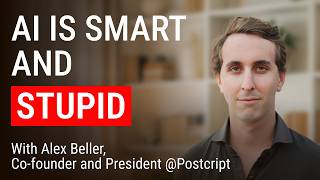
In this interview, Postscript CEO Alex Beller explains how his company has built a suite of AI‑powered SMS marketing tools that give e‑commerce brands control over brand voice while automating conversational commerce. He starts by describing Postscript at three levels – a simple text‑messaging service for kids, a conversational AI platform for marketers, and an SMS marketing platform that generates lists, revenue, and support. He then details the new AI products—Brand Center, Infinity Testing, and Shopper—explaining how Brand Center curates brand voice from websites, social media, and uploaded guidelines, and provides a simple interface to avoid a black‑box AI. Infinity Testing uses a multi‑armed bandit algorithm to generate hundreds of message variants, run continuous hold‑out tests, and route traffic to the best performers, with statistical significance considerations for small versus large brands. Shopper is a conversational sales agent that relies on a RAG‑style pipeline, supervisory agents, and “graceful failover” to prevent hallucinations and ensure compliance with regulations such as the Telephone Consumer Protection Act. Beller discusses challenges of data discrepancies, regulatory compliance, and the need for explicit opt‑in lists, noting the high liability for non‑compliant SMS. He reflects on Postscript’s 7‑year journey, the competitive pressure from better‑funded rivals, and the shift from skepticism to widespread adoption of SMS. He predicts that brands must optimize catalogs, integrate tightly, and aggressively grow owned SMS lists as consumer AI agents become primary shopping channels. He also shares how AI has accelerated internal tooling, product development, and personal productivity at Postscript, and offers advice for founders and early‑career explorers, recommending two books: Leadership and Self‑Deception and The Moon Is a Harsh Mistress.
Chapters
They are not going to let a black box AI agent just run. And so with Brand Center, we built an interface where they can curate and have really firm control and visibility into what all the different AI products are creating on their behalf.
How do you maintain this brand voice under the hood?
Do you know Dr. Squatch, the soap brand?
Yeah, the soap.
An interesting thing was happening in their infinity testing program. Their character that sends their text messages, they've named him Chad, like soap and Sasquatches. That's his persona. And those were seeing the highest engagement rates, and that was was like a complete surprise to the merchant.
So today we're here to talk about what happens when AI agents start having conversations with your customer. Alex, thanks for joining.
So glad to be here. Thanks for having me.
Thank you so much. I love starting with this question. Would you mind explaining what Postscript does at 3 levels? For instance, to an elementary schooler, to someone outside e-commerce like myself, and maybe an e-commerce brand owner, a store owner.
The good news is that elementary school kids know all about cell phones and definitely know all about text messaging because they see their parents obsessively send texts all the time. So what I would say to an elementary school kid is that Postscript helps businesses send text messages. Simple as that. To someone like yourself, maybe outside of e-commerce, outside of our specific industry, I would say Postscript is a messaging and conversational AI platform for e-commerce businesses. And then I would go on to say what that means is that people who sell things online, right, brands like HexClad and Brooklinen and True Classic, businesses like that use Postscript to send text messages and have conversations with their consumers over text. So if, you know, you get a link that says, hey, your order just shipped, they might be using Postscript to send you that message.
Ah, maybe I even have gotten that. I just didn't— wasn't paying attention.
Bet you have. And so then to someone in the industry, I would say Postscript is an SMS marketing platform. We're used by many of your favorite brands, competitors like the ones I mentioned before, and they use us to market to their customers to generate incremental revenue and sales. And the way that we stand out and how we fit into the space is that when brands use Postscript, they're going to generate a list faster than anywhere else. They're going to generate more revenue per message than anywhere else with our AI tools, and they're going to receive great pricing and great support from the Postscript team.
How old is Postscript now?
It's a good question. I believe it's 7 and a half years old.
How do you feel about 7-year-old journey? You know, it reminds me of Lucas Graham song, like, once I was 7 years old.
It's a funny thing. It's not what I imagined when we started. It just, you know, you don't think about 8 years down the road. You think about what's right in front of you and helping those customers and talking to those customers that you're just, just starting off with. But it's been a pretty amazing journey. And actually, like me and my 2 co-founders, Adam and Colin, the 3 of us are all in the business still full-time. We run it together. And so going on the journey with the 2 of them has been amazing. It's been great.
How do you keep yourself and your team still excited after 7 years?
Mostly because it still feels early. Um, you know, business is an incredible game. It's in many ways the greatest game. Have been in a market like, like many startups that has not been easy. We've been constantly challenged, and that's put pressure on us to constantly innovate, to constantly differentiate, to bring new things to market, to be fighting against better-funded bigger competitors, and that's an invigorating thing. And so even though we've grown a lot and the team's scaled a lot, it doesn't feel like we're dealing with the same problems today as we were 7 years ago. Every single year has felt like its own chapter and journey, and there's been pressure to innovate every single year and to find new edges. And so, um, I think that's what, what keeps it interesting. But in particular, you know, since these LLMs became, probably with like GPT-3, when it became clear that like the LLMs were good and like here to stay and capable of orchestrating real work for customers and creating value for customers, that feels like really hit reset for me and Adam and Colin, where we went from like, oh, we're like a scaling SaaS 2.0 business with playbooks that have been established for a long time to, wow, this is a completely new thing. This is a new world. Everything's being reset. And so we're going to have to reinvent the company all over again.
You captured the new wave with your new AI products.
Trying to.
Right. So you have the— based on like I'm learning from your website as well. So Brand Center, Shopper, and Infinity Testing. These are more around the AI products. Did I miss anything? And are these relatively new, right? These are.
Yeah, yeah, yeah. All them are, uh, less than a year old. They're all connected and play with one another. And, um, really it all starts with actually the Brand Center because, um, you know, we work with e-commerce marketers, with digital marketers, and they're very protective, as they should be, of their brand and of their brand voice and of all the communication that goes on between them and their customers. And so, uh, because of that, they are not going to let like a black box AI agent just like run, right? They are going to want to have like firm control over all the content that's being created on their behalf and everything the agent is saying to their customers. And so with Brand Center, we built an interface where they can curate and have really firm control and visibility into what all the different AI products are creating on their behalf. So Really, like, even though we have a bunch of these different products, for customers, they go look at the Brand Center, and then the Brand Center gets used to power Infinity Testing and Shopper and stuff like that.
The first one I was thinking about is the conversational agent, but it seems like the Brand Center makes sense. This is like, this is for your brand, for your store. So you set up first. How do you maintain this brand voice, as you said? How do you do it? Like under the hood?
Yeah. So it's, it's, um, It's a very interesting thing and it has not been simple because you're constantly finding new edge cases and you're constantly trying to like walk the balance of giving brands firm control, but also not bogging them down in like operational overhead. So let me give you an example. We really want Brand Center to be simple and scalable. We want a brand to come into it for the first time, a marketer, to have most of it, by the way, already pre-populated because we like can go and scrape and pull in information about their brand voice from many different sources. We can look at their website, then from there we can look at their social media and what's going out on there. Then there's places for them to like upload or link pages that they want to influence their brand voice or brand guidelines. They can just like upload and we'll like deduce and pull and populate the brand center from that. And then the brand center itself is a series of controls around brand voice and creating the persona they want messages to come from and banning certain language or encouraging certain language. Like a good way to remember too is that this is messaging. So emojis are a big deal. Brands often want to curate like how heavy of emoji use they have, or are there certain emojis they would never use, things like that. But we want Brand Center to be simple. What would be easy is to make it endlessly complex to cover off like every single edge case and to be surfacing examples for them to give feedback on and create rules on it. We really wanted to avoid a like infinite rules-based engine. We really wanted to lean into the strength of the LLMs and like do interesting work on our side with like prompts and getting to confidence versus creating like just a language-first form of a rules-based engine.
That makes sense. Like that's the last generation, right? Now you have the full power of LLM that you can leverage. So if I'm a support, then I get onboarded. What's the information that you're asking me of? Like, do you— I'm sure you're asking about my website, like, link or URL, right? Do you give you the brand guideline that maybe I already have?
Yeah, a lot of it happens automatically just in the nature of how businesses use Postscript. So today, when a brand installs Postscript or integrates Postscript with their e-commerce instance, at that point we know their URL. We know we were syncing with their e-commerce catalog, so we already know like what are the products that they sell a lot of? We know like what's being trafficked on their website. We can look and see at their— we can do searches for their social media feeds. And so based on just that stuff alone, we can pull in a lot of information. Then what goes to the marketer is a single-page synopsis and allows them to put in any additional information or upload any additional files around brand guidelines or curating the persona or the brand voice that gets used in all the messages.
That's very interesting. So I really don't have to do anything. I just, you know, hook you up and that's it.
It's fast. It's fast. We like for brands to still look it over and engage in it, but we try to make it as easy as possible.
And you give me control, like give the store owner control as well. So you give me the synopsis based on your analysis of my data and my, you know, what's my presence look like for my—
Exactly. And then also show you examples right there of like, Here's examples of content that would be created in this brand voice. Look good, look bad, make further tweaks and adjustments. And so we'll, we'll generate live examples based on them, like turning the different dials, how that will shape the brand's voice.
What kind of examples is it for? Is it for messaging, like example messages?
Yep. It's all example messages. So in our world, what that means, if you put, put on the hat of being an e-commerce marketer, that means, Things like welcome series content, right? So when someone first signs up for your marketing program, for your program, like what do they receive? It looks like abandoned cart messages. If someone's shopping on your website, adds a product to their cart and then doesn't complete, what gets sent to them? It also looks like campaigns. So when you release a new product, what gets sent out, or when you are running a big sale, or when something is back in stock, things like that.
Yeah. So it sounds to me like, you know, you have, you are doing a little bit of, you know, a technical term would be few shots learning. So you generate a few shots for me, right? And then you're asking the owner to evaluate, is this good enough? Some thumbs up, some down. And then with that, you're constructing the the customization of a brand voice, and then you have 20,000 of them, right?
Yeah, yeah, that's right. And I think that like from our perspective as well, we use that, that like user feedback loop in a couple different of these AI products.
The feedback happens like only on the— during the onboarding process, or it's just keep happening? Like you always give the, uh, you know, let the user to tune the, the model?
So It keeps happening, but it's not required. So an example of this is a, like, good applied example of this is with the Infinity Testing product, which is like the second AI product that we launched. What Infinity Testing is, is essentially AI-powered message optimization. So, uh, a user will put in a version of an abandoned cart message and our AI will take it. Will create hundreds of variants of that message and will automatically run holdout tests against those variants. And over time, route more and more of the traffic to the higher performing variants. So instead of an A/B test, it's an infinity test. And all that's like controlled by the Brand Center. But what happens is that once that's set up and turned on, it will run and run and run and run and run. And we don't need feedback from the brand about Brand Voice, but if they ever want to log in, And review like the message variants that are working really well. They can upvote, downvote, and give feedback on them to keep shaping the brand voice if they want to.
That's so smart. I mean, the, so you have an ongoing engine that's continuously testing.
Yes. It's a multi-arm bandit algorithm and it's continuously learning and then adapting to send more traffic to the winning messages. But what's interesting is that it's not a one-off test. What we see is that. Different messages work best in different times of year and different settings. Running it for one month and then stopping and pushing all traffic to like the best performing message, that works worse than just permanently leaving it on because the message that's working best in December is going to be different than one in June.
I'm curious about this, right? So even with a multi-armed, uh, banded approach, you probably need significant message volume to learn what works. Are you only able to do this for like your brands are sending millions of messages, or how are you handling this balance between volume and statistical significance?
It's a great question. Great question. It's, I think, the right question. So we do work to reach some level of statistical significance. It doesn't limit the, like, what's the right way to put this? It definitely narrows the scope for the number of brands that can use this product and reach stat sig. On like a many variant basis and especially do it quickly. Like when smaller brands use that product, it tends to take a long time to reach statistical significance, right? Sometimes it's like running for like weeks and weeks or a couple months until it reaches that point. Um, that's on like the automation side, which automations is like an abandoned cart message or a welcome message, things like that, right? That occur slowly. The other side of this is the campaigns product, and the campaigns product is the same concept of infinity testing, but it's sending out to like your entire list of SMS subscribers all at once. So that gets more data more quickly, but that's also like the ability to get statistical significance is also limited to your point by like how big someone's list is. So there's still value and you can still get early signal, but you need a certain list size to be able to reach statistical significance. You have to be sending enough messages.
Yeah, that makes sense. It's very interesting. I think a lot of the marketers when I used to work with, I lead data team, so, you know, they're all interested in the early signals, like when can we peak, when can I know the answer so that we redistribute the investment across the board, so things like that. So, that's very valuable information. Have you seen like something surprising from infinity testing, like something that worked really well that maybe a human marketer would never have, you know, tried because I used to do like this manually.
Oftentimes brands are surprised by the messages that are working better than their control messages, right? And it's because someone in the old world, in the old paradigm, someone would log in and they would say, I'm going to run an A/B test and they would run like 2 variants. Exactly. Maybe they'd be similar, maybe they'd be different. But if you like branch out more widely, you're potentially going to hit on some interesting creative. And so one example of this is, do you know Dr. Squatch, the soap brand? An interesting thing was happening in their infinity testing program where the person that sends their text messages, their character is, they've named him Chad. Texts at Dr. Squatch come from Chad. He's this bro. He likes soap and Sasquatches and things like that. That's his persona. And whenever he would mention his dog, click-through and conversion rate would go up. And so the like Postscript Infinity test agent was testing all kinds of different content. And at one point was like, oh, this like dude Chad, like he might have a dog. He's probably someone with a dog and messages where he was mentioning his dog in like marketing messages being like, I'm just over here like hanging with my like new puppy, like blah, blah, blah, blah. Like we just dropped some new soap. Those were seeing the highest engagement rates and that was like a complete surprise to the merchant, who also is very on brand for them. So like, they love that story and they've used that elsewhere, but it was definitely a surprise.
That's very interesting. I mean, it's hard to imagine, right? For, for A/B testing, I can think of 2 messages to send. Maybe I can come up with 10, like, but you're testing a thousand, tens of thousand level. It's not a human work. This is when I think, you know, also in your brand center as well, using LLMs, hallucination, my coming to play. How do you handle that?
So this is a big project. This is a huge challenge. So in general, balancing brand voice with driving conversion was something that took us a little while to dial in because the models are really smart. And so the models would quickly learn that the more aggressive you are in like sales tactics and marketing, the like better performance would be. But the brands are only interested in that up to a point, right? So for example, if the, if the agent, the agent will realize that if I send a message that says there's only 3 of these product left by now, but that's like completely not true. It'll drive a bunch of sales, but the brand will be really mad about it. Balancing things like, you know, everything from like excessive exclamation points to like artificial scarcity, to being like overly pushy with the CTAs, they would upset brands. It would also impact, uh, unsubscribe rates. And so the team took like a pretty sophisticated approach here, and it took a little while, of putting like prompt-level constraints in place to really like explicitly like limit the aggressiveness of some things and like require subtlety. Um, but also use a thing called like batch validation gates that would block messages containing like off-brand content before they ever went live. And then also there'd be that merchant feedback loop I mentioned to you before, right? Where when they were reviewing, like in the early days of testing, they could mark a message as negative, which would like remove it, and the, the AI would then like learn from it. Um, so that was like an example that we had to walk on with like brand voice with tactics. Actual hallucinations which there were some hallucinations in there, like false urgency, but, uh, actual hallucinations where we saw a lot of these creeping up in early days is the LLMs would want to be helpful.
Right.
And they would just like fabricate answers when they didn't have them when there was a knowledge gap. And so what we ended up doing here is going with what the team called a graceful failover. So essentially, like, you need to be really explicit with the LLM of, like, when information is not available to them, to say that rather than making something up. Yeah. For example, like if a subscriber asks the shopper agent we have, which is a conversational selling agent, that's different than Infinity Tester. When someone says, hey, can I get 10% off on this product? Right? If we don't have information loaded into our system, or if we don't have information from their website, like that, that's what it wants to do. And especially when it's tasked with conversion. And so instead it like redirects to the website or to support, or it'll say, I don't have information about if that's available right now. And so in that case, we built a supervisory agent that will like cross-reference all the information and the product links and, and things like that against the like actual information database we have before sending. And so that, that's how we've dealt with, with hallucinations is like with this like graceful failover approach and with using supervisor agents to validate Everything from like the links to the shopping carts to the message information.
Do you really see a lot of hallucinations?
Not anymore, but like in the early days of like Alpha and Beta, for, for sure. Because there were things within the e-commerce use case that had to be solved for. Like, I'll give you an example. On an e-commerce brand's website, there might be a piece of information about a product on the actual product listing page. That in the like private metadata description in their e-commerce database, there's like two contradictory facts. Or oftentimes within the Shopify ecosystem, there can be many different places where the amount of available inventory says like contradictory numbers. And so an LLM needs like a lot of systems around it in order to be able to like handle situations like that without like creating information or providing the wrong information or walking a weird line. And so, there was, given the nature of the work, there was definitely hallucinations early on, but we're at a point now where new, very large enterprise brands are coming on or using these products and are really happy with the brand voice and are not running into issues.
But this is a different problem, right? This is, this is more upstream because this is, you have a like internal data problem that exists in your backend data and your frontend data potentially. If you say that on the, on the web. Page, you say that this product is available, and then in your backend it says it's backordered, then are you gonna— is the shopper's— is it gonna tell me it's gonna ship to me in 3 days? Right? That's— and I can see where LLMs can hallucinate in— how do you handle this data discrepancy?
So, the thing is that like, even though it isn't an issue in Postscript's data, it's our customer's data. It has to be our responsibility to like still deliver a good experience despite that, because the way our ecosystem works and the way our market works is like, these are small teams moving quickly across many different features. Their integrations and data isn't perfect. There's no way we could say, hold on, wait, wait, wait, wait, wait, get your data in order and then we'll import. That like wouldn't work.
So you have to—
we have to be responsible for it. We have to be responsible for it with, um, you know, the like failover tactic I mentioned. We need to have supervisory agents that are like checking information before they go out. And we have to be comfortable telling an end consumer that like, we don't have the right answer or they should check with the brand and something like that.
I see. Do you actually somehow clean the data, you know, just create a level of layer of you know, the true source layer, the true source layer to ensure, to provide, you know, the data, the right data to the best of your knowledge?
I didn't personally architect the system, so I don't know exactly like what their mechanism is here under the hood, but my impression is that no, because there just isn't a source of truth here. Like some products, some e-commerce products on a brand's website, might have like perfect front-end information and like messed up back-end information. Others might be like completely in sync. Others might be totally out of sync on like a brand by brand basis. It totally varies. So I don't think there'd be like a, like one size fits all approach. What I do know is that like, we've just had to build the capacity for to ingest a ton of data and information so that the LLMs can like survey as much as possible and come to the right decision. For example, like every single brand we work with, has a unique catalog, right? Some have 3 products, some have hundreds of products, some have hundreds of thousands of SKUs, right? When you consider like colors and sizes and materials and variants and all this stuff. And so being able to have our pipeline ingest all the information about all those SKUs and have like low latency in order to be able to, to like come back with relevant messages that was its own challenge. Um, makes sense, but that's what we've had to do over time.
I have a very naive way of, uh, of thinking about how if I were to build a shopping agent from scratch, like your Shopper Assistant, the approach that I would take is take your product catalog exactly as you said, set up some, you know, semantic or hybrid search, and do the traditional RAG, like retrieval augmented generation, which is very common in a chatbot setup. Maybe that's some, probably not enough.
I do know that parts, uh, so our agent is called Shopper. That's like the conversational shopping agent is called Shopper. That, so brands each set up their own Shopper. And I know that parts of it are constrained to, to like a RAG pattern where, you know, it can only offer products from like the synced catalog and it can only offer discounts that are explicitly configured in the system. Cause like fake discounts or off discounts are a big issue, um, or it can only link to like verified URLs. And so I do know that that's the case. I'm not sure exactly like how it, how it was implemented.
Um, yeah, I hear you actually handle a lot of like details, for instance, as you said, the loading, the, the loading of like different, uh, different, you know, the store information, the data and the real-time information and the comparison of different data and, you know, recognizing different data discrepancy discrepancies. So it seems a lot, a lot of things going on.
It's much more complex than we thought it would be at first, which is totally fine. It's a, it's a good thing. We, we like that. But there's even a couple of additional layers which are interesting where SMS is very regulated.
Okay.
And also many of the industries our customers work in are regulated. So what that means is that like the sort of content that is allowable through like web chat is, is very open. SMS is different. SMS has like requirements around like compliance and opt-out. It's regulated by something called the Telephone Consumer Protection Act. It's much more regulated than email. And then a lot of our customers also have things like maybe they sell like medical supplements or things that they can't have hallucinated information go out about. Yeah, because then they'd be like liable for— they can't give like health advice or medical advice. So, um, that's also why, like, for some of those specific use cases, we have additional supervisor agents, um, in the multi-agent system to just, like, validate responses before they go out.
Yeah, so additional guardrails are also needed. I can't just ask any questions, and it's not a— it's not ChatGPT, right?
Nope, nope. It really can't be because it's not a consumer destination. It's a agent for a business.
I think you answered my, my next question. I wanted to ask you, like, my, my audience is technical, so a lot of them may be able to build a basic SMS agent in a weekend. You think it's a good idea?
So, I mean, I love innovation in the space. Here's the reason why it's harder than it seems. This is regulated. If you send marketing messages to anyone who hasn't explicitly opted in, And there's definitions for both marketing and explicitly opted in. The liability for those messages is enormous. It's $1,500 per message sent. It's crazy. It's essentially like a telemarketing rule to prevent spam telemarketing. What that essentially means is that like, if you're just starting from scratch, you need to like have a way to build a compliant opted-in list. And with phone numbers, opting in doesn't say like you clicked a box to sign up, it's like a very formal thing. It means like with the proper compliance language, they send the first message to sign up or they check an unchecked box. It can't be pre-checked with, again, with the proper messages. But because the penalties are so high, there's a big industry of lawyers who are full-time plaintiffs in SMS and they just send out demand letters all day long trying to catch brands up in lawsuits. So we have kind of this like large compliance operation. That is its, is its own beast. And I think like, if we knew all about that before starting Postscript, we probably would've like thought twice before getting into SMS.
Yeah. But you were, you're, you're brave enough to actually crack the nuts. I feel this is, this is, is, do you feel this is the hardest challenge in building this?
The, the compliance piece? It's been a challenge, probably not the challenge. We're lucky. We've had really incredible legal counsel from early days, two people in particular, Elliot and David on the Postscript team who've worked with us in different forms for a long time. They've been kind of incredible at like helping us lead in that space. It's been a challenge. I think the bigger challenge has been, you know, the classic startup stuff. We've been competing with people who've raised much more money than us. Uh, we, uh, we're constantly putting pressure on ourselves to, um, innovate and to like be the innovators and to find the new edge within the market. You know, just in general, driving market adoption was a huge challenge, right? Like when we started, I would get on sales calls and most customers would be like, we're never doing text messaging, this isn't going to work. And now it's like really common and most people do it. And just that whole adoption curve over the last 7 years was its own huge challenge.
Do you feel, do you feel you could, you would start today or do you feel it's actually too late?
I think it's too late within our space, but But I would definitely do this journey over again. Absolutely. It's been fantastic.
There's been a lot of news lately, right? Google and Shopify announced something, and Stripe and OpenAI talking about agent e-commerce protocol. What do you think is going on in the space?
I think that what's happening is that tech incumbents today are smarter than they used to be, and everyone is aware that AI is changing everything. And so I think what you're seeing there is incumbents trying to like shape a little bit of the future to help avoid themselves being disrupted. Like they've all learned the Clayton Christensen Innovator's Dilemma stuff through the last several cycles. And so I think they're being wise and leaned in. I think in both cases, like, you know, it's slightly different context is my understanding. I haven't reviewed the protocols myself, but I think that, you know, Shopify is a specific platform. Stripe is more of the payment rails for the more, more of the open internet. But in both cases, I think they are aware that there's going to be gigantic consumer AI destinations like ChatGPT, like Claude, like Gemini. And clearly users are already doing lots of product research and are already using them to shop. And Stripe and Shopify want to ensure that like all their customers can get exposure and access into those new shopping destinations. Which I think is good. I think it's their responsibility to do that.
Are you seeing consumer behavioral changes, like with this AI wave of chatbots and things like— I get it for customer service, right? I have a request, but I—
It's a firm yes. It's a— it's early, but firmly yes. We are seeing across our customer base that they're seeing real traffic and purchases come from ChatGPT. It's not half their traffic, it's still small, but like single percentage points, they are seeing traffic and revenue flow to their website destination from that. Additionally, on our end, we're seeing consumers— because what we do is we power agents for the owned experiences of e-commerce, where ChatGPT is more the, like, you know, the consumer destination. But with us, we're seeing consumers getting trained on how to interact with a chatbot and interacting much more freely than they did historically. And so we're absolutely seeing an increased aptitude and demand from consumers to interact with these brands on a, on a conversational basis. And I think that's because the whole world is using these consumer destinations now.
Wow. You, you are, your product seems to be really timely then. ChatGPT is training the consumers for your customers and customer. They're ready for this. Right now you send me a message for shopping and then I feel like, ah, this seems to be reasonable and I can just text to shop.
So this is a channel that one of our sales engineers set up called the Shopper Sales Bell. And essentially it's just highlighting like really amazing conversations that are happening between consumers and brands. And you can see there's like long exchanges happening here where a consumer is like giving quite a bit of information about like what they're looking for, what they had previously. Like this person saying, I'm looking for a natural lash. I had the shorties and love them, but mine were from years ago, had a plastic band. If I order again, do they still come with that strap?
Wow. This is a very complex ask.
Yeah, this is what it's— and the agent's like, they've evolved. We moved away from the plastic band. But if you're interested, I can recommend some. Oh, that's great to hear. The agent makes a recommendation. Does it come in brown? It does not come in brown. What are your other natural options? Here's a few more. Do you have any sales and coupons? Here's 15% off just for you. And then places the order, right? That is like, there's things like this happening all day long, like long extended conversations where the, uh, where these agents are capturing so much like zero-party information about that unique subscriber. And then giving like really tailored conversations back and they are driving sales. It's pretty cool to see.
And this is initiated by the end consumer.
So it's a mix, like you're seeing the start of the conversation from the end consumer, but what happened right before then is a message from Postscript, right? And probably like more of an automated one, but in general, what we're learning is there's so much value from these conversations that we're encouraging our customers to shape their marketing strategy to be more conversational, to like teach your subscribers that you're actually on the other end of the line and will interact with them so that you're training these people to interact more and more freely.
I guess if the, the first, you know, the proactive message from the bot is like, I feel very personalized and it hit my pain point, I do feel convenient to just respond there. And if I can just make the purchase. It seems to be, you know, it seems to make sense.
I think it's the, I think it's like, here's the great version of this. So actually I'll tell a story because this is something you'll be interested, you'll be really interested in that, that we haven't covered. We have this thing called Shopper right now. Like 3 years ago, we started a business, maybe more, 3 and a half, called SMS Sales. And SMS Sales was a giant office in Phoenix, Arizona called the E-commerce Sales Center. Where we staffed up tons of humans who would do this for brands. They would like answer questions and conversationally sell for brands lots at once. We had this whole software suite for it. And through that experience, we learned all these like tactics and insights about like what actually drives revenue through conversations. And the vision for that and the vision for this is you walk into a Nordstrom, right? And someone comes up and they help you shop, right? Sometimes maybe you walk into a Nordstrom and you shop around and you buy on your own. Other times, maybe you have a quick question. Other times, maybe someone actually pulls outfits for you and it helps assemble an outfit. All those different things happen when you shop in a retail, and that hasn't existed for e-commerce previously. E-commerce is the big empty silent store, and you can browse around and yeah, you can email them for support and they'll email you 3 days later, but that's very different than having someone who can actually answer questions about like, size, fit, materials, and actually try to coach you towards a sale. So that was the original vision and background, and we've learned a lot that has then informed this product.
That's a lot of a sales conversation experience that you have. Is that a benefit for the store owners to use Postscript because you actually have that baked in your conversation engine?
It's an enormous benefit. We've had millions and millions of manual sales conversations previously. It's been like an unbelievable set of training data and an unbelievable set of, um, just like strategic insights that have generated. I think that if someone was starting from scratch with a chatbot trying to get it to sales, it would take them like, it would, I don't think it would be, I don't think it would drive much revenue.
Yeah. So as a store, I can have my marketing campaign. I'm like rolling out a, maybe like a Black Friday deal, and then you will set up the conversation stream for me. Yeah. Awesome. Great. Prediction time. What do you think e-commerce will look like this year and maybe in the next few years? And what should brands be doing now to prepare?
All right, prediction time. I think that brands should be aggressively optimizing their product catalog, their on-site content, and their actual integration set to ensure that they are well positioned to succeed in a consumer LLM world. That's like no-brainer. Like, I firmly believe that people are going to be shopping through agents and with agents, like, more and more and more. And so they need to be embracing the, like, tooling and strategy to set themselves up for success in that world. Simultaneously, they need to be aggressively building their messaging opt-in list. That is essential. Brands need to be radically adopting SMS in particular, because that is going to be an owned channel. Eventually you're going to have to pay to show, to have, be listed in ads and ChatGPT and Gemini and all that stuff. But with a phone number list, you're going to own that forever. And so people need to, that's the other thing I would say is people need to be aggressively building that list as fast as they can.
Should I care about this visibility inside within ChatGPT, or should I care more about having this my own shopper or agent?
I think you, I think you have to care about both because they're targeting different things.
This is different. Yeah. So speaking of, you know, showing up in ChatGPT, what's your take on the hot topic of AEO and GEO today?
My hot take is, so I recently heard about a business that was trying to hack their listing and what they did is that they created a bunch of accounts like under different names and then they were like doing searches about their company versus competition. And then they were like upvoting and giving feedback on the ones that like best favored them. So like there's already black hat stuff going on. I don't think that stuff will last. And I think that clearly like OpenAI and others will come down very hard on stuff like that. I know that there's lots of tools towards measurement. I'm still waiting to see tools that can actually drive change in ranking and impact.
Good point. It's like a SEMrush or Google Search Console doesn't exist for this, for this. So. So, let's see. How do you, how, how, how are you observing AI is changing how you build internally at Postscript? So not about the products, but the actual company operations.
So it's changing a lot very quickly, and I won't promise to like say that we have all the answers already. I mean, we are watching how it's changing how quickly new products can get built. We're also. Watching how quickly it's changing, like what's possible with internal tooling and things that like weren't possible before can now be built quickly. We're also seeing impact on, you know, how it makes like day-to-day operations more efficient. Like for example, I can do performance reviews dramatically faster than before. Or I mean, one of my favorite personal workflows is I really like to write, and Postscript is a very writing memo-centric culture. But it takes me a lot of time. And the other day I had an important complex memo to write and I used Whisperflow for like, oh, I use that too, maybe 10 minutes to download all my thoughts in a doc. And then I worked, I have like a subagent in ChatGPT trained on my voice. Um, and I like dumped it all in there and I had it like just clean it up and reformat and like, I probably shortcut 3 hours of work. Um, so we're seeing good adoption in terms of like at the bottoms-up level, and we're starting to roll out more and more tops-down initiatives around like both how we go about building new products with these tools and also how we build internal tooling and how we automate internal process.
Yeah. For, for someone maybe early in their career, like watching this AI wave, do you have any tips or advice for them?
I mean, I would just be building a startup. I think it's like an— you said it's so hard. It's very hard, but also like, I think you can do more with less, more than ever before. Like the old days, those playbooks of like, you need to like raise a lot of money to like power this gigantic go-to-market engine and this gigantic product development engine, those are changing. The barriers are coming down even more than before. And the barriers were already low. And so I think that like, it's an incredible time to be building a startup with a very, very, very small team. And I think like the ability to get to 6, 7 figures of revenue with a very small team is probably like better than it's ever been.
Do you have kids? But you must have like nephews and niece. What do you think of the younger kids? What should they do when they grow up? Do you have any advice?
I don't, I don't know what's gonna happen in the future, but I do think that I have seen some parents do some cool stuff to expose their kids to this tech early, like, like co-build unique custom games, like computer games that the kids are really excited about that I think are, are fun use cases. But I'm not sure. I'm personally not scared of the future. I think that kids should be kids and go outside and play, and the economy will continue to evolve.
Hmm. We'll see. Yeah, I don't know either. I feel like the career path is changing now. Everybody is, uh, an explorer. You have to be an explorer.
I think that having high agency is the key. I think you have to be an explorer.
It's true. Yeah. I have a closing question. If you could recommend a book to, let's say, 3 groups of people, maybe one of those fresh graduates we just talked about, you know, feeling lost in the job market, someone maybe at your stage today and, you know, building a company maybe, or a book that you want to read at some time when you have time, no pressure, like whatever you can recommend.
I have two books I'll recommend. Okay. On the business side of things, it's Leadership and Self-Deception. It brings out this content, this idea of being in the box and like treating things around you as objects versus people. And it's been a mechanism that's been really helpful for us and a device that's been really helpful for us. It's a short, easy read. It helps with leadership, especially for first-time leaders, especially for very early founders who are starting to hire their Teams for the first time. And then on the fiction side, 'cause honestly I read way more fiction than nonfiction, I'll say The Moon Is a Harsh Mistress, which is a great, great, great sci-fi book that I love and I try to reread every couple years.
Alex, you know, uh, I think what strikes me about this conversation is that I feel like you're not building a marketing software anymore. You feel like you're building a new category, uh, the infrastructure for almost a completely new way that brands and customers can interact with each other, right? This may be the new era of agent-to-agent commerce. It sounds sci-fi itself as well. I imagine like my ChatGPT, or I have a consumer agent and talk with your Postscript agent and then just, you know, get my things down. I just give the weekly shop— shopping list and then, you know, something will happen and I get everything, you know, at my door.
That's an interesting one. I do think something there is coming. I also though, think that people really like to shop and I don't know if they're going to stop shopping or if they're going to hand it all off to agents. We like to buy things. I love to, I love to shop in person. I love to go to the grocery store.
Yeah, me too. I want to see the veggies and the tomatoes that I'm buying. Yeah, I get, I get it. But anyway, so after I listened to you, I mean, I feel like this sci-fi is already happening. It's here. Thanks for also diving deep into your technology, your products with me today. Thank you so much.
More from Angelina





The MrBeast Rule That Quietly Decides Who Wins on YouTube | Rox Codes, CEO @ Flightcast




Ask Any C-Suite This One Question About Their AI Agents | Hector Hernandez, COO @ Speakeasy
