Why Resumes Don’t Work Anymore (And What Does)? #datascience #jobhunting
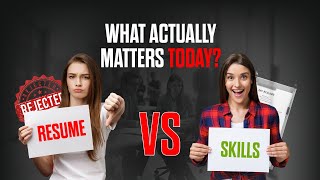
A 2025 YouTube interview (Angelina Yang with Yujian) about how AI and market shifts changed hiring for data scientists and engineers. Key points: large applicant pools ("~3,000 applicants per role"), reduced signal from standard applications, and a shift toward AI-focused skills in many openings. Practical advice centers on choosing quality over quantity when applying: spend substantial time researching target roles/companies, build public projects (especially AI-relevant when relevant), tailor resumes as a last step, and cultivate inbound opportunities by publishing work. Yujian frames career skills as three core abilities—"build, sell, lucky"—and recommends allocation priorities for job-seekers (rough guideline shared). The interview closes with a plug for Yujian's Maven course and community.
Questions this video answers
June 19, 2025
About 3,000 applicants per role
About 50% market research, ~30% developing projects, ~10% polishing the resume, ~10% applications
Build, sell, lucky
Chapters
Resume still matters. Like because I'm competing with 3,000 people, right. Should I even apply?
Yeah, it matters. The quality of the resume matters.
If I'm a data scientist, how can I find my unique value?
I think everyone is unique, right? Everyone by definition is unique. And because we conform to the best practices or just how we think other people think, we became more generic.
What do you think are the most important skills. Skills to have in this age of AI?
Build, sell, lucky.
Build, sell, lucky. Okay, you mentioned the skill of getting lucky or helping others to get lucky. How do you do that?
Naval, I think categorized that into four different kind of luck.
Hi, Yujian. Yeah, nice catching up with you. Yeah, yeah, yeah, yeah.
Likewise.
It's been a while. Yeah, it's been a while. So thanks for coming to my podcast today. I want to have a discussion with you especially around the job market and where roles was related to data science and engineers are going, especially in this age of AI. Right, everybody. I know that I have a lot of friends who are, who are looking for jobs and they're having a hard time and you know, there are layoffs in big companies and also, you know, freezing of hiring of a lot of roles. So even when, even after we pass the new year, right. This is 20 or Q1, 20, 25. I'm not seeing like, it's more opening up, like as expected, opening up.
Like this is just opening up.
Yeah, so this is really scary. So. So, you know, I don't want to, you know, put FOMO at the beginning of the podcast. So I want to ask you several questions around this topic.
Of course. And I think you got to the right person, right, Because I like, I have the YouTube channel, I have the community, and I work at a startup, so I'm connected with a lot of data scientists. I heard, I hear like, like similar horror stories as. But I also see like success cases in our community. Like if you check the community post, there is someone who has been. Who finally landed a job after like half a year of searching. So I see some success case and my company is actually doubling headcount and each position we post, we get over 3,000 applicants. So I can speak to that as well.
That's unprecedented, right? It's like, like five years ago is not going to.
You're.
You're not getting 3,000 applicants or even three years ago.
Even a year ago. Like, even, I think a year ago when we post, it was still already a tough job market, but I think we got like several hundred applicants. I think AI changed the job market and LinkedIn has changed. Like if we are interested in the details, we can do that as well. But I also did an interview with the hiring manager at Databricks and he offered the opinion that because everyone today is applying to everything, so the signal, the precision and recall just drastically changed. That's why the traditional job, traditional method of applying for a job doesn't work anymore because there is just no signal from this process.
Right, right. Maybe, maybe later, later for this. During this talk you can share a little bit like what, what, what should we do right now? So yeah, my first question is like where, where, where do you see data science or engineer roles heading in the next one to two years? Are companies shifting focus focuses from this like traditional data science or software engineer to our more AI specific roles or are they like merging these skill sets? Can you share your, your, your observation?
Yeah, of course. I think I hear this like people complaining like they are data analytics and they try to switch jobs and every position they can find the company asks for large language model related experiences. Like even if for analytics, if you don't have such experiences, it's hard to even find that opening. I think that reflects how the industry is going. Right? The industry is going to AI. The money, the B2B spending, the company budgets are going to AI. And if you look at new startups, the most successful ones like Lovable Cursor, they're going to AI so and big tech, all the like new initiatives or the visibility goes to AI. So I think that reflects kind of the market trend or just where the money goes, where the value is going to be created or at least where the demand is. But meanwhile, I don't like the framing of the question. The framing of the question is typically like how would data scientists, how, how does the role of data scientists change? Like how, how should data scientists adapt to the new like. Right, but so let me actually ask you, what is the definition of data science? What is data scientist?
So traditionally I would think that data scientists are doing like you know, data, you know, including should we include data engineering? I'm considering the whole data pipeline of traditional, you know, the data function that you include, you know, ETL of the data and then transformation of the data into some like analysis ready model ready data set and then you either do analytics on or you either do like models on and then for some predictive models and things like that. Right. And after we have machine learning engineers rose a few years ago, the rise of machine learning engineers, then Moops becomes also important to becoming part of this whole pipeline from pulling the data all the way till you're going to have operation side DevOps kind of thing roles for MLEs. So data science roles have been enriched over time for all those functions. But now I think it's adding any new flavor, like the AI flavor to it. I just don't know how, how severe it is.
I became like, I definitely, like, I think four years ago I was trying to introduce like what are the different type of data roles at Amazon? Like they have I think 10 different titles. Like I was using this approach to describe the role of data scientist. I became kind of critical of this kind of definition because it's fake. I think it's fake. If you think about the origin of data science, it's definitely a made up position. Like I think the history of the role is like 20 years at most.
It's statisticians, right? I'm a statistics major, right?
So yeah, yeah, like a statistician, like even that, like, but data scientists, the term doesn't exist 20 years ago. So it's a made up role. And like for example, when you talk, for example, just a builder, right? Just a construction worker there. Like if you ask a construction worker what do you do? They say we build houses. They don't say like I yield hammer or I use a saw, right? They don't talk about the tools, they don't talk about, they talk about the results. So what is the result of data scientists? The result of data scientist? Unless you work on production system, you just influence people, you just help make better decisions, that's all.
Informed decision is common words in job descriptions.
Yeah. The entire value of data science is without the data scientist. This company does a worse decision with the data scientist. The company does a better decision than the delta of these two decisions is kind of the value of data scientist. So with that I don't care. Am I using SQL, Am I using Python, Am I using large language models? Because today most of my SQL and Python are written by large language models. So why should I care about which tool do I use? Do I just care about what kind of decisions am I actually influencing? Can I actually help make even better decisions? Can I work on more important decisions? Can I influence more people that come? I think that speaks more directly to the value.
So it's more like performance driven now. So people are focusing more on ROIs. Historically it's very hard to judge the ROI for a data team or data science team.
I think that was a luxury and might be because of empower building, right? Because at Big companies, everyone wants to hire more people to get promoted and you want to be quantitative and you want to play it safe. The best way to play it safe is to let numbers speak. You don't hold any responsibility of making decision, you just let numbers make a decision for you hire data scientists to justify or whatever.
Right.
Then you don't have to actually justify the value of this data scientist.
Right, right. Yeah that's true but. But today it seems like it's changing.
Right. I think companies are disrupted like especially like those profitable big tech companies, they feel a sense of urgency that wasn't there like three years ago because of Genii, because of the macroeconomics environment, because like history like yeah, like they are going to have earned so much money. They have such a growing hyper growth business model. They have all the free cash flow and then they can't afford to hire a lot of people and hire a lot of people with their dream of this. Like hiring more people leads to more growth. Maybe some domain is true. But for example like look at Google or Meta, like the more people they put on a problem the more, the slower the progress. So more people is not going to lead to more productivity in the long run. Yeah, they need to do reversion, they need to adjust.
Well, why do you think the big techs are not hiring now? What's the real root cart?
Because of the pendulum, I think because they were empower building. Because it's just a cycle. Right. Like before they were overhiring, like not, it's not like they are slowing down. But this is. They don't need that many people. Like if you cut 50% from Google from Facebook, I think they'll function even better. They're not going to, so they don't need, they're going to work function. Suppose there is no moral hit. Right?
Right. So do you think that there's a possibility that. Well as you said they're going to come back potentially. So for what reason? They could come back in hiring again. Like the big companies or the whole industry?
I think the whole industry can irmo but it's not the big tech. The big tech, unless they reinvent themselves, they're just gonna like they reach to maturity. Like they're gonna stay there for decades but I don't think they're gonna grow. Like if they're not gonna grow then they're not gonna hire aggressively. So like it's gonna be new companies that hire a lot of people. But if you look at OpenAI, if you look at they are like expanding Aggressively. Right.
Okay, so let's not put our hope to, towards the traditional like big tech companies, maybe because of AI, right? There is a lot of rising stars in all those new companies that potentially the traditional data science, data scientists or engineers could, could actually go after today, right? What do you think? Like the, the, the new grads or just in case, like people get laid off from big tech, what can they do? Like if they were like data sciences roles, right? Or software engineer roles, where, where can they go? Like for the, for the, for the.
Newer companies if they're used, looking for a job, which means like you summarize what you did, right? And then you find a template and like try to improve your resume. Once you have like a polished resume, you go for the numbers, you apply for other jobs that are available on the market. You spent 10 seconds per job per, per application or 30 seconds per application. It's not going to work because every position is going to receive like hundreds, thousands of applicants and their resume all look the same. Everybody is going to have the same generic resume that says, you know, I drive this much impact with this model or whatever, so you're not going to stand out. And my advice is, I think there are two folds. One, look for quality instead of quantity in today's day and age.
So what does that mean?
The stat is reverse. You have to look for the position you want to go to first, like building any product, right? You want to look for the market you like finding the product market fit is not like I just built in a vacuum and try to find the market. The first step is I need to understand the market. In the first process I described, they spent like 00 hours understanding the market. So actually need to understand which companies are hiring, what am I good at, which positions I want to apply, Is this realistic? And then schedule like the connections, coffee, chat, use your own connection or whatever. Like try to understand as much as possible, get the inside information, do research, watch episode, watch YouTube, listen to a podcast, listen to whatever. Like just learn these roles and to learn their specific requirements, what kind of people do they need? And then try to organize your past projects, experiences towards this requirement. And if there is a gap, go fill the gap. Like if they need a specific domain knowledge, try to learn that specific domain knowledge. If they need like for example, certain skills, learn that skill and put on a resume, right? Ideally you want to learn the skill while building in public so you have a track record that the interviewer can just check and understand your quality. I think once you do that, your success rate is 1000 voltage. And I'm not kidding because most of the resumes receive today we just throw out without even taking a look because they're too generic. Clearly like that candidate use AI to apply and never look at our job code or job description. So even if you just spent like five minutes to look at the job description and write, you know, a tailored resume, the chance of success increase 15 fold to 100 fold. So like and then if you do like bridge the gap and like talk to the insiders, I think it's very easy to get another like tenfold of success rate. So it's much like I think the time spent on understanding the market and developing the proper skills, not playing the numbers game. But you know, be very specific on what you want to apply can pay well. Meanwhile, to do get the job is the kind of job you want to go to. Right? Like the first approach. The problem is you're probably going to end up in a bad job because that's kind of the worst job that can mesh with you. And then you probably are not going to be happy there because you know nothing about the job going in. That's the only job you can get to. You'll be miserable to the second approach, the job you get into, you understand? Be happier.
How many resumes are you receiving now for your roles at Statsig?
Like I'm not a hiring manager. It's 3,000 per role. Per role.
3,000 per role. How do hiring managers are sifting through that resume to find the high quality ones?
We use high precision filters. Like for example first are you local? Because we are on site company. You have to come five days per week. Did you like that screens out a lot of candidates and do have the relative like we have criteria various like do have the relevant experience. If not then that screens out a lot of candidates. And then we look at for example the application like to do actually to read our job description. If not. Yeah. So in the end like only less than a hundred applicants actually we, we need to, we need to take a serious look. Like for the hundred applicants then we spent two to five minutes per applicant to actually read their resume.
Oh, okay. So is this an internal tool that you're using? Because it sounds different like the filtering system.
I don't know. I think from the way it was described, I feel like it's an internal. Just a screen. Then maybe they use some too. Maybe they use internal tool. I don't think it matters that much.
Okay, okay, I see. Because I was wondering if I want to Ask you, does, does the resume still matter? Like because I'm competing with 3,000 people, right? Should I even apply?
Oh yeah. Oh yeah. It matters like the quality of the resume matters. Like you don't want a resume that is the same. That's me. Like the analogy is like online dating app, right? Like all the online dating app. Like most of the people actually look the same, but there are like 1% of the people that actually are very popular. You want to be that 1% of people that actually learn how to make a good resume. Like it's very easy to spot a good resume. The good resume can stand out in hundred or a thousand resumes. There are not that many. Especially a resume that speaks to our industry, speaks to our company.
What are other ways to be to become the popular 1% other than you know, polishing your resume, do the, do the homework and stuff like that and find your own interest.
So non polish our resume. So first understand the market, then build our project and then update our resume accordingly. So the step is not first polish our resume, polish resume is the last. But, but the other thing is like do some AI projects. Because since everybody's interested in AI, of course if you can be an expert in this field, you have a big advantage. And the good thing is everyone kind of start at the same time, right? There is no people with 10 years of larger language model experiences. Most people have about two years when they put on their resume. And you can easily prove that you actually understand large language models by building some projects and posting on GitHub. Like did you actually build a project? Did you actually overcame overcome a lot of challenges? Did you actually have some unique insights? Or do you have a GitHub that has commit every day? Did you actually make a working product? Like those are some low hanging fruits that I don't see many people are doing.
Is this something I should put on my resume? And besides publishing the resume itself, of course.
But I mean depends if the company you are looking for do not care about AI. Well the. No, but how many you care about if the company cares about AI and if you developed a credible project. When I say credible project, I'm not saying like class project, don't do class projects, just go to YC company. This is advice that I heard. Go to the first, the latest YC batch, right. And look at what they do, most of their ideas. You can do it by yourself. Then try to just do that.
Yeah, that's a really good idea.
Yeah. And I mean yeah, there are so many legit projects so don't work on fake projects. The class projects are projects.
I'm just wondering at what point I can showcase. Like as let's say you're the hiring manager. I'm, I'm trying to apply a job on your team and I've, let's say I've had industry experience, I have my work experience and I'm doing some side projects on the side. I put both on my resume. Which one would pick your interest?
We are a B testing both platform. So for if I'm giving advice for someone who are applying to our company, your side project better to be about a B testing. If you can successfully apply AI in a B testing in like a useful way. Right. That certainly would get a lot of attention.
Hmm, that's a good point. So, so again Mark, this market research is important. Like are you really interested in what you're applying to? There's a time needed, right. For, for doing that research and building up your project. So what, what do you, what, what's your suggestion for people who are out of job right now so they could spend like three months doing that research? Basically find like employee market fit kind of thing.
Employee market? Yeah, like applicants and market fit. I think regardless, they are spending a lot of time. Right? You're talking about the people who are going to receive this advice, other people who are going to spend a year looking for a job but cannot find one. So they have the time. It's not like they need to. The alternative is they can get a job in a day so they have the time. I'm just suggesting how to prioritize and how to allocate your time. The allocation should be spent at least 50% understanding the market and then spend the rest at least 30 plus percent on developing projects, enhancing our resume and then 10% on polishing our resume and 10% on application. The reverse. Most people do it by spending 30% on polishing the resume, but there is nothing to polish. You just change the word that doesn't mean anything. Then the, the quality of your resume is not going to get any better or meaningfully better. And then you spend 90% of the time just hit applying. Right. It's just a waste of time because you're becoming more valuable in this process.
Right, right, right, right. I can imagine that somebody can build something like this. Like you know, keep hitting on applying and then you can just compare your resume with a job description and try to see if you can adapt automatically. And then you can see.
Right.
Then somebody can actually build something like to automate a little bit of that because applying can be very time consuming as well.
There are so many like AI tools like already. Yeah, I don't like that. Automation, because you don't like.
You can hallucinate. So for sure.
No, because everybody else is doing the same thing. So you are making yourself just the same as everyone else. And in a competitive market you are not gonna get picked by doing the same thing.
That's, I feel like that's almost the same thing as if you're building a product you're looking for. How do you differentiate yourself? Right. If I'm a data scientist, how, how can I find my unique value?
I think everyone is unique, right? Everyone by definition is unique. And because we conform to the kind of best practices or just how we think other people think, we became more generic. We start off very unique and we became generic. Like your passion, your own projects, how you go to market with our product, how you build a personal brand, like how you choose to handle like decisions. They are all different. So I think intrinsically very different.
Right.
But make our resume look the same.
Which is right.
Yeah.
Which is bad. Unfortunately. Yeah. We are like cookie cutter, but we were trained and told to do that. Like you have to have your resume that look like that. Cool.
It's bad coach.
It's bad coach.
Right? That's a bad advice.
Right? That's what I heard like from like when I was in grad school and then the, the student counselor, like you have to write your resume one page and has to look like this. You know what I mean?
I think format. So, so I think there are two like those advice. I don't, I'm not against. So first you want to follow a certain format. I, I certainly would advise like just do one page. Right. Don't write five page resumes and follow certain formats. I think formats makes the like the architect. There are like there are going to be a best way to format things. You should use the best way. Don't try to do too much. You mentioned here, it's the substance that matters. The substance should be different. The projects you work on, like your experiences, the passion, like how you describe yourself, that should be different. But the format I think should be the same. And the second, remember the vice changed because of the market environment. Even three years ago there is a huge, like there is much more demand than supply and today there are much more supply than demand. Or maybe it's a balanced market, maybe it's much more supply. So the past experience, like the device that works three years ago doesn't apply today.
That's true. Do you see titles change?
I don't, I don't really care about titles like title the titles. The titles are made up. Su says this. So there are three skills that are real. Build, sell and get lucky. So like are you building, are you selling? Are you trying to get lucky or helping others to get lucky? Yeah, but whether you are data scientist. Oh, and there are three types of kind of talents. Entrepreneur, entrepreneur, technician and manager. So the three by three matrix gives you kind of where you map and then you have some expertise, right? Yes, you, you can, you can, you can develop expertise. But I don't want to limit our thinking in job roles because we are chasing a manatee target.
Right. Maybe I'm still in the old mindset of if I'm applying for jobs the way I do, which roles I apply is by searching for the title. Once I have the title, then I can search, okay, 100 jobs opening and then I can click on each one of them and hit apply.
Because that's language. Oh, the language is important. I think what you do is valid. Right. Like you should apply to kind of a certain definition of the job that resonates the most with you or aligns the most with you. But know that the language is fake.
Language is just a. Yeah, just, just.
Yeah, it's just language.
I don't know how to describe it. Yeah. You mentioned the skill of getting lucky or helping others to get lucky. How do you do that?
Oh, can I do that?
What kind of skill?
Naval. I think cates that into four different kind of luck, only blind luck. That is something you cannot control. Right. You just got lucky. The second one I think is luck by developing better judgment. So when there is an opportunity, you can see the opportunity, others cannot see that opportunity. So that's you being more lucky. And the third one I think is luck by trying like for example, if you are going out fishing every day, you're gonna get more fish. If you cast the net, you're going to get more fish. So by just by being more diligent, you get more lucky. And the fourth one I think is attracting like the luck by attraction or whatever. Basically. Suppose you are the. I think he's, he's example was suppose you are the world expert in diving into like a sink ship to find treasures and then someone discovered a sink ship, they're going to cover you. Like you don't. You just sit at home and opportunities come to you. You develop this reputation and yeah, other people will come to you. So the first kind of lucky, the blend luck cannot be developed but rest rate, you can actually get better.
The last one is really interesting. Basically you're talking about inbound. So can we as a, as a people who are seeking for job opportunities get inbounds? Right? I'm sure you get inbound, right?
All the time.
Yes, all the time. Right. So how can you make yourself exposed and get more inbounds?
Suppose you develop interesting projects, you actually study how to make it better. You publish a GitHub and the GitHub people found it useful and you get a lot of stars. When GitHub gets a lot of stars, you get opportunities and. Or suppose you publish your building process and share your insights. I suppose your posts are actually insightful and help others. You get more opportunities or okay by through the process you develop certain skills, you'll develop certain, you know, you, you, you, you, you, you found a new way of solving things. You can, you know, tell others, you can help others because you are, you can actually solve the problem. You get more opportunities.
Right. And you have to showcase that you have the ability to solve the problem to the world. So not just to your employer but to the whole wild world. Right? That's the, that's different. Like you being a YouTuber, right. You're telling everybody you're changing, you know, you're, you're, you're teaching all these mindset shifts things.
So.
Right.
The reason we thought we don't need to tell the world is because we are used to getting exams. Like in exams you don't need to broadcast. Everyone gets the same exam and everyone is judged by the right answer and other things are more valuable. But in reality nobody is going, going to give you an exam and hold the standards, make it fair for everyone. You have to be the one to, you know, showcase our work and broadcast for ourself. Otherwise who'd know? Like do you know anyone working a company that is doing amazing things? No. Unless they.
No. Right, right. That's a huge mind shift too as well. Especially for like the technical maybe population. You know, the probability of being a little bit more introverted is higher.
Yeah, not introverted. Technical people are trained because of the quantitative school and the quantitative. In quantitative school we kind of look down upon the people who you know, broadcast themselves.
Because people brag about themselves.
Yeah, you don't have to because I'm the best at doing this exam. My score shows that I'm the best. I don't have to do that. But that's just a mess up system. Teach you all the wrong things.
Right? Right. What do you think? What do you think are the most important skills to have in this age of AI As a, let's say, you know, trained machine learning or data scientist or software engineer, what should we think? What's the shift? Say that again.
Build, sell, build, sell lucky.
Build, sell lucky. Okay.
Yeah, like you're not going to do all three well, but pick one that actually you can do well.
What percentage do you think is? Let's say we allocate a percentage to these three skill sets. Are they 30?
30, 30.
You think the importance or if you can do one of them like 100% really well, that's good enough.
Remember, I'm doing the maven course with Yan. Right. With Yagu.
Right.
He is definitely the builder. I'm definitely the seller. I think without me, like if he do the maven course by himself, he'll have all the maven material. But when, hence at most the revenue, if I'm doing it myself without his material, maybe 1/10 myself. So combined builder plus seller gives us 10x return or 10x the return. I think so.
So that's a great example.
Yeah. Each of us are like the necessary conditions, but together.
Speaking of your maven course offerings, because I know that you have really, you're one of the most popular AI, you know, features on Maven and you have really well received the courses and I think you are having multiple courses now. You want to share with. With my. With our audience at two side AI because our audience are, you know, data scientists, engineers and developers. Builders. Yeah, we want to have this mind shift of especially, you know, learn a little bit about sales and learn to get our own luck.
Oh, nice, nice. Glad you mentioned mindset shift. So there are two things we teach in this course. First, just how to use AI and behind how to use AI through the applications. We teach the mindset of how you should work with AI. For example, you should actually act as the manager of AI. You should understand how it works, but you should try to make AI as automatic as possible and try to get out of the way and don't over learn things. Like there are a few best practices and mindset we teach and I think our students found this particularly useful because even students that we taught a year ago, they can still keep up with the latest development. Of course we have this community and we share the latest community development and we also keep updating our course and all the past students have access to our future course. But still because they have the mindset, they can always Catch up versus if you learn certain tricks like for example if you learn Langcheng, then what's the use of that? Like tomorrow is going to get obsolete. So the mindset is important but even beyond that, because AI is a paradigm shift and any paradigm shift, it's very important to understand what the paradigm shift is and how to deal with a paradigm shift. The way to deal with paradigm shift is building. So we teach the builder's mindset. That's kind of the overarching theme of our course. The proposition is unless you are building otherwise in this new dynamic, fast changing technology, if you just learn like first there's so much noise and there's so much information overload and there are so many shocks cognitive burden like you have to unlearn to learn a new thing. It's just impossible. But by building you quickly develop first a sense and a judgment and kind of a feedback loop. Because for example the GitHub project. Suppose you are working on a GitHub project that propels you to learn. Because by learning you can make your project smarter and you get more stars, more opportunities, more returns and that propels you to learn even more.
So if I were to ask you to use one sentence to summarize the point Core idea of your course how to keep updated in this fast paced.
World today the builder's mindset Building.
So basically building.
Yeah, building with AI and don't chase, don't.
There's no need to chase the latest AI or hype.
We are chasing it for you. So we distill the information for our students then you can stay focused on building and whenever you have questions like for example is this new model better? I'll give you an answer. We have like a community constantly share the. Yeah, so we help you distill the information.
Awesome. So this sounds like a really great community to be part of as well. And for the, for the, for the. For the benefit of our audience, we'll share the link of the. Of your. Of Yujan's course and also the community community. And then if you have like you know, discount code, share with us.
Happy to provide a unique discount for your audience.
Yeah, sounds good. Thank you so much. I don't have more questions. Thank you so much Eugen. I really appreciate you sharing your very unique perspective. I think you're one of the most unique perspectives in the space of AI in terms of having the background of both data scientists, machine learning engineer and in data and in a B testing as well. I feel like you are one of the person who has jumped out of the box. So fewer people have done that, and you are one of them. And that's why I want to share your perspectives with our audience as well. Thank you so much.
Thank you for having me.
More from Angelina





The MrBeast Rule That Quietly Decides Who Wins on YouTube | Rox Codes, CEO @ Flightcast




Ask Any C-Suite This One Question About Their AI Agents | Hector Hernandez, COO @ Speakeasy
