Why You Don't Need That Many Engineers Anymore? | Simon Du, Chief Scientist @Apodex
13 Jul 2026 · 1 min
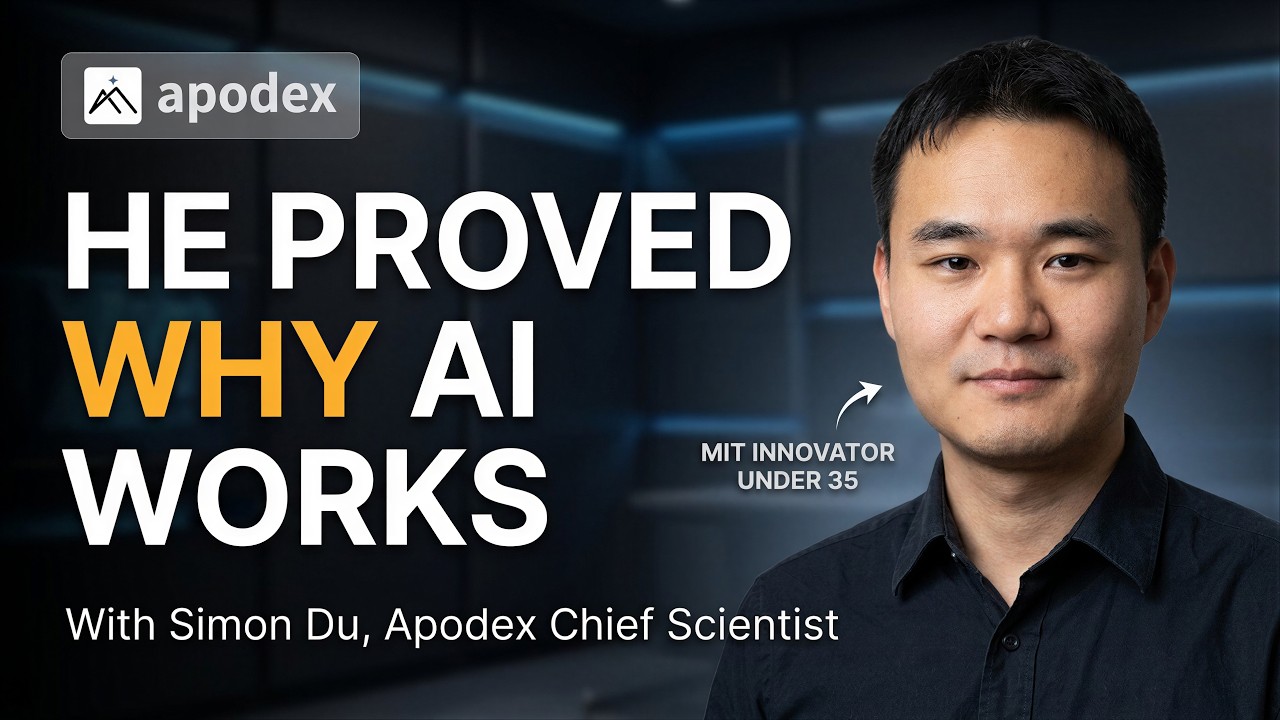
1:03
Simon Du argues that LLMs are more predictable than humans, making them easier to coordinate into autonomous agent networks that can tackle hard scientific problems. Building powerful agent systems doesn't require training massive models; existing APIs are enough. Self-evolving loops could accelerate research by an order of magnitude.
Chapters
More from Angelina





youtube.com
The MrBeast Rule That Quietly Decides Who Wins on YouTube | Rox Codes, CEO @ Flightcast
1w ago




youtube.com
Ask Any C-Suite This One Question About Their AI Agents | Hector Hernandez, COO @ Speakeasy
1w ago
See all content
