Ann Miura-Ko: Why Great Businesses Still Fail l Trailblazers Podcast Episode 41
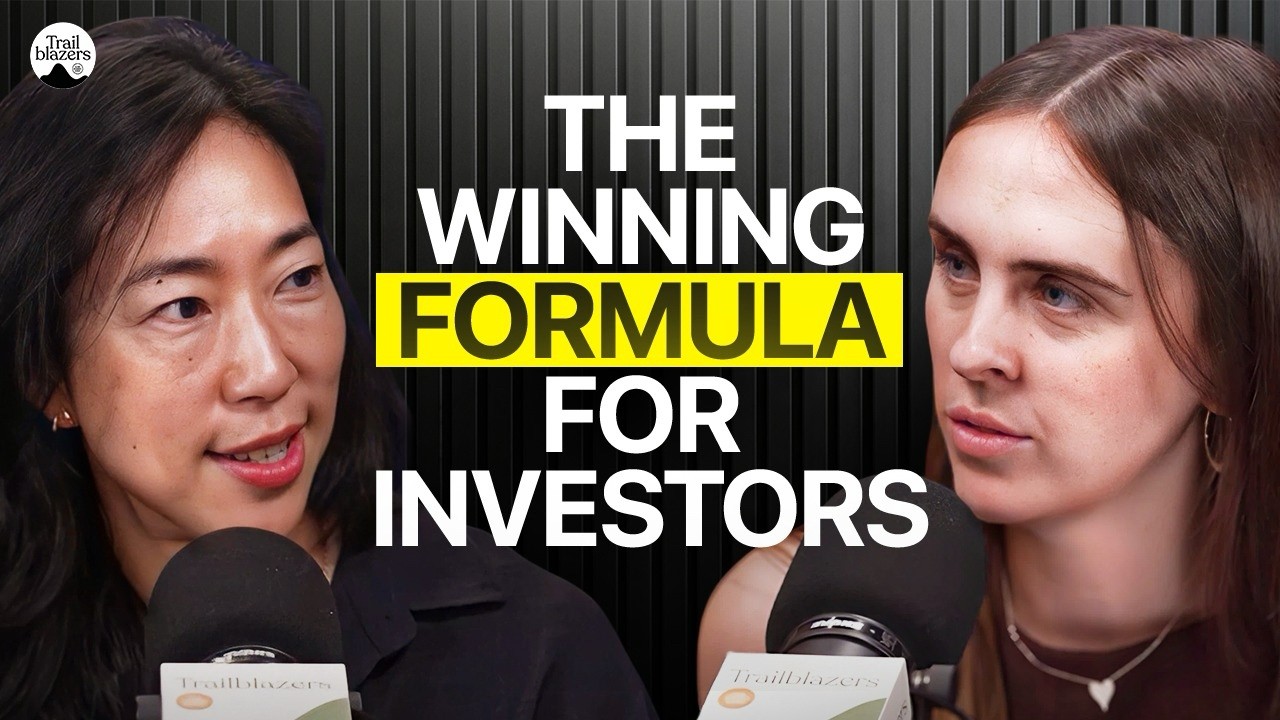
In this 2026 Trailblazers podcast episode, host Erica Wenger interviews Ann Miura‑Ko, co‑founding partner of Floodgate, about a range of topics that illuminate her expertise as a seed‑stage venture capitalist and thought leader. Ann explains the concept of an “AI‑pilled organization,” outlining five levels of AI adoption and emphasizing the importance of leadership buy‑in, data legibility, and cultural acceptance, especially among non‑technical staff. She discusses the emerging wave of non‑technical founders, arguing that the combination of a technical builder and a “super‑thinker” who is a relentless truth‑seeker is the modern founder archetype. Ann then details Floodgate’s investment philosophy: a disciplined, small‑fund, pure‑play seed focus that prioritizes deep founder engagement, personal mentorship, and a hands‑on approach rather than a platform model. She describes how the firm sources founders, evaluates traits such as tenacity, inevitability, and curiosity, and uses a week‑long, written‑back‑and‑forth process to gauge founder thinking. The conversation moves to historic investments—Twitter/X, Justin.tv/Twitch, Lyft, SmarterDX—highlighting the role of luck, pattern recognition, and the difficulty of predicting consumer adoption. Ann shares insights on fund governance, secondary sales, and exit strategies, noting how small checks can be fund‑impacting and how Floodgate’s size enables rapid, high‑impact exits like SmarterDX’s $1.2 B outcome. She also talks about the Mayfield Fellows program at Stanford, its co‑op structure, and its role in nurturing future founders. The episode concludes with reflections on partnership dynamics with co‑founder Mike Maples, the importance of trust and humor, and Ann’s optimistic view of AI as an abundance‑creating force that will empower solopreneurs and high‑agency individuals. Throughout, Ann balances enthusiasm with measured caution, offering practical advice for founders, investors, and operators navigating AI, culture, and venture capital.
Chapters
Today on the show, I am so excited to be joined by Ann Miura-Ko. Ann is the co-founding partner of Floodgate, the seed-stage venture firm she launched in 2008 with Mike Maples Jr. Since then, Floodgate has written some of the earliest checks into companies like Lyft, Twitch, Okta, Applied Intuition, Hebbia, Nooks, SmarterDX, among many others. A repeat member of the Forbes Midas List, Ann has built a reputation for backing category-defining companies at their earliest stages. Ann holds a PhD from Stanford and has spent years helping founders think through the craft of building enduring companies.
Today, Ann lives in Menlo Park with her husband and 3 children.
She is the daughter of a NASA aerospace engineer. Let's welcome Ann. I have to start with the obvious. This AI-pilled organization. This was an essay you wrote that went super viral. Tell everyone what you mean by that. Talk to everyone about the AI-pilled organization and these 5 levels you very articulately put together on, you know, how AI-pilled you can be.
Yeah. So The essay started because I had— about a year and a half ago, one of my CEOs that I get to work with had called me and said, I'm having an existential crisis. It was around the fact that he'd been using ChatGPT to code and had done a couple of things and had very unexpectedly positive results. He's a very time-constricted CEO. He was able to get rid of a lot of technical debt. He built out an iOS app.
Wow.
that the team hadn't built in a long time. He was clearing all of this frustration using AI. This was before everyone was really onto coding in such an autonomous way for someone who wasn't a coder. This ended up spreading throughout his organization. One of the things that he was really leaning into was not just enabling an individual, but enabling non-engineers to use AI, and then going beyond that and really having the organization use it in concert. And so when I looked through that lens at all of our portfolio companies and then actually beyond, what I was starting to see was that there are AI-pilled individuals within every company. There's someone out there who is using agents in some really novel way. But they're kind of on their own. Sometimes some of these individuals are quite secretive about what they do because it gives them a little advantage. And so it's hard to have it spread throughout an organization. So there aren't that many groups who use AI in really interesting ways. And so it became sort of this thing where I wanted to find out who was really AI-pilled, not just as an individual, but as a company. And so I started interviewing as many people as I could. from a 3-person startup to Ramp and Vercel, and then as big as Wix, which is a public company, to see what people are doing. And it was eye-opening to see sort of really interesting, innovative companies that are building AI-first products that maybe aren't as AI-pilled as a company that has no AI really inherently within the product. but the organization itself is agentically immersed.
So fascinating. What's wild too is there's these like 2 use cases. There's like your culture and how your organization operates. You can use AI to the extent that, you know, your leadership wants you to. And then there's like the product you're selling and how agentic and AI-native it is. And I think people sometimes get confused with that, like you said, like they can be really far in one category but not in the other. And then, you know, that can cause things. What have you found is most important? Is it most important that your technology itself is super agentic and AI-native, and that's really pushing the boundaries and you're learning with your customers? Or is it more important that actually you have this like company brain? I mean, I'm sure you get pitched a lot of those these days, right? That your organization itself is AI-pilled. Which one are you seeing matters more?
Yeah, there's a few pieces to it. I think one is obviously the leadership has to be really bought into this. And part of the reason is When the leadership isn't bought into it, there are a bunch of things that go wrong. One is, the AI actually needs to be able to see things in order to operate on top of it. There's this whole question of what is legible to AI. What databases? What emails? What codebase can it see? The more it can see, the more it can do for you. Clearly, leadership has to be bought into that. The second piece is that, if you're not an engineer, Typically, a lot of those non-engineer, non-technical folks are a little bit scared of what they might end up doing if they use AI incorrectly.
Mm-hmm.
There has to be a little bit of permission to make mistakes, to try it out. The more publicly leadership, and particularly non-technical leadership, uses AI, or the technical folks teach others to use AI within the organization, then you start to see a lot more adoption. I think Toby talks about this from Shopify. They have this product called River where the default is that you have to leverage these agents in public. I think that's a really great example of how one can learn from other people, see what's happening, and then the fear decreases culturally.
Totally. It's funny, as you're saying that, I actually find that a lot of the non-technical talent tends to be more of the culture carriers as well. Like, you know, like the friend who's like running marketing that seems to be everywhere at every event and is like so passionate about the product, like getting them to adopt it and getting them to be excited about it is the path. What do you think is the biggest barrier other than like fear of failure between, you know, this like, you know, AI nativity or excitement around AI and the non-technical leaders within an organization? What's like the gap and how can we close it?
Yeah, so if you look at an organization like Ramp, what they have is this product that they've written about called Ramp Glass, which enables someone to come in and, on day one, actually have everything that they need connected into this basically cowork environment. One of the things, if you're nontechnical and you walk into this environment, the first thing you need to do is like MCP server into all of these different data sources. And that's actually already kind of a scary step, right?
It's intimidating. Even the MCP, people are like, what is that?
What is that? And so it would be better if that was already provisioned for you, right? And so in that case, you know that you're not going to mess something up or do something that you're not supposed to do or expose data that maybe is secure. There are all these fears that you have once you have to do something super technical. Some people don't want to be in the terminal, right? Command line interface looks a little bit scary. The degree to which you can take down those psychological barriers and create an environment where Hey, this is all legitimate and you can work within this environment. We've already provisioned it for you. I think that reduces the fear quite a bit.
Totally.
One thing I've learned talking to GPs on the show and in my own experience as a GP, your back office is a signal. How fast you close deals, how clean the LP experience is, how your K-1s land. Investors notice all of it. The more buttoned up you are, the more likely they are to give you more money in the future. That's why I want to talk about Sidecar. Sidecar is the SPV platform built for fund managers who want institutional-quality execution without hiring a full back-office team. They'll review your deal within hours, handle full secondary transaction support, and give you transparent pricing upfront. No platform carry. Also, your LP relationships stay private, which is super important. It is not a marketplace. If you're running a professional fund, your infrastructure should look like it. Sidecar makes that possible without the overhead. Check them out at sidecar.io/partners/trailblazers.
This is getting a little bit more into your investments, which we'll talk about, but because we're starting to lower these psychological barriers and these actual technical barriers to creating software, there is a very exciting wave of, like, non-technical founders getting into our business and starting companies. What is your take on the future of the non-technical founder being, you know, having the potential to be the next great founder? And I say that because our industry has really typically leaned for the, like, technical founder. Ideally, they're commercially savvy. Too, that's a bonus. But really, you need to be able to be technical to build the foundational software that we all know and love. But things are changing. So what's your take on that non-technical founder archetype?
Yeah. So I've always loved the combination of a fairly technical, joyful builder with someone I would label as a super thinker. And that person may or may not be actually technical. But you actually have always needed that person. And I would say, Today, even more than previously, you need that person who is an absolute rabid truth seeker. The reason for that is there's a lot of things that you can now build, and there's very low barrier to doing so, but the real question is why. The real question is who will buy it?
Right.
And why will they care? And is there durability? I think without that added detail, your business has a chance of lasting 3 months, but 3 months from now, we're not sure if you'll have real durability. There's probably even more emphasis on that super thinker.
Yeah.
How do you find the super thinkers? It's sort of the crazy question in venture of sourcing. How do you know? How do you know someone has these special traits that are going to make them the founder of a generational company? Are there certain things you look for to pull out? Is someone a super thinker? Are they a truth seeker? Are they going to ask the right questions when they need to?
Yeah. I actually really like to engage with founders. This makes it hard when a deal is super hot. Hot, and so that probably means that I can't really engage in a process where it's like, OK, in 24 hours you need to produce a term sheet or not. That's just not my style. Usually, I'm engaging with a founder over the course of at least a week, and we're going back and forth in terms of, here's what I think I understand about your business. I'll even write it down. And then I'll have a bunch of questions about that business that I also write down. This is not just a conversation. So we'll have the typical 30-minute, 1-hour conversation. But out of that, I need to write down what I know about the business. Everything from, this is what I think your product does. This is what I understand about the technology. This is what I think your core insights are. This is what I think inflections you're riding on. These are your competitors. These are the bets that I'm making. This is potentially the risk that I'm facing. This is what I understand about your background and why it's relevant. And I'm looking to see how a founder engages with that information. Truth seekers will not always agree with everything that I write, right? And I'm going to get a lot of things wrong because this is just my impression of what you're doing. And so I want to understand how you think. And so in that engagement process, I need that back and forth, and I'm looking for that. The other piece is I engage a lot in teaching because some of that is you get to see someone in their most raw form when they're a student, and I think as a student, you start to see elements of who actually is a truth seeker or not. How do they engage with information? How do they wrestle with it? How do they disagree with themselves? How do they change their minds? Those are all things that I'm looking at to see how curious a person is.
I love that. It's so particularly timely because I think so much of it too, whether or not they agree with you, it's the excitement to engage. I sent a lot laundry list of a lot of what you're talking about to a founder just yesterday, and the founder just, like, did not engage in the way that I would want. You know, like, let's get into it. You know, like, I think it's this. No, I think it's this. Okay, but we're both right here. And, you know, I think that, that, like, almost like that sparring is so much of the fun of building. You talked a little bit about teaching. I'd love to talk about that for a second. Um, the Mayfield program at Stanford, iconic. Tell me a little bit about what made you want to start that.
Well, so I wasn't the founder of it, so there's a—
So you're just the leader of it now, basically.
I'm a co-leader of it. So Tom Byers, who's been leading it for 30 years, is the person who founded it, and I think he was so visionary in this, that I think at the time he was trying to understand why are there all these co-op programs? Like, people go abroad. They go to all these different places, but there's this incredible place that Stanford happens to be in called Silicon Valley, why don't we have a co-op program right here? And so the vision for it has been, it's a 9-month program. You start with 3 months where we teach students, and they're all undergraduates, ethics, leadership, and entrepreneurship. And then we just finished that quarter. In the summer, they all live together in San Francisco. They go to 12 different internships. We actually visit all of those companies and do open houses at all of them. It's almost like they all are doing 12 internships at the same time.
Oh, so each intern goes to all of the companies, not just the leaders?
Yeah, we all go to see all these different startup companies just to get a different feel for, oh, this company looks one way. This company looks another. Then the last 3 months, which is the fall when they come back, they teach each other and they write one paper on an inflection that they see.
Okay, so can I do this program? We need this for adults. It sounds pretty epic.
It's really epic. It's 12 students and I get to know them really, really well, which is really fun.
That's amazing. There's a long list of incredible alumni. I know Mike Krieger and Kevin Systrom started Instagram, maybe the most famous. What were they like back then? What was it like teaching them as part of the program?
They were part of the program before I became a co-director and co-instructor, so that was sort of the Tom and Tina era.
Got it, got it. I also know Josh, who started Gusto. Was he part of your era, or was he right before you?
He was not, but he actually continues to teach every year in the program, so he's someone I know much better in the context of the program. He actually comes He comes back and teaches an entire class on culture. We try to place it at the very beginning of the class because he talks a lot about what values are and how you take values and place them within a company and grow that. How do you think about the values of the company and make sure that's translated into all the things that you do? We try to do that. for the Mayfield Fellows, too.
That's amazing.
Yeah.
So there's this trend in our industry, speaking of culture, where we back a lot of young people. I may or may not have gotten pitched by a 14-year-old recently, which I have opinions on, but those are mine. And a lot of Silicon Valley likes to back the 18-year-old dropouts and sort of these younger adults who maybe haven't experienced culture in another company. How do you teach culture? How can you learn culture when you're trying to build it yourself? And I say that because I think that's something that has been hard for me to see as sort of a fly on the wall at times. Sometimes the younger companies struggle with what does culture mean? How do you lead with values? How do you not micromanage? Or how do you inspire? You know, some of these very important questions when they haven't done it themselves.
Yeah, I think it's a really sort of foundational question. That's a great question. Part of what we're investing in is— when we look at investment, we're not just looking at a product. We're not just looking at a single founder who's going to build a business on their own. We are looking at their ability to recruit, their ability to build a great company. There has to be that piece, too, because I don't think every part of it is observable and teachable. by the VC. In fact, most of it is not. Part of what I look for is— my partner Mike likes to say, we're investing in people who are time travelers. They are sitting in the future, and they time travel back to today to try to get us to help them bend the curve of the future to where they see the future should be. In order to get there, they have to convince a mass group of people to come along with them. That's the movement that they're creating. A founder, if they can't create a movement, they're just seeing the future. In some ways, you can say they're—
A visionary.
Not visionary, they're just having visions, right?
Mm-hmm.
And so how do you translate someone who is able to create a movement? I think those people, like, they manifest in a lot of different ways, and that's why I think some people feel like leadership has to look a certain way. They'll say, okay, this person was really mean and bossy, and so that's the way to create a movement.
movement.
I think a lot of it is dependent on what are you trying to accomplish? Who do you need in order to bring that vision to life? You'll see much softer leaders who are incredibly inspirational, but then also drive a very, very large business with a huge vision. vision, and I would say, like, Josh Reeves is a really great example of that. If you ever meet him, he feels like this incredibly driven leader, but someone who is deeply, deeply ethical. He doesn't feel like he's going to be, like, someone who yells at a ton of people, but he's quite inspiring. And then, on the other hand, you'll read all these stories or watch movies about Elon Musk or Travis Kalanick, and they feel like a very different kind of leader, but also quite inspiring to many people. I think it's a really hard question how you assess it, but you have to get a good sense of it over time.
It sounds like it's also about embodying the authenticity of the the founder, and then creating a culture that attracts that type of talent that would thrive there. So, like, I think there's a different person that's gonna thrive at Gusto than is gonna thrive at Uber.
Totally.
Than is gonna thrive at SpaceX. Like, I think it's— and it's figuring out, and maybe this is the work that the VCs have to help with, especially for the younger founders, how do you clarify what is, like, authentically your style, so that you can create a bigger organization beyond just you? 'Cause to your point, if you can't build a movement, and you can't attract people, you're just sitting there thinking about the future.
Right. I've seen people who are 24, 25 years old and they've hired someone who is 60 years old and that 60-year-old is like, I can't believe how excited I am to work for this person. I'm so inspired. My whole career has been building towards this moment. I think some of it is dependent on what are you building and why does it matter? And so therefore, what are you doing for your customers that is meaningful and can change the world? And so I think those are the things that I really look for.
I love that.
If you're building in public, sharing insights, or staying top of mind with your network, you need a newsletter. And if you have a newsletter, you need Beehive. You know how I always talk about writing essays that change the trajectory of my VC firm? Well, I publish all of them through Beehive. It's my absolute favorite platform because it serves as a blog, A newsletter and a website all in one, so I don't have to republish or reformat across platforms. Beehive is the creator platform where newsletters actually grow. We're talking built-in referral programs, a recommendation network, and analytics that tell you what's working, not just vanity metrics. Plus, you can monetize from day one through their ad network, paid subscriptions, or boosts. No platform cut eating into your revenue as well. I can speak from my personal experience. I'm always getting pinged for new ad opportunities. Beehive has a range of customers from major publishers like Time Magazine, TechCrunch, and Newsweek to solo operators earning seven figures from. Their inbox. It's the same platform that's built to scale with you. If you've been putting off starting your newsletter or outgrowing whatever you're on, now is the time. Go to beehive.com and use code TRAILBLAZERS30 for 30% off your first 3 months. So I have a confession. I used to be a compulsive note-taker. Every single meeting, I'd be half listening and half scribbling and still leaving with gaps on next steps, details that were shared, and more. But Granola completely changed that for me. It's an AI-powered notepad for meetings, and it's connected to every single call on my calendar. Before each call, it shows me a well-researched brief so I know who I'm meeting with and the full context going in. During the call, I jot down whatever stands out. Maybe it's a keyword or a decision I make, and Granola handles the rest. It'll transcribe in the background on the call and then turns my rough notes into clean, structured takeaways the second we hang up. There's also no bots joining calls. It just works in the background. I use Granola for several things. If I finish a meeting with a potential investor in my fund, I'll ask Granola, what could I have done better to get my point across? If I'm meeting with a founder I like, I'll ask Granola to point out any major green flags or maybe red flags I may not have already caught. For people with a lot of meetings and decisions that require endless context, Granola is a game changer. Actually, we're running Granola on today's episode, so you can read the full show notes at granola.ai/trailblazers. New users get 3 months completely free. That's granola.ai/trailblazers.
So one of your very infamous early investments is Twitter. I guess we'll now call it X. Jack Dorsey is, I would say, N of 1. Talk to me a little bit about first meeting him and deciding to get involved in that company.
That was one of Mike's actual early angel investments. I think the story goes, it was actually pre—
Pre-Floodgate.
Well, it was pre-Floodgate, but it was pre-Jack Dorsey really being successful. This was an Ev Williams investment.
Yeah, because Ev Williams.
Wow! He actually had a podcast app called Odeo that Mike had originally invested into. They decided to give the money back to all of the investors at one point. Mike basically said, I'll just roll it forward into whatever you're doing next. And it happened to be Twitter. I think what's really interesting, lessons that we learned from some of those angel investments, was that you just don't know what's going to come of these fast-moving product cycles. Another one that Mike invested into that I saw a little bit more closely was Justin.tv, which was basically an app to livestream Justin Kan's life. He had this contraption on his head where he could video his point of view and livestream it.
Which doesn't feel like a big investment at the time. I mean, it feels like if someone were to pitch us that now, we'd be like, hmm, market might be a little small for just your fan base. Doesn't social accomplish that?
It was a really weird idea.
Quirky.
I remember going to meet with Michael Seibel and their team a couple times. In the last meeting that I remember, Michael Seibel told us that the company was splitting into 2. One was called Twitch, and it was going to enable people to watch other people who are livestreaming gaming. And the other one was called Socialcam. And I remember leaving that meeting and turning to Mike and saying, I'm really glad we have Socialcam because who's going to watch another person game? And then we walked down the street, I remember when I heard how big Twitch was becoming, I was like, well, I'll be darned. I cannot predict what consumers like.
So funny. There's so many niches of the internet that we don't even understand.
I mean, real big niches, too.
Yeah, huge, giant niches. That's wild. It's awesome to see that up close, though. I didn't realize Michael Seibel was so involved with Justin's company that early. He's such a legend, though. The world is small, also.
That mafia is quite interesting, too.
OK, who else is part of it?
The CEO and founder of Cruise, Kyle, was also part of that, too.
Kyle Vogt, I think, right? For those who don't know, Michael Seibel is now very involved with Y Combinator and has been a big prolific VC now for some time. Another one of your legendary investments, Lyft. Rumor has it there's like a 10,000x that people talk about. Tell me, how did you first meet the Lyft team? And if you can share, how big was that return?
I think you've had Leah Sullivan on the podcast. Of course. She's great. She was the founder of TaskRabbit. She was also my very first investment.
Wow!
Into TaskRabbit?
Yes. When I first started Floodgate, I was actually still finishing up my PhD at Stanford. I had promised my mom I was going to finish it. I'm sitting there. I'm married, actually, and I have an 18-month-old. I just started Floodgate, and then I'm still doing this PhD. And I think at the 8-month mark— or no, actually April, so 11-month mark, I actually had my second child. And 6 weeks after that, I defended my PhD thesis. And then I think I met Leah in October or so of that year. That was my first investment. It was just sort of this whirlwind year, and Leah was sort of at the end of that.
Lucky you. She's lovely.
She's awesome. She moves out from Boston. She had been part of this Facebook Fund incubator. She introduces me to 2 guys that she had shared desks space with at this incubator, and that was John and Logan. When we met with John and Logan, the crazy part of the story was that there wasn't a single transportation startup that existed at that time. It was called Zimride. We had seen—
Was John's last name Zimmer or something?
No. Where did it come from? It came actually from Zimbabwe.
Oh, it wasn't What are their last names?
It is John Zimmer. But Logan Green really started Zimride in the very beginning.
Oh, so just a coincidence that his last name looks similar.
It was a coincidence. John joined as a co-founder, but I think it was after it was named. I saw the company. We hadn't seen anything in the transportation space. I ended up talking to Scott Griffith, who had started Zipcar, asking him, hey, I think transportation feels like a really big industry. We haven't seen anything in this space. Have you seen anything? I think it was right before Uber got started. He told us, haven't seen anything in transportation, but it feels ripe for something to happen. Their pitch was, They were creating a platform in which people can actually exchange rides. It was mostly for, at the time, universities. If you wanted to carpool to your school, you could do that. If you wanted to find a one-off ride, you could do that as well. It was live at Stanford. It was live at most of the UCs and a few other schools. A few other colleges. The plan was actually to go out to a few other companies. We're going to approach Hewlett-Packard, Facebook, some of these other companies. That's how they grew for a little while, but it became very clear that there just wasn't enough density in the activities that they were doing. Over the course of, I think, a couple years, they really expanded their notion of what they wanted to do. Then, in 2012, they decided this whole platform was not working. They did a hackathon and then came up with this peer-to-peer. It was already after Uber had launched, but Uber was still black car services. Their tagline was, ride like a baller.
They had that pink mustache, too, so they were funny. They had personality.
Lyft had the pink Yeah, yeah, yeah.
I was just saying, ride like a baller was Uber's tagline.
Uber's, yeah.
Oh, so it was more, like, fancy.
They were fancy. Only black car services. And so there was a debate internally of whether or not Uber would come after this peer-to-peer, kind of funky space, where Lyft, in the beginning, you put this huge, furry, pink mustache on the front of your car. The riders would get into the front seat and Fist bump the driver because it was supposed to be like your friend was coming to pick you up. And then the drivers also responded by having sort of funky themes to their cars. So there was Lyft karaoke. There was Lyft trivia. There were all these different types of drivers that were going around. And so it was a really fun, innovative experience at that time. They were very different from the Uber experience. Then within, I think, 6 months, Uber started to realize that this was going to be a thing. Travis went to all the different cities we'd launched in and said, if you don't shut this down, we're going to also launch our own service, because he felt it was not legal and all these other things. When he realized that the cities were not going to shut it down, he just went live with his own service as well.
It's wild. There's a lot of famous rivalries in our industry. I feel like you were part of, if not the most iconic, one of the most iconic ones.
Yeah, that was a really wild ride.
I mean, I can only imagine. What's wild about this story is so much of what started to work happened a couple of years after you invested.
Mmhmm.
And so then a lot of people ask the question of, like, how could you know? It's the same thing as your Justin story. Like, so glad we have Socialcam. Twitch will be what Twitch will be, but Socialcam is a thing. How do you explain identifying these opportunities? Is it luck? Is it great founders? Is it, like you said, transportation's ripe for disruption? After almost 2 decades now of investing, what's the thing? that you think makes you pick someone when you know it's still a couple years out, potentially, and many pivots away from figuring it out?
I think that's the question.
Yeah. And everyone has their own opinion.
I think I've— in my old age, I've grown a lot of humility. I would say there's a lot of lady luck in the process. I've actually, in the very early stages, let go of the idea that the initial product idea matters so much. And I invest entirely in people. And when I say people, I think a lot of people have a very loose definition of what they mean when they say, oh, I invest in people. Most of the time, it's vibes. I really like this person. They seem really smart, or they have the right resume. I'll go back to this notion of super thinker and super builder. We have very specific questions we're asking. We have very specific internal debates about the qualities of these people. The only other characteristic I'm really looking for is tenacity. Sometimes the founder just has to outlast everyone. And so if you've just bounced around, 9 months here, 12 months there, I'm just not sure you have that. And so that's another thing I look for. And then there's sort of this— I think the vibe I am looking for is— someone once said, oh, that person is inevitable. And I remember hearing those words. And just being like, that's exactly the term I'm thinking of when I'm looking at someone. And it's very like Thanos from Avengers, right? But at the same time, there's something about being inevitable that is so important. And I think it encapsulates a lot of different things.
Yeah, it's a really good word. It's a really good word, and it ties a lot closely to this movement conversation we were having earlier, that you see the future, you're working towards it, it's inevitably going to happen, you're just convincing people along the way to join you. So I think that's really clear. I want to make sure I circle back on the Lyft return question. I realize we didn't answer that. Can you share? How big did it get? How well did it do for your firm?
Yeah, it was— so you're always looking for a multiple fund returner, and And that was definitely a multiple fund returner. We got in at a $5 million valuation. We sold a little bit along the way, actually at a price that is even higher than it is today. We were able to get a good chunk out at that point and then at the IPO as well. I can't give you the exact returns, but it was a—
Multiple fund.
It was a multiple-fund returner just on its own. That fund also had Okta. It also had Ignite, which is actually interesting. It just got bought by a PE firm, and that was also a multiple-fund returner as well.
That's incredible. It's always nice when you have many. You don't just need one. I know it's a power law business.
The 2026 primaries are taking shape, and if you have a strong opinion about how they're gonna go, Kalshi lets you actually trade on it. Kalshi is the largest prediction market in the US, federally regulated and available in all 50 states. You're not betting against a house, you're trading against other people in a live market, taking yes or no positions on real-world events. Elections, federal interest rates, economic data, you name it. Right now on Kalshi, you can trade on the California governor race, Senate outcomes, and a dozen other major political storylines as they develop.
And you can even trade on the outcome of this very episode.
As the probability shifts, you can buy in or out of your position in real time. It's a completely new asset class, and honestly one of the more interesting ways to have skin in the game on what you're already watching closely. Download the Kalsi app—that's K-A-L-S-H-I—and use code Trailblazers to get $10 when you trade $10. Or go to kalsi.com/r/trailblazers to accept this $20 offer. With Kalsi, you can trade on anything. 18+ only. Restrictions and eligibility requirements apply. Event contract trading involves risk and may not be suitable. Suitable for all investors. Prices, values, and available markets may differ from those mentioned. For more information, see kalshi.com/regulatory. Okay, so quick experiment. Think about the last long message you typed. Could be a Slack thread, a prompt into Claude, maybe it's a detailed email. It probably took you 10 minutes, maybe even 20, to get it right. Now imagine you just said it out loud instead. That is the whole pitch for Whisperflow. Whisperflow is voice-to-text that actually works in every app on every device. You speak naturally and it outputs clean, formatted text that's ready to send. No setup, no integrations, no fixing weird transcription errors. And it works across Gmail, Slack, Notion, Claude, iMessage, wherever you type. And unlike the built-in dictation on your phone, WhisperFlow removes all filler words, mid-sentence corrections, and jargon. What I personally love about it too is that it perfectly matches my style. So I often type in all lowercase letters, so it'll type like that. I also say things like LMK, which means let me know in shorthand, and it'll auto-adjust it from let me know to LMK. Like many of you, I also do a lot of brain dumping into LLMs. So instead of typing it all out, I actually just speak my windy train of thought into WhisperFlow, which is infinitely faster than trying to get my fingers to keep up with the pace of my thoughts. If you do any serious writing or just send a lot of messages and emails, using WhisperFlow is a no-brainer. Get one whole month of WhisperFlow Pro completely free at ref.whisperflow.ai/trailblazers.
One thing that I've been super impressed with you guys is you've stayed Very disciplined on fund size. Um, we're saying this as Benchmark is now one of the last to fall. They've raised a much larger fund, which is good for them, but they've always been also very disciplined in their own way. Uh, you guys are 18 years in, and you still raise really solid funds, but they're not multi-stage.
Yeah.
And a lot of the other folks in your cohort— I think of you guys as, like, OG seed funds, you know, sort of like the First Rounds of the world. They've scaled, and you guys have stayed diligent. Talk Talk to me about why you've stayed so disciplined on fund size, and what your philosophy is on it today. Because the market also looks pretty wild, and there's a lot of arguments about what's the right fund size to deploy.
Yeah. I think it sort of depends on how you want to operate as a venture capital firm. And I think for me and for Mike, we just really like working directly with the founders. It's just what we love. We love the personal relationships we have with them. We love getting to know who they are, what they're building, why. We actually feel that that's also the way we learn. We do not learn very well when we are hands-off. If we are learning through another person who is doing marketing, I don't think Mike and I learn very well. We need to see the problem firsthand, understand it, talk to the founders, understand that journey. Only then can we really translate that for other folks. Part of what someone gets when they receive an investment from Floodgate is they get our time. They get Ann and Mike Maples Mike Heller, Iris Choi. They get the partners. And they get all of us, actually, because we don't do that many investments. We're fundamentally not a platform. And as a result, we cannot scale like that. But they know, at the very least, that that is what they are getting. When they get us, they also get, you know, between Mike and I, We each have basically 20 years of experience of seeing companies go from zero to one. We've seen that done really well. We've seen that done really poorly. We've seen all of the mistakes. The thing about going from zero to one, I wish it was a scientific experiment.
Right.
I think growth, in many ways, is science, but zero to one is a series of anecdotes. You're sort of looking for patterns, but you're also looking for what's unique about this particular situation. You're trying to provide the CEO, the founders, with the right coaching for that particular moment. If you don't know the details, if you're just sort of an observer at the highest level, I think it's really hard to give the right advice at the right time. That's why we've chosen to be more pure-play in terms of, do we build out a gigantic platform to do all the things that we want to do? It's just not the right mechanism for how we learn and how we impart that knowledge to our portfolio. It's also I don't know. Our personalities work better that way. A lot of people describe Mike as the fun uncle. I'm sort of tiger mom. You kind of know what you're getting when you receive an investment from each one of us. I think that's point one. Point two is, in this world, I think what we've seen is That there are really— you can have optionality in different ways, but you can't have optionality in all ways. In what ways do we not have optionality? Well, we only invest at pre-seed and seed. We have no entry-level optionality. If we miss something, we can't come in at the A or the B or the C. So that's the only moment at which we can enter into a working relationship with the founder. So that puts some pressure. If someone wants to work with us, it's the only moment where we can really find that opportunity. And so other folks, they can choose to work with them in the next round of financing or even after that, but this is the only moment where we can really work together. So that's hard on one hand, but it also— It's a good thing.
Right.
Forces a choice. The second is, though, we have exit optionality. Because we are a small fund, there's a few things. Number one, the small check we're writing will be a dent-maker in our fund, and that's why Ann and Mike and Mike are all writing the checks themselves, because we're not going to pass it off to an associate to write the check. That That $1 to $5 million check really matters for us. Because we only make 4 to 6 investments per year per partner, if that one doesn't make it, it's not just sort of a, oh, well, it didn't make it. It actually really matters to us, too. I feel like we're really aligned with the founder in terms of incentives. Then the last piece is that, because we're a small fund, A relatively smaller exit will actually really matter for us. I'll give you one example, which is, for us, we recently had an exit with a company called SmarterDX. For us, it was a great $1.2 billion outcome. It happened in less than 4 years.
Which, by the way, the time horizon matters a lot in our business.
Yeah. It was quick. Usually you're holding out for 10, 15 years. This happened in less than 4 years. Greater than $1 billion. We ended up returning 2/3 of our fund in that moment. Because we were still in the investing phase of this fund— it was the first investment I made out of the fund— we actually returned more capital than we had actually invested at that point. And so it was a— for a lot of folks these days, a billion-dollar outcome just doesn't even start to matter, which is crazy if you think about it as a founder. And actually, if you think about it as an investor, too, right? A billion-dollar invest— a billion-dollar outcome should matter, because It's a big deal. For us, it actually really does matter. That was, to me, really interesting because our exits, we have a lot more optionality. We can even participate in secondaries, too, because if Floodgate sells some portion of our investment, that's not seen as—
A sale.
As big a deal as if one of the multi-stage actually starts to sell their position. Oftentimes, we're actually asked to sell some part because the multi-stage can't have as much ownership as they need to.
They always want to gobble it up as the company's growing.
I understand, because they're trying to get to 20% or more ownership, and they can't get that necessarily in the first take. And so we're working, actually, in some cases with upstream capital, and as we exit, we're selling into their position, and it's good for them, and it's actually good for us as well.
So this is also very timely. I dealt with it 24 hours, literally, before talking to you about a secondary situation. A multi-stage firm wanting to gobble up early investors. I have a selfish question to ask you. Do you have a rule of thumb for when you do it and when you don't do it? If it's going to return half the fund, selling a quarter returns half, then you do it. If you're not faithful in the leadership, do you have any rules around how much you should return for the fund? You know what I mean? It's a tricky thing.
I wish we did. We actually have a partner who's entirely—
Mike said that. Their whole job is to trigger follow-on stuff.
And so we actually start evaluating companies 6 months after we invest.
OK.
And we are constantly reviewing with our partnership, this is what's happening with the company, this is what we're seeing, and we're constantly, at each stage, looking at our excitement level about what we're seeing and why. And we'll actually We actually debate this quite a bit internally so that we can give our partner, Iris, a very crystal-clear picture of what's happening internally. Now, she's underwriting it from an external perspective as well, because she wants to get, for her check, a 5x return, right? And so she's trying to say, OK, not only am I evaluating this from the internal view of leadership, product development, everything that we're really excited by. I think the problem is Mike and I tend to be extraordinarily excited by our companies regardless of performance. Usually, that view, that internal view, is perhaps a little too rosy. This was our problem with not having an external investor who could Hold us accountable for that. So Iris will come in and say, OK, from an investment point of view, here's what I'm seeing about this business. Here's sort of the sentiment from upstream capital. Here's where we think this company can go. Here's what I want to underwrite it to. Here's why. And so for each company, we are really developing a case-by-case basis.
OK.
There have been even times where, at the end of the day, Iris will turn to me and she'll say, Ann, I know why you're excited by this business. In fact, if we were just investing personal capital, I could see why we might invest into this. But given our mandate, this is not investable. So I'll have to let it go.
It's so important to have someone with that backbone and that separate point of view to hold firm and keep you guys accountable? Because, like you said, when you're a GP and you brought the deal in and you've been working with them forever, you want to do it most of the time. You want to help.
I think what's also important, though, is that separation allows me to not have to wear 2 hats at the same time, and I get to be this mega fan totally.
It lets you say, sorry, they decided this thing.
Yeah, and it's not even like I need the excuse. I just want to be in the room really advocating for the founder if I believe in them. I think it was always really hard when we were trying to be responsible stewards of the dollars, but I just feel like if we flipped another card, something else might turn over. like, they've been so diligent or creative, or I feel like they have what it takes. I want to be able to argue for that. Sometimes I'm able to argue for it and convince Iris, but I think you need to have that separation of church and state.
I think it's really inspiring. I remember a couple of years ago, Mike was talking to a small room of emerging managers and he made that comment. about having this external person. And I was like, jot it down. That's a very, very good idea. A lot of people don't do it. You'd think more folks would adopt that. I have one final question before we get to our lightning round, and it's about your partnership with Mike. I feel like Silicon Valley's got these duos.
Yeah.
You and Mike, Satya and Hunter. There's these people that they've been buddies for decades. And it's worked. I'd love to hear your take on how you've kept your partnership so strong and any advice you might have for co-GPs or co-founders, actually, who are getting married to someone and want it to last as long as yours has.
It's a really interesting question. I remember when I first was thinking about Working with Mike, he gave me this offer. And we had sort of a trial period where we were in the car going everywhere together for about 2 months. And we had this rinky-dink office. Didn't have our fun name on it. No one really knew who we were. We're just chasing down founders. I had talked to a few people who had worked with him previously. He had done the startup Motive, and I wanted to get a sense of who he is. I couldn't find a single person who said something bad about him, that he was unethical in any way.
Really?
They would say, oh, he's sometimes really disorganized, or, he has these crazy ideas, and, you know, some of them are really brilliant, but some of them are really crazy. And at the same time, I was sitting there observing him, and I had this deep desire to learn from him because he possesses—
What?
This incredible talent and creativity that is so different from anyone else that I know. And it's partially sort of marketing, partially product. There's sort of category design, this way with words. He has this magical set of capabilities that, to this day, when I'm sitting in a room with him and I hear him him speak and he's on, I want to write down everything he's saying. And then there's certain moments where he'll see something in the world, and his take on it is just so different. And I have to pause to really, like, ingest what he's saying. And it's those moments that every time I think, I'm so glad I'm working with this guy. And then I think the last The best part is I've never even once felt like I had to watch my back when it came to Mike Maples. I remember one of the first times was I'd made this investment in a company and someone gave Mike credit for it. He stops them and he says, oh, no. That's not my deal. That's Ann's deal. deal. I remember thinking, oh, he didn't have to do that. But I thought also in that moment, most other senior VCs wouldn't have corrected that. Here's this guy. We're still just trying to build up our careers, and he just doesn't feel greedy about anything. I think that culminated in And I think our second fund, our attorneys called us and said, oh, you guys haven't split the carry yet. And we were not together at the time, so we got this text message. And so then Mike texts me and he's like, oh, we haven't split the carry yet. So we're negotiating over carry, and I remember at one point, it was like maybe 10 back and forths, and at some point he goes, okay, you drive a hard bargain, but sure, and I was like, I should have asked for more, but I remember describing that to someone, another partner at another firm, and his mouth literally hit the floor because he said, our negotiations go on forever, and they're between lawyers. They're so detailed. And you guys are doing this over text message. And it's because we've had fundamental trust. And I think Mike just doesn't have a ton of ego. And so we just haven't really fought over weird things. And he's a really easy guy to get along with. And I think there's a lot of That's really special.
And to say that after all this time too. A lot of people say this in the beginning and then things happen. What do you think he would say about you if I were interviewing him?
Oh, I don't know. What would he say?
I mean, you said a lot of very complimentary things about him. Is there something that you think he might say or a story he might say?
Oh, we've had just really good moments. I think the early days are probably the most fun. There's one where I remember I felt like I gave him really good advice, where he was trying to negotiate a term sheet, and he was getting a little bit too eager. And we were in the car, and we're driving, and he's like, oh, I think I should call them. And I looked at him and I said, you know, Mike, I think in this moment we just have to play the role of the hot girl. And he goes, what does that mean? I'm like, I don't know, but I'm just thinking, like, if you were the hot girl, if you were the prom queen, how would you act? And we were both like, never been in that position. But we're like, theoretically, okay.
Let's put ourselves there. Right?
Hot girl wouldn't call. I don't know. I just think part of it— I think what works for us, I think what he might say, is we never have taken ourselves too seriously.
Yeah, you can poke fun.
Yeah, we totally poke fun at each other.
You call each other out. If he's being too eager, you can tell him you're being too eager.
Yeah, we play real pranks on one another, too. I love that.
I think my favorite—
oh, this is what he would probably tell you— is he's not able to focus for a really long period of time and plan out something really elaborate, whereas I can. And so he played sort of like a prank on me that didn't take that much effort. And part of it involved an email that I He involved Josh Kopelman in this, or at least name-dropped Josh Kopelman, and said Josh had said it was okay. And so in the process of him playing this prank on me during a meeting, I wrote Josh Kopelman an email that said, WTF. And then Mike was like, I wouldn't send that, and I just sent it. And then he was like, I was just kidding. I was like, this This is just a joke. Then I had to write back to Josh Kopelman. I said, actually, Mike was playing a prank on me. Ignore that last message.
Josh must have loved that.
Then Josh immediately wrote back. This is on a Monday, when everyone's in partnership meetings. He wrote back, do you want to get him back? I said, I do, but just hold that thought. So I randomly run into him. at a dinner that evening. And Josh says, well, how are you going to get Mike back? And I'd been really thinking about it. And I had decided that I wanted Mike to be recorded dancing. So I said, I think I want him to dance. And I said, I need your help with this, Josh, because at the time, First Round Capital would do these really elaborate Christmas videos or holiday videos.
Totally. They're legendary.
They're legendary holiday videos. I said, the only thing I need from you, Josh, is an email to me and Mike offering a cameo. He said, done. He sent out this email. To me and Mike. And Mike is, you know, he also doesn't get back to email so quickly, but man, he got back to that email real fast. He's like, sure, I'll participate. And I was like, we are good. So then I went out and I interviewed all of these choreographers. I must have interviewed like 4 or 5 people because I wanted the right person who'd be kind of enthusiastic, but pressure him to keep going when he didn't want to do it. And so I found this woman who had been a Stanford dolly, and she came over on a Monday, and Mike sees this on his calendar, and he's like, oh, I think this whole First Round Capital video thing is happening today. Are you in it, Ann? And I said, oh, Mike, I already recorded mine yesterday, or last week when I was visiting Rob Hayes, and I was like, it was really easy. Don't Don't even worry about it. So he goes into this other office, and literally for 45 minutes, he's practicing Watch Me Whip Nae Nae dance. And at the end of 45 minutes, I go in. I was like, oh, we should at least record a piece of this just so you see what it looks like. And so I record him dancing, and then I walk away, and I bring back a folder, and I said, oh, Mike, I need your signature on this document. He opens it, and it's a picture of Ashton Kutcher and said, you've been punked. And so to this day, I still have that video. I've not published it, but lots of people have seen it.
Wow. Maybe you can do privately show people?
I do. And then his ringtone when he calls me is still to this day Watch Me Whip Nae Nae.
Iconic. I love when, like, a joke and a prank really sticks. And just all that time later, it's still so good.
It's still, it feels, it still feels really good when I think about it. Yeah.
Okay, so I'm going to encourage you to bring that back. Yeah. Not sure if you've done one lately. You know, who knows if Mike's going to tune into this, but, you know.
I haven't done one in a while.
Maybe you can conspire. Yeah. Just, just going to plant the seed. And I'm sure Josh would be down to help again.
Totally.
Yeah, I love it. That's amazing. Thank you for sharing.
So here's a problem I hear constantly from operators. The data exists, The answers are somewhere in there, but getting to them, actually pulling a useful insight without bugging the data team or learning SQL takes way too long or just does not happen. Hex solves that. Hex is an AI analytics platform where anyone on your team can ask data questions in plain English and get real answers backed by your actual business context. No SQL required. And the best part is that Hex shows you exactly how its data agents think so you can see where the logic comes from and trust the output. The more your team uses it, the smarter it gets. From seed stage founders running lean to larger orgs dealing with serious data complexity, Hex is built to scale with you. It's game-changing for people like me who want to understand what's going on under the hood, but we are not the data experts. It's funny too, because I feel like every time I look over my operator friends' shoulders, whether they're in product or marketing or ops, they often have a Hex dashboard pulled up. It's a great tool. Trailblazers listeners get an exclusive 30-day free trial at hex.ai/trailblazers.
We have a quick lightning round. Trailblazer trade-offs. Let me know what comes to mind first. Book in hand or podcast in ears?
Book in hand.
Any recent favorites? Pattern Breakers? Mike's book?
I'm reading The Power Broker right now by Robert Caro, which is maybe not the best book in hand because it's like 1,500 pages. But on a Kindle, it's actually great.
Yeah. It's very light. Cool. Awesome. I'll add that to my list. Hire slow or fire fast?
Fire fast.
Okay. Tell me more.
I just think most people don't have a problem with actually hiring. It's the making a decision once you know something isn't working, and I think people think it's It's not kind to let someone go, but if it's not a fit, I think both sides know, and it's kinder to actually let someone go.
10 small wins or 1 big moonshot?
1 big moonshot.
I mean, we're in the business of VC.
There's only 1 right answer there.
Exactly. Being early or being right?
Being early.
Tell me more.
I think so. Being early is, you know, you can be right by just sitting around and waiting and seeing what everyone else does. And I think that's just less scary. I like to be often wrong, but highly convicted.
Harder to do, though. What's the best teacher, a mentor or a mistake?
I actually learn really well from mentors.
Any favorites? Any recent mentors come to mind?
Well, Mike's always been a mentor, but one of my early mentors is this person, Ted Dintersmith.
Okay.
He was a venture capitalist at Charles River Ventures. He was one of my early bosses. I learned so many things from Ted, but probably the best thing I learned from him was actually how to network, because I'm a terrible networker. I'm very introverted, but what I saw with him was he's an incredible listener, and he's fascinated by people. He He loved to meet individual people. And he loved to hear their stories and who they are, where they come from, what are they interested in. And when I interviewed with him, we spent 2 hours talking about books that we were reading. They were all fiction books at the time. And then we also talked about music we were listening to. And at the time, it was— What was that music? He's really into opera, and I'm a classical pianist, and so we talked a lot about what music we really loved. That, to me, didn't feel like networking, and I love that.
I love that. I love networking your way, too. It doesn't have to be the big fancy events and the big dinners. That stuff can be overwhelming for anyone, even the extroverts.
Very overwhelming.
Yeah. I get it. I get it. Is the future of AI abundance or chaos?
Maybe a little bit of both.
Okay. If you had to pick one?
I choose to believe abundance.
Eternal optimist. I love it. Killer product or loyal niche audience?
I start with loyal niche audience.
Okay. VC or Bootstrapping.
I prefer bootstrapping, even though I'm in the world of VC. I think 99% of businesses should be bootstrapped.
What are your thoughts on this seedstrapping wave, where you do a little bit of both?
I do think that there are reasons why companies will need less capital. What I'm hoping for is that entrepreneurs will separate their ego from their fundraising strategy.
Mmhmm.
And once you're able to do that, you can actually fundraise in the right way. And that's the only thing I really want. I want people to fundraise in the right way for their business. I think right now, though, the problem is fundraising is very much related to ego.
Yeah. But when you see it on our side, sometimes people— founders don't set themselves up for success if they take the really high valuation, or they dilute themselves, or whatever the thing is.
Yeah.
That can be hard.
Yeah.
Never post on social media again, or never fundraise another dollar again.
As a VC?
Yeah. You never raise another fund dollar. I mean, you could self-fund it, I guess, or never post on social media again.
I wouldn't mind never posting on social media again.
Is AI overhyped or underhyped?
Underhyped.
Okay, tell me more about that.
I think people still haven't seen how these agents can fully operate in a fully autonomous way. You just started seeing writing Yeah. On this and, you know, the loops that agents can actually perform in. And when the agent is no longer locked to a human being but is locked to a purpose or a goal and works beyond the role of a particular person, I have seen absolute magic happen. And I haven't seen it rolled out to very many companies at all. And so I don't think people even understand what's that potential.
Yeah. There's a lot of potential too in the media opportunities to share this with the world and frame it in a way of positivity and abundance as opposed to the alternative.
Yeah. And I'll give you some thoughts on just even on abundance. I think if you think about you want to preserve the status quo, You want to preserve how companies operate. You want to preserve jobs in their current format. You want to have a marketer be exactly the kind of marketer they were before. I don't think that's going to happen. But at the same time, I think you're going to pressure people to be more high agency. I believe that when you love something, when you're passionate about something, you actually exhibit high agency characteristics. And so it will push people towards things that they love to do. And I think you'll see a lot more solopreneurs. I think you'll see a lot of businesses that are about a single person who knows something, and they're selling that thing. And I think that's a really great world to run towards.
Very empowering. It means anyone can do it, you know? Ann, thank you so much for being here. This was really fun. You did a great job. Thank you.
Thanks so much for listening to the Trailblazers Podcast. If you found this conversation valuable, please follow along on socials, share with a friend, leave a review, all the things. Most of all, please subscribe to our channel. It helps more contrarian builders find us and supports the work we're doing here. To learn more about what we're doing, you can visit trailblazerspod.com or my venture capital firm parkrangercap.com, or just follow along on socials @Erica_Wenger. Until next time, keep trailblazing.