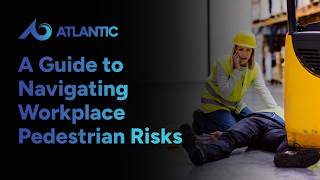
The video presents a comprehensive workplace pedestrian‑safety briefing. It begins by defining pedestrians in a work setting—employees, visitors, the public, and specific roles such as crossing guards or tow‑truck operators—and cites the grim statistic that 2,258 pedestrian workers died from vehicle or mobile‑equipment strikes between 2014‑2020. The speaker then outlines three layers of responsibility: the individual pedestrian, the driver/operator, and the employer. For pedestrians, the core recommendations are wearing high‑visibility safety apparel (HVSA) that meets reflective‑tape‑on‑fluorescent‑background standards, inspecting and replacing it regularly (as often as every six months depending on wear), using designated crosswalks, staying alert (no phone distractions), understanding traffic flow, and avoiding pedestrian‑free zones. Drivers are urged to stay attentive, slow down, be prepared to stop at any crosswalk or intersection, obey speed limits—especially in school‑bus and construction zones—and comply with state Move‑Over laws that require moving away from flashing‑light vehicles. Employers must clearly mark indoor and outdoor pedestrian routes, ensure vehicle routes have sufficient clearance, limit the number of pedestrians in active equipment zones, use barriers or gates where needed, keep vehicle lights and warning devices functional, maintain adequate lighting, and keep signage visible. The narration emphasizes that safety is a shared responsibility and hints at additional, situation‑specific guidelines that will follow.
Chapters
Everyone's a pedestrian at some point, so all employers and employees need to be aware of ways to keep pedestrians safe in the workplace. A pedestrian could be an employee, member of the public, or a visiting worker. You want some examples? Well, how about crossing guards, tow truck operators, construction workers? Sure. In workplaces where vehicles are present, like forklifts in a warehouse, the risks, well, they're even greater. In fact, anytime a pedestrian enters the work area, measures should be in place to ensure their safety. From 2014 to 2020, 2,258 pedestrian workers were killed from being hit by a vehicle or mobile equipment in the workplace. Certain steps can help to prevent these accidents from happening, though. First, workers should wear high-visibility clothing when they're working near traffic or other areas where vehicles and moving machinery might be present, like airport ground operations, train work, and maritime operations, just to, you know, name a few. Examples of High Visibility Safety Apparel, or HVSA, include reflective vests, hard hats, bibs, and coveralls. HVSA should consist of reflective tape on a brightly colored background, like fluorescent yellow or orange. Now, due to wear and tear, high visibility garments have gotta be inspected regularly and then replaced whenever they become faded, damaged, or lose their reflectivity. Workers who wear HVSA daily might need to replace items as often as every 6 months, depending on conditions and manufacturer recommendations. In addition to wearing HVSA, pedestrian workers should also cross the street at a crosswalk or intersection. And avoid stepping out from between vehicles where they might be hard to see by oncoming traffic. Stay alert at all times. This especially means putting the phone away so you can be aware of all visual and auditory clues of traffic hazards that are around you. Understand the flow of traffic where you're working and stay out of any pedestrian-free zones. These should be clearly marked, by the way. If you're working near traffic, Mark the area off with clearly visible traffic cones and don't assume that a driver sees you or will stop for you. When you're driving in or around an area where pedestrian workers are present, you gotta stay attentive and be alert for workers who may come from unexpected places. Slow down and be prepared to stop at all crosswalks or intersections. Even if you don't see a pedestrian, right away, okay? Observe all speed limits, especially those in school bus and construction zones. And observe your state's Move Over law. This law requires drivers to slow down and move to a lane away from emergency and other roadside vehicles that have their flashing lights on, or to change lanes or slow down as you approach an emergency vehicle on the side of the road. Finally, employers have a responsibility to keep everyone safe. All pedestrian routes in both indoor and outdoor work areas should be clearly marked, and vehicle routes need to have enough clearance from doors, gates, and pedestrian routes to operate safely. Where possible, you need to limit the number of pedestrian workers in an area where moving equipment's being used, and close off areas as needed using barriers, access gates, or clearly marked doors. All vehicle lights and other warning devices must be functioning at all times. The workplace should be well-lit and all markings and signs should be clearly visible. It's important that everyone works together to keep pedestrians safe in the workplace, so you need to do your part. In addition to these general safety practices, there are more specific guidelines to be followed in certain situations. You want to talk about them? Okay, me too. Let's go.