#0058 - Ari (Palmer) Salafia Of TaxTaker Explains R&D Tax Credits For Startups
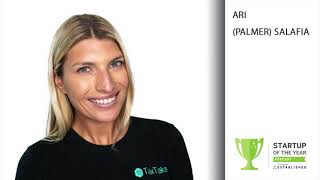
In this episode of the Startup of the Year podcast, host Frank Gruber interviews Ari (Palmer) Salafia, co‑founder and CEO of TaxTaker, a company that automates the claiming of U.S. federal and state Research & Development (R&D) tax credits for startups. The conversation covers the history and mechanics of the R&D credit (originating in 1981, made permanent in 2016), how it can be used as a payroll tax offset for companies of any profitability, and typical financial impact (roughly 10 % of qualified engineering spend, e.g., a $500k payroll can yield a $50k credit). Ari explains TaxTaker’s service model – a no‑up‑front, contingency‑based fee of 15 % of the credit delivered – and the technology tools (online calculators, quizzes) that streamline qualification. The discussion also details go‑to‑market channels (Austin tech ecosystem, Capital Factory, accelerators, VC networks, accounting firms), compliance and audit considerations (need for thorough documentation, TaxTaker provides audit‑ready reports), and market adoption statistics (about 80 % of eligible firms miss the credit, $50 B potential vs $18 B claimed). Ari shares founder advice on networking, routines, reading "Essentialism," and supporting under‑represented founders. He also gives a brief update on TaxTaker’s seed round raised in 2020 and future growth plans. The episode ends with calls to action for listeners to use TaxTaker’s calculators, join the Startup of the Year community, and connect with Ari on LinkedIn.
Chapters
Welcome to the Startup of the Year podcast, where each episode we showcase exciting new companies from around the world. This podcast is produced by Established, creators of the Startup of the Year program. Established is focused on helping organizations with their innovation, startup, and communication strategies.
All righty, and welcome back to the Start of the Year podcast. I'm Frank Gruber, the co-founder and co-CEO of Established and the co-founder of Established Ventures, the team behind the Start of the Year community and this very podcast. Thank you so much for listening. We really appreciate you being here. In this episode, I'm talking to Ari Salafia about her company TaxTaker. TaxTaker is automating R&D tax credits for startup companies so they can get back 10% or more for every dollar that they spend. It's relatively unknown that the government rewards companies regardless of profitability, which is what is super important for early-stage companies to know about. So you got to listen to this episode. It's going to be great. We're going to learn a lot about these R&D tax credits, and Ari is an expert. Before we jump into that interview though, I wanted to share a segment from a team member, Rich Malloy of Established and Established Ventures, with the VC Minute.
Hi, this is Rich Malloy with Established Ventures bringing you the VC Minute. Quick advice to help startup founders fundraise better. Let's talk about the VC treadmill. Raising venture capital is a treadmill, one that only gets faster and only gets steeper. If you choose to step onto the treadmill, know that the expectation is that you will go on to raise increasingly larger rounds at successively higher valuations. You use the money you raise in each round to hit growth milestones that show the next level of investors that you're a great investment for them. And then you raise more money to spend more money to hit higher milestones. And so on and so on. It's a treadmill. Venture capital is rocket fuel that is focused on one thing and one thing only: growth. The path of a successful venture-backed startup is one of constant growth fueled by capital. The whole process of raise, spend, grow, raise, spend, grow is the VC treadmill. And I'm not disparaging it. I'm just making sure you know what you're getting into before you step on the treadmill. In the next two installments of the VC Minute, I'll talk about getting on the treadmill, getting it going, and even pausing the treadmill. That's all for the VC Minute today. Back to you, Frank.
Thanks, Rich. Helpful info as always. I wanted to, uh, also let everyone know that's listening that our 2021 start of the year application is open. So if you're a startup and you've raised less than $5 million in funding and have a functional prototype— yes, that's right, functional prototype beyond just the idea— you might want to apply right, right today and join our amazing community and growing community of founders who have been, you know, growing companies since 2006. We've been doing this for a while. Just go over to soty.link/apply soty.link/apply. And what we do every year, you know, aside from just being a part of the community and everything that's happening throughout the year, we have our big summit coming up in the, uh, you know, at the end of the year to round it out. We have about 100 startups who come together for additional opportunities to connect, showcase, and potentially take home the title of Startup of the Year. So that's coming up. I'm excited about it. I think we're going back to in-person here soon, so I'm amped. It's going to be a lot of fun and You can be a part of the companies that come out to our summit and interact with some amazing investors, thought leaders, mentors that turn into mentors and build some real relationships. So excited about that. And one of those companies that came through last year that I'd like to talk to you about is a partner and now a portfolio company. And that company is Finmark. Talked about them before. Because I like them so much and what they're up to. I think it's something that every startup should be able to take advantage of, and, uh, it's, it's truly a special company. So Finmark is a financial planning software for startups for revenue forecasting, cash projections, and runway. So if you're out there and you're trying to figure that stuff out and you're probably doing it in a spreadsheet, you should check out Finmark. Just simply go to est.us/finmark, and we give our community members a 30-day free trial. Again, it's est.us/finmark, and you can get started right away. Okay, enough for me. Now let's get started with our interview with Ari Palmer Salafia from TaxTaker.
Thank you so much for having me, uh, it's a treat to be here. So yeah, I'm the co-founder and CEO at TaxTaker, where we help innovative companies save a whole lot of money through government research and development tax credits. And one thing that's pretty neat about what we do is we basically get to reward companies that are building really cool stuff all day long, get money back from the government. And so most companies think tax credits, you know, why would I even think about a tax credit? We don't want to be really thinking about our accounting, let alone our tax. But the fact of the matter is, is there are government programs much like grants, or kind of like what we saw in the last year with PPP loans that are specifically set up for companies, and more recently specifically for startup companies, to get rewarded for their investments in developing and improving upon products and technologies. So we find that, you know, because companies really aren't excited about accounting, that That means that there's a lot of dollars left on the table. So TaxSaker is designed to help bring attention to these government tax credits and more so actually get the companies the money so they can continue doing what they love best, building their companies.
Very, very cool. R&D tax credits, right? That's not something you hear every day. But how old is that idea? Or when did that start? When did people start getting tax credits? Do you have any idea?
Yeah. So before millennials were born, since 1981. Wow. And it's, it's something that, you know, historically, it's just like you could kind of imagine everyone kind of says this in this space. Think of the white lab coat, very science-heavy research-backed, but the code has evolved over the last 40 years and the IRS has actually made the definition quite broad. So that dozens of industries can qualify and benefit from the program. So the, the basic definition of the R&D tax credit is it's available to any company that's developing or designing or improving upon products, technologies, softwares, inventions, formulas, etc. But it's gained a lot of popularity in the last few years because it actually became a permanent fixture of the tax code, which really means two things. Now companies and their financial advisors can better plan around it. But secondly, it created a whole new market for startup companies to better qualify from the program. Because as you can imagine, you know, most startups, especially in the early years, they don't get to a profitable cash position. If you ask some startups, they're like, if ever, right? So they don't really have much meaningful use for a tax credit that's going to offset their income taxes because they don't have those. So startup companies were kind of always eligible, but the utilization wasn't there. So in 2016, when the credit became a permanent fixture of the code, it— something changed. And now startup companies, regardless of profitability, can take advantage of these credits as a payroll tax offset. So no matter what type of company you are in the United States, if you're an employer, you're paying FICA taxes, and the R&D credit can eliminate that FICA tax on a quarterly, yearly basis. So that means more cash back to your business for activities that you're already doing.
Wow, Ari, that's why we had you on the show, because you know this inside and out. I mean, and I'm curious what drew you to the space, you know, the R&D tax credit space, and kind of what ended up, you know, turning into a company for you. How did you get into this?
Yeah, so it's very hyper-niched, right? And it's something that most times I'm talking with people and they're like, I've never heard of this. And it's no surprise why, right? There's tons of tax credits and incentives and all different types of programs across the country. I got into this space actually by way of my dad. He's run a specialty tax practice for 40 years and done a multitude of different state and federal tax credits. And truthfully, by delaying law school and working at a couple of failed startups, I took a look at the business and I was like, you mean to tell me I can talk with cool startups in the Bay that are sending satellites into space in one hour and then talking to a pet DNA company the next? Like, this is the coolest thing. And who really gets that much access to learning about companies and then, you know, telling them that they can save some money along the way unless maybe they're a venture capitalist.. And I didn't have any of that, that experience from, from any of my academics. So that's how I kind of got in the door. And then over the last decade, just have never looked back. The catalyst for actually forming TaxTaker and putting some technology around this business to make it easier for companies to qualify and actually capture the credits came when, when the credit became permanent. And truthfully, from the accounting partners and companies that I was already working with asking for it.
That's really interesting. So it sounds like it's been in the family for a little while and then ultimately it turned into a business, which is a startup business. And that's pretty cool to see you spin out there. And curious, where, you know, how do you guys find customers? How do you find these startups? How do you kind of look to get in front of them as you're coming at them with this R&D opportunity, R&T tax credit opportunity?
Definitely. So yeah, it's been really a fun ride from working with founders to putting the founder hat on myself. I've built this company primarily out of Austin, Texas, which is a very supportive tech hub. You see it in the news every day, more and more people and more and more startups and VC funds are popping up here left and right. And really because of that, early on, I saw that there were really supportive channels being VCs, accelerators. So that's been one way that we've been able to really connect with a lot of companies and gotten our first customers. We put our, our startup through Capital Factory, which really is the center of gravity for entrepreneurship here in Texas. We've gone through a GAN accelerator through Tampa Bay Wave. And so we realized quickly, okay, you know, we can bring this to a lot of folks' attention fairly quickly by hanging out in the areas they're hanging out. And then also the relationships that I had previously built as a value add for accounting firms, booking firms, and fractional CFOs. Kind of all these one-to-manys have been really instrumental catalysts to TaxTaker's initial success.
Great, that makes sense. Can you give us a little bit more about maybe some of your clients that you don't have to go all into the details, but I'm curious, like, what, what is the advantage? Like, what— give me an example, I guess, of a company that had a really big savings or didn't even know it, and all of a sudden they found some, some additional, um, you know, cash basically through these— through this program and through your help. So I'd love to hear a little more about that.
Sure. Yeah, I mean, and really that's one of our strongest KPIs. You know, a lot of businesses say, I can increase your productivity by this amount, or I can save you X amount percentage of time, you know, per, per day or month with your, with your organizations. We truly can say, I saved you, you know, $32,000, $32,449, right? Like, which is, which is so fun. It's real, it's real dollar amounts. So our average customer is pretty similar in size. Typically they're about, well, the seed stage, right? That gets a bit skewed on the coast, but our most typical profile to date has been a seed stage SaaS company that's got somewhere between 5 and 15 employees and they, spend about $500,000 in technical salaries and they're getting a $50,000 tax credit. So it's really no small change. Yeah, that's great. Yeah. And so, you know, I've talked, but then I've talked with companies that they're as big as about to raise their Series B and they've never heard of it. So they're capping out at $250,000. In credit.
So it's—
wow, it's pretty exciting. There's actually no limit to how much credit a company can claim in a given year. It's complete. And that's what's one thing that's really neat about this is it's totally custom to the business and relative to the business's spend, unlike other programs where you've got to kind of apply and there's only a certain amount of allotment available. It's directly proportional to your spend. So if you were to just do back of the napkin math for your startup company, you can expect about a 10% return on your qualified spend. So that's coming through your developers' or engineers' wages, W-2 wages, potentially some of your outside contractor spend if it's US-based. Just as a side note, we know talent is global. Most of our relationships, they've leveraged some type of distributed team, but we can only count, US expenses, and then some supplies or maybe cloud costs. So if you were to just add up those on a yearly basis to know that you're going to get that 10% back, that's meaningful.
So is that every company you think, or just like certain kind of, what is, what is the exact, like, I guess, criteria look like for the company? Just so like, cause a lot of early stage companies listening, probably a little few later stage and probably some investors as well. So I just want to make sure that we're giving them the right information so they can go back to them, their, their associates or company and kind kind of see what they can do.
Yeah, totally. So let me paint like a perfect kind of— I'll just do a math equation, right? And I'll keep it simple. So let's say that— yes. All right. So let's say you've got an early-stage company. Really doesn't matter what kind of what their discipline is, but let's, let's say TaxTaker, for example, because we drink our own champagne and these aren't our exact numbers, but let's just say we have $1 million in payroll. And half of that is engineering spend, or $500,000. So that's going to— we're going to assume that we're going to get up to a $50,000 tax credit on that $500,000. But that million dollars that we spent, we're spending 6.2% in FICA tax over the year. So that's $62,000. That $50,000 can get applied to that $62,000. So as a company, I'd only owe $12,000. Wow, that's great. Yeah, and that's every— I mean, that's every year. That's one of the beauties of this program is so long that you continue to develop and improve upon, uh, your product, you can get that credit. It's, it's for the life of your business. And that's why you see these big headlines every year of, you know, how does Amazon or Tesla not pay any taxes? I mean, they're— they've got specialty accountants and powerhouses looking at every single section of the tax code and making sure that they're leveraging these things. But the good news is, you know, for a young company that's just trying to save every dollar they can and look for, you know, any amount of runway they can, they can get this too. So we work with companies with as little as one full-time engineer all the way up to companies with 100 employees today.
Wow. Cash, cash is oxygen, especially in startup land. And so definitely think this— shouldn't every company be doing this?
Yes, they should. They absolutely should. And it's one of those things too, where, you know, we've heard these stories where maybe they're in the middle of a raise and it's the this gave them a little bit of relief, you know, for, for a few months. We've had companies that have said this literally kept the lights on for us. Like, it's been that, that dire, you know, this last year has been so crazy. And I also think because of the nature of the companies that we've worked with, that, you know, paid attention to this, they're in, they've got a competitive advantage, right? And they, and most of the companies that we work with did not fail in 2020 because they were just so resourceful. And this is one of these things that can just, just be that extra little boost that, that you might need over the course of the year. And I think also, you know, founders, right, we make a lot of assumptions based upon, you know, who we've kind of hired because we can't do it all. Right? We can't literally do every part of our business. So it's unfortunately something that just gets missed out on all the time because we think that if we have got an accountant or bookkeeper, then everything must be handled. But we also can't expect for an accountant to be an expert in every section of the tax code, right?
There's a lot, there's a lot there, there in the tax code. And that's why I'm so thankful to have a good accountant. But, and everyone should find that right person that can help them. But got a question here. What's the, uh, You know, it just sounds amazing, right? Like, what's the catch? Like, what's— what, you know, what's the downside? I'd love to hear your thoughts.
Yeah, so yeah, we get that a lot, you know, oh, you found a loophole, or like, what's gonna happen if I claim this? Um, and the truth is, this is for the taking. It's actually estimated that 80% of companies miss out on this. The government has this in place and has made it permanent because they want companies to innovate and hire and grow the economy here. Uh, you don't get—
80%, sorry to interrupt there, but 80% of companies don't take advantage of this?
That's the, that's the yearly estimate. It has not changed since I've gotten in this space. It's always been that way. Um, $50 billion, uh, are expected to be claimed and last year $18 billion were claimed. So That was like the first change where it got a little bit closer. But there really is no catch. I mean, the only catch is you shouldn't be claiming it if you don't have any technical personnel on staff. And you have to be willing to provide the right information and spend a tiny bit of time on this. We have to pull, you know, financials and we have to pull some prior financials to build out the, the actual credit for the year you're claiming it. And then it's also very important when claiming any type of tax credit that the, the program is well documented. So that's something that's really important to our team because anything on a tax return can get audited, and so it's important that you have the right team and right documentation in place. Behind the numbers. So that's also something that TaxTaker does. It's not that we just give you a dollar amount and you throw it on your return. We're also providing a report so that if for any reason, you know, you get reviewed, we expect to be your first call to sustain it in the long run. So a company really should be only worried if they lied about what they're doing and what their numbers are. But Other than that, this is something that should just be an absolute no-brainer every single year.
No, that makes sense. I'm curious now, and I'm sure our listeners are as well. So how does TaxTaker make money on the situation? You know, I'm assuming there's some kind of fee or something related to it, or how do you— what's your business model for this?
Yeah, so our business model is super simple. We're trying to be as founder-friendly as possible, so So we charge 15% when we deliver you the money. So there's nothing upfront to get started. We're only, we only get paid when we deliver the credit to you. So it's, it's always a win-win.
I love that. That's great. Yeah. So you really either, you don't take advantage of it or you get money back and take, you know, a little bit of you guys from actually helping make it happen.
It sounds like. Exactly. Exactly. And it's, it's really quick for us to determine if a company qualifies We have a couple of tools and calculators on our website and quizzes, but it can really be as easy as a few-minute kind of discovery conversation because we also, we, we want to make sure, you know, if our name's on it, that this is going to be something that holds water. So it's not usually a matter of if they qualify, it's a matter of when and when does it make the most sense. So we always want to put our customers in a position where, you know, if they're even going through this and spending any amount of time on it, that they're going to be excited about the results at the, at the end of the day.
That's great. And so you mentioned a website. Where should they go to do those calculators to check out and see if they qualify quickly?
Yeah, so super simple, taxtaker.com.
T-A-X-T-A-K-E-R. It's just on the home page there?
Just on the home page. Yeah, we've got, we've got a new, uh, simple calc and an advanced calc that's actually getting a little update, um, that will be live soon, but our quiz can be found right through the homepage. And that's actually where we get the most amount of volume.
And this works in any state, any, any company that's founded in any state or working in any state?
Yeah, great question. So this is a federal incentive. So you can get it wherever you're located across the United States. There are actually 35 supplemental state credits. So a lot of our clients, we add in a state credit as well. You know, if they're, if they're not in a taxable position, sometimes they don't opt for it. But these credits, most of these credits, they bank and carry forward. So it can be a nice strategy as well on the state side.
Okay. One more tax question, then we're going to shift gears. What state's the best? Is there like any, like what, what's the most friendly, I guess you could say, for these tax credits?
Well, people will laugh at me because everyone's— and I can say this because I'm originally a Californian— because everyone's like leaving California, right? California has an R&D tax credit that matches the federal. So if you're in California because it's just such a beautiful place to be and you're paying a premium to be there, you're going to want to make sure you get that California R&D credit as well.
Oh, interesting. I would never have thought that. That's great to hear. All right, we're going to shift gears. We're going to go a little bit more on the founder side. And do you have any words of advice for any founders out there, you know, we've got a lot of startups listening in our community. Any words of advice for founders out there about growing your company or growing their company?
Oh my gosh, I feel like I probably have so many things. I probably have things not to do too, right? Which sometimes can be just as helpful. I mean, I think when growing your company, I mean, first kudos to you for even doing this. It takes a certain type of breed. To get into startup land and to be a founder and to have the grit and resilience and just be kind of a little bit crazy too, right? You can give up a lot and sacrifice a lot to be in the position that you're in. I think in growing your company, I think, you know, a lot of us tend to think we might have the best idea or might know how to do things, but I think for me, me personally, knowing when and to frequently ask for help has been super instrumental in the development of myself personally and professionally. So I would say, know that there are folks around you that have done this before, maybe not exactly what you're doing, but they're out there. And there's, you know, communities just like this Startup of the Year, right? That, that help companies in so many ways. So I would say just tap into these groups that, or advisors or other founders that can share war stories or put extra eyes on your business. I think that especially getting started, founders have a tendency to kind of want to hide their baby, if you will. And I think if more people would probably talk about what they're doing more, they probably save a lot of time and probably money and learn lessons faster.
Absolutely.
Yeah.
You can't, you gotta get it out there a little bit more. And we see that a lot, you know, people are working in their own little, I guess, silo. Okay. So let's, let's ask another question here about your entrepreneurship, because you were an entrepreneur yourself. You mentioned you were gonna go to law school. What's your favorite part about being an entrepreneur versus, you know, working out there in the world, maybe in, in the corporate law or, you know, I don't know what it would be field you were looking at, but, um, we'd love to get your take on what's your favorite part about being an entrepreneur.
Yeah, I mean, I, I like the variety, truthfully. Uh, as stressful as it can be to wear lots of hats, I like that every day is a bit different, um, and that I'm getting to solve challenges all the time. Um, I, I truly think I've learned more in the last few years being a founder than I have my entire life because there just comes a point in, in your day, your week, your month, your year where you just have to figure out how to do it. And, and that's, there's a big sense of accomplishment when that happens. Sometimes it's easy to forget how far you've come because there's always the next thing that you've got to do. But, uh, every day is just interesting. Um, and I, I, I, I just can't imagine myself in any type of routine at this point, although I probably, maybe I would enjoy it, but I haven't given myself a chance to do that.
Well, I love that. I love that. And I actually leads into something I always think about is, is, uh, routine. And I'm a very routine-oriented person, but, you know, obviously like variety as well. So I want to get your take on just your regular daily rituals/habits that keep you kind of motivated and refreshed and moving forward.
Yeah. Well, what's funny is I do like value some amount of routine, but I guess I would say that the variety comes from, you know, I like that I'm working on different types of projects and working with different types of personalities and people all day long. Right. But yeah, it's, I mean, it's, it's pretty essential to have some type of normalcy in your day or week. Right. So in the morning, I've actually, I've actually been trying to implement more blocking and tackling myself, and I'm just doing little things throughout the day that, that I know are also going to make me a better coworker, leader, founder. So in the morning, I have actually stopped checking my email when I first wake up. I've found that like having a cup of coffee, being with, walking my dogs, even getting into the word for that first kind of 30 minutes or hour of my day has done wonders for me. So just taking a little bit of time for myself. Also, everyone says this, but like scheduling in You know, some type of healthy eating or exercise. That's always a good thing for mental and, um, stability.
Uh, yeah, absolutely. That scheduling thing is important. You got to block and tackle like that because you're right. It's easy for that time to be eaten up by the current, the latest, um, crises or thing that's happened. Not that there's always crises, but you know what I mean? When it started, but there's always something. Something new that's, that's important that you gotta be working on.
Definitely. There's always gonna be something. And I, I might butcher his name, Greg McKeown, but I don't know if you've read The Essentialist, um, but, or Essentialism, but, um, I've been reading that, um, each night before I go to bed. Oh, that's another thing I do too. I stop looking at emails before I go to bed too, cuz I just find that I'll just like go, I won't ever go to sleep cuz there's always something to see here.
Yeah, no, it gets your brain going. Right. Screens definitely do that, especially right when you wake up and right when you go to sleep. So that's great. Great, great tip for anyone listening.
If you're trying to— Yeah. My mom always said, don't feel bad about not going to a party or an event because there's always going to be another one. Well, same thing with emails. There's always going to be more people to respond to. But in Essentialism, it's a great book, by the way, I'm really enjoying it. There's a principle in there that says like, if you don't make a choice, someone's going to make a choice for you. And that's so true for your day. Right. Like if you don't choose to block and tackle and do certain things that you want to do, someone will always make that choice for you. And, and I've, I've, that's happened to me. Um, a lot.
That's a good one. No, that's really interesting. And I will have to check that out. Essentialism, you meant is what you said?
Essentialism by Greg McKeown. Yeah.
Okay, cool. Great. All of our listeners go check that out as well. We'll put the link of that in our show notes. And I think, I think we're about out of time, but any, any last thoughts for any, or advice for any young entrepreneurs out there? I'm not sure when you started your entrepreneurial career, like maybe start with that and then give any advice.
Yeah. So I actually started 2 and a half years ago, almost 3. And I would just say, you know, if you've got that itch, explore it, because this was something that, that definitely kept me up at night, which is— and I'm totally a self-proclaimed tax credit nerd, but like, especially if you're young, why not now? Why not try now? Because what's the worst that can happen? I think you hear it all the time with folks that are older, they're like, I wish I would have done that. So check that box while you're young. Don't be afraid to fail. Most people that fail are the ones that become successful later on, right? And then my— for my own soapbox on the tax credit side of things, most folks think that tax time is only 2 times a year because that's when, you know, we see the H&R Block and the TurboTax ads. But the fact of the matter is that companies are filing their taxes all year long. And most companies don't file their taxes until the end, towards the end of the year, meaning September and October. So if you haven't filed your taxes and you're, you're curious about what this weird R&D tax credit thing sounds like, give us a call or visit our website because we'd love to see how much money is on the table.
That's great. And I think Benjamin Franklin said something famous about taxes, right? There's only a couple certainties in life, death and taxes.
There's two of them, so we'll make one of them more fun.
Exactly. I love your enthusiasm for the space. I don't think I've ever met anybody so excited about tax credits. It's pretty amazing. You can tell you're the right person for running and growing this company. So thanks so much for joining us today. And I want to just give you a chance. Is there anything else that you're working on that's, that's new that our listeners might be interested in? Or where can they contact you? I guess you mentioned earlier taxtaker.com. Anywhere else that if you wanted people to check anything new out?
Yeah, definitely. I mean, I love connecting with founders. I love to learn about businesses and, and, and just keep in touch with what what people are doing. There's so many fun journeys I get to follow along with our customers. So I'm pretty active on LinkedIn as well. So it's just Ari Salafia on LinkedIn. Love to connect there. I've got a particular passion for helping other women-run businesses and underrepresented founders too. So, you know, such that anyone is looking to kind of jam on any of those topics, always kind of on Clubhouse and the like, doing kind of sessions on there. So follow along or reach out if you need someone to help build your megaphone there. And then, yeah, hopefully I can save some folks that are listening here a bunch of money this year.
I love that. And actually, one more question. You drew it out of me here. You raised some funding as well, right? So you went through a couple of accelerators and And can you just give us a little bit of an update on that so we, everyone knows out there where you're at, what you're up to?
Yeah, yeah, definitely. So we actually raised our seed round in the height of the pandemic. Got a term sheet in April of 2020, which was a wild time, and closed shortly after then with actually firms in Texas. So did our whole raise in Texas. And that was awesome and scary and nerve-wracking and fun all at the same time. The only reason why I say it was fun is because we had a unique opportunity during our fundraise to, to the earlier point of how did we get customers? Every VC we spoke with, they had, you know, customers within their portfolio companies.
Exactly, exactly.
That's great. So I would say too, if you have any business that like could help any of the customers at the VCs that you're pitching, start there. Because what, what better, what better play than let me give you some value right away and then ask for money. So yeah, there was a couple of shops that I went into saying, oh yeah, I've already saved your, your, a couple of your portfolio companies a couple hundred thousand dollars and they had to pay attention, right?
Right.
Absolutely.
And we have— we actually are also out there sharing the news. So if you're interested, if anyone is listening, wants to see if they're qualified, she mentioned earlier, TaxTaker.com/SOTY, TaxTaker.com/SOTY, and you can get right started in there and see if you can save some money on your taxes. Right. And get some— get those R&D credits. So, Ari, thank you so much for joining us today. Really appreciate it. And obviously, we'll be— anyone wants to reach out, she shared her information and LinkedIn, and sounds like you're very active out there. So, Ari, thank you again.
Thanks so much, Frank, for your support. Really appreciate it.
Thank you, Ari. I always love hearing about companies and what they're doing to disrupt the industry, and I've never met anybody who's passionate about tax credits. So super excited to talk to you, and I love your enthusiasm and being able to help all these companies out there in the community. Everyone's listening, probably could take advantage of this, so check it out if you haven't already. All right, so that's the episode today, and hopefully you found this conversation interesting. Hopefully you enjoyed it. If you did, you know, first off, thank you. Secondly, please share it with somebody. Uh, sharing is caring. We want to get this message out to as many people as possible. It sounds like at least 80% of the companies out there could benefit from this by just checking out what we're talking about over at, uh, taxtaker.com/SOT. So Go check that out and see what kind of credits you can get. And obviously love to have— love the fact that you'd be actually saving money and being able to have a little bit more runway for your company. And if you have a startup idea and you want to get it started, today is the best day to start up. Not tomorrow, not the next day. Tomorrow it could rain, there could be things happening, we don't know, right? So today is the best day to start up. And in doing so, I encourage you to join our growing community for access to support, expert advice, and resources you need to elevate your company to the next level. So go over to est.us/join, est.us/join, and become a part of our growing community. All right, until next time, I'm Frank Gruber signing off. Thanks again for listening. Wishing you the best of luck and future success with your venture.
Thanks for listening to the Startup of the Year podcast. Be sure to subscribe, and we'll be back with another episode soon.
More from Ari
Getting millions back for startup founders | Tax Taker | Ari Salafia - Why We Strive Podcast #3