Sami Hamdi analysis of the Imran Khan situation. Totally nails it.
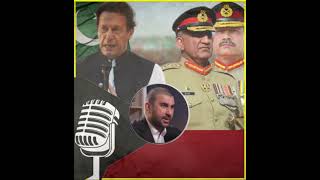
Sami Hamdi analyses Imran Khan's arrest as part of a broader struggle between the popular will (mobilized PTI supporters) and Pakistan's entrenched establishment. He argues Khan attempted to exercise a democratic mandate—challenging the military/intelligence leadership and prompting a clumsy, multi-charge legal campaign and suppression to prevent PTI from contesting elections, making Pakistan's future social contract the central stake.
Chapters
In terms of Imran Khan himself, in terms of what's happening inside Pakistan, I think one of the most fascinating things is, is that it appears that Pakistan is in the middle of a revolution to renegotiate the social contract between those who rule Pakistan and the Pakistani people. I actually think that Imran Khan's greatest crime between quotation marks is not that he upset the US or upset Saudi Arabia or the UAE or the like. His greatest crime in the eyes of those who have imprisoned him is that he TR to actually use his powers as a democratically elected prime minister to make decisions that a democratically elected prime minister is entitled to make. I think where Imran Khan fell out with the establishment that has forced to, that has imprisoned him and that has sought to arrest him, is that Imran Khan actually tried to wield the democratic mandate against an establishment that has often sought to constrain that democratic mandate. And the reason I say that is that when you look at the buildup to Imran Khan's arrest rest, you can see that there is a very clumsy battle between the popular will and the establishment. First, you have the vote of no confidence where everybody can see that it's been orchestrated or the like. But when Imran Khan is kicked out of power, when the vote of no confidence proceeds, we see more than 170 charges levied against Imran Khan. The idea being, throw anything that sticks. If it is corruption, defamation, terrorism, money laundering, insulting a judge, tweeting Facebook posts, find something that sticks with Imran Khan. The reason I call it clumsy is because it was not done in the traditional way that we expect establishments to tackle their political opponents. And I think the reason it was so clumsy, the reason why 170 charges were thrown at Imran Khan, was because thousands of Pakistanis took to the streets. What rattled the establishment was not that Imran Khan himself was starting to pose a threat, but that Imran Khan was demonstrating for the first time in a long he could mobilize ordinary Pakistanis on the streets and force this renegotiation of the social contract in which the establishment found itself between a position whereby we might actually have to listen to the Pakistani people. And I think Imran Khan himself was aware of this, which is why he called for early elections. The idea being, I don't want to cause a war or a civil war or a fire here. Let's hold elections and settle this in a civil way. If the people are truly against me, as in this vote of no confidence, I will lose the elections and Masalama. I'LL go and sit in my house. But the reason elections weren't held after the vote of no confidence was because the thousands of Pakistanis that took to the streets indicated that Imran Khan might actually win the elections. In other words, the establishment feared that if we held early elections and Imran Khan won, then Imran Khan would be wielding a democratic mandate against an establishment that already has its rules over how this country should be run. And this is why we saw that they weren't keen on going, going towards early elections. What really agitated this fear even more was that PTI started winning landslide elections in key provinces. We saw the landslide election in Punjab, which was a sweeping statement on the part of the Punjab electorate, that we are not happy with the vote of no confidence, that we have no part in it, and that if we're going to be given a choice, we are ready to vote for pti. So if you put yourself in the position of the establishment, it's no longer about negotiating who will come to power. You're now in the midst of this sort of irresistible wave where Pakistanis are in the street and they are demanding that they choose their leader as opposed to it being negotiated with the establishment. And the reason why I say this is because one of the reasons that I argue, at least from my research, from my understanding of Pakistan, from my extensive coverage of the issue that has taken place, is that where Imran Khan fell out with the Army Chief of Staff was when Imran Khan tried to suggest a successor to the position of Army Chief of Staff and to the Intelligence chief. And this was considered such an insult to those who are established. The idea that the democratically elected Prime Minister might have a say in who should be the successor of the Army Chief of Staff in the way it's done in the UK or the way it's done in the US or elsewhere. This was considered so much of an insult that they decided to oust Imran Khan. But going back in terms of the events in the lead up to the arrest, which show why this is a renegotiation of the social contract, is because despite numerous attempts to arrest Imran Khan, the reason they couldn't was not because they didn't have the power, but because they feared the reaction of the Pakistani people. They feared that if they arrested Imran Khan, they would enter into clashes with the Pakistani people. And that's why the continued rallies meant that Imran Khan could not be arrested. And that's why the focus was on how to delegitimize pta, the strategy of the establishment from my analysis is that given that Imran Khan, it was very difficult to arrest him, let us make sure that PTI is not an option at the ballot box. Let's make sure that when the Pakistanis go to vote in the elections, if we can't arrest Imran Khan, let's make sure they can't arrest Qureshi, let's make sure they can't arrest some of these other PTI leaders. Let's make sure that's not an option at the ballot box. Which is why I think it's quite fascinating that Blinken's first comment about free and fair elections comes about after Imran Khan has been arrested as opposed to before. Almost as if Blinken implicitly is indicating that now that PTI is not on the ballot box. Good luck Pakistan with your free and fair elections. But the point here is that the establishment struggled to arrest a leader in Pakistan in a way they might have easily arrested him previously because the Pakistani people took to the streets. And the only comparison you can make in Recent times is 2016 in Turkey when there was an attempted coup and Turks took to the streets to prevent that coup. I'm not saying that there was a coup taking place in Pakistan itself, but I'm saying, saying that people power meant that the establishment struggled to arrest Imran Khan. And that's why going back to the idea of the clumsiness when the paramilitaries were sent to the court to arrest Imran Khan, it was almost as if the establishment was saying that my goodness, this incompetent police won't arrest Imran Khan. The people keep protecting Imran Khan. Let's send a heavy handed force to go arrest Imran Khan because the days are counting down to when we constitutionally have to hold an election. So let's arrest him quickly and let's make sure that he gets indicted so that we keep him out of those particular elections. But the reason, I won't go on for too long about this, but the reason Imran Khan and what's happening in Pakistan is so significant and why it's not restricted to Pakistan is because Pakistan today is the clearest example of people versus establishment. It's the clearest example in which we see a ruling elite deploying everything they can to ensure that the people do not choose the option that they do not want about Pakistani suddenly believing that there's someone at the ballot box who perhaps can be trusted. I'm not saying Imran Khan's policies are perfect. But the reason why I focus on this idea of trust is that when people say Imran Khan didn't have good economic policies, Imran Khan was not toppled because of his economic policies. When people say that Imran Khan was toppled because of his politics, he wasn't toppled because of his politics. Imran Khan was toppled because he represented this renegotiation of the social contract that upset, that establish. And that's why, when we're looking in terms of Pakistan, why it means so much is because those in Egypt, those in the Muslim world, those even in Europe are watching it and seeing it plain as day. This careful navigation. And I think that going back to the clumsiness, even when you look at the way in which the Pakistani president, the President of the nation of Pakistan puts on Twitter, he says, as God is my witness, I did not sign the Official Secrets Amendment Bill and the Pakistani Army Amendment Bill 2023, President of the nation of Pakistan has to come out on Twitter to deny that he signed bills of Parliament, but doesn't have the power to reverse those bills, despite his claim he doesn't have the power to reverse it. Suggesting that Imran Khan's challenge to the system in Pakistan has been so potent and so powerful that the establishment is no longer even operating within the realms of the political order or within the laws of the state. But to conclude on this, the reason why I mention all of that is to highlight that some people will debate the details of selling the watch, some people will debate the details of the economic policies or the political policies. But the reality is that when a man has more than 170 charges levied at him, then it's not about the details of the charge. It's about getting something to stick. When elections are held or announced immediately after he's been imprisoned, then the issue is not one about whether Imran Khan is corrupt or not. The issue is to ensure that Pakistanis do not vote for Imran Khan. And this, to conclude on this sentence, this is where the frightening prospect comes in. In that coming from the Arab world where you see the democratically elected Mohamed Morsi was toppled by Sisi, where the international community said we prefer Sisi to Mohamed Morsi in the same way in Pakistan they are saying that we prefer the establishment to Imran Khan. The reality is now what we're seeing is PTI have the strength of the nation or the instit is being smashed by these institutions. The aim being let's disperse this party and make sure it's not available for the Pakistani people. And I think that this will be a turning point in Pakistan's history, because Pakistan is now at a crossroads. Who is Pakistan supposed to serve? Is it the people of Pakistan, or is it an establishment that is trying to dictate that the Pakistanis must choose who we want them to choose, and they must not be allowed to choose freely? This is not about Imran Khan in and of himself, but it's about what Imran Khan has come to symbolize, which is what is the social contract that should exist in Pakistan. And I think Pakistan is now in a battle to decide the terms of this social contract. And I think that with Imran Khan in prison, if we are not careful, it may well be that the history will go on the side of those who don't have Pakistan's best interests at stake. I'll leave it here for now and then leave the floor for others.
More from Asif



If these are God's chosen people then God chose them to test the rest of us.