AutoSuccess Executive Spotlight with Jake Davis
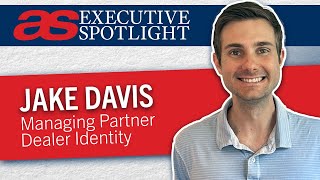
Brian Ankney talks with Jake Davis from Dealer Identity about why dealership phone numbers get flagged as spam by carriers and how it damages business. They discuss strategies to keep dealer lines working and customers able to reach them.
From the Aisin broadcast studio, it's the Executive Spotlight. Welcome to the Auto Success Executive Spotlight. I'm your host, Brian Ankney. Today my guest is Jake Davis from Dealer Identity. Welcome, Jake.
Hi. Pleasure to be here.
Let's get started with a little bit about you. Can you just tell us a little bit about yourself and the career path that led you to where you are today?
Yeah, well, for me, a lot of it's been based off of the fact that I'm working with my dad right now. You know, when I was in college, I was studying to be an engineer, got a bachelor's in electrical engineering. And out of college, I was doing some other work with digital marketing. And then there was a role that I could help my dad with in our other company, Volley. And we'll get into exactly what we do with Dealer Identity. But there was a need that we were solving with this service, and I kind of became the subject matter expert on it. And, you know, so I started running this program for our company, and here we are today.
You know, there's actually. There's a lot of things I want to cover about what you do today, so I'm going to dive right in. What percentage, from your experience, what percentage of dealership phone numbers are flagged as spam and what does that really mean to their business?
Well, really, if we can even back up a second, I'd say it's really important for a dealer or anyone watching to understand why their numbers are coming up as spam. Really, to answer your question, it's about 30%. About 30% of a dealership's phone numbers, when they dial out to their customers, are coming up as spam. And the reason that they're being flagged as spam is because the carriers have new obligations to the FCC and to Congress through the TRACE act from 2019. And ultimately, they just don't want to get sued. But the FCC has determined that the carriers do not have an obligation to connect the dealer's calls with their customers. The carrier's obligation is to protect their customers from unwanted communication. And so they've kind of taken that and run with it. And they've implemented these new guidelines and algorithms that are analyzing all of these calls, and it's about 30%. 30% of a dealer's calls are being flagged as spam.
So is that just like a flag that shows me on my phone that it could be potentially spam, or does that mean that the phone call is actually not going to get to me?
Well, that's a Great question, because it could be either or. So the carriers have two different types of labels that they use to label a negative call or what they have determined to be a negative call. Because obviously the dealers aren't making bad calls. They're just being flagged as such. So if the dealer has you flagged as spam, then they think that you are a potentially unwanted call. That's why the label on your phone says potential spam. You know, we've all gotten potential spam. Or it could be scam likely, or spam risk or something like that. They all mean the same thing. It doesn't mean you're in a legal call. The call does connect, but it has that label. And again, those are for potentially unwanted calls. If the carriers have determined that you are an illegal caller making an illegal call, then depending on the carrier, it may not connect. And that's something that dealers don't really have any good visibility on. And frankly, any business does. It's not just dealers and the automotive industry, but they make it really hard to track that stuff.
Wow.
So you're saying it's the carriers that are flagging dealerships, phone numbers as potential spam. And how do they determine that? What decision criteria are they using to potentially flag your call?
It's the carriers. Yes. But even more than that, each of the carriers has an exclusive. They call them their analytics partner, their analytics engine. They have an exclusive partner who runs algorithms that analyze every single call that hits their network to determine if they want to let this call go through, if they want to label this call and, you know, and what have you. So they're looking at everything relating to your calling history. They also take. They also take customer feedback into account here. If you call your carrier or you can also file a complaint with the FCC directly about a phone number that can get you flagged as the one making the calls if you have too many consumer complaints. But the majority of it is the algorithms that the carriers have analyzing calls. And they're looking at everything relating to your calling history, how many calls you're making in a day. Is it the same as it was last week? How long are the calls? Are you leaving voicemails? Were you leaving voicemails yesterday? I mean, really every single thing, trying to determine what a consumption consistent traffic pattern is for this number. And it's really hard because you're just going about your business making legitimate business calls, and the carriers have picked that up.
Yeah, I mean, I'd say probably every dealership in the United States has a big Uptick in phone calls the last week of the month.
Right.
So that would probably. Is that a potential red flag?
Well, it's really interesting because we also have the ability to check a number before we start working with the dealer. We can check to see if their numbers are clean or not. And we run these numbers and through, through the, through the system. And I see phone numbers that have made one phone call in the last 30 days and that one call came up as spam.
Wow.
I see numbers that have made 10,000 calls and it's not flagged on any carrier. And I see see numbers that have made 2,000 and they're flagged. So, you know, I wish I could say if a dealer does this, they won't come up as spam, you know, on their own, but it's really not that simple.
You know, you mentioned it earlier in the interview about how each carrier has their own partner that is determining through algorithms which numbers should potentially be marked as spam. So if every carrier has a different partner and there's all these carriers out there, like you mentioned, checking the numbers, like how many places do you have to go to look to see if the number is going to get flagged or not?
Well, that's a great question and a great clarification I should make. When we say that each of the carriers does this, I really mean each of the big three. Verizon, AT&T and T Mobile. Every carrier in the country, big or small, falls into one of three categories. They're either one of the big three. They either use one of the big threes and analytics engine or they don't do call labeling. So by verifying that you're not coming up dirty on any of the big three, you know, that's how you check. Because some of the little ones, like US Cellular or something like that, you know, they'll use the analytics of one of the big three.
I gotcha. I gotcha. So I mean, the telephone is one of the number one ways that we communicate today. And that's pretty darn important to any retail business. I mean, for a car dealership to not know that they are going to be able to communicate with their customers is kind of a big deal. Like, what can they do about it?
It's a huge deal because it's not just the infrastructure and the effort they're putting into it. It's also the people and the labor and the cost that's associated with a phone call. You know, we all know it, but your agents are your most valuable and expensive asset. That you have, they're making these phone calls and you want to make sure that those calls are connecting, right?
Yeah.
So it's pretty tough on your own trying to solve this. The first thing you need to do is establish if you have a problem. So I would get synced up with a vendor, with a company who can check your numbers live against all the carriers and give you a report so you know how your numbers are doing. Or alternatively, if you want to do it on your own completely, you got to do test calls. You need to do a test call from every single number that you have. Because like I said, you can make one call and that can come up as spam, but you need to do test calls from all of your numbers three times. You know, one on Verizon, AT&T and T mobile. So you need to test them three times. And really, you need to do them at least once a week, probably more than that, because it can be spam today, not tomorrow. Spam on AT&T tomorrow. You know, I mean, they're constantly changing.
Wow.
But. But yeah, you want to do test calls and then it's from there. If you know you have a problem, it's pretty tough. You ask me, what can you do about it? There are some free databases that, that the carriers and their partners have made available as per the trace act, that the carriers had to provide a place where businesses could submit their numbers. Now that, if you notice, I didn't say that. They have to keep a record of it, keep a database, clean them up after you submit them, that's really all they have to do. There is a data. So then they did put out this database called the Free Collar Registry, where a business or a third party can go and submit numbers for this business and say, these are my phone numbers. It's supposed to go to the carriers. I mean, sometimes they do do something with it. Maybe about 30% of the time, 20% of the time, you can see a potential label, but they don't keep it clean, they don't keep a record of it, and you're going to get flagged again in the future. But really the first step is identifying if you have a problem. And then maybe you want to try the Free Caller Registry or some other of the free resources. If you want to really solve this problem, you need to find a vendor who can go above the free databases, who has an actual relationship with the carriers. I liken it to the, you know, last year they rolled out, you can pay $8 for a Twitter stamp, right? Twitter verification so you get your tweets seen. I liken it to that. The carriers want to know that you are a legitimate caller. They want to know that this is a legitimate business making legitimate calls. This is why they're calling, and these are their phone numbers. So if you really want to solve this, you need to work with a company who can verify that your business is legitimate business making legitimate calls for these reasons and has the, not just the relationship with the carriers that they can vet and provide the stamp, you know, if you will, but then also register all of your phone numbers under that verified entity to keep those numbers clean. Register them with the carrier's algorithms so that they're going to let the calls go through without being labeled. That is really the true way to solve this. It is an active service. Of course, you know, if you want to make sure that you're staying clean, it's pretty tough in some ways. It's pretty hard to know that 15 years ago, maybe even six years ago, you could make a phone call and trust it was being delivered. But nowadays, the carriers want to see proof that you're a legitimate business making legitimate calls.
Wow.
And really, because they don't want to get in trouble, the carriers now have new obligations themselves to the government. So they, they, they have been determined that it's their responsibility to protect their customers, and that's really where they're coming at it.
So they would much rather err on the side of flagging too many numbers as opposed to not flagging enough, because their liability exists if they deliver the calls they shouldn't be delivering, not if they block some that they shouldn't be blocking.
You're 100% correct.
Wow.
Presented from the Aishin broadcast studio at Babcock's Media. I've heard people bring up the term number swapping. What is that and does it work?
Well, the name is kind of in the, in the, in the question. Number swapping. Swapping out the phone number. There's a lot of tricks that, that people try to do to combat that this without going through the steps to verify their entity and verify their phone numbers properly. And one of them that you see is, it comes up a lot is where a vendor will. Maybe they have a tool to detect if a number has gone bad. Maybe they're running them live, or maybe they just do test calls or wait for feedback from the customer. But if they know that a number has been flagged as spam or fraud, then they will swap out the phone number. That's number swapping. It's really not a good solution to try to prevent spam and fraud. And there's a few reasons. Firstly, it can aggravate your customers. If you keep swapping out your phone numbers, maybe they save a phone number. I mean, you don't want to be aggravating your customers. But the main reason that it's a bad idea is because it doesn't actually solve the problem because you're being labeled due to your calling habits. You get a new phone number, you're going to have the same calling habits. That new number is just going to be flagged again. Right. But there's also no such thing as a new phone number. When you swap out your phone number with your vendor, they're pulling from a pool of all of the numbers that they have. They're just reassigning you a number that may have already been used and maybe already is labeled. So there's a lot of reasons that I don't recommend number swapping, but it is one of the many things that people try to do to solve this as opposed to working with a vendor who can verify the entity and provide an actual service to monitor and fix these numbers as they come up. Another one that we see that's common is that the vendor will just submit the numbers to the Free Caller Registry on behalf of the dealer. And oh yeah, we protect them against spam. And I'm not a big fan of that one for a couple reasons, but we can. Like I said, the Free Caller Registry doesn't really work 100% of the time. It's a low percentage of the time that it can remove a label and it's certainly not long term. So those are the couple big strategies we see people try.
I'd like to talk a little bit about your strategy in particular. I kind of want to know what it looks like. How many numbers are you monitoring? How many do you see that get flagged from time to time? And then what do you do about it? What does that process look like?
We monitor currently about 50,000 phone numbers. And keep in mind, again, it's different for each carrier. So when I say 50,000 phone numbers, it's actually about 150 because you have to check a number three times, right?
Yeah.
So it's about 50,000 phone numbers though. And only this week, only about. I think it's seven phone numbers. I checked. Only seven numbers came up as spam and we had to fix them this week. So it's like a.006% chance or however the math works out. It's very, very unlikely that that post registration with us, the number will come up as spam. So the way we do it is in total adherence to the various know your customer laws, the Trace act and all the other pieces of regulation. We verify who the dealer is, why they're calling, and we have the agreements with the carriers so that we can register them with the carriers, provide them that verified entity, give them that stamp. Like I like, I like to say, so the carriers know who the dealer is, why they're calling their customers, and they know that this is their list of phone numbers. Post registration we get updates from the carriers, we monitor to make sure that the numbers stay clean. There's reporting. We can make sure that every single week, you know, I can tell you how many of our of the numbers we have are coming up as spam. And that's because we get live data from the carriers. If anything comes up, I mean the dealer can log in, they can get a weekly report emailed to them. But really my team's monitoring it. We monitor the current reputation of all the phone numbers we have and if anything comes up for any reason, we see that we're alerted and we start the, we call it remediation. We then remediate the phone number to make sure that it's clean again. And the carriers, we have the agreements that they remove the labels in about a day.
Oh wow.
So you don't have to change the number. And so if I've saved your number, then you know, even if that number is like the.006% or whatever that comes up flagged, you fix it in a day. And I don't have to change the number I have for your business?
Absolutely. And I would recommend that any dealer who invests, who has invested so much in their telephone strategy, get your phone numbers. Unless something catastrophic has happened, don't change your phone numbers. Put a strategy in place to protect them, to make sure that they stay clean. So your customers can save your phone number, can know who's calling and know that you are a trusted caller.
Great.
Let's talk about the financial impact. Like you know, at a dealership if they're not monitoring it or they're not monitoring it the right way if they do decide that, okay, I want to have a spam free zone in my dealership. What's the financial impact to their business that you normally see?
This is great because we've analyzed 11 dealers, we put together this study that dealer, not just dealers, but dealer groups. And so all of these customers, some of them knew they had a problem before and some of them didn't. You know, to your point, if you're monitoring it or not, and the average dealer that we work with sees they see an increase of 7% in their contact rate. That's, you know, if you call 100 people, seven more of them are going to answer. Those dealers have 38% more conversations than they set 38% more appointments. And you know how that makes some money from there. And that's sales and service. You know, our average customer setting, you know, reaching 38% more customers, having 38% more conversations, setting 38% more appointments. And you know, really their agents are doing as good a job as they always do. They're converting, they're setting appointments. We're just giving them more at bats because we're helping them to get more people to answer.
Wow.
You know, my mind instantly took me to sales. You know, like if you're trying to follow up with somebody and have them come in or you let them know that you found the car you were looking for, my mind instantly went to sales. But I didn't even think about service. If I'm a service rider and your car's up on a lift and you don't take my phone call now a technician takes it off the lift, takes it outside and then you know, puts in, brings another car in. Like think about how much wasted time there must be in service if you can't reach your customer.
Absolutely. There's status checks and other reasons that they're trying to reach the customers day of but even more than that, they're running recall campaigns and do for service campaigns and all the reasons that they have their advisors or BDC agent reaching out to their customers on the day to day, trying to set service appointments. And then of course sales, that's always dealers want to make sure that these valuable leads that they pay for, you know, you we've talked to a lot of dealers that they seem to spend about $100, very, very conservative, about $100 per callable lead for sales. You know, someone comes in through their website. I mean that's a lot of money you're throwing away if you're never going to have a chance to reach them because you're being flagged as spam. So wow. You know, to me it's pretty imperative that, that if I were the dealer spending as much money on my phone system, my employees to be doing the dialing, I'd want to make sure that those calls are reaching the customers.
Yeah, well, I mean if you think about it from a dealer group perspective, I mean, just a thousand leads, if you can get me in, you know, 7% more people will answer and 38% more will have a conversation at $100 a lead. We're talking about some pretty big numbers there.
We're talking about some very big numbers. So those 11 dealer groups that we took their data and did a study on, their average contact rate before working with us was 18%. So you call, you said 1,000. You call a thousand of them, 180 of them are going to answer post work, post launching. You call a thousand of them, 250 of them are going to answer again. That's a 38% increase.
Wow.
So, I mean, the numbers really don't like. And it makes sense because I don't pick up a number, I don't pick up a call if it says potential spam. Do you?
No, no.
I mean, I guess occasionally I might if. If, you know, if I'm not busy. But how often are people not busy?
Right.
We're all busy, and we want to make it easy for our customers to pick up our calls.
Great. Jake, is there anything more you'd like to share with our audience today?
You know, really, the hard thing about this is that it's still so new to not just the automotive industry, but I guess the telephone is new to being labeled and having these restrictions in place. There's a lot of folks who will sign up with their phone system and they say that they're protecting against spam and labels. And a lot of times we see that they're swapping phone numbers for them or they're submitting to the free caller registry. And even if that does work, which it doesn't the large percentage of the time, but that the couple times it does, well, it takes about two weeks and then you're going to get flagged again. So the big thing that I'd say for anyone who's concerned that they have a problem with their numbers being labeled is if you have a provider who says they're doing this, ask them to show you how are they remediating? Do they have a way to monitor phone numbers? If they can remediate, how quickly can they remediate? Is it taking them weeks and weeks to get a number cleaned? If it's, if it's being labeled? I mean, if you have a vendor who actually has the partnership with the carriers, has the integrations with their algorithms, it should take them a couple weeks to get installed because the carriers take a couple weeks to approve a new phone number. And then from then on out, they should be able to pull a number live and see how it's doing. They should be able to remediate a phone number and get a label removed in a day, day and a half. And if that's not what you're seeing, then there's just a lot of bad information out there. And I hope that anyone listening takes the time to check to make sure the numbers are being protected.
Well, thanks for coming today, Jake. I learned a lot.
Absolutely. Thanks so much for having me.
And thank you for taking the time to join us for this Auto Success Executive Spotlight. I'm your host, Brian Ankney. Today my guest has been Jake Davis from Dealer Identity. We hope to see you again on a future episode. This one's over the Curb and Burning Gas.
More from Wendy

Fixed Ops Roundtable: The TCPA Compliance Panel ft. Scott Davis and Josh Stevens





