AutoSuccess Executive Spotlight with Scott Davis
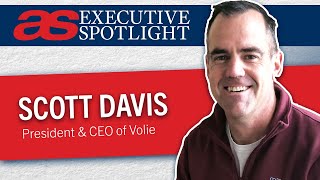
Brian Ankney interviews Scott Davis from Volley about keeping customers coming back for service. They discuss call center technology and strategies to improve dealership fixed operations efficiency.
Welcome to the Auto Success Executive Spotlight. I'm your host, Brian Ankney. Today my guest is Scott Davis with Volley.
Welcome. Hey, good to be here, Brian.
Let's get started with a little bit about you and the career path that led you to where you are today.
Yeah, I maybe took the least traditional path to automotive. I own a bunch of pizza places. So 32 years ago, I opened a pizza place and opened 16 of them. And I was doing the marketing for all of my pizza places, database, kids club, those type of things, fundraising, and I'm doing it for the whole chain that I was a franchisee of. And pretty soon I had a local dealer who I was a friend with and I'm doing service retention for them and then 70 other dealers in the Midwest. I'm originally from Iowa and that's how we got in the business. So I've been in IT since 2002, started doing service retention and it's got me to where I'm at today. Great.
Let's talk about service retention and fixed ops. It seems like as things are changing a little bit in our industry and everybody's coming off the best couple years in history, that dealers are starting to turn their gaze to the backside of the building and their fixed ops departments and improving fixed ops. Where do you see a real opportunity to move the needle?
Yeah, I mean, these things are all cycles. So as you know, this comes in and out of importance. And the last few years, it hasn't been as much of the focus because it didn't have to be. But there's a good opportunity now with interest rates higher when less cars are sold, even though at a higher margin of the previous few years, it means less service business. So the opportunity is really to improve your service retention, improve your customer base, because there's steady income there. There are also a lot of your future buyers, so it's very important to focus on it. So.
So what you're saying is, is when there's fewer cars sold, you have fewer cars to service? Or are you thinking that's. Is that mainly because of warranty work or.
Well, when you historically look at a dealer's data and they haven't made fundamental changes in their data, their loyalty quotient pretty much stays pretty constant over the years. So if you're at a time where interest rates are low, you've got a lot of inventory and you've sold 250 new, 100 used, and then you go into a period where there's no inventory and your number is a lot lower than that. It's just simple math. You've got to do something different to improve your business because your 32% or 34% or 45% of a smaller number is less customers coming in.
Gotcha. I gotcha. Well, let's talk about call centers and BDCs and how they can be used in the fixed ops department. Dealers historically have kind of struggled to figure out the best version of that. I mean, when I first got into the car business, there was one version. And then, you know, over the last 20 years, I think I've seen a dozen different ways to skin that cat. And seems like no matter which direction they go, dealers have, have trouble. Like what, what can they do to, to, to get good on the phone?
Well, I mean, it's a combination of, of being able to measure your business and having good technology to do it. The cost of an agent has doubled in the last 15 years. All the while they've had less resources to work with. Labor was tough before COVID It's been really tough since then. And they're asked to do more with less at a higher cost. And so it's never been more important.
Well, when you say they're asked to do more with less, you know, are they able to do more with less? Like what? I mean, if I'm in that situation, what can I do?
Well, your typical bdc, they're managing a lot of different programs. They're using a desk phone which, or click to call through a CRM. But there's no real good feedback on what the agent's done, how efficient they've been, how fast they've worked. They're generally in fixops, they're working off spreadsheets. The OEM put in a list or they pulled a list down from their dms. And it's hard to know where you've been when you're running around the spreadsheets. You don't have visibility to where you've been. So in the past it's been, it's been very, very tough. So I mean it's, it's not been standard for a dealer to have a BDC and in house BDC that used call center technology. They run in out of cycles. Just like with a lot of things in auto, they run in and out of cycles where they've outsourced the calls or they've in sourced them and, and not. There's not one size fits all for every dealer. But up until now, it has not been common for them to use call center software in a dealership.
So if A dealer, you know, would like to use call center technology in their dealership and they, you know, they recognize that they have a problem and they want to solve it. Is this something that, that, that a dealer can make a decision today and be operational in six months, one month, a year? Like, like, what is it? What's that process look like?
It depends on what they're trying to accomplish, of course. So generally when we work with dealers, we try to get them up and going in about 15 days. So our first meeting with the dealer will get there, get their data ordered for their dms, have them order their headsets, and then we put them down the path where they're making money with their BDC in about 15 days. And in general, there are lots of places to sign up for call center software. The other elements that you'd have to do normally, you'd have to figure out a way you're going to manage the campaigns, you're going to get the data into the dialer and the feedback back out that you know how to make good decisions.
Well, can you share some success stories, you know, for maybe from inbound and outbound phone calls in the dealership environment?
Sure. We had one dealer group in Florida. They had three BDCs for their 29 stores when they started out. They had 19 of their stores in this BDC and they had, they had 34 agents. So they were making about 2,000 outbound attempts a week. And since they, they added this Technology, they have 17 agents, three managers. They make about 12,000 attempts a week. This isn't robo dialing. It's manually initiated call center software and with about half the workers and quite a bit more output. And in a normal week, they'll schedule 1100 outbound appointments as well as the inbound calls that they'll manage. We had another dealer group that they saw, gee, Scott, you better, this better work. You know, we, we put this BDC in a year ago. We really thought it would grow. And, and this is our last tab to make it work. Well, they put in technology, they figured out they were dropping about 30% of the calls that people were trying to give business to them. They weren't making any outbound calls. Now their, their drop rate is an acceptable level and they make about 5,000 attempts a week.
So, wow. I mean, that's, that's kind of an incredible change to produce that many more outbound calls with fewer people. Like, how, how is that possible? Like, where are you shaving off the.
Time if you're running off a desk phone. And you want to not make the customers angry who are trying to do business with you, you need to have people sitting around waiting for the phones to ring. It's no tougher than that. We recently looked at 10 million phone calls and 62.8% of the people that dropped did not call back within seven days. And those people were buyers. 74% of them had a previous service appointment in the DMS. If you called them back, 54% of them answered on that first try and, and 34% of them even leaving in status checks, main appointments. So when you, when you factor all that in, you're shaving off the time by measuring the agent's efficiency, helping them realize that they spent a lot of time in between a phone call and then when they're not on an inbound call, serve up the next most important outbound call you want them to make. And you also help them out by using email and SMS along with it to multiply what they're doing. So you compare that with the desk phone and spreadsheets where they have to wait for the phone to ring because otherwise they're going to make people mad if they don't answer the phones. We all get frustrated with it, right? Oh yeah. And then when they're not, they're checking names off a spreadsheet.
Now how, like you said that to not make people mad, you have to have somebody waiting to answer the phone. How does it know that the phone's not going to ring or that you like, does it, does it have a certain person waiting each time so that everybody's not waiting or like what does that look like?
Well, there's a call queue. So just like any phone system, you call and if someone's available, it'll serve the call right up to them. If not, as soon as they hang up from the call they're on. Whether inbound or outbound, it'll immediately serve them a call based on how they're skilled to answer those calls. And so customers are not waiting for calls. It's counterintuitive. Dealers are accustomed to having ring alls where because they figure that will help the phones get answered. But all it does is ruin your productivity and it makes it so no one's responsible. If you really want to be successful, put everyone on a system where, where every minute they're working accountable for the customer and to help serve the customer.
Interesting. Let's talk about KPIs. If a dealer wants to improve, is trying to improve, or is on this path to improve what Are the important things they should be measuring and paying attention to.
Sure. When we speak with dealers, they with a desk phone and spreadsheets and click to call through CRMs and such, all you can really keep track of is activities. And that's fine if that's all you can do. The first thing I would do is I would benchmark inbound and outbound differently because most of the time when you speak with a dealer, they're going to say, oh, our agents do 80 calls a day or our agents, you know, we've got a goal of 100 calls a day and that's pretty good output if you're using a desk phone and such. I would start out, I would benchmark inbound and outbound separately. And if I was running a service, bdc, I would try to get to where an agent can take 70 inbound calls a day and make about 150 outbound attempts a day.
Wow, that's a lot of calls.
Sure. But if you've eliminated the time in between a call that isn't them working. 60, 60 minutes an hour, which is the next benchmark, I would, I would really look at. If you're trying to measure agent efficiency and effectiveness, and this is the only way you can do it is with a system, a call center software system. We try to benchmark against 85% efficiency. So meaning we want them productive. 50 minutes an hour. Okay. I mean BDC agents have a hard job. They've got numerous bosses, they have all the service advisors, they have their BDC manager, all the customers want service. And so you're not going to be working them 60 minutes an hour, eight hours a day. But, but if you can get them about 85% efficient, they're doing really well when they're on the phone and they're making, making outbound attempts. And we'll just talk service retention. On a four attempt service retention campaign blended through the four attempts, you're going to get about 35% of the people to answer. So 50 some percent on the first attempt down to 18 on the last attempt. The math works out pretty simply that on 100 attempts you're going to have about 35 conversations. And you know, some of them might be first attempts, some of them might be four attempts, but you're going to have about that many conversations. And if you can convert about 30% of those two appointments, you're doing good.
Now do you, do you measure how many actual connections that they make?
Like, sure.
I mean, I imagine that, you know, if you're looking at it on a daily basis, if. If I make the same amount of attempts as you do, but you talk to twice as many people that, well, you probably couldn't make the same number of attempts because when you connect, it probably takes as much time as five attempts, right?
Yeah. Well, the average appointment on the 10 million calls we recently looked at was the agents were on the phone for four minutes, four seconds. So. Oh, so you did nail that. But a lot of it is just how conscious you're going to be to stay busy through the day.
Also, you know, dealers spend a lot of money on advertising and probably a lot of them wonder, you know, what if I did nothing, would the people still come into service? Do you know the answer to that?
Yeah, it's funny you asked that. We kind of wondered ourself, really. So when we did this 10 million call study, we looked at the people who are all due for service. You know, we're sitting on hundreds of dealers of data database. So we have a lot of people who, who are proactively reaching out and ones who weren't. And the difference of the. And we looked back 10 million calls that we could look 90 days forward. So the lift was about 51% for the people that, that actually the dealers reached out and spoke to compared to the ones that didn't. So you can really move the needle if you, if you reach out. The customers do not think about us as much as we think about them. And a lot of times service is just catching them on the right day when they're due and making it easy to convert. The other great advantage you have there is if you're managing these people and proactively reaching out and doing it in a system where you actually take the inbound calls. Also you'll reduce the number of inbound calls you have to take because customers don't have to keep calling back in to get help. So a lot of benefits, but yeah, the lift is substantial compared to overdoing nothing because they're. They're going somewhere. Wow. I mean, that.
The answer. I mean, that answer is a lot bigger than what I was. What I was expecting. That is substantial.
Yeah.
So, Scott, is there anything more you'd like to share with our audience today before we go?
Yeah, agents have a hard job, but they can really have a huge impact on your business. And certainly if anyone has anything they want to reach out and ask, we'll help with or without, whether they work with us or not. Just keep in mind, the customers need service. Everyone needs service on their vehicle. It's just a question whether they're going to get it from you. So, so if people put technology in place that helps them be effective, lets them know the customer's history, when they've called, what services they've done in the past, people just need help and they all need service. So just know that you can really, really improve your business if you give them a few tools. It's really hard to improve your business if you don't know the numbers. And so I would just urge everyone to put something in place to help these hard working folks be more successful. Great.
Well, thanks for coming.
Yeah, thanks for having me.
And thank you for taking the time to join us for this Auto Success Executive Spotlight. I'm your host Brian Ankney. Today my guest has been Scott Davis from Volley. We hope to see you again on a future episode. This one's over the Curb and Burning Gas.
More from Wendy

Fixed Ops Roundtable: The TCPA Compliance Panel ft. Scott Davis and Josh Stevens





