Monday Training 10 AM Session
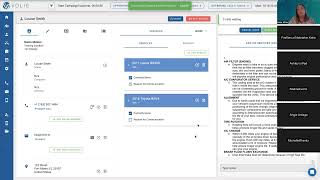
A walkthrough of the Volley platform for customer communication, covering login, queue selection, call screen panels with customer history, DMS data sources, contacts directory, and how to set communication preferences and dispositions for callbacks and follow-up messages.
So that people who maybe weren't able to join us today can have access. So, excuse me, pardon me so much. I'm gonna go ahead and share my screen and we're going to, I'm going to show you Volley and what you will see when you get logged in. So I'm going to assume everyone is good to see my screen unless somebody lets me know otherwise, I assume we're good to go. But if at any point you can't see, you know, just be sure and let me know. So this is where you are going to land when you get logged into Volley. One of your homework type items for today is just to make sure by the end of the day that if you haven't already, that you're able to at least get logged into Volley. We want to make sure that, you know, you get logged in. If you have any questions there, you know, be sure to bring those to your manager. They can bring in your Volley account manager and help you get logged in if needed. So you're going to come into what we call Q Selection. Think of Q as being synonymous with a group of customers or a campaign. You may hear through your tenure. With Volley, you may hear that described in some different ways. Okay, so this is the, the reasons that you're contacting those customers. Maybe they have maintenance due, right? Maybe they are part, have a recall on their vehicle. Maybe we are confirming their appointment, that type of thing. Right. So it's the reason that we're reaching out to these customers. You're going to have in queues here in your queue selection. You're going to see the cues that you have access to. Now, your access may be different than another member of your team. Let's just say, for instance, you have members of your team who primarily make CSI calls or appointment confirmation calls. Or you have a different team for recalls, right? Your list might look different than one of your team members, but that's okay. You're going to have access to the campaigns that you need and that you have access to. Your best practice at the beginning of your day is to use this green buttons kind of outlined in green here at the top left that says log into all queues. So this is going to, as it, as it sounds, log you into every one of the queues. We want you to do that because that will not only feed you the next outbound call that your manager wants you to make and the priority that they want those customers contacted. This also will allow you to take any inbound calls that are coming in. So today we're going to go through some of the basics of the call screen. We're going to look at that in a moment. Tomorrow we're going to start practicing some outbound calls and what that looks like. But today, again, you saw in your packet for the week, we're going to go through that call screen information and what that looks like. We're going to talk about communication preferences. This allows us to indicate if a customer is requesting not to be contacted by a particular method. Right. We're going to talk about dispositions, which is the result of your communication. Every call in Volley, you're going to make a disposition or the result, what happened in that customer's call. And then we're going to end our time today speaking a little bit about, you know, the, the first impressions with our customers and why they're so important and then how volley can help you, you know, manage your time better and be more efficient. So that's our plan for today. But again, if you have any questions, I'll pause at various points. But, you know, be sure and let me know if you have any questions. So you'll notice in your account you're going to have a sandbox. You're going to have a training environment. This is what I'm going to use this week and this is what you are going to use when you do your, your homework time. Right, so this is a, a demo environment, a training environment. The customer information is, is pretend, Right? So it's pretend customers, pretend data. It's designed to let you click around, you know, access different items, test different items before you start making calls to real customers. So when you are doing your training in your sandbox, instead of logging into all of your queues, just come into the individual sandbox here. You're going to find it. If we go over to the right, there's a green login button. We just want to log into that training campaign only while we're doing some training. So I'm going to click login here and then we're going to go to our call screen over on the left. It's kind of in the middle. It has this icon of a phone handset and it's called the call screen. So again, we're going to log into our sandbox. You're going to go ahead and click the call screen and this is where we're going to be spending most of our time this morning, talking through. So so far, how I got to this space, how I logged into the sandbox, does anyone have questions on how I got this far. Okay. If you do, please let me know. So we're going to talk about the contents of this call screen and again, as we go further into the training in subsequent days, we're going to talk about, you know, specifics of how we'll these different menus. But I'm going to give you an overview this morning. So over here on the left is the customer's information. So we have their contact info, phone numbers, emails, physical addresses, information about that customer. We are getting that from two sources. The primary source is your dms. We are sitting on top of your DMS data and we're getting that every single day. So we are getting the customers again information, sales history, service history, we'll talk through that in a minute. Or it could be a part of a list that your manager has loaded and we've either added information to a customer's record or if we had enough info about that person, we might have been able to create a new record. But that's where we're getting the customer information that you see here in Volley is from your DMS or from a list that your manager has loaded. That is where we're getting it. At the very top left, I want you to notice we have a, a name here in bold and then some other information. So the bold at top, that is your dealership. If you're making calls and receiving calls on behalf of one dealership, you're going to see that same name over and over again, right? If you're making calls on behalf of multiple dealerships, that name may change. The calls are going to be fed to you in the priority that your manager wants them contacted. So you might see five calls in a row with one dealership and then it may switch to another, etc. So that's what that means. The middle is the campaign. Why are we calling that customer the queue name? Right. Are they due for service? Are we calling them as part of a recall? You know, what is the reason that we are calling this customer? And then you have your attempt. So built into every campaign we have a follow up cadence and it can be different for different types of campaigns. Different types of queues. Maybe in one campaign we're trying to call customers every other day for a week. Maybe in another campaign we're calling them every four days for two or three weeks. Right. But there is a programmed cadence where the calls are going to be fed to you. This is just your visual. Is this the first time I'm looking to reach the customer? The third time, you know how, how Often have I tried to reach the customer for this reason. Any questions there? Okay, we're going to come back to some of these icons up here in just a moment, but I wanted to move on to this middle section. We refer to this as the tab section. It's going to default to any vehicles that the customer has on their profile. But if I expand the more here on the, on the right hand side, if I click more, I'm going to get some more options. And we're going to talk through these in the coming days. But I wanted to give you just an overview today of the information that you would see here. So you can see any appointment history for that customer. You can see any communication history. So this pretend customer doesn't have any. We'll. We'll find one in our time together where they do. But you're going to see any calls for a particular customer. You are going to see either inbound or outbound. You know, how long was the call, any notes that a team member of yours made. And we'll look at that more as the week goes on. But you're able to see any, any phone calls as well as any emails or text messages that have gone out of volley. So you can see that. You can see sales history and service history. Again, if I click on these, these are blank because this is a pretend customer, right? This isn't real data. But in your real customer, that information would fill in here. Again, we're pulling that from your DMS every day. And so we're able to find past service history, past sales history, appointment history, et cetera for that customer. The other item you're going to use often, which we will spend more time talking about tomorrow and when we practice actual calls is this contacts directory here. So think of contacts as kind of your phone book or your phone directory as part of your onboarding process. Your manager has supplied us with a list of people or departments or ring groups that your team transfers calls to frequently. So, again, this is primarily advisors. Might be a ring group for parts or for sales. It may be members of leadership. It might be your preferred towing company or a collision center that you use, or your own collision center. Again, we'll go through in subsequent days how we utilize this to transfer customers outside of volley, you know, to that, that person they want to speak to. But just so you know, this is an area you will use a lot. One of the items that we will talk about when we make those practice calls is just making sure that as you're doing your practice in Bali, after we've spent our time together, this, either later this week or early next week, you're going to start calling real customers in some outbound campaigns. And you'll want to pay attention to your contacts directory at that point as well. But we'll talk about that further in the next couple of days. Any questions on in general that the kinds of information that we can get from this middle or this tab section. Okay. What you'll notice on the vehicles, I wanted to point out as well, if this, if this profile had multiple vehicles, I'm just going to go ahead and add one for practice. And you can do this when you're doing your practice, when you're in your sandbox area, when you're in this training area, you know, go ahead and add phone numbers, add email addresses, add vehicles, just to practice that, that, that workflow. But I'm going to pretend that this customer has more than one vehicle on their profile. I'm just going to add one here. So you'll notice that one of them on the top is clicked reason for communication. That is the vehicle that we enrolled the customer into that campaign for. So again we talked about that DMS data that we're sitting on top of. We can scoop that data to say bring us customers who are due for service or you know, customers who we may be confirming their appointment or whatever it may be. Right. The vehicle clicked. Is the vehicle the reason for communication, the reason we were reaching out to that customer? If you need to change it, you can. I'm going to show you tomorrow when we speak about making some practice outbound calls. You know, if you would need to schedule an appointment on one call for both vehicles, there is a way to do that. But you can change the reason for communication if you need to. This is simply then what will be noted in, you know, in future reporting and future metrics, you know, what, what vehicle we were reaching out to the customer about? You can also uncheck this currently owns box. Let's say we were visiting with this customer and they indicated, you know, they no longer own the Lexus, for instance. We can uncheck this and then volley. Just knows for the future, hey, that's not a vehicle they have on their profile any longer. We recommend doing this versus removing it. The reason being is as I mentioned, we're constantly scooping your DMS for that data. Right. If your DMS or a list has that customer's vehicle on it, it may add it because it doesn't see it. Right. But if you uncheck currently Owns Volley's going to look at that and say, oh, they told me that customer Louise no longer has this vehicle. So I'm not going to put this customer in the campaign. Any questions there? Okay. On the right hand side we have the scripting and if we look at the more drop down here, we can actually toggle to different scripts. So your manager, you know, your manager, your team, you may have more than one loaded in a campaign. Maybe you have scripting for, you know, active customers. Maybe this is an active customer campaign. But you might have scripting ideas for handling objections or ideas for add on services. Right. You may have multiple scripts in a campaign that you can toggle back and forth to if you need to. You'll notice as well on your scripting that certain items are in bold. We're able to pull in, you know, the customer's name, the dealership, the vehicle, the reason we're calling them for that particular conversation. Right. We're able to pull that in into your scripting. So that just helps you not have to bounce back and forth, you know, looking at the customer's info and looking at your scripting. We are going to talk in, in the coming days about something we call manual mode. We're also going to talk about how to initiate a dial on our next conversation tomorrow. But in these first three panels, the information that's included and we're going to go back to the customer panel here in a few moments and look at a few items. But in general, any questions on the kind of information that you can see in these three panels? Okay, so I'm going to go back here to the customers panel. We're going to go to this middle icon first of the, the person with the phone handset. And if we, if we put our mouse over it, we see it's called communication preferences. This is what you use to indicate if a customer does not want to be contacted either at all or contacted by specific methods. So these are customers who say to you, you know, some version of please put me on your do not contact list or don't contact me any longer, that type of thing. Right. You can go ahead and unclick this top box and it will opt them out of all communications. The box being checked means they're opted in. If it's empty, it means they've been opted out. So if we call customer Louise and she does not want to be contacted at all, we can unclick this top box and she becomes unavailable to be contacted at all. And then you'll notice below we have a history, right. Of what she unsubscribed from and when. You can also do specific methods of communication. So let's say a customer, maybe customer Louise on a call indicated she was okay receiving phone calls, but she didn't want to get emails or text messages. You could just click those boxes to opt that customer out for emails or text messages as an example. And then you can even get specific with a particular method of communication. So I'm going to go back to this customers panel and I'm going to add a couple pieces of information just so that I can show you in our testing here how we could opt out specific methods of communication so you can be more general with it. Right. All communications or only, you know, I only want to be opted out of texting or only want to be opted out of email or whatnot. You can do that. You can also choose specific methods of communication. So let's say this customer had multiple email addresses on their profile and they said they were okay getting contacted at the Gmail address, but this other email is their person is their work email, so they don't want to be contacted there. We can unsubscribe them from just that email address. Similarly, with phone numbers, right? Maybe the 319 number is their personal phone, but the 763 number is their work device and they don't want to have calls or text messages coming to that work device. We can unsubscribe them from that as well. So again, the buttons at the top is all communications or all phone calls, all emails, all text messages. Below you can get specific on specific email addresses or specific phone numbers if the situation would, if the situation would, would warrant that. If you have indicated that a customer, for instance, has opted out of all communication, it means that they are, they are not going to be eligible for any outbound calls in volley or to receive any emails or text messages or any outbound communication at all. Doesn't mean the customer can't call in. But we want to be real careful and really intentional with how we use this. What it's not meant to be used for is maybe you have a difficult conversation with a customer. Maybe they're upset about something. You know, maybe they weren't that, that pleasant today. Maybe they were in a, in a poor mood, right? That's not an instance where we want to use this. These are for instances where the customer says, please put me on your do not contact list. I don't want to be contacted anymore. Those types of conversations, right? That's when you would utilize these communication preferences. Any questions on how you would use it or any specifics there? Okay. Just a reminder, I know some of you have, which is lovely. Thank you so much. For those of you who haven't, if you could please put your information in the chat again. You know your name and your dealership group or dealership name and if you have multiple people watching with you on one screen, if you could put everybody's information, that would be great. That's how I pass on to to our onboarding team that you were able to join us today. So if you could do that at some point between now and when we end our call, that would be wonderful. So next I'm going to click to this icon of a pencil which is the disposition. So the disposition is the result of that call. It's the result of what happened in that communication. And in your packet for the week I included a disposition glossary and some definitions. So I would encourage you to to review those today that wasn't on your official homework list for the day, but just take a glance over those and look at it throughout the week as we're doing training. Many of them, most of them are very self explanatory but if you have questions on which disposition you need to choose in a particular situation, just utilize that guide and that can help you. We're going to talk through some specifically. I won't talk specifically through every one of them, but we are going to talk about a few of them. So you notice I have my list here of my dispositions. If I click in here and I can scroll the one I want, you can also start to type it in. So once you get going and get comfortable, you can also start to type in. For instance, if we tried to reach a customer and they didn't answer, I can do that. So it's whatever is easiest for you. But these again, it's what happened on the call. Every call, whether it's inbound or outbound, we're going to disposition every communication in volley. So the dispositions do a few different things. So we'll talk through those today. Before I do that, does anyone have questions on on the dispositions or where we're at with those so far? Okay. So our dispositions do a couple of different things. One of the things they do is to track the outcome of that conversation. So both in reporting you have access to which we'll talk through as the week goes on. Also reporting that your team has access to, you know, what happened in that conversation. We called Customer Louise at 10:26am on October 6th. And this is what happened, right? She scheduled an appointment. Maybe she said she wasn't interested, you know, maybe. Maybe she said she doesn't live here any longer. Right? What happened in that conversation? So you'll just find the disposition that best matches that situation and again, we'll talk through a few in specific, but you'll just pick the one that best matches. You know, for instance, if we had a customer who indicated they didn't want to be contacted and we updated those communication preferences, you know, we would choose this communication preferences, updated disposition. Maybe the customer called to our inbound line, they had a general question, right. Maybe we spoke to them and they indicated that they've already completed the service that they. That that was needed. Right. Maybe it's a status check. Maybe they're indicating they're going to tow in the vehicle, you know, the vehicle's being towed in. Right. Whatever it may be, what is the result of that communication? So it allows us to again, say we called this customer and here's what happened. Another thing we're able to do with dispositions is either exclude or include people from being a part of a future phone campaign. So one of these examples, for instance, is no longer an area. Let's say we called customer Louise and she indicated that she doesn't live here any longer. Right. Maybe she moved out of state last month. Right. What that will do. Bali will just get smarter and smarter as you use it. So in the future, even if Louise appeared on a list from your manager, or even if in grabbing the DMS data to, to pull people into a campaign for you to call if she could be eligible, we are not going to place her in the campaign because she told us in the past, I don't live here any longer. Right. So that helps us, helps us get that information, helps us learn. Couple that I wanted to talk to specifically is appointment scheduled being one of them. So appointment scheduled, you will still use your scheduler, xtime or my karma or whatever your team uses. All we need is the date and the time. That's all the information we need. And again, that's so we can say, you know, we called Louise on this day in this campaign and she made an appointment. It's so we can track the hard work you're doing in Bali with an outcome, right. I called this customer, I was able to speak to them, I was able to schedule an appointment. All we need is the date and the time. So I'm going to say maybe they're coming in on Thursday at 1pm or whatever it may be. Right. So we just need the date and the time. Volley will also allow you, as you're making appointments in volley, if you need to reschedule an appointment or cancel an appointment. It won't in our demo environment, but if we need to go ahead, for instance, and cancel an appointment, it's going to bring up, you know, in, in this case, we don't have any in our test area, but if we had some in our real environment, you know, it would bring up any upcoming appointments. You know, you could choose the one that the customer wanted to cancel or you could reschedule it. Right. Whatever it may be. Another disposition I wanted to talk about is callback. So this is for when a customer indicates, as it sounds, that they want you to call them back. So remember, we just talked a few minutes ago. I'm going to bounce back to this contact info panel. We talked a few minutes ago about the attempts. Right. And how we build in that follow up cadence. If you choose a disposition that said you did not reach that customer, volley's going to bring up that customer for the next call they need again, whether it's in two days or four days or whenever it is. Right. I say that because callback is not something you're going to do on every call so that the customer gets contacted again. These are calls where the customer indicates they wanted to call you to call them back. Maybe they were just going into a meeting or they were out of town. Right. And they said, well, I'm not, you know, I'm not home right now. Can you call me on Friday afternoon? Right. You can choose Friday afternoon. In this case, we're going to choose the 10th. Maybe we do 2pm they asked for 2pm and this will then bring up the call when that customer wants to be contacted again. You can choose your name if you want to. You don't need to. If you don't choose your own name, that call is just going to be fed to whichever team member of yours is available next. Otherwise, if it's you, it will serve you that call. Voli will give you about an hour before it opens up that call to another team member. We do that so that you know, if you happen to unexpectedly be out that day, maybe you got sick or whatnot, the customer isn't kept waiting when they wanted to be called back, that'll be sent to another member of your team. Any questions on those two dispositions in particular? Okay, so I mentioned the dispositions are the outcome of the call Right. They also allow us to either include people in the future or exclude people. Right. Like that. No longer an area. The other thing they can do is send alerts. And on your disposition guide in your packet, I've made a note that an asterisk next to those dispositions indicates an alert. So one of them is a CSI concern. So let's say we spoke with a customer and she, you know, maybe she indicated that, you know, she wasn't looking to schedule an appointment because she had a poor experience last time. Right. Or whatever the situation may be, when you choose a disposition, that's an alert. And again that's noted in your disposition glossary and your packet. When you choose that disposition, that's an alert, it voli will send an email to whomever your manager has indicated. So that could be your manager. Maybe that's an advisor, maybe that's your service director, maybe it's another member of leadership such as the gm. Your manager has made that determination as part of your onboarding process as to who those should go to. What the, what that person will receive is any notes that you made on this particular conversation, they're going to get the customer's information, they're going to get a link to the call itself so that they can then action those items. So instead of you, you know, having to note it in volley and then go to your email and maybe send an email to your manager on what happened in that particular conversation, that can be, that can be teed up to somebody else who needs to get that alert or needs to get that notification. Questions there. Okay, so the other thing we're able to do with dispositions, the last thing we're able to do, and we'll talk about this further in the coming days. When we practice calls, we are able to send out an email and, or a text message to the customer when that call is finished. Most often it is a disposition that indicates you did not talk to the customer. Like ring no answer or left a voicemail. And we may be sending out an email or text message that says something to the effect of, you know, sorry, we weren't able to reach you, we were looking to get a hold of you. You may have maintenance due, you may have an open recall, whatever that particular campaign or that particular call is referencing. The customer could get an email and or text message as a result of that communication. Often it is not every single call. More often than not, it's every other attempt or maybe the first and the last. But again, that's where we use that attempt Information we talked about at the beginning, right here where that follow up cadence that we have programmed for that customer, that's how we're utilizing that information. So just to recap on dispositions, you will include a disposition with each call. It is the result of that, of that communication what happened on your call. It allows us to include or exclude people from communication. We can also trigger alerts like the CSI concern example I mentioned. And we can also use that disposition to trigger an email or a text message follow up to go out to that customer after the end of your call. So we'll talk through more dispositions, you know, tomorrow and Thursday when we make those practice inbound and outbound calls. We'll go through these in, in a little more detail. But conceptually, does anyone have questions on, you know, how and why we use the dispositions? Okay, so at the very top here of your screen I'm going to, hopefully you guys can see, I'll move, move all of these different, different icons that I have here. Hopefully you guys can see. So you'll notice at the top you have a, some appointment and some call logs. We'll look at that as, as the week goes on. But this is just a good visual for you of the calls that you have, you know, received and made today and any appointments you've made today. So we'll take a look at those as the week goes on. But you've got a good kind of visual for where you're at in these call logs here at the very top. So again, this is the information in this customer screen. Some of it we will talk about in days to come, such as the manual mode and starting next dial. Those are things we're going to look at, you know, as we, as we go through our week here together. But conceptually, any questions on what is indicated here on the call screen for the customer? And again, I'll show you tomorrow we're going to practice some outbound calls. So I will show you what it, you know, how you utilize the dispositions. We're going to walk through how to transfer customers. We're going to do that both tomorrow and on Thursday. We're going to walk through that in more detail. So you'll see how these look in and in, in that sort of practice environment. Right. And then we'll also talk about, I'll show you how to utilize this in order to do those practice calls that are part of your homework for the week. So we're going to spend our last 10 minutes or so talking through some, some, some Other items to finish our time for today. Before we do that, does anyone have questions either how we got to the screen or some of the navigating we've done around it so far today? Okay, so we're going to talk about a few items to, to round out our time this morning. But you included in your packet your homework items for today. Before we meet again tomorrow, make sure you've been able to get logged into Volley. If you already have, that's great. If not, make sure that you can get logged in. Let your manager know if, if you haven't seen your invitation yet, they can talk to the onboarding team. Make sure you get that. Make sure you're able to get logged in. Okay, so that's number one. Number two would like you to access that your training sandbox. So I'm going to go out to our main screen here in Q selection just to remind you. You're going to go ahead and just log into that individual training sandbox, right? You're just going to log in here and go to your call screen. So make sure that you can do that successfully. And then in your demo environment, just poke around. You don't, don't worry about practicing any calls today. We're going to do that tomorrow. Just poke around in this environment, click things, read through the dispositions, read through your glossary, you know, look at some of this other information, adjust the scripting, you know, choose different ones, etc. Just to get more familiar with it. And then again, we will practice some calls tomorrow. So any questions there before we do our last five or ten minutes or so of our wrap up here? Okay, so again, please do let me know. Throughout the week you will have questions. I expect as you start to kind of, you know, push buttons and practice, you'll have more questions, which is great, you know, but make sure, make sure you participate in, in that homework. You know, we've, we've designed the course in order to, to best prepare you and your teams to be launched with Volley. So the more of this you're able to do this, the more, the more successful you'll be when it comes to launching. So I'm going to stop sharing my screen, but we will talk, you know, for the next few minutes here together. So what I wanted to, to kind of round out our time today, we want to talk about first impressions with our customers and also, you know, why efficiency matters and how Volley helps you. So we know first impressions, 10th impressions, 90 first impressions. Right? It all matters so much. You and your team are often the primary point of contact for customers, the interaction that you have with them, the relationship with you have with them, is typically how they view your entire dealership or dealer group, right? So your professionalism and your tone and your empathy and all of these other things. Some other items we'll touch on throughout the week, like being an active listener, right? All of that is so important, you know, to help the customer have a really positive view and a really positive relationship with your team as a whole. You know, unless a customer is, you know, purchasing a ton of vehicles, if they're kind of in that extreme, or unless they're in service a lot, you know, more than they should be. Unless someone is in one of those two extremes, you and your team are the ones that they have contact with most frequently. So one of the items we will touch on during the week is customer loyalty. That's the step above customer satisfaction, right? Customers being satisfied is important. We want customers to be happy with the interaction. We want customers to be happy with the experience with you, other members of your extended team, et cetera. But customer loyalty is that next step on the ladder, right? Customers who are loyal will, you know, they won't consider going anywhere else. They're much more likely to purchase additional vehicles or next vehicles, which means those vehicles are much more likely to be with you as well in service. Again, they're likely to recommend you to. To friends or family members or co workers. So we just want to make sure that we're cultivating that customer loyalty with. With every. Every experience. So just want to make sure. And again, and we'll talk throughout, as we do throughout the week, you know, making sure, as. As I know you all do, but just making sure that we are, you know, really, you know, professional. You know, we. We have a warm tone. We're empathetic, we're understanding, we're demonstrating to the customer that we are listening to them, that we are engaged in the conversation. And we'll talk about that further in the next. In the next couple of days here. Efficiency. We want to talk about efficiency and time management and how volley can help you with that. So we know time is a limited resource, right? And everyone's time looks different, right? If everyone's. If, you know, everyone's time is a pie chart, right? The way your pie chart is divided might be different than your team member depending on your personal circumstances, your family, your obligations, your work, you know, whatever it may be, right. But it's limited resource and, you know, for you and your teams, the more efficient you are with Managing your time, the more appointments you're able to set and the more money you're able to make. Right. So Volley is going to help you with that. You know, you saw those, those call logs that were at the top of the screen there that I pointed out. We'll talk about throughout the week, how you can use those kind of as a, as a gut check, right. How am I doing in my day? How am I doing in the number of appointments I've set, the number of calls I've made or received? We're also setting up goals with your manager that will appear on your screen as well. Goals either for call volume or appointment set. So you can kind of, again, whether it's a daily goal or a weekly goal that has been set up for you that again, you can, you can have that interaction to see how am I doing on the way to my goal. You're also able to get. Volley will serve you that next outbound call that you need to make, and we'll look at that tomorrow when we practice the outbound calls. So you're not having to spend time, you know, going to a spreadsheet, looking up a customer initiating a call. That information will just, that customer will be fed to you in the order your manager wants them contacted, those customers contacted. So that helps you be more efficient. We also have different metrics, different benchmarks that we're sharing with your managers to help you. We won't spend time, a lot of time this week talking through those benchmarks, but we are sharing those with your managers so they can help you kind of, you know, look at some places where maybe we can adjust our efficiency, the more efficient we are. And Volley will help you with that. The more efficient you are, the more outbound calls you're able to make, and also the more inbound calls you'll be able to receive. And we know a good portion of those inbound calls result in appointments. Right. So just some things to think about as we start our time together again. We will meet at this same time Tuesday, Thursday and Friday. We won't meet Wednesday, but we will meet tomorrow. Tomorrow, you'll see in your itinerary, we're going to go through how to make an outbound call. And I'm going to show you after our time together how you're going to test that and, you know, make a practice call to maybe a manager or a coworker and how you practice those. We're going to talk about that. We're going to talk about how we transfer calls. So using that Contacts area. We're going to go through that. We're going to talk about using multiple dispositions. So remember we talked about those dispositions today. You have the option, if the situation warrants it, to choose more than one on a call. So we'll go through that structure. But in the meantime, again, our homework for today, and it's in your packet, we're going to just make sure you can get logged in, make sure you can access that training sandbox that you can click on the login and then go to the call screen and then just start poking around the screen. Right? Just start clicking items, start looking at things. Again, it's pretend data, so you're not going to have service history or sales history, but you can start to click through, make sure you know where the different pieces of information are. And then after we meet tomorrow, you'll be able to start making some practice calls. So that's our time today. Thank you so much for being here and for your attention. And as we go, of course, I mean, I'm sure you will have more questions, you know, if you think of something from today that, that you didn't think of to ask, you know, be sure and bring that with you tomorrow. And throughout the week we can look at those questions. As I said in the beginning, it may be something if it's specific to your account, we won't be discussing that this week. But I can always, you know, tee that back up to your launch team and they can visit with your manager about that. So thank you again so much for being here, everybody. Really appreciate it. One last call for putting your information in the chat again, your dealership or dealer group, you know, your names, just so we can keep track of who's able to attend. And I will see you all tomorrow morning. Hope you guys have a great rest of your day. Take care.
More from Wendy

Fixed Ops Roundtable: The TCPA Compliance Panel ft. Scott Davis and Josh Stevens





