Revelation Chapter 5 Part 2 Greg L Bahnsen/ Revelation Verse By Verse {21 of 63 }
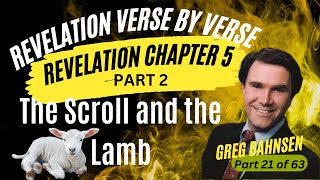
Greg Bahnsen walks through Revelation 5, explaining the sealed scroll, Christ as both Lion and Lamb, and the new song. He connects Old Testament prophecy to a Reformed reading of God's sovereignty and the saints' present reign as theological reality.
Chapters
Father, we praise you for your majesty and sovereignty this day. We praise you because you have created all things by your power. All things are upheld. We praise you that you have created us in such a wondrous way, that you do sustain our lives, providentially govern us, take care of every one of our needs. We praise you above all, Father, that you have taken care of that greatest of needs, that we might be reconciled to you because of our sin, that we might be reconciled through the blood of your son, that his righteousness might be imputed to us who are so wicked, who have transgressed your law, who deserve nothing at your hand, and our sins have been laid on him. And we thank you, Father, from the bottom of our hearts that you should call us your people, and that you should be willing to be our God. And we thank you for your word that sustains our spiritual lives day by day. We pray that you might help us to feed upon it now, that we might grow up into righteousness, that we might attain unto the stature of our Savior, that we might be filled with his spirit and empowered to act in a way that is pleasing to him. For it's in his name that we pray. Amen. Let's do a little bit of review before we continue in chapter five of the Book of Revelation. To understand what's going on and to. And to get the point at the end of chapter five, you need to go all the way back to the beginning of chapter four, where the setting is given to us for what's going to happen in chapter five. And so let's rehearse for a moment again, Chapter four. John has been beckoned up hither to heaven, to an open door in heaven. And as he goes, he perceives first of all, a throne established, a throne set in heaven with an emerald rainbow around it. And he says that one on the throne was similar to looking at Jasper and Sardius stones. And so he sees a very brilliant vision there on the throne. And from the midst of the throne come forth lightnings and voices and thunders. And so you have to imagine the awe with which John would be perceiving this, the throne of God, in this sight and sound that he has come before him. And then as he looks about, he sees seven lamps of fire which are identified as the seven spirits of God in some rather ornate way, a symbol of the Holy Spirit before the throne of God the Father, and a sea of glass like unto crystal, before the throne as well. And then, looking around again, John sees four living creatures which we have identified as cherubim, with some seraphim features mixed in cherubim around the throne, four of them full of eyes, each having six wings, and each appearing either like a lion, a calf, a man, or a flying eagle. And then around about the four living creatures, we find 24 elders on thrones. And I have interpreted the 24 elders as a high ranking of angels wearing white garments and having golden crowns upon their heads. So that is what is. That is the setting, if you will, in chapter four. And then we have to pay attention to what is going on in the heavenly throne room as well. There is an antiphonal song being sung. The four living creatures are singing, holy, holy, holy is the Lord God, the Almighty, the Eternal One, praising God for what he is in himself, giving him the glory, the honor, and the thanks. John tells us. But when the four living creatures sing this, it immediately stimulates the response, or the refrain, if you will, from the 24 elders who fall down in worship, casting their crowns before the throne of God. And they sing their song. Our Lord and God is worthy to receive glory, honor and power, for he has created all things. Actually, it's a song to God, for you have created all things by your will. And so I summarize that by saying that chapter four is speaking of the sovereignty of God in creation. There's the praise to God the Father, the Creator, the Eternal One, the Almighty, the Lord, God Almighty, who has created everything. Now, when we come to chapter five with that setting, seeing what's going on in the heavenly throne room, the drama begins. John says, I saw in the right hand of him that sat on the throne a book written within and on the back, closed, sealed, with seven seals. A scroll is in the hand of God the Father, in his right hand, you see. And again, throughout Scripture, a symbol of God's might, His sovereignty. God's holding a document, and the document is securely sealed. It has seven seals on it along the back edge, you see, to hold it together. Last week we discussed the form of the book as being a scroll and not a book, a leafed book, like we know them today. And I discussed the seven seals, the wax seals along the edge. But we had some difficulty in deciding what the scroll itself represented. And I went through a number of suggestions that the commentators will give you. And I wonder if you might help me rehearse that this morning before we go on in our lesson. What were some of the ideas for the meaning of this scroll? What does it represent? The Book of Life. That's right. One was the idea that this is the Lamb's Book of Life. And then the fact that it's written on the front and the back, which is unusual for ancient scrolls, the fact that it was written, the writing was so thin on the scroll would represent. What if it's the Lamb's Book of Life? The elect, but the vast number of the elect in particular. Okay. The difficulty is the context doesn't suggest that the Lamb's Book of Life is being discussed at all. And in fact, when you go to see the breaking of the seals and the sounding of the trumpets which are portrayed in the document, you see that it's really the judgment of God, not the blessing of God, that the scroll contains. All right, so what's another suggestion? Anybody remember? Yes, perhaps this is the Old Testament. And that would be suggested. It was especially suggested to ancient commentators because Jesus Christ is the fulfillment of the Old Testament promise. And Christ is the only one, it turns out, in chapter five, the only one in heaven or earth or under the earth who is worthy to open the scroll. Christ is the only Messiah, you see. He's the only one who can fulfill the promise of the Old Testament. But a similar problem, I think, attaches itself to this interpretation. When you begin to open the scroll, it doesn't appear to be Old Testament prophecies that are being fulfilled, but rather new judgments upon the new enemies of God and of his people. Well, if it's not the Lamb's Book of Life or the Old Testament. So there's kind of a Roman interpretation of this scroll as well. It sees this as a. Especially because of the seven seals and the seven witnesses that were necessary to go along with a will. That's right, a last will and testament. That in some sense this is along the Roman model of a last will and testament with seven witnesses. And. And Hebrews the ninth chapter, at least according to some interpreters. Hebrews the ninth chapter, speaks of the last will and testament that God has instituted and is made good by the death of his son. First Peter chapter one tells us, however, that it's not yet fully executed, that the inheritance of the saints is still future. And so some people have combined these passages to interpret Revelation chapter 5. Again, the seals have to do with judgment, though not the Christian inheritance. So I suggested that perhaps a clue to what this scroll represents comes from Ezekiel, the second chapter, where Ezekiel has a similar situation. A scroll in the right hand of God the Father presented to him. He is to eat the scroll, however, and that enables him to prophesy. And when he prophesies, he Prophesies, lamentations, woes and judgment. And so I would suggest that in the context of revelation and given the Old Testament hint here that the scroll represents a prophecy of redemptive and judicial events in world history. The fact that it's written on the front and on the back in this unusual manner indicates that the purposes of God cover the entire field of history. History. There aren't any contingency zones, there aren't any blank spaces to be filled in. You see, by man things which are apart from the decree and plan of God. And indeed these purposes shall have their full consummation. So all the events of history, especially that portion of history covered by this scroll offered before John, offered in the presence of John, the events of history are in God's sovereign decree, under his ultimate sovereignty will all be fulfilled. Well, so much for verse one. Let's move on now. Two, and following. And I saw a strong angel proclaiming with a great voice, who is worthy to open the book and to loose the seals thereof. This begins the drama. Now, an angel, a mighty angel, is challenging who can open the book. And no one in the heaven, or on the earth, or under the earth. The standard category scheme to indicate all of creation scripture, especially the psalms of the Old Testament. No one in heaven, in earth or under the earth was able to open the book and to look thereon. Now, why does John respond in the way he does? And I wept much. Again, if you're accustomed to American TV programs and so forth, this may seem something somehow not quite appropriate. I mean, so there's the challenge to find somebody who can open the scroll. You don't find somebody who can. But then John breaks down weeping. Acts 1, the Greek says he wails. Why is John wailing and weeping in such great distress over the fact that nobody was found, able to open the scrolls? That's right. John had been promised an understanding. And that understanding wasn't simple, simply some sort of appendix to his life, some sort of supplement to all the other things that he knew. It was a very crucial understanding that he'd been promised. For he was in tribulation, wasn't he, upon Patmos? He was a fellow sharer with the saints in the tribulation of those days. He knew the persecution that the church was undergoing. He knew that by all appearances, the kingdom of God was going to be snuffed out. And so when he was promised an insight into what God was going to do about the situation, and then he gets to heaven, if you will, and it turns out that nobody can Open the scroll. Then it appears that God's promise to him has been frustrated, that the agony and tension of the centuries as it comes to expression in the church of God is now not to be relieved at all, and John will be deprived of his promised insight. But the response comes in verse five. One of the elders saith unto me, don't weep. Behold, whenever you see the word behold, you know that means pay attention. Now, John, behold, the lion that is of the tribe of Judah, the root of David hath overcome to open the book and to loose the seals thereof. The lion of the tribe of Judah referenced to Genesis 49, where Judah is likened to a lion's whelp. And Judah, of course, has the dominance, has the kingly role in Israel. The lion of the tribe of Judah, the one from the tribe of Judah who indeed is the ruler over all, and the one who is the root of David, Isaiah, the 11th chapter, verse 1. From Jesse's root comes forth that stalk that will lead to the triumph of Israel over the nations, the one who will destroy all evil, the one who will deliver God's people from affliction, the one who will establish a completely new order of things in history. And we are told that this lion and this root, Jesus Christ, has won the victory. And I expounded that last week in terms of Christ through his death conquering death, and through his death conquering Satan. Two major themes in the New Testament. The one who is the captain of salvation has in fact already overcome the world. And in virtue of the incarnation of Christ, his death, resurrection, and ascension, he now stands actually sits at God's right hand, installed upon his throne and subduing every one of his enemies, First Corinthians 15, telling us that he'll subdue every enemy prior to the last enemy being subdued, that is death. And I think that's about where we left off. Well, verses six and seven, I guess we did get into a little bit. I saw in the midst of the throne and the four living creatures in the midst of the elders. That is, John is reminding us what the setting is, but he says, central to all of this, for all the grandeur of that environment, in the very midst of it all, is a lamb. And this is one of the interesting literary devices that John gets into in the book of Revelation. He's heard of the lion of the tribe of Judah, but when he looks, he sees a lamb. And how is that possible? Well, of course, Jesus is the conquering lion, the regal king in virtue of his sacrificial death. And his priestly work on our behalf and due to our sins. He sees a lamb standing as though it had been slain, having seven horns and seven eyes. The seven horns symbolic of what? What's a horn? A symbol of so often strength, power or might. Yes, and the fact that he has seven horns. I mean, you don't often find lambs that are so constructed. He has seven horns meaning that he has full or complete sovereignty and might. But he also has seven eyes. A lamb with seven eyes. Very unusual image. And the seven eyes are what the seven spirits of God sent forth into all the earth. Previously, John has spoken of the seven spirits of God referring to the Holy Spirit. And so the seven eyes which are the seven spirits are in the possession of the Lamb of God. And although this is not, we're not used to quite that ornate a symbolism, I'm sure, and many commentators, because of the ornateness of it, have flown into fits of allegory over it all. But I mean, in our day, you know, symbolism I think would be much simpler. But the fact is the seven eyes of this lamb represent the fact that the Holy Spirit is under the, under the control in terms of the economy of God's redemptive work in history, under the control of Jesus Christ the Son. The Son sends the Spirit into the church, the Spirit witnesses to the Son, the Spirit does nothing but what the Son tells it to do. In fact, Paul can go so far as to say that in the operations of redemption the Lord is the Spirit. They are functionally one when it comes to the outworking of God's plan in history. That's how closely identified Jesus is with the Holy Spirit. It's interesting that the seven spirits are seen as seven eyes going throughout the earth. That must at least emphasize in terms of this imagery here, the all seeing or omniscience of the Lamb by means of the Spirit of God. Alright, this line of the tribe of Judah, this root of David, this one who is the Lamb having been slain for our sins, the one who has the Holy Spirit under his control, he came and he taketh the scroll out of the right hand of him that sat on the throne. All right, so there's the resolution, you see, of the tension in heaven. And then we begin this morning with verse 8 and let's read the remainder of the chapter over together and then go back and look at each verse point by point. And when he had taken the book, the four living creatures and the 24 elders fell down before the Lamb, having each one a harp and golden bowls full of Incense, which are the prayers of the saints. And they sing a new song, saying, worthy art thou to take the book, and to open the seals thereof. For thou wast slain, and didst purchase unto God with thy blood men of every tribe and to tongue, and people and nation, and madest them to be unto our God a kingdom and priests, and they reign upon the earth. And I saw and I heard a voice of many angels round about the throne, and the living creatures and the elders, and the number of them was 10,000 times 10,000 and thousands of thousands, saying with a great voice, worthy is the Lamb that hath been slain flame to receive the power and the riches, and the wisdom, and the might, and the honor, and the glory, and the blessing, and every created thing which is in the heaven and on the earth, and under the earth, and on the sea, and all things that are in them heard. I saying unto him that sitteth on the throne, and unto the Lamb be the blessing and the honor, and the glory, and the dominion forever and ever. And the four living creatures said, amen. And the elders fell down and worshiped. What a marvelous sight. There's quite a bit of singing that John's going to hear in heaven. And I think all of it is important, significant for us to understand. Although it hasn't been explicitly indicated up to this point, there have been hints that John, because of the throne setting and the elders and all the rest, but John is in something akin to the temple imagery of the Old. I mean, the imagery is that like the temple of the Old Testament, where it had been hinted before, it becomes very explicit now in verse eight, when he had taken the book, the four living creatures and the four and twenty elders fell down before the Lamb, each having a harp and golden bowls full of incense. Let's look at a few passages in the psalms here. Psalm 33, verse 2. Give thanks unto Jehovah with the harp. Sing praises unto him with The Psaltery of Ten Strings. Psalm 98. 5. Sing praises unto Jehovah with the harp, with the harp and the voice of melody. Psalm 147. 7. Who is it that's giving these instructions? Who is the psalmist of Israel? David? Yes. And David is speaking specifically to groups of people that perform in the temple who bring the music to the worship of God. Psalm 147. 7. Sing unto Jehovah with thanksgiving, Sing praises upon the harp unto our God. The harp was associated with the music of the temple, the imagery of praising the Lord. You see, at his holy place, the bowls of incense make this even more explicit, of course, because the incense was offered daily within the holy place of the temple or the tabernacle. Now, this is an interesting reference in Revelation 5, at least for many people, because it says that the golden bowls full of incense are the prayers of the saints. You can get into some pretty wild interpretations of what that's all about. But I'd like to give you a couple of passages among the many that are possible to show why there is that association in the mind of John. Look at Psalm 141:2, Psalm 141:2. The heading of the psalm says, an evening prayer for sanctification and protection, verse 1. Jehovah, I have called upon thee. Make haste unto me. Give ear unto my voice when I call unto thee. Verse 2. Let my prayer be set forth forth as incense before thee, the lifting up of my hands as the evening sacrifice. It would appear that, you see, this is a prayer that's associated with the work of the temple, the daily operations of the temple. In the evening, David is praying that his prayer would be taken as the evening sacrifice, and his prayer would be seen as the incense that rises up from the temple. And then In Luke the first chapter, verse 10, give another, I think, helpful piece of background to what John is telling us. In Revelation Luke 1:10, we read, and the whole multitude of the people were praying without, that is, they were outside, praying outside the temple, praying at the hour of incense. In the worship of Israel, there was this correlation between the incense of the temple and prayer. There's the hour of prayer, the specific hour of prayer called the hour of incense. And David himself likened prayer to incense that would be offered up to God. And so that's why in Revelation 5 we read of the 24 elders and the 14 living creatures having harps and golden bowls full of incense. And the incense here is associated again with the prayer of the saints. And what do the saints pray? We're having a series of sermons from our pastor on that, right. Jesus taught his people how to pray. And specifically, they pray that God's name would be hallowed, that his kingdom would come, that his will would be done. They pray, thy kingdom come. That's the prayer of the saints. And especially in the Book of Revelation, the coming of the kingdom is associated with the support of the church in the midst of persecution, the judgment of the enemies of the church and the triumph of the gospel, the coming of God's kingdom in that way. And we can't look at all the passages, but just a few glimpses at that Emphasis in prayer in the Book of Revelation, chapter 6, verse 10. And they cried with a great voice, saying, how long, O Master, the holy and true? Dost thou not judge and avenge our blood on them that dwell on the earth? Chapter 11, verse 18. And the nations were wroth. And thy wrath came in the time of the dead to be judged in the time to give the reward to thy servants, the prophets, and to the saints, and to them that fear thy name, the small and the great, and to destroy them that destroy the earth. Revelation 18:20. Babylon is fallen. And we read in verse 20, rejoice over her, thou heaven, and ye saints, and ye apostles, and ye prophets. For God hath judged your judgment on her. God has avenged, you see, his wrath on the one that persecuted his people. While we're going to be coming to these verses, and I'll be saying more about it later, I think it's appropriate to ask this question at this point. You see, as the prayer of the saints, as incense comes up before God, I wonder how often those of us here pray for such things. And I'm really asking this question because I think it's a reflection upon the nature of evangelical Christianity, especially in the 20th century. I don't think that we are taught often to pray that God would avenge the blood of his saints. That seems vindictive to us in this century. We don't pray that God would somehow bring historical judgment upon the persecutors of the church. Now, I don't think that that excludes praying for the conversion of those who persecute us. So don't get me wrong. I'm not saying that we need to be bloodthirsty and angry, bitter sort of people. But I think there's a holy, proper way to pray that God would in fact avenge his saints, that their blood would be vindicated, and that he would bring historical judgment, indeed, that we would rejoice when God brings overthrow to those people that are so wicked toward the people of God. It's always something of a tentative thing for those who are not inspired, but especially the sort of thing that you can get cut off very easily in your interpretation when you venture an application to the modern world. But I'll give you one that I think is not too hard to apply. Apart from our prayers for IDI Amin that he might be converted, I think there also should accompany such oblation before God, our incense before him, that in fact he would judge such a wicked ruler who has done so many wicked things to his people, and we should be willing as 20th century Christians to rejoice if God should bring overthrow in that situation. But now, even saying that, I mean, as much as you see it right here before you in black and white, in the very word of God, I think that we still have a hesitation, don't we, about that. There's something emotionally we do not resonate to that. And I'm going to leave my remarks at this point with just simply asking you to meditate upon that today. Why is it that we can't pray the full prayers of Scripture? What is it about 20th century Christianity, evangelical Christianity, that prevents us from asking God to avenge the blood of the saints and to rejoice when the wicked are overthrown? Well, let's go on. The temple imagery is what I was getting at here. The harps of worship of God, the bowls of incense, the prayers of the saints. And note that it's the saints that are referred to. And something needs to be said about that. It's the prayers of the saints coming before God. Here throughout the book of Revelation, the term saints is going to be used to designate the people of God. That may not sound all that surprising. Why is that worthy of note? Well, because there is a large number of commentators, especially writing in this day, dispensational commentators, who tell you that the saints here do not represent the people of God as a whole, but rather a very narrow selection of the people of God, to wit, the converted Israelites who come through the tribulation. Who are the saints? The saints are those Jews who are converted in the midst of the tribulation period. Of course, the dispensationalist tells us that chapters 4 through 18 represent the whole tribulation period. Anyway, that's the seven years on earth of Jacob's wrath. Distress. Now, those who are converted, those Israelites, those Jews who are left and are converted in the tribulation, then are properly designated the saints, and only they are properly designated the saints. And I think there's great difficulty not only in the contextual interpretation that they offer here, but there's real difficulty in terms of that one particular word too. Look at chapter 11, verse 18. And the nations were wroth, and thy wrath came in the time of the dead to be judged the time to give the reward to thy servants, the prophets, to the saints, to them that fear thy name, The servants of God, the prophets of God, the saints of God seem to all be explored, explained as those who fear the name of God. Chapter 16, verse 6, another collection of designations. For they poured out the blood of saints and Prophets. The combination of the prophets of God with the saints. Chapter 18, verse 24. And in her was found the blood of prophets and of saints and of all that have been slain upon the earth. It would appear to me that the fact that you have associated with the saints in these places the prophets, indeed the apostles of the New Testament. And then chapter 19, verse 8, that they are described in the particular way as the bride. Read that 1980. And it was given unto her that she should array herself in fine linen, bright and pure, for the fine linen is the righteousness of the saints. Well, who's being described here? The bride of Christ. Now, the reason that these other terms, the significance. There is significance to these other terms being associated, especially that the the saint should be considered the bride of Christ, is that in terms of dispensational eschatology, those don't go together. You don't have the prophets and the apostles and the tribulation Jewish saints together. Moreover, the tribulation Jewish saints are not the bride. The bride is the Gentile church of the New Testament and the bride of Christ is raptured. You see, prior to the tribulation. I don't want us to get too greatly distracted by this interpretation, but I do think it's worthy of note here that the saints throughout the book of Revelation are the whole people of God in every age. They include the prophets, the apostles. They indeed are the bride of Christ. Well now, what are the saints in the midst of this temple with the harps and the bowls of incense, the prayers of the saints? What are the four. And what are the four living creatures and the 24 elders doing? Verse nine? They are singing a song, but that's not quite accurate. They're singing a new song and there's a great deal of significance to the fact that John calls it a new song. And the song is worthy art thou to take the book and to open the seals thereof. For thou wast slain and didst purchase unto God with thy blood men of every tribe and tongue, and people and nation, and made us them to be unto our God a kingdom and priest, and they reign upon the earth. This new song. Well, in the Old Testament Psalms, the theme of a new song given to the people of God is a very persistent one. You don't often hear sermons about it. In fact, I've not read all that much about it, even trying to look in depth into this theme. But I want you to see how often the Psalms psalmist stresses the newness of the song God gives to his people. Let's begin at Psalm 33. 3. In the midst of praising the Creator, the one who providentially takes care of his people. Sing unto him a new song Play skillfully with a loud noise. Psalm 43. And he hath put a new song in my mouth. Even praise unto our God Many shall see it in fear, and shall trust in Jehovah, A new song put in his mouth. Psalm 96. I want you to see the full context here. Since the opening has to do with the new song, let's read the whole thing. O sing unto Jehovah a new song. Sing unto Jehovah all the earth. Sing unto Jehovah, bless his name. Show forth his salvation from day to day Declare his glory among the nations, his marvelous works among all the peoples. For great is Jehovah, and greatly to be praised. He is to be feared above all gods. For all the gods of the peoples are idols. But Jehovah made the heavens. Honor and majesty are before him Strength and beauty are in his sanctuary. Ascribe unto Jehovah ye kindreds of the people. Ascribe unto Jehovah glory and strength. Ascribe unto Jehovah the glory due unto his name. Bring an offering and come into his court. So worship Jehovah and holy array Tremble before him. All the earth, say among the nations, Jehovah reigneth. The world also has established that it cannot be moved. He will judge the peoples with equity. Let the heavens be glad, and let the earth rejoice. Let the sea roar in all the fullness thereof that the field exult, and all that is therein. Then shall all the trees of the woods sing for joy before Jehovah. For he cometh. He cometh to judge the earth. He will judge the world with righteousness, and the peoples with his truth. Why am I reading all of this psalm? Because it is so suitable as theological, you know. See context and background to the new song of Revelation. Here's the Creator. He has established the earth that it shall not be moved. But this Creator is going to establish justice in the earth. He's going to judge among the people by his truth. And see all the nations are going to ascribe praise to his name. Begin to understand the contents of the new song you see, of Revelation. And the saints of God reign upon the earth. That's why a new song is given to them to sing. Well, let's continue our theme of the new song in just a few more passages. Psalm 98:1. O sing unto Jehovah a new song. For he hath done Wondrous things his right hand and his holy arm hath wrought, set salvation for him. And then jumping ahead to a couple more Psalm 144:9. I will sing a new song unto thee, O God, upon a Psaltery of ten strings will I sing praises unto thee in Psalm 149. 1. Praise ye Jehovah. Sing unto Jehovah a new song, and his praise in the assembly of of the saints. And so from the very beginning, you know, we begin at Psalm 33, down to the very end, Psalm 149. This recurring theme of God putting into the mouth of his saints a new song in conjunction with the mighty works of salvation that he will perform for them in virtue of his kingly role in history. So the new song is a fresh song of praise, one that was often composed in Israel for a special occasion, especially a mighty deliverance of God. And one more passage of the Old Testament to look at before we come back to Revelation. Look at Isaiah 42, 9, 10. I think especially this is valuable as background to the new song of Revelation 5. The prophet declares, behold, the former things are come to pass, and the new things do I declare before they spring forth. I tell you of them the emphasis upon newness. The old has passed away, the new things are now declared and established. Sing unto Jehovah a new song in his praise. From the end of the earth, ye that go down to the sea, and all that is therein, the isles and the inhabitants thereof. Let everyone sing a new song, because God is establishing newness in the old age. The old circumstances are passing away. That's got to be rather amazing to John, who knows his Old Testament so well. You see, in the very midst of this persecution and tribulation, when the saints are being martyred, when the church seems to be beat down, John hears, just like Israel of old, a new song being sung in heaven. You see, there's a new occasion for praise, a new mighty work of salvation, a new deliverance for God's people. God's justice is going to be established in the earth, and all the people start to pray, I mean, are to praise him and to sing this song in virtue of the newness. Whereas John is seeing nothing but oldness through the old age. There doesn't seem to be any note of victory and regeneration and newness and restitution about his environment, what he knows in history. But in heaven, that is, behind the scenes where reality is to be seen. Ultimately, the new song is being sung. Indeed, the whole book of Revelation has a theme of newness about it. There's the new name of chapters two and three, which is so significant. We have the new Jerusalem in chapter three and the New Jerusalem in chapter 21. We have the new heavens and the new earth in chapter 21. Chapter one also declares that all things are being made new, but now, in the local context, bringing it. Now let's tighten it up a little bit more. Looking at chapter five itself. Not only the whole Old Testament, not only the whole book of Revelation, but in chapter five, why is there reference to a new song? Because John's already heard the Song of Heaven, the antiphonal song of the four living creatures and the 24 elders. And what have they been singing? The sovereignty of God in creation. You see, Holy, holy, holy is the Lord God, the Almighty, the Eternal One, the One who's created heaven and earth and all things that are therein. This antiphonal song of the sovereignty of God in creation is now to be accompanied with a new song, an additional song to be sung in heaven. And let's take a look at that again. The new song has to do with this drama that's been resolved for us as Jesus, the Lamb of God, has overcome and now can open the scroll of God's decree and prophecy. Worthy art thou to take the book, and to open the seals thereof. For thou wast slain and didst purchase unto God with thy blood men of every tribe and tongue, and people and nation, and madest them to be unto our God a kingdom and priest. And then the final declaration, that, of course, is just, I'm sure, so astounding to John, the one coming from Patmos, you see, in the midst of persecution, and they reign upon the earth. Worthy art thou to take the book, to open the seals. Why? Because you were slain. You were slain. In chapter 5, you'll notice verse 6, 9, and 12 all emphasize the fact that Christ was slain, that he gave his life. Chapter 13, verse 8 uses the same Greek word. It's interesting, though, that it isn't simply Jesus Christ who is slain, this technical word for the sacrifice of Christ, but believers are also slain. Look at chapter six, verse nine. And when he opened the fifth seal, I saw underneath the altar the souls of them that had been slain for the word of God. Chapter 18, verse 24. And in her was found the blood of prophets and of saints, and all that have been slain, slain upon the earth. Rightly did Jesus say that the servant is not above his Master, the disciple is not above his Teacher, as Christ was slain at the wicked hands of Men who oppose the kingdom of God, so his people will be slain. And when Jesus was slain, more particularly now, we are told that he did purchase unto God with his blood men of every tribe, tongue and people and name. This is really the language of ransom. Throughout the Scripture, the price is indicated here. The price of manumission, the price of release. The price of ransom is given. And what is that price? The blood of Jesus Christ. And the fact that the price has been given is but just, in encapsulated form, a declaration that the ransom has been effective. See, the price has been paid. And therefore full release is the effect. That is, those for whom Jesus has died are genuinely ransomed and free of guilt and emancipated and stand as saved before God. I emphasize that, of course, because we who are reformed put a great deal of emphasis upon the effectiveness of Christ's work upon the cross. That it was a genuine substitutionary atonement that all those for whom Christ died are in fact saved. That it isn't a potential redemption that he provides. It isn't simply hypothetical, but rather it achieves the end of all ransoms. And that's the release of those who are under slavery, those who are condemned, those who have the price to pay. Jesus paid the price Jesus paid with his blood, we are told. And in so doing he purchased for God men from every tribe and tongue and people and nation. Well, did Jesus die for all men or only for those who are saved then? Well, this verse tells us that he died for all men and for only those who are saved. Let that sink in a second. You notice how John says that he purchased unto God with his blood men of every tribe and tongue and people and nation, all men international. You see, there isn't any discrimination when it comes to Gentile or Jew or, you know, tall or short or thin or fat or black or white or whatever it may be. There is no distinction among men which applies to the redemption Jesus provided. He died for all kinds of men, every tribe, tongue and nation. But when he died, he provided a ransom with his blood that is effective. And so he died only for those who indeed have their sins forgiven. Indeed, if Jesus should have died for anybody and his sins were not forgiven, then it would appear that God judges twice that the ransom price is paid. And yet the effect of the ransom is not. Ever seen that God in fact exacts the ransom price and the judgment. The punishment, if you will, is exacted twice. Once upon the Savior and once upon the one for whom he died who didn't really get Saved by that, after all. And so what we're saying is that the ransom is effective and it applies only to the elect, only to those who genuinely come to Christ in faith. And yet those who come to Christ in faith are all men, all kinds of men, all in the sense of all without distinction. Well, that to the side. Let's continue with the theme here. In terms of the kingdom of God. Worthy art thou to take the book, open the seals thereof, for you were slain, did purchase unto God with thy blood make of every tribe and tongue, and people and nation, and you made them to be unto our God a Kingdom and Priest. 1st Peter 2. 9 is a classic passage that brings together these two images of a kingdom and priests. In 1 Peter 2. 9 we read, but ye, speaking of the Church, ye are an elect race, a royal priesthood, a holy nation, a people for God's own possession, that you might show forth the excellencies of him who called you out of darkness into his marvelous light. The Church is a kingdom of priests, and we are told that they reign upon the earth. Now, I would imagine with the number of people, variety of people we have here, that you all have different versions. You might have a version that says, and we reign, or, and we. Or they will reign. That is, there are two. There are two variant readings here that, of course, are rather crucial to the interpretation, aren't they? It's one of those few places in the New Testament where your textual criticism has a great deal of dogmatic significance. That is, it has a lot to say about your theology. There are some versions that say we, we reign or will reign upon the earth, referring to the 24 elders. But now, if the 24 elders are, as Dr. Stonehouse taught, this high ranking of angels, and that means that there's going to be a high ranking of angels that does in fact or will in the future reign upon earth. Well, that's difficult theologically, but it's also difficult textually. I think the best readings support the idea that it's. They. It's the third person and not the first person to be found in the original Greek. But then also, is it a future or a present tense, this verb, reigning? You can see, by the way that I have read it that my Bible puts it in the present tense. But I think also that a little bit of textual criticism applied to this will support the idea that it should be present as well. The fact that the word for reigning in Greek can, in the future and the present take the same form just complicates the dilemma here. Before Us. And so when it comes down to it, although you have to look into the ancient manuscripts and all that, the question of the present or future tension will eventually be established on the basis of the context of your own theology, or hopefully the context of the book of Revelation as a whole. And so that being said, look at the context of the book of Revelation as a whole about the reigning of the saints, and let's go through these passages very quickly. Revelation 1:6 and he made us to be a kingdom, to be priests unto his God and Father, present tense. We are now a kingdom, we have been made. So Revelation 2:26 and he that overcometh, and he that keepeth my works unto the end, to him will I give authority over the nations. The present prospect to the Church in Asia Minor is that they might rule over the nations. Chapter 3, verse 21. He that overcometh, I will give him to sit down with me in my throne, as I also overcame sat down with my Father and his throne. A present reigning is offered to the Church in Asia Minor again here in chapter three. So chapters one, two and three, three all set forth the possibility of a present tense kingdom or reign of the saints in chapter 20, verse 6, which is that passage where you won't have any disagreements among the commentators. And so we can settle this once and for all, right? That's the most hotly disputed chapter of the entire book of Revelation. So some will think that I'm appealing from the obscure to the more obscure. But nevertheless, Revelation 26 Blessed and holy is he that hath part in the first resurrection over these the second death hath no power, but they shall be priests of God and of Christ, and shall reign with him a thousand years. Just about anybody is going to be willing to say that the reign of the saints referred to in Chapter 5 is CO extensive with the thousand years and with the first resurrection. Now later I will argue, I hope cogently, convincingly, that the thousand years are in progress right now. That is, we live in the midst of the millennium. But apart from that, let me note that for sure, I think the first resurrection is operative now. See, those who are called from spiritual death to spiritual life partake of the first resurrection. Notice what Paul says in Ephesians, the second chapter. This is one of many passages we could look at. But look at Ephesians 2 and the imagery Paul applies to our salvation experience in the present day. And you did he make alive when ye were dead through your trespasses and sins? Verse 5. Even when we were dead through our trespasses made us alive together with Christ, verse 6, and raised us up with him. The first resurrection. You see those who are in Christ and raised to newness of life through the death of sin, from the death of sin, those who are in Christ are raised with him. And so those who you see experience present salvation, experience the present reign of the saints upon earth. I think that's the context of the Book of Revelation and New Testament theology. And I'll just have to fill in the details of that later about chapter 20 and all the rest. But back to chapter five. The new song, the one that's in addition to the antiphonal song of heaven, is that Christ is worthy, the sovereign Savior who is overcome, worthy because he is purchased for his God through his death, because he was slain and he has purchased with his blood men of every tribe, tongue, and people and nation. International salvation has been made by Christ, and he makes his elect to be unto our God a kingdom of priests or kingdom and priests, and they presently are reigning upon the earth. Christians overcome, you see, just as Christ was said to overcome. Let's look at some passages in the New Testament dealing with this theme. First of all, Romans 8:37. Nay, in all these things we are more than conquerors through him that loved us well through what type of thing has Paul just been speaking of? For thy sake we are killed all the day long we are counted as sheep for the slaughter, even as Christ was the Lamb of God slain for the salvation of men. And all those things, even unto the point of death, we are more than conquerors. Look at 2 Corinthians. 4:7 and following well first of all, 2nd Corinthians 2:14 but thanks be unto God, who also always leadeth us in triumph in Christ, and maketh manifest through us the savor of his knowledge. In every place we are always led in triumph even in martyrdom we are more than conquerors, and in this life we are always led in triumph, 2 Corinthians is telling us but now look 2 Corinthians 4:7 for we have this treasure in earthen vessels, the exceeding greatness of the power that the exceeding greatness of the power may be of God, and not from ourselves we are pressed on every side, yet not straitened, perplexed, yet not unto despair pursued, yet not forsaken, smitten down, yet not destroyed, always bearing about in the body the dying of Jesus, that the life also of Jesus may be manifest in our body for we who live are always delivered unto death for Jesus sake, that the life also of Jesus may be manifest in our mortal flesh. So then, death worketh in us, but life in you. But having the same spirit of faith, according to that which is written, I believed, and therefore did I speak. We also believe, and therefore also we speak, knowing that he that raised up the Lord Jesus shall raise up us also with Jesus, and shall present us with you. For all things are for your sakes, that the grace being multiplied through the many, may cause the thanksgiving to abound unto the glory of God. You see, the persecution of God's people only works greater havoc in the kingdom of Satan. For, you see, the grace of God in this way is multiplied through the many. All the more are saved because of the willingness of Jesus saints to even go to the point of death for him. Look at 2nd Corinthians 6, verse 4 and following. But in everything, commending ourselves as ministers of God, in much patience in afflictions, in necessities, in distresses, in stripes, in imprisonments, in tumults, in labors, in watchings, in fastings, in pureness, in knowledge, in long suffering, in kindness, in the Holy Spirit, in love unfeigned in the word of truth, in the power of God, by the armor of righteousness on the right hand and on the left, by glory and dishonor, by evil report and good report, as deceivers and yet true, as unknown, and yet well known, as dying. And behold, not killed, excuse me. Behold, we live as chastened and not killed, as sorrowful, yet always rejoicing, as poor, yet making many rich, as having nothing, yet possessing all things. That's the irony that the world can't understand about the Christian church and fidelity to Christ. You see, in all those terrible things, be they the slightest evil report, even to the point of chastening and martyrdom, we are always bearing about the body of Christ, you see, we are always being led in triumph. And we are even more than conquerors if our lives should have to be given up first. John 5, verse 4. For whatsoever is begotten of God overcometh the world, and this is the victory that hath overcome the world, even our faith. I think it's a dreadful spiritual situation. It's not only a theological mistake, but I think it's a very sad emotional thing when Christians can fail to see the triumph that is theirs in Christ. John had to be reminded of that. See, on the isle of Patmos, in the midst of an age where the Christian church was being beat down on every side, he had to be reminded, you see, that they reign upon the earth Even those who are being persecuted. Because Christians overcome just as Christ himself overcame. First there was his humiliation, and then his glorification. First there was his suffering, and then his reign. Remember on the road to Emmaus, how Jesus said to his two discouraged followers, behooved it not the Christ, to first suffer and then enter into his glory. And so the Church too, you see, is not above its master, is not better than its Teacher. The follower of Christ knows humiliation. He knows the discouragement, the persecution. But afterwards the reign. He knows the victory that is in Christ as well. And this is not simply a future reign of Christ. They reign upon the earth, contrary to premillennialism. And nor is it a reign of the saints in heaven, contrary to all millennialism, they reign upon the earth. On earth, thy kingdom come, come, thy will be done. The Christian Church, you see, should be the key organization in human events, the one that is the pacesetter in society, the dominant social factor in politics, in labor, in art, in ethics and science. Whatever field of endeavor you may be thinking of, as the Christian Church is taking the Great Commission to all nations. The unlimited task is to see all nations are ready to be subdued, to be discipled. And the unlimited presence of Jesus Christ making it possible because he is with us until the end of the age. Well, let's finish out very quickly the rest of this chapter, verse 11. And I saw and I heard a voice of many angels round about the throne and living creatures and elders. John up to this point has only told us about the four living creatures and the the 24 elders. But now it turns out that there's a whole host of angels in heaven too. In fact, notice how it's described. The number of them was 10,000 times 10,000 and thousands of thousands. See the Greek. It just piles up upon itself. John couldn't possibly number all the angels. He now sees this mighty host. The new song is being sung. The sovereignty of God in redemption. Not just creation, but the sovereignty of God in redemption. And a vast number and innumerable hosts of angels is singing. And seven expressions are to be applied to indicate the wonder of this sovereign Lamb, who is the lion of the tribe of Judah, who will rule over the nations. His is the power, the riches, the wisdom, the might, the honor, the glory and the blessing in 1st Chronicles 29, verses 10 through 13, which is ascribing praise to the dominion of God. In this circumstance we find almost the identical praise. I'd like to read it before we close. First Chronicles 29, 10, 13. This is David's prayer, of course, concerning the temple. Wherefore David blessed Jehovah before all the assembly. And David said, blessed blessed be thou, O Jehovah, the God of Israel, our Father forever and ever. Thine, O Jehovah, is the greatness and the power and the glory and the victory and the majesty for all that is in the heavens and in the earth is thine. Thine is the kingdom, O Jehovah. And thou art exalted as head above all. Both riches and honor come of thee. And thou rulest over all. And in thy hand is power and might in thy hand it is to make great and to give strength unto all. Now therefore, our God, we thank Thee and praise Thy glorious name. It's almost the identical set of expressions that are applied to the Lamb of God who was overcome to open the book. So this mighty host of angels. Now the new song is sung. And then all the angels in heaven sing. And then we read. And every created thing. You see, the song isn't going to end now. It's going to reverberate throughout all creation. And every created thing that is in the heaven, on the earth, and under the earth and on the sea, that is the whole created realm, all things that are in them heard. I saying unto him that sitteth on the throne and unto the Lamb be the blessing and the honor, the glory. And then the final word, which is the climax of all the songs of heaven and the dominion forever and ever. All of creation. Finally, you see, have to praise God. Every creation, O Lord, my God. When.
More from BahnsenAI




Dr Greg Bahnsen - Proverbs: Proverbs 16:28, 30 (Some Tips on Promoting Strife) (Part 72)

Dr Greg Bahnsen - Proverbs: Proverbs 15:23; 16:21, 23-24 (True Religion: A Bridled Tongue) (Part 71)

Dr Greg Bahnsen - Proverbs: Proverbs 14:21 (Imitating the Father's Tender Mercies) (Part 70)

Dr Greg Bahnsen - Proverbs: Proverbs 15:25; 22:28; 23:10-11 (Widows and Property Rights) (Part 69)

Greg Bahnsen R C Sproul Debate Part Two Presuppositional vs. Classical Apologetics


Greg Bahnsen VS R C Sproul Debate Part 4 Presuppositional Vs Classical Theology

Greg Bahnsen vs R C Sproul Debate Part One Presuppositional Vs Classical Theology