The Time Of The Gentiles & The Destruction of Jerusalem Luke 2:15-36 Greg Bahnsen
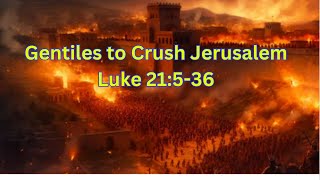
A recorded sermon by Greg Bahnsen expounding Luke 21:5–36. The speaker reads Jesus’ Olivet discourse (prediction of the temple’s destruction) and argues most of the chapter refers to the first-century fall of Jerusalem (AD 70) and the subsequent "times of the Gentiles"—a period when Gentiles dominate and the gospel is extended to them. Bahnsen cross-references Old Testament prophecies (1 Kings, Daniel, Micah, Zechariah) and New Testament writings (Paul, Revelation) to show the destruction fulfills Scripture and inaugurates the era of Gentile inclusion; he closes with pastoral exhortation to perseverance and prayerful readiness for the final judgment.
Chapters
I'd like to read the vast majority of the chapter for you. Beginning at verse five. We'll read down through verse 36, Luke 21, beginning at verse five. Hear this as the word of God. And as some spoke of the temple, how it was adorned with goodly stones and offerings, he said, as for these things which ye behold, the days will come in which there shall not be left here one stone upon another that shall not be thrown down. And they asked him, saying, teacher, when therefore shall these things be? And what shall be the sign when these things are about to come to pass? And he said, take heed that ye be not led astray, for many shall come in my name, saying, I am he, and the time is at hand, go ye not after them. And when ye shall hear of wars and tumults, be not terrified. For these things must needs come to pass first. But the end is not immediately. Then said he, unto them, nation shall rise against nation, and kingdom against kingdom. And there shall be great earthquakes in divers places, famines and pestilences, and there shall be terrors and great signs from heaven. But before all these things they shall lay their hands on you and shall persecute you, delivering you up to the synagogues and prisons, bringing you before kings and governors. For my name's sake it shall turn out unto you for a testimony. Settle it therefore, in your hearts, not to meditate beforehand how to answer. For I will give you a mouth and wisdom which all your adversaries shall not be able to withstand or to gainsay. But ye shall be delivered up even by parents and brethren and kinsfolk and friends. And some of you shall they cause to be put to death. And ye shall be hated of all men for my name's sake. And not a hair of your head shall perish in your patience. Ye shall win your souls. But when you see Jerusalem being compassed about with armies, then know that her desolation is at hand. Then let them that are in Judea flee unto the mountains, and let them that are in the midst of her depart out. And let not them that are in the country enter therein. For these are the days of vengeance that all things which are written may be fulfilled. Woe unto them that are with child, and to them that give suck in those days. For there shall be great distress upon the land and wrath unto this people. And they shall fall by the edge of the sword and shall be led captive into all the nations, and and Jerusalem shall be trodden down of the Gentiles until the times of the Gentiles be fulfilled. And there shall be signs in the sun and moon and stars, and upon the earth Distress of nations in perplexity. For the roaring of the sea and the billows men fainting for fear and for expectation of the things which are coming on the for the powers of the heavens shall be shaken, and then shall they see the Son of Man coming in a cloud with power and great glory. But when these things begin to come to pass, look up and lift up your heads, because your redemption draweth nigh. And he spake to them a parable. Behold the fig tree and all the trees, when they now shoot forth, ye see it and know of your own selves that the summer is now nigh. Even so ye also, when ye see these things coming to pass, know ye that the kingdom of God is nigh. Verily I say unto you, this generation shall not pass away till all these things be accomplished. Heaven and earth shall pass away, but my words shall not pass away. But take heed to yourselves, lest aptly your hearts be overcharged with surfeiting and drunkenness and the cares of this life and that day come on you suddenly as a snare, so shall it come upon all them that dwell on the face of all the earth. But watch ye at every season making supplication that ye may prevail to escape all these things that shall come to pass and to stand before the Son of man. And thus far, the reading of God's word. You can see the newspaper headlines now. Jesus predicts Gentiles to crush Jerusalem. They would have been just as controversial then, more so than they would be today if those headlines were to hit. The animosity between the Gentiles and the Jews, especially those centered in Jerusalem, is now historical. It's something which we take for granted. It's something which informs modern day events and something which informed current events. In Jesus own day. The Jews and the Gentiles have an animosity that goes all the way back to the Old Testament, all the way back to the animosity that came in Abraham's own family between Isaac and Ishmael. In Jesus own day, however, the Gentiles, the Romans in particular, were dominating the Mediterranean world and they had the Jews under their heel. The Jews had to serve Caesar and they resented that greatly. And so when the Jews thought of the Messiah and the great day of God that was coming, they thought of deliverance. Not only deliverance because of sin and deliverance, from sickness and deliverance into the age of the resurrection, but they Thought of deliverance from all Roman and foreign hostile occupation of the land. A restoration of the promised land to the glory that God had promised it would be. And so now Jesus, if he is going to give messianic teaching to the Jews, would be expected to fit into that pattern. He'd be expected to be predicting a day in which the Jews will rise up and will get rid of the foreign domination of the land. When the Jews would become again the leading force in the Mediterranean world. And when God would honor his people with power. Yes, the Messiah would drive out Roman occupation. He wouldn't say Roman occupation would finally crush the Jews. But as was usually the case, Jesus didn't meet the expectations of the people. He didn't fit into the common pattern of messianic expectation of his day. When Jesus speaks of the fall of Jerusalem, and especially of God's own house in Jerusalem, he is saying that something is coming to an end. A great, great end is about to come upon the Jews. The end of the Jewish nation is the people of God. The Jews would not be able to understand that. They wouldn't be able to comprehend that. They wouldn't be able to digest that. They certainly wouldn't want to accept it. And so, as Jesus is teaching in the temple, you remember last time we were preaching out of Luke, how he noticed a poor widow who gave more money than all the rest, he says, because she had less left over when she was done than the others. Jesus is still teaching in the temple. Mark tells us he's passing on his way out of the temple. Luke says he's in the temple, probably right about the doorway. He's going over the threshold and he hears people saying and exclaiming about the magnificence of this building. Look at these goodly noble stones, they say, huge stones that were used in building the temple. And the offerings there too. One might think of Herod's gift to the temple. An ornamentation in the wall. Grapes, a cluster of grapes the size of a man. A beautiful building. In fact, Josephus tells us that many people experience expounded upon the magnificence of the temple that day. It was the wonder of all the visitors, the national pride of the Jews. And so it's natural what Luke tells us, that Jesus would overhear somebody saying, wow, look at this place. And Jesus stops. And you think this is a strange way to get into it. But this turns out to be Jesus last public discourse, his last extended teaching before he's going to enter into a controversy with the authorities and finally go to the cross. So Jesus stops right there as he's passing out of the Temple and gives one of the longest eschatological discourses that we find in the entire Scriptures. However, when Jesus does this, I think it's interesting that he doesn't stop for the most part to divulge apocalyptic secrets. You may read this in that light, and some people continue to read it in that light. I'm continually amazed at the amount of popular literature that Christians put out about the last times, focusing on this particular discourse or discourse parallel to it in either Matthew or Mark, and telling us precisely when things are going to take place, when the end of the world might be, when the rapture might be, when the Jews are going to do this, that and the other, as though the Jews were still significant in terms of the playing out of biblical prophecy. Jesus stops at this point not to divulge apocalyptic secrets, but but rather to prepare his followers spiritually for events that are going to lie ahead. Two events in particular, the fall of Jerusalem and his second coming in glory. As it's obvious to you just from the surface reading, and nobody denies this, Jesus, at some point in this discourse talks about the fall of Jerusalem and the destruction of the Temple. Now, he's done this previously. If you look in Luke 13:35, you recall Jesus saying, behold, this is to Jerusalem. Behold, your house is left unto you desolate. And I say unto you, you shall not see me until you shall say, blessed is he that cometh in the name of the Lord. Jesus warns Jerusalem that its house, that means Jerusalem, taken as a whole, the household of God, but more particularly the house of God, the glory of the Jews, the temple will now be desolated. And he says, because of that desolation, and the occasion of it, the rejection of Jesus as Messiah, and therefore the desolation of the temple because of that, Jesus says, you won't see me again until you're able to say, blessed is the one who comes in the name of the Lord. And we'll be talking about that further in our lesson this morning. Look also at chapter 19, verse 44, for another previous discourse of Jesus where he speaks of the fall of Jerusalem. Luke 19:44. I'll read verse 43. For the day shall come upon thee when thine enemies shall cast up a bank about thee, and compass thee round, and keep thee in on every side, and shall dash thee to the ground, and thy children within thee, and they shall not leave in thee one stone upon another, because thou knewest not the time of thy visitation Jesus again warns Jerusalem, because you don't understand the significance of the events taking place about you. Because you don't see who I am, the significance of my ministry, because you don't know God has visited you. This will become a day of visitation and judgment. It was intended as a day of visitation for blessing God, sending his own Son to His people. But he came unto his own, and his own received him not. And so now God makes this a visitation of judgment. And he says, your enemies will circle about the city, they'll cast up a bank around you, they will not let you out. They'll cast out your children within you, and not one stone will be left upon another within. Now, if you were a Jew in that day, hearing such a prediction, you would likely say, yes, except for the Temple, of course. No one would touch the sacred precincts of the Temple. God wouldn't allow that. We can trust in the Temple. And we know historically, the Jews did that very thing, that when the Romans were occupying the city, many of the Jews ran to the Temple, thinking this would finally be safe ground. They wouldn't enter the Temple. God would prevent them. Not a stone will be left upon you, Jesus says. And now in this later discourse, his last public discourse, Jesus says, and I mean even the Temple, even the Temple will be cast down so that not one stone is going to be standing. And so Jesus announces doom upon the Jews. And this in itself is significant. But I think the climax of the significance of this passage is that Jesus says, and a time of the Gentiles will come. The Jews are being laid aside, they are being laid low, they are being judged by God. And in the place of the Jews, the Gentiles will occupy the attention of God. Now, what relationship does all of this happen, have to the end of the world, to the return of the Son of Man in judgment? Luke is the one who will clarify these things for us. It's been called Luke's contribution to Christian eschatology, that he makes it very clear that many of the events of the olivet discourse, Matthew 24, Mark 13, many of those events, the vast majority of the things being said, apply to AD 70, the events surrounding the fall of Jerusalem. Let's take this passage verse by verse and see what we might learn from it about the significance of Jew and Gentile in the fall of the Temple in Jerusalem. In verse 5, we see the comment on the splendor of the temple. In verse 6, Jesus says, the days are coming in which this temple will be completely destroyed. This goodly Temple that you See, this magnificent building is going to be laid low and not a stone will be left standing by the way that happened historically, the Romans were vicious with respect to the abomination of the temple. They wanted to make. The ensigns of the emperor were set up, sacrifices, pagan sacrifices made, and then the Temple torn down. And when the temple was torn, every stone was shoved over and the ground was plowed and salted. The Romans were saying very definitely that the Jews and their trust in God were vain and that they were now to be laid low forever. Jesus says that is going to take place. And he says the days are coming when this will happen. He doesn't say on a particular day the Temple will fall. He says there comes a period of time when the Temple will be laid low, implying thereby, I think, that the return of the Messiah and glory is not to follow immediately after the Temple's destruction. As though the day comes when the Temple falls, and then immediately after that the Lord returns in judgment. No, rather he says, the days are coming, a period of time is coming that will be characterized by what? No temple in Jerusalem laid low. Now, that opening remark provokes a question by the disciples, which is then followed by a detailed exposition by Jesus that goes well beyond this original statement. In verse seven, we see the disciples responding, as you might respond. They ask him, saying, teacher, when shall these things be? And what shall be the sign when these things are about to come to pass? They want to know at what point in human history they can expect this. And they also want to know a step before that, when the time is coming near. Not only when will it take place, but what's the general period? What will be the sign of its advance? What indication can you give us that this is about to take place? It would seem, not only from this passage, the Olivet discourse as it's found in Matthew 24, but also in Acts, the first chapter, where the disciples again asked Jesus about the restoration of the kingdom and his return in glory, that the Jews assumed that there was going to be a link between the destruction of the temple and the end of the world. When the Temple is destroyed, that means the earth is going to be destroyed. When the Temple goes, the Lord is going to come and establish the Messianic age. And so these two, this question about when the temple will be destroyed and the underlying assumption, and when will the Lord return, these two questions are going to be addressed by Jesus. We don't have near enough time to look at each and every verse. It's all fascinating. Each and every verse in Particular I want to go in major portions, though. Throughout this section of Luke's Gospel, Jesus in verses 8 to 11, speaks of mistaken indications, things that might lead you astray. That the time is at hand. We see there. Take heed that you be not led astray. Why? Because many will come in my name. Many are going to come saying, I am He, I am the Messiah. In the times at hand, Jesus says, when you hear people saying that, don't follow them. And when you hear of wars and tumults, don't be terrified. These things must needs come to pass first. But when you hear of false prophets, when you hear of wars and tumults, he says, don't think the end is immediately. It's not. That is not the way the end is going to come. Now, you already knew that, didn't you? Because in Luke, the 17th chapter, which we've expounded previously, Jesus has said that when he returns in judgment, it's going to be like lightning from east to west. It will be seen, and there will be no doubt in anybody's mind that the day of judgment has come. But when you hear people saying, I am the Messiah, follow me. Oh, the end of the world's at hand. Here are wars and tumults. Jesus says, don't worry about that. That isn't the way. You're going to know. The end is not immediately at hand. All those things must come to pass. Those things must happen. That's not the sign of the end. And when you shall hear of wars and tumults, don't be terrified. Then, said he unto them, nation shall rise against nation, and kingdom against kingdom. And there shall be great earthquakes, and in divers places famines and pestilences, and there shall be terrors and great signs from the heaven. But now we pass into another sign that might be assumed to show the end of the world. But before those things take place, there's going to be a time of persecution. Before all these things, they shall lay their hands on you and shall persecute you, delivering you up to the synagogues and prisons, bringing you before kings and governors for my name's sake, before the Jews and the Gentiles, before the synagogues, before kings and governors. You're going to be delivered up. It's going to be a vicious time, because you'll be delivered up not only by those who hate me, but more particularly by those who hate me and would be your loved ones, by your friends, your kinsfolk. They will deliver you over. They will bring accusation against you. Verse 13 but it shall turn out for a testimony for you someday. We need to return to this passage and have a message just on that verse. I think this isn't that day. But notice the significance of that. How would you respond if you were being betrayed by your own family when you're being delivered over to hospital authorities because you were a Christian, because you named the name of Jesus Christ? Would you take that as a blessing? Would you say, thank you Lord, I know you intend this for my good and the advance of your kingdom. I don't think so. I think our natural response is to say, something's gone wrong here. The Lord's lost control, this isn't right. This isn't the way it should turn out. But Jesus says it will be for a testimony for you. This is God giving you a grand opportunity to speak. And so you think, oh well, that's going to happen. I better get back to the study and work out what I'm going to say. Right, I better prepare my discourse. But Jesus says, don't think ahead of time what you're going to say. In the first place, you don't know what you're going to be accused of. You don't know what the cross examination is going to be like. Just trust in me. I will give you a mouth. I will give you your word. And when you speak, following my direction in that day, they won't be able to gainsay what you say. They'll have no answer to you. Isn't that great? Not only is Jesus going to be our right hand man, not only is he going to be our lawyer for the defense, but Jesus is going to let us speak. He's going to give us the very words. And he says, and when you speak, you're going to dumbfound them. Many Christian groups have made the mistake of thinking pastors shouldn't prepare for their sermons because of this passage. Jesus says, don't meditate ahead of time what you're going to say. And so there are groups that believe you come and you sing and you pray and read the scriptures and you wait until somebody has led to speak what Jesus has given you to speak. However, you'll notice that the context here is not that at all. Jesus doesn't say, it's an axiom for all those who want to teach in my name. So they shouldn't think ahead of time what they're going to say. No notes for the preacher? No, rather what Jesus says. When you're delivered up in a time of persecution and emergency, don't worry about the fact that you can't go to the study and prepare a defense. I will give you your defense in that day. Verse 14. Settle it therefore in your hearts, not to meditate before how to answer. For I will give you a mouth in wisdom which all your adversaries shall not be able to withstand or gainsay. But ye shall be delivered up, as I said here, by friends and by your family. Verse 17. You shall be hated of all men for my name's sake. That's the sort of verse that ought to be the motto verse for a revival meeting. Most of the revivals that I've seen, most of the evangelistic approaches that I'm aware of call people to become Christians out of a form of what I call Christian hedonism. You know what hedonism is? That's that philosophy that says that the chief end of man is to enjoy. Hedonism says pleasure is the highest value. And so why should we tell people to become Christians in a hedonistic age? Because they'll enjoy more, because they'll be happier, because God will give them everything they want. Christian hedonism, instead of saying Jesus will give you an abundant life and all your heart's desire to become a Christian, I think we ought to tell people, and you'll be hated of all men for my name's sake. Now, how many of you want to follow that kind of messiah? Jesus warns us that will take place. And I hear something that mystifies the commentators. Jesus has just said, you're going to be killed. You're going to be let out, you're going to be persecuted, your family's going to hate you, all men are going to hate you. All these things are going to take place, but not a hair of your head is going to be harmed. Now wait a minute. If I'm going to lose my life for Jesus sake, how is it that not a hair of my head scared. Going to be harmed? Do we have here, as some would say, evidence that some editor of the New Testament was just pasting together sections of Jesus words and didn't realize there was a contradiction here? Not very likely. Luke tells us at the beginning when he wrote this that he was very exact and he was very cautious about the way he put together his Gospel. Do we have here an indication that Jesus contradicted himself, that he, he himself didn't know what was going on? No, I don't think so. You remember the Sermon on the Mount? Jesus said that we shouldn't be concerned about the cares of this life, that even the hairs of our head are numbered. And if God takes care of the sparrows as they fly, not a one of them falls to the ground without him knowing. Isn't it true that God takes care of us and he's aware of our needs as well? I think Jesus is saying something very similar here when he says, you may die, you may be persecuted, you may suffer for My sake, but God knows what's going on. Even the hairs of your head are numbered and they'll not hurt a hair of your head. Without your Heavenly Father's permission, nothing's going to take place that falls outside of the plan of God. And if it's within the plan of God and He's the one who's in control, he's the one who is sovereign, he's the one who disposes all the events of history and all the events of your life, then you can accept this and know that he cares for you and that you will be protected. Verse 19 is the theme, really. And in your patience or steadfastness might be a better translation. In your endurance, you shall win your souls persevering to the end. We've had that theme very often in our church, haven't we? In our Sunday school lessons. Very often we have people asking questions, well, what about these people who appear to be Christians, and then they renounce the faith or they. They don't walk with the Lord anymore and they turn away from attending worship services. They don't claim to be the Lord's people any longer. What do we make of them? Jesus says, in your steadfastness, in your endurance, in your perseverance, you will show that your souls are one. And even in the midst of persecution, especially in the midst of persecution, do we demonstrate that we belong to Jesus Christ because we don't deny his name there. Okay, Jesus has said, don't be misled by false prophets. Don't be misled by all these tumultuous signs, wars and the rumors of wars, those sorts of things. Don't think that persecution even is going to be the sign of the end. Now he comes in verse 20, and he gives his answer, though he says, but when you see Jerusalem being encompassed with armies, then you know that her devastation is at hand. The encirclement of Jerusalem is going to be a sign that the devastation is near, that it's come to be. That will be a signal. Jesus goes on to say, for people to flee from the vicinity and to avoid entering into the city. You see the natural thing for people when a war Breaks out is to run to the walled city, to get inside the city where you'll be protected. And Jesus says just the opposite. He goes contrary to the common wisdom of the day. He says, don't run into the city. In fact, if you're in the city, do everything you can to get out. That's why it's important to note that Jesus says, when you see Jerusalem being encircled, if the circle had been set, if the Romans have set their siege to the city and they have a complete circle, no one breaks out of the circle. That's the point of the siege. So Jesus says, as you see the Romans encircling the city, you'd better flee. You'd better run. Elsewhere we read not only in Luke's gospel, but in Matthew and Mark. Those who are on the house don't even enter into the household. Those who are up on the roof don't even enter into the household to get your things and leave. He says, just get out if you have to, run across the roofs of the houses, but get out. Because when the Romans start to encircle the city, that is the sign that it's done. God will not let up. The judgment is to fall. Jesus warns that the plight of the Jews is going to be quite severe, especially for those who can't stand the hardships of wartime. Now, who do you think that would be? Who suffers the most during a war? Well, that's bad enough for everybody. I'm sure that nobody enjoys being in a war. But you take a pregnant mother or one who has just delivered her child a suckling, and they've really got it bad. Jesus says, pray that you not be in that condition when this happens elsewhere. He says, pray that it not take place in winter. Can make it very hard to escape if you're in that condition. When you see Jerusalem compassed with armies, then know that her devastation is at hand. Then let them that are in Judea flee unto the mountains. And let them that are in the midst of her depart out. And let them not that are in the country enter therein. For these are days of vengeance that all things which are written may be fulfilled. Woe unto them that are with child and to them that give suck in those days. For there shall be great distress upon the land and wrath unto this people. Why is this going to happen? Because this will be wrath unto this people. God's judgment on this people and fulfillment of the scriptures. These are the days of vengeance that all things which are written may be fulfilled. I'd like you to turn to the Old Testament, because it's very important here that you know, not just in a general way, that God had predicted that this day would come. But I want you to know specifically that God has said these things. And I want you to see the wording of those prophecies. First Kings, the ninth Chapter, verses six to nine. But if ye shall turn away from following me, ye are your children, and not keep my commandments and my statutes which I have set before you, but shall go and serve other gods and worship them, then will I cut off Israel out of the land which I gave them, and this house which I have hallowed for my name will I cast out of my sight. And Israel shall be a proverb and a byword among all peoples. And though this house is so high, yet shall every one that passes by it be astonished and shall hiss. And they shall say, why hath Jehovah done this unto this land and to this house? And they shall answer, because they forsook Jehovah, their God, who brought forth their fathers out of the land of Egypt, and laid hold on their gods, and laid hold on other gods, and worshipped them, and served them. Therefore hath Jehovah brought all this evil upon them. Even this house will become a point of hissing, as people say, look what has happened? Why would God do such a thing? And the answer is, because the covenant has been violated. Or Daniel the ninth chapter, verse 26. Another Old Testament prophecy that this would come about. Daniel 9 at verse 26. The whole passage, of course, is of interest eschatologically, but these words in particular and after the threescore and two weeks shall the anointed one be cut off, and shall have nothing, as after the 69th week the Messiah is going to be cut off, and the people of a prince shall come and destroy the city and the sanctuary, and the end thereof shall be with a flood, and even unto the end shall be war. Desolations are determined before we move on. Micah 3 at the 12th verse, therefore shall Zion for your sake be plowed as a field, and Jerusalem shall become heaps, and the mountain of the house as the high places of a forest and Zion shall be plowed it will become a heap before you. This magnificent place, this place that has the grandeur of God's own house, will become a heap plowed under so serious is God, that a day of vengeance must come if his people violate the covenant, and his people will be carried away into captivity, and they'll die by the edge of the sword, Jesus says, and then these awesome words. When Jesus says that Jerusalem will come under the heel of the Gentiles, verse 24. And they shall fall by the edge of the sword, and shall be led captive into all nations and Jerusalem and shall be trodden down of the Gentiles, until the times of the Gentiles be fulfilled. The wording here is based almost explicitly on the Old Testament passages suggesting. It seems to me this passage therefore suggests that the fate of Jerusalem now is being likened to what took place at the hands of the Babylonians previously. Jerusalem will be tread down and tread down by Gentiles, and a time of the Gentiles will ensue. There's going to be a period of Gentile domination with a set limit until the times of the Gentiles be fulfilled. Jesus says, what are these times of the Gentiles? I'm glad this passage mentions this, because it gives me something to say to most of you. Most of you are not Jews, certainly not Jews living previous to the fall of Jerusalem. So you say, what good is this warning to me? But Jesus says, there will be a time of the Gentiles that follows this. Now it so happens in zechariah's prophecy, chapters 8, 12, 13 and 14. Obviously we're not going to read them all now. In chapters 8, 12, 13 and 14 of Zechariah, we read of the siege of Jerusalem by the nations. And Zechariah says, that will be followed by the restoration of the Jews. And notice this, by the conversion of the Gentiles. The siege of Jerusalem, the restoration of God's people, and the conversion of the Gentiles are all tied together in Old Testament prophecy. In Acts 28, the very end of Acts, Paul is in Rome. And the leading Jews in Rome come to visit him. And he addresses them. And when they will not hear the Gospel, Paul says, that's all right, for the Gospel must go to the Gentiles. And he reminds them that he's an apostle to the gentiles. In Revelation 10:7, the significance of the trumpet judgments is given to us. Revelation 10:7. But in the days of the voice of the seventh angel, when he is about to sound, remember, every time one of the trumpets sounds, another aspect of the judgment to fall in Jerusalem is going to be given. Seven angels are going to sound their trumpets. And now we are told, when the seventh angel sounds, when the trumpet judgments are finished, notice when he is about to sound, then is finished. The mystery of God, according to the good tidings which he declared to his servants, the prophets, that mystery of The Old Testament will be complete when the seventh angel sounds. When Jerusalem is finally destroyed, then the mystery of old will have come about. What is that mystery? I know we're hopping around in the Bible today, but it's necessary to put this all together. Ephesians, the third chapter, beginning at verse three. How that by revelation was made known unto me, the mystery, as I wrote before, in few words, whereby when ye read, ye can perceive my understanding in the mystery of Christ, which in other generations was not made known unto the sons of men, as it hath now been revealed unto his holy apostles and prophets in the Spirit. To wit, what is that mystery that's been kept hidden previously, but is now made known that the Gentiles are fellow heirs and fellow members of the body, and fellow partakers of the promise in Christ Jesus through the Gospel? In Romans, the 16th chapter, Paul tells us that that is the mystery, that he should be an apostle to the Gentiles, that they should have an equal footing with the Jews. Romans 16:25. Now unto him that is able to establish you according to my Gospel, and to the preaching of Jesus Christ, according to the revelation of the mystery, which has been kept in silence through times eternal, but now is manifested, and by the scriptures of the prophets, according to the commandment of the eternal God, and is made known unto all the nations, all the Gentiles, unto obedience of faith. Yes, when Jerusalem falls, Revelation says, then the great mystery will have come about, because when Jerusalem falls, it's evident that God's people are no longer the Jews. When Jerusalem falls and the temple is destroyed with it, it's just as evident as can be that the new temple, the body of Jesus Christ, is the only one that matters in God's eyes. And into that temple Jew and Gentile come, and are alike on a par, on an equal footing in the body of Christ. The destruction of Jerusalem is a sign of the times of the Gentiles, that they become the people of God on an equal footing with the Jews. There is no special privilege for the Jew. Paul himself speaks of this in Romans the 11th chapter. And because we've expounded on this previously, I'll be brief. But in Romans 11, beginning at verse 11, we read these words. I say, then did they stumble, that is, the Jews. Did they stumble that they might fall? God forbid. But by their fall, salvation has come unto the Gentiles to provoke them to jealousy, to provoke the Jews to jealousy. Now if their fall, that is, if the fall of the Jews is the riches of the world, the Gentile world, and their loss is the riches of the Gentiles. How much more their fullness. Paul says, but I speak to you that are Gentiles. Inasmuch then, as I am an apostle of Gentiles, I glorify my ministry. If by any means I may provoke to jealousy them that are my flesh, and may save some of them for if the casting away of them is the reconciling of the world, what shall the receiving of them be but life from the dead? And verse 25. For I would not, brothers, have you ignorant of this mystery. Lest ye be wise in your own conceits, you Gentiles, don't get smart, don't get wise in your own conceits. Recognize that a hardening in part hath befallen Israel, until the fullness of the Gentiles be come in. And so all Israel shall be saved, even as it is written, there shall come out of Zion the deliverer. He he shall turn away ungodliness from Jacob. And this is my covenant unto them, when I shall take away their sins. As touching the Gospel, they are enemies for your sake, but as touching the election, they are beloved for the Father's sake. Paul says in Romans 11 that the casting off of the Jews is for the sake of gathering in the Gentiles. But the gathering in of the Gentiles at the very end of history is going to provoke the Jews to jealousy, and they too will be restored to the favor of God. And when that happens, then the Gentile world will be all the more blessed. So the Jew and Gentile alike in the Gospel will see the salvation of our God. Jesus says, and when you see Jerusalem being compassed about, flee, because not a stone will be left standing in that city. And there's going to be a time of great distress, for God's wrath will be in this people, and the Gentiles will crush Jerusalem until the time of the Gentiles is over. The time of the Gentiles is the time of Gentile conversion, the time when God turns his attention away from the Jews and focuses on the equal privilege of Jew and Gentile in his kingdom. Verses 25 to 28 in Luke 21 tell us that heavenly changes are going to be observed. There will be signs in the sun and moon and stars, and upon the earth. Distress of nations. Now, if you've been studying the Book of Revelation with us on Wednesday evening, you already know what this language is of. This is language from the Old Testament, language used for the fall of a great power in the Old Testament often enough, symbolically, when a nation was to fall or a great city would fall, it's as though the heavens were shaken. You see, Everything is now going to be changed. It's like a new world. When Babylon falls, when Idumea falls, when Judea falls. And there'll be signs in the sun and moon and stars upon the earth. Distress of nations in perplexity for the roaring of the sea and the billows, men fainting for fear and for expectation of the things which are coming on the world. For the powers of the heaven shall be shaken. When God destroys the Jews, when he destroys his own temple, when Jerusalem is leveled, then it's as though the heavens have been shook, Something great has taken place. Verse 27 tells us symbolically what the meaning of it is. They shall see the Son of Man coming in a cloud with power and great glory. How many commentators have been misled by that to say, well, that means literally, Jesus is returning again. Right? Wrong. Absolutely wrong. His language is throughout here, the language of the Old Testament. It's the language of Daniel's prophecy. When one like the Son of Man comes to the ancient of days, all on the clouds, and receives from him a kingdom that shall endure forever. And Jesus says, when Jerusalem falls, and when the powers of the heavens are shaken because God has cast away that people, then you shall know that Daniel's prophecy is fulfilled, that the Son of Man has been given a kingdom, and it shall endure forever. Verse 28. And when you see these things beginning to come to pass, look up and lift up your heads, because your redemption draws nigh. Oh, that's beautiful language. The lifting up of the head. Psalm 110. Many other passages could be alluded to. God says, don't be hung low, don't be downcast, don't be looking at the ground. When you see these things happening, this time of distress, Jerusalem falling, says, look up. This is great because God is working out that redemption which he has promised. In verse 29, Jesus speaks this well known parable. You know how it goes. When you see the summer blossoms coming on the trees, you know summer's at hand, don't you? And Jesus says, when you see these things happening, you'd better know that the kingdom of God is near. When God destroys the Jews, when the Son of Man has been given this kingdom of Daniel's prophecy, you know that these things have come to be. Verily I say unto you, this generation shall not pass away till all these things be accomplished. Now heaven and earth will pass away. But my words Won't this will stand firm. This will happen. This is truly to be. Now, when will it be? You know, I could take the youngest child who can read in this auditorium, I could read this verse to them and they'd understand it. And yet, you know, I have a list here of educated men, men that I respect in other regards, who have made absolute exegetical gymnastics out of this passage. Jesus says, and all these things will take place within this generation. This is just a nice summary here. It isn't Leon Morris fault that these men say these things, but he reviews this for us. Some see a reference to the men living and see the fulfillment in the fall of Jerusalem. Rather natural understanding of the passage. The context seems against this. Unless with Plummer, we see the fall of Jerusalem as a type of the end. That is, Plummer says, now you see the fall of Jerusalem, that's like the end of the world. So Jesus talks about this generation having these things happening, and that's what it's going to be like at the end of the world. Which isn't what Jesus says, but that's what we want to read in between the lines. Many think that Jesus was prophesying the end of all things within a few years, but that he was mistaken. Well, he doesn't talk about the end of all things. He talks about the end of Jerusalem. In fact, he explicitly says, when you see these things happening, don't think that this is the end. In view of his explicit disavowal of knowledge at this point, this seems most unlikely. Moreover, as many critics have pointed out, it is impossible to hold that Luke, who recorded these words, understood them to mean this. Now, in the early church, it was often held that the generation of Christ followers was meant so that the elect would persist right through to the end. This generation meaning this elect generation. Others see a reference to the Jewish nation these things will take when the Jewish nation finally passes away. Some have thought that Luke means us to understand the term in the sense of mankind in general. When mankind passes away, of course, then there wouldn't be anybody there to observe them happening. I trust. Lansky draws attention to the frequent use of generation to denote a kind of man, especially evil men, so that when these evil men pass away, these things will take place. Similarly, Ellis points out, in the Qumran scrolls, the term last generation apparently included several lifetimes. So if the Qumran people thought of the last generation being many lifetimes, Jesus can say generation, and that might mean many lifetimes right on down to when, 2,000 years later, my Point a child can understand these words. Preconceived theological opinion though, cannot tolerate it. When will all these things take place? Jesus says all these things will take place within this generation. Verily. Truly, I say to you, this generation shall not pass away until all of these things be accomplished. Well, looks like it's an interesting message for the Jews, right? Gentiles will crush Jerusalem. Not much of a message there for us though. Yeah, I guess there's something of a message. We know that Hal Lindsey and the like are wrong when they try to take these words and apply them to current day affairs. But is there a message for us? Jesus says there is. It's something that isn't easily caught. I'm a bit sad about the subtlety of this, but you must see that in the last paragraph, Jesus now changes the focus of his attention from this generation and this city and this temple falling to a greater day of judgment that is yet to come. In verse 34 he says, but take heed to yourselves, lest aptly your hearts be overcharged with surfeiting and drunkenness. The cares of this life and that day come on you suddenly as a snare. Now I grant you that if you were to read those words and just being light hearted about it and taking them in the natural flow of things in the English anyway, that you say that day, the one we were just talking about, right? But it turns out that isn't the way this language is used. And one must remember especially that Luke is editing here. Luke is taking portions of Jesus discourse and putting them together according to his own teaching purpose. In Matthew 24 it is very clear when Jesus ends the destruction of Jerusalem and he says, this generation will not pass away till these things happen. He goes on to say, but of that day and hour no man knows. Jesus says, these days of destruction for Jerusalem, here are all the signs. But of that day there are no signs, and nobody knows of that day. Previously in Luke's account, Jesus has spoken of those days of distress, the days of vengeance, but now he speaks in the singular and not of those, but of that, that day in particular. And I thought it would be good just to let you know that I'm not making this up. You need to understand that, you know, some very complicated and detailed study goes into these things. That special language, special eschatolange, special eschatological language for the final day. In R.T. francis book Jesus in the Old Testament, he says further the phrase, and he gives the Greek, but of that day is as clearly as possible setting the day it describes, in contrast to what is preceded, the phrase, that day is a new one. In this chapter, the events of AD 6670 have been described as all these things are those days, but the singular has not yet occurred. The inference is clear that a new and distinct day is being described. And then he gives. If you're taking notes this morning, you might want to notice Matthew 7:22, Luke 10:12, Luke 17:31, 2 Thessalonians 1:10, 2 Timothy 1:12:18, 2nd Timothy 4:8. Just a sampling of passages where the language that day is special language talking about the final day of judgment. Well, let's come back to the point. Jesus says in verse 34, but you take heed, don't let the cares of this life weigh you down, lest that day come on you suddenly as a snare. For so shall it come upon all them that dwell on the face of the earth. And Jesus has been talking about a judgment upon the land, upon Jerusalem, in particular upon the Jews. But now he says, all that are on the face of the earth will come under this judgment. But watch at every season making supplication that you may prevail to escape these things that shall come to pass and to stand before the Son of man. The Jews living in Jerusalem in that day would not stand before the Son of Man. They would come before the judgment and be laid low. But Jesus says you should pray daily that you would be in preparation for that day, the day in which he comes to judge all of mankind, that you will be able to stand. The times of the Gentiles will pass. And just as surely as God judged the Jewish nation, God will judge the Gentile nations. And those of us who presume that we are in a special place of privilege because the Jews have been set aside and the Gentiles now grafted into the tree, we too must take heed and watch our own hearts to make sure that we too are not weighed down by the cares of this life, that we not live in readiness for the second coming of Jesus Christ. Jesus Christ was once rejected of men, and those who rejected him have been judged. Jesus Christ will come again, and those who live lives as though he had been rejected, even if they with their mouths say, Lord, Lord, they will be said to them will be said by Jesus, I never knew you. That day of judgment is coming. And Jesus says daily pray that you will be prepared for turns out that those who turn to this eschatological discourse by Jesus, the last one he gave to teach us as to this day and age, what we should be doing are right. What they're saying we should be doing and what they're telling us to believe is completely wrong. But they're right that this passage does apply to us. Just as surely as Jerusalem fell and was trodden down by the Gentiles, so too we will be judged if Christ comes and we aren't prepared. The way we prepare for the final day is not by looking for the rebuilding of the temple, not by considering the events of the Middle east, even what's taking place in Beirut this week, not by worrying about the intrusion of the Communists from Russia or anything of the like. The way we prepare for that final and great day, that day of judgment, is by daily making supplication that we will be living in preparation. Let's pray. Lord, we ask this day that you would prepare our hearts, that we would be as shocked by the prospect of judgment as the Jews of old were shocked that Gentiles would be allowed to destroy your holy house. We ask, Lord, that we would live in readiness, that we would not have our minds distracted from. From that great event that will climax human history. Lord, we ask that our hearts would be set upon it, that we would know what kind of people we should be, that we might set our priorities and make them correct, that they might match the ones that you yourself have. We ask, Lord, that we wouldn't be attached to the things of this life, to the things of this earth, but rather we would set our hearts and upon eternal things, the verities of your word, upon the truth of your word and upon your kingdom. We ask that you would teach us to seek first the kingdom of God and its righteousness in all of our affairs, trusting that not a hair of our head will be harmed apart from your will. We ask you, Lord, that you would prepare us for whatever persecution may come to us because of our beliefs and because of our obedience. We pray that even if we should be betrayed by family and friends, that we'd be willing to do that for the sake of Jesus Christ, that we would take upon ourselves the hatred of all mankind, if it be your will. Just that we might be loyal to Jesus Christ. Lord, we pray that you might keep us mindful of all these things that your Son has taught for. We pray in his name. Amen. Engine.
More from BahnsenAI




Dr Greg Bahnsen - Proverbs: Proverbs 16:28, 30 (Some Tips on Promoting Strife) (Part 72)

Dr Greg Bahnsen - Proverbs: Proverbs 15:23; 16:21, 23-24 (True Religion: A Bridled Tongue) (Part 71)

Dr Greg Bahnsen - Proverbs: Proverbs 14:21 (Imitating the Father's Tender Mercies) (Part 70)

Dr Greg Bahnsen - Proverbs: Proverbs 15:25; 22:28; 23:10-11 (Widows and Property Rights) (Part 69)

Greg Bahnsen R C Sproul Debate Part Two Presuppositional vs. Classical Apologetics


Greg Bahnsen VS R C Sproul Debate Part 4 Presuppositional Vs Classical Theology

Greg Bahnsen vs R C Sproul Debate Part One Presuppositional Vs Classical Theology