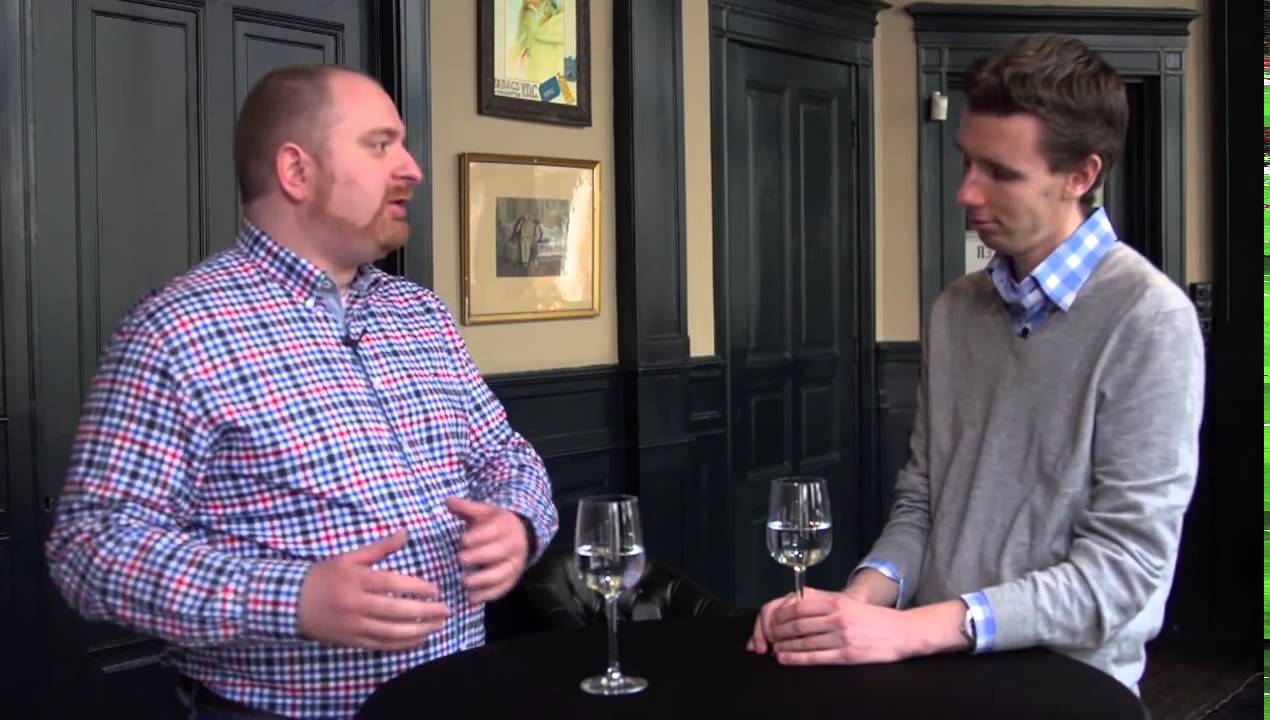
In this interview at the Friends of Search conference, Barry Adams reflects on his recent presentation about Google’s increasing personalization of online experiences and the resulting filter bubbles that limit exposure to diverse viewpoints. He warns that reliance on a single search engine can narrow information consumption and suggests using alternative search engines such as DuckDuckGo, Yandex, Bing, and Blacko, as well as reading news from multiple sources with varied political slants. Adams discusses the responsibility of marketers, noting his love for retargeting’s effectiveness but also its invasive nature, which contributes to an advertising‑mediated worldview where all content is filtered through ads. He highlights the ethical crossroads marketers face in balancing profit with societal impact. The conversation shifts to regional technology adoption, with Adams noting that Northern Ireland and the broader UK lag slightly behind the Netherlands, which is more advanced in embracing new tools. Finally, he looks ahead to the next evolution of search marketing: keywordless search, where Google anticipates user intent and delivers answers before queries are typed, posing challenges for SEO and SEA professionals.
Chapters
Welcome at Friends of Search. I'm joined by Barry Adams this afternoon. He just presented on personalization in search by Google. Barry, how did it go, man?
I think it went well. Nobody heckled me on Twitter. No cheese thrown at my head, so I consider that a success.
Oh yeah, definitely. What did you speak about? Can you give a short summary? Yes.
Basically, it's about how Google is increasingly personalizing our entire online experience, not just in search, and how that has negative impacts for how you consume information online. That you always get confronted with the same information from the same sources, and that can result in what we call a filter bubble, where people just never are exposed to opposing viewpoints, different opinions. And I think that's a bad thing.
And you also gave a couple of examples on how you could prevent that. Could you give a couple for the audience?
Well, the first one, of course, is stop using Google, which is much easier said than done. But for example, when it comes to online search, there's a couple of really good alternatives like Blacko and DuckDuckGo and even Yandex that you can use. And yes, even Bing. In other parts, you should always try to read news from different news sources, not just from one online newspaper every single day, but to try and read news from different sources that might have a different political slant and a different viewpoint. So that if you have an opinion that might not necessarily be right, at least you will make aware of the fact that there are people out there who have different opinions and come from a different background.
99%, Marcus mentioned it earlier in his talk this morning that he is like, that Google has a 99% market share in the Netherlands. Do you think we are, as a search marketing industry or the digital marketing industry in general, can really make a change in how the rest of the world or the rest of the Netherlands will behave on Or we'll use Google.
I think so. I mean, that's how Google started in the first place, because all the geeks started adopting it and told everybody how awesome it is. And I think we, as people who are on the front line of the digital industry, we have a bit of a responsibility to take people to places where they might not know they want to go, but they should be heading. We should be the early adopters of the things that we think are the best way of doing it. And by just keeping using Google and basically standardizing on that platform, we are doing not only ourselves a disservice, we are doing the whole country a disservice. I think there needs to be more variation in the online tools we use, more variation in the types of information we consume. And that can only happen if I start using a different tool and I talk to my mother and I make her change to a different search engine.
Yeah, that's only— in this case, it's only Google. You talked about the variation of tools. tools, but a lot of other tools are also enabling users to do like remarketing, retargeting, search remarketing, retargeting. That's what we all talked about today in a couple of presentations. What do you think about that?
I, you know, as a marketer, I love retargeting because it works really, really well. As a consumer, it freaks me out, and that's something, you know, I'm actually writing a commentary on State of Digital, which should be live by the time you see this video. About exactly that, about our responsibility as marketers when it comes to using these types of technologies. It's very easy to just pick the easy route and go where the money leads and not really think critically about what we have to do. But I think, as marketers, we have to decide for ourselves what we want to do, what kind of world we want to live in. Because we're not just marketers. We're also consumers. We're also just regular people. And by enabling these fairly invasive advertising techniques, We are enabling what I called in my presentation an advertising-mediated worldview, where all the information we consume is filtered through advertising channels before we see it. And that's, I think, a real crossroads in the discipline of marketing, and online marketing in particular. And that's a hard decision we'll have to make for ourselves in the next few years.
Okay. And you also talked about the difference between consumers and we, like the search marketing people. You're from Belfast, you just flew in for this conference. How do you see the difference between the Irish/UK market in comparison to the Netherlands? Are we behind? Are you guys running behind on the Netherlands?
Well, being from— living in Northern Ireland, it's quite obvious Northern Ireland is quite behind the rest of the world, I would say, the rest of the Western world at least. The island of Ireland itself is, I think, a little bit behind the Netherlands in terms of adoption of technology and what they're doing, but not very far. The Netherlands is quite advanced and definitely on a par with the UK. in how they use technology and how they've integrated that into our daily lives. Especially with some of the more recent initiatives done by the big companies here, there's a lot of room for Dutch companies to try different things and roll out new technology on a much larger scale than you would be able to do in a country like Ireland.
Cool. And last question, how do you see search marketing in, like, for next year? Let's say we are going to use this video as a promotional video for probably for next year. What do we need to talk about next year?
I think we'll start to see the hints of what Marcus also talked about as keywordless search, where you don't have to type keywords anymore, where Google will start providing the answers before you even know you have a question. You know, Google Now with those cards is a great example of that. And it's going to be challenging for search engine optimizers and search engine advertisers to ensure they maintain proper visibility for their clients and their brands in a keywordless search scenario. Cool.
Thanks a lot, Barry. That's so far our short summary of Barry's talk on Friends Search. We hope to see you next year.