Delphi CEO Dara Ladjevardian Speaks at GrowthDay Summit
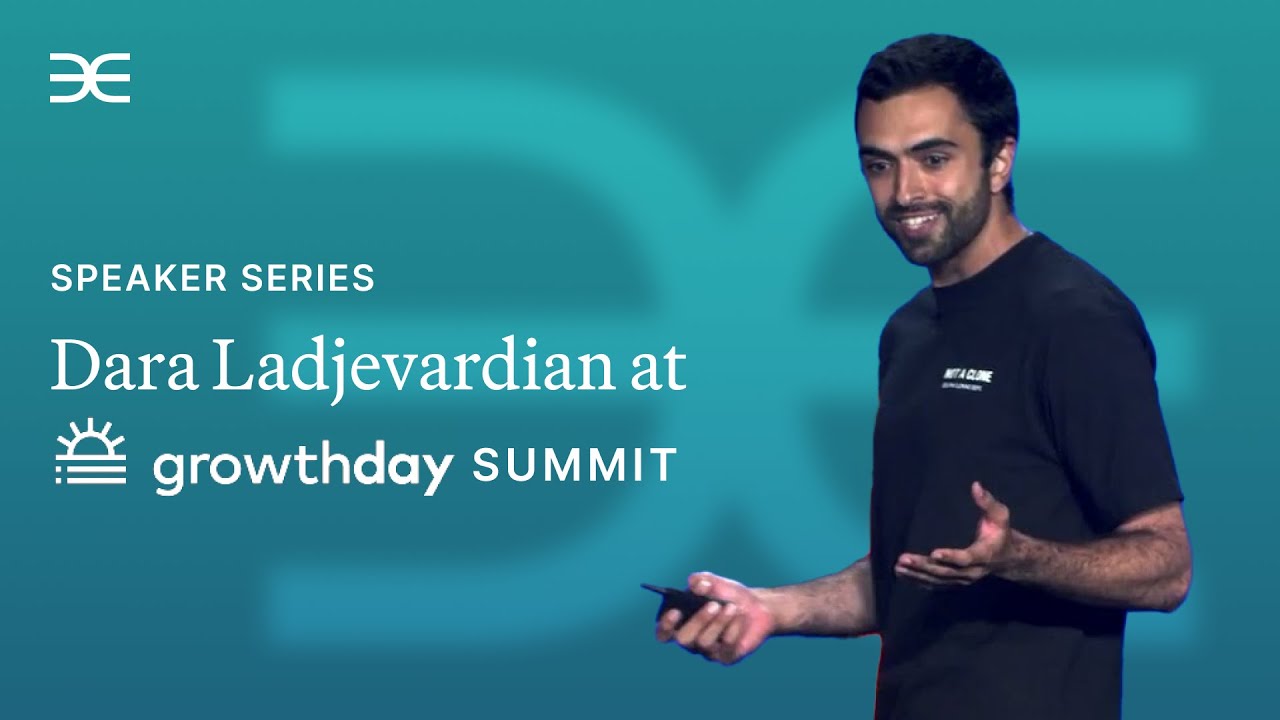
In a live presentation at the GrowthDay Summit, Delphi co‑founder and CEO Dara Ladjevardian introduced Delphi’s digital cloning platform, which creates AI replicas of a person’s voice, video, knowledge, and personality. He argued that a person’s mind is their most unique asset and that traditional content formats cannot scale one‑on‑one interaction. Delphi’s clone lets experts scale premium, personalized coaching, support, and content while they focus on high‑value human interactions. The talk covered the end‑to‑end workflow (goal definition, data ingestion from socials, Notion, YouTube, podcasts, voice/video synthesis, testing, custom instructions, and deployment across web, phone, WhatsApp, Slack, Discord, LMS platforms). Key product features such as clone quality scores, strictness levels, custom guardrails, and real‑time improvement loops were explained. Dara highlighted business use cases (coaching, cybersecurity consulting, health, dating, education) and monetization models (charging per minute, upselling courses, affiliate sales). He addressed safety concerns—hallucinations, liability, data ownership, GDPR/HIPAA compliance, encryption, backups, and de‑identification roadmap. The session included a live demo of Brendan Burchard’s AI clone in multiple languages, followed by an extensive Q&A covering language support, data requirements, integration limits, privacy, liability, and future roadmap items like proactive accountability, listening mode, and multi‑clone management. The overall message: AI clones augment—not replace—human experts, unlocking software‑scale reach while preserving trust and authenticity.
Chapters
I started following this team and I was like, "Ooh, wow, look what they're doing. Oh wait, well, they already figured that out. Oh wait." And they were just like leapfrogging. And so I got on the phone, had a couple of great conversations with the CEO and founder, got getting really, really excited about it and ultimately invested in the company, ultimately advised, brought them up to Napa. To this epic home where I do these incredible retreats and experiences that overlooks all of Napa Valley. You know, we had private chefs and fancy things. And what was cool is like these guys who came up, these engineers, they were kind of like, yeah, let's talk about AI. It was like they're just so hardworking, so excited about it. And anyway, I was texting with my friend there, CEO yesterday, and helped me really get back in and get Brendan AI shipped. Get that out. And he's going to show you some of it. He's going to show you the future of AI. He's going to show how it applies. And this is cutting edge. These guys have been invested in by the big dogs. This guy has it down. He's not like me or in our industry in that way. He's a builder and he's built an incredible company doing this called Delphi AI. And he is so great and he offered to come here and I was like, yes! Who's pumped to be in the Ultra Network now? Ladies and gentlemen, in this house we have the CEO of Delphi, Dara Lajvarian. I'm so excited for you to learn from him, so give him an unbelievable coaching welcome. Dara, let's go baby! Angels want to celebrate. We've been around the world since— All right, who's ready to learn about AI? There we go. Well, my name is Dara, and as Brendan said, I'm the co-founder and CEO of Delphi. And today I'm going to be talking to you about cloning. Not physical cloning, not yet at least. Digital cloning. The most unique thing that we all have as human beings is our mind. It's the collective sum of our experiences, our relationships, what we've learned, our biases and opinions. There is no other version of you. And up until now, the way you express that mind has been limited by time. You can only be in one place at one time. So the number of people you can impact is capped by this limitation. Yes, there are ways to scale yourself. You can write content, newsletters, YouTube videos, podcasts, but it's not personalized to the end user. Can't keep them accountable like a coach can. You can hire teams and train them in your way of thinking, but that loses essence that is you. You can create communities, but ultimately you want to sell your time, and that works for people who can afford it, but like we said earlier, there's a cap to that. Now on the other side, the people who are paying for your time will always pay for your time because the human experience is the premium. That's never gonna change. The other people who don't have that opportunity, what do they do? They read your content, maybe they try to reach out to you on LinkedIn or email you, and they will take notes and try to figure it out on their own. But we all know the best way to learn is one-on-one. It's the premium experience. I can list dozens of educational studies that talk about this. One-on-one is really the best way to learn. So the solution? Delphi allows you to actually clone yourself and scale that one-on-one. Time zones are no longer a barrier. Languages are no longer a barrier. While you are working with the clients that are paying a premium for your time, your clone is out there talking to everyone else, building relationships, making money for you. And this isn't just a generic chatbot. This is you, how you speak, that unique mind we talked about earlier. This is you unlimited. So let's talk about use cases and benefits. So we— because we all know there's a lot of— I love that. There's a lot of AI tools out there that are cool when you look at it, but it's not actually that useful. So we tried to make this useful. Number one, which is the obvious: scale your expertise the same way software can scale. Like I said, one-on-one businesses have been capped, but now one-on-one businesses can reach the scale of software. We have customers who are raising money to build businesses on their clone. A cybersecurity expert building a consulting firm on his clone, a dating coach building a personalized dating product on his clone, a health expert building a personalized nutrition app on his clone. So now you can, you can think of one-on-one as something much larger than just time-constrained. Number 2, save time. I'm sure you guys are tired of getting the same questions over and over again, and you're like, dude, this is on my website, you can just read that there. Well, your clone can handle these repetitive questions so that you can focus on the people that actually move the bar to the next level. It can also provide 24/7 customer support. So instead of hiring overseas customer support teams, your clone can represent you the way you want. Number 3: increase value and trust. When you give people access to your clone, you're giving them access to your mind, and it provides a sense of trust, especially that all responses are cited, so they know it's not generic AI. They know it's coming from you. And the number of times that I've been emailed from someone who has told me, "Hey Dara, I was just chatting with your clone and I'd love to hop on a call." And we get on that call and the conversation is more in depth because they went over all the unimportant details with my clone. Number 4, and personally my favorite, mass personalization. So your clone becomes personalized to the end user as they speak to it. You can send out a mass message to all of your clone users. Let's say you want to ask everyone, "What are your current goals?" And they can respond. And your clone actually responds differently to each one of them based on what it's learned from them in the past. And on top of that, you can leverage analytics around your clone users to personalize outreach to those people. You're learning what these people are interested in, and you can use that to inform how you communicate with them and maybe potential content strategy ideas. Increase your team's effectiveness. So we have several people who have created a clone, and the clone actually helps their team make decisions when they're not available. They also use the clone for content creation. So it's not just— it's not only useful for your audience, it's useful for your team as well. So how do you actually create a clone? You guys want to find out? Let's do it. So first, define your goals. How do you actually want to use this clone? This is important because it will help the system learn how much data is actually needed to make your clone good. For example, if I wanted to create a clone of myself to help people learn more about Delphi, it doesn't need to know about my personal life or my dating life. It can just learn about the product. Alright, next step, collect and upload all your data. You can connect your socials, Notion, YouTube, podcasts, and it creates feeds so that it stays up to date. If you release a new blog post, a new tweet, a new YouTube video, it will automatically keep your clone up to date so you don't have to constantly come back. Next, perfect your voice and face. So we support voice cloning, which means people can call on the phone, and we recently released video cloning. And this is our friend Jay Abraham who recently got his video clone, and you can FaceTime with his clone now. The next is testing. Obviously, you know you the best, so talk to your clone. If you don't like an answer, you can actually improve the response in real time and adjust the tone. And you could also set custom instructions so that your clone can avoid topics that you just don't want it to talk about. For example, we do have some health experts and financial experts, and obviously there's a lot of liability there. So a custom instruction could be like, don't make any stock recommendations. And the clone will abide by that. Next is sharing it and integrating it into different sources. So you can add it to your website, you can give it a phone number, WhatsApp, Slack, Discord, your course. We have integrations with Kajabi, Mighty, Thinkific. Your clone can live where your audience lives. Engagement. So your clone will actually notify you whenever it is asked a question that it doesn't know how to answer, and you can hop into conversation and answer that question yourself, and your clone will improve so you don't have to do it again in the future. You can also send out mass messages to your audience, and like I said before, you can update them on content updates or Just check in on them. This is like mass accountability. Woo! Thank you. Last thing, which I know we all love to talk about, drive revenue. So like I said, there will always be the people who are willing to pay for your time because that is the elite experience. It's why we're all here. Being with humans is great. With your clone, You can provide a more affordable alternative by charging for minutes, messages. You can also include your clone as an upsell to your course, your book, your community, and you can even have your clone sell your products for you in conversation. Last thing is unlocking insights. So you're— there are thousands of conversations, millions of conversations maybe. How do you make sense of all that data? Well, you can ask your clone, "Who are the people I should pay attention to the most? What topics are most interesting to people? What should I write about next?" And this allows you to scale your understanding as your clone scales your availability. So obviously there's a lot of fears in AI, and they're valid. Things are moving very quickly. And we've tried to build around these fears. So what if my clone hallucinates? Step number one, you don't want it saying something that makes you look bad. Well, we spent a lot of time building guardrails around this, and there is actually a clone quality score that will let you know how ready your clone is to represent you. We also have a strictness score so that you can set it that your clone only says things that it's trained on. And I think that's good if you're a health expert or, you know, a financial expert. It's sometimes best to keep it less strict because if you're in a field where personalized advice matters, your clone needs to be able to reason on new situations. You sometimes— people are asking you, "What would you do in my situation?" And your clone needs to be able to reason there. What if it's used inappropriately? Well, like I said, custom instructions can prevent the clone from engaging in certain topics. You can also put a disclaimer, and anyone who uses the product relinquishes you or us from any liability. I know that is a stress for a lot of people, but like I said before, we spent months building guardrails around this, so— You're gonna be good if you have the data. What if my data is misused? Well, your data is yours, period. Any data you use to train your clone is owned by you. It can be deleted at any time. There are so many AI companies these days that are raising money on the promise that they're gonna use our data to train bigger and better models. That sucks, right? We don't like that. Data ownership is super important for us, and it will never be used outside of your clone. What if you're impersonated? We only let people clone themselves, and I manually verify every single person that goes through. Eventually that's not going to scale, but for now it works. What if my clone makes me seem inauthentic? And I think the mental model that really works for a clone is that similar to how a book is an artifact of your mind, it's a way of your— of expressing your thoughts, or a course, a clone is an artifact of your mind that responds. It's a way that gives people the opportunity to experience you. And like I said, it ends up augmenting relationships because they build trust with you, and it makes the one-on-one that much more valuable. So, AI spins out content infinitely. And when there is abundance, what usually happens afterwards? There will continue to be a premium for human-verified content. People aren't going to be tired of ChatGPT-generated content, which is why I say that having a clone will most likely increase the value of your one-on-one time because your clone gives you the scale of AI. And a good analogy I like to use: before AI, we had Wikipedia. And Wikipedia arguably has documented all of human knowledge. Yeah, we still read books, we still talk to experts, we still get coaching, we still watch YouTube videos, we still listen to podcasts. What does that tell you? Humans prefer humans. They want to learn from people who have experiences, who have that unique thing that we call a mind. So humans plus AI will always be better than AI because it has that layer of trust and authenticity that AI and ChatGPT doesn't have on its own. So do you know what they say about live demos? They say not to do them, but I'm feeling a little risky. What do you guys think? All right. So live demos plus shaky Wi-Fi, we're going to see how it goes. So we're going to talk to my friend Brendan. Let's give him a call. And notice, you can call him in any language. So you want to hear Brendan talking in Japanese? We can do that after. Hey, it's Brendan Burchard AI. What's on your mind today? What do you want to improve or learn? Hey Brendan, I am speaking in front of a crowd of very intelligent and successful people. I'm almost getting a little nervous. Can you help me out here? Absolutely, Dara. First, remember that nerves are natural, even for the most experienced speakers. The key is preparation and mindset. Focus on delivering value to your audience. They're there to learn from you. So shift your attention from your nerves to serving them. One tactic I use is to remind myself that it's not about me. It's about the message and the impact it can have. Take a deep breath, visualize a successful outcome, and connect with your audience from the heart. When you speak with authenticity and passion, people will resonate with you. What specific part of your presentation are you most nervous about? Pretty good advice. What specific part of your presentation are you nervous about? Follow-up. Go ahead. Follow-up questions. I just had— I knew they were like, is he really doing it? Okay, go ahead, Chip. Okay. So we just launched video calling and it is It's still a bit uncanny, but if you guys have been following the speed and pace of AI, you know how fast this stuff improves. When we first launched voice calling, that took 5 seconds for the thing to respond. And so I think video is going to have the same slope of improvement, but let's try it out. Hey, it's Brendan Burchard AI. What's on your mind today? What do you want to improve or learn? It's Brendan. Let's ask him a question. Oof. Let's ask him a question. Let's ask him a question. All right, Brendon, I want to learn how to exude the high energy that you do every day. How can I do that? Absolutely. Dara, high energy is something you can cultivate with intention and practice. One of the key things I focus on is having an energy vision. This means being clear about the energy you want to bring to your life daily. For instance, I want to be able to serve on stage for hours, be mentally sharp, and still have energy for my family and friends at the end of the day. This vision drives my habits and routines. First, it's crucial to take care of your physical health. I follow a strict routine that includes regular workouts, a balanced diet, and plenty of sleep. I even lay on the floor multiple times a day to realign my back and hips, and practice specific breathing patterns to maintain my energy levels. Second, mental and emotional health are just as important. Journaling and planning in the Growth Day app helps me stay aligned with my goals and intentions. Self-awareness is key. Knowing what drains your energy and what replenishes it makes a huge difference. Lastly, I always remind myself that a power plant doesn't have energy, it generates energy. You have to actively generate the energy you want to experience. This could mean taking short breaks to refresh your mind, doing light physical activities, or even just putting a big smile on your face to boost your mood. What specific areas of your life do you think could benefit from a higher energy level? Let's dive into that. To generate high energy daily, you need to integrate specific habits and practices into your routine. First, start with— All right. Went on a bit long there. But I may apply that advice. I may try to apply that advice. So as you can see, having a clone, it's not the real you. I prefer being with Brendan in person. But have I called this clone some days when I feel like I really need personalized advice? I have. And it's pretty good. So I'll end it on this. What we're trying to do is allow you to scale one-on-one, and this doesn't mean replacing you. This is augmenting you. This allows you to focus on the people who have paid for your time while your clone reaches more people and gets your word and voice out there. I don't know if there's time for questions, or I don't know how we would do questions. But if someone wants to yell out a question, that works. And this is also a QR code that will take you directly to my clone if you have questions too. So you said that it can learn, right? Can it learn like in Slack? I have a mind embedded in Slack. I love my website, by the way. Can it learn in Slack as well? It— you mean becomes more personalized to that Slack channel? Yes. Yes. Repeat the question, please. She asked if her clone is in Slack, if it becomes more personalized to the Slack channel, and that is true. I have a question, Dara. Sure. So I know something you didn't talk about, but I've heard you talk about it on a separate webinar, is that let's say maybe you're not ready to deploy your clone and, you know, sell it to the world, like, but you, you want to take advantage And I know that you've suggested before you could use your clone to learn information. Oh yes. From another expert. So I'd love to hear you talk on that a little bit because I got so excited about that. I went, oh my gosh, I am going to have some of my favorite ADHD thought leaders and experts and I'm going to connect their YouTube channel to my clone, and I knew I was safe because I wasn't selling it. It was just for me. And I realized pretty quick, oh my gosh, what have I done? Because every video they'd ever created was being uploaded to my clone. And I kind of, I kind of went, whoa, whoa, whoa. How is this supposed to go? So I was wondering if you could just speak on that a little bit, because that's an exciting way to use a clone. Yeah, I think the one thing to touch on there is Data ownership is super important. So that's really only possible for data that is publicly available. And I think the way to think about that is I had a book on my shelf and it had been sitting there for a pretty long time. And so I was like, am I going to get to this? Why don't I just give it to my clone and he can tell me which parts I would find really interesting? And that worked. That worked. I mean, your clone can learn as fast as you, and it will give you the insights that would most resonate with you, not just generic summarizations. So for social media support, like for messaging, prospecting clients, finding your ideal client, does it work for that type of thing? Because I'm finding that I am spending an enormous amount of time combing through people on social media, reaching out, reaching out to new people, trying to build that relationship, have there be an authentic connection, and then find if if they're a good fit for my offer. Would this help with that? Do you mean in like Instagram DMs or LinkedIn DMs or like Instagram, Facebook? Sure, we don't have direct integrations with these platforms yet because integrating with the big tech companies is not easy, but it is on our roadmap. People do use their clone to generate content on socials, but it doesn't automate your socials right now. Thank you. Can you pass that down to her, please? Hi, Dara. Ooh. Hey. My name is Kimberly Crow, and I just wanted to say I have a Delphi clone. And it rocks. I love to hear that. Thank you. I use it. First, I sent it out in WhatsApp to a whole bunch of groups that I love and know and love and trust me. And I said, hey, could you just bang on this thing for a while and find out like what kind of answers you're getting? That was super helpful. Then I put it on my website as the chat at the bottom of your website. I don't have a live person to answer chat 24/7. The clone does that for me. But what I did not realize is that it was going to be an information gathering machine. Mm-hmm. And it does all of my market research for me. So the questions that it's asking were not questions I had been routinely answering for my audience. So I just wanted to be a testimonial. If anybody wants to talk to me about it afterwards, my name's Kimberly. I'll be happy to be a testimonial for you. Thank you, Kimberly. It's awesome. Just one more thing. I went away for— some of you know I travel full-time. I went away for the summer. I did not answer any email. My clone did it all for me. And on my out-of-office— case study right there— out of my out-of-office, had a QR code like that. It said, I'm out, but if you want to have some fun, come play with my clone. There we go. Thank you, Kimberly. One quick note on what Kimberly just said is that you can create multiple versions of your clone that have access to different datasets. So for example, you may want to create an instance that is public-facing, but you don't want to give it the good stuff. You want to save that version of your clone for paid customers. So you can have one for your team, have one for, your public-facing customers, have one for your private customers, and maybe one day have one for your grandchildren or great-grandchildren. I teach some college classes. I teach some college classes. Are there any restrictions if I get that? Uh, could I connect it to my class at the college and they can connect into that as me as the professor and ask questions when I'm not available? Yeah. I mean, I think we have a lot of professors using it, 24/7 office hours, not with TA, but with the actual professor. Yeah. I'll get it. I got a question. So you kind of answered it, but— So I have played with this as well and put in my book and put in a few of my coaching stuff, but I have different businesses. So do I set up a different clone for each business? Like I have one that focuses on business exiting. I have a love business book type thing. So there's so many multiple things. Do I just have that one clone do everything, or do— or like even my team, I have team members that I interact with as well. Yeah, good question. So if it's one identity, so if that clone is you, then it would just be one clone and each of those businesses or use cases would just be the instances. Hi, my name is Melissa. I'm from Vermont. You talked about the information as being mine if I was to have a clone. Mm-hmm. And yet my clone can learn information from other people, and then is that information now mine? Well, public information. If there is a website that you want to use and the data can be cited to the original owner, the more— the more— the point I was trying to make is your clone is yours. So we don't take your data and use it anywhere in our system. It is a product that you own. And it's an important point because in case a lot of you don't know, this is what the majority of AI companies do these days. This is why they have crazy valuations like I think a company this week just raised $1 billion at a $5 billion valuation pre-product because their whole sell is collecting data and training bigger models, which is not the way. It is not the way. These models are going to get better over time. And I think having a model for you is what's going to be really important because then you can get access to it and no one else can. Hi, from the penthouse. Up here at the penthouse. Hi, good evening, or good afternoon. Thank you for sharing, first of all. My question is, how much is required, how much data is required to effectively clone for it to be useful and helpful and not become stale? Good question. So when you onboard, you define those goals, how you want to use the clone, and this calibrates that clone quality score that I mentioned. And so if you just want to use your clone to answer questions about your company, the threshold for the amount of data needed to make it useful is lower versus if you want a clone to represent you in every facet of your life. That's going to take a bit longer to put together, but we have that score. And something that we're actually releasing in a couple of weeks is interview mode where your clone can actually ask you questions to make itself better so it incentivizes that data entry. I have a question. Well, I'm sorry. Sorry. I have all this stuff on my lap. All right. So my question is, we were wondering, how do you get your book from the shelf into the AI? We've tried, I mean, I tried like to download one of my Kindle books into it and I couldn't. But I also think that you've got to show people that haven't seen it how it goes to a podcast and all of that. I just think that that's a missed opportunity. We could, we could. Direct integrations with podcasts. You can just search your podcast, direct integrations with YouTube. On the book thing, we kind of rely on you to have the PDF of your book, but we actually are in talks with publishers to find a way to do this legally with the consent of the author and the publisher. Right here. Hey, I'm Sarah. I'm from Nova Scotia, Canada. Hey. Hey. So I work in the health field, and I'm wondering if you can talk a little bit more about how it's being used in there, and then also how are people kind of covering the liability side? How far do you take it? Yeah. Sure. Yeah, great question. So we have a couple of health experts, and a couple of things that give them ease and less stress. One is the disclaimer, obviously. Two is when someone logs into using your clone, They're agreeing to a terms of service that we put together that relinquishes both you and us from any liability. And then 3, the strictness score. You, as a health expert, you probably want your clone at the highest strictness level, and then your clone will not say anything it is not trained on. It will follow any custom instructions that you've given it. So there are definitely ways to create guardrails around that experience. Thanks, Tara. This is so exciting. And about once a month I get some kind of email saying, oh, there was a data breach. Can you tell me a little bit about the guardrails and how to protect ourselves there? From us? From our data on this platform getting breached. Oh, just in general. Well, if we upload all of our IP into a clone, right, and somehow your servers get hacked into, okay, now what happens? Yeah, very fair question. I mean, we store all of our data in an encrypted database through AWS, so it already has the highest level of security that any company could have right now, and We have backups in case it's all deleted and your clone gets deleted, but we have the level of security that any of the top tech companies would have, and it's almost more important for us than them because, like you said, it is our IP. So it is definitely a top priority for us to making it very private and safe, and it will continue to be. There are a lot of hands up. I'm sorry. I'm just going to point. Stand up. Stand up. OK. Stand up. OK. Oh, no. Oh, I know what I was going to ask. OK, sorry. 40-year-old brain. OK. OK, question is, I've got like 2.5 million words uploaded into mine, right? My question is, when somebody asks it a question, Does it fill in the blanks by itself with any filler words, or is it really all me? It depends on the strictness score. Okay. Again, if you want to make it more personalized to the user, a higher strictness score usually works better. Is what we'll try to do, we'll say, hey Brendan, what would you do in my situation? And Brendan has never experienced my situation before. What it's going to try to do is take its training data and reason on what he might say in new situations. And some people may, may not want that. They just want to be super strict. So that would be that way to control it. Okay. Thank you, sir. Hey, Dar, appreciate the information. So quick question for you. So when you mentioned, uh, your stuff lives in AWS, I'm gonna ask you some questions, hopefully you may not know, but when you're doing that, are your SLA agreements keeping all data within the US borders? Is it going overseas? How's that work? In the US borders. Okay, and because it's asking things like your name and stuff like that, managing things like GDPR, the privacy laws of all the different states, PPI information, stuff like that, how are you guys managing that? And so how are you managing that? Yeah, we have a lot of international clients, and I don't think we've done everything to be fully compliant with GDPR, but we are in the process. Okay, and then the last question I have is, if we're using it, because you mentioned the backups and stuff like that, one of the challenges we have within the technology community is if we have to go and purge any of that information, it's one's identifying it, purging it out, but then also going back to the backups if they're in a granular state. Do we have that ability to do that yet? You mean de-identifying data? Yeah, if they want, if someone says, hey, from a privacy concern, I need you to get that data out of your system. And some of these may not be known because it's just such a groundbreaking thing. Yeah. So kudos for that because you're doing an awesome job. I appreciate it. Yeah. So if you want to remove data, the best you can do is just delete that document. We can't go into that document and de-identify specific data, though it is on our roadmap. Because we have some coaches who want to upload their coaching transcriptions, and we already separate things by voice, but they also want to de-identify any mention of people's names to secure their privacy. So whatever you train your clone on, it can talk about right now, but the de-identification thing is super important because we also want to allow people to train their clone on their text messages, but it's obviously a lot of private— private data in your text messages. So that will be coming soon. Hi. Hi. I'm a physician coach. My name is Nora Vasquez. I have the clone. I was curious. I coach burned-out healthcare professionals. And so if there's any indication, like they ask a question about self-harm or suicide or anything like that in the mental health sector, do we get alerted to that? What are the safeguards? And then also if you could speak on, like, if we have a VA, how do we integrate the clone so that the VA can can create content for us? Yeah, absolutely. Great question. We do have an alerting feature, so you can say whenever someone talks about harming themselves, your clone will alert you. For me, I have my clone alert me whenever a customer is angry with the product, so I can reach out to them, uh, which, if that's any of you, thank you for your patience. Um, and your VA, you can add people as collaborators to your clone so they can get in there and benefit from from it as well. Back here, back. Sure. My name is Carlos. I'm coming from Bogotá, Colombia. Hi. South America. So I've got 3 questions. First of all, how about other languages? How is it trained? What model do you use in order to manage all other languages? That would be first. The second one would be, We are trained on what we know, right? And we have studied some other people like Brendan and some other stuff. Are we liable for training the bot with that kind of information basically because we're profiting about based on that data? And I know it's a lot, but the third one would be like, how do you manage international database? Basically, because we're using some other data around the world, you know? Sure, all good questions. On the first question— what was the first question? Language. Language, okay, yeah, we have a multimodal architecture. We do not want to stick to one model provider because that provides too much risk, and you'd be surprised that the act of creating a system that represents your mind is actually more about how the data is structured than just training a model on itself is when you train a model, there's no explainability. You don't know where anything comes from. It's just a full black box. So we're using Mixtral, Llama, a bunch of open source models there. And the second question is a great question. It's— I can't remember the question, but I remember thinking it was great. Yes. If we are— sorry, if we are liable because we are profiting from other people's content. Yes, yes, great question. And this is something we've thought about a lot, because like, if you think about it, we're all amalgamations of things we've read over time. No one is that original, but I think the way we curate our experiences and convey them, that's what's original. And so, like I said, If you want to upload data from other sources, it must be public. You must actually cite the author, and the clone will cite the author in conversation. If you want to use something that's private, what probably makes more sense is that you use maybe your notes on it. For example, when I read a book, I have a Notion page of notes of that book, and that's my interpretation of that book. And so I can upload it to my clone. And international security. We are fully international. We have clones in Australia, Japan, Norway. But right now data is stored in our US AWS instance. Hey, thank you, Dara, so much. This has been very informative and very exciting. I couldn't help but immediately think of my relationship with my wife and if I could clone myself just for a version for her. But aside of that, you mentioned your roadmap a couple times. I'm very curious to see, or hear, what the next 3, 5, 10 years looks like for Delphi and what that could mean for everybody here. Yeah, great question. And it's funny you said that initial thing, Right before this, I got a text from one of our customers who said, "Hey Daria, I don't know if this is a use case, but I created a clone for my wife and she's liking it a lot." So, could be ahead of your time. Roadmap. So, the best thing of having a one-on-one relationship is the accountability. A lot of people don't want to have to do it on their own. And so clone proactivity is something we're working on right now. And the idea that your clone can actually keep someone accountable, follow up with them, check in on them, send reminders. And that way with your clone, you're not just selling information anymore, you're selling guidance. And that's what consumers want. When you buy a book, you're buying the promise to get better at a specific subject. Same with a course. But as we all know, attention spans are not as great as they used to be. TikTok and Reels kind of ruined that. So a clone is something that kind of meets that middle ground where you're not sitting there watching 20 hours of corn— course content, you're talking to a clone that is telling you what you need to know to achieve your goals. So I think that's number one for us, the clone proactivity, and just continuing to improve the product. Cloning yourself is, is not easy. Hi, yes, thank you so much for your presentation. It's been amazing. I have a question. My name's Starlee Murray, by the way. Thank you. So what about, is it possible to have a clone that watches a live video footage for you? Like, I caretake for an 85-year-old mom and literally built my coaching program from her bedside from the last year and a half. After the last Brendan coaching event. But I'm here now, and I'm checking my phone constantly to make sure she didn't fall out of her bed and that she's okay and all of that. So I was just curious about that. Yeah, great question. I link to the roadmap. Not in our near-term roadmap, but it is in our roadmap, is this idea of listening mode. You know, send your clone out to listen, interpret, give you a follow-up on what actually happened. This is especially relevant to some of our customers who want to send their clones to all the Zoom meetings they don't want to go to, and then their clone can be like, "Hey, this is what you missed, and this is what I answered." So definitely think about that. Thank you. I'm Christine. Two-part question: How long does it take to train it, and how much information Does it need to really be useful? Yeah, I mean, the, the large— the longest part of creating a clone is collecting the data. Once you have all your data in one place, it could take anywhere from an hour to a day, just depending on how much you have. And the amount of data you need is just fully based on the use case that you plan to use it for. Okay. So I was looking at— I went through that and you've got different levels. At different levels are able to be trained because it takes more information depending on which level clone you get, or did I misunderstand that in looking at your website? Different levels. So the tiers are just based on usage and how much training data you have. But the amount of training data is more just in the amount of content you have. Like Brendan has so much content. His clone has a lot of data. My clone doesn't have that much data. I don't have that much content right now. Okay. Thank you so much. Hi, Dara, great presentation. Rosie Zelinskis here. You know, social media has different algorithms, and if I were to put the Delphi algorithm in my social media, is the LinkedIn algorithm gonna bury that post? Because you posted a link, or am I understanding? Yes, so if I do right now, if I put up a post and I put it like my external link with within the post, typically LinkedIn buries it. So I have to take that link and put it in the comments so that the algorithm doesn't bury my posts. And I've proven it over and over and over. Okay, so if I put my— the Delphi link, is the algorithm going to bury it? To be honest, I'm not that familiar with the LinkedIn algorithm, but LinkedIn does have this cool feature where you can add a custom button to your profile. And so I've added a button It says like, "Talk to my clone." And so if people come to my profile, they can start asking questions. Thank you. Thanks. Hi, Dara. Thank you so much. Hi. Hi. What you said before about the crediting the author or the expert, is that an honor system? Right now, it is. It is. We can't track it, but this is why we are in conversations with publishers so that we can track it. Because this is something that publishers obviously care about a lot. This is what authors care about a lot. So it is an honor system. Got it. Thank you. It's good training. I just want to say, I just wanted to— my name's Lynette, and I wanted to know about HIPAA, because I'm a body worker, so any information I'm collecting from my clients and so forth. Right. We are not HIPAA compliant right now. It is on our roadmap, but as a startup, it's all about priorities. It's gonna happen eventually. User data is stored privately though, encrypted as well, and you have the ability to anonymize all conversations. So that you can say with confidence, "Hey, anything you send to my clone, I can't even see." That's an option. What if I'm trying to gather information like the check-ins and stuff? Like, with Bodywork, you'd say, "Hey, what was the effects from our last session? What differences?" And that's where I would need the feedback. Right, then you wouldn't want it anonymous. It's an option if you want to give people a tool that they can use without feeling like anyone's looking at their conversation. Yeah. Because you'd be surprised, a lot of people, the reason they like a clone is that they're not embarrassed to ask questions that they would normally be embarrassed to ask a real person. I guess I'm just trying to think about how I would set that up so that I could ask them questions in between sessions, gather data, and have it be, you know, safe with their— with HIPAA. It is definitely safe and secure, but I cannot say it is HIPAA compliant right now because it's We haven't gone through the process yet. Okay, thank you. Last question. Cool. Perfect. Well, joyful Wednesday to you, Don. I want to take a minute and just say it's brilliant. Like, wow, that's so cool. Thank you. Yeah, really, like, give it up to him, man. Wow. No wonder Brendan brought you on. Your amazing product. I mean, I haven't registered for a few things and I think God was saying please wait, that's too fake. Now I know why, 'cause I gotta enroll into this. My question is very different, it's very personal. You are a young guy who is successful. You can do anything you want. Why did you get into this? It's a good question. So I've been working in the AI space for about 8 years now, and I started my first AI-based company in 2021. And I was a solo founder, and many of you guys know starting a business on your own the first time is very lonely, isolating, it's terrifying. And at the time, I didn't really have any mentors or advisors or coaches, and I was reading a book about my grandfather who was a very successful entrepreneur in Iran before the revolution. And he had had a stroke 2 years prior, so I couldn't really talk to him or get his advice, but There was so much in the book that resonated with me and like how I wanted to be as an entrepreneur. I wanted to get his advice. And so I was leveraging the technology that I was using for the first startup to create the first clone, which is of my grandpa. And it was not only therapeutic but useful. And like the useful thing is I wasn't asking my grandpa, what was the first business you started? I was asking him, what would you do in my situation? With your life and the principles that you have, how would you handle this problem that I have right now? And kind of went down the rabbit hole, and I became super interested, interested in this idea of allowing people to learn one-on-one. It's not fully democratized to everyone. On the other side, allowing people to scale themselves beyond the constraints of time, either time while they're alive and maybe time after they're gone. ¡Gracias! Thank you. I think that is all we have for questions, but I will be hanging around. You guys also have the link to my clone, and I'm pretty responsive to my emails as well. So please let me know if you have any questions, and join the next content medium. You know, we had cave drawings, we had typewriters, books, podcasts, YouTube. Now we have something that is personalized, interactive, and soon can keep people accountable. Thank you. Let's go, Dora! So good! Thank you. This guy. So good!