Talkin' Sales in a Pickup Truck: How Ben Braverman grew Flexport to a $2B run rate
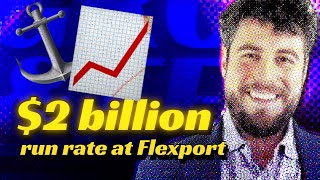
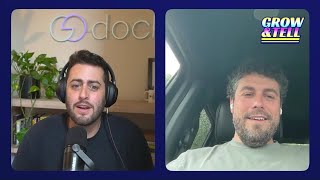
This content was created by Ben Braverman. This content was uploaded by Ben Braverman. This is a YouTube podcast episode titled "Talkin' Sales in a Pickup Truck: How Ben Braverman grew Flexport to a $2B run rate" (published/created 2023-07-24). It's an English interview from the Grow and Tell show, hosted by Alex Krakoff with Ben Braverman as the guest (calling in from a pickup truck in Wyoming). The conversation covers Ben's experience as Flexport's first sales hire/CRO (growing revenue to ~$2B run rate and helping reach an $8B valuation), how Flexport moved from customs brokerage to end-to-end logistics, early product and go-to-market strategy (targeting long-tail e-commerce sellers), building brand and outbound/SDR motions, moving upmarket to enterprise, the squad model that pairs sales and operations, hiring and ramping sales reps, and lessons on sales leadership and scaling ops-heavy businesses. The metadata indicates YouTube as the content type and the episode context (Grow and Tell / sales and growth discussion).
Chapters
You have to be delusional to do this job well. Like, the idea that I would visit some of these customers 10 or 15 or 20 times over the course of several years while their spend just didn't justify it. You can look really dumb doing things like that. You can look really dumb making these kinds of bets. But now, like, you know, Flexport's a 9-year-old company, something like that, and the bets are paying off.
Ben Braverman was the first sales hire and chief revenue officer of Flexport for 6 years and the chief customer officer for another 2. Ben led sales at Flexport from zero revenue to over $2 billion. He's also our first-ever guest to call in from a pickup truck in Wyoming. This is Grow and Tell, the show where we tell the growth stories of the revenue leaders behind successful companies. I'm your host, Alex Krakoff.
Grow and Tell. Grow and Tell.
Flexport is a freight forwarder. They help book, track, and deliver freight shipments. So not only did Flexport sales team have to cope with the usual challenges of growing a SaaS company, they also had to handle the real-world logistical challenges that come from working with factories, customs, and jumbo jets. After leading Flexport to an $8 billion valuation, Ben shifted to the role of venture capitalist running Flexport's VC fund. That's how I became friends with Ben. Flexport is an investor in my company, Doc. Recently, Ben started a new chapter as the Chief Business Officer of Hadrian, a space and defense manufacturing company. Today, Ben and I talk about why it's better to solve an entire problem for your customers rather than a subset of a problem, how Flexport hired and ramped up new sellers in a complicated industry, and what the future of space manufacturing looks like at Hadrian. I hope you enjoyed today's episode. Hey, Ben, super excited to talk with you today. What are you doing? You're calling in from a car. I think this is the first podcast we've recorded from, from a car. Where are you at?
Yeah, man, this is a Ford truck. It was made for work, and so I'm working from it. No, it's awesome to be here. Huge fan of yours and the company, obviously very tiny, tiny investor. So yeah, thrilled to be here. Thank you for having me.
Yeah, I guess this is just what conference calls look like in Wyoming now. You don't have meeting rooms, you just do it from pickup trucks is what I imagined.
Yeah, correct. I'm trying to build a whole brand. TJ from PillPack is now a partner at Matrix, and he's like the leading mountain man startup guy. I'm trying to be the number 2. I got— there's still a number 2 slot open.
I love it. You know, next podcast you'll put on a cowboy hat, cowboy boots, and it'll really— you'll be really into it. But yeah, I'd love to start the conversation with kind of your decision to join Flexport, because that's what I mainly want to talk about today. Like, You had a couple of years of experience before Flexport, so I'm curious, like, how did you find out about the company and what made you take a chance on kind of joining an early-stage startup?
This is why it's so important, young people listening, you have to have a dog. If you don't have a dog, I don't know how you're going to find any success in this life, because I met Ryan Peterson, the founder of Flexport, at the Dubose Dog Park in San Francisco. If you don't have a dog, you have no reason to be at the Dubose Dog Park. Therefore, you will not see a founder wearing a YC hoodie and walk up to them and say, what's up, man? I work at a YC company. How you doing? And that moment of serendipity won't happen to you. So go out right now and get a dog. I met Ryan really at the dog park. It turned out it was his brother's hoodie. His brother, another amazing founder, was at YC prior to Flexport. This is before Flexport was a company. But I met Ryan. And he was obsessed with this thing that was going to become Flexport. And he told me, like, you wouldn't believe it. There's $50 billion companies with basically no website. Many of them were built by acquisition. So when you go to their customer login, it's like 12 different logins for each customer. So like, depending on what they want, they have to log in 12 times. He's like, you wouldn't believe it. And the truth, the truth was I didn't believe it. I was like, no, it sounds too good to be true. It couldn't be that there was such a big market that the internet hadn't gotten to. And then, you know, I spent a year just like walking here, you know, literally walking our dogs together. And it became clear that Ryan was right. Like, this was a massive market that through some combination of complexity, regulation, and like maybe just like the self-preservation instincts of the people in the industry, technology had not come in yet. And I'd never seen an opportunity that was so obvious. So I both invested and begged for a job. Ultimately, Ryan acquiesced and we were off to the races.
And can you set the stage a little bit for like what Flexport was like when you joined? Because I think you were the first, fifth employee, first sales hire or something like that. And was there even a working product? Was there a team? Yeah. Do you remember what it was like?
Yeah. I mean, so there was— the product was basically there was a website there was no actual customer login yet. We were only a customs broker. So Flexport was not actually moving cargo yet. We were only handling the regulatory filings associated with moving cargo. And one of my observations, or maybe it's because I'm lazy, I didn't want to build a business in a narrow space. I sort of, in the first couple of weeks, went to Ryan and said, look, you know, you've been working on getting this thing called an NVO's DC license. It turns out this is not a nice to have, it's a must have. Like customers don't want us just to handle the regulatory filing, they want an end-to-end solution. And by the way, I think this is applicable to like every business. In general, customers want you to solve a whole problem and they will pay you way more to solve a whole problem. And the market is way bigger for solving a whole problem than it is for solving a subset of a problem. And so in our case, you know, if you were an Amazon seller whose business was taking off, you might have found Flexport because you were having a regulatory problem, because your factory had shipped some cargo, it was stuck at the port, and you found one of the ads that Ryan was running. But ultimately, on your next shipment, you didn't want to have your factory ship it and have it stuck in the port again. You wanted someone who could just handle the problem for you end to end. So pretty quickly, we went from being just a customs broker to being licensed to do the full end-to-end service. And that's sort of when the business really exploded. There was fewer than 10 of us, certainly. And the team was like, you know, really ragtag. It was like on the surface, other than Ryan, who was like very shiny and like, you know, Columbia Business School, import genius, which had printed a ton of cash. The rest of us were like the Bad News Bears. You know, it was a couple of people who were from industry, like, you know, think folks in their 50s as like the first start of employees, non-technical. But you needed these folks because they knew how the industry worked. And then actually, in the case of a couple of them, they were essential to our regulatory standing. You know, it was me who was like the most unproven sales leader in the history of companies that got this big, probably. And you had a couple of like, you had Anthony Chen, who was a recent college grad, worked a couple of years in investment banking, and then you had one or two software engineers and that was it. And so it was sort of like improbable that we ended up being this thing that got to what it became.
And so you had zero experience in freight forwarding and you and Flexport were sort of these software experts who were trying to sell into like the super old school industries. Like, how did you think about trying to break into those industries and how did you yourself like learn about freight forwarding?
Honestly, I have one man to thank. It's a Danish gentleman by the name of Michael Backboll. Michael Backboll, his retirement job, or so he thought, because he's now been working on it for almost 10 years. He always said he was like, he started at Flexport as sort of the catch-all guy who understood freight forwarding. He had been the GM of sort of a mid-sized forwarder. Somehow he'd found Ryan Peterson and was captivated like the rest of us. And he agreed to just be sort of like the guy who knew how it all worked. And so my first couple of weeks were literally sitting at a whiteboard with Michael. And this is like a super cool guy with a ponytail, like Danish guy in his 60s, rides a Harley. He like whiteboarded for me, like, you know, John Nash, Beautiful Mind style, what global transportation looks like end to end and every microprocess that has to happen for the end-to-end process to actually work. It ended up being like literally 40 feet of whiteboard, just end to end across the whole wall of a loft office in San Francisco. And it stayed up with his, this crazy scroll he wrote stayed up on the board for the first year. And it's unbelievable what you can learn from someone if they're willing just to tell you all the secrets that they've learned over their whole career. Like Jeff Bezos has this quote that like, he didn't have to start off that smart, but he spent like 30 years having all the smartest people in the world give him their best 5 minutes. And so now he's really smart. And I feel like we had sort of a similar situation where like, we got 40 years of Michael Backbowl's experience. I got it condensed into his best 2 weeks. And as a result, like, I kind of knew the industry.
And then so you have this like general understanding of the industry. And so then how did you apply that to these early sales conversations? Because I assume like the product didn't do everything on that 40-foot whiteboard. And so, yeah, like what did those early sales conversations look like? And was it sort of like customers were asking for specific features and you're running back to the product team to go build it? Or can you kind of take us into the room of those early calls?
Yeah, the early calls, you know, it's so funny. There's so many blessings we had at Flexport that I didn't recognize at the time. One of our many blessings was that we had this insane long tail of potential customers. E-com was exploding. The whole notion of being like a third-party reseller on Amazon was exploding. I think like there was a million third-party Amazon sellers that were doing at least $1 million a year in sales. Huge percentage of them were importing or exporting goods depending on how you look at it, depending on if they're in China or in the US on their residency. It was just a massive, massive market. And so we just knew we had to be volume players initially. Like, the world was too complicated. You can't go after Apple on day one, but we could just go after a huge list of these Amazon sellers. And that was really like, it got us in the habit of winning quickly. Like it felt like, 'cause we were talking to people who literally couldn't get service from the incumbent vendors. Like if you're an incumbent $50 billion freight forwarder, your company's built around serving the biggest, you know, the biggest conglomerates in the world. You have no time or patience for a first-time importer. And guess what? There's now a million of those folks to go target. So like we started just fishing in the easiest, most well-stocked pond imaginable. And even though, like, if you look at the operational CAC, and I don't mean the cost to acquire from a sales perspective, but the cost to acquire from a, hey, here's how freight forwarding works. Oh no, you have the wrong document. Oh no, you uploaded your tax ID wrong. Like, these people just need, at least at this point 10 years ago, need an incredible amount of handholding. If you look at the operational CAC of serving them, you're not building the best business in the world, but it got us in the habit quickly of like, onboarding customers, learning how to serve them. The stakes were pretty low. That was how we learned and cut our teeth. And then by the second year, it's so funny, this is like, it's amazing you can build a company on an observation so simple. We had the observation that is the customer's core problem is they don't feel in control. It's like from the moment you pay your factory to the moment your stuff arrives and, you know, for sale in the US or gets to your customer in the US, it can be months. And that's kind of nightmarish for a small business owner. So we were like, okay, let's look, let's give them a map. Let's put a map where it has their factory on one side and has the destination on the other. And let's show them exactly where their stuff is. So even if they can't physically touch it, they know where their possessions are. Like, you know, in many cases, like our customers had put their own money into these small businesses. It was material to them where this stuff was. And building this visual just totally changed the customer's ability to feel like they were in control of the problem. And the combination of that plus just like being willing to serve these smaller customers, you know, allowed us to grow at sort of a ridiculous rate.
Yeah, it's interesting. It sounds like that was sort of the aha moment for Flexport, at least in the early days, when I was like, okay, there's this map. We just give them— we just show them where their stuff is. And then that's when they start to get to understand, okay, how Flexport is so powerful. And then you can kind of go in and then just build all the products that actually happen across that map and moving things from, from, from China to the US or whatever, wherever it's coming from.
Totally. There were so many things that we didn't do initially from a revenue perspective that we charge for now. Like initially we were like, oh no, we don't want to handle the factory pickup at the origin location in China or Turkey or wherever it may have been. But now like, yeah, pay us end to end, we'll contract the trucker at origin. We didn't want to handle the export customs clearance. You know, now we gladly handle that. That's the regulatory process of the goods leaving the country they're manufactured at. So yeah, to your point, there were all of these things that we, you know, we weren't able to monetize initially, but that were sort of in the value chain that we were covering on our map that eventually we were able to build and monetize.
Yeah. And then from my understanding, over time, Flexport sort of moved up market, right? And started focusing on not just the long tail, but more mid-market and enterprise customers. And like, what was that journey like starting to work with the, like, you know, the bigger, bigger companies in the space?
Yeah, one of the problems with human memory is you don't think of time correctly. It's like time in your memory gets warped. It's like a psychedelic journey we're all on. And so when I actually think about the time from when like one of the large smartphone makers, I almost said the name, I won't, one of the large smartphone makers became engaged with Flexport to the time where we became like one of their anchor vendors, You know, you're literally talking about 4 or 5 years because an anchor vendor means hundreds of millions of dollars in annual spend. So it's like, yeah, of course it's going to take 4 or 5 years to get there because from our side, we had to build a global network of freighters of like literal 747 freighters, our own landing rights, our own ability to consolidate and deconsolidate cargo around the world. Like this giant physical network had to be built. At the same time, our software had to progress to the point where one of the biggest companies in the world would use it and have it work. It's effectively like you can delude yourself into thinking it's going to happen faster. And I think we were onboarding a lot of these folks. I thought we were going to get that $100 million a year in spend in year 2 or year 3. It turns out, at least as a startup, it takes a lot longer than that. But yes, we ultimately did move upmarket. I'd say the 2 core motions were one, building physical services that are useful. So like the fact that we have like through a partnership in Vietnam, we have like a warehouse on the tarmac. So like cargo can come in an hour before a freighter is supposed to take off and we can pack it for flight, make sure it's certified for export, make sure it passes all the regulatory stuff. And it can be, it can be loaded on a plane like as physically fast as humanly possible. And therefore we have like a ton of apparel enterprise customers out of Vietnam. You can't spin that up overnight, but it's like when you build things in the physical world, it's very, very powerful. The other thing that worked is, and this was again, like a much slower burn than I wish it had been. The whole idea of Flexport was like, look, you get this software platform totally for free because you're doing the transactions with us. Like you're actually, you're physically moving your goods with us. This worked like pretty well as you moved up market, but at a certain point, the companies you're serving are so big that they go, look, My, my budget's $1 billion. I can't spend it all with one vendor, but your software is pretty great. I'd love for all of my, of my logistics data to be in one place. Why don't I use you as like a logistics vendor in some places, but as a software vendor, be agnostic and just feed data in from all my other vendors. So we have one source of truth, clean up all the data from other vendors, make it so it can go into our ERP cleanly, yada, yada, yada. I thought that was gonna be like a 12-month build. It turns out, like, building for the enterprise, making sure everything's secure, again, it was years before that went fully online, but we were able to sell the dream, like, really in both directions. Like, we were able to sell the dream of, look, look at all this physical, powerful stuff we're building, and look, we promise the software that you love so much transactionally is gonna be available sort of institutionally. And even though it took a lot longer than it probably should have on both fronts, or at least probably longer than our customers wanted, we built up enough goodwill that they waited for both dreams to become reality.
And so it sounds like you weren't just waiting as a salesperson, waiting for all this infrastructure to get built out and all this software. You were nurturing these enterprise relationships sort of along the way and promising, okay, we're going to go build that warehouse on the tarmac in Vietnam or whatever. And then once they saw you sort of fulfill those promises, then you earned trust and you sort of won those enterprise enterprise deals. It seems like that's sort of how it went down over, over the years.
Very, very succinct and well said. You have to be delusional to do this job well. Like the idea that I, that I would visit some of these customers 10 or 15 or 20 times over the course of several years while their spend just didn't justify it. You know, you can look really dumb doing things like that. You can look really dumb making these kinds of bets. But now, like, you know, Flexport's a 9-year-old company, something like that. And the bets are paying off. Like, you know, the kind of growth that we're seeing now from these, you know, these major logos that, you know, frankly, like, that's the only way you can grow when you're, you know, in the billions of scale. Like, you just can't grow at 20%, 30%, 50% year over year unless you have these massive accounts that are giving you more and more share of wallet every year. There's just no other way physically for the math to pencil. So I think like now, like, we're all glad we made the bets. But at the time there was definitely like, even myself, I was like, why am I not just spending every ounce of energy in the mid-market where we're crushing? But I think it's because like, you know, we knew someday we were going to need the growth from these monsters.
And what did the top of funnel look like for Flexport? Like, how did you actually set these meetings? Was it just outbound to people? Like, where did you— yeah, I don't know. How did all that work?
We were 90% outbound. However, what I will say is your outbound strategy, like when people talk about like marketing versus like SDR, it's such an artificial separation. The more press we got, the better our brand seemed to be in the market, the easier our SDRs' lives were, the higher their quotas could be, the faster the deals would progress through the cycle. Like these things are highly correlated and I hate to admit it because like spending on brand sucks. Like it's one of those things that like when you think about how much money it costs to effectively build a brand, like in reality, like yeah, there's some things that go viral, whatever, but like to build a brand over the course of the lifecycle of a company, it's a lot of in-person events. It's a ton of founder time. It's like, it has to be a core part of your strategy that you care about and nurture. And like some of it you do just by having customers love you. But a lot of it is like being in market and spending the time and telling your story and teaching, teaching, teaching at every opportunity. Just being that source of value that people find, not just for things that are like buying things from your company, but across the whole industry. It takes a huge amount of money and effort to do well. But the truth is, like, when I look at, we look at the times where our FDRs were just cranking and way overachieving, it was always at the same time as we were investing in the brand. And like, even some of the dumb brand spend worked, like just being on the front page of the Wall Street Journal. Works. And like, you know, we had a bunch of like stupid paid Forbes articles that I hated, but frankly, our outbound worked better when those articles were running. It's frustrating to believe, it's frustrating to admit to, but it's true.
Yeah, no, we found the same thing at Lattice. And, you know, I was on the other side running all the marketing, but as I put up billboards around San Francisco or rebuilt the community and did more high-profile events, it just makes everything better. Like, the funny analogy I give is obviously like war. It's like marketing is the air cover. It's like the bombers and the sales reps are the ones who are on the ground actually making this shit happen, but you need sort of both things to be successful in, you know, in your, in your motion.
So yeah, we're SDR and marketing at Lattice, one org, or were you, were you all separate?
Yeah, it was separate orgs because I always thought of it as like, I am not the best at sales. So me being able to teach an SDR the right way to become an AE, right, it was really a proving ground for an SDR to become an AE. I could help them write a better email. I could help them follow up with marketing campaigns. But a lot of the motion that we found that worked was some marketing touchpoint, whether it was them joining our Slack community, joining the ebook, watching the podcast, whatever it is, we would get their email and then follow up, you know, from an SDR motion. So it wasn't as much like cold, cold outbound. It was like outbound off of a marketing touchpoint. And that worked. I think it was like 80% of our outbound deals started with a marketing touchpoint, something like that.
That's awesome. Yeah, we, we were never that good at measuring it, honestly. Like, and I got so bogged down in trying to do perfect attribution. And so what I ultimately concluded was let's just assume it works. Like, let's assume the smart stuff that marketing is doing works. As long as like the events are good, as long as the webinars are teaching people valuable things, like let's assume it's working and let's not spend a ton of time and money trying to measure everything perfectly. It's like you can just, you can spend forever trying to measure it all and like just define every dollar of attribution perfectly. And in these enterprise sales, it's just, you're never gonna do it in a way that's accurate.
Totally. And everyone wants it to work like consumer, where it's like you see an Instagram ad and you buy the shoes and it's just like, that's not how this works. And I think it, it takes, you know, like leadership. Like Jack was amazing at understanding this. And then Josh Brown, who was the CFO at Lattice, like, you know, he was the first finance person I met who didn't just look at the numbers in the spreadsheet, like actually knew what the numbers meant and knew how it was hard. It wasn't just like this $100 should turn into $1,000. Like there's, there's a lot of gray. It's not just a black and white thing to get all this working.
Jack, for the people listening, is Jack Altman, who's like one of the world's great humans. So not surprising he did this well, but it's like, it's super hard for, especially for first-time founders to do well, because to your point, everybody wants that, like, what is our cost per click? What is our cost per install? It's like, dude, it's not mobile gaming. You know, we're not going to have that level of precision, sadly. Uh, but yeah, I'm not surprised that Jack did this well.
Yeah, and it just takes so long. But yeah, it's attribution. That's a— we could spend an hour talking about it. I'd love to talk though about building sales teams because I think you were very methodical about building the sales team and I think you would get shit for sort of not hiring fast enough. Right. And so could you talk about your approach to building the sales team?
Yeah, I mean, I think we were so lucky that Parker exists, like Parker Conrad, all of us, like all of everybody with a great company right now. Learned from Parker Conrad, whether they know it or not. Like the whole notion of like modern outbound, the SDR structure, all of it, like it being a compound startup. Like there are so many things that Parker taught us when it comes to building the sales org. One of the, one of the many lessons we took from him was that you should not add reps to the team until their calendars are jammed, where it's like someone, your reps should be coming to you screaming, I have too many leads. I'm not closing enough business because I'm so spread, hire more reps. If they're not doing that, it means that their days are actually pretty empty. And it means that anybody you have that is effective is actually being underutilized. And it means that like whoever you add to the team is going to be particularly dilutive because they're going to be taking leads away from people who are already ramped up, who actually have capacity to work more. So like, this is a beautiful lesson. Uh, I think we mostly honored that at Flexport. There was a few times where I think we overhired a little bit, you know, some model said we were supposed to go faster or that a rep couldn't get more productive. But one of the things we saw was what a rep can do in year 1 versus year 5 is just unreal how different the number is. Where it's like the company's so much better, our deal sizes are so much bigger, they are a much more sophisticated rep, obviously, like in some cases they're improving, but in a lot of cases it's just like the company is in such a different place. That, that same person can be literally 5 or 10 times more effective for the same dollar you're paying them. And so if you don't believe that, the model says you've just got to hire some insane number of people to keep growing. What happens though is every time you overhire, this horrible thing happens to your machine where it's like, because there's not enough total opportunities coming in for the number of people receiving them, they're no longer fully busy. Therefore their total energy level goes down. Therefore they're less aggressive on the calls that they're on. And like this whole machine slows down because you're not, you're not running it at the right pace. And so, yeah, we, we got really comfortable with the idea that, yeah, individual quotas could double each year and people would be fine with it because they knew it was possible. And we showed every time and time again, it was possible.
And did you have a specific like hiring profile for, for sales reps? Were you sourcing from a specific place? Like how did you think about kind of who to bring in?
Yeah. I mean, so I have a couple of recruiting, like third parties that I relied on for years and years and years that I've been super loyal to. Um, I generally don't like using internal recruiting for sales roles. I think internal is not— there are, there are, there are companies that do sales hiring really, really well. And in the first couple of years of a company, you don't have time to figure out like, how do I build a rec— it's hard enough building your sales motion. Building a recruiting motion is building an entirely second sales motion inside the company. And chances are you're not going to have the caliber of people working on it that you're going to have working on the core sales motion. Like, that's just, that's just how the market has allocated talent for the most part. And like, in some cases that's totally wrong. In some cases you have, you have talent partners that are like way better than their part, their counterpart in sales. But in general, like sales roles are more highly compensated. So people who have sales skills tend to go to them. So you have a lot of folks who have less of a background in building like a systematic sales process in a talent function, especially in a super early stage company. So I like to use third parties. I don't negotiate with them generally on fee structure. Like I have a couple of, I have a couple of partners who I think they charge like a very fair percentage of base. They're able to get me candidates within like 14 days of starting a search that are like to a T what I'm looking for. And in general, like Flexport. Flexport and Hadrian are very different companies, but like Flexport really was 3 businesses in 1. It's an SMB business, a mid-market business, and a key accounts business or enterprise business, whatever you want to call it. Each of those sales is a totally different profile. So like the, the SMB motion, what the people we saw that were the best at it, it was purely a function of positivity, energy, project management. Because like one of our SMB sellers might literally do 10 or 12 demos in a day. There are some people for whom that is a nightmare. There are some people that like at the end of that day, they are, they couldn't even talk to their spouse kind of thing. And there's some people who like, that's awesome. Like it's super high volume. They get to, they hear yes a lot. It's super fun. That profile for SMB generally does not translate that well into key accounts. Like SMB, you might get 10 dopamine hits a day. And so therefore you do 10 demos a day, super fun. You don't have to know that much about the client's supply chain. You don't have to be an expert in transportation. You know, the profile for mid-market is very different, but our mid-market profile is a road warrior. So like our SMB seller in office, on the phone, demos on Zoom, super high volume, onboarding your uncle who's selling Moscow Mule party sets on Amazon. Our mid-market seller is a road warrior who is basically like, they're selling to a professional buyer of this commodity. Like their customer, literally their whole job is to buy transportation services. They have no other job in the company generally. It's that important to a supply chain, you have someone who owns it. They are not gonna buy from someone they don't know and trust. These are 7-figure annual deals. These are, you know, committed contracts where like we're going and signing a contract with an ocean carrier, basically saying, hey, this customer's gonna ship so many thousands of containers with you. The customer's agreeing to do it. You know, everybody believes the supply chain's gonna run smoothly. It's an in-person sale. It's highly methodical, but it's not like a key account sale in the sense that there's no integration. There's no ERP to figure out. The process is pretty much the same on every account. You can onboard, you know, maybe not 20 of these folks a year, but a good seller will have 5 to 10 of these accounts onboard a year. Pretty predictably that are spending 7 figures. And there it's like it's a relationship sale. It's really the customer needs to feel like you are an extension of their company because they're not quite big enough to have a size logistics team that they need and they need Flexport to fill that role. And they're almost interviewing the people we send to be members of their team. Key accounts is like your BCG, your McKinsey, your Bain, your Deloitte, whatever, whatever your consultancy of choice is. We are mapping an organization. We are onboarding in some cases 30 or 40 people to the, to the software and making sure they all know how to use it, making sure Flexport has been customized so that when one division logs in, they only see data that's relevant to them. It is like a project launch. And even if they're not buying the software platform, even if it's a purely logistics quote unquote sale, even if it's just someone who wants to buy $50 million a year of air freight from us, It's like, hey, we need to build a process to make sure that we understand how to pick up cargo from their factory, get it to the airport, make sure we, make sure we understand how everything needs to be packed for transport. It's like you need, it's a project plan where you're talking about potentially 9 figures of spend and the timelines are a year. So it's like very low dopamine, very high stress, tons of project management, and the engagement looks a lot more like a consultancy than a sale.
What was this like for you personally? Because I mean, Flexport had offices all over the world and then you have these sellers traveling around all these different places and different segments of the team. Like, yeah, what was that like for you? Were you traveling like crazy and how did you just kind of manage all this stuff?
Yeah, my, my wife is a living saint. I was on the road every single week for the most part, which was like cool pre-children, much harder post-children and like pre-children, like she would come along a lot of trips, like her job was flexible and that was pretty awesome. And then post-kids where she was like, you know, having to be a mom, there's no way to be good at the job of CRO of Flexport and not be on the road constantly. Like, I truly believe it's impossible because one, the deals are so big that like, you know, on the enterprise side, you need a C-level stakeholder involved to sell something that, you know, that costs as much as a 747. Like, you're just— you're going to need C-level engagement to get those deals over the finish line. You have so many different people in so many different offices, all of whom are running, frankly, very different kinds of businesses that you've got. Like the SMB business, maybe you could run more remotely. You know, you could use Gong to listen to a ton of the calls. You know, it's a lot more of like a metrics, you know, drive by the numbers kind of approach. You know, the team was so spread out geographically. The customer was so frankly invested in us seeing them physically. Yeah, it's a brutal— these businesses are brutal to scale. And when you look at anybody from this industry, people age quickly.
And I think one of the things you did that was really smart was you had this squad model. I think I've heard you talk about this where you gave sellers a lot of leverage and it kind of helped them with this big project management component of things. Can you talk a little bit about that?
Yeah. So what we figured out pretty early on is the customer didn't want to talk to anyone about like an operational problem that couldn't actually solve their problem. So like you couldn't separate customer service from the actual operations of the company that easily. And so what that meant was if you're a seller, if you didn't have a team supporting you, like even though obviously like it's other people, like we're not driving the trucks, it's not, it's, you know, for the most part, we're not driving the boats or the planes either. Um, even though we are this non-asset-based business, there is a whole workflow of operationally moving the cargo, which is uploading documents, talking to trucking companies, talking to warehouses, all this stuff that has to happen. And then if you, if you have the person who's doing onboarding, who's like actually selling net new, if they get bogged down in trying to communicate that world of operations to the customer, their ability to sell net new goes to zero. Like truly it goes to zero. One, because the same person who's, who's good at selling net new is generally not that good operationally. And two, because it is just, it is to serve the customer is so operationally intense in freight forwarding customs brokerage that you just, you're almost forced to give the customer a direct line to the people that are doing the operational work. So we found was, okay, let's pair up an operational leader and a sales leader or, you know, a seller and an operations person and have them basically be CEO, COO of their own little book of business. We had, you know, the squads had their own swag budgets. They all had cool jackets and patches. They were on the monitors. It wasn't like individual names. It was names of the squads. And so you had this very healthy internal competition. They all had equal access to the resources that were Flexport or that are Flexport. So obviously they all had equal access to our air contracts, ocean contracts, whatever it may be, but everything that their customer needed. So if let's say you and I were the squad, Everybody that Ben and Alex had onboarded knew that whatever they needed from Flexport, they could get from Ben and Alex. Like, they didn't have to think about anyone else. They didn't ever know anyone else's name. They didn't have to go, oh, if it's a customs brokerage question, who do I call? If it's an air freight question, who do I call? They just know. Let's, let's say you're the account manager and I'm the seller. They know day to day for a question, they're going to call you because you're literally the one moving their cargo. And they know if there's a huge problem and they're like, man, Alex really is not doing what I need for him right now. They're gonna call me and go, hey Ben, you sold me on this fucking thing and it's not working the way you promised. What do we do? And so it's like, you're, you know, the operations leader is like day-to-day point of contact. The salesperson stays involved and like we cop the salesperson for years in the case of our mid-market and key accounts, even though a lot of the work is being done by the squad because you need that relief valve and because the squad itself basically becomes an extension of the customer. They almost think of the people operationally serving them as their own employees. And you can't have your own employees telling you that something costs more or you've got to pay a penalty because you didn't pick a container up on time, whatever. It's like nice to have a seller who can come in and do some of that more unpleasant work or some of the work that requires a little more brute force. So yeah, the model worked incredibly well. Building something very similar at Hadrian. I'm trying not to be the general who just fights the last war over and over again, but I think in these ops-heavy businesses, is like, this model just works.
It must have been really intimidating for new sellers to join Flexport. I mean, there's just so much to learn, especially like, I don't know, most people probably don't know much about freight forwarding. Like, how did you get the best sellers to even care about training other sales reps? Because those sellers are trying to hit their number too. And so yeah, what did you do there to kind of incentivize them?
One, the squad model helps tremendously with this because generally it would be an account leader who knew the industry. And so even if you were a seller who didn't know anything about what they were selling, you know, literally during the sale, they could be slacking their business partner going, hey, what does this mean? Hey, this customer just asked me this. And as long as the seller had a good poise, they could say to the customer, hey, I think I have this answer for you, but my operational leader, who by the way is the best and you're gonna love, and they're gonna serve you end to end once you buy from us, let me just check in with her cuz she's so good. And then I'll get you a hard answer. Like, that model allows you to hire people who don't know the domain and still crank in a way that if they were left to their own devices, it would have been impossible. The other thing we did was we had a few really special folks who were great at ramping other leaders. Probably the most well-known is a guy named Justin Schaefer, who actually now is VP sales for a company called Expedoc that sells software that arms legacy freight forwarders to compete with Flexport, which is hilarious. But Justin, we basically realized that Justin would do anything. Like, he was an ex-pro baseball player, blown out his shoulder, like the most competitive person on planet Earth. He would just do anything to make a person that he hired succeed. Like, if he had said, this person's good, I'm hiring them, he just couldn't live with the idea that he was wrong. And he would go to the ends of the earth to help these people ramp up, even if that meant just like going on the road with them and doing the deals for them. And ultimately, like, there's a few folks we had to let go because, like, Justin was just doing their jobs. But really, like, that's how you ramp sellers. Like, the way you ramp a seller is you take them on the road with someone who knows the dance and they get to watch it first and they join in a little. And then, you know, before you know it, they're dancing on the road. And that's what worked for us. And we figured out an equity model. Like, generally sellers don't get enough equity. And so we figured out for folks who were able to ramp new sellers as sales managers, If you were end-to-end responsible for hiring someone and then they hit their year 1 quota, you just instantly got a chunk of vested equity. And that for the right people, that worked really well.
There must have been just a giant learning curve for yourself, right? Like you were never the CRO of a billion-dollar company before. This is a brand new industry, right? Like how did you think about scaling yourself? Like at Lattice, I feel like I had to reinvent myself every 6 months or something like that. And I'm constantly worrying about getting layered and stuff. Like, what was that like for you to kind of keep, keep going and growing with the company?
You know, this said, this is going to sound a little bit Machiavellian. And I don't know that I've admitted this before, but I basically was managing this process of like, because there was always this question, like Flexport was doing so well. And even though I was like partially responsible for how well it was doing, it was doing so well that a lot of smart people were starting to go like, should we just bring in like 40-year-olds from Salesforce? To run sales here? Like, why not? Like, we could get anybody. Like, this business is a winner. Why do we have this relatively unproven person in the role even though things are going really well? Like, these are the questions you could ask. And so rather than fight it, I just sort of pretended to be on board with it, which I obviously wasn't. That'd be fucking crazy. But I pretended to be on board with it and I just was like, look, let me be a part of the process. Like, I'll interview all these people and if we find someone great, You know, I'll step down, whatever. And I got to spend 2 years meeting all the best sales leaders in the world, asking them how to run sales forces or sales orgs and taking notes and stealing the best ideas. And then, you know, in the background, fighting to keep my job and not hiring any of them. And then eventually we hired someone who was much more of like, just like a people manager. And I was able to stay as the sales leader and they took over the squads. Like they took over the operational management. But yeah, that's, that's how it went down.
Yeah, it was honestly very similar. Obviously my story with Lattice, which is not as big of a success as Flexport, but it was like, all right, this is going well. Can Alex keep doing— being the head of marketing? And I was like, I've been doing it, I've been crushing, Jack, like, let me do it. And then we interviewed a couple of people and I was like, all right, I'm sucking what I can. And then eventually what the sort of compromise was, I got a marketing coach, this guy Francois, who's awesome and like helped me understand and sharpen sort of the rough edges of things I didn't know, right? How to talk to a board and how to professionalize myself and all this, this stuff. So yeah, it's a, it's a funny personal journey because you're like, I'm being successful, but like, and yeah, I've never done this before, but I think I can. Um, so yeah, I don't know.
It's hard. It's, it's super interesting. And I actually think the cycle that we were building these companies in, like you with Latinus and Flexport, it was a time when things were going so well, like across the whole industry. And there was still a lot of, like, frankly, a lot of the folks who would've wanted jobs like that now retired over the last cycle. So like, I think this generation's group of like first-time marketing leaders, sales leaders, it may not be quite as cutthroat for their jobs as it was for our generation. I also think a lot of VCs learned over the last cycle, it's really hard to replace the people who built the thing. Even if people look amazing on paper, like, you know, the number of 15-year Google SVPs that I've seen fail as CRO or CMO in the last 36 months is like staggering.
Yeah, it's just a very different beast. All right. I'd love to talk about what you're up to now because you're working at Hadrian and you're the CRO and Hadrian does space manufacturing. What is space manufacturing? Could you tell us what you're up to?
So I would say the company that's really doing space manufacturing is Varda, which is Deleon's company, one of our big investors. So Varda, they're sending a capsule into space and they're like trying to actually manufacture in space. Hadrian is much more down to earth, both literally and physically, in that we just have factories here on planet Earth that make things both for the space race and the defense industry. Gotcha. I'm not necessarily the most creative person in the world. And I found a company that has many parallels to Flexport as I possibly could, which is like highly regulated. In the case of Flexport, it's regulated in the sense that like being a customs broker is super regulated. Being a freight forwarder, like being able to buy and sell ocean freight is regulated because they want to avoid price gouging. Um, Hadrian is regulated by something called ITAR. So effectively ITAR stipulates that anything that goes into like various parts of the sort of, um, most important space and defense supply chains have to be manufactured domestically. Like even down into the source materials, like the raw aluminum, steel, whatever that goes into an F-22, all of it has to be US source, US manufactured. And that's for pretty obvious reasons. Like, you know, pretty, pretty easy to attack an, you know, for an adversary to attack us in our, in the supply chain if, if the supply chain's not US controlled. So this is all highly regulated. It was also a jobs program in the sense that after World War II, this regulation allowed like tens of thousands of machine shops all around the US to spring up because, hey, all the stuff for the military supply chain and the space race has to be made here anyway. Let's build a machine shop. And like, you know, over like 1940 to 2020, there were a lot of families that built amazing lives, a couple million dollars a year even on like one little location. Selling 1 or 2 parts into the DOD supply chain. What has happened now though is, you know, the folks who are running those companies have retired. In many cases, the companies have been sold to private equity. You know, their sons and daughters were not interested in running machine shops. And so now the number of shops that are actually what are like basically certified to do what I would call like real space and defense manufacturing, there's only 2,000 of them around. There's like 20,000 machine shops or so in the US. 2,000 of them have the kind of certifications that we have that allow you to serve like human spaceflight, you know, rockets, like things that can go boom. There's like a very limited list of vendors that can do it. There's an even more limited number of machinists that can work inside of these companies. So the estimate is like ballpark, we would need a million more skilled machinists tomorrow just to meet the current like space race and NATO demands. So like, not gonna happen. The whole premise of Hadrian is, can you use software and automation to allow someone who does not necessarily have 5 or 10 years of machining apprenticeship behind them to get in front of a million-dollar CNC machine? So CNC is a machine that's either cutting into or taking metal around a block of aluminum, steel, titanium, Inconel, whatever it may be. Can you put them in front of a million-dollar machine making a $2,000 part that's gonna send a satellite into low Earth orbit? And can you have them doing it in 60 days instead of 5 years? And the answer with Hadrian seems to be yes, that it is possible if you constrain the environment enough. So it's like, we have built the most, in some ways, complicated but automated process for taking a 3D model and making it into a part with as little human involvement as possible. So it's like very complicated from a software perspective, but from a human perspective, it's really as simple as like follow a list of instructions on a screen, insert a piece of metal in exactly the way the screen is telling you to visually. The machine checks that it was inserted correctly and then the machine runs. So like, you know, our overnight shift where you have these million-dollar machines running overnight, making tens of thousands of dollars worth of parts, it's overseen by one gentleman at home on CCTV who started as Hadrian's first security guard. And like, you know, it may be that something, you know, that there's something that can break overnight, of course, but there's enough redundancy in place that if one operation fails, another operation just starts in its place. And in the morning when the engineers get in, they can troubleshoot the 1% edge case that didn't work overnight. So it's pretty amazing.
Yeah, it's crazy. I mean, you just talked about a bunch of stuff I didn't even know existed or had never even thought, thought about before. Like, what does your early stage sales look like? I guess it sounds like you're selling to the machine shops and like the actual factories, or is it like, because originally I was like, oh, it's government contracts or you're selling to Lockheed Martin or something, but it sounds like you're actually deeper in the supply chain.
Yeah. So, so, so we're selling both to the primes. So a prime is like a Lockheed or a Northrop. Or it's basically anyone who has the direct contract for the final product with the DOD. So we sell to a lot of those people. We sell to a lot of aerospace suppliers. So think of like the companies that supply engines and components to the aviation industry. Those are our big customers today. One of the biggest challenges at Hadrian is that we don't have the long tail like Flexport had. In many ways, like, we're very blessed, like these markets are big, our customers can spend hundreds of millions or, you know, in some cases, billions of dollars a year just on machined parts, and they have to buy them domestically. So, you know, we're not competing against government subsidized operations around the world. It's an amazing business in a lot of ways. The big challenge though, is like a small customer for us is someone who could spend $500,000 a year is going to require like fairly significant onboarding, And really like our target customers, like we're all, we're going for like 7 figures a month minimum, uh, because it's, it's very transactionally taxing to onboard these customers. Um, one of my aviation customers has a 200-page contract we've been working through since the day I started at Adrian almost 3 months ago. You know, these deals only make sense if you're getting massive revenue out of the customer and there's really only 200 customers on earth that matter. So like, We have got to nail every one of these engagements. It's very different than at Flexport where frankly, like, we could be a lot more cavalier in how we approach the deals.
Yeah. I'd love to end on a more forward-looking note. Like, what do you think about the future of the space industry? I mean, it's been amazing to see all the progress, like, over the last 10 years with SpaceX and Varda and now Hadrian. Like, yeah, I don't know. What do you think kind of the future looks like? Are we going to be living on Mars eventually?
You know, I have no idea. Thank God for Elon. If it weren't for Elon, the US would be so behind in launch count. So basically, like, if you take every launch company in China, government, non-government, everything, they technically did a few more launches than the US did total last year. But without SpaceX, it would have just been dramatic. And actually, like, in terms of payload, like, in terms of the amount of stuff we put into orbit, because of SpaceX, like, the US crushed everybody else. That dynamic I think is really important. Like the future of global defense, potentially global transportation, a lot of it is going to be determined by what happens in space. And so like, pretty exciting that SpaceX has sort of opened up the field. And now you have tons of cool new projects, like you have Sierra Space, you have Ursa Major, you have like folks that are following in SpaceX's footstep. You know, Blue Origin's doing amazing stuff. Amazon with their Kuiper project is pretty amazing, which is like a Starlink competitor. Um, there's just so much cool stuff going on right now. I have no idea where it's gonna go, but I think we're gonna be sort of shocked at what comes next. And the cool thing about this new space race is it's kind of pushing the physics. Like, like, our— like, the human's understanding of physics is being pushed forward as a result of a lot of the stuff that's happening in space. Like, um, you know, like, what, you know, SpaceX has a new thing called the space laser. Which basically aligns the satellites in space. It's like technology that people thought was physically impossible. And who knows what other applications will come of this, but they pushed the human understanding of what you can do with lasers and transmitting information forward by some massive leap. Yeah, I'm not smart enough to know where it's all going to go, but it's definitely going somewhere cool.
Yeah. Well, thank you so much for the wonderful conversation, Ben. If people want to follow along on your journey, where's kind of the best place for them to find you?
We can go fishing.
No, love it.
I'm @BraveBen on Twitter.
Drive to Ben's house in Wyoming.
Yeah, exactly. It's only, it's a brisk 13-hour drive from San Francisco, so I'll see you soon. And yeah, what time is it now? So if you start driving now, we can have a very late dinner.
Yeah. And you're already in the car, so I know you're coming over my house later. All right. Thank you so much, Ben. Take it easy.
Thanks, Alex.
That's a wrap on another episode of Grow and Tell. If you enjoyed the show, subscribe to us on YouTube or your favorite podcast platform, or find every episode at growandtellshow.com. I'm your host, Alex Krakoff. Thank you for listening.
More from Ben

Max Altman & Ben Braverman chart Saga VC's maiden voyage with Mark Suster | E1948

You Don't Need More Sales Reps to Move Upmarket | Ben Braverman, CRO of Flexport

Why Brand-Building is the Key to Outbound Sales Success | Ben Braverman, CRO of Flexport