HubSpot Co-Founder Brian Halligan: How Culture Scales Faster Than Code and Built a $20B Company
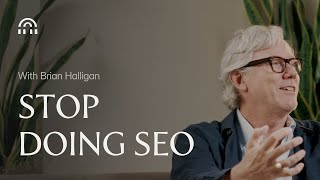
Brian Halligan built HubSpot into a $20 billion company by turning inbound marketing into a category, then expanding into CRM. He cut churn through persona-focused products and two-tier pricing, hired for culture fit over credentials, and learned from a catastrophic 8-hour outage that reliability matters more than speed.
Chapters
If your marketing system goes down for eight hours, it totally sucks. But if your CRM goes down for eight hours, you're out of business. The level of quality and the level of the way we needed to think about the marketing app versus the CRM. In my mind, I was like, wow, People really rely on us to run their business and we can't be down for more than a friggin nanosecond from here on. And that hit me right between the eyes.
The Library of Alexandria was an attempt to capture all human knowledge. Fire and war destroyed it. Today we try again. Welcome to the Library of Minds, where you'll learn the frameworks and mental models of the world's greatest thinkers. And when our conversation ends, yours begins. Each guest has created a digital mind on Delphi that you can talk to anytime, anywhere. I'm Dara Ledgevardian. Let's dive in. All right, everyone. Today we have the legendary Brian Halligan, co founder of HubSpot. He coined and dominated the category of inbound marketing. And you know, HubSpot started in 2006, now a multi billion dollar empire and public company. He's an advisor at Sequoia and an investor in several companies. It's great to have you here.
My pleasure. Thanks for having me.
I would love to start on inbound marketing because we talk a lot about category creation here. And so you coined inbound marketing while outbound and paid ads were all the buzz. I'm curious, what gave you the conviction to bet your life on this new category and how did you deal with the people that would say this is not going to work because you're going to get that whenever you're creating something new.
Yeah, I have a lot to say on that. But the thing that really gave us conviction was we were our own best case study. We started a marketing blog, B2B Marketing Blog. We were very active on social, particularly digging Reddit back then. This is kind of pre Facebook, Twitter, all that stuff. And we were very good at SEO and we were generating leads like crazy. Customers were interested in buying. We were a very good case study for what we were selling. And then there were two other companies out there that were doing something quite similar. 37signals had a blog and was good on social and they were doing really well. Another company that people probably don't remember is called Fogbugs. They had an excellent blog and kind of dominated an SEO pre Atlassian around that space. And so it's like we were cranking ourselves and we saw those two companies kind of cranking on the same idea. And so when we would go sell it, evangelize it, we were very confident we were right. That's kind of what gave us the conviction to keep going. Most people thought we were wrong.
And when you are evangelizing this, it's as much of a story as it is a strategy. What tactics did you practice to kind of change the perception of the market, that this is where the future was going?
Well, we should just talk about the idea of category creation. Yes. At all. One of the biggest, first, biggest arguments inside the four walls of HubSpot was, what the heck is HubSpot? A lot of people are like, well, it's Internet marketing software. And I was like, no, it's this new thing. It's inbound marketing. And the old things, outbound marketing. And there is a lot of arguments about it and some very strong, thoughtful opinions on the. Why don't we just call it what it is? People understand what that is. And ultimately, we went with inbound versus outbound. And it. It obviously worked out really well in order to make it happen. First of all, I think one thing that really worked for it was people knew what outbound was, but no one called it inbound for some reason. It was like, oh, we do outbound. They never talked about inbound. And so there was like, inbound versus outbound. Outbound was always kind of like spammy and shitty, you know, ads and cold calls. And no one liked outbound. And so inbound was like good cop versus bad cop.
You create an enemy.
I think creating an enemy very much worked for us. And then it was just brute force. We wrote a book that was a lot of work. We started a conference. Actually, the conference is this week in San Francisco. We have 10,000 people coming, a lot of work to do a big conference. We wrote a million blog articles, a jillion tweets. Any stage we could speak from, we spoke from. It was pure muscle to make it work. Now, on the flip side of that, we were like, we know how to create a category. Hold my beer. We got this. And then we wanted to do other ones. We did inbound sales. Totally failed. Completely failed with the same playbook we tried to do. When we came out with our content management system, we called it a content optimization system. We tried to create a category like content management. You want to manage your content, you want to optimize your content. Failed. Then we came up with CRM. Pubspot is kind of known as the CRM company today. And we said, it's not CRM. It's CMR Customer Managed Relationships. We want to enable your customers to manage their relationships with you. Failed on all of those. So it's not for the faint of heart. We kind of caught lightning in a bottle with inbound.
Well, I have a couple follow up questions. When is the point where you're happy enough with the category that you've created that you're like, let's create a new one. And I'm sure through all this you now have a framework for when does it make sense to use what works versus try to create something entirely new?
Yep. Just like slowly build. I was obsessed with Google trends for many, many years and I would look at HubSpot versus Salesforce. I would look inbound versus outbound marketing, automation versus inbound marketing like multiple times a day. I was a little bit obsessed. And we just saw it increasing. We saw our search traffic increasing, we saw the number of people searching on inbound marketing increasing. And it was, it wasn't a hockey stick. It was kind of steep, steady growth for a long period of time. And one other weird thing happened with our category. A different group of people came up with this idea of content marketing which is pretty darn similar to inbound marketing. And so there were two competing memes around the same time they came up with it. So those two sort of tracked for a long time, which was a little bit unfortunate. I wish we had co opted the content marketing folks to just call it inbound marketing like we did, but we were very happy with was going well. Everybody and their brothers started calling their system an inbound marketing system. Salesforce.com came with their inbound marketing stuff and marketo and all our competitors had inbound marketing. So that was a good sign. And then at some point in HubSpot's history we were like, well, we want to go from a marketing app to building a full CRM suite and ultimately CRM platform and kind of pivot it. And that was probably halfway through HubSpot at this point. About nine years in, we did a giant pivot at scale to become a CRM platform.
Why? Was it due to larger ambitions? And you saw there was like a plateau.
It wasn't so much a problem with inbound marketing. It was the kind of secret of HubSpot is in the early, in the early days when we would pitch people, when Salesforce first started it was an SFA platform just sold to salespeople and they obviously did incredibly well and they started well before us. And so when we would pitch HubSpot we'd be like, well it's inbound marketing. But the second pitch was, you know, you use Salesforce to sales. Salesforce is the sales is HubSpot is to marketing. And then one day salesforce.com woke up and said, you know what? We want to be the salesforce.com of marketing. And they started. They bought a bunch of companies that started competing with us. And we're like, we need. We can either hang on and that's what some of our competitors did, or we can kind of come beneath them and just try to disrupt them from below and build a CRM platform that competes with them from below. So that was a big pivot. It had nothing to do with the inbound marketing meme. There was plenty of gas left in the tank. At some point in our history, we were going to pivot and become a CRM platform just to access a bigger market, kind of. Salesforce moved our timeline way up and.
Did that pivot isolate the customers you had at the time? Did you have to say bye to them or you were building on top of it? It wasn't really a pivot.
So we had a marketing app, and then we started drawing on whiteboards. Like, we're gonna have a marketing app, sales app, service app, data app, all these different apps sitting on a CRM platform. So all those customers were. A lot of those customers were really happy we got into sales.
That's good. So I read that in the early days, HubSpot had to deal with kind of brutal churn. And I'm curious, what were some key operational decisions that you made that kind of flipped the curve?
We had a hard time with churn. Part of the problem with inbound marketing is, like, we were quite good at it because for some reason, my co founder and I were decent writers, and we hired other decent writers. And kind of the key with inbound marketing is your successes is much more about the width of your brain than the width of your wallet. And not everyone has a thick brain or a good brain to write. Not everyone did that well with it. And a lot of people couldn't write. They weren't good at social. They weren't good at the creative side of marketing. And so we had a relatively high churn rate. And part of it was the product wasn't as good. Part of it was inbound marketing was kind of hard. I'll tell you the early days of HubSpot. I remember the series B on. We're based in Boston. We'd fly from Boston, take the United flight back then to sfo. And my co Founder and I would get off the plane like, okay, we're raising the C, we're raising the B, wherever around, really confident. We would go up and down Sand Hill Road and just get crushed, just get our asses kicked. Every time we get back on the plane. On the way back, we had to scratch and claw every round, every round. We were not a consensus pick. And the problem was Churn. That was a big problem with Churn. And we'd explain it and wave our hands a lot, but we just couldn't get around it. And so finally, actually it was with the Sequoia folks. We get very serious about how are we going to fix it. And we kind of ran a playbook around it and there were three parts to it. One of our guys, Brad Coffee, came up with the three parts. Mary mofu monetization. Mary meant we're going to pick a Persona and we had Internet Ian, we had Mary Marketer and we had owner Ollie. Three different Personas who want three different things. We said, we're going to bet on Mary. There's something about Mary. We're going to better mofu. We describe the funnel as top of the funnel, then middle of the funnel, bottom of the funnel. Inbound marketing was top journey. Middle of the funnel was marketing automation with drip marketing and all that stuff. We weren't very good at it, but the people who used it were very sticky. So we said, let's take resources from the top and move it to the middle. So we kind of shifted our product priorities. And then monetization, we moved from a one axis pricing. We basically have one SKU$250 a month. It didn't matter how big or small your company was. We moved to like a two axis pricing model where we had a couple different pricings here. And then we price based on how many contacts you had in the system. So the better you did, the more you paid us. So we, we leaned hard on that. We moved the P and L around in a lot of ways. HubSpot was a, a company that was a bit of a reflection of its CEO. And the CEO is a sales and marketing guy and a little bit backwards relative to the way people advise you. We got very addicted to our hockey stick curve very early and the number of customers. And we were much more obsessed with how do we turn a perfect stranger into a customer. We sort of flipped the culture and said, how do you turn a customer into a delighted customer that's telling all their friends. We kind of move the center of gravity. We move the P And L a lot of money out of sales and marketing into R and D. We did a little acquisition in there that really helped of some technical talent and so it was like a multi part playbook to kind of get out of that churn black hole a lot. I know it worked. It took a while but it worked. And it didn't work right away. We had to look at the cohorts and the new cohorts are coming in better and we started feeling better about ourselves.
That last thing you said, you said you shifted your focus from making current customers really happy versus getting new customers. Is that what you said? And what was that process like? Is that just talking to customers? How do you know? I know serving SMBs is difficult because they all want different things. And how do you kind of prioritize who you do listen to and who you don't?
Well, we were listening to three different types, small business owners. Onorale was like a roofer or like a landscape guy. Internet was someone like you, technical person, founder, really wanted open source, really wanted API only didn't want a ui. And then merrier marketer was like you probably have a merry marketer here like a director of marketing and a startup. And what was incredibly helpful was just drowning out the noise of Ollie and Ian and just focusing on the noise for Mary. I'm kind of a Mary myself and I was the most active user so we kind of built it for me as well, which helped. Yeah, nice.
Same here. I'm an active user of Delphi. I know a lot of HubSpot's success came from user education which I want to get into in a bit. But how do you know when the problem you're dealing with, whether it's turn or engagement is a the product is not good enough and we need to improve onboarding, improve all these things versus we need to invest in the academy and make sure that people are knowledgeable and educated on how to use the product.
We did both. We invested heavily in the product into mofu. The other thing we did to get the center of gravity more on customers than on prospects was we changed compensation team for the management team. We compensated the management team on NPS and churn. We also changed compensation plan for our sales reps. We put in a clawback. So if the sales reps sold a deal and it churned within I forget the number of months we clawed back that commission. We put an incentive in that you don't get into your sales accelerator unless your retention rate's over a certain amount. So we kind of changed the whole incentive system to focus much more on customers and products.
And so making customers happy is kind of a slower endeavor. And people always say startup speed is really important.
Right.
Was there a point where you prioritized speed over delight? It changes.
It changes. Like in that period, we were like, we're gonna slow everything down. We were always like, ship fast culture. But we were like, let's just get a little more careful and slow it down and get things right. And then, and this is like 2013, we really slowed things down. We slowed things down for a couple years and then we started speeding things up. It's like, we got it. We're going to build this platform. We know what to build. Let's speed it up. And then we had an outage in 2019 on the last day of a quarter that was pretty long. It was like eight hour outage. That was maybe the worst day in HubSpot's history. It was like, let's slow it down. You know, it depends on the, on the timing. And now we're sped up because, like, we're trying to innovate, trying to figure out, you know, what does the future of CRM look like? What's AI native look like? So it depends on the timing, the timing.
And so a year later in 2014, you launched the free tier of the CRM and we're about to launch free tier. So I'm curious how you thought about launching a free tier without worrying about cannibalizing current revenue. And what ultimately was the objective and the outcome of that free tier that you wanted?
I think one of the benefits we had at HubSpot was we weren't in Silicon Valley and we weren't part of like the groupthink. And so we kind of zigged when everyone else zagged. And we did that a couple times. Like we zigged at SMB when everybody and their brother was like, you're an idiot going in the enterprise. And we sort of looked at like our obvious competitors, salesforce.com, they were definitely moving up into the enterprise. We saw an air gap beneath them and we were like, as they move up, as they acquire companies, we're going to move down. We're not going to acquire. We're going to build instead of buying. And we knew they couldn't do freemium. It's just too hard to set up and use and too expensive. We knew they couldn't do it. So we're like, how do we really differentiate? How do we draw a bright line between HubSpot and Salesforce on the product side. Also just a messaging side, like, we're freemium. You can actually pull this shit off with CRM because prior to that, the only people really doing freemium was, like, Dropbox and like SurveyMonkey, people like that. And I remember sitting in a conference room with my co founder, Dharmesh, one day, just talking about Blue Ocean strategy, thinking about all this stuff. It's like, I got it. If Dropbox can do freemium, we can do it too. And he was like, great idea. Then we had to talk the rest of the company into it.
How did you think about scaling customer support before HubSpot really blew up? Because if you really want to prioritize customer happiness, you could hire as many customer support people as possible and make sure people are heard.
We were a little contrarian on this as well. I was the customer support department, the sales department, and the marketing department in the early days of HubSpot. And if I couldn't answer a question, I have to bug my co founder, one of the developers. I didn't enjoy doing that and I wanted to write code. And so we wanted all of HubSpot was about helping. It's sort of a helping culture. So we wanted to help our customers. So support wasn't just about answering the ticket. Would keep them on the call and say, you have. Why don't we set it up like this? Why don't we connect this? Like, we would extend the calls as long as we could versus try to get them off the call as quickly as you could. As like the conventional wizard of mountain support is. And we took a bunch of inspiration from Zappos and Zappos at the time. Tony Hsieh, rest in peace. He had his thing. Like, customers love our support so much that, like, they'll talk to him for hours and hours and hours and hours about stuff. They'll order pizzas for him, like, stuff like that. And we didn't go that far, but we were kind of inspired by that. The other things we did that were unique, we made customer support sexy. Inside of HubSpot, culturally, most of the hires were from Apple stores. So I would go to an Apple store, upgrade my phone, and if the guy or gal was good, they got an offer within a week. And it got to the point where I would walk into the Apple store in Cambridge and be like, you out. And they were good. And the value prop was really simple. Like, you're making whatever 40k and standing on your feet all day. How'd you like to make 40k and sit down all day. That was pretty appealing. That was part of it. The other part of it is we promoted out of support. So if hiring a CSM or an account manager, a product manager, every other role in the company was full of people we hired from the Apple Store into support through the rest of the org. And eventually the guy who is our head of product was started as a support rep. And that's still true today. So we made so much about the product. Yeah, we made it very sexy inside of HubSpot to be in support. It was a little bit like the Marines. It was hardcore. My nephew, who's very sharp HubSpot, by the way, is anti nepotism. Like if I refer someone to HubSpot, they are much less likely to get hired than if randomly they got referred by somebody else throughout the website. And I was like, my nephew who was sharp and I knew would do well was graduating school. I'm like, I gotta get him into HubSpot. And of course Andrew said, no, give me a fucking break. And I talked them into hiring and we had a Portsmouth, New Hampshire office with a bunch of support people like, all right, okay, he can start, he can start, but he has to be out in New Hampshire, which is kind of shitty. Nothing against Portsmouth, but he didn't want to live in Portsmouth. And he started and I kind of followed his journey and it was like, it was like the Marines. Like he worked 20 hours a day and they really challenged him and he came up the curve incredibly quickly. And so that was sort of our. We always refer to HubSpot as a teaching hospital. And that was sort of the beginning of the teaching hospital.
Enjoying the conversation. Got a question you can ask Brian's digital mind? Just check the link in the comments or description. Well, speaking of, you know, the company, I think one of the things I really like about you is how much you talk about culture and maintaining company culture. And I'm curious, what practices would you invoke at HubSpot daily to make culture an unavoidable aspect of the day to day? Or is this something that more kind of lives in the background?
I can tell you our culture journey is, I think, kind of funny. My co founder and I are very analytical and we didn't like the idea of talking about culture. If anyone brought up culture, we'd always be like, stop, stop, stop. Go get more customers. Stop, stop, stop. Write another blog article. Stop, stop, stop. You know, write more code. And we were very, very negative on it. And then a couple years into our Journey. I joined a small CEO group, and there were 10 CEOs. I was the 10th CEO to join. And we met all day, and we focus on one topic. And so I largely joined because One of the CEOs in there was a guy named Colin Engel. And I had a massive man crush on Colin Engel. And Colin is the Roomba guy, the vacuum cleaner guy. And he was on fire at the time. Just gone public. And I remember I showed up for the first meeting, excited to meet Colin, and sat right next to him, and I found out the topic I didn't know ahead of time was culture. I was just like, I'm wasting time. Why didn't I join this thing? And I kind of had to put some in my face the full half day. And Lunchtein came around, sat next to Colin, and Colin said, I don't see you participating, Brian. I said, no, I'm not big on the topic. He said, brian, culture. Culture is how you really scale your company. Culture is how people make decisions when you're not in the room. Okay, participated, engaged, whatever. And then I go back to the office the next day and see my co founder, Dharmesh, and he's like, how was it? How's Colin? Was it good? How was the meat? What'd you talk about? I said, it was great. Colin's great. He said, what'd you talk about? Culture. He said, oh, waste of time, dude. No, Dharmesh, culture. Culture's how you really scale a company. Cultures help people make decisions when we're not in the room. And at a very weak moment, I got him to volunteer to be the culture czar, which is ironic because he's the most introverted, like, doesn't like people person I know. And he's tried to get out of it so many times. Like, no, no, no. Remember that one day you volunteered to do it? And he did two. We did two very simple things. We wrote a culture code, which kind of went viral. We were the second one. Netflix did it. And we're like, that's a good idea. We should do our own. And we spent a bunch of time with a few people in HubSpot, like, writing down, what is HubSpot? And what is the relationship between the employee and the company? And how do we rethink that relationship, given the Internet has happened and companies should be built, people should be managed a whole new way. And we wrote that, and it went viral. And then we did a Net promoter score. We're like, we do a Net promoter score of our customers once a Month and get a report. Maybe we should do it for our employees. And so we started doing our employees, and we still do that years and years later. Those were keys to getting it right. Now everybody's copied us on both those things. The problem people run into with culture code is that they all kind of sound the same. They're motherhood and apple pie when you write them, it's like if you close your eyes and took the logo off, it's like, are we running a yoga studio or are we running a company here? Like, it sounds like a yoga studio. And, you know, it's a lot of talk the talk, but not walk the walk. And there's too big a gap. And so we. We had that too. And so every six months, we go in and refactor it and try to bring that gap closer. So that's the first thing. It's not differentiated. I think of your culture like, you get two products, you got your product, you're selling to your customers. It's got to be unique and differentiated. You got your product, you're selling to your employees. It's got to be unique and differentiated, or they'll go to OpenAI, they'll go to anyplace else. And so you want to think it that way. And that helped us a lot to reframe it that way.
When culture veers away, what you want culture to be veers away from how people are behaving. Do you go in the direction of how the company is, or do you go in the direction of what you aspire to be?
We argue about it, and it's 50, 50, and a lot of it is like, what is the leadership modeling? And can you continue to walk the walk on this? You know, as reality hits and the budgets are tight and the economy is bad, like, can you continue to walk the walk on some of these kind of unusual ideas? So, yeah, it can go either way on that.
And when people were not walking the walk. Let's talk about hiring for a second. You hire people based on their ability to already represent the cultural values that you like or their coach ability to become a part of the culture.
We always said we try to hire for culture ad.
Culture ad.
Not sure we always pulled that off, but that was what we said. Like, this person, give me culture ad. And then we had, like, our. And these have changed over time. Heart, like, humble, effective, adaptable, remarkable, transparent was sort of our features. And we wanted our employees to be like that more at the early stage than we do today. And so the way we would reinforce that kind of thing is when we had our interview panel would be like, you know, be a form you'd fill out and you had to put in a score for each of those. Like was this person actually humble? Were they effective? Are they adaptable? Are they remarkable? Are they transparent? Like, what do you think on this? And so we kind of built that culture code into the hiring. We also built that into the. When you had your quarterly annual review, that was built into that as well. That helped perpetuate it. The culture also is a lot about your mission. And we always had a good mission. We wanted to help, you know, transform the way marketing works. So people love it. We wanted to help small businesses grow. We wanted to help startups turn into scale ups. Like I personally like the, that that mission and sort of the employees and I think that's a big part of culture is you, are you building them? Are you building something that people can get behind?
Totally. And when it comes to the mission now, in a world of AI where inbound marketing is probably a little bit different because anyone can create a million blog posts in one day that are hyper optimized, how has your opinion on inbound changed?
I think inbound is changing. I look inside of HubSpot and your traditional SEO is not doing as well as more and more people are using Google answer boxes and chatting with Google and certainly using ChatGPT. You want to get found in there because people are. The thing in steady state that I think happens around this kind of thing is today people go to Google, they click on a blue link and they go to your website and they learn all about your company through your website. I think in the Future, I mean ChatGPT knows everything on our website, is going to listen to this podcast, knows a lot. It's like, why am I hopping off ChatGPT to even go to the website when I can continue asking about your brand on ChatGPT? So you want to get found in those systems and you want to stay in those systems. The other thing that's kind of happened is conversion rates have really improved these days where you can use data to improve the conversion rates when someone does visit your website or an email or whatever you're doing. We have noticed dramatic increases by using AI in conversions.
You mean on the copy?
Copy the copy personalized per company, per person. Yeah, getting really tight on that. And like this big large swaths of HubSpot that have adopted AI, like the BDR function really is kind of a lot of it's autopilot, not copilot. And then support. A lot of that is autopilot, not copilot. Like there's certain functions within HubSpot that are really taking advantage of AI. Everybody is in sort of a copilot way, but a couple of groups, it's like, ooh, that's kind of autopilot.
So you told me that you're here for the Inbound conference. Tell me about your decision to start that conference in the first place. And do you attribute it to one of the reasons why HubSpot has become the leader in Inbound? You know you guys have a conference named Inbound?
Yeah, we went after the brand. We spent like 80% of our marketing bandwidth in calories. We on creating the category in the early days, 20% on marketing HubSpot to the point where people come to our website, they didn't know we were selling software sometimes. And so we went after it. And part of it, part of what was going on at the time is there was in the marketing world and this is very much in every function today, a marketer historically was doing trade shows and brochures and stuff like that. And all of a sudden the CEOs were like, what's this SEO? So why aren't we getting found in Google? Why don't we have a blog? Why does our Twitter profile suck so much? And so marketers were very uneasy at the time and looking for help. We had the conference so they could all meet together and they all could learn from our gurus. We wrote the book so they could learn about and people would hand me the book and every word of the book was highlighted in yellow and pink and like. Yeah. And then we started university and then at the conference you'd see people where, you know, have their lanyard and when you got a certification, you got a little badge on there and then have like the whole friggin thing 25. I'm going to see it when I go to the conference tomorrow. Certifications for everything from inbound marketing to marketing automation to whatever the new hot thing is. All of that kind of came together to like we help this woman Mary go from doing brochures and simple websites and some ads to no, she's a ninja in the new way to do marketing. And we're kind of do the same thing today for RevOps. RevOps people were kind of salesforce administrators for a long time, but managed. There are a lot more to RevOps in the age of AI. So the conference today is sort of holding the hand of that Revops manager and moving them into the new world.
Some of our customers are literally HubSpot influencers and they have full YouTube channels. And how do you even think about creating a community? Did that happen naturally or did you find your most active users and kind of push them up?
No, very naturally. I remember we said we were going to have conference and we had a guy named David Meerman Scott and Seth Good and a couple speakers that we liked. And we put. We only had room for 400 in the conference and we put them for sale. And like within five minutes they sold out. I was like, oh, we hit a nerve here. And then we saw the reaction of people to us at the conference. Like people like wanting autographs. This is a pre selfie. And like, oh, wow. And then we saw how people were talking to each other and how the agencies were engaging is like, well, there's much more here than we thought. And I remember we, we invited one of our investors to the. Our investors came to the conference and the investor investors said to me, he's the young Brian. I thought I invested in a terrific software company. I actually invested in a terrific religion. It was like this real connection people had to it. And that caught us off guard. That really caught us off guard.
And you think that came more from the product or the evangelism that you did in the category?
Initially it was evangelism. I think of HubSpot first as like, like a philosophy company first, like around the culture, around the way you market. It's change. But we were very. People like that philosophy. And then they use the product and the product started getting really good and they base their career on the product. Like they go from one company to another because they're a HubSpot guru. They start an agency because they're a HubSpot guru. Like there's a whole HubSpot sphere that emerge that is a real secret to our success.
What is the darkest moment of your professional career and what did it teach you about suffering?
Okay, the darkest moment in HubSpot's career was probably that day we had the outage. Yes, eight hour outage. I cried that day. I got screamed at by many, many customers. Deservedly so. That was a brutal, brutal. I cried in front of the whole company. I was rattled. And it was also like a little bit of. We had moved clearly from marketing. If your marketing system goes down for eight hours, it totally sucks. But if your CRM goes down for eight hours, you're out of business. And so just like the level of quality and the level of the way we needed to think about the marketing app versus CRM. Just in my mind I was like, wow, people really rely on us to run, run their business and we can't be down for more than a friggin nanosecond from here on. And that hit me right between the eyes.
And how do you, when a customer is screaming at you, what do you do?
You listen and say you're sorry.
Yeah, that's a good answer.
Yeah, you're listening, you say sorry, it's not fun and you have to take the arrows for the whole company.
Yeah, yeah, I've been there. So at Delphi, we talk a lot about building a company that can outlast us. You know, people are hosting their legacy in a way and it should be around 100, 200 years from now.
I'm hoping mine is around. Yeah, my great, great grandkids can have a chat with me.
Yeah. And I'm curious, are there any things that a startup should be thinking about in the early days that are critical to durability? Like one more one way door decisions.
The thing we always say, it's a mantra, is we want to make a company our grandkids will be proud of. And like we just say that over and over and over and over and over again and that helps, it helps frame the way we make decisions. And we always tried to focus on the long over the short. And it gets hard, the economy gets tight, the AI bubbler in pops, you have a shitty quarter. It's really easy to start solving for the short term and it's really easy to stop walking the walk on your mission. And we tried to stay quite true to the mission and we tried to stay quite true to that over time in the face of a lot of pressured to do otherwise.
And seems like you've done that for the most part.
For the most part, yeah. Yeah, we're not perfect, but for the most part.
What's up?
My co founder is great by the way. It's, it's like if it was just me, it would be hard to do but he and I, and I are like, what do you think? Like, it's like would be really easy to make a short term decision here and you know, having two people on the same page helped a lot.
What's a question you wish you were asked more?
No one asked me about the Grateful Dead and nobody asked me about the Boston Red Sox.
Just like what about them or what's your opinion on them?
Well, since we're here in San Francisco, I wrote a book about the Grateful Dead. Marketing lessons From Grateful Dead. It's coming out in paperback in November. Buy it. Buy it for your wife, your kids, your dog, your cat. Buy it in triplicate. It's available on Amazon.
We're going to put it right up here in the library.
And HubSpot was inspired by the Grateful Dead. The Grateful Dead rethought marketing in a massive way. They were kind of the first inbound marketers and not know this about them. Yeah, yeah, totally. They, for example, most rock and roll bands of the times, take the Rolling Stones. They made all their money from records, and you had the tour to promote the record. The Grateful Dead inverted that. They made all their money from touring. And so they were on the road a lot, touring. And the way they made that work was each concert was unique. They were like a jazz band. Each show was quite unique. So you went in Boston, it was one show, and then you went in New York City. Totally different set list. Totally different way. They would play. Same in Philly. Change it every time. Go see the Rolling Stones, the exact same concert. So there was an incentive for idiots like me to follow them around the country and buy lots of tickets. The Grateful Dead also did something interesting. Like, if you wanted to go see a Rolling Stones concert and you brought, like, your big camera and your microphone and all this stuff, they'd be like, hell, no. That's rip. You can't record any of that. When you went to a Grateful Dead concert and you had all your heavy equipment and microphones and video machines. Come on up front, Mr. Halligan. They had a taper section, and so they incented people to tape the concerts. And so an idiot like me would tape the Boston, New York, Philly, D.C. and I go back to my dorm room. I pick the best one, and I make like, 50 copies of it, give it to all my friends. And my friends would be listening to it. You'd be at a party on campus and be like, what is this gypsy? I kind of like this crazy gypsy. That's a Grateful Dad. Just like, oh, I've heard of them. You want to come on tour with me? And then they're buying tickets. So they were the first freemium kind of model. They were the first inbound.
Did they view themselves that way?
Okay, so I spoke with Bob Weir about this because Garcia was dead by the time I published it. And I think for them, they never considered themselves, like, kind of marketing geniuses, but what they consider themselves is very customer centric, and they consider themselves very first principles. And they were like, the way this industry Works is crap. Let's rethink it from scratch. And they did that in many ways. Like the ticketing system. They also were the first, like, disintermediators. The way a ticketing system worked back then is if you wanted to go to a Rolling Stone concert, you'd go to Ticketmaster and Ticketmaster would be like, on Tuesday at 4 o', clock, we're going to start selling tickets to Rolling Stones. And you have to freaking put it on your schedule. Calling, your fingers bleeding, calling. Who do you think got the best tickets?
Who got the best tickets?
The scalpers.
The scalpers?
Yeah. Because their job is to sit there and dial. And so the scalpers bought all the tickets. And then who do you think was in the front row at the Rolling Stones concert? Venture capitalists. They had their best on. They're the only ones that can afford the ticket from the. From the scalpers. Grateful. They didn't like that. They wanted their best fans in the front row. Freaks with their tie dyes on.
Not the vests.
Yeah, no vests. And they didn't like the fact that Ticketmaster was making money. Scalpers were making money. They were at the end of the line when they played that game. So they said, screw it, we're going to disintermate the scalpers. We're going to disintermate Ticketmaster. We're going to start our own ticketing system, Grateful Dead Productions. So you bought tickets directly from the Grateful Dead. And do you know how they decided who to give the best seats to? How do they get the scalpers out? I'll help you with it. When you bought tickets to Grateful Dead show, they set it up in a way that a scalper would never want to do it. You had to put together a 4x6 card. You can only buy four tickets per concert. And then you had to put a postal money order, which was a pain in the ass, to go to the post office to get it.
Only the true fans.
Yep. And then you had to put in a self addressed stamped envelope. And then you decorated that envelope. And the more beautifully decorated the envelope, the further towards the top you would get the front row tickets. So the really hardcore killer Deadheads to follow them all over the country like crazy hippies. They were in the front row. Grateful. They were brilliant marketers.
All right, send us the book. All right, we want the book. I guess I know the answer to this next one, but if you could have dinner with anyone, alive or dead, who would it be?
I mean, Jerry Garcia and Steve Jobs are up There.
All right, we'll make it happen. Andrew, you mentioned that you had a number of failures for new category creation. Was there any consistencies across those failures?
One thing I don't know is true because you can't really a B test it is when we did inbound marketing, like my co founder and I did most of that lifting, we had help from a marketing department. And when you're a founder, you are very motivated and you tend to be very creative and I think you get a high return on calories. We kind of delegated the other ones out and so I don't know if those categories were bad or stupid or if my co founder and I had spent 100 hours a week doing the same thing. If we could have pulled it off, I'm not sure about that. I will say the one thing we got right about in Members Outbound is like, there was this. It's a little bit like founder mode. There was this thing kind of floating in the air. And then Paul Graham said, oh, it's founder mode. And it was like, that's it. It kind of summarized what inbound was that like, it's like social and search and like there's this new type of Persona. It's all kind of floating around like, that's inbound marketing. So naming what was sort of in the ether is what kind of worked.
Thank you so much, Brian.
Yeah, thanks for having me.
Appreciate it. Thanks for tuning in. If you enjoyed today's episode and want personalized advice from Brian, thanks. Head to the link in the comments or description to ask his digital mind on Delphi.
More from Brian
How to be a CEO when AI breaks all the old playbooks | Sequoia CEO Coach Brian Halligan

Goldman Sachs CEO David Solomon: What Startup Founders Get Wrong About the CEO Job
Scaling AI Rocketships: ElevenLabs’ Mati Staniszewski & Lovable’s Anton Osika


HubSpot ft. Brian Halligan & Dharmesh Shah - How an underdog helped invent modern marketing