Next Big Opportunities in Data Infrastructure | Panel: Sequoia, Foundation Capital, Insight Partners
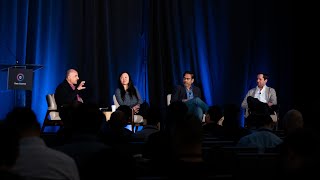
Three venture partners from Sequoia, Foundation Capital, and Insight Partners discuss where data infrastructure is headed. They highlight the shift from ETL to ELT, the rise of feature stores and MLOps tooling, and why data tools remain underestimated as a market. They also warn founders about the importance of a clear user, distribution strategy, and market timing.
Chapters
Well, thanks everyone for being here. This is going to be fun.
Amazing intro.
Awesome, thanks. Thanks Pete. Thanks for the roast.
It's the least I could do. So I want to let you introduce yourselves and we can just start with George and go down the line and tell us sort of your focus area and how you got into venture.
Yeah, I guess I'll start. George Matthew with Insight Partners. Been in venture capital I guess officially for only about 14 months or so. Was mostly a founder entrepreneur like most everyone on this audience here, mostly working on data analytics, ML, AI companies. I got to the venture world predominantly by just building companies. So I was the president of Alteryx. I was kind of building Alteryx from its get go into a public company readiness outfit that we took public in 2017. Became CEO of CASP. Was doing a lot of image video analytics on 2 petabytes of image video data and running machine learning models against it. And then my current boss, Jeff Horing, the founder of Insight, had an idea that we should be going a little bit earlier into series A, Series B companies. And that's what I did to go Join Insight. Did 26 deals in the last 14 months, mostly focused on great companies in this space, half of which I think I invested in.
Awesome. Well, I first want to congratulate Pete. I think when I first met Pete maybe four or five years ago. Five years ago at this point this community was much, much smaller. And this is, I'm incredibly impressed by how robust this has been. So congratulations. My name is Joanne. I'm a general partner here at foundation. We mostly do very early stage investing. So starting at inception, sometimes the companies don't even exist. And we are primarily focused on helping companies go from 0 to 1. So everything foundation has been built around this, from recruiting to customer networks to angel networks, et cetera. Firms were around for 26 years. We have about 400 portfolio companies, 31 IPOs. We invest in enterprise, fintech and web3. In terms of my journey to venture, I've been in venture for about a decade at this point. I did a short stint at Cisco. I worked on my own startup. I studied engineering, computer science and then I kind of accidentally started angel investing before meeting initially the folks at Formation eight and then more recently about eight years ago. The folks at foundation very excited about everything that's been happening in AI, machine learning, data infrastructure, Web3, and I'm excited to chat more about that with you today.
Bogomil Bolkanski I'm a partner at Sequoia. Been at the firm for a couple of years now, so relative newcomer to the field. Before that I actually had a real job. Like many of you, I was making software and putting in the hands of customers. My true wheelhouse is product management and product marketing. Spent eight years at VMware leading the product management product marketing team for the core Hypervisor platform. Then went to a startup, spent some time at Google Cloud. How did I find myself in venture? After my stint at Google Cloud, I took a nice long sabbatical and I was about to start a company when Sequoia came calling and here I am an investor. Given my background from VMware, Google Cloud, I mostly focus on geeky stuff, developer tools, DevOps, data infrastructure security. So really glad to be here. Many friends already and looking forward to meeting more of you.
Amazing. And it's great to have operators and technical folks with varying business and technical backgrounds on stage. So thanks for sharing. So I wanted to kind of ask about the State of the Union overall. What are the patterns that you're seeing now in data infrastructure, machine learning, et cetera, that you might not have expected to have seen just a few years ago? Like where. Where are we seeing increased adoption? Sort of. What are the, what are the big memes, the big themes that you're seeing across the space these days?
So I guess I'll start I really focused on two big themes, no surprise in this room. One was everything related to the unbundling of everything associated with ETL to ELT and the modern data stack that is arising around that movement. And a lot of it was just kind of centered around cloud native data warehouses and cloud native data lakes or delta lakes and cloud lake houses or whatever we're calling them these days. But the fact that you can now do transformation in database and you can actually have a separation of the logic that was effectively transformation that was previously in ETL is a profound change and actually drives a fair number of opportunities to create a system of record and cloud native data warehouses. And so a lot of my investment thesis was around the tooling associated with that. The second was mlaps. So everything related to when you look at this sort of opportunity that you see in this market, particularly around just making it more straightforward to get things into production because it is really hard to get models into production. Went all the way from first party third party data blending with explorium lead weights and biases and everything related to experiment tracking, hyperparameter tuning. Roscoe was effectively building a feature store natively on top of Snowflake as well as Fiddler of course Doing model monitoring, model production. So that entire tool chain was quite important to me. And then there were some interesting opportunities to re bundle things together. Y42 was one of my favorite rebundling plays which went after just a very focused targeted play for DTC E commerce, but just a bundle stack just making it easier for everyone to just get product out the door, particularly from a data standpoint. So yeah, it's a pretty broad mandate, but I think anything that has life and next generation data I love.
And it didn't take long. Only five minutes in and we already had our first rebundle unbundle bundle reference.
How to do it.
Thank you for that. I knew it wouldn't take long. There's people with bingo cards out there. So I hope you scored some points.
I should have taken out three or four points right there.
Are we also playing a game where we have to insert a weird word in the middle of our talk and we get points for it? From my perspective, maybe the most interesting trend is that or the most interesting new pattern is that there are multiple different patterns that happily coexist in the data infrastructure. So on one hand, yes, of course the modern data stack is a revolution that's gathering speed and we all know about it. But at the same time as the modern data stack is taking shape, in many organizations you do have end to end all in one products like Y42. And I often get asked like, well which way should I go? Do I implement the modern data stack? Should I go with something like end to end product? And interestingly that it's not an either or answer. So you have the data science, data engineering team building the modern data stack. You have line of business people who quite honestly can't just take a ticket and wait to be served by the central data authority. So at some point they take things in their own hands and implement their own tools. And so when it comes to end to end tools, you see horizontal ones, but you also see vertical ones that specifically serve the needs of like the marketing team or the sales ops team, et cetera. So it's a very interesting trend. And speaking about the lake house, yes, you know you have the data warehouses, you have a data lakes, and again it's not an either or in most companies beyond certain scale you tend to have both like and coexist happily and then to keep kind of adding on different patterns. Now you have what I would call a virtual data warehouse. So you have all of these query engines like Starburst that allow you not to ETL the data like it stays where it is and you can query it real time, you can serve it real time in applications, et cetera. And Rockset is another example of that. And so it's very interesting that all of these different trends and all of these different patterns very happily coexist in the same customer serving different needs of different Personas, different business units, et cetera. All good news because it's not a competition among different vendors. There's plenty of opportunity for pretty much any pattern at a company serving a customer beyond certain scale.
Well, I'm glad we're talking about this already because this whole bundling, unbundling, best of breed point solutions versus end to end platforms. I'm curious Joanne, if you have thoughts on that topic, because I wonder how long we can continue to double, triple, quadruple up on best of breed tools that completely overlap or apparently overlap in individual how many data quality companies can this community support is what I'm getting at.
One of the things I wanted to touch upon that was related to what Bogomil's talking about, and this is a little bit more abstracted, but answering your question is we're super excited about the importance of data as respect to the importance of code. From a decade ago or even five years ago, that movement has been shifting and data as an asset, as everybody here would agree, is becoming the most important asset in any organization. So I think in the beginning data was used by some of the larger players like Facebook and Netflix to just understand their users a little bit better. And then now data as an asset is operationally strategic. Are we hitting our KPIs? Is there anomalies in our data? It's also go to market strategic, meaning what kind of users should we go and target? And then it's also product strategic, meaning we're building data products like Uber is a data product, which is a data product. A lot of our favorite companies are data products, so that means every single function needs to be able to tap into this access. This related to what Bogumill was talking about, which means the opportunities for both consolidation and point solutions are specific to the use cases. So my guess is today this area has been very much invested in and we're seeing lots of best of breed tooling. My expectation is that just like any other industry, the best will stay relevant and we'll see consolidation more and more so especially as the larger companies understand, you know, their market cap has been growing very, very quickly in the last couple years and they understand the strategic importance of this.
Got it. So before we Go a little bit lower level, let's sort of stay broad. How do you think about the size and the growth potential of this market overall? Like what sort of mental model do you have that sort of informs how much time you spend in looking at data tools or machine learning stuff versus other options in the the enterprise stock?
So I think we're all underestimating the size of the data market again, right? I think if we look at what the last generation of data tools look like and even the generation before that, these are sizably speaking some of the biggest aspects of the software market. And we're at a. The Oracles and saps, Oracles, Business Objects, those were big companies and they got to scale in a much smaller software space, right? And now software is somewhere in the neighborhood of like 20x bigger, right? 20 to 30x bigger than it was. And data is probably, you know, a substantial portion of that space. So you know, how many data quality companies can we have? A fuck ton of data companies, right? It actually turns out like there's a lot of room to play big and build big companies. I think what you have to sit back and not worry about is like, okay, how much is this going to consolidate in the future? It's like, go figure out a Persona, go figure out a market, go figure out a customer, go serve them well. Build a hundred million dollar business. It's all possible for everyone in this room.
Well said. I think we see this. Several of you have mentioned the Persona focus because we might see Data tool for X and Data tool for Y and sometimes they might seem to overlap, but in reality they target completely different users of the stack. And so I think we see this with certain kinds of machine learning and data science infrastructure where a company like Orchestrates might be giving data scientists infrastructure to spin up that obviate the need of the data engineering team to exist in a particular kind of company. So even though you might call that their product data infrastructure, it's infrastructure for data scientists and not necessarily for data engineers. So I do see that in this community where folks have to be, it's not just about the product they're building, it's about the combination of the product they're building and who it's specifically targeted at. Because it can look like a completely different company down the road if they're laser focused on who their user Persona or their ideal customer profile is.
I mean, as a former product manager and still product manager at heart, this really resonates for me because the advice that I always give companies is your Product cannot be all things to all people. It cannot be good for everybody. But it better be amazing for somebody and better have this clarity of thought from the very beginning. Who is that somebody that your product would be truly amazing for?
Yeah, I think Bogumol's got a great point there. So when I was president of Alteryx, there was the moment that I know I won wasn't like when Alteryx hit 100 million revenue and we took it public. The moment I know I won was when we were about 15 million and people who were data analysts would come up to me in early days in our conference and literally say, can I
give you a hug?
I'm like, I don't know you.
Why?
Right? And they're like, well, I just want to let you know that I had a massive challenge with getting 15 different sources of files together and I couldn't get to my son's baseball game on Friday afternoon and now I can. And I just want to let you know, it literally changes the way I get my work done. You build a company like that and there's no way that can stop you. And I think that's what you have to keep thinking about when you're particularly in this data space, Persona based driven experiences that are fundamentally life changing for how people work.
One of the things that sometimes we advise our data companies is let's take some of the lessons from application companies or consumer companies in terms of the focus of the Persona. I think right now we are still underestimating the market size of this whole ecosystem. And if we look at the software engineering market, companies have a lot more clarity today around who they're serving in the software engineering space. Are you a front end engineer? Are you a back end engineer? Are you a design centric person? Are you engineering for this type of company? And I think that kind of clarity we want to bring in the data space one, because I think the roles will actually expand and we'll see a lot more types of people who are building and that clarity will come as the ecosystem matures. And second, because of everything that Bogomil and George and Pete has said, you've got to win, you have limited resources. Survival is what happens, what the goal is in the beginning and to have little resources and people to survive, someone has to get promoted, someone has to love you.
And yeah, as data gets closer sort of moves up closer to the business user and becomes required table stakes for business teams, marketing teams, finance teams, et cetera. Do you think we'll start to see a greater democratization of Sort of those folks driving what becomes the next generation of data infrastructure. Right. I feel like we've been kind of building databases and feature stores and metric stores and ETL pipelines in this community for years. But I kind of feel like the business now is starting to, they have more consciousness of the fact that they sort of need to drive some of these requirements for the type of data they need, when they need it. And I'm wondering if you see a greater democratization of access for these folks sort of being built on top of all the systems that we've sort of been myopically focused on over the years.
I can start. First of all, we've been investing in enabling everybody in the organization to have this power because there's a shortage good for you guys talent in the space. And how do you bring that automation augmentation to the rest of the organization? That's been a huge, huge trend. I think the second part that's, that's important in this is that to your point about democratization, there's, there's, you know, for example, operational real time data analytics has been a very popular thing to do. Well, who actually cares about this, right? Today decision making is in some ways more and more decentralized. But as we saw in other ecosystems, there has been a swing of technical buyers to business buyers, back to technical buyers, now to a hybrid. And I suspect the same thing will happen in the data space as this matures.
Peter, your question reminds me a little bit of a marketing campaign that new relic had maybe like four or five years ago with these billboards plastered all over San Francisco and other cities. If we're all data geeks, to me the trend of everybody working with data is not new and of course it's gathering steam. And I think it manifests itself on multiple levels. Business users kind of grasping for more analytics, more dashboards, like analyzing their business is only one aspect of everything becoming data driven. But if you take for example a modern marketer and how they work and what are the tools that they use every day, you know, their marketing automation system, it may be something like Iterable or Braze or Marketo, you know, etc. If you look under the covers of every single marketing automation system today, it's a big data infrastructure and data wrangle product and marketers don't necessarily experience it like that directly. But one of the most interesting things that has happened in the world of marketing in the last few years is segment like a powerful data pipeline to be able to collect all the data from Everywhere and then that feeds your marketing automation system. But under the covers, again, it's all about slicing and dicing data, being able to create segments, et cetera. And so I would say most business line, line of business applications that every functional leader, that every employee and every function today is using increasingly under the covers is basically huge data wrangling operation. And to me that is actually almost like a more interesting aspect of data enablement of everybody whose title has nothing to do with data than just the traditional like analytical dashboards and slicing and dicing analytics.
Yeah, so we'll see, we'll see how quickly the SQL becomes required sort of language knowledge for business users. I think that's something a lot of us in this community are always kind of keeping one eye open for. Right. Like to what extent can we insist that people learn SQL even if they're a business analyst? So we'll see with definitely a vote of confidence there. So I want to kind of turn the conversation towards the founders, the potential founders in the audience, because there's lots of people in Data Council who have started and who will start companies. Where's the biggest white space? If the ecosystem is so crowded and if there's six different point solutions in every category, where should folks in this community be looking for opportunities?
So I'm a big proponent now of what's happening around unstructured and particularly like unstructured analysis when it comes to unsupervised deep learning. I've been looking at a lot of work that's particularly been happening on large language models, transformers, semantic search that could be kind of layered on top and you're not now just seeing that for kind of NLP use cases. So the fact that the transformer based approach is transfer learning has kind of now shifted over to computer vision use cases. And you're kind of seeing that now in computer vision and other sort of realms beyond just nlp. That's a big area of interest for me and probably going to talk to everyone or anyone who's interested in that space. Come by and chat if you have some work you're doing there.
To me, I see a couple of areas that are very interesting to me. One is a byproduct of the fact that I also spend a bunch of time in the areas of observability and security. And when we talk about data, we traditionally think about business data that gets generated by business applications and then you ETL the data you put in the data warehouse and et cetera. But let's not forget that in every enterprise There are other domains that generate inordinate amount of data. I would argue that observability or system monitoring is all about data. I would argue that Splunk is a data company. The Elk stack is all about data. Similar analogy I think applies to security where every security tool basically spits out a whole bunch of data that needs to be be stored, that needs to be transformed, et cetera. And so in the world of business data we have this wonderful thing called the modern data stack. And I fully expect the equivalent of the modern data stack over time to emerge in the domains of observability and security. And maybe it's not a one on one translation. So I'm not suggesting people starting creating pitches like we are like the five trend for security or the five trend for observability. But I do believe that we will see some of the disciplines that have emerged from the modern data stack be transplanted onto these other domains that generate inordinate amounts of data. And I think we've started kind of seeing the glimmers, the beginnings of these trends. For example, there's a company called Monad that does data pipelines for security and it's very similar to what segment did for customer data, what rudderstack did or does for customer data. I was talking to Todd from Eradb yesterday and you know, they're doing something similar for the observability stack. And so that entire area is very interesting to me. Kind of modern data stack for other very data heavy domains. And then the second trend that I think is ripe for opportunity is software was eating the world starting 20 years ago. Now data is eating the world and every company is a data company. And so if you believe in all of that, I think that the world of data is still at kind of the artisanal stage of how you do things. And I do believe that over time a lot of the best practices that have been implemented in the world of software development will be implemented in the world of data and data pipelines. So call it GitOps for data, whatever you want to call it. But I do expect that we'll see more discipline and rigor in terms of how anything data related is being created, version controlled, can be audited over time. There's a disciplined process how a data pipeline can or cannot go into production. So I anticipate to see the emergence of CICD systems like for data. And so to me that is also a very interesting area of exploration. And somebody mentioned data observability or data quality companies. To me that is one of the manifestations of that trend. Right. So, you know, in the world of software system, we've had monitoring observability flow for many, many years. And now the data has become more crucial and more important. Bam. All of a sudden we have monitoring for data and observability for data. And so again, I expect many of the things that we have in the software development life cycle to start emerging for the data processing life cycle, if I can call it that.
On our end, we're excited about all the things that has been mentioned, observability as well as computer vision and security, cybersecurity, all these things. But I'll touch upon something else that hasn't been mentioned, which is the convergence of Web3 and Web2. So we started investing in Web3 in 2014, if you can't believe that was not very fruitful at the time. And I remember even in 2017, 2018, we would see pitch decks of founders that were much different, kind of than the founders that you will see in the enterprise space, because maybe they didn't have the backgrounds or capabilities, but very few people who had kind of the credibility to go and start a company today that has completely changed. Completely changed. We were at one of the crypto conferences recently, and I would say it is just as robust and high quality as Data Council that the individuals who attended, which means if everybody believes in this concept, it will eventually become true, even if you're a pessimist. And so I think there's a lot of opportunities in that space. Security, observability, developer tooling. Except this is probably 20 years less mature than what we're seeing today, and I think there's a lot of opportunities there to build.
Yeah, completely agree. I'm also very interested in blockchain infrastructure because there's parallels and analogs to what we see in the data infrastructure world. And like you said, developer tooling that needs to pop up around web 3. There's a lot of lessons that this community can share with Web3 founders because there's a whole infrastructure layer that needs to be built and is being built, and sometimes it's being built accidentally in Web3, but it needs to be built much more intentionally by some of the folks who are in this room. So I want to credit.
We went for a full half an hour before mentioning Web3.
That was a success.
Sorry, I couldn't resist.
So I do want to leave some time for questions from the audience. So if you have a question, please be ready. I do want to touch on one topic though, quickly. If we can open it up new topic quickly and that would be open source. Are you still excited and interested in open source GCM models or do you think we're seeing some break in this previously perceived sort of straight line from open source adoption to having building a successful commercial product? I feel like we're seeing some sort of break in that where it's not as obvious as founders used to think it was to be able to flip over your open source user base into a commercial product. Do you perceive that to be true and are you excited about open source GTM in general?
It has never been straightforward like to flip from an open source product to a commercial product. That has always been a very tough balance to navigate and you have the cautionary tale of Terraform for example. Beloved products ubiquitously used. If you look at the P and L of Kashi Corp. Very little of their revenue actually comes from Terraform and credit to them that they created other hit products that we're able to monetize. I think open source continues to be a very interesting distribution mechanism in my mind though it only helps if your product is targeted at very technical people and if your product has a value proposition for a single user and if those two criteria are met then yes, then open source will help you because you'll have an engineer or data scientist et cetera, pull something off the web, tinker with it like off they go. And obviously there are so many examples of powerful companies, huge companies that have been built on top of open source. But sometimes I see companies not being very thoughtful about kind of these aspects of what are the criteria for open source to actually help you. And again unless you have a value prop for a single user, unless you're targeting very technical person, then I don't know if open source does anything for you.
It's a good question I think. Yes. And it depends to your question. I was having this conversation with Neha who's one of the co founders at Confluent just a of couple couple weeks ago. Like what has changed in this ecosystem for a startup to be successful? I think if you take a step back, ubiquity has been the goal for open source company in the past. Ubiquity and then commercialization or monetization and today I think that has changed because there's so many attempts at growing both the community as well as monetization and extracting value much sooner without ubiquity. I think there are some advantages to this model by the way. You could use the community and iterate much Faster, right? You can test out a bunch more things and shorten the cycle. I do think the pitfall of open source companies today is that that thoughtfulness is not there. Like why is this supposed to be open source? Why should you monetize? Why does this user care? The same things that apply to non open source companies still apply here. There's not a lower bar. And I think that's like some of the issues that we're seeing today, which is the lack of thoughtfulness around using this ecosystem.
The line isn't a straight line at all. As you called out. You kind of look at even the most successful data focused open source companies. I'll just spend a second there. When you see good example of recent open source work that found some scale and now growing like a monstrous company at this point is Airflow. You look at what happened with Airflow over the last several years. There were some real challenges to the airflow community, what Airflow was delivering into the market. And then over the years we're Max and everyone else that was associated with Airflow in the beginning got together with the Astronomer team and came back and pushed airflow 2.0. It was just a whole different company, it was a whole different experience for the airflow community. And that just created Rocket ship right there. The flip side of it is you have something like Cassandra where every step of the way data stacks as a commercial offering of Cassandra was in open warfare with the open source community around it. Like literally you had moments where the Data Sacks team and I would talk to Billy about this over the years where they would release features and those features would just literally just show up as open source capability inside of Core Cassandra. So I think you have to just kind of figure out the right way to not only kind of build a community and figure out the commercialization strategy, but but also really understand what's important for that community and serve the community well enough that you can kind of differentiate and build and have the privilege to build a commercialization play on top of the open source work. And so the ones who do that, the two things that we just mentioned, plus kind of figuring out the right way to navigate the community in a way that both commercial and open source interests matter. Those can be big companies. And you have a great example in databricks. I was just catching up with Ali last week. It's a billion dollar business growing 80% year over year. The underpinnings of still spark. And there's obviously other things that they've produced as far as commercial product go but the underpinning is still an open source project. So there's good, bad and ugly when it comes to building with an open source mindset.
Great, thank you. Let's take a question. Who's ready? I think there's a microphone back there somewhere. Anyone? No one has a question for the Sharks?
There's a question over there.
All right, we got. We have a taker. The mic is coming.
Hi.
I want to ask the opposite of the white question. So what are the products we're building or problems we're solving that don't actually have business value? Like, where do you think we're wasting our time? I'm looking for a spicy take.
What not to build.
Pete, do you want to take that one?
Not to build? Well, this is too generic. But don't build something if you don't have the user in mind. Sometimes founders, we are our own customer, and I think this is kind of a YC insight. It's solve the problem that's sort of most important to you. Solve your own problem first and sort of be your own customer first. When I was an engineer starting companies, I built shit because I thought it was cool, right? I thought the world needed API Security in 2008, so I built that thing. Well, the world did not care about API Security in 2008, so I guess for me, you know, the inverse of that. This is not a category maybe, which you were hoping for, but it's just make sure that you know who you're building for and that they care about it first. Everything else is worthless.
Let me maybe try to answer the question in a slightly different way, which is having a great product is unnecessary, but by no means a sufficient condition for success. And as a young company where you tend to trip over, it's not in your ability to deliver a product that would delight some user, it's in your ability to gain distribution. And I think you need to be very thoughtful about how fragmented, how occupied, how noisy is the space that you're going after and ask yourself the question of, hey, even if I have a great product, would it matter if there are 20 other companies vying for attention and you may be solving a very legitimate business need? You may truly be the best product, but the question becomes, how are you going to rise above the noise? How are you going to let these prospects, how are you going to get their attention? How are we going to let them know that, hey, you truly have the solution to their problem? And unless you have a good answer to that question, how are you going to stand out how are you going to get some distribution advantage? I'm not saying that you're wasting your time, but I think because this is not the intuition of a technical founder typically and most of you are technical founders like you obsess about the product, you obsess about serving a customer. You don't necessarily wake up every morning and think about marketing and distribution and stuff like that. And I think that's, that's where you need to focus a lot to figure out are you wasting your time or not?
I have a finally an example. This is not in the data space, but I'll just give a generic no names example. We invest in this company many, many years back that was a valet on demand service. Who doesn't want that? You're driving in San Francisco, you're driving downtown Austin. You could just leave your car, someone comes and parks your car, like that Sounds fantastic. Especially to the VC's fantastic product. The company didn't survive. It was economically not viable, maybe not forever unviable, but at the time unviable because it was so expensive for someone to come and there were errors. Maybe they can't find your car, maybe they don't have to start it because you're driving in manual and all sorts of problems arose and it was economically unviable. So I take that kind of example to this world. One thing to think about is you have a product, you have happy customers. If your customer is willing to pay you five bucks for your product and it takes you 12 months to sell this product, it's probably an economically unviable business over time. You could do that for some time, but hopefully after some time you're able to strike a balance between the cost and what you're getting.
If we're to tell more cautionary tales, sometimes there is something like the world is not ready for your idea. And again, you might be so market timing is so, so important. Again, many of your visionaries like the reason you start companies is that you can see around the corner, you can see further along and sometimes your customers are, or potential customers may be like years behind you. And it's very ironic how sometimes one idea flops and then like a decade later that's the very same idea, like you know, succeeds. You know, that's another thing that I will obsess as a founder, like is the market ready for my idea? And sometime seemingly minute changes in execution, be it on the product side or go to market side, make all the difference. Tales from, let's say, Sequoia history. Sequoia was an investor in Webvan in the early 2000s, and we know how that ended. And then a decade later, Sequoia was an investor in Instacart, and that worked. And the differences are not that subtle. Like, one built these huge warehouses and that was usually capital intensive, etc. The other one didn't do that. But again, these are interesting examples of how the market may not be ready for you. And differences in execution make all the difference.
Well, excellent. Thank you for that question. That was thought provoking. I can tell the panelists were musing. So thank you for joining us. It's been a really great chat. We're going to move on with the schedule and let folks get to the track rooms. But. But thanks for being here. I really appreciate it.
Thank you so much.